
Surprise! A vine-y, twine-y desert milkweed discovery ……

July 9, 2024

Just when I was feeling confident about the morphology of the milkweed family of plants, a new twist on the familiar leaps out shoutin’ “ Hey, lookie here!”      Expecting to see a common vine gracefully twirling its way up a desert shrub, I paused ……. searching for the crimson red trumpet-shaped flowers of Ipomoea cristulata (Trans-Pecos morning glory). But instead there was an umbrella of 5 flowers, each with 5 widely spreading greenish-brownish-mauve colored petals crowned in the center of an unmistakable floral corona, a sure fire characteristic of a milkweed! Could it be?
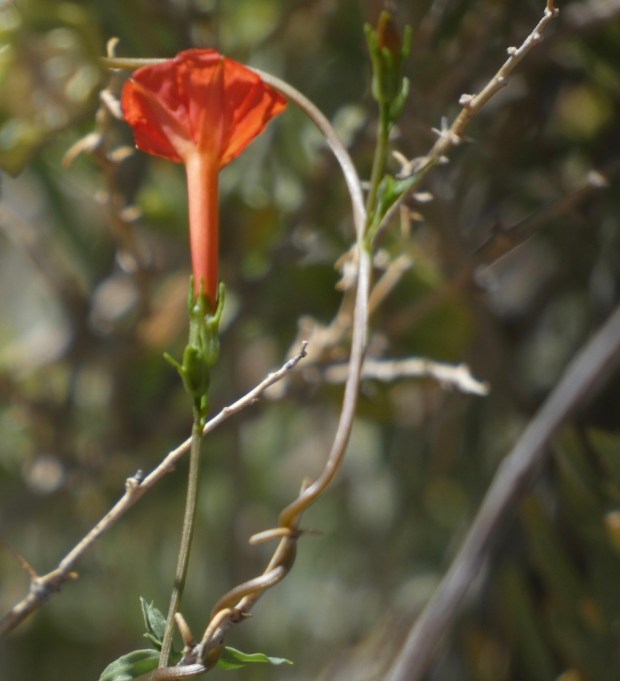
Trans-Pecos Morning glory

Oh Yes! 

This unexpected, undeniable discovery had me puzzled though. It’s been two years since I created a detailed post about the Asclepias genus of milkweed (see Summer Botany: Meet the Milkweeds). At that time and throughout the decades prior, my knowledge of milkweeds was limited to Asclepias, and the specific characteristics of that genus. 
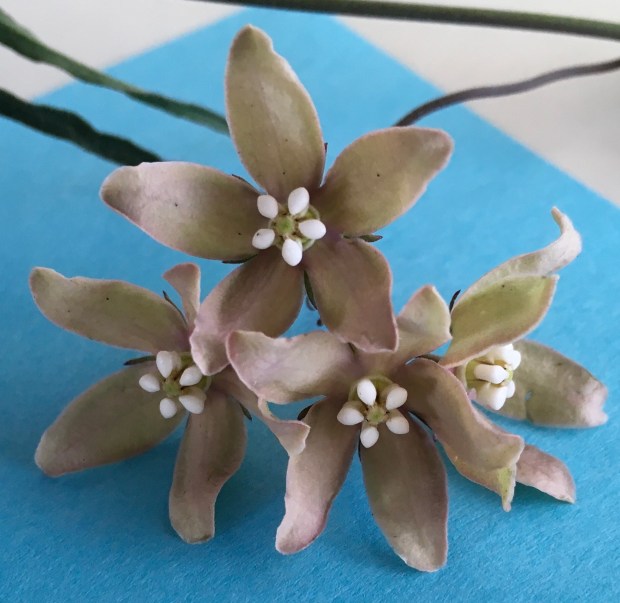
Spreading petals of Wavyleaf Twinevine

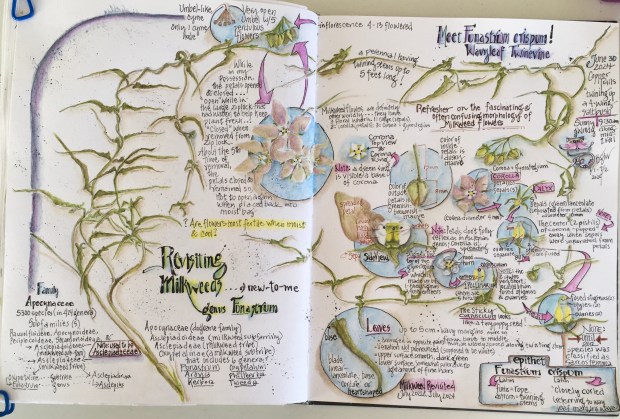
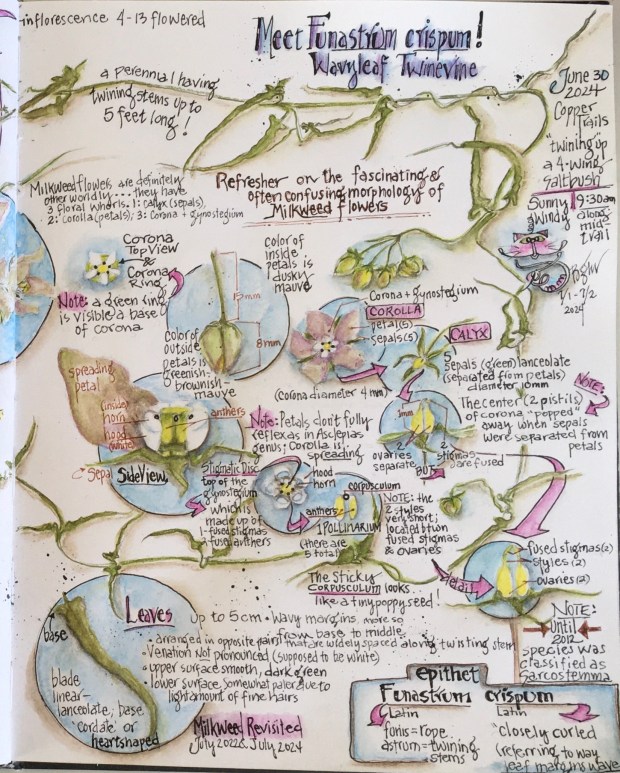
But here was something new-to-me; so worthy of whatever time it might take to learn all about this find in the dogbane family (Apocynaceae), aka the Milkweeds.  I quickly confirmed this vine does not belong with the Asclepias species of milkweeds, but is of the genus Funastrum, which is Latin for rope (funis) with twining stems (astrum), commonly referred to as the “twinevines.” And the full name of this plant is Funastrum crispum, commonly called Wavyleaf Twinevine.

Most of what I uncovered about Wavyleaf Twinevine is included on my 2 journal pages, along with some confusing taxonomy involving family and subfamily names, tribe and subtribe names, and how until 2012, this plant was known as Sarcostemma crispum. Curiosity about the taxonomic history will undoubtedly tempt me to sort through the confusion ……. maybe someday soon!
Have you discovered anything new-to-you in nature lately? What was it, and did it lease to more discoveries?

Thanks for stopping by!

Crazy for Locoweeds! Meet the White Point-Vetch

May 24, 2024

After a longer than planned for blog break, I’m glad to be back and sharing a few pages from my nature journal.  Beginning in April, the riot of wildflowers popping up everywhere has, and still keeps me scurrying about my backyard, the “back 40,” and local hiking trails just to refresh my memory about familiar plant species while searching for new discoveries. I’ve been sketching daily, learning about new-to-me plants, and growing my knowledge about favorites.  

Recording first seasonal sightings, it’s interesting to compare previous years’ emergence and abundance, and wonder why timings vary. For example, last year the white-stemmed evening primrose (Oenothera albicaulis) blanketed the hillsides with white; this year those beautiful white blooms have been scarce. Last year the tall crowded flower stems of White Point-Vetch (Oxytropis sericea) were few and far between. This year an explosion of these graceful plants that belong in the pea family (Fabaceae) began blooming in April and are still going strong! 

White Point-Vetch, also called white locoweed, whitepoint crazyweed, and silky crazyweed, makes a striking bouquet that glows like a bright light as it blooms along tall flower stalks 15+ inches above bare brown ground. New stems push up through multiple dried stems packed with last year’s empty seedpods. But it’s obvious this species is an aggressive re-seeder; there are so many new plants this year where last year there were none! 

It’s been a spectacular show!

Enjoying researching this species, dissecting a few fresh flowers, and searching for remnant seeds in the dried pods, kept me delving deep into the bits and pieces of what defines this group of plants. This large family, which houses well over 10,000 species world-wide, includes peas, acacias, mimosas, and licorice (see the list below for more residents). 

The dried stem was drawn and shaded in graphite.

But one species at a time, please! Actually the locoweeds, which fall into the genera Oxytropis (like the White Point-Vetch) and Astragalus, contain over 600 species world-wide, 21 of which grow in the U.S. Many plants in these two genera are toxic, particularly to domestic ungulates. More about the toxin and what happens when these animals ingest even small quantities, along with other interesting facts are described on my two journal pages. ……

There is so much more to learn about this important family of plants, but I’ll save that for another post. 

Thanks for stopping by and have a safe and happy Memorial Day weekend! 

Thanks for stopping by …… have a safe and happy Happy Memorial Day!

Perky Sue!

May 11, 2024

It’s Spring in my neighborhood, and not a day too soon!!
Along with gusty winds carrying clouds of yellow pollen come drifts of an outrageously bright yellow ‘sunflower’ named Perky Sue.

How Perky Sue got its common name is a mystery. My best guess is this herbaceous forb, native to New Mexico, has to be the Perky-est, Happiest Spring Flower, Ever!

What is your favorite native flower signaling the arrival of Spring in your world? Does its bloom cause you to smile; perhaps you break out in your happy dance?

Thanks for stopping by …… and Happy Mother’s Day to all!