Cypsela! The Sunflower Seed

July 9, 2023

Buckle in …… 

In my last blog post, Fascinating Fasciations, I shared my discovery of an extremely malformed Rush Skeletonplant. While researching this much branched and dainty member of the plant family, Asteraceae (which includes asters, sunflowers and daisies), I became entangled in the winding and seemingly never-ending number of rabbit trails on my journey, until finding myself on a surprising detour. Totally absorbed in the subject of plant malformations, and learning a lot of cool stuff about Rush Skeletonplant along the way …….
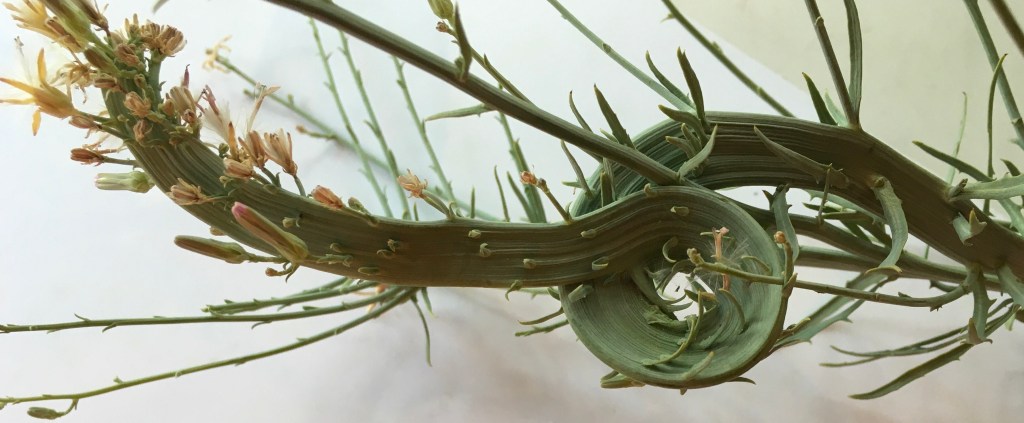
The weirdly wild fasciated Rush Skeletonplant

………. I tripped and fell flat on my face (only figuratively!). One of the published research papers appeared to be in error …… regarding the seed (aka fruit) name of this plant. Known to me for decades by the name “Achene,” the researchers had labeled the seed “Cypsela.” And not only did they call seed of Rush Skeletonplant a “Cypsela,” but they used this name when referring to all the seeds of the Aster family! 

What! No Way! Who was responsible for this name change? When did this happen? Why oh Why

Continue reading “Cypsela! The Sunflower Seed”

Fascinating Fasciations …… Malformations in the Plant World

July 2, 2023

It was early morning, but already a hot 85F as we hiked the dry, dusty trails of the Albuquerque foothills. With a few exceptions, late June’s wildflower display is all but gone, replaced by an abundance of seeds ready to drop, blow away, or feed hungry chicks. While the “stage” resets for the next Act, the Summer Monsoons, plants in the Sunflower-Daisy-Aster family (Asteraceae) still dot the quickly browning landscape with bright yellows, whites, and shades of purples.  One of the most curious plants now making a showing is Rush Skeletonplant (Lygodesmia juncea). 

Perfectly adapted to the desert environment with its chaotic tangle of blue-green mostly leafless stems, is Rush Skeletonplant. Spindly stems, standing up to 18” tall, are topped with 1-2 petite pale lavender-pink flowers. These tiny delicate beauties may not be as showy as your garden variety sunflower, but when closely examined you’ll find typical characteristics of the family, including 4-6 strap shaped ligulate florets each with a protruding hot pink anther tube surrounding a double lobed stigma. Short lived, the florets quickly transform into dandelion-like seed heads.

So there we were, hiking along, wishing for even the gentlest of breezes to keep the biting gnats from crawling into our ears and mouths, when out of the corner of my eye …… Weirdness Extreme! A wildly malformed Rush Skeletonplant.

Continue reading “Fascinating Fasciations …… Malformations in the Plant World”