Perky Sue – Page 7 .. The 100 Day Project (2026)

April 29, 2026

Perky Sue (Tetraneuris argentea)

Perky Sue has to be the happiest little sunflower on planet Earth!

“Is it because Perky Sue is an early spring bloomer, it’s smiling face opening in mid- to late March? Maybe it’s how those brilliant yellow flowers climb above fields of drab, dry grasses to brighten the landscape? Perhaps it’s those tall, soft and silky flower stems that dance with wild abandon to the music of our spring breezes?”

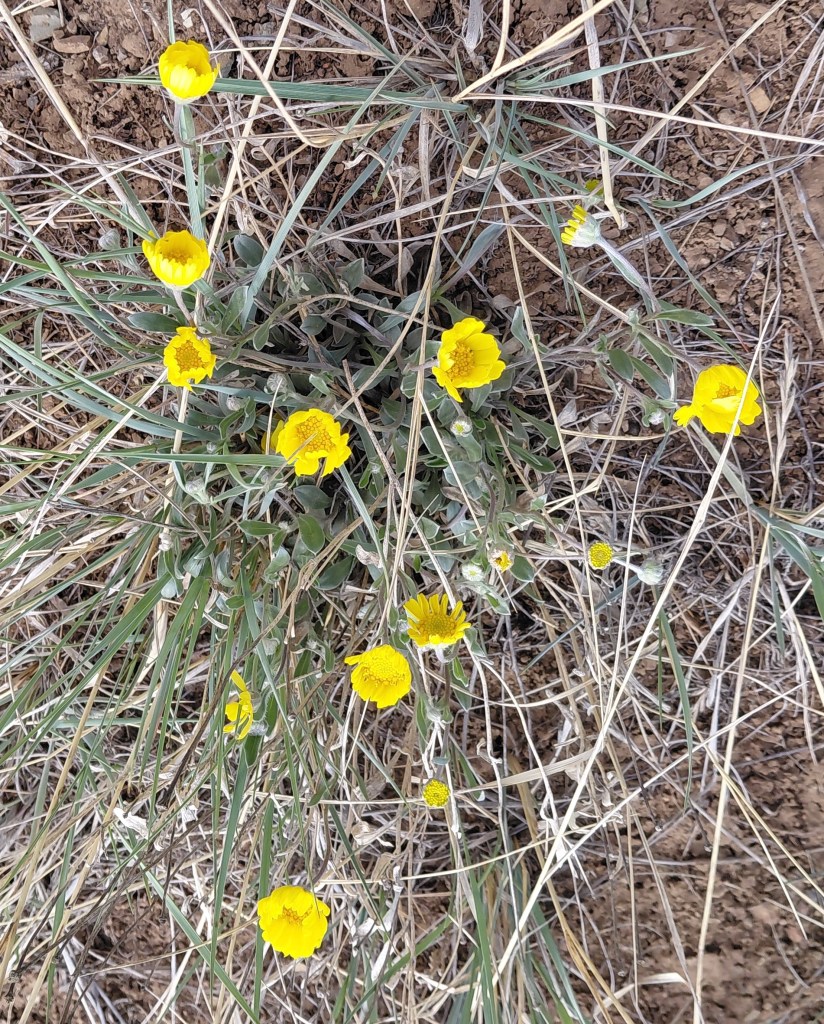
No matter why Perky Sue always brings smiles, you can’t deny that encountering a blooming bunch makes you instantly happy!
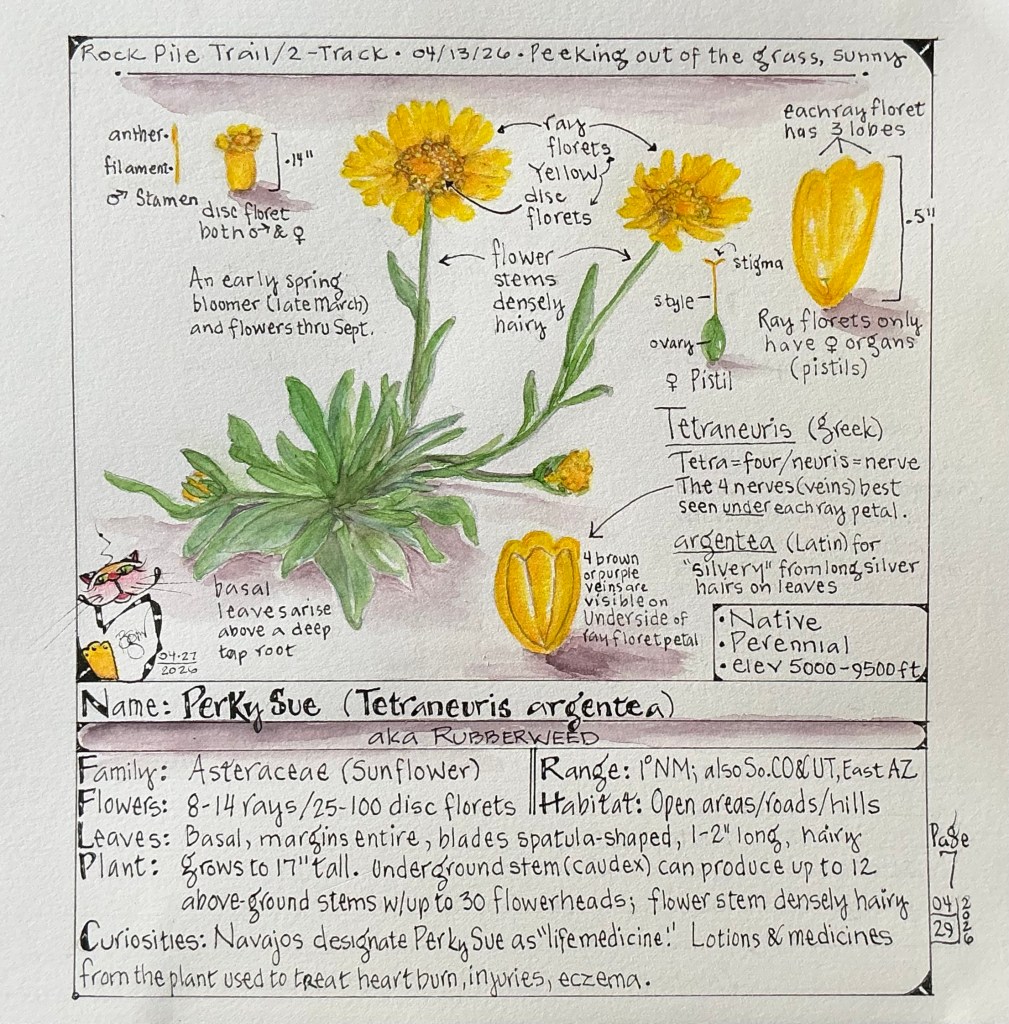
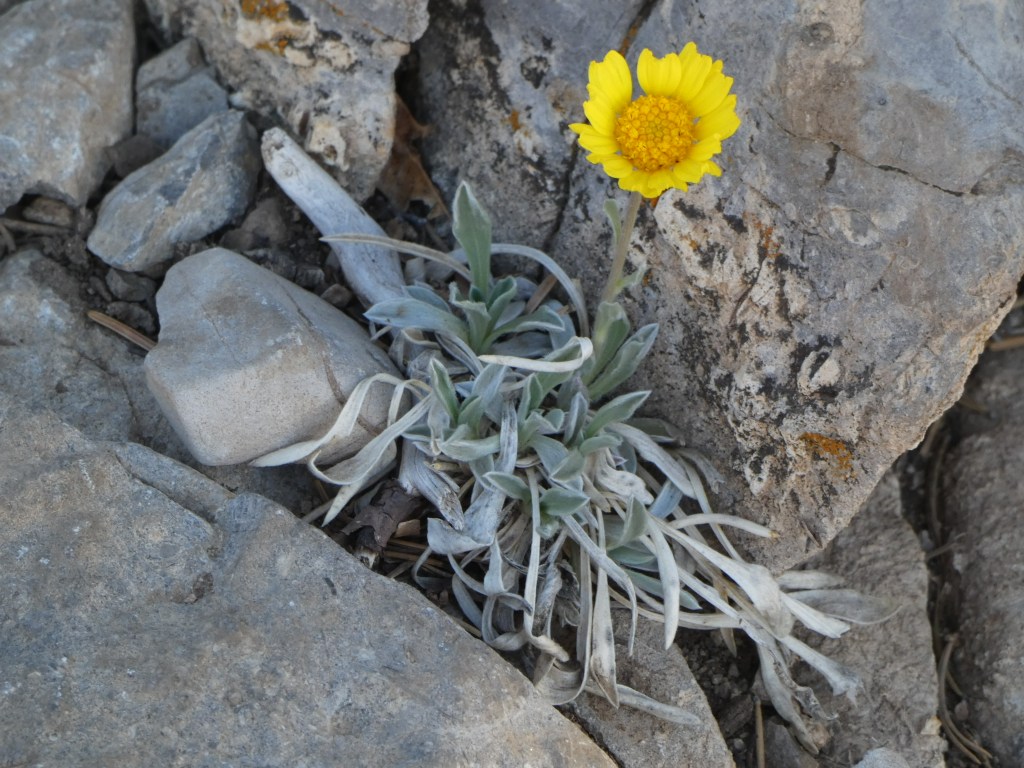
Look for these stunning sunflowers in the open areas scattered throughout and adjacent to the subdivision. Separate the dried grass and discover the soft sage-colored, spatula-shaped leaves densely clustered at ground level. Remember this spot and return every Spring to watch our grassy meadows awaken with dazzling yellow sunshine.

Did You Know ………………. ?

When you encounter Perky Sue (or most any other sunflower) take a close-up look at one of it’s flowers. What you’re actually seeing is a collection of tiny flowers (florets). The most numerous type of floret lies within the face or center of the flower head (these are the disc florets). But you may be surprised to learn there’s a second type of floret often thought of as the sunflower’s petals (called the ray florets).

The Sunflower Face

The face or central part of the flower head is called a disc; the individual flowers, the disc florets, are arranged in clockwise and counterclockwise spirals. Look close and notice each floret has five distinctly flared petal lobes attached to a fused floral tube (which together form the corolla). Each floret is fertile, having both male (staminate) and female (pistillate) organs, able to produce pollen and seeds.
The Sunflower “Petals”

Radiating out from the disc like the rays of the Sun is a showy ring (or multiple rings) of what looks like flower “petals.” However,  each “petal” is a single ray floret ‎consisting of a single strap-shaped flower (ligule) of five fused petals (corolla) that form a tube at the base. In Perky Sue and some other sunflowers, the ray florets are pistillate. But in the majority of species the ray florets are sterile. 

The Sunflower “Landing Pad”

Sunflowers have one of the most highly evolved “flowers” in the plant kingdom. To maximize their visual attraction to pollinators, the ray florets became large showy structures that act as a “landing pad” for bees and other pollinators. When they “touch down” they are immediately drawn along the ligule to the bountiful pollen supply of the disc florets. Large pollinators also use the ligules of ray florets as a supporting platform to balance and feed from the disc florets’ floral tubes. So, ray florets evolved to increase the pollination success of the fertile disc florets at the center of the sunflower. And in the case of Perky Sue, insects carrying pollen as they fl to other “landing pads” increase the pollination of the pistillate ray florets.       
Want to Learn More?

The biology of sunflowers is a fascinating subject, and I’ve spent many hours researching and illustrating their intricate parts and pieces, and how they work. If you’d like to learn more, check out these detailed posts I put together in the summer of 2023: 

Geeking Out …… Total Bliss ….. Sunflowers! 

Cypsela! The Sunflower Seed

…. and for a bit more about Perky Sue, get more here from my summer 2024 post

Perky Sue!

…………………………………………………………………………………………………

Does Perky Sue bloom in your neighborhood? 

Have you ever taken a close look at its flower head or inspected the florets of another sunflower species?

What did you see?

Hope you enjoyed this page of my field guide. I’d love to know if you found the information new and/or inspired you to check out the details of your local sunflowers.

As always, thanks for stopping by!

References
inaturalist.org

swbiodiversity.org

deercanyonfolks.org

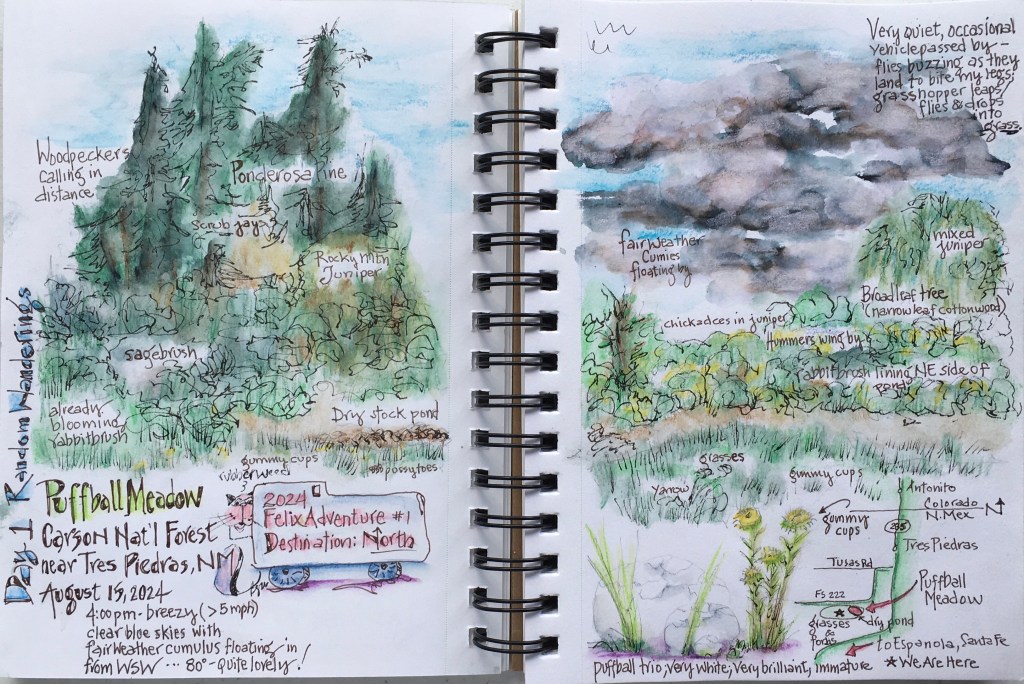
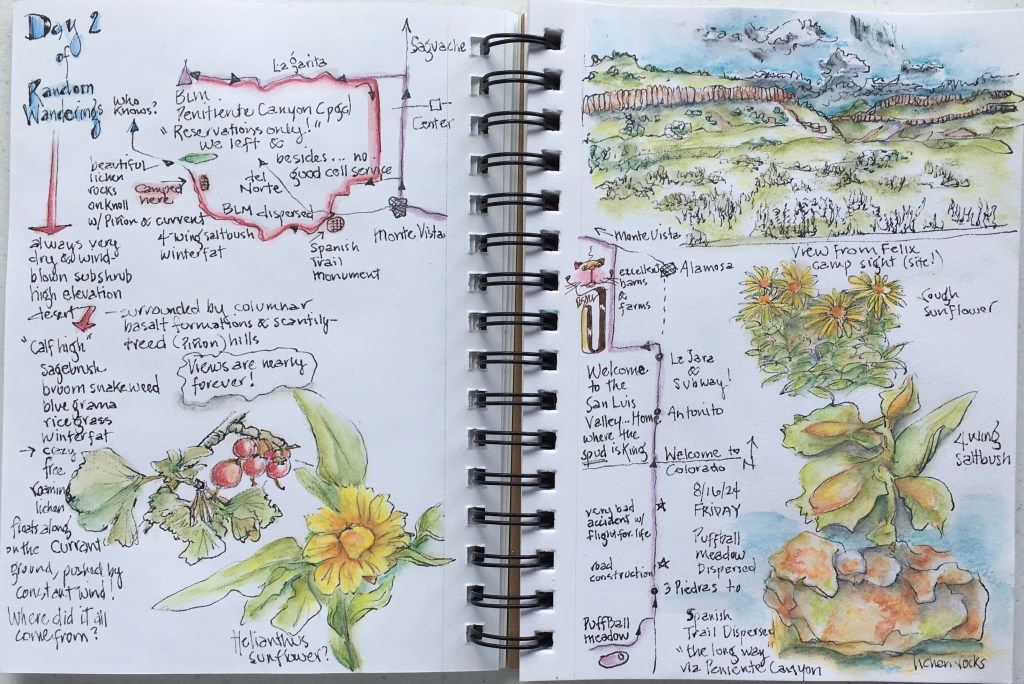
Random Wanderings; Destination North

August 15-20, 2024

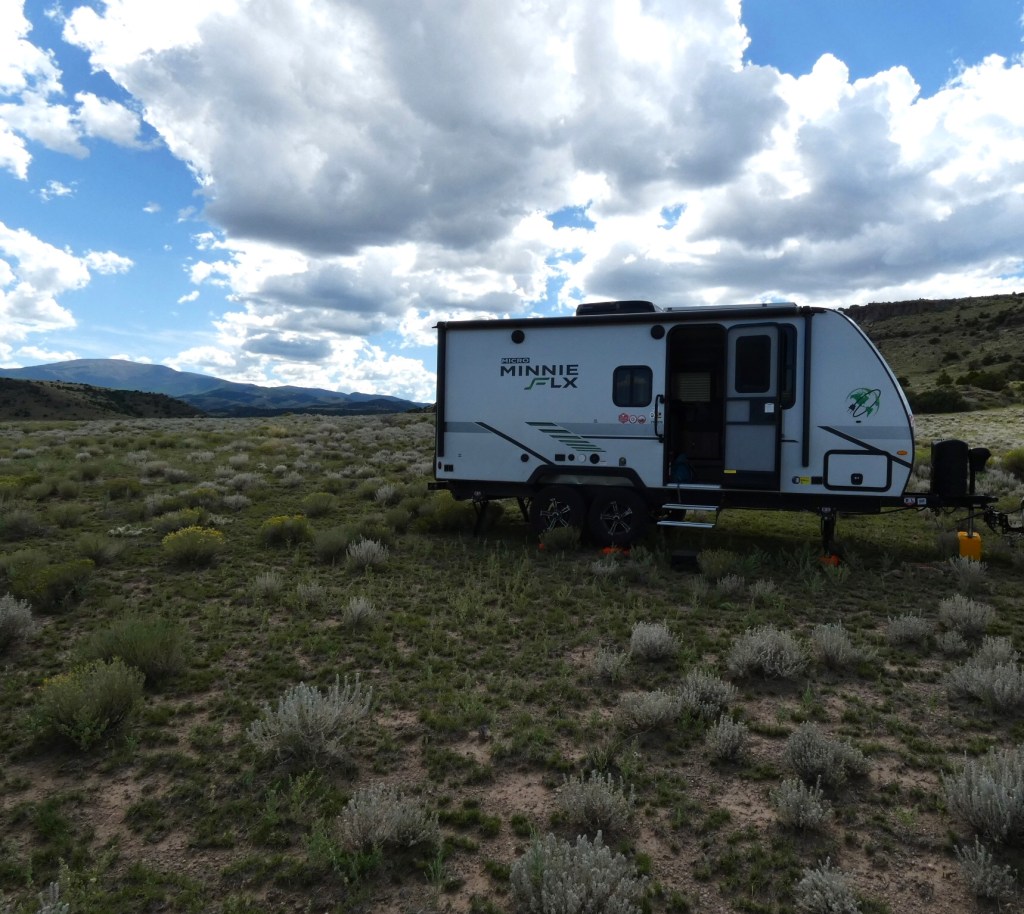
Felix parked along the Old Spanish Trail route, south central Colorado

With no defined route or objective, we decided it was high time we hitch up the trailer (Felix) and tote it north just to see what’s going on in south central Colorado this time of year. As we made our way through the San Luis Valley, we found acres of lush greenery topping almost-ready-to-harvest potatoes. Alfalfa was nearing its second cutting. Carrots had already been shipped to market. The wildlife refuges were patiently awaiting the arrival of migratory birds. And the last of the summer tourists were excitedly boarding the Cumbres and Toltec Scenic Railroad in Antonito, for the 64 mile steam engine journey to Chama, NM.

Day 1. Our first stop was in northern New Mexico, just south of Tres Piedras, Carson NF. An unlikely dispersed camping spot that I nicknamed “Puffball Meadow.” A nice level spot adjacent to a dry stock pond. The meadow was full of fist sized puffball fungi, and a coyote paid us a visit during the night.

We enjoy boondocking on our public lands managed by the US Forest Service and Bureau of Land Management.  Having a trailer that’s self-contained, we can easily find lovely off-the-grid areas to set up camp. And thanks to our solar panels (and lots of sunny days) and large water tank, we can stay out for up to 5 days without needing refills. This allows us to explore lesser visited areas, which suits our tastes beautifully!

Day 2. Made it to the San Luis Valley, Colorado. Wandered around until we found a wide open area of dispersed camping in the vicinity of the Old Spanish Trail. Lots of wildflowers blooming, and plenty of hiking opportunities.

But I think one of the best things about random travel is the spare time …… we drive for 3-4 hours, find a place to camp ….. then the rest of the day involves hiking, wildlife watching, nature journaling, collecting drawable items, photography, more sketching, identifying the unknowns, reading, napping, and a bit of ukulele strumming!  Perfection! 

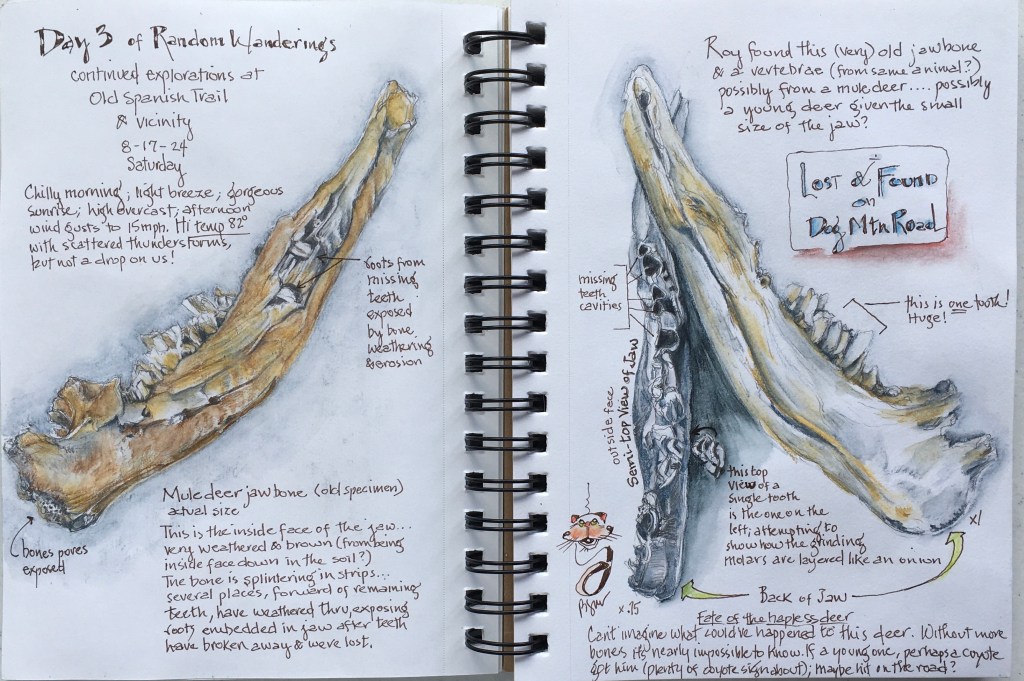
Day 3. We enjoyed the area so much, Roy suggested we stay for another day! And then he found this weathered mule deer jaw bone.
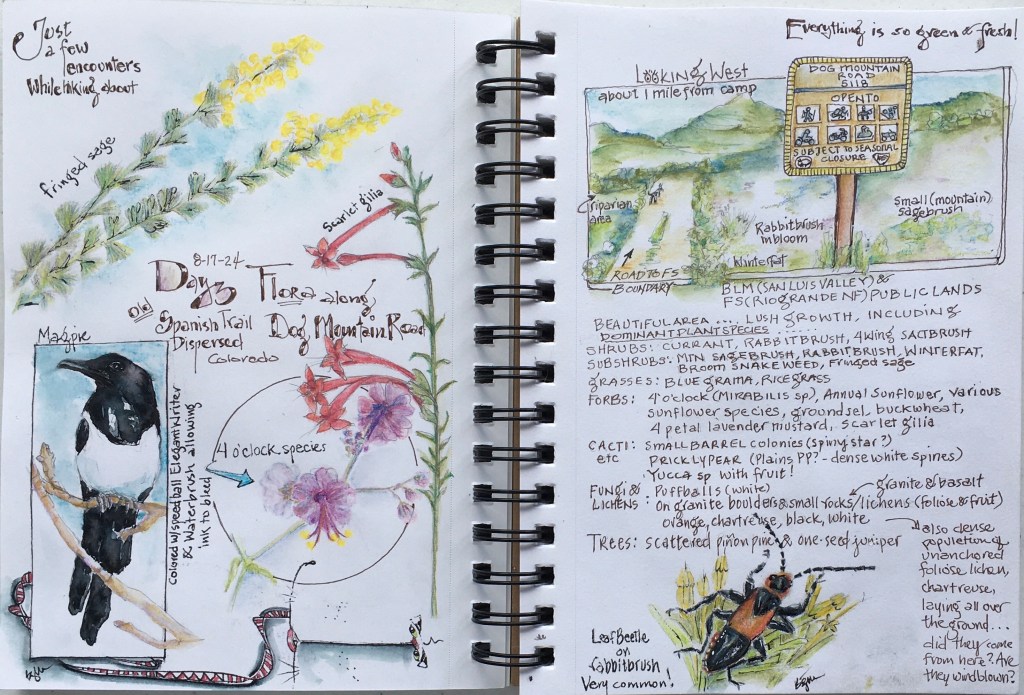
Day 3, continued. Magpies! Can’t understand why these gorgeous birds don’t come south at least as far as Albuquerque and East Mountains.

Although the 6-day trip wasn’t remarkable, it was good to get away. Scattered about this post are my journal pages highlighting Days 1 to 5. 

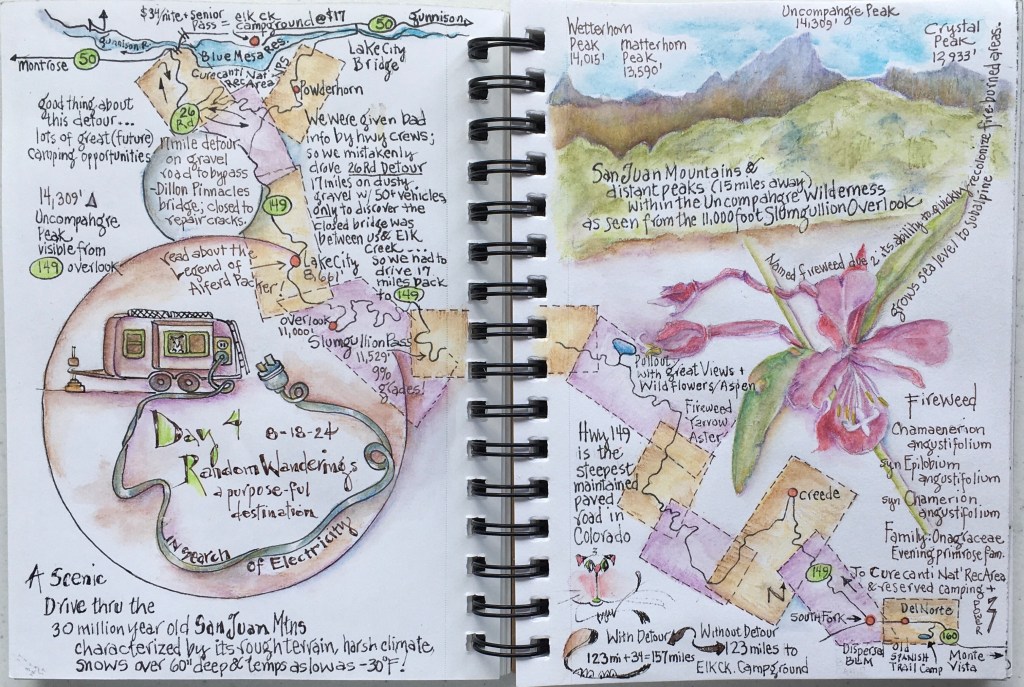
Day 4. Our travel route as we made our way to a campground to charge our battery and top off our water tank. An inconvenient, unplanned for detour led to future camping possibilities.

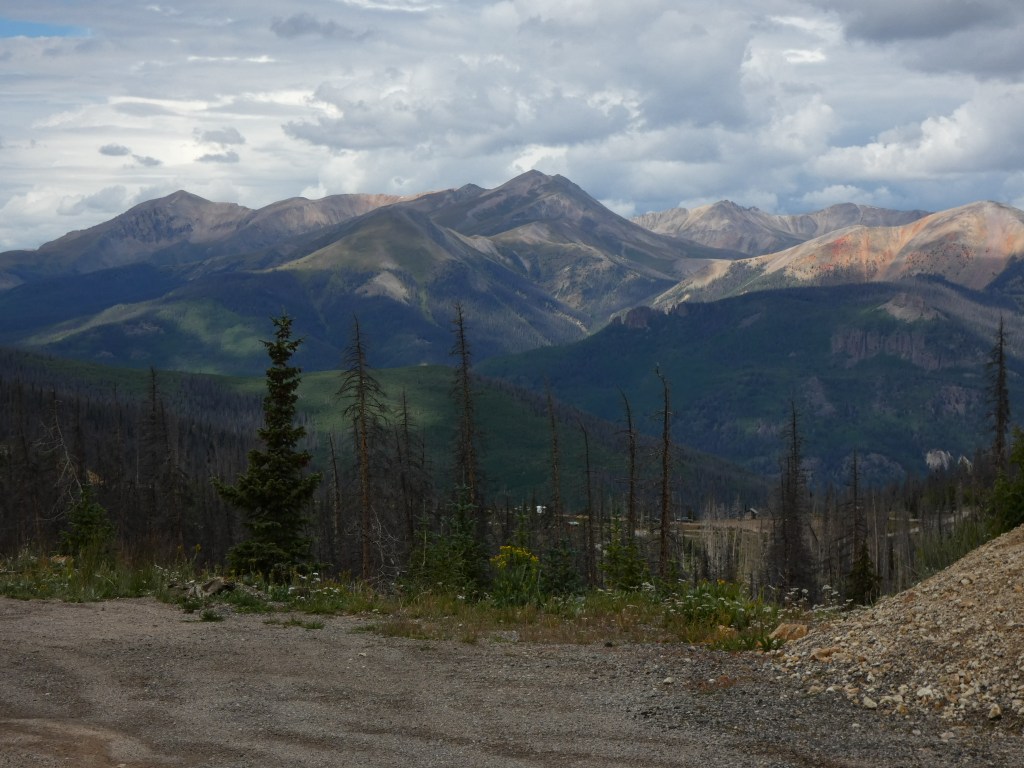
On Day 4, we decided to make our way up and over Slumgullion Pass (11,530 ft) on our way towards Gunnison Country. Not having been this way in years, we really enjoyed the crisp mountain air and spectacular views up and over the Pass. The villages of Creede and Lake City have grown swollen with tourist amenities and summer cabins dotting the once open meadows. As we got closer and closer to Lake City, we couldn’t help recall the story of Colorado’s notorious cannibal, Alferd Packer. Wanting to reread the tale as we passed near Cannibal Plateau and Deadman’s Gulch, the crime scenes, here’s what I found:

Brief Background: Alfred Packer (newspaper misspelling as “Alferd” Packer, which stuck) (1842-1909) was a prospector who set out for Colorado gold fields in 1873. By the winter of 1874, he reached the rugged San Juan Mountains with a party of five men where they became lost and stranded during one of the worst winters on record. The men, with only had 3-4 days provisions quickly consumed and no firearms, were forced to cook their rawhide moccasins. Places where “snow had blown away from patches of wild rose bushes,” ….. they “were gathering buds from these bushes, stewing them and eating them.”

When the snow finally crusted over, Packer, the only man to survive the ill-fated trip, walked out of the mountains after 60 days. He told a story about the demise of his fellow prospectors, and how he managed to survive by eating them. His story involving cannibalism became legend, and continues to be passed down to today! (Whether the story is true or not will never be known, but it makes for colorful history.)

Based on historical records and news reports, Alferd Packer was tried several times for murder and cannibalism (even though the act of cannibalism wasn’t considered illegal in the US). Convicted of these heinous crimes, Judge M.B. Gerry supposedly uttered this famous quote while handing down the sentence in Packer’s first trial …… 

“Stand up yah voracious man-eatin’ sonofabitch and receive yir sintince. When yah came to Hinsdale County, there was siven Dimmycrats. But you, yah et five of ’em, goddam yah. I sintince yah t’ be hanged by th’ neck ontil yer dead, dead, dead, as a warnin’ in reducin’ th’ Dimmycratic populayshun of this county. Packer, you Republican cannibal, I would sintince ya ta hell but the statutes forbid it.”

This is the quote I’d grown up hearing many times, over and over and over! It makes for good reporting, but is a ways from the actual sentence and what Judge Gerry sounded like while reading it (nope, he didn’t talk like Yosemite Sam!).   Here’s what the record shows:

“Alfred Packer, the judgment of this court is that you be removed from hence to the jail of Hinsdale County and there confined until the 19th day of May, A.D. 1883, and that on said 19th day of May, 1883, you be taken from thence by the sheriff of Hinsdale County to a place of execution prepared for this purpose, at some point within the corporate limits of the town of Lake City, in the said country of Hinsdale, and between the hours of 10 A.M. and 3 P.M. of said day, you, then and there, by said sheriff, be hung by the neck until you are dead, dead, dead, and may God have mercy upon your soul.”

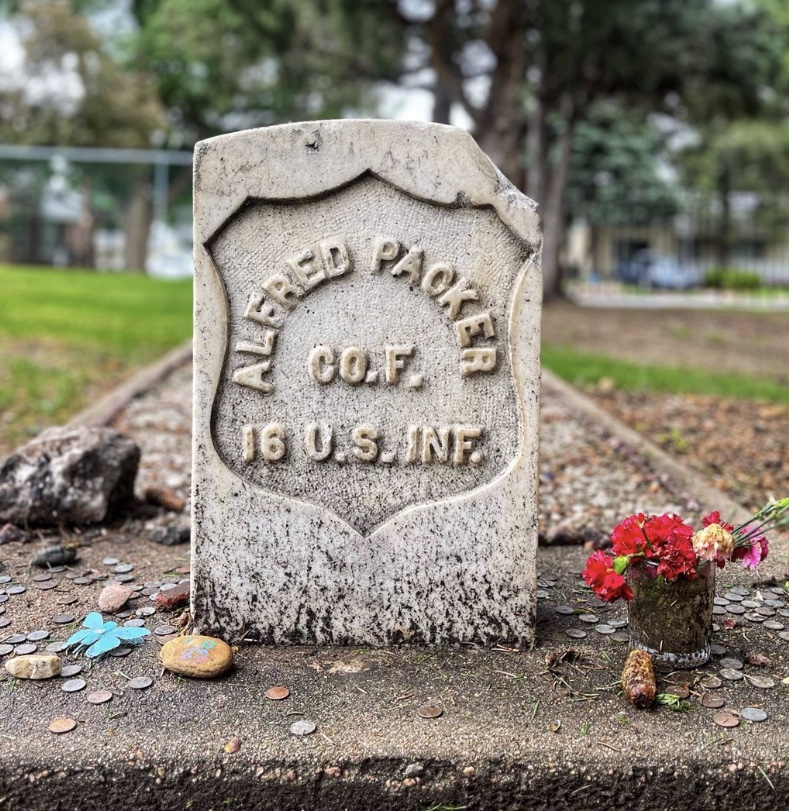
Alfred Packer tombstone in Littleton Cemetery where he was originally buried in 1909. Today, he now lies back in Hinsdale County, near Lake City.

Alferd Packer never did hang. It’s quite a detailed story following his first trial, including a jail escape, nine years on-the-lam, and recapture. There was a second trial in 1885 where he was charged for only one murder; after serving only 16 years of his 40-year sentence, he was released and died peacefully one year later at the age of 60. He was buried in Littleton, Colorado where his tombstone properly reads Alfred Packer.

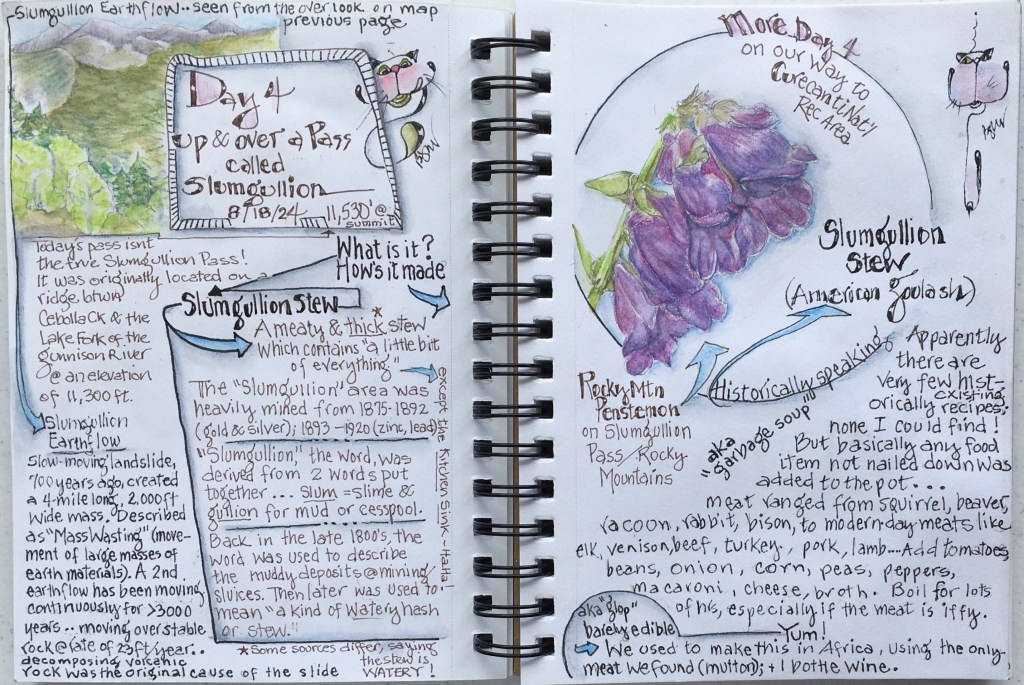
Day 4. Supplemental information about that strange name “Slumgullion.” Is it a stew? Is it a drink? Is it the sludge that puddles below an 1870 sluice box?
Day 5, on our way back to Old Spanish Trail (because we liked it so much). Discovered a new-to-me plant; after a bit of checking with iNaturalist, learned it was Black Henbane, but not before handling all parts of this very poisonous noxious weed!

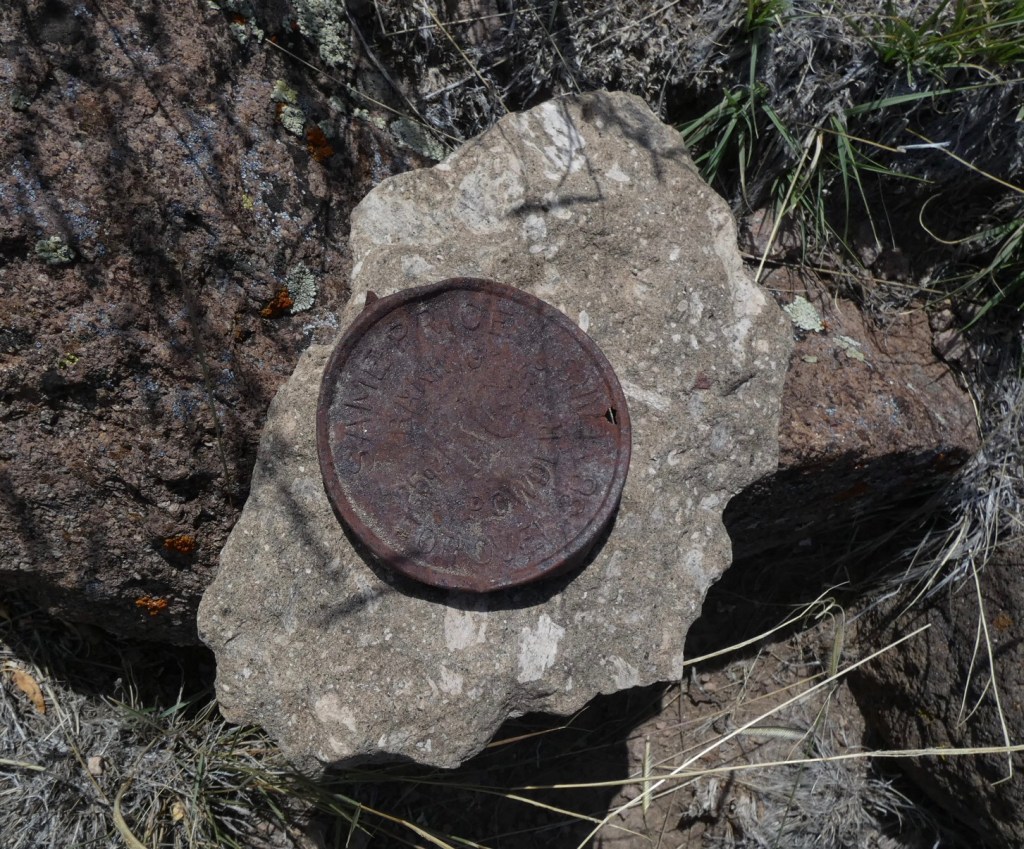
A short comment on the KG Baking Powder tin lid we found near our trailer. It was old and rusted, but very readable. The tin and its contents were probably long gone. Tried to find any information on the KG brand; sure curious about the age of the lid. If you’ve heard of this brand, please let me know.

KG Baking Powder tin lid we found near Old Spanish Trail.

Day 6. Headed for home. Hope you enjoyed my travel journal.

San Juan Mountains …… up and over Slumgullion Pass. The view of the 700 year old earth flow.


As always, thanks for stopping by!

Exploring the Familiar

July 23, 2024

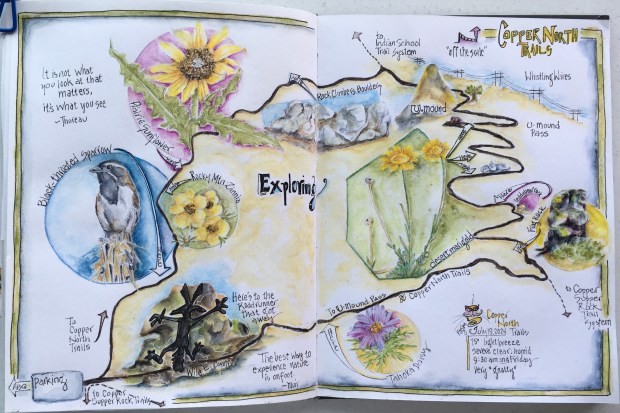
Hiking and rehiking familiar areas always turns up new discoveries. This may be because my eyes skim over the most commonly seen phenomena, allowing me to actively search for anything new or anything out of place. Rarely am I disappointed.

A few days ago, we explored one of our favorite hiking areas. Because birds tend to be more secretive this time of year, the best surprise was to hear a black-throated sparrow sweetly singing from his perch atop a cholla skeleton.

Because it’s monsoon season, many plants that bloomed late spring are making a comeback, and are happily spreading throughout the area. So to keep track of how ranges are expanding, I made note of their locations and transferred this information to a simple trail map. I also noted that the most commonly seen flowers were from the composite family …. the sunflowers.

Oh! Couldn’t resist capturing the silhouette of Wile E. Coyote glued to the back end of a dented vehicle in the parking area. That’s was a perfect discovery for the resident roadrunners!

Do you enjoy exploring familiar areas? What surprises have you discovered?

As always, thanks for stopping by!

Cypsela! The Sunflower Seed

July 9, 2023

Buckle in …… 

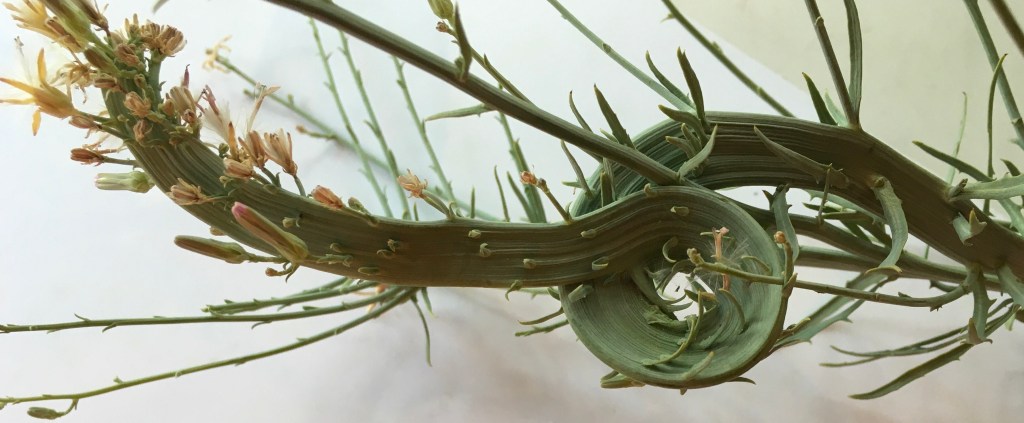
In my last blog post, Fascinating Fasciations, I shared my discovery of an extremely malformed Rush Skeletonplant. While researching this much branched and dainty member of the plant family, Asteraceae (which includes asters, sunflowers and daisies), I became entangled in the winding and seemingly never-ending number of rabbit trails on my journey, until finding myself on a surprising detour. Totally absorbed in the subject of plant malformations, and learning a lot of cool stuff about Rush Skeletonplant along the way …….

The weirdly wild fasciated Rush Skeletonplant

………. I tripped and fell flat on my face (only figuratively!). One of the published research papers appeared to be in error …… regarding the seed (aka fruit) name of this plant. Known to me for decades by the name “Achene,” the researchers had labeled the seed “Cypsela.” And not only did they call seed of Rush Skeletonplant a “Cypsela,” but they used this name when referring to all the seeds of the Aster family! 

What! No Way! Who was responsible for this name change? When did this happen? Why oh Why

Continue reading “Cypsela! The Sunflower Seed”

Fascinating Fasciations …… Malformations in the Plant World

July 2, 2023

It was early morning, but already a hot 85F as we hiked the dry, dusty trails of the Albuquerque foothills. With a few exceptions, late June’s wildflower display is all but gone, replaced by an abundance of seeds ready to drop, blow away, or feed hungry chicks. While the “stage” resets for the next Act, the Summer Monsoons, plants in the Sunflower-Daisy-Aster family (Asteraceae) still dot the quickly browning landscape with bright yellows, whites, and shades of purples.  One of the most curious plants now making a showing is Rush Skeletonplant (Lygodesmia juncea). 

Perfectly adapted to the desert environment with its chaotic tangle of blue-green mostly leafless stems, is Rush Skeletonplant. Spindly stems, standing up to 18” tall, are topped with 1-2 petite pale lavender-pink flowers. These tiny delicate beauties may not be as showy as your garden variety sunflower, but when closely examined you’ll find typical characteristics of the family, including 4-6 strap shaped ligulate florets each with a protruding hot pink anther tube surrounding a double lobed stigma. Short lived, the florets quickly transform into dandelion-like seed heads.

So there we were, hiking along, wishing for even the gentlest of breezes to keep the biting gnats from crawling into our ears and mouths, when out of the corner of my eye …… Weirdness Extreme! A wildly malformed Rush Skeletonplant.

Continue reading “Fascinating Fasciations …… Malformations in the Plant World”

Geeking Out …… Total Bliss ….. Sunflowers!

June 12, 2023

David Lukas, naturalist, presented an amazing 2 hour video workshop on the largest family of flowering plants, the family Asteraceae1, commonly called Sunflowers, Daisies, and Asters.  Not only are they the largest family, they are also the most successful …. from a botanical and evolutionary perspective. That was the hook! I needed to know more!

Disclaimer! The following post is lengthy and covers many botanical things about sunflower “flowers” I wished to remember. If you decide to take this deep dive with me, prepare to be amazed. And if you make it all the way to the end, congratulations! But beware ….. you’ll develop an irresistible urge to stop and investigate every roadside sunflower on your next trip to town!  Are you ready ……?

Continue reading “Geeking Out …… Total Bliss ….. Sunflowers!”