Part 1 ….. Can There Be Too Many Sunflowers?
August 5, 2025
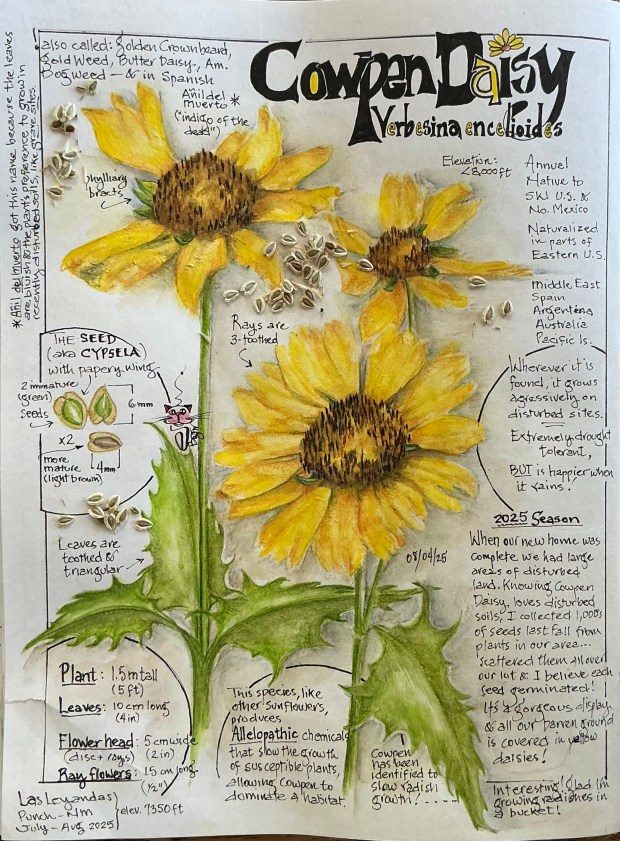
It was the Fall of 2024. A small cluster of Cowpen Daisies (Verbesina encelioides) flourishing on the severely disturbed ground surrounding our new home was going to seed. Waiting several weeks until the migratory birds ate their fill, I spent an hour or so collecting as many remaining dried seeds (cypselas) as possible, stuffing full two quart-sized ziplock bags. About 1/3 of the seeds I scattered around the house where they would overwinter on the ground. The rest were poured into large pill vials that were labeled with species name, location, and date, then placed in the refrigerator to simulate cold storage until Spring.
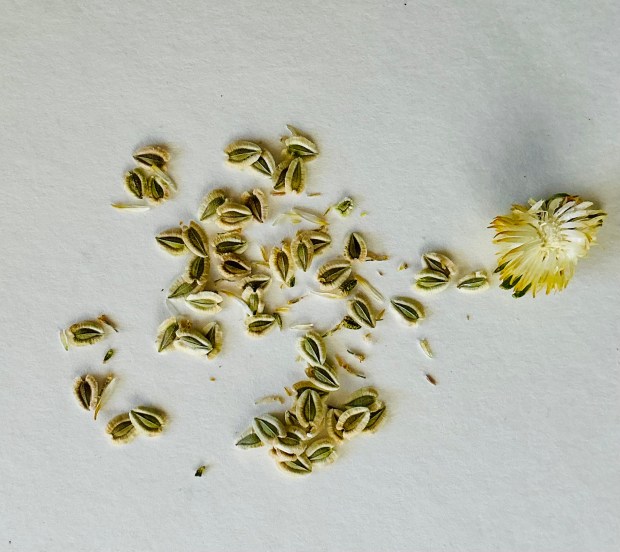
It was late April 2025. The chances of heavy frost seemed a distant memory. My fingers crossed, I chose a sunny 42 degree morning to liberate those refrigerated seeds from 6 months of cold storage, and scattered them in disturbed areas not seeded last Fall. Then I waited like an expectant parent, watching for signs of germination, worrying that runoff from late season snows might wash away my scattered seeds, expecting that flocks of migratory birds would gobble them all up, and hoping for gentle rain showers to swell those thousands of seed coats to aid those tiny embryos in growing their first roots (radicles) and first leaves (cotyledons).
Then early June 2025. Success! Cotyledons were literally popping up everywhere, which meant the radicles were already expanding into the soil. They were especially crowded where I’d scattered all the cold storage seeds, and germination was obvious where seeds had been scattered the Fall of 2024. By early July, those Cowpen daisies were crowding out many of the other native species I’d also seeded in the same areas.
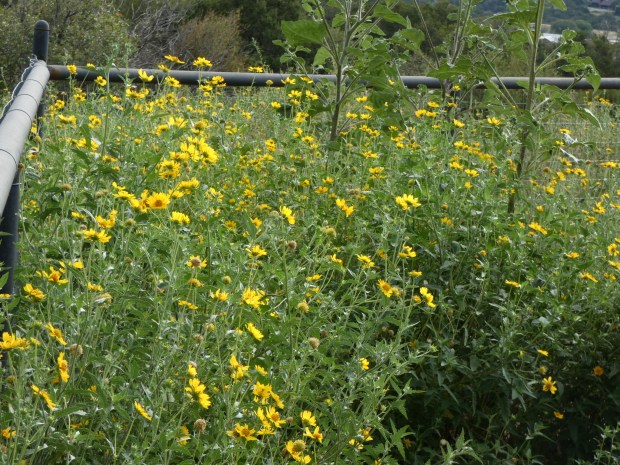
And now it’s early August 2025, and what a dazzling show! Even though the sunflower yellow flowers of Cowpen Daisy are small (2” wide), there are up to 75 long-stemmed flowers on each plant that can grow from 4-5’ tall! They are so dense, the backyard fence is hardly visible, our walking paths are totally draped with 4” long leaves, and if there’s a rattlesnake lurking around under our massive Cowpen Daisy canopy, we’d probably (hopefully) hear him well before he slithered into view!
Goals and Lessons Learned
I’ve learned a lot by parenting these Daisies; from the best time to scatter seed (in the late Spring following cold storage) and where (not so close to other desirable natives or pathways), to managing the mass of growth (by organizing through selective removal). Our initial goal of seeding and growing native plant species was to attract and help feed wildlife (pollinators, reptiles, rodents, birds and mammals), and we are optimistic that achieving this goal long-term seems realistic with the success we’ve had to date. However, because so many of our native plants are losing the battle against habitat loss caused by invasive species encroachment and takeover, land development, and climate change, we will continue to explore ideas to expand our initial goal to address the habitat situation. As we gain insight about the best native plants to grow to help restore our disturbed soils, we will learn and share with our neighbors those species that: are drought tolerant; aid in building soils; are effective at invasive weed suppression; provide wildlife benefits; and increase plant diversity.
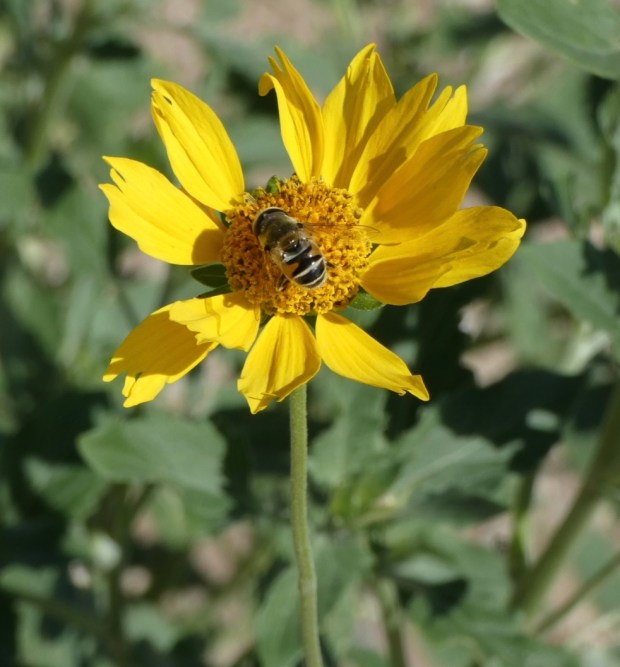
Happy – Happy – Happy! Will I be collecting Cowpen Daisy seed again this Fall? You bet! Having all that sunshine yellow around our home is thrilling. Every morning all those thousands of sunflower faces looking East towards a new day are about the happiest sight ever! And having such wild, uninhibited growth of a native annual out our back door has been ideal for observing the pollinators that benefit from the abundant nectar and pollen, enjoying the aerial acrobatics of several phoebe families that have been feasting on those pollinators, and promises to be a perfect spot for bird watching this Fall when all those cypselas ripen into high protein food.
Can’t wait!
Do you ‘know’ a special native plant? How about a native butterfly garden? Are you a bird watcher? Maybe you enjoy the occasional deer, coyote, or bobcat wander through your yard? Please share your favorite wildlife encounter!
As always, thanks for stopping by!


 a curious nature
Ooooh, what a glorious yard youâve created, Barb!!! Whether Sunflowers or Cowpen Daisies, the bright yellow is sooooo therapeutic. After reading your Sunflower post, I was writing morning pages with Little Robin, and penned the following: Life is short. We must be vigilant about being sun flowers, always turning toward the sun, slowly coming around to face East during the nighttime so that when the sun comes up again we are already facing toward the sun⦠follow the sun. In case you donât get it⦠this means we always gravitate toward joyfulness and fun.
Thank you for giving me this wonderful new metaphor by which to live.
LikeLiked by 1 person
Robin! I definitely get it and agree! I agree with everything you ‘penned!’ Reminds me of the song “Keep on the Sunny Side (of Life” ….. and I do believe the lyric writers must’ve been inside your head! Now go out and welcome the sun with a huge smile!
LikeLike
Do you have any concerns about this becoming an invasive plant? Best wishes,
Nancy
LikeLiked by 1 person
Hi Nancy! Thanks for your most excellent question about the potential invasiveness of Cowpen Daisy. Because there were so many seedlings coming up late spring, I was definitely alarmed and wondered about the need for early control. But as the season advanced, it became clear the density of plants seemed self-controlling. I also read that Cowpen Daisy only exhibits a super bloom when there is an unusually wet spring, which we really didn’t have. In 2023, following a very wet spring, my first encounter with Cowpen Daisy was when I couldn’t help but notice the plant completely covered an extremely large field near our home. It was quite the talk of ‘town’ so to speak; quite spectacular. I wondered if this plant species dominated and overran all other plant species every year. Returning the following year (2024) and again this past spring (2025) just to see, I couldn’t find a single Cowpen Daisy anywhere! So I think the answer is no, this annual is not considered invasive, at least not in central New Mexico. However, I also read that as an introduced species to Australia, New Zealand, and other countries, it is considered invasive ….. which may have something to do with its allelopathic tendencies.
If you have some experience with Cowpen Daisy, I’d love to know ….. especially if you do consider it invasive.
Thanks so much. Hope my thoughts make logical sense!
LikeLike
I can’t say I have any experience with this plant but from your photo it gave me pause that it could be invasive. My experience with invasive plants is limited to lily-of-the-valley and Chinese lantern. They were coexisting peacefully in a spot with the former emerging first, blooming and then being overshadowed by the growing Chinese lanterns. The lily-of-the-valley are now encroaching on my irises so I tried to dig out some iris and the mat of roots of the lily-of-the-valley was unbelievably thick. The Chinese lanterns seem to have lost that race and are now growing on the periphery of my bed. I have to say I am impressed by your knowledge of our natural world, the more so because you are self-taught! Best wishes,
Nancy
LikeLiked by 1 person
Hi again Nancy! Your comments about the lily of the valley competing with Chinese Lanterns aroused my curiosity. Had to look up Chinese Lantern and found it’s a member of the nightshade family, genus Physalis. I have volunteer Physalis (ground cherry) plants in my perennial garden and scattered about the Cowpen Daisy perimeter. I really am fascinated how the “lily” formed such a dense root mass! I hope you can save your iris! Good luck! Oh, and how beautiful the Chinese Lantern net-like fruit husk looks!
Thank you very much for the wonderful compliment! My love of the natural world is driven by my passion to learn everything I can! So much to learn; so much fun!
Thanks again!
LikeLike
I don’t know whether I like the bright orange pod in the fall vs. the delicate lacy pod that remains for the winter.
Best wishes,
Nancy
LikeLiked by 1 person
Wow, Nancy! That would be a difficult choice!
I think you can pick both pods, especially since they show off their stuff in totally different seasons!
Xxoo
LikeLike
These bright flowers are such a cheery, joyful sight in your yard, Barb! (although, I don’t think I could handle the unknown presence of an unseen rattlesnake at any time, though!) So, by disturbed soil, do you mean soil that has been dug in or raked, etc.? Such a wonderful resource for the pollinators! Your painted flowers look like they are going to jump off the page, they look so real! And, did you scatter some seeds on the page, too — what a great idea! We are having much needed rainfall today after weeks of dry weather — it will be fun to see what’s popping up after the moisture!
LikeLiked by 1 person
Karen! Thanks for all the great comments and questions too. You’ll be happy to know that after dreaming of rattlesnakes creeping out in herds from under my mass of Cowpen Daisies, I was out before the sun rose (and before the rattle-snaking hour) and thinned, by pulling, a bunch of daisies between the perennial garden and fence. Visibility is definitely improved, but not perfect. Couldn’t bring myself to remove everything, but at least 50 plants will make fine green mulch now, and I should sleep better tonight!
You are correct about the less destructive definition of “disturbed soil.” After a big front-end loader not so carefully graded around our home last year, my definition of ‘disturbed’ morphed into the total topsoil and A horizon removal, including all of the beneficial soil creatures. Try as we might, the operator was everything but delicate. There were only invasive grasses and annuals able to survive and grow afterwards. But I do love weeding, and did just that in 2024, June – November. I think the Cowpen Daisies look gorgeous!
Yes, those are real seeds (still immature) scattered on the journal page. Kinda brought everything into 3D focus, huh?
So happy to hear PNW is getting moisture…… sounds like potential for nature journaling material??!
LikeLiked by 1 person
What a beautiful backyard you have! Makes me happy looking at your photos. Thank you for sharing. 🥰🌻
LikeLiked by 1 person
Awesome, Michele! So glad all those flowers brought happiness!!
Thank you!
LikeLiked by 1 person
Thank you for sharing your incredible talent! 👏🏻
LikeLiked by 1 person
And you yours! Have a great weekend Michele!
LikeLiked by 1 person
Your photo of the pollinator being very close to Cowpen Daisy makes me think that maybe they might even be talking to each other and enjoying a honey-sweet convo. Charmingly warming work!
LikeLiked by 1 person
I do believe you are correct ‘Z’ …… and very perceptive. Thanks for the comments!
LikeLiked by 1 person