April 1, 2026
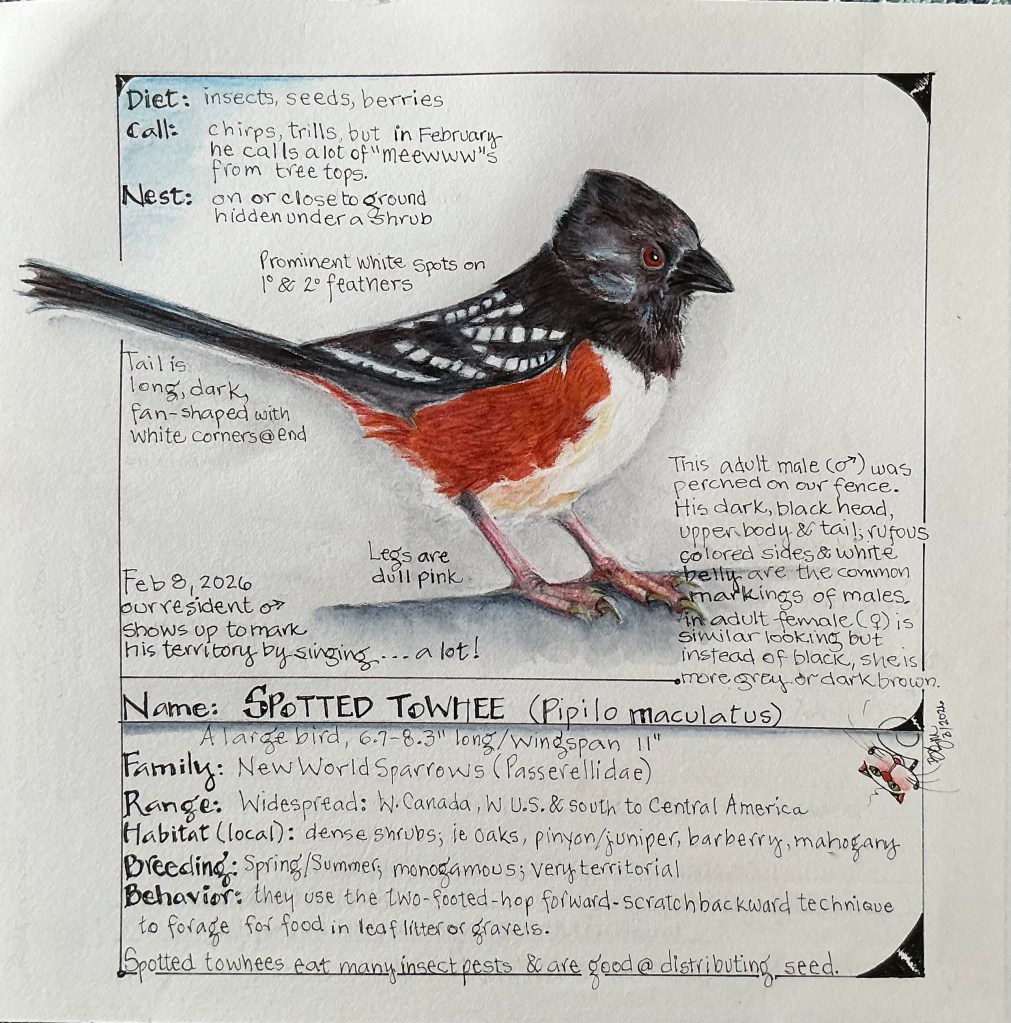
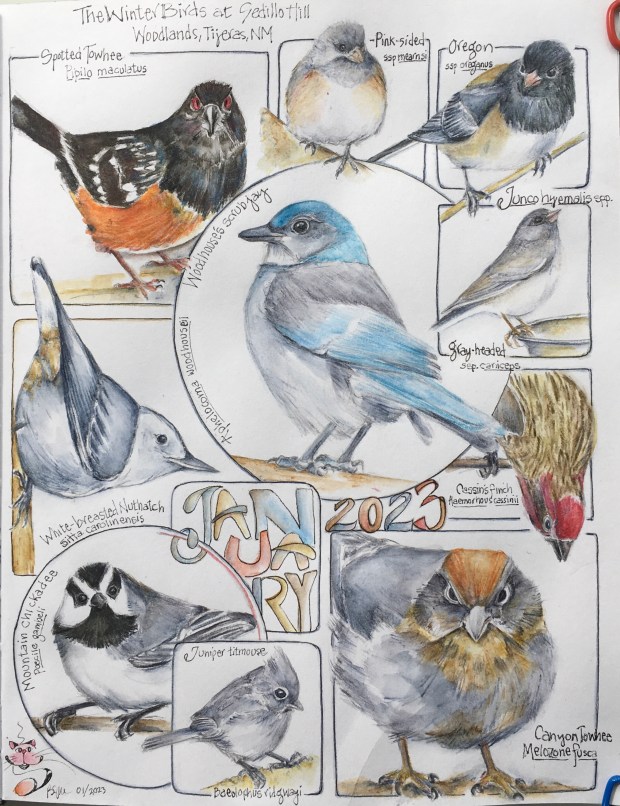
Spotted Towhee (Pipilo maculatus)
Here’s one of my favorite birds that’s a regular visitor to our yard. Spotted towhees, especially the males, are year-round residents throughout most of New Mexico, which means they breed in the shrubby vegetation surrounding our home. In our area, males sing at the crack of dawn until late afternoon beginning in early February. Instantly recognizable, their beautiful songs carry far and wide. Their songs not only signal to their mate it’s time to pair up again (spotted towhees are monogamous), they also let other male competitors know they’re horning in on his territory.
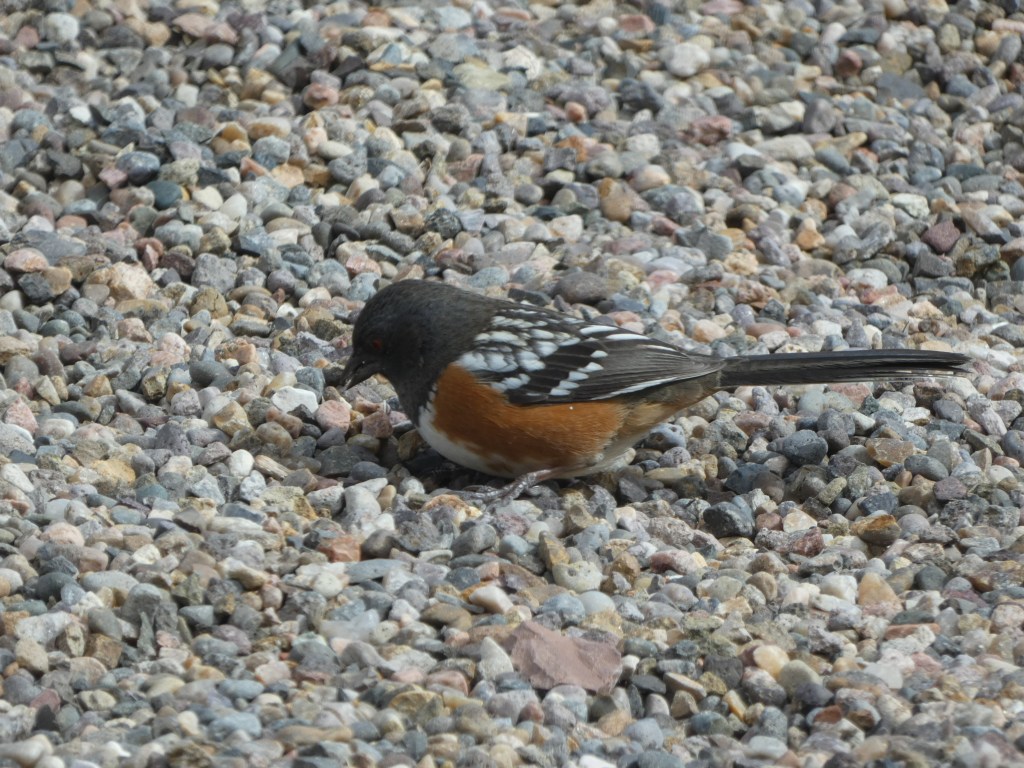
With favorable weather and abundant food, spotted towhees can produce two clutches of chicks during the breeding season. Their ground nests are hidden so well under a dense oak that I’ve never been able to find one. But it’s a lot of fun to watch clumsy fledglings trying to master the “two-footed-hop-forward-scratch-backward” forging technique all spotted towhees use to uncover hidden bugs and seeds.
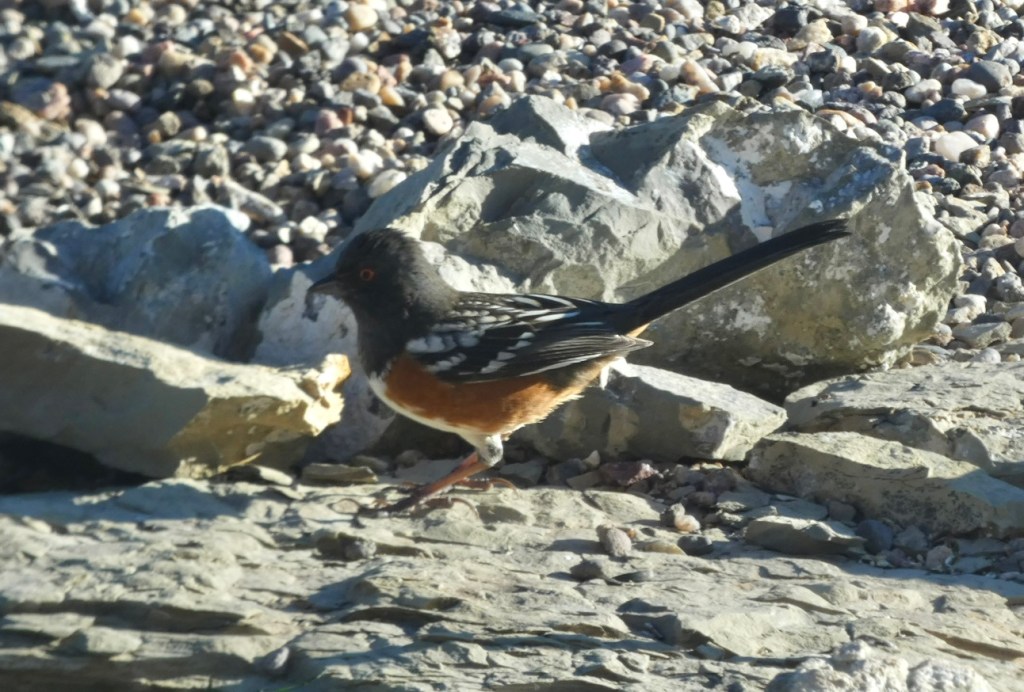
Fun Facts
- The spotted towhee and the eastern towhee were considered to be the same species called the rufous-sided towhee until 1995.
- Male towhees have been recorded spending 70% to 90% of their mornings singing during breeding season.
- Once a male mates, he only spends about 5% of his time singing.
- It’s thought that the spotted towhee’s white spots are a form of camouflage.
- Spotted towhees will sun themselves by lying on the ground feathers spread.
- They will bathe in the dew or fog that has collected on vegetation.
- Nesting females have been seen running away when disturbed rather than flying.
- A group of towhees is called a “tangle” or a “teapot.”
- When two towhees fight, one bird will pick up a piece of twig and carry it around as a sign of submission.
- Their bright red eyes act as a visual signal during the breeding season, standing out in their dark, shady, ground-level habitats.
Do spotted, canyon, green, eastern or any of the towhee species visit your yard?
Hope you enjoyed this post! Thanks for stopping by!
References
https://peecnature.org/learn/nature-guides/featured-critters/spotted-towhee/
 a curious nature