Great Mullein – Page 16 .. The 100 Day Project (2026)

August 19, 2026

If you’ve ever passed by a barren field, a somewhat rocky yet gentle slope, or a roadside waste area and noticed one or maybe many more very tall stems rising from a rosette of large fuzzy leaves, you were likely looking at Great Mullein (Verbascum thapsus), a non-native biennial plant of the Figwort family. Standing out as sentinels on landscapes across the U.S., this now-naturalized1 species was intentionally brought to North America by early European colonists in the 1700s primarily for its medicinal properties and as a fish poison.

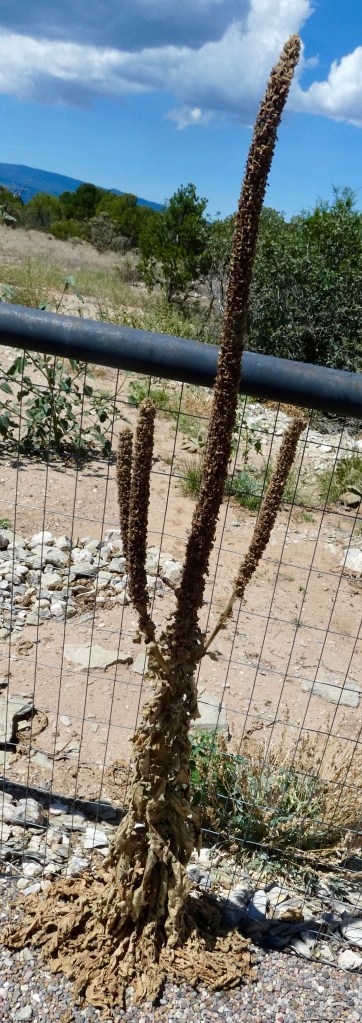
Two years ago while wandering down the “Trash Can” trail, just below the little rocky earthen dam stood an 8-foot tall Great Mullein. This wasn’t just any ordinary mullein though. The top 2 feet of the flower stalk was crowned with one of the most uniquely contorted, bent and folded mullein crests I’d ever seen. Magnificent!
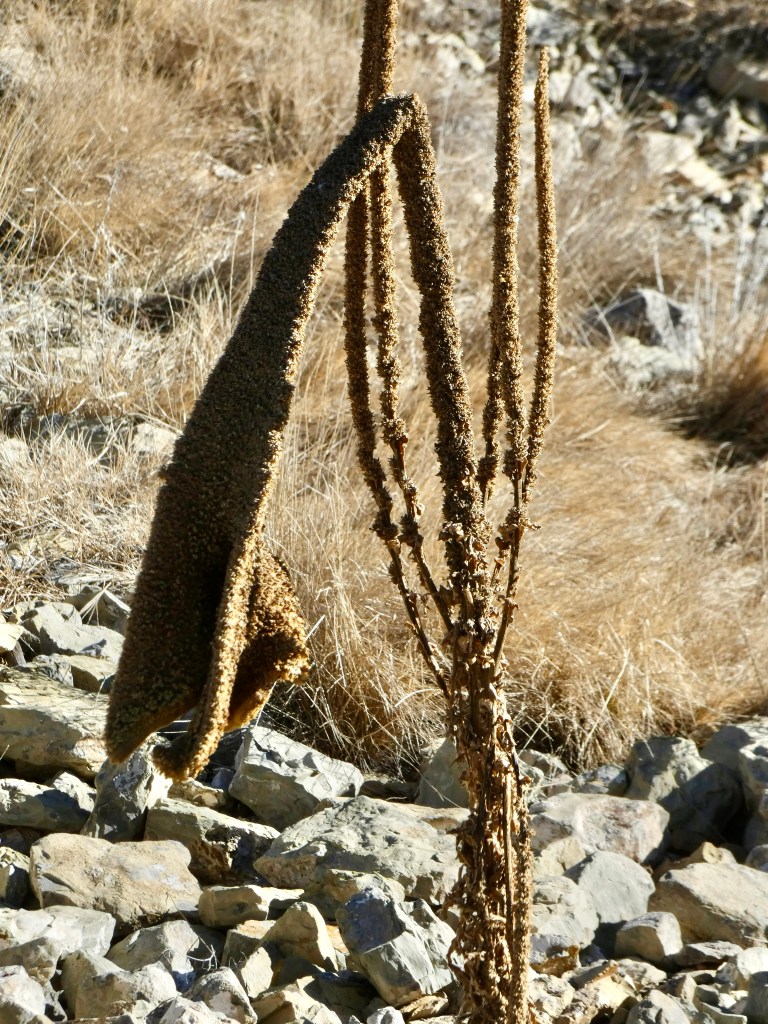
The “Trash Can” trail Great Mullein plant (long dried) with a very large, deformed flower stalk (a fasciation) that had bent from excessive weight.

The top-heavy mass, supporting scattered flowers and many hundreds of growing seed capsules had begun to dip and sway dangerously in the light Fall breeze. While watching and wondering what cause(s) of this rare and exaggerated growth, known as a “fasciation,” the heavy stalk moaned (really!). All I knew on that morning along that trail was that the stalk’s lean would soon take the entire plant to the ground. 
Rushing to the rescue, I grabbed onto the lower third of the stalk, hoping to somehow rotate the top 180°. It was at that moment, when nothing moved, I realized just how heavy that flower stalk was. Then, as my eye blinked only once, the upper 2/3rds of the plant broke and came crashing down …… fasciation and all!
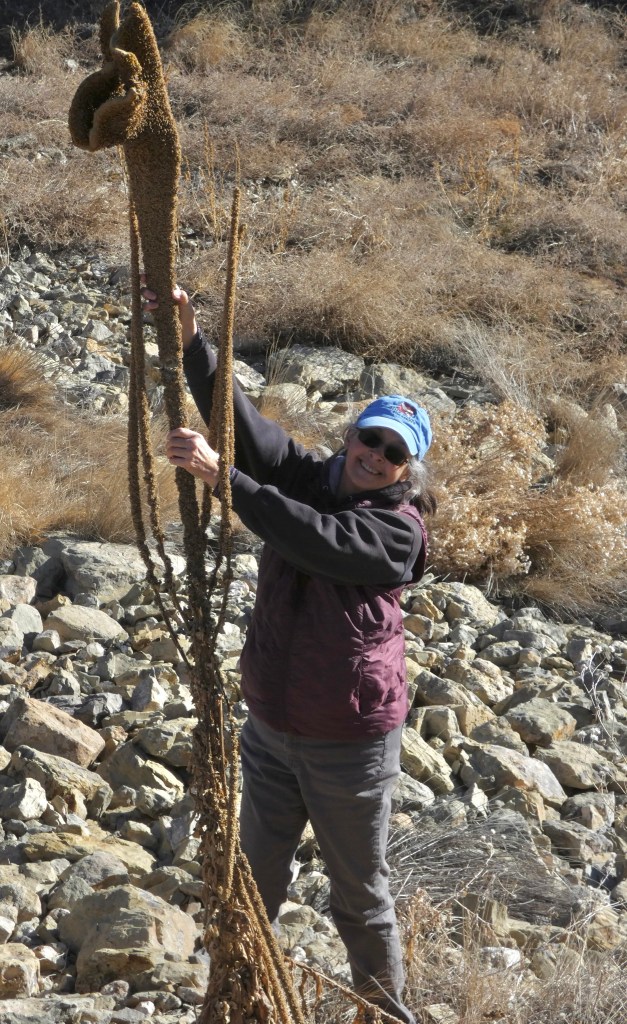
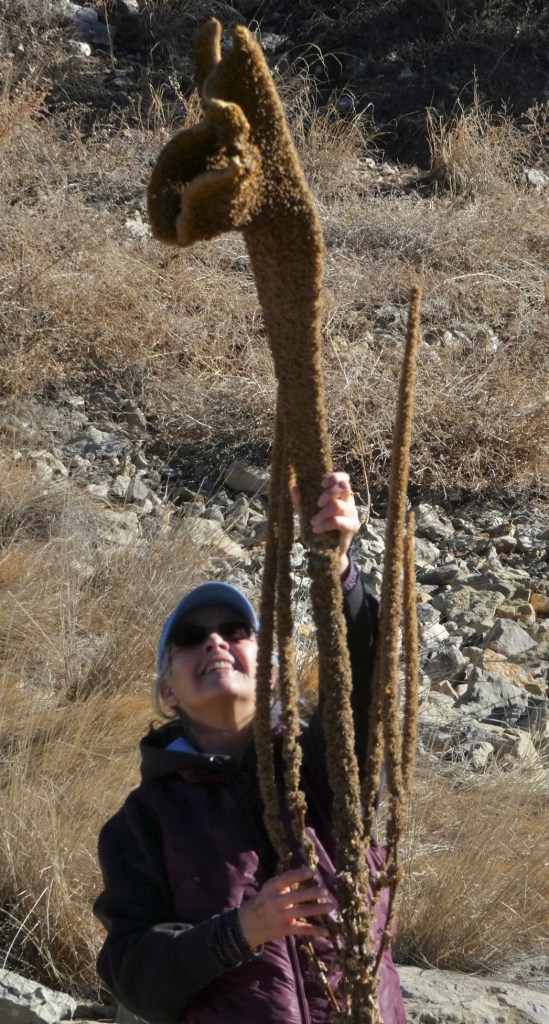
Lying on the ground in a heap (mullein pieces, not me), Plan B began to materialize. Here was my chance to learn if Great Mullein “fasciates” genetically. So I collected the still-intact contorted and folded crown with its many ripened seed capsules, and proudly carried it home where it spent the upcoming winter hanging out in a 5-gallon bucket while the seeds dried, became dormant, and experienced a natural dormancy-breaking winter, preparing them for Spring planting. So certain was I that my mother plant had passed her “fasciation genes” on to her seeds, that the flowering plants of her progeny would fasciate too. 
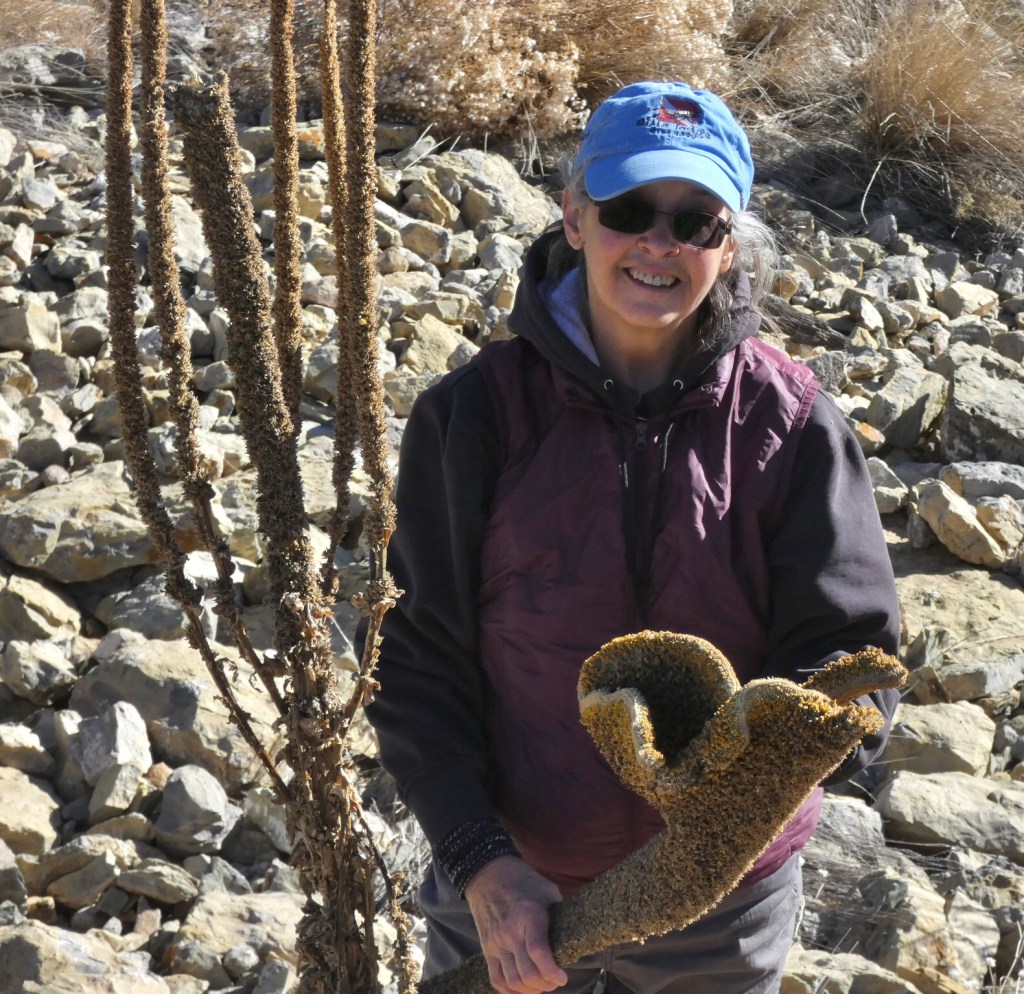
All my efforts were in vain ….. eventually the fasciated top of the flower stalk broke and crashed to the ground.

(Here’s an excerpt from my garden journal)

Spring 2025 ….. many minute seeds were scattered about our back yard.  

Summer 2025 ….. 8 seeds germinated into petite 1st year rosettes 

Winter 2025-2026 ….. 7 rosettes were robust enough to survive the winter

Late Spring 2026 ….. all 7 rosettes bolted, and flower stalks began growing; no sign of fasciation

Mid-Summer 2026 ….. woke one morning to find 3 had died — cause unknown (did they get too much hand watering?); only 4 flowering plants still alive; no sign of fasciation; Ladder-backed woodpeckers feasting on something inside countless seed capsules (some kind of insect?). (You can read about my mulleins’ visits from Ladder-backed Woodpeckers in my June 8, 2026 post here)
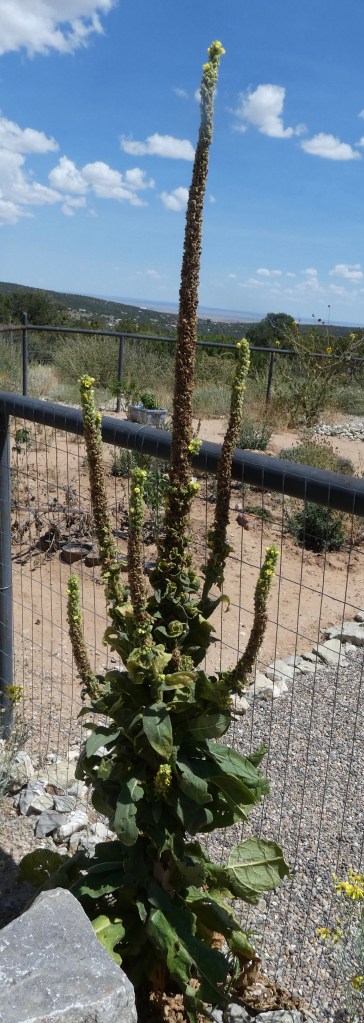
Of all the plants in our yard growing tall, with multiple flower stalks, this is the only one remaining alive at the time of this post.

Late-Summer 2026 ….. only 1 flowering plant still alive, still flowering, still plumping up seed capsules that are still feeding hungry woodpeckers (there’s so many capsules, they aren’t opening them all, so there may be seed left over for the next generation?)

Fall 2026 ………………. 

Thinking back on the last two years, it seems I have a slight case of Mullein Madness, judging from my apparent obsession with the fasciation (fascinating) characteristics of Great Mullein,Verbascum thapsus! If that’s as weird as contorted flower stalks, so be it. I’ll confess to this tho….. many happy hours were not only spent watching my mullein grow, but in combing the literature and published research in search of answers to my questions while learning so much about such a remarkable plant. 

Apologies in advance, but after reading the rest of this post (which is quite verbose), you too might just catch a case of Mullein Madness!
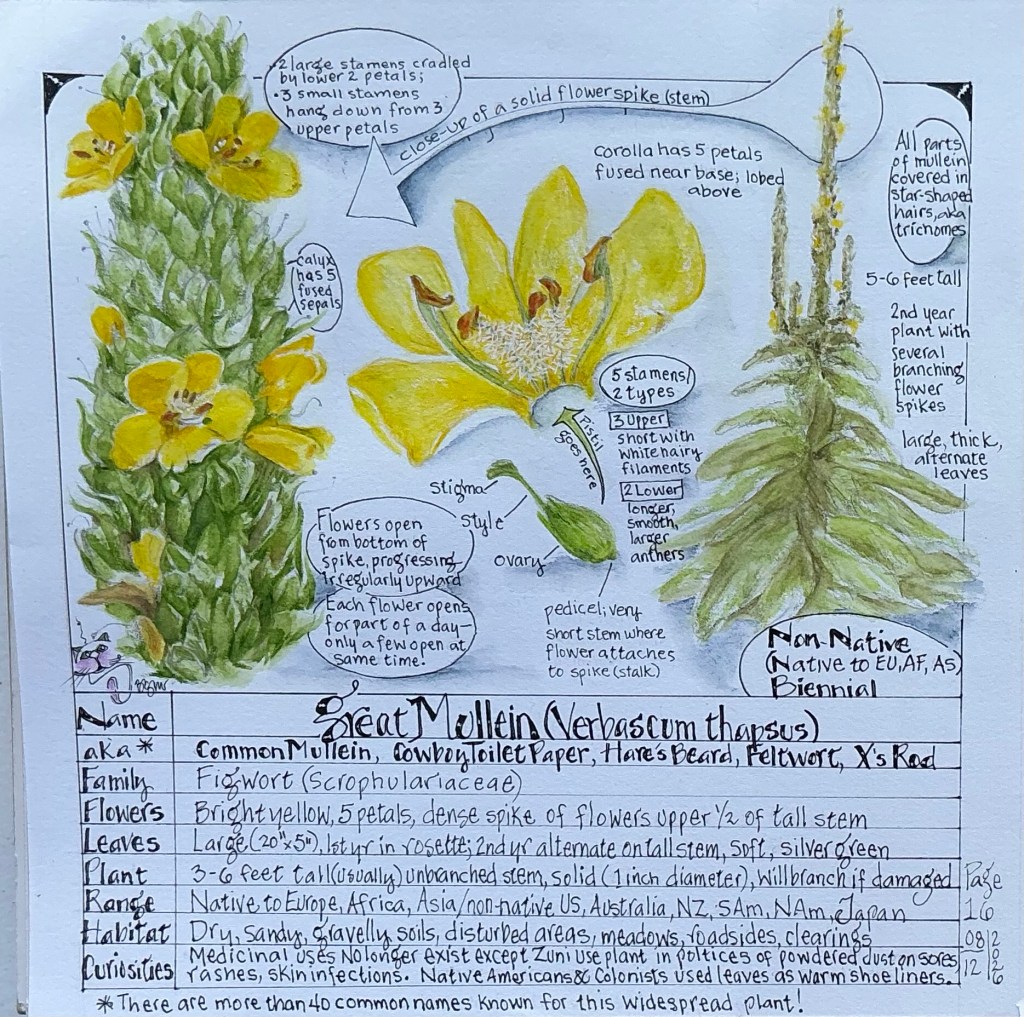
Great Mullein (Verbascum thapsus)

—aka—

 greater mullein, common mullein, mullein dock, cowboy toilet paper, hig candlewick, Indian rag weed, bullock’s lungwort, Aaron’s-rod, hare’s-beard, ice-leaf feltwort, velvet dock, and flannel; woolly, velvet and blanket mullein; beggar’s, Moses’, poor man’s, Our Lady’s and old man’s blanket

Home, Sweet Home

Native to Europe, North Africa and Asia, Great Mullein is an introduced (a non-native) species in the Americas, Hawaii, Australia, New Zealand, and parts of Japan.  

In the U.S., Great Mullein was imported very early in the 18th century and cultivated for its medicinal and Piscicide2 properties. By 1818, it had begun spreading so much that everyone thought it was native. By 1839, the species had spread as far west as Michigan; by 1876, it was growing in California. Today, Great Mullein is common in all 50 states. In Canada, it’s common in the Maritime Provinces, southern Quebec, Ontario and British Columbia, with scattered populations in between.

Happiness Was Watching My Mullein Grow

Life cycle: Great Mullein, a biennial (requiring two growing seasons to complete its entire life cycle), needs a winter dormancy period to flower. During its first year, a seed germinating in the spring or early summer develops a showy rosette of large leaves that grows from a taproot. After overwintering, the second year’s growth begins when a solid 1-inch diameter woody stem emerges from the rosette. This single pole-like stem, that can extend 6 feet tall or more, is covered in alternately-arranged leaves along the lower third of its length, becoming completely surrounded with a dense grouping of small flower buds that randomly bloom throughout the summer. Typically, only one stem forms, but if damaged during growth, branching may occur. After flowering and seed release the flower stalk(s) dries up and remains covered in dried brown seed capsules. Dried stalks and any seeds not scattered during fall may persist into the following spring or summer.

Habitat: Great Mullein grows in a wide variety of habitats, but thrives on well-lit disturbed soils, open meadows, and arid or overgrazed rangelands. Viable seeds, that can persist in the soil for hundreds of years, rapidly germinate in the spring soon after the ground warms up. While the mullein can also grow alongside existing plants, growth of the rosettes on bare soil is four to seven times more rapid than under vegetated conditions.

Flowers: Beneath the flower’s corolla (petals) is the deeply lobed, green calyx consisting of 5 hairy, triangular-shaped sepals. The bright golden-yellow saucer-shaped corolla (0.6–1.2 in) is formed from 5 slightly unequal petal lobes that are fused at the base. Attached on top of the petals are 5 stamens of two types: three shorter upper stamens covered in yellow/whitish hairs, and two longer lower stamens that are smooth. The pistil at the center of the flower consists of a superior ovary, a single slender green style, and a two-lobed stigma.  Flowering lasts up to three months from early to late summer. Flowers begin blooming from the bottom of the tall stalk (spike) and progress irregularly upward. Each flower opens for part of a day and only a few open at the same time around the stalk. They typically open before dawn and close in the afternoon.
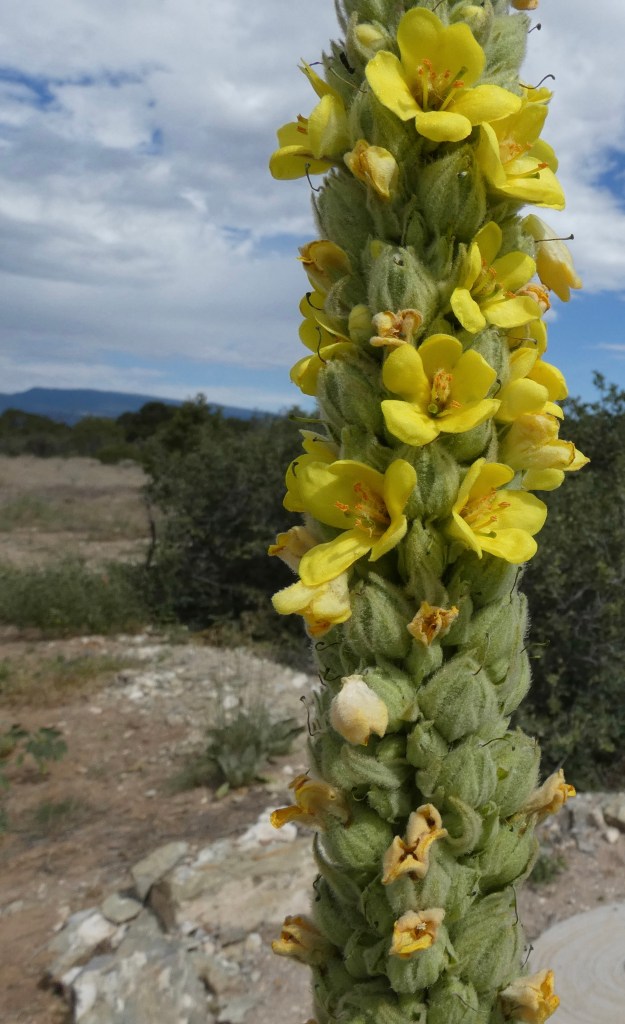
Great Mullein flowers. The lower flowers had closed the day before.

Pollination and Pollinators: Flowers are able to self-pollinate if they haven’t been pollinated by insects during the day. Even though many insects visit the flowers, only certain bees actually get the job done (such as halictid bees (usually dark black or brown, often metallic appearing sweat bees). Birds foraging for insects, such as the white-headed and ladder-backed woodpeckers, are known to feed from the seed capsules covering the flower stalk.

Seeds: Each tiny (<0.04 in) brown Great Mullein seed is marked with longitudinal ridges. Each flower produces a small, ovoid (0.24 in) capsule full of seeds that splits open with two valves when mature. Each plant produces hundreds of capsules that contain up to 700 seeds apiece, totaling anywhere between 180,000 or 240,000 seeds/plant. Seeds germinate in spring and summer on bare soil (or very close to the soil surface) when exposed to light, at temperatures between 10 and 40°C (50 and 104°F).

The seeds are generally too small for birds to feed on, although the American goldfinch has been reported to eat them.

(See the following section for more on seeds.)

Did You Know ………

They Call it Fasciation! If you’re familiar with Great Mullein, you may have noticed some flower stalks don’t always grow straight and tall. For some reason, some tops form weird shapes that may be flat or compressed, folded or ribbon-like, bulbous or crested. These plants have grown what’s called a fasciated flower stalk, the result of a rare developmental mutation. Scientists studying these unusual growths are trying to learn what triggers fasciation, but it remains a mystery.  They have, however, identified several potential vectors that may disrupt normal growth:
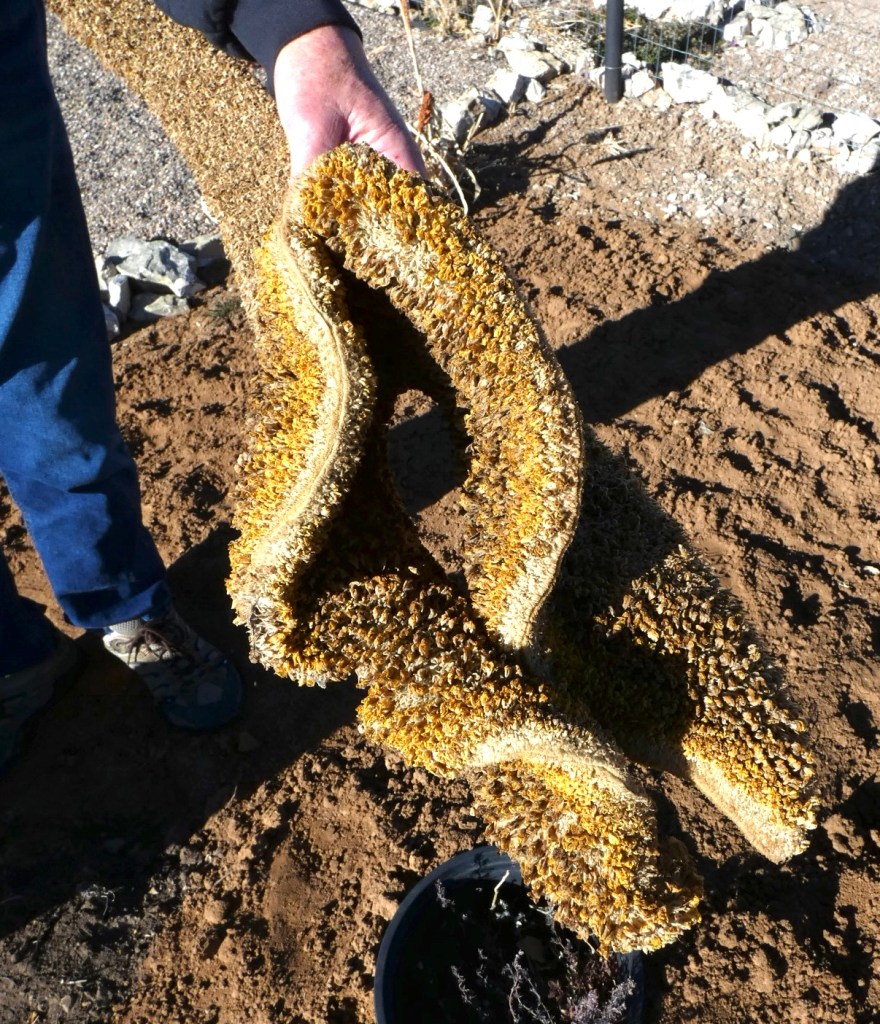
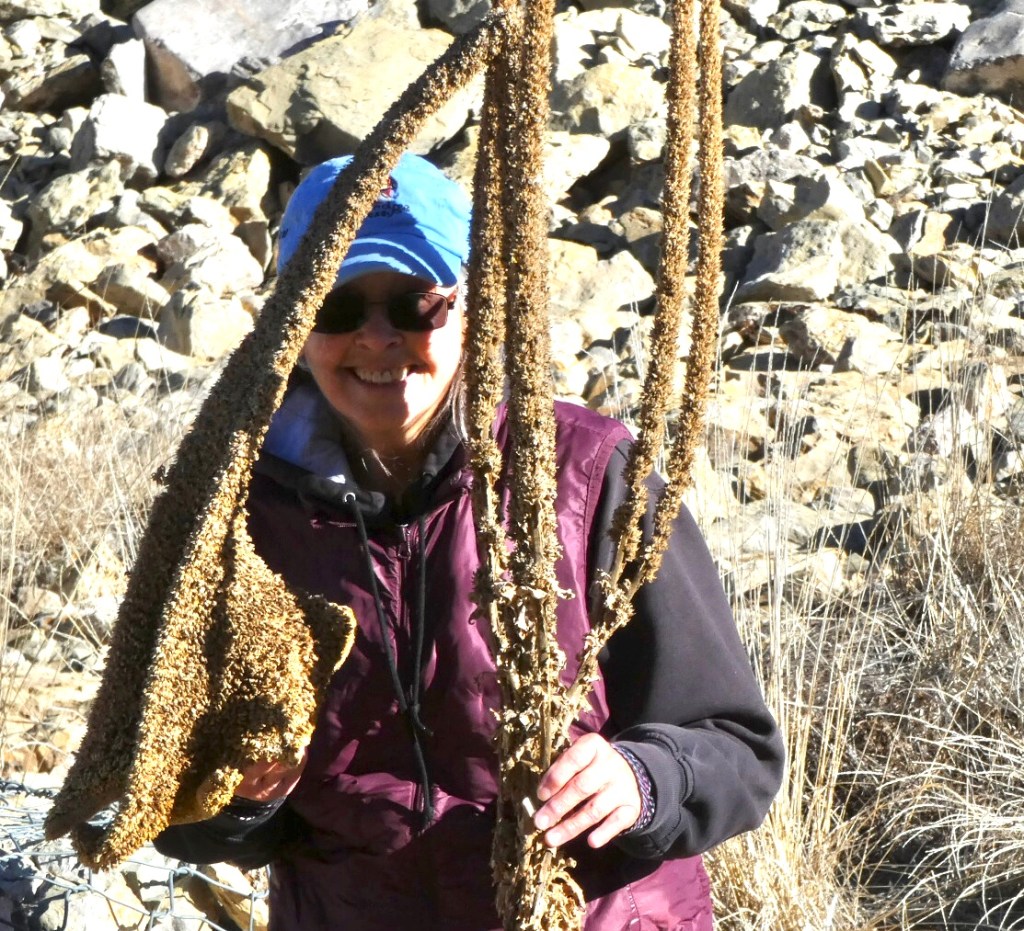
Roy holding the fasciated end of the “Trash Can” trail Great Mullein.

  • Pests and pathogens: Insect feeding, mite activity, or bacterial infections (like Rhodococcus fascians) can damage or trick the growth tip into abnormal widening, though some field tests found their presence on fasciated mullein as well as on normal plants.
  • Environmental stress: Severe weather shifts, frost, or chemical/herbicide exposure during early stalk development may shock the growing tip into expressing fasciation.
  • Physical injury: Mechanical damage to the growing tip is known to disrupt normal elongation, though specific studies carried out on some Great Mullein plants noted that physical damage actually reduced or did not trigger fascination.

And Now! Everything You Wanted to Know About Great Mullein Seeds

Did you know ….. some seeds that germinate in autumn may jeopardize the life of the plant? Rosettes getting a late start must grow to at least 6 inches in diameter or they are likely to die in winter. Regardless, all first year plants that do survive overwintering and go on to complete their life cycle, die at the end of their second year, with some exceptions. Under the best growing conditions, some individuals flower in the first year, only to die the same year. And some individuals, especially in the northern parts of the range, require a longer growing period and don’t flower until their third year. Curiously tho, three-year plants often produce fewer seeds than biennial and annual ones. While year of flowering and size are linked to the environment, most other characteristics appear to be genetic (fasciation is an example).

Did you know ….. decades-old seeds can readily sprout from bare ground, or after forest and range fires, long after Great Mullein plants have died. This ability to quickly grow or even colonize disturbed areas may provide some soil stability, but it does interfer with the natural succession of native species. 

Did you know ….. seeds don’t disperse far from a Great Mullein flower stalk? This means plants rarely establish in new areas without human intervention. Seeds scatter naturally when winds or animals move the stem causing 75% of the seeds fall within 3 feet of the parent plant; 93% fall within 15 feet.

Did you know ….. seeds are in the fossil record? Oh My! Discoveries of Great Mullein seeds have been reported from several important geological areas on the British Isles, including:

  • Cromer Forest Bed geological formation (Early to the early Middle Pleistocene [2 to 0.5 million years ago]) located in coastal areas of the Norfolk region of England; 
  • West Wittering in Sussex in fossil-bearing clay formed during the Eocene epoch around 46 million years ago; and the
  • Ipswichian interglacial layers falling within the Middle Paleolithic period 130,000 to 115,000 years ago.

Great Mullein Plays Host to Many Visitors

The Good, the Bad, and the Questionable Pests and Beneficial Insects, and Diseases

Represented by 29 different families!

Pests: The majority are western flower thrips (Frankliniella occidentalis), Lygus species such as the tarnished plant bug (L. lineolaris) and various genera from the spider mite family (Tetrantchidae).  Other common insects that feed exclusively on Verbascum spp. in general or V. thapsus (Great Mullein) in particular are: mullein thrips (Haplothrips verbasci), mullein moths (Cucullia verbasci), and common stalk borer moths (Papaipema nebris).

Beneficial Insects include predators, pollinators and specialized herbivores, such as:
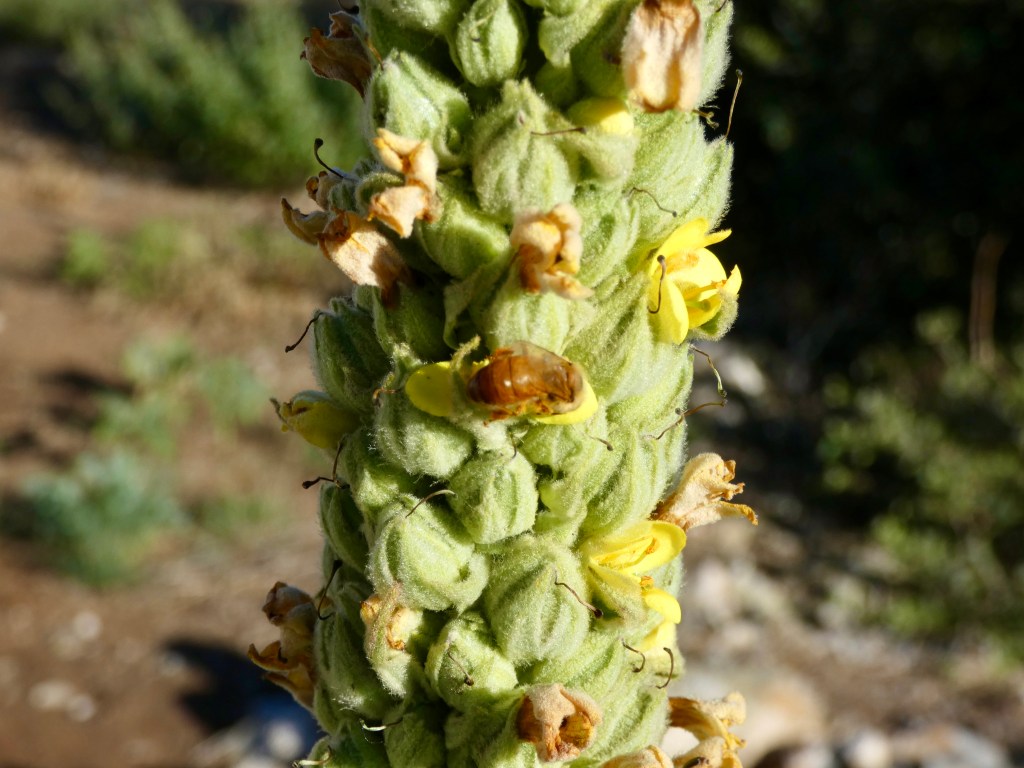
Honey bees were busy collecting pollen and nectar from my Great Mullein flowers. The flower stalks were a-buzz every morning and into early afternoon when the flowers were open.
  • Mullein plant bug (Campylomma verbasci) is hosted primarily in summer and permitted to feed lightly on the plant while actively preying on orchard aphids, mites, and thrips.
  • Leaf bug (Dicyphus hesperus) is hosted year-round as its primary habitat and food source in return for helping to manage greenhouse and agricultural pests like whiteflies and spider mites.
  • Minute pirate bug (Orius tristicolor) hosted solely as a platform to hunt thrips and other small pests on the foliage.
  • Predatory mites (Galendromus, Typhlodromus and Amblyseius spp.) hosted year-round on plant surfaces to hunt harmful plant-feeding mites.
  • Wool carder bees (Anthidium species) hosted as a casual visitor for purposes of gathering the dense, soft/woolly hairs from the plant’s leaves to line their nesting chambers.
  • Bumblebees, honeybees, hoverflies, butterflies hosted as frequent drop-in visitors throughout the growing season to gather abundant nectar and pollen from the flowers in return for pollination services. Special accommodations are always arranged for the following members of this visitor group known to successfully pollinate the flowers —  generalist short- and long-tongued bees, including certain bumblebee species (Bombus spp.), honeybees (Apis mellifera), and assorted solitary bees (small native, wild bees).
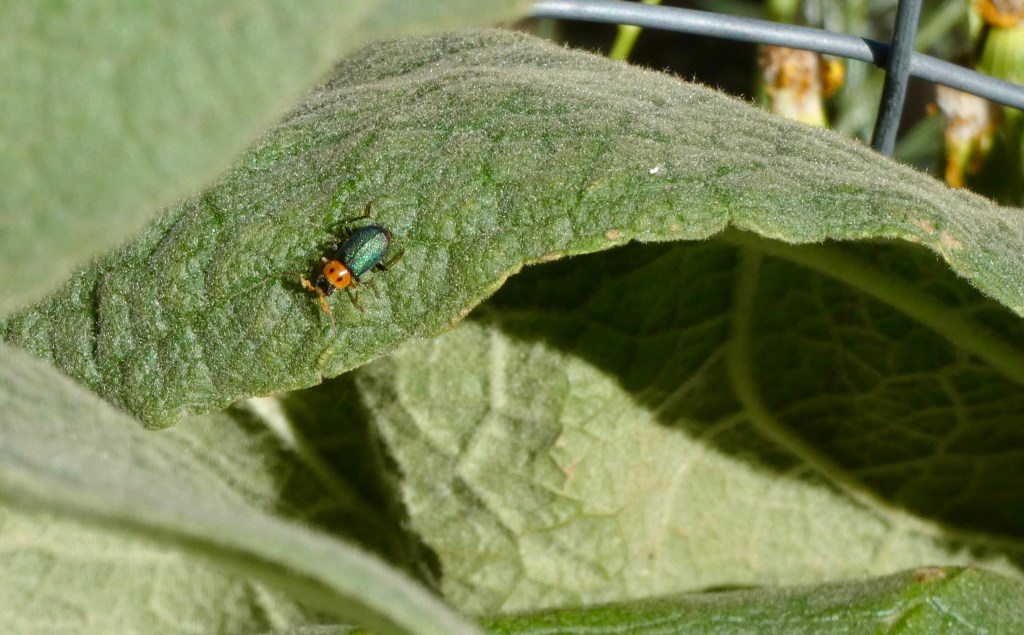
This colorful beetle is two-spotted melyrid (dollops bipunctatus), a predatory insect on mites, aphids and other harmful insects. They were common on the huge leaves on my Great Mullein plants.

Diseases reluctantly hosted by Great Mullein include cucumber mosaic virus — the cucurbit powdery mildew (Erysiphe cichoracearum), and root rot (Phymatotricum omnivorum), along with Cercospora verbasciola; Phoma thapsi; Phyllosticta verbaciola; Heterodera maroni; Meloidogyne sp.;  Mycosphaerella verbasciola; Ramularia veriabilis; Septoria verbasciola; and Oidium pyrinum.  These microorganisms not only impact the health of the host, but may impact other desirable plants in the area.

A Confusingly Questionable Insect — 

The Voracious Mullein Seed-Eating Weevil
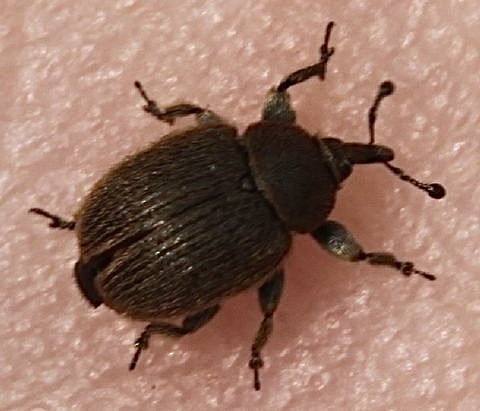
A mullein seed-eating weevil adult. They were found everywhere on all the mullein plants in the yard. Very small weevils made the plant looked like it had been covered in very fine pepper!

Great Mullein was clearly tricked into hosting the mullein seed-eating weevil (Rhinusa tetra syn. Gymnaetron tetrum) by this demure, sometimes brown to nearly glossy-black beetle that promised to nibble only on leaves and a few seed capsules for the entire 45 days of its adult life. Little did mullein know that this weevil was hiding a secret. When it came to the end of her days (coinciding with flower blossoming) there was only one thing left to do … deposit all 150-200 of her fertilized eggs, two-by-two, into as many flowers as possible, she does this for over an 11-day period, and then she dies. But about 1 week following egg laying, the eggs hatch into larvae (grubs) and commence consuming most of the ~700 seeds in the growing seed capsule. When they’ve about exhausted their food supply, the larvae pupate and finally emerge as adults ~25 days later. The adults remain on the host mullein, munching uninhabited seed capsules and leaves, for 45 days until the next batch of females lays their next batch of eggs, and on it goes, until …..  when the growing season winds down and winter begins to blow in, adult weevils that haven’t completed their life cycle will tuck into a dried seed capsule and hibernate. And larvae that have entered the pupa stage of their lives will remain as such, overwintering until late spring when warmer weather triggers completion of their metamorphosis and the adults can safely emerge, ready to begin feeding on 2nd year flowering mullein. 

Weevil Interlude

The mullein seed-eating weevil was accidentally introduced from Europe in 1876, to control the spread of Great Mullein. But back then and for many years following, the weevil was never intentionally used for that purpose. It happened “naturally” as the weevil spread throughout North America, making its living on Verbascum spp. it found on its journey. In more modern times, and because the weevil was never formally cleared as a released biological control agent, local land management and weed programs (such as in parts of the Pacific Northwest and Wyoming) informally recognize it as an already-established bio-agent since its larvae feed extensively on the seeds of Great Mullein.  In some regions where the plant is a designated noxious weed, the weevil is viewed as a helpful naturalized helper; in other states—like Colorado—it remains unapproved for intentional release due to a lack of formal ecological impact studies.
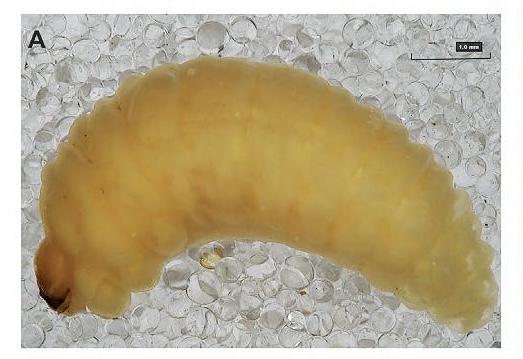
The larvae of the mullein seed-eating weevil. By researching the Great Mullein, I learned it was these grubs the Ladder-backed woodpeckers were picking from seed capsules.

Bumper-to-Bumper Weevil Interlude

It seems that using a non-native insect to control a non-native plant is effective in significantly reducing the number of Great Mullein’s viable seeds to limit the plant’s spread.  It is also a risky strategy, as many biological slip-ups have occurred in the past when a population of an introduced insect, having depleted its targeted food supply, develops an appetite for other, desirable-to-native-species plants. So far in the U.S., the mullein seed-eating weevil has only feasted on seeds of two Verbascum species—the Great Mullein (its clear favorite) and the equally-alien Moth Mullein (V. blatteria). Because the population of egg-laying adult female weevils doesn’t have enough eggs to lay in all of the hundreds and hundreds of mullein flowers, it’s probably unlikely they will run short of food in the near or far future.    

To Weed, or Not To Weed

And What to Do With Unruly Great Mullein

In all areas where Great Mullein has been introduced, it’s recognized as a weedy species. Considered Invasive3 across much of the U.S., Great Mullein is a state-listed Noxious4 weed in Colorado and Hawaii, and in several counties in Wyoming, Nebraska and Montana.  In these states it aggressively crowds out native plants in dry or open ecosystems. 

In other areas of the U.S., opinions on the ecological impacts of Great Mullein vary. Some land managers primarily view it as a short-lived pioneer species on heavily disturbed ground that eventually fades as native vegetation recovers; others classify it as a persistent invasive weed based on its seed longevity. Where agricultural crops are grown, impacts are generally considered minor — the ability of Great Mullein to outcompete most crops is limited because it’s shade intolerant and doesn’t survive tilling. Where it may become invasive, individuals are easy to remove by hand, even though populations are difficult to eliminate permanently.

Control Measures that Work: Mechanical methods that control the growth and/or spread of Great Mullein are the most effective. The best means is by hand pulling and hoeing, preferably followed by sowing of native plants. Regular cultivation is known to be adequate for the control of mullein. Tractor-mounted mowers or scythes can be used to trim the plants when they begin to flower. Repeated mowing prevents the flower stalk from bolting, but if mowing is discontinued then the plant will bolt and produce flowers anyhow.
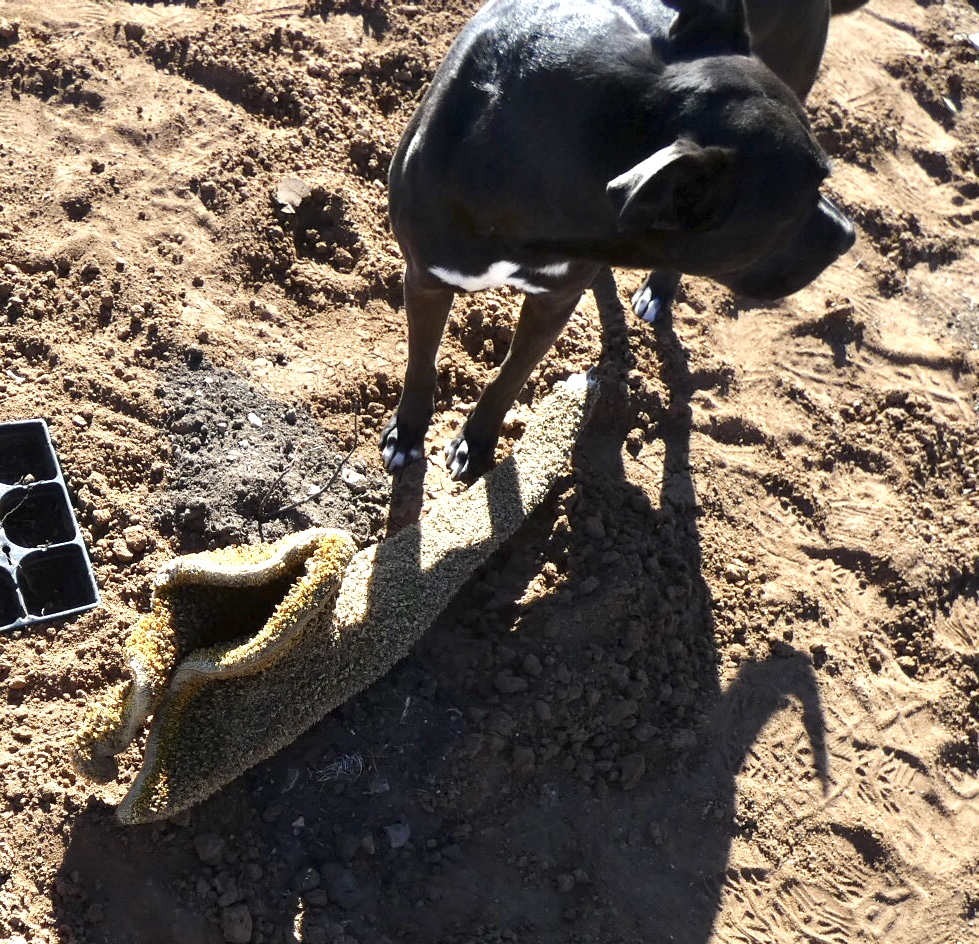
Luna standing next to the rescued fasciated flower stalk, keep watch for thieves!

Not Worth the Time or Effort: All parts of the plant are covered in dense, star-shaped hairs (trichomes). Cattle and sheep avoid grazing the plant because biting into these hairs is irritating. Goats may find the plant edible, but studies are inconclusive. Use of contact herbicides is impractical since the hairs cause the liquid to roll off. Ground herbicides when taken up by the roots will damage or kill the plant, won’t kill seeds stored in the soil from previous years, and also denude the ground creating ideal conditions for growing more mullein. It would take decades of annual applications to slow, let alone prevent, new plants from growing. The use of seed-eating chickens has been proposed for mullein control, but has not been studied.

Multi-Use Mullein

Although commonly used in traditional medicine, today there are no FDA-approved drugs made from Great Mullein. Non-medicinal uses, past and present, are curiously varied. 

Traditional Medicine

  • Dioscorides, an Ancient Greek pharmacologist and botanist, first recommended Great Mullein 2000 years ago as a folk medicine for pulmonary diseases. Leaves were smoked to attempt to treat lung ailments, a condition that in America was rapidly transmitted to Native American peoples. 
  • The Zuni used the plant in poultices of powdered root applied to sores, rashes and skin infections. An infusion of the root was also used to treat athlete’s foot. Any preparations meant to be drunk had to be finely filtered to eliminate the irritating hairs.
  • Oil from the flowers was used against catarrhs (inflamed mucous membrane(s) in an airway or body cavity) colics, earaches, frostbite, eczema, and other external conditions. Topical application of various V. thapsus-based preparations was recommended to treat warts, boils, carbuncles, hemorrhoids, and chilblains. The plant has been used in an attempt to treat colds, croup, sunburn, and other skin irritations. 
  • Great Mullein (V. thapsus) was in the United States’ 4th edition of the National Formulary from 1916 – 1936, stipulating that fluid extracts of dried leaves and flowers of the plant was approved as a pharmaceutical drug.

Otherwise Practical and Curious Uses

  • Roman soldiers are said to have dipped the flower stalks in grease for use as torches.
  • Romans extracted a yellow dye from the flowers to color women’s hair.
  • In some cultures, leaves have been used as wicks. 
  • Native Americans and colonists lined their shoes with the plant’s leaves to keep out the cold.
  • As with many plants, Great Mullein was linked to witches, although the relationship remained undefined. At the same time, the plant was also widely believed to ward off curses and evil spirits. 
  • As mentioned earlier, the seeds, which contain saponins, glycosides, coumarin and rotenone, are toxic to fish and have been widely used as piscicide since the plant’s introduction to the U.S. in the 1700s. Settlers threw the seeds and even the leaves into slow-moving water, allowing the chemicals to spread and stun the fish, causing them to float to the top making them easy to catch.
  • In modern times, Great Mullein is treated as an ornamental plant.
A first-year rosette turning into a 2nd year flowering plant.

Etymology

From the Greek word etymon, meaning 

“literal meaning of a word according to its origin”

Scientific Name: Verbascum thapsus

Genus Verbascum: Originally described by Carl Linnaeus in 1753, Verbascum was derived from the classical Latin verbascum, used for the plant by Pliny the Elder (CE 23-79), Roman author, naturalist, scientist, etc. However, the word “verbascum” was widely believed to be and accepted as a corruption of “barbascum,” from “barba” meaning “beard.” The genus name Verbascum, back then (as it does today), refers to the dense, hairy coating on the leaves and the bearded appearance of the plant’s stamens.

Species (specific epithet) thapsus: First used by Theophrastus (BC 371-287), Ancient Greek philosopher and naturalist, for an unspecified herb from the Ancient Greek settlement of Thapsos, near modern city of  Syracuse, Sicily ….. OR ….. it may have come from the ancient Tunisian city of Thapsus. 

A first-year rosette turning into a 2nd year flowering plant. Would these huge leaves make excellent shoe liners!?

Common Name: Great Mullein

“Great” was used in the plant’s common name to distinguish it from other more diminutive plants of the same genus Verbascum. “Great” refers  to the plant’s tall stature.

 “Mullein” evolved from Middle English “moleyne,” by way of the Anglo-French word “moleine,” which came from the Latin root “mollis,” meaning “soft.”

…………………………………………………………………………………………………

Wake up Now! Unless you’ve caught a case of Mullein Madness Fever!

Regardless, hope you found this interesting!

(I promise to write a shorter post next time)

As always, thanks for stopping by!
The End!

1 Naturalized – a non-native plant species brought from other regions that now reproduces and spreads on its own without human help, but doesn’t aggressively overrun native habitats.

2 Piscicide – a chemical substance that’s poisonous to fish. Piscicides are primarily used to eliminate a dominant species of fish in a body of water, done as the first step in attempting to populate the water body with a different fish species. They are also used to combat parasitic and invasive species of fish.

3 Invasive – a non-native species introduced to a new-to-it ecosystem where it spreads rapidly, outcompetes native species, and causes economic or environmental harm. Because it lacks natural predators or diseases in its new home, it easily takes over natural habitats, yards, farms, etc.

4 Noxious – any plant legally designated by a government agency as harmful to agriculture, public health, wildlife, or property. These plants grow aggressively, spread fast, and lack natural controls. While many are non-native invasive species, some native plants can also be classified as noxious if they cause severe damage.

References
ag.colorado.gov

botanical.com

botanical-online.com

britannica.com

cabidigitallibrary.org

discoveringfossils.co.uk

extension.oregonstate.edu

herbalgram.org

iNaturalist.org

iucngisd.org

npsot.org

pmc.ncbi.nlm.nih.gov

pnwhandbooks.org

sciencedirect.com

southwestdesertflora.com

starrenvironmental.com

uwm.edu

wikipedia.org

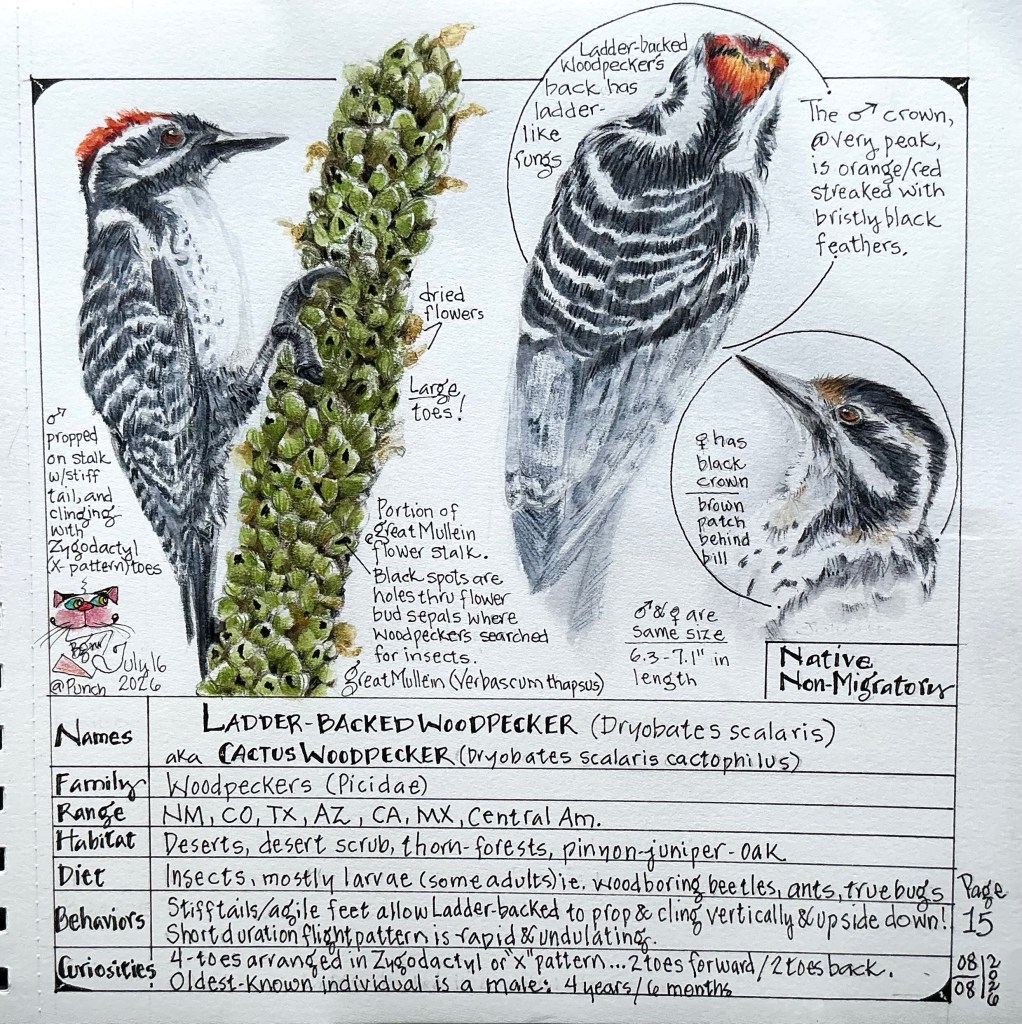
Ladder-backed Woodpecker – Page 15 .. The 100 Day Project (2026)

August 10, 2026

Ladder-backed Woodpecker (Dryobates scalaris)

aka Cactus Woodpecker (Dryobates scalaris cactophilus)

Such dashing little birds, Ladder-backed Woodpeckers are fairly common along the trails of the Albuquerque foothills, easily spotted as they fly from one prickly cholla to another. They feed on insects living under the leather-like hide of the cactus’ trunks, somehow avoiding getting speared by thorns. Ladder-backed Woodpeckers are also at home among our neighborhood stands of pinyon pine and oak. For several years I’ve heard their high-pitched “Peek” call as they fly amongst the trees, but hadn’t caught a glimpse of one to confirm a sighting ….. until this summer!

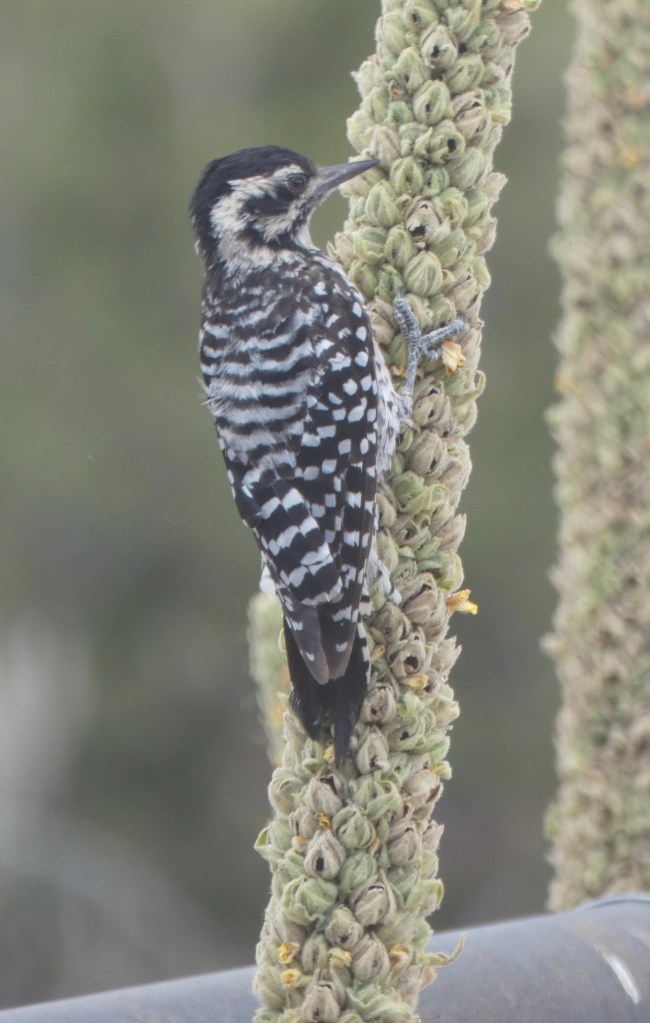
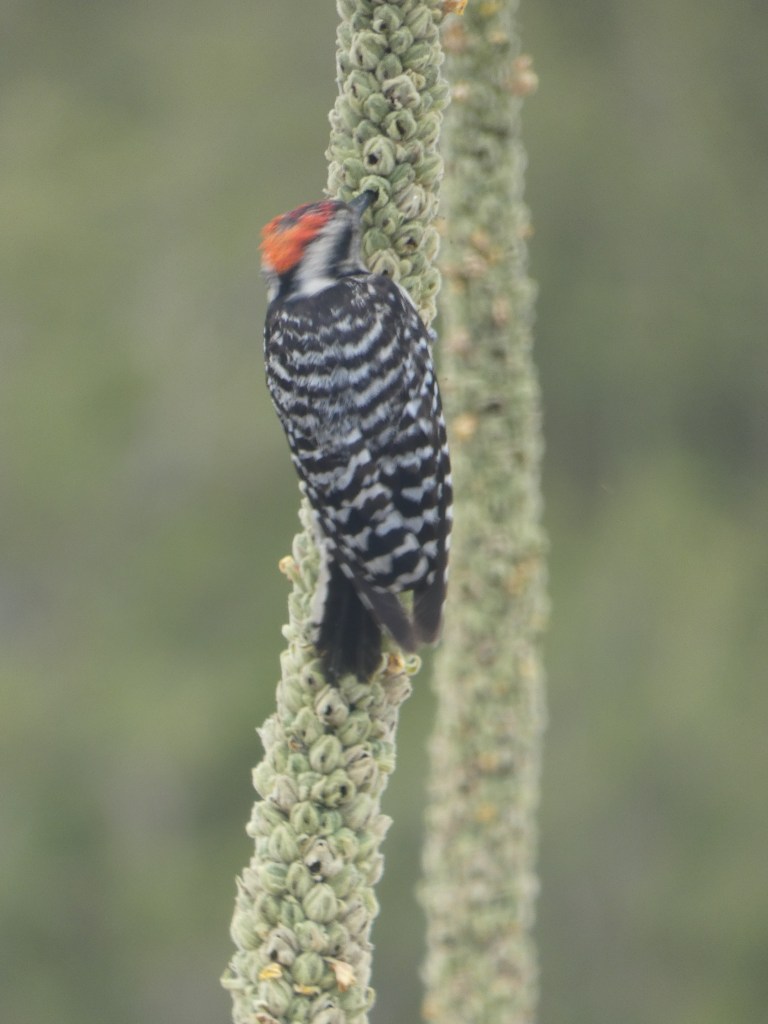
While walking into the back yard one day I came to an abrupt stop at the gate. A mere 20 feet to my right came a “Peek” call —- and then another “Peek.” Turning only my head, ever so slowly, in the direction of that familiar call, I saw a male Ladder-backed Woodpecker creeping up and around the 5 foot tall vertical flower stalk of a mullein plant (Verbascum thapsus) growing along the fence line. And not 1 foot away from him was his partner busy working her way up another mullein flower stalk. They were both so intent on drilling into bug-filled seed pods, they seemed not to notice me! Here was my Ladder-backed Woodpecker confirmation! 

After watching their activity for 10 minutes or so, I tip-toed away to fetch Roy and my camera, confident the birds had enough seed pods to keep them busy. Upon our return, they were still excitedly feasting and calling to each other, and I was able to capture a few dozen photos. 

Like clockwork, the pair returned every day for a week! It was such a joy to watch them both ….. mostly they got along — like a newlywed couple. But there were times ….. like when one or the other of them dared to feed from the same mullein flower stalk, at the same time! Quite a squabble took place; both birds shouting rapid-fire “PEEK – PEEK” with wings wildly flapping all while they hitched themselves up and around the stalk to the very tip! Peace returned by default when the first bird reaching the top ran out of flower stalk, and surrendered to their mate by flying away to another mullein. Because there were only a few mullein plants with a supply of delicious bugs, competition and arguments between the two birds was frequent. But I never knew who the winner would be until each round was won. 

A Bit About Looks

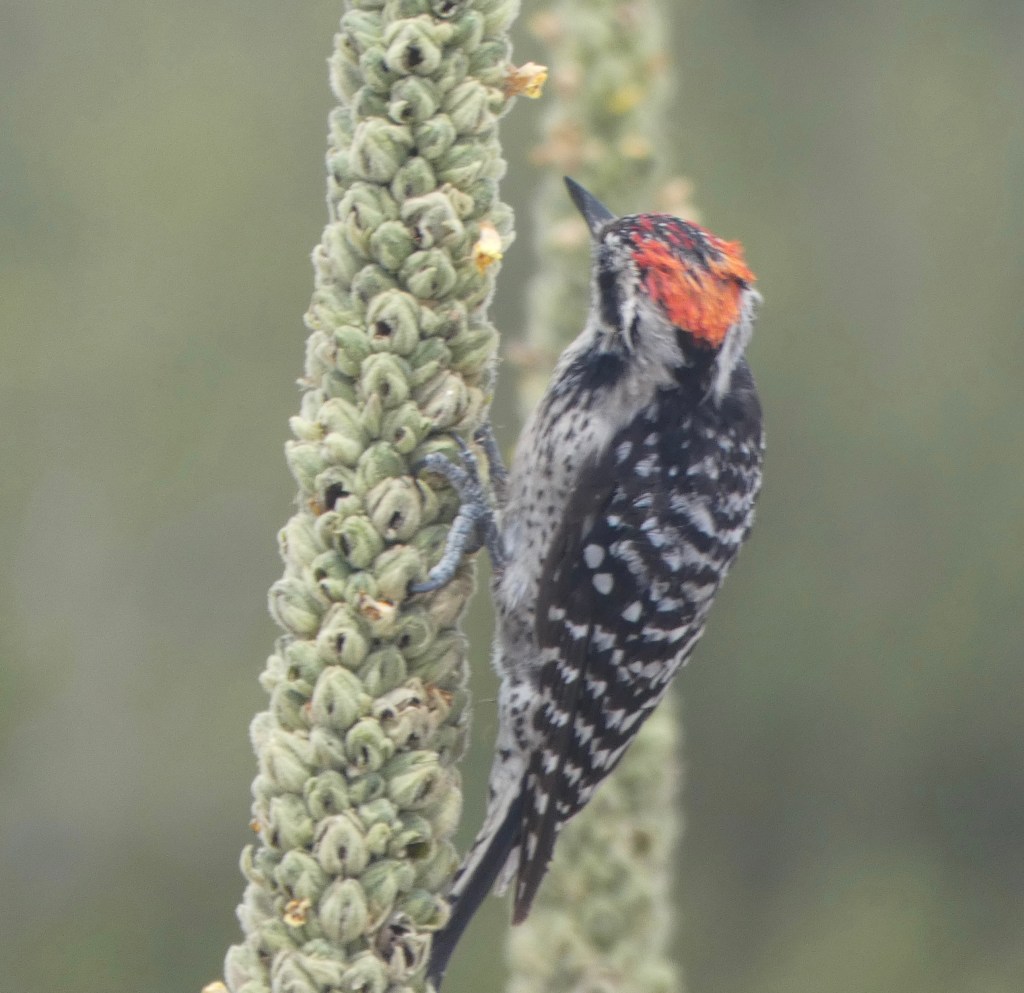
Ladder-backed Woodpeckers have a square head, a small but straight chisel-like bill, short neck, and stiff tail that they lean against for support. Both sexes are 6.3 – 7.1 inches long and have a 13 inch wingspan. Color-wise, they are black-and-white above arranged in neat stripes like ladder rungs on their backs, and a more checkered pattern on their wings. Underparts are buffy white or grayish, stippled with black. Their buffy white face is broken by black lines that extend from the bill and eye and join at the neck. Males have mostly red crowns from their eyes to back of the head; females have blackish crowns with a buffy patch in front of the eyes.  

A female Ladder-backed probing a mullein flower bud for insects.

A Bit About Behaviors

Usually staying hidden by foliage, Ladder-backed Woodpeckers are readily detected by their “Peek” calls or rapid drumming on trees while searching for food. As they move about from tree-to-tree, you’ll notice their short duration flight pattern is rapid and undulating. Breeding pairs of this woodpecker form or re-form in winter or early spring.

A Bit About Foraging, Diet and Related Behaviors

Like most woodpecker species, the Ladder-backed male typically forages on tree branches and trunks; females forage on smaller plants and bushes. They find insects by pecking, picking, probing, prying, gleaning, flicking, or tapping their bill at bark or other spots that might be hiding insects. Ladder-backed Woodpeckers can be quite acrobatic, twisting and turning, balancing with the wings open, and hanging upside down in pursuit of food as they hitch and hop upwards on a tree or other plant. Their ability to prop themselves in any position on just about any plant to feed is due to their stiff tails and agile feet.  

A male Ladder-backed drilling furiously into a mullein flower bud. The birds make lasting holes in the buds as they open the sepals in search of insects.

Although Ladder-backed Woodpeckers eat mostly insect larvae, they do eat some adult insects. Prey include wood-boring beetles, leaf worms, ants, caterpillars, and true bugs (hemipterans). Occasionally they will eat cactus fruit. 

Unlike larger woodpecker species, the Ladder-backed rarely digs deep into the wood, they do not cache (store) food or capture flying insects in midair. They rarely feed on the ground.

A Bit About Range and Habitat 

Ladder-backed Woodpeckers are permanent residents (not migratory) within their range which includes: central and eastern parts of NM through extreme southeast CO; southern, western and northwestern AZ; extreme eastern and northeastern tip of the TX panhandle; extreme southeast CA. Ladder-backed Woodpeckers are found throughout most of Mexico and in parts of Central America.

Typically, these woodpeckers live in very dry habitats such as deserts, desert scrub, thorn forest, and pinyon-juniper woodlands from the lowest elevations up to about 7,600 feet.

A Tiny Bit of Fun Facts

Like most woodpeckers, the Ladder-backed have their four toes arranged in an X-pattern, with two set forward and two backward (known as “zygodactyl”). This adaptation allows them to cling to vertical surfaces and even upside down on horizontal surfaces more easily and firmly than perching birds (which have three toes set forward and one backward).  

A male Ladder-backed showing how his X-shaped or Zygodactyl toe arrangement and stiff tail allows him to cling and prop against this vertical mullein flower stalk.

The oldest known Ladder-backed Woodpecker was a male who was at least 4 years, 6 months old when caught and released in Texas.

A Bit About Common Names

The “Ladder-backed” name comes from the pattern of black-and-white markings climbing the bird’s back in neat stripes like ladder rungs, all the way up to the base of their heads.

The “Cactus Woodpecker” (D. s. cactophilus) is an old name for a subspecies of the Ladder-backed Woodpecker that inhabits the southwestern United States and adjacent Mexico. Calling them “Cactus Woodpecker” was fitting as they frequently forage on and nest in various species of cacti.

A Bit About Scientific Names – Etymology

Dryobates scalaris and Dryobates scalaris cactophilus

The genus Dryobates, named by the German naturalist Friedrich Boise in 1826, is from the Greek compound word δρυο-βάτης : ‘woodland walker’; from δρυο (-drus)  meaning “woodland,” and βάτης (-bátēs) meaning “walker.”

The species scalaris comes from Latin, meaning “of or pertaining to a ladder” or “a flight of steps.”

The subspecies cactophilus was likely a slight misspelling of cactophily (or cactophile/cactophilic). Breaking down cactophily (cacto– and –phily), you have something with an affinity for or specialization in cacti. More precisely, cacto- is from the Neo-Latin noun for cactus, which derived originally from the Ancient Greek kaktos, a term used by Theophrastus to describe a kind of thorny thistle. And -phily is derived from the Ancient Greek suffix -philia meaning love, fondness, affinity, or a tendency toward something.

…………………………………………………………………………………………………

Hope you found this interesting!

I’d love to know what woodpeckers visit your neighborhood.

As always, thanks for stopping by!

References

allaboutbirds.org

audubon.org

iNaturalist.org

House Finch – Page 14 .. The 100 Day Project (2026)

July 14, 2026

House Finch (Haemorhous mexicanus ssp. frontalis)

aka Common House Finch

More than likely you’ve seen the sparrow-sized House Finch if you live almost anywhere in the U.S., southern Canada, or Mexico. The males are particularly showy with their bright red heads, throats and breasts, and their bouncy flight is sure to catch your attention. Just filling a backyard bird feeder with black oil sunflower seeds can bring a flock of 50 House Finches in to feast. They tend to dominate their favorite feeders, often chasing off competitors, after which you’ll have plenty of time to observe these finches as they sit still while shelling seeds by rapidly biting and crushing them with their large beaks. 

If you aren’t familiar with House Finches, you’ve probably heard their long, twittering song, which they belt out in most neighborhoods from coast to coast. Their song, so full of excitement and energy, is usually sung from the top branch of a tall juniper or pinyon pine tree. House Finches seem to be pleading urgently for attention by clearly singing, “Talk to me PLEASE, isn’t anybody THERE!!” (At least that’s what I hear over and over again first thing every morning throughout the Spring and Summer!) 

Not knowing how many broods have been reared this year, to date, it seems like we’ve enjoyed a large number of family groups around the house. Fledglings are fun to watch in flight as they constantly chase adults to beg for food. These futile attempts for free handouts strengthens their wing muscles and hones their acrobatic skills. Usually defeated, these novice students soon land in a tree and begin a long, hard practice session to learn their parents’ complex song.  

Completely exhausted, they will return to a certain cholla and the nest where the adult female fed and defended them as nestlings during the first 12-20 days of their lives. Finding even one of their well-hidden nests in any of those 4 to 7 foot tall cactus “trees” is quite the prickly endeavor! Even knowing how to recognize a House Finch nest hasn’t prevented me from experiencing plentiful and painful spiny jabs. What an excellent defensive location our local birds choose for nesting.

The Nest and Nesting Habits

In as little as two days, the female builds a cup-shaped nest made of fine stems, leaves, rootlets, thin twigs, string, wool, and feathers, with similar, but finer materials for the lining. This sturdy nest, durable enough to raise up to six broods a season, measures 3-7 inches wide; the inside cup is 1-3 inches across and up to 2 inches deep.

House Finches usually build their nests in cavities in deciduous and coniferous trees, on cactus and rocky ledges, and in or on buildings using sites like vents, ledges, street lamps, ivy, and hanging planters. They will also claim nests abandoned by other birds.

A western House Finch is likely to build its nest within 60 feet of where it was the previous breeding season; eastern birds choose sites more than half a mile away from prior nests. Despite these differing habits, all nest sites have a few things in common: a sturdy base and a roof-like overhang to shelter against sun and rain.

House Finch Facts

  • With over 40 million House Finches across North America, they are currently one of the most widespread and common bird species across the United States, second only to the American goldfinch. 
  • Native to the Southwest U.S. and Mexico, in 1939 a few House Finches captured in Santa Barbara, California, were sold to a New York City pet store owner as “Hollywood Birds.” Even back then, the sale of these birds was recognized as illegal under the Migratory Bird Treaty Act of 1918. To avoid prosecution under the Act, the pet store owner released the finches …. they were set free on New York’s Long Island. By the early 1940s wild nests were discovered on Long Island, and from there the spread continued. 
  • Sometime before 1870, House Finches were introduced to Oahu from San Francisco. By 1901, they had become abundant on all the major Hawaiian Islands.
  • Where House Finches are an introduced species, they are considered naturalized 1. They’re also considered an invasive species in some places, largely in unforested lands across the eastern U.S. where they’ve displaced the native purple finch (and even the non-native house sparrow!).
  • In their native range in the Southwest U.S. and Mexico, House Finches live in desert, grassland, shrubland, and open woodland environments, as well as near human dwellings and cities. The biggest House Finch flocks in the East are found in cities, and it’s much more common to find the eastern birds in habitats developed by people than anywhere else. 
  • Depending on where they live, House Finches can appear very different. Within the 11 officially recognized subspecies, body size, beak size and shape, wing length, tail length, and coloring can all vary regionally. For example, the northeastern migratory populations have longer and more pointed wings better suited for longer flights than the western finches which tend to be permanent, year-round residents.  Also, House Finches on Guadalupe Island off the coast of Baja California, Mexico, have heftier beaks than mainland birds.
  • The bright red (and sometimes orange or yellow) plumage on the head, throat and chest of mature House Finch males comes from compounds in their food (bird species are unable to produce red or yellow other than by diet). These pigments, called carotenoids (the same ones found in carrots and tomatoes), come from the berries and other fruits they eat. Females prefer mates with the biggest and brightest red-colored patches — a sign of a well-fed male.
  • House Finches are among the strictest avian vegetarians: seeds, buds, fruit, and foliage comprise 97% of their year-round diet. Most seed-eating birds not only eat insects in the spring and summer when they are abundant, but will feed bugs to their nestlings to add protein for growth. Except for the occasional fly larva, House Finches stick to a vegetarian diet.
  • Dealing with a pandemic for decades, these birds suffer from “House Finch Eye Disease,” a form of conjunctivitis that was first detected in Washington D.C. in the winter of 1994. Since then, the bacterial illness has expanded continent-wide causing big declines in House Finch numbers. Infected birds often have swollen or reddened eyes and may appear inactive or confused. Over time, it leads to birds becoming blind, disoriented, and vulnerable to predators. Other finch species, such as the American Goldfinch, are also affected. Because the disease is spread through social contact, it’s very important to keep bird feeders and baths clean.
  • The mite, Pellonyssus reedi, is often found on House Finch nestlings, particularly later in the season. However, the adult female has a clever strategy in response to these often fatal attacks. Since male chicks are more vulnerable to a mite outbreak, she will lay eggs containing females first to reduce the length of time male chicks are exposed to mites. This strategy increases the likelihood that representative numbers of both sexes will survive.

…………………………………………………………………………………………………

Share stories of your local House Finches!

Hope you found this interesting!

As always, thanks for stopping by!

1  A species is considered “naturalized” if it didn’t originally evolve in an area but has successfully adapted, established a permanent population, and is reproducing independently in the wild. These species are non-native, surviving without human help. Note: not all naturalized species are considered invasive.

References
allaboutbirds.org

audubon.org

iNaturalist.org

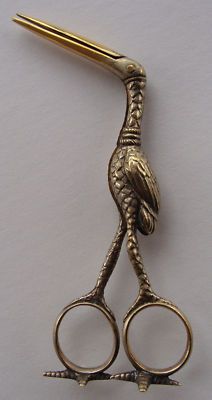
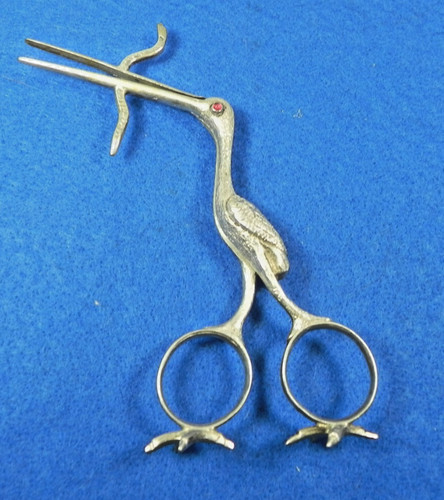
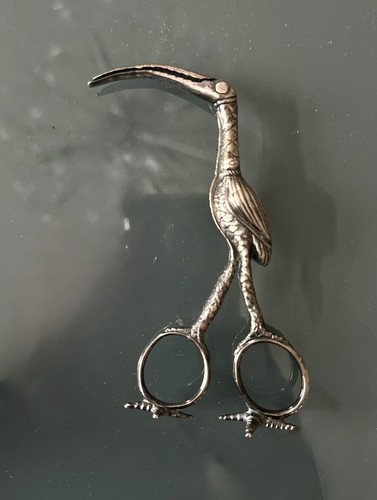
Scissor-billed Stork Stalker

July 1, 2026

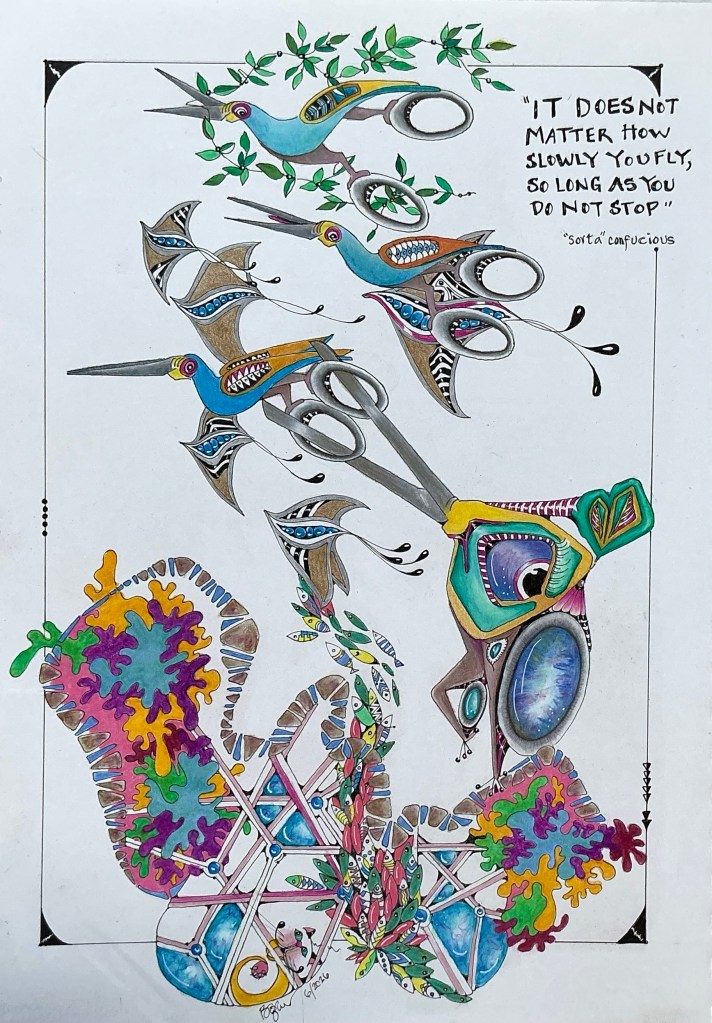
Today’s tangled drawing was not inspired by a special day of the week or month. Instead I was smitten by a recent scissors-shaped discovery. It began with a desire to create a nature-themed action piece, like birds in flight. As I mentally rabbit-trailed the many possibilities, it seemed important to think of a reason why my birds were flying in the first place. Maybe they were fleeing something, but what? Being momentarily distracted while addressing an envelope, my mind took an exit ramp while considering the name of our return address town of Tijeras. Excitedly recalling that “Tijeras” is Spanish for “Scissors,” I nearly decided my birds would be scissor-tailed flycatchers — gorgeously graceful birds — but a tad too obvious?  Regardless, the notion of “scissors” stuck in my brain. So I returned to my main rabbit trail with thoughts of fanciful, yet desperate birds fleeing a pair of big scissors! 

Zentangle patterns: Greenery Vibrant, Toku, Neb, Wind Farm, Rayz, Spangle

Those totally irrational thoughts focused my internet search for “flying birds and scissors.” As I wasn’t terribly optimistic about finding any interesting results, imagine my shock when after only a few short moments of scrolling I shouted ….. “Bazinga!” 

There, before my eyes, had to be one of the wonders of the world (and the answer to my flying-fleeing birds) ….. Stork Scissors! I never knew such a thing existed, but right then and there I began mentally designing and composing a tangled illustration of birds with scissors!

Of course I had to learn the why’s and what-for’s behind Stork Scissors and the use of such clever scissors in the shape of a stork who’s long bill actually forms the scissors’ blades. Here’s what I learned:

Stork Scissors” (sometimes called crane or bird scissors) are used today as a classic sewing tool shaped like a bird. Even though they look decorative, those long, precise bird beak blades are very efficient for snipping tiny threads in embroidery and crafts.

But there’s oh so much more to the story. 

It’s believed that the first Stork Scissors were used in the late 18th and early 19th centuries by midwives as medical clamps to stop blood flow in a newborn baby’s umbilical cord after birth. The original 4 – 6 inch long clamps were designed with a stork motif because of the bird’s folklore association with childbirth, good luck and hope. The head of the stork was mounted at a 45 degree angle and had a beak that was blunt and heavy. The handles looped to form the wings and body of the bird. Some clamps had an inlay of a little baby hidden inside the beak that appeared when opened. Also, Stork Scissors usually came with a set of forceps to help the midwife deliver the baby.

Once disposable clamps replaced them in the 1960s, the design of Stork Scissors as umbilical clamps began to change in shape and size. The 45 degree angle of the bird head was straightened so it aligned with the handle and the bird beak was sharpened into blades making the Stork Scissors an elegant and precision tool for sewing and needlework projects.

Fast forward to today ….. Since the vintage design was never copyrighted, charming and whimsical Stork Scissors have continued to be made under various brand names. 

After checking various on-line sites for antique clamps (mostly EBay and Etsy) and modern scissor designs (Amazon, art supply stores), I found a wide range of prices. For $700, you can own a circa 1800s “stork midwife umbilical cord clamp” made of 800 sterling silver. Another antique sterling silver “stork bird clamp scissors” with baby inlay costs $300. Today’s versions, some highly rated, are mostly gold or brass color coated and may cost as little as $8.99 for a 2-pack. 

Have you ever heard of Stork Scissors? If so, do you own a pair of vintage Stork Scissors or even a newly manufactured pair? Maybe you’re even a collector of Stork Scissors. Seems that’s a thing!  Do you think today should be designated as National Stork Scissors Day? Maybe not ….. but for me, this was a fun story to share and tangle! 

Happy July everyone!

Western Meadowlark – Page 8 .. The 100 Day Project (2026)

May 4, 2026

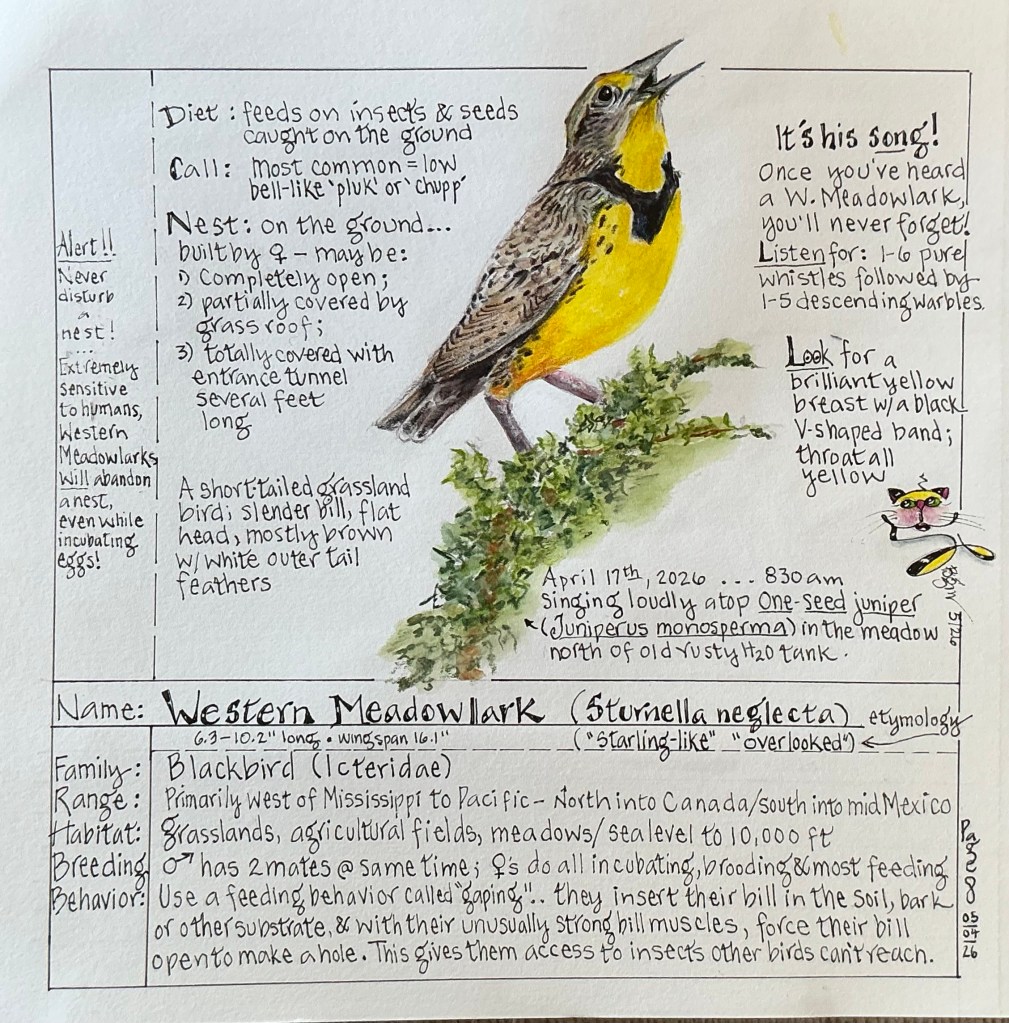
Western Meadowlark  (Sturnella neglecta)

When male meadowlarks return to the grassy meadow north of the old rusty water tank and begin singing, you know it’s Spring! 

There’s something wonderful about his song ……. At first he stutters a few practice notes; rough and rusty like the old water tank. But as daylight lengthens and temperatures warm, his song grows long, strong and melodic. Having perfected that signature song, he sings intently from sunrise to sunset, defending his territorial boundaries against all invaders. And he sings lovingly to announce his breeding readiness, enticing not just one, but two female meadowlarks to mate with him.

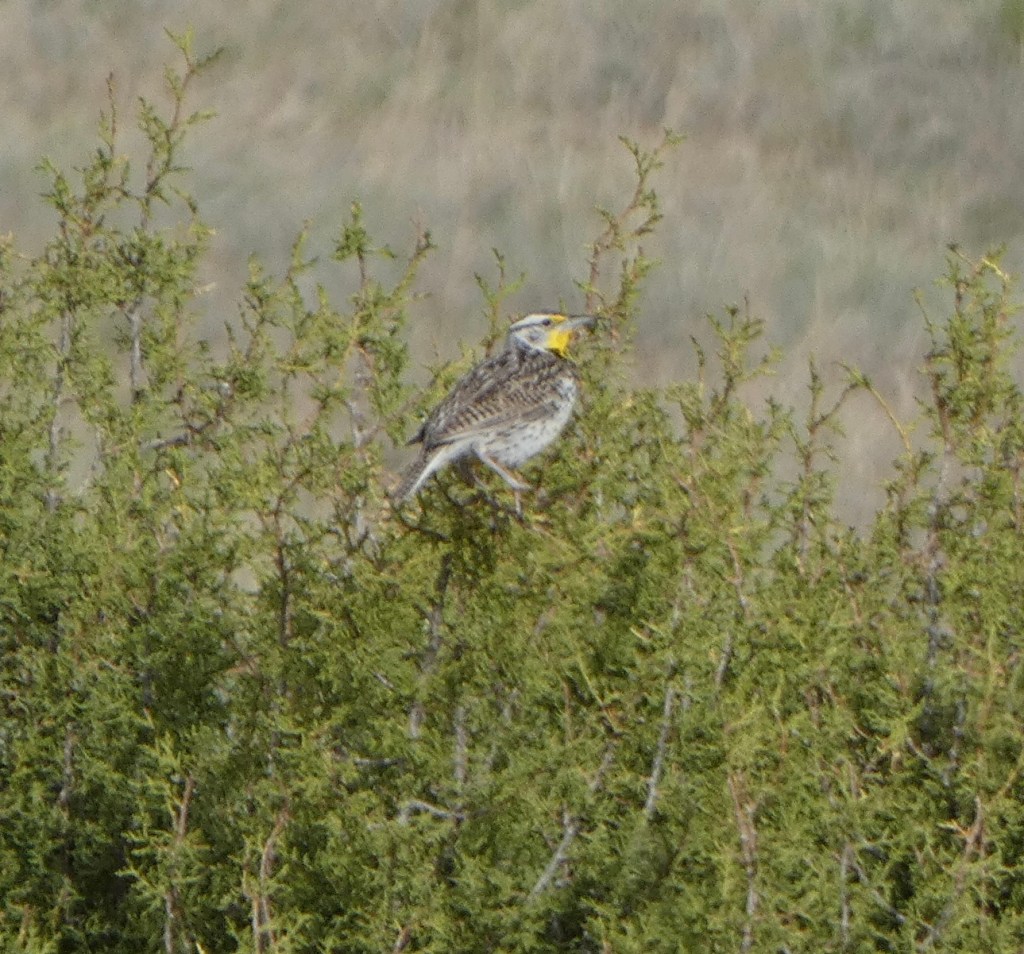
While walking the perimeter of the meadow in mid-April, it was easy to hear a male singing at the top of his lungs about 1/4 mile away. After a few moments scanning the tops of the widely scattered juniper trees with binoculars, I spotted him. (Males seem to favor these trees as perches, perhaps because they get a great view of their territory, and their voices really carry!) Able to get only 50 yards closer, I managed to take a few telephoto pics before he flew to the top of another juniper. Western meadowlarks are very skittish around people, so I held my ground and just watched and listened. It was a wonderful encounter.

Below are a few more fun facts about Western Meadowlarks, in addition to those on my illustrated page ….

If you’re lucky to see a Western Meadowlark, you’ll notice they’re a robin-sized bird but chunkier and with a shorter tail. Their flat head and long, slender bill are visible above a round-shouldered posture that nearly conceals its neck. They have short rounded wings, and a short, stiff, and spiky tail.

When flushed, Western Meadowlarks fly low, wings below the horizontal, gliding and flapping with short, stiff, quail-like wingbeats. 

Other than perching on tall trees, don’t be surprised to find males singing from atop fence posts, bushes, power lines, and anything higher than their surrounding habitat.

John James Audubon gave the Western Meadowlark its scientific name, Sturnella neglecta; Sturnella meaningstarling-like,” and neglecta because he felt most explorers (after Lewis and Clark) and settlers who traveled west of the Mississippi overlooked this common bird.

The oldest recorded Western Meadowlark was at least 6 years, 6 months old when it was found in Colorado in 1965.

…………………………………………………………………………………………………

When was the last time you went Birding? Meadowlarks are calling!

As always, thanks for stopping by!

References:   allaboutbirds.org and inaturalist.org

Spotted Towhee – Page 4 .. The 100 Day Project (2026)

April 1, 2026

Spotted Towhee (Pipilo maculatus)

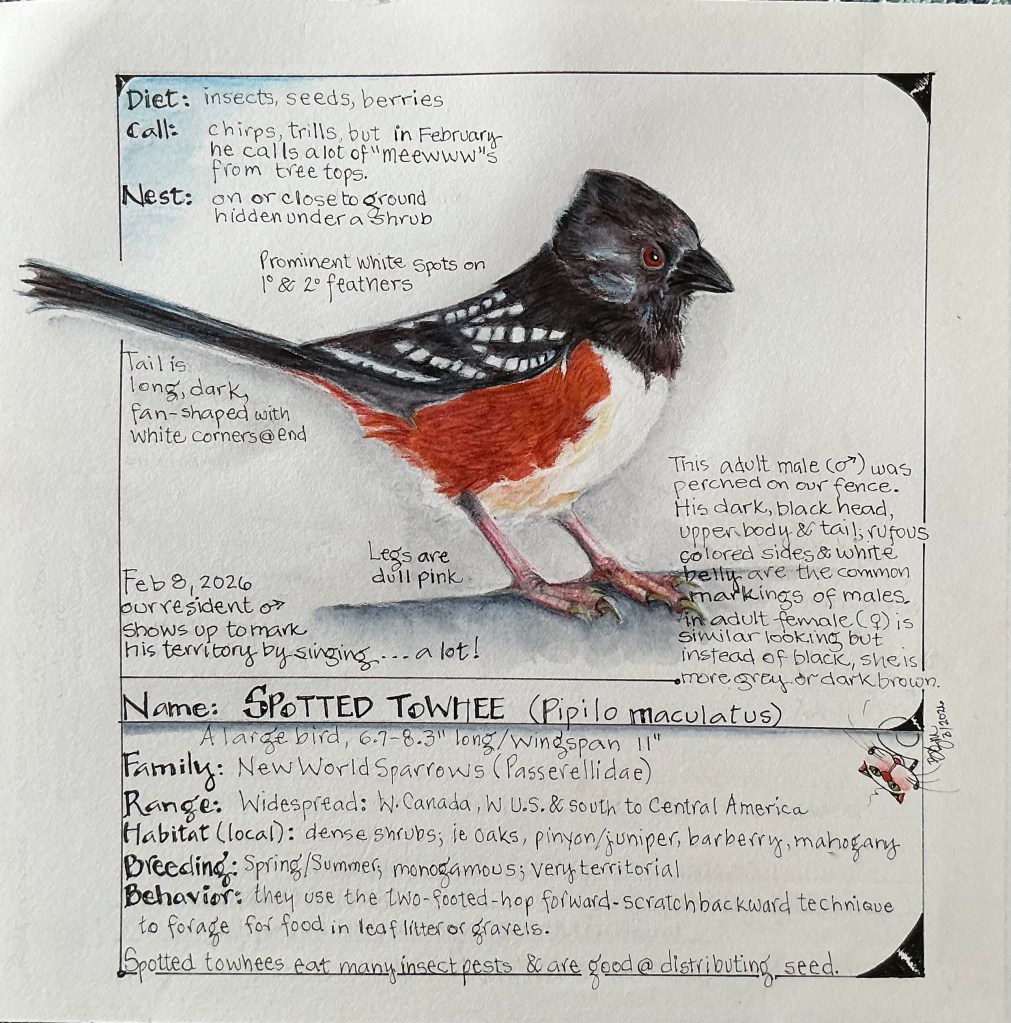
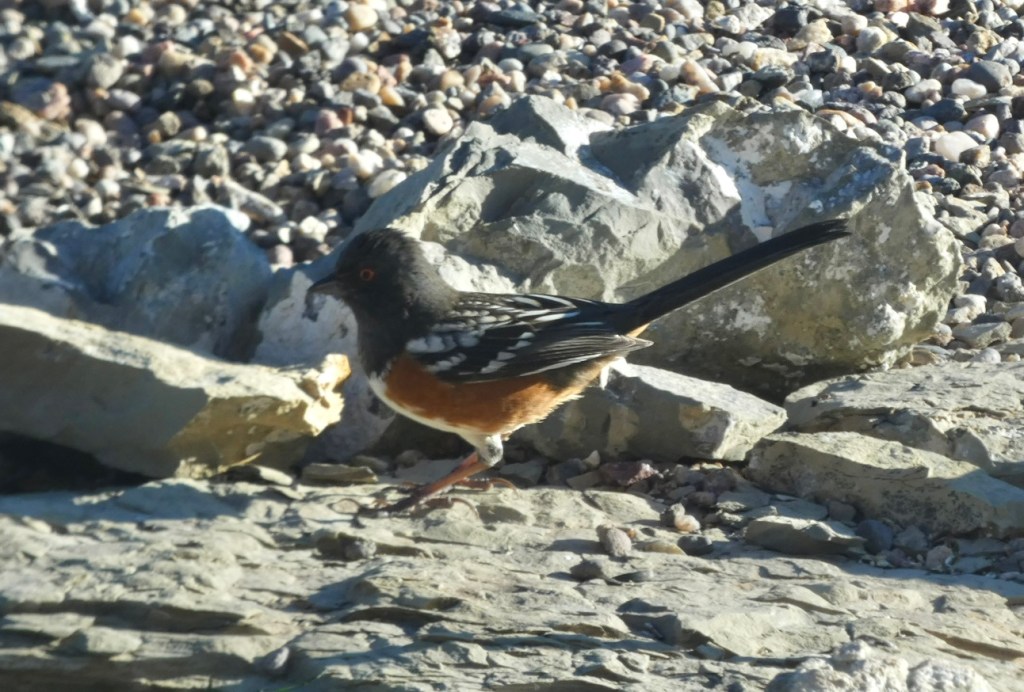
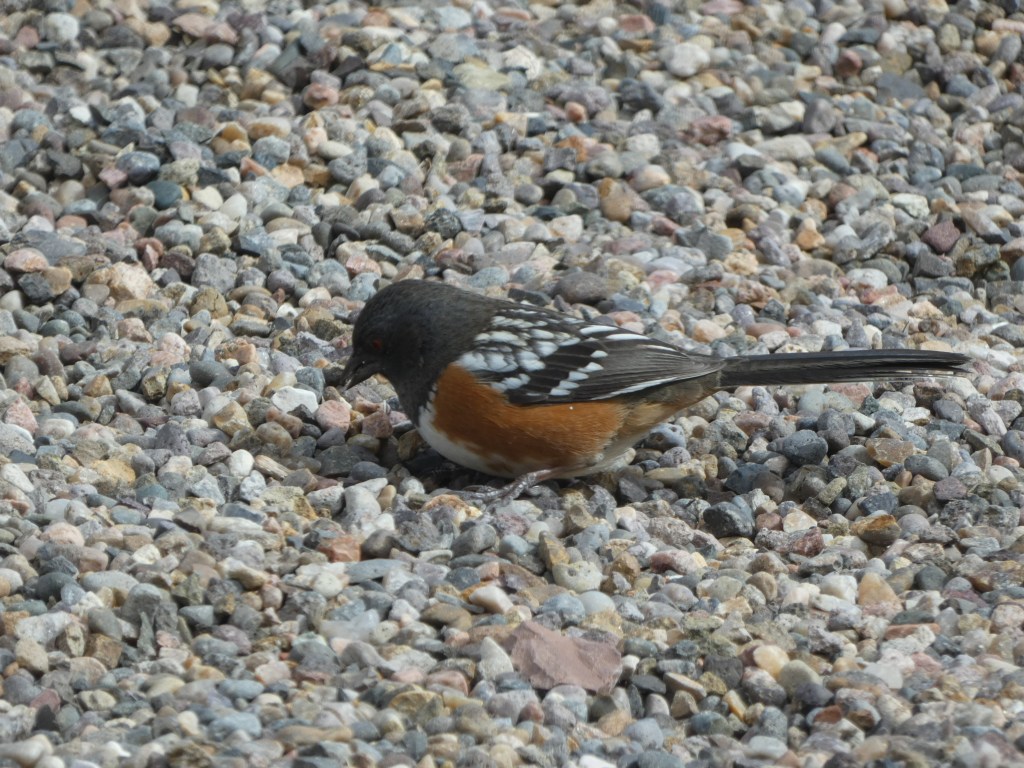
Here’s one of my favorite birds that’s a regular visitor to our yard. Spotted towhees, especially the males, are year-round residents throughout most of New Mexico, which means they breed in the shrubby vegetation surrounding our home. In our area, males sing at the crack of dawn until late afternoon beginning in early February. Instantly recognizable, their beautiful songs carry far and wide. Their songs not only signal to their mate it’s time to pair up again (spotted towhees are monogamous), they also let other male competitors know they’re horning in on his territory.

With favorable weather and abundant food, spotted towhees can produce two clutches of chicks during the breeding season. Their ground nests are hidden so well under a dense oak that I’ve never been able to find one. But it’s a lot of fun to watch clumsy fledglings trying to master the “two-footed-hop-forward-scratch-backward” forging technique all spotted towhees use to uncover hidden bugs and seeds.

Fun Facts

  • The spotted towhee and the eastern towhee were considered to be the same species called the rufous-sided towhee until 1995.
  • Male towhees have been recorded spending 70% to 90% of their mornings singing during breeding season.
  • Once a male mates, he only spends about 5% of his time singing.
  • It’s thought that the spotted towhee’s white spots are a form of camouflage.
  • Spotted towhees will sun themselves by lying on the ground feathers spread.
  • They will bathe in the dew or fog that has collected on vegetation.
  • Nesting females have been seen running away when disturbed rather than flying.
  • A group of towhees is called a “tangle” or a “teapot.”
  • When two towhees fight, one bird will pick up a piece of twig and carry it around as a sign of submission. 
  • Their bright red eyes act as a visual signal during the breeding season, standing out in their dark, shady, ground-level habitats.

Do spotted, canyon, green, eastern or any of the towhee species visit your yard? 

Hope you enjoyed this post! Thanks for stopping by!

References
audubon.org

inaturalist.org/taxa

allaboutbirds.org

explorer.natureserve.org

https://peecnature.org/learn/nature-guides/featured-critters/spotted-towhee/

Under Siege! 

A Battle of Wits

Conflict of Interest

November 24, 2025

Were you ever so challenged by something so clever, while at the same time so frustrated with something so beautiful? No, no, wait….. that question may be more complicated than need be. Let me put it this way …… 

Were you ever at your wit’s end finding a solution to a seemingly simple problem that you thought was obviously and repeatedly staring you right in the face?

My reply? Yes!

It’s All About the Genes

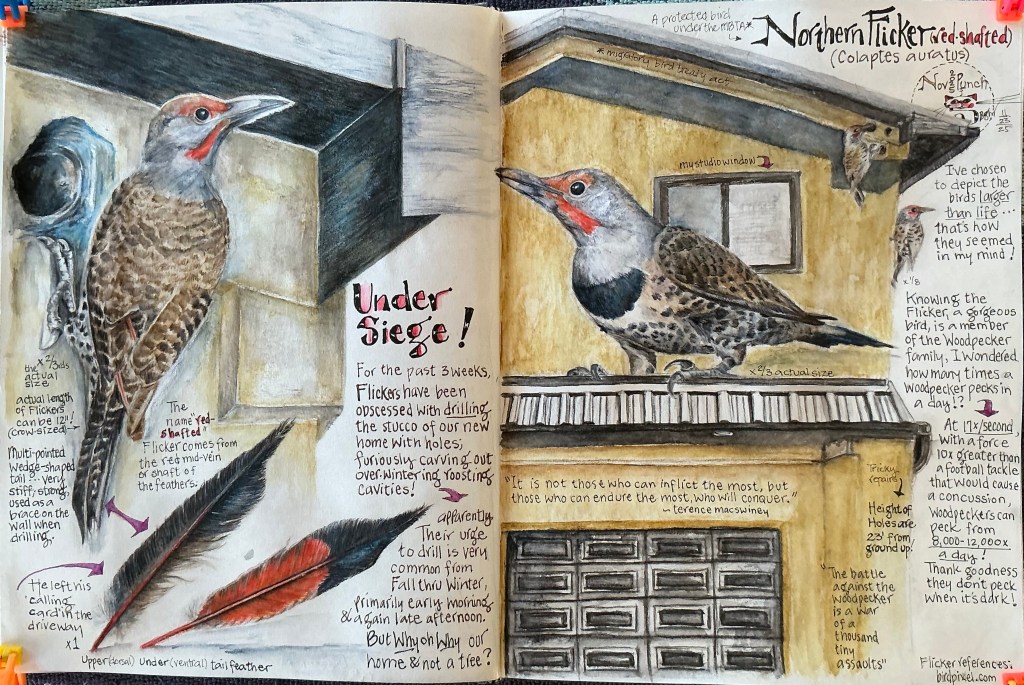
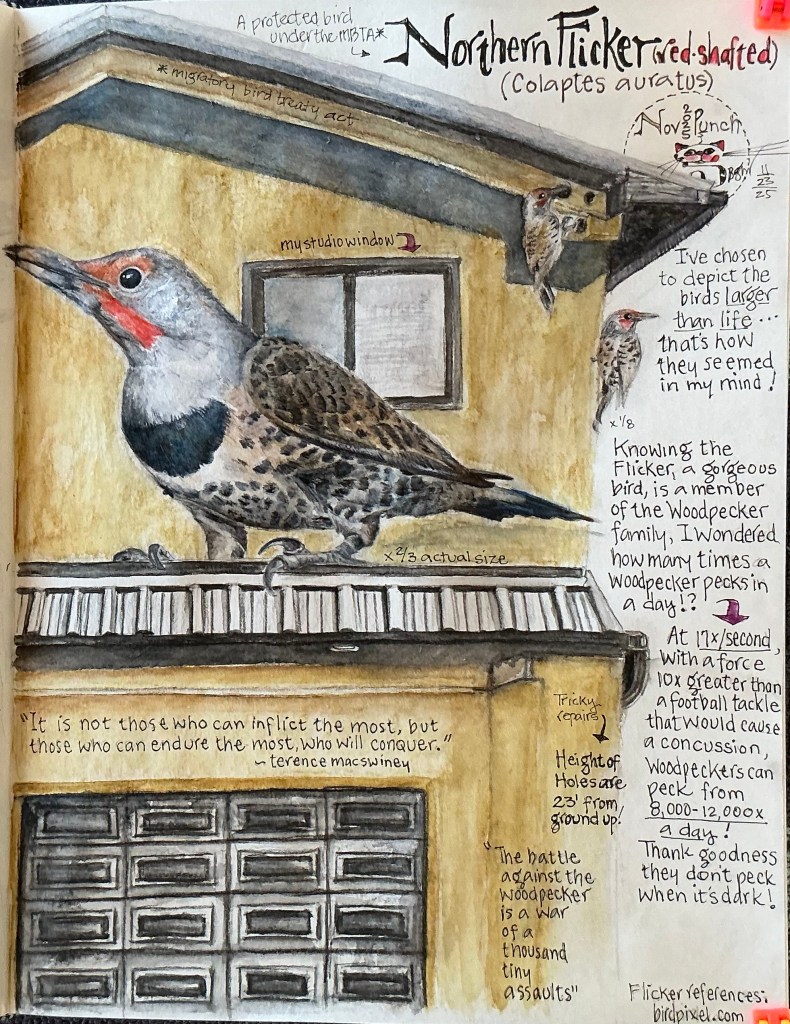
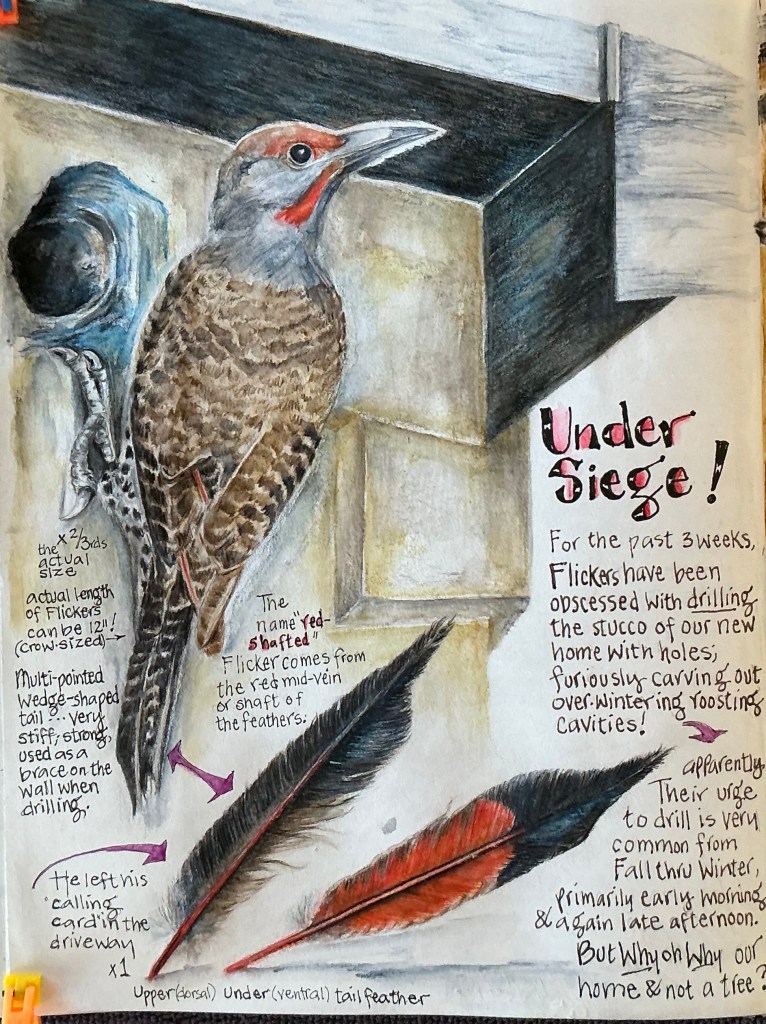
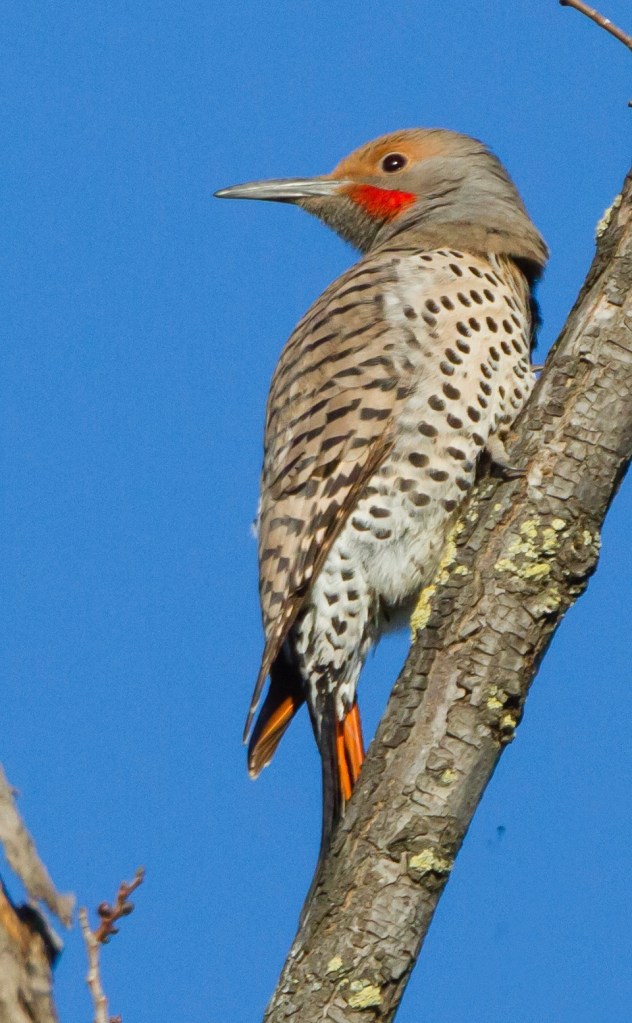
Meet the Northern Flicker (Colaptes auratus) … or more specifically, the Western red-shafted flicker (C. auratus ssp. cafer)*, a gorgeously flamboyant and noisy member of the Woodpecker family, that’s common throughout its western range.**  And as woodpeckers do so well, they peck and peck and hammer and drill with the determination and force of a jackhammer*** on nearly any vertical (preferably wooden) surface. They’re single-minded, from start to finish, when it comes to creating a cozy nesting or roosting cavity, whether in a tree trunk or into your home.  (More about that in a bit.)

Flicker ID – 101

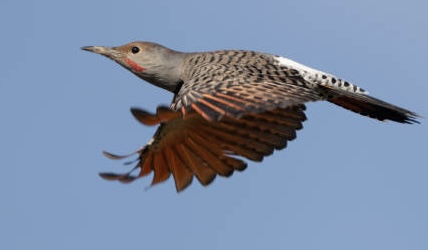
How do you know a Flicker has laid claim to your place? Well, he’s a big, heavy-bodied bird, and when flying overhead, your first thought might be “Crow!” At 12-14” long, with a wingspan of 18”-21”, the size is right. But as he flashes a large showy white rump patch bookended by reddish-orange underwings, you realize he’s not black. Anything but! As his flight slows and dips you notice his brown back is marked with narrow black bars. In preparation for landing, with wings open wide, he vertically aligns his body and feet with the wall, exposing a pale gray belly with bold black spots and a chest-wide black patch. Two strong clawed-toes up, two down (zygodactyl), and a stiff wedge-shaped tail adjusted as a brace, he taps out a few test spots, drawing your attention to his long and heavy bill, on a slate gray head broken by a buff-brown crown, a bright red whisker (male), and light gray cheeks. 

Male Western red-shafted flicker in flight. Note white rump patch (unsplash.com)

On a crisp cool Autumn morning, as you watch in horror …… 

Before you can declare, “It’s a Male Flicker!” ……

This bigger-than-life bird has landed, tested, and pecked away at his chosen spot  170 times in 10 seconds! He’s created an entry hole about 3” wide, right through the stucco and foam sub layer. This determined Flicker knows winter is coming and he intends to drill into our home, making a cozy roosting cavity in which to hunker down until Spring!  

Oh no, No, NO!

We love Flickers and have no wish to harm this beautiful bird.**** But he’s already caused enough damage (23 feet high on the wall) that needs immediate repair. So I clap my hands and holler loudly (something unintelligible), and off he flys to a nearby snag to see how serious my noise-making was.

That’s the story of Flicker hole #1 

Oh Not Again, and Again, and Again!

Since early November, our resident Flicker (I call him Jack), has continued to return many times, usually between sunrise and 10am. Sometimes he’ll make a fly-by before sunset. Often his quiet arrival escapes our notice; either we’ve been running errands, we’re out hiking with Luna, or enjoying a short roadtrip. These are the times he’s been able to drill six 3”-wide holes on the initial wall, and another 3”x6” hole just around the corner which was so deep, he almost penetrated the interior of Roy’s woodshop! This gives a whole new meaning to the term “Airbnb!”

After a few weeks up and down our fully-extended extension ladder to make a 2-step/2-day repair job/hole, we were making ZERO headway. Jack, unable to resist the need to drill him a roost cavity, was always one hole ahead of us. And because he didn’t hesitate to redrill newly repaired holes, was there something we were doing wrong?

All Flicker painting are larger than life, because that’s how they seemed to me!

It’s an Education in Biology and Patience

So we learned to listen for his noisy “kerrreee” scream-like call announcing his presence from one of Jack’s many favored perches around the house. Unless we missed it, his territorial call would put us on high alert, ready for action. We also listened for his series of warm-up test pecks that usually sounded inside the house. This “alarm” would catapult one or both of us from a comfy chair and run outside yelling and clapping our hands. 

Between listening, running, clapping and yelling (and wondering what the neighbors might be thinking), I discovered a few interesting things on-line…..

  1. Woodpeckers can’t resist drilling holes in synthetic stucco. This product provides the perfect surface for woodpeckers to hammer. When they begin tap pecking, it creates a hollow sound because the synthetic stucco includes a foam layer. The woodpeckers peck through the hard outer surface into the foam where it is easier to create a larger cavity to nest. 

#1 …. Our entire home happens to be covered with synthetic stucco! While this might explain Jack’s insatiable desire to drill his roosting cavity into our home and not into one of the surrounding hardwood piñon pines, we’re not going to replace  the stucco. 

  1. Basil, mint, cinnamon and/or lavender are suggested as natural, non-toxic deterrents for woodpeckers, who dislike strong aromas. The scent of basil, in particular, can be overwhelming and confusing to woodpeckers. Crushing one or a mix of these herbs with adding a bit of water, creates a green slurry that can be filtered and applied with a spray bottle to the affected area(s).

#2 …. This idea was worth a try, especially since there’s still have basil and mint growing in the garden. After collecting several handfuls of each, I popped the mix into the food processor with a bit of water and flipped the on switch. Gathering the resulting slurry, I filtered it through paper towels and collected the liquid for a spray bottle. That was several weeks ago, and with every hole repair, Roy’s been thoroughly soaking first the patch job then follow-up stucco coating with the basil/mint spray. It’s hard to know if it’s actually working, but the initial drilling sites haven’t been redrilled in the past week. It could also be that Jack is gone; pushed out with one of our heavy rainstorms.  Or he’s begun drilling more recent holes over the RV garage door. With each repair, Roy continues to spray the basil/mint mix.

  1. The Federal Migratory Bird Treaty Act*** provides protection for Flickers (and all woodpeckers), making it illegal to harm or kill them. But when warranted, migratory birds can be killed under a depredation permit issued by the Law Enforcement Division of the USDI-Fish and Wildlife Service (USFWS). Authorization by the relevant state wildlife agency also may be required before lethal control methods are initiated. Sound justification must be present for the issuance of depredation permits.

#3 …. Applying for a depredation permit may be our last resort, if Jack and his cohorts threaten to turn our brand new home into Swiss cheese. 

AGAIN!

That’s the story, almost. This clear Conflict of Interest; an obvious Battle of Wits, continues. Just yesterday, one of the holes Roy patched above the RV garage door was redrilled this morning!

Oh Good Grief!

 It’s already been repatched and resprayed, and while writing this story in my studio with window cracked and a clear view of the patched hole, I’m sure to hear and see that gorgeously determined Flicker if he returns to jackhammer away, once again, into a side of our home!

I’d love to know if you or anyone you know has a proven solution to this natural dilemma. Meanwhile ….. 

Thanks for stopping by, and Happy Thanksgiving!

……………………………………………………………………………………………………………

*Northern Flickers are divided into 2 subspecies, the Western red-shafted flicker (C. auratus ssp. cafer) and the Eastern yellow-shafted Flicker (C. auratus ssp. auratus). The red-shafted subspecies is found throughout Mexico, western and west-central U.S. (where it is common all year long), and British Columbia, Canada. The closely related yellow-shafted subspecies, which is highly migratory, is found in eastern and east-central U.S., the Canadian provinces and Territories (except B.C.), and far north into AK. 

**Where the range for both subspecies overlaps (in the ‘lower 48’), a lot of hybridization occurs. It’s common to see a red-shafted flicker with more orange feather shafts and/or shades of yellow-orange on the underside of their flight feathers. The same holds true for the yellow-shafted hybrid. Otherwise, appearances differ notably between both subspecies of the Northern Flicker, primarily where the malar (mustache), nape pattern (back of the head below the crown), face color, and tail and flight feathers are concerned. See the table below for non-hybrid subspecies characteristics. For hybrids, any color and pattern variation(s) and combination(s) you can imagine have probably been found! 

Northern Flicker subspeciesRed-shafted Yellow-shafted
Face colorGrayBuffy to warm, light brown
Malar colorMale: red Female: brownMale: black Female: brown
Nape color & patternGray, unpatternedMale: Red crescent on gray Female: gray, unpatterned
Feather shaft/under flight feathersPinkish to reddish to redYellow

***A woodpecker can peck wood 17x/second, and from 8,000-12,000x/day! Really! And they can drill into wood at a force 10x greater than a football tackle that would cause a concussion. On the November 17, 2025 episode of the Science Friday (SciFri) podcast, biologist Nick Antonson stated that woodpeckers can peck 20-30x their body weight. Now that’s amazing for a Flicker that weighs about 6 ounces! 

****Because we had no desire to harm the Flicker(s) drilling into our new home, even when we reached our point of extreme frustration, we wanted to ensure our deterrent efforts aligned with wildlife regulations; especially with the Federal Migratory Bird Treaty Act (Act). Flickers (and all woodpeckers) are considered a migratory non-game bird species, and protected under the Act. It’s illegal, punishable by fine and/or imprisonment, to harm or kill them. 

Male Western red-shafted woodpecker with his tail braced against the branch(bird pixels.com)

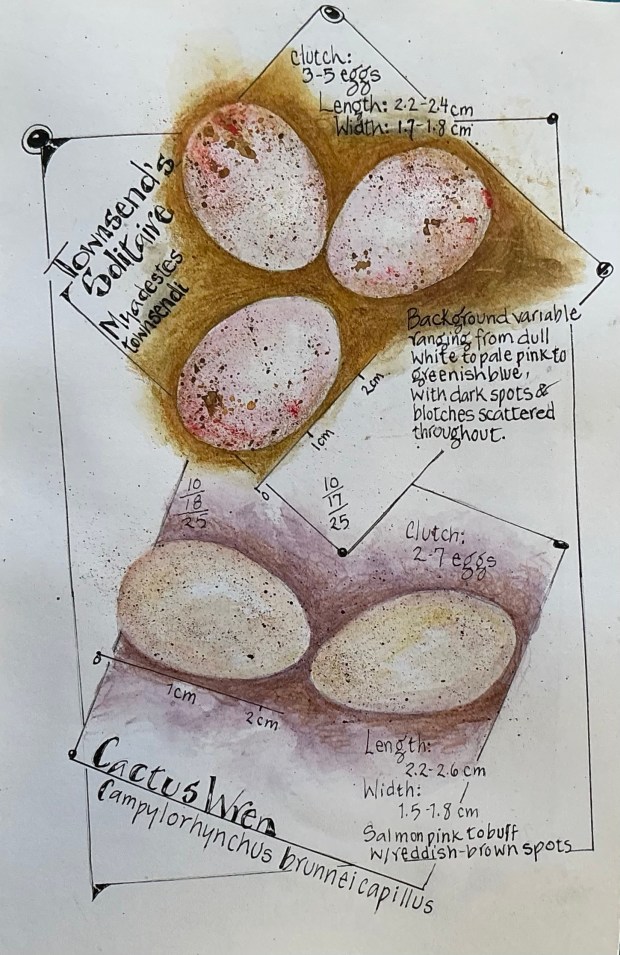
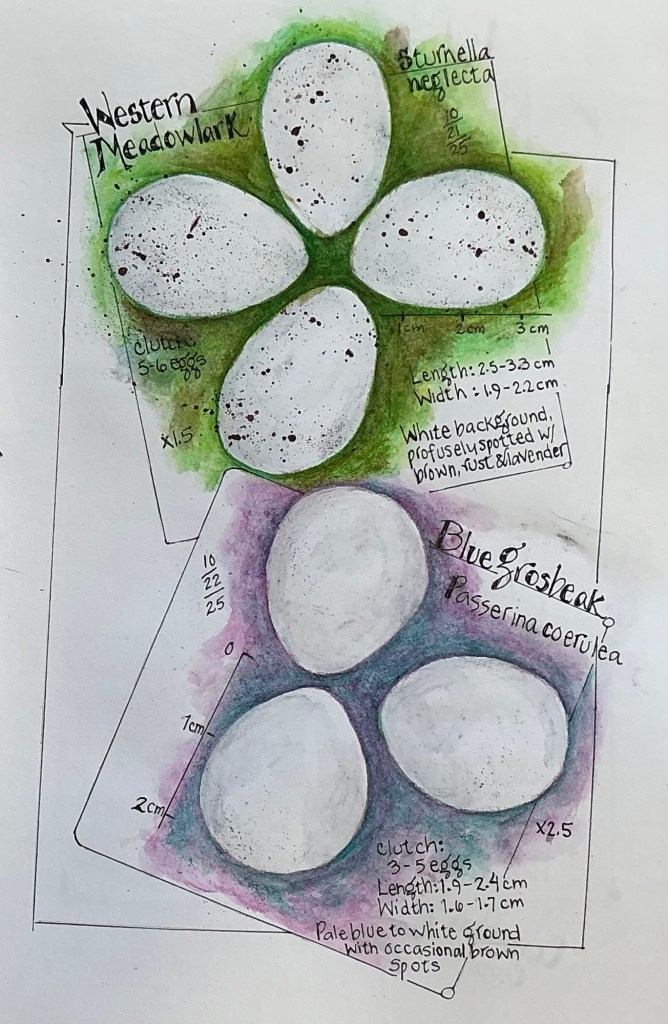
EggTober 2025 ….. the Full Four Submissions + Bonuses

November 15, 2025

It’s a wrap! EggTober 2025 – the Full Four Submissions- all in one place!

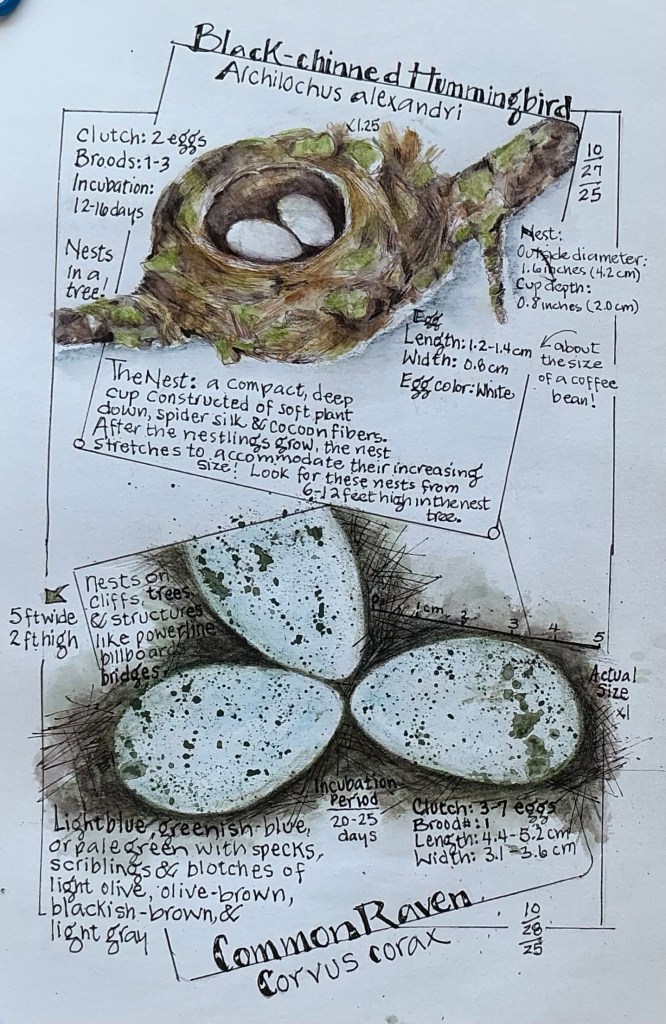
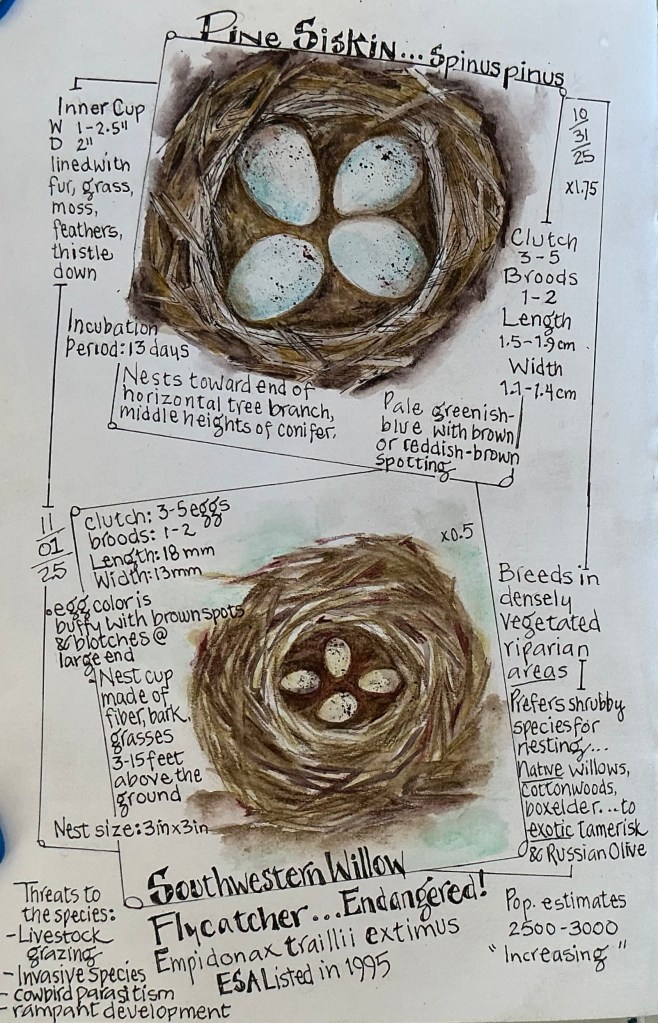
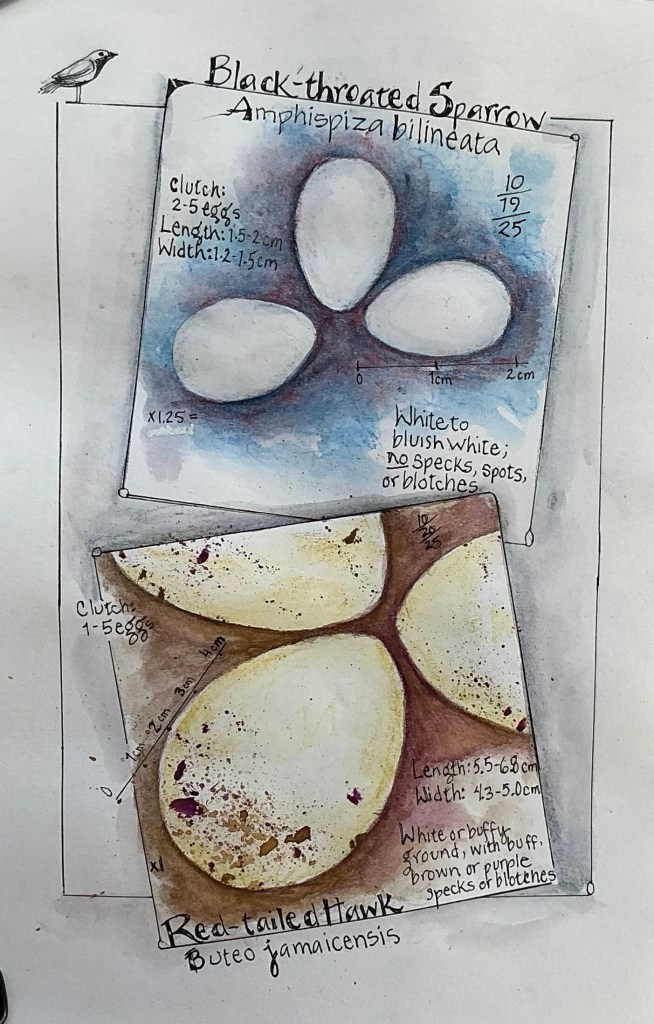
My 3 minute YouTube video (see link below) features all 32 annotated bird egg paintings submitted for Inktober2025, along with several bonuses you won’t want to miss!

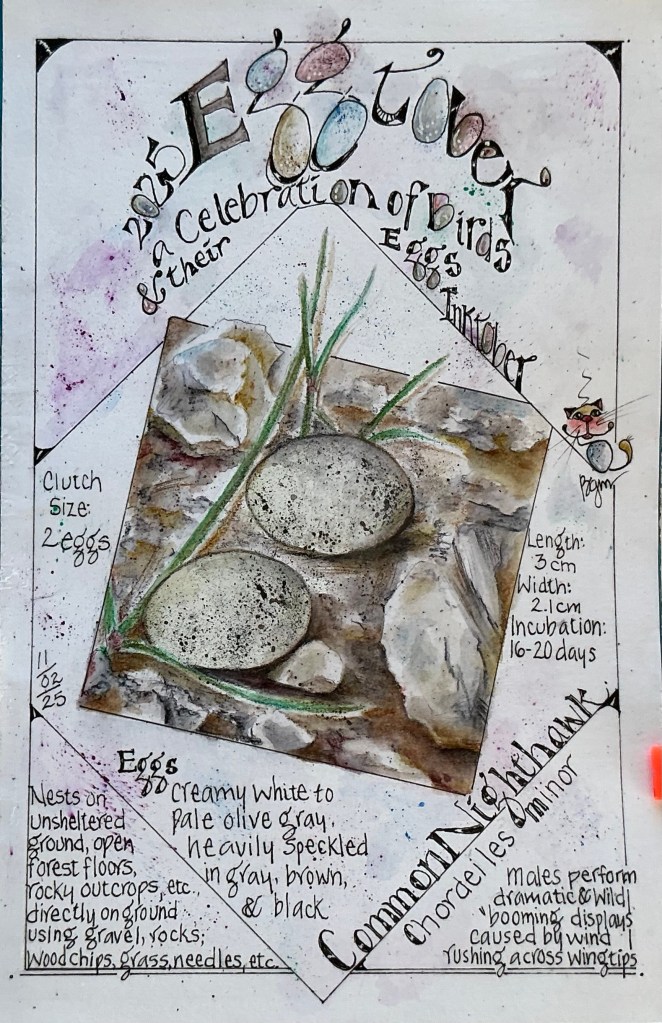
1) a pair of never-seen-before annotated Common Nighthawk eggs painted for the cover of my 6”x9” handmade journal ………

2) an index, by common name and date of appearance, of the 32 bird eggs painted and annotated between October 1 and November 1, 2025 ………

3) an accordion book attached to the inside back cover that has all the fascinating details about each of the 8 layers of an avian eggshell

YouTube Video Link

For some reason, I’m unable to embed my YouTube video directly into this post. This is rather inconvenient, huh! So until I can troubleshoot the player issue, I’d love for you to click on the link below to view the video on my YouTube channel!

https://www.youtube.com/watch?v=keiOCtFwASo


And That’s All Folks!
Thanks so much for joining me on this fun educational adventure.

P.S. If for some reason you’re unable to view the video, please let me know.

EggTober 2025/Submission Four ….. Days 25 – 31

It’s All in a Day’s Work! 

November 3, 2025

EggTober 2025 has officially ended! And Wow … I’m so eggs-cited to share Submission Four, the finale, with all-y’all!  The eggs showcased for Days 25-31 +1 (yes, another random bird flew in and laid a bonus clutch on the last page) are all snug in their New Mexico nests. Also, you’ll notice a bit more text surrounding those nests.   

Following Submission Three, where my narrative focused on the different layers of the eggshell membrane, I was curious about how avian eggshells are constructed. Then I wanted to know more about the entire reproductive system of birds, from ovulation to fertilization, to egg laying. And Then I couldn’t rest without knowing about the embryo, the yolk, the egg white, and all the bits and pieces you see when cracking open an egg! I didn’t know any of this, and if you don’t know, you’re head is about to explode in wonder!

October 25 and 26

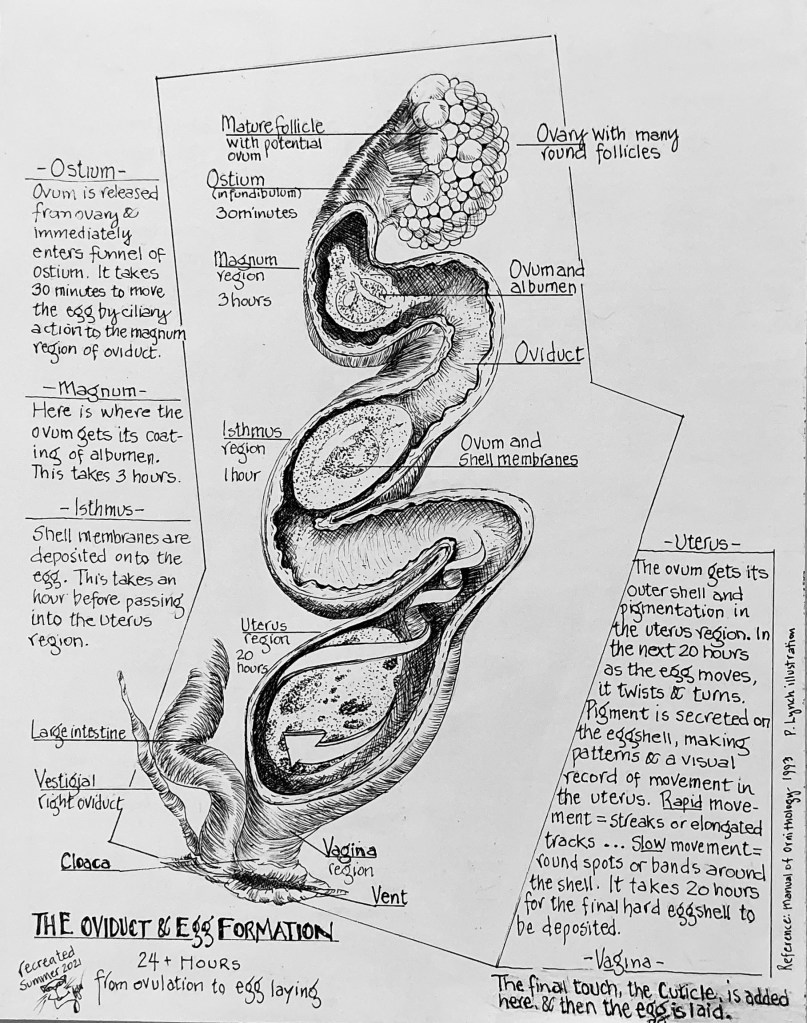
The Avian Oviduct and Egg Formation

It takes about one day to build an egg. But to prepare for the journey, about 7 to 9 days before the egg will be laid, the Yolk must be formed. Here’s the story of …..

The Yolk …..

….. formed in one of the many Follicles of the Ovary, the vitellus or Yolk begins as an immature Ovum that is stimulated to enlarge over several days by receiving deposits of yolk material. Once growth is initiated, over the next 7 to 9 days the Yolk’s formation intensifies as 99% of its nutrient-rich layers are deposited until it’s fully formed. Now mature, the Follicle ruptures and the Yolk is released in a process called Ovulation.

And this is where the Journey through the Oviduct begins! Over the next 24 hours, the developing embryo acquires the many layers it needs for nourishment, respiration, and protection until it’s formed into a perfect egg ready for laying. The entire journey takes place in the Oviduct …..

….. which can be divided into several regions: the Infundibulum, Magnum, Isthmus, Uterus, and Vagina. What happens in each of these regions is nothing short of fascinating!

The Regions of the avian oviduct

Infundibulum – After Ovulation, the Yolk immediately enters the funnel of the Infundibulum (the Ostium) where the Ovum is fertilized and the Chalazae is formed. With the help of ciliary action, it takes 30 minutes for the Ovum to move through this region of the Oviduct to the next, the Magnum

Magnum It’s this region where the Yolk, together with the now developing embryo and the Chalazae, gets a protective coating of protein-rich Albumen, a process that takes about 3 hours to complete, before moving along to the Isthmus.

Isthmus – The Inner and Outer Shell Membrane Layers and the Nucleation Sites are formed in this region of the Oviduct. This takes about an hour before the package is delivered to the Uterus

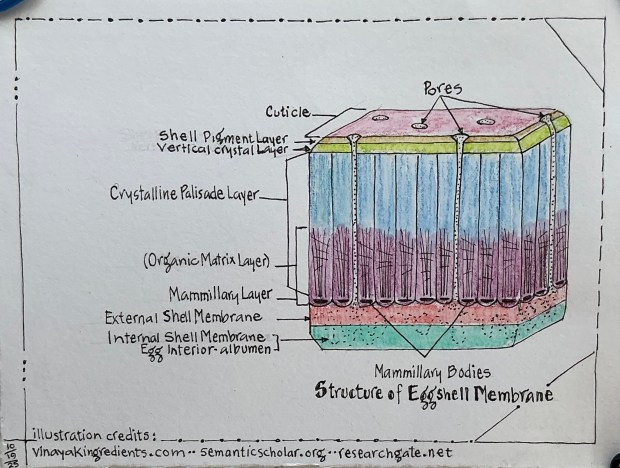
Uterus This is where five of the six layers of the outer Eggshell are formed. They are the Mammillary Layer and Mammillary Bodies, Organic Matrix Layer, Crystalline Palisade Layer, Vertical Crystal Layer, and Shell Pigment Layer. Also, as much as one-third of the protein in an egg is added while in the Uterus. 

It takes about 20 hours for the egg to move through the Uterus while these layers are deposited. And as the egg moves, it twists and turns. When it’s time to add pigment, the rate of rotation adjusts to ‘paint’ the species-specific patterns we see on the eggshell, leaving a visual record of the egg’s movement in the Uterus. For example, if streaks or elongated tracks on the shell are required, movement is more rapid than when creating round spots, blotches, speckles, or bands. After pigment is added to the outer shell structure, the layers of background color and any markings are enclosed in calcite crystals. 

Vagina – The last region of the Oviduct where the Cuticle (the Bloom) is added to the shell just before the egg is laid. 

The egg is now complete. The entire process, beginning with the release of the mature Yolk and Ovum from its Follicle until the egg’s final touches, takes 24 hours! And the timing ensures the egg is always laid sometime during the day.

………………………………………………………………………………………………………………

Glossary and Other Interesting Things

Albumen – refers to the “white” of the egg. The Albumen is an effective barrier against microbes that might cross over and cause disease in the developing embryo. Albumen contains over a hundred antimicrobial proteins.

October 27 and 28

Chalazae – two spiral bands of white, stringy tissue that suspend and hold the Yolk in the center of the Albumen.

Crystalline Palisade Layer – A  tough, mineralized structure of calcium carbonate crystals that grow into dense columnar units above the Mammillary Bodies (the mineralized base of the crystalline eggshell). The amount of shell deposited is determined by the time spent in the Uterus.

Eggshell – Depending on species, the eggshell represents from 9-15% of the total weight of the egg. 

Eggshell Formation – The Crystalline Palisade Layer is essential to the process of eggshell formation which takes place in the Uterus. 

  • Nucleation: The process begins at the Nucleation Sites, located on the External Shell Membrane, which are the specific places where the mineralization of calcium carbonate begins. 
  • Initial growth: As calcium salts are deposited and crystallize, inorganic calcium carbonate crystals grow around and outward from the Nucleation Sites, forming the cone-shaped Mammillary Bodies; the first, innermost calcified layer of the eggshell, anchored to the External Shell Membrane. This base of mineralized shell provides mechanical strength, and serves as the main source of calcium for the developing embryo’s skeleton.
  • Maturation – The calcium carbonate crystals continue to grow into the dense columnar units that form the Crystalline Palisade Layer, creating a tough, mineralized structure that protects the embryo. The amount of shell deposited is determined by the time spent in the Uterus. 

Follicle – an enclosed cavity in the Ovary

Labile Medullary Bone  a temporary, highly porous, and woven bone tissue that forms, driven by hormonal changes in female birds, in her medullary (marrow) cavities in the period leading up to and during egg-laying. As a highly porous, woven bone, medullary bone has no significant mechanical function or structural strength. Its role is strictly metabolic.

The word labile means the bone is unstable and readily undergoes rapid and frequent change. Once the egg-laying period is complete, hormones change and medullary bone is reabsorbed. 

Labile Medullary Bone Formation and Calcium Requirements  – It’s interesting to note that an egg-laying hen requires 10% of her the total body calcium reserves during each 24-hour period she is producing eggs. To meet this calcium requirement, primarily for eggshell formation, it’s necessary that her plasma (blood) calcium levels triple during egg formation. This calcium is mainly obtained from increased intestinal absorption and a highly labile reservoir found in the medullary bone. In other words, to meet the calcium requirement, the hen’s body naturally produces it as medullary bone.   

Eggshell Layers

Mammillary Bodies – The first, innermost calcified layer of the eggshell, anchored to the External Shell Membrane. These cone-shaped Mammillary Bodies form the  base of mineralized calcium carbonate which provides mechanical strength to the shell, and serves as the main source of calcium for the developing embryo’s skeleton.

Nucleation Sites (aka Organic Cores) form in the Isthmus region of the Oviduct, and are found on the External Shell Membrane. Composed primarily of organic material (proteins, proteoglycans, collagens), they are the specific locations where the mineralization of the calcium carbonate shell begins. In other words, the Nucleation Sites provide the initial template or “seed” for calcium carbonate crystals to start forming. 

Oviduct – the tube that transports the developing egg with embryo from the Ovary to the Vagina.

Oviduct … Only One? – Yup! Most bird species have only one Ovary and adjoining Oviduct, the other having degenerated when the hen was, herself, a developing embryo. This evolutionary modification probably resulted because egg production from two ovaries would deplete the female’s body of calcium to excess. As has been demonstrated in chickens that are on a calcium deficient diet, egg production ceases.

Ovulation – The process in which the mature Yolk and Ovum is released from its Follicle in the Ovary and is received into the Oviduct through the Infundibulum.

Ovulation Rate – Within 1 hour after a hen has laid an egg, the next mature Follicle in the Ovary ruptures (aka ovulates), releasing the mature Yolk and Ovum.

Ovum – an unfertilized egg

October 29 and 30

Pigment or Not? – Whether an eggshell is white, or decorated with a background color and/or markings, it’s appearance is influenced first by the species of bird, then by lifestyle and nest location. The specific color of an egg is an adaptation to its environment. This is where camouflage and/or thermal regulation may be required.

  • Thermal regulation is still being studied, but where camouflage is beneficial, egg color depends strongly on nest locations:
    • White eggs – prevalent among birds like pigeons, doves, swans, many seabirds, etc. These birds often build concealed nests where camouflage isn’t necessary, or inconspicuous locations are chosen for nesting where white coloring helps camouflage the eggs, reducing the risk of drawing attention.
    • Blue or green eggs – Bluebirds, robins, sparrows, parrots and other birds that lay pale to bright blue, blue-green or green eggs blend in with the sky or the foliage of nesting sites, providing natural camouflage. 
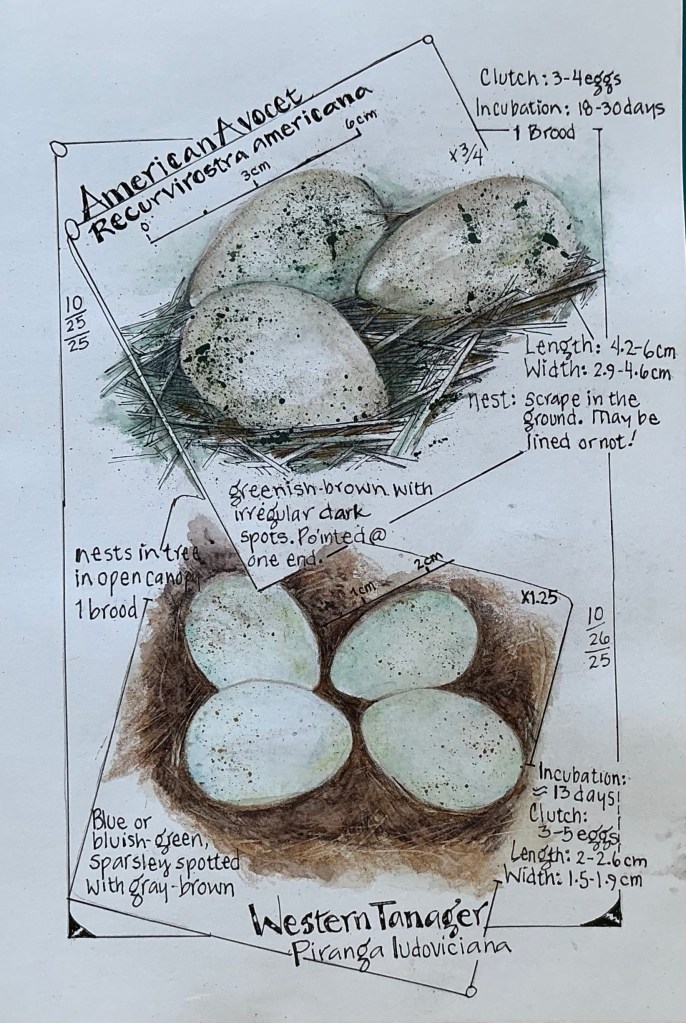
    • Brown or speckled eggs – Brown or highly marked eggs with speckles, spots, blotches, or scribbles provide excellent camouflage for ground-nesting birds like quail, avocets and killdeer. The mottled appearance of these eggs blend well against rock, sand, soil, foliage and branches. The eggs’ colorations are camouflaged well in nests woven from a variety of materials to nests that may be nothing more than a scrape or depression in the ground.

Shell Pigment Layer – Pigment granules are deposited on the outer shell structure, forming color layers which are then enclosed in calcite crystals.

Sperm Storage – a female bird need mate only once for the sequential formation of her eggs to be fertilized. In other words, each newly ovulated egg that arrives at the Infundibulum, which occurs every 24 hours (more-or-less), becomes fertilized from a single mating. That’s because female birds can actually store sperm in Sperm Storage Tubules (SSTs). SSTS are tubular “invaginations” in the Infundibulum where sperm can be kept alive for 2 to 15 weeks (depending on the species), and can be released after Ovulation.

Uterus – the Shell Gland

Yolk – The nutrient-bearing portion of the egg containing most of its fat, minerals, and many of its proteins and blood vessels.

Yolk Behavior – The Yolk always rotates so the developing embryo floats to the top, regardless of the egg’s position

Zygote – the fertilized Ovum

Wow, gosh! I’m egg’s-hausted ….. how about you!?! But wasn’t that a fascinating journey through a bird’s oviduct? A literal look behind the scenes! 

October 31 and November 1 (bonus)

And that concludes my Inktober/EggTober 2025. Researching so much information not only took me down some fascinating rabbit trails, but everything I learned in the month of October blew my mind! And everything I uncovered had to be shared with you all. The bounty was voluminous, resulting in each Submission eggs-panding to accommodate nearly everything. Yes, you read that right ….. I nearly got everything shared, and there’s still so much more to learn about past, present and future bird eggs and all eggs in general. Maybe once my notes are gather and organized, and I pursue answers to countless questions on the when’s, why’s and what-for’s, it will be time for EggTober 2026! 

Did you participate in this year’s Inktober? Maybe my four submissions gave you ideas for Inktober 2026? Share your thoughts and ideas.  Meanwhile ….. That’s all for now, yolks!

As always, thanks for stopping by!

P.S. in case you missed any of my previous EggTober 2025 Submissions, you can catch up with the following links:  Submission One, Submission Two, and/or Submission Three! Enjoy!

EggTober 2025/Submission Three ….. Days 17 – 24

October 25, 2025

October is ‘flying” by! It seems amazing how quickly my Inktober 2025 sketchbook is filling up with daily EggTober watercolor paintings of bird eggs. Week three is now complete, and the eggs of eight more breeding birds of New Mexico can be viewed below. As with Submissions One and Two, included are a few fascinating facts about bird eggs, this time with a focus on the eggshell. 

In case you missed my first and/or second EggTober posts, and would like to catch up, click the following link(s) to read Submission One, and/or Submission Two.

October 17th & 18th

A Bird’s Eggshell 

At first glance, you may think all bird eggs are covered in a hard, solid shell. You would be right about the shell being hard, but have you ever taken a close look at the shell surface? The outer shell appears to have dimples, a bit like a golf ball. Those dimples are pores in the eggshell. Bird eggs are considered “amniotic” which means their eggs not only have a hard shell; they have a porous membrane to allow for oxygen and carbon dioxide exchange. Also, an important characteristic of amniotic eggs is they resist dehydration, which is why birds can lay them on dry land. So, is the porous membrane sandwiched between the eggshell and the ‘egg white’ (albumen), and why?

In Submission Two, I noted that the typically oval-shaped bird egg is able to withstand the weight of the incubating parent(s); the shell having the strength and resilience to withstand external pressures which minimizes the chances of the developing embryo becoming deformed or suffering bone fractures. So, just how thick must an eggshell be, yet still allow the developing embryo to breathe? 

What are the main functions of the eggshell?

The shell of an egg contributes to successful formation and development of the embryo, by providing protection, respiration and water exchange. The eggshell is also the major source of calcium for the development of high-calcium consuming organs, like the skeleton, muscles and brain. 

But what we think of as the eggshell, is actually Eight Separate Layers (!) that stack together from the outside of the egg to the inside where layer eight meets the albumen. It’s through these layers that the embryo breathes. 

These layers, from the outside in, are the Cuticle layer with Pores, Shell Pigment layer, Vertical Crystal layer, Crystalline Palisade layer, Organic Matrix layer, Mammillary layer with Mammillary Bodies, External Shell Membrane layer, and Internal Shell Membrane layer. These will be summarized below. I’m also compiling a more complete description of each layer and detailing their importance, which should be complete and posted before the end of the month.

But before taking a brief ‘look’ at the eight eggshell layers, I wanted to share a snapshot about their thickness ….. because, quite frankly, I couldn’t imagine how all those eight layers manage to fit!

Eggshell Thickness

Most bird eggshells must be thin enough for the chick to peck through when it hatches, but at the same time it must be thick enough to bear the weight of the growing embryo inside, and the weight of the parents incubating it.  The thickness of eggshells varies among species and individual birds, but also among individual eggs laid in a clutch. Eggshell thickness is also influenced by factors like the bird’s age, diet, and where the measurement is taken on the egg. In general, bird eggshells are usually 5% thicker at the mid-section of the egg (the area called the equator) than the ‘bottom’ (the sharp egg pole) and ‘top’ (the blunt egg pole) ends.

To ‘illustrate’ how thickness varies by a few species, the egg of a Blue-tailed Emerald (a species of hummingbird that lays an egg with one of the thinnest recorded eggshells among all bird species) has a shell that’s 0.029 mm (0.0011 inch) thick. Compare that with an Ostrich egg, the largest egg with the thickest eggshell in the world, measures in at 1.92 mm (0.08 inch) thick. For many common species, like the Mallard, shell thickness is around 0.337 mm (0.013 inch); a domestic chicken eggshell varies from 0.33 – 0.36 mm (0.013 – 0.014 inch) thick. 

It may be helpful to relate these small sizes in eggshell thickness to an average human hair, which can be anywhere from 0.06 mm (0.0024 inch), to 0.10 mm (0.004 inch) thick. I’m still amazed how an eight-layered eggshell happens!

October 19th & 20th

Structure and function of eggshell layers: Cuticle layer and the Pores, Shell Pigment layer, Vertical Crystal layer, Crystalline Palisade layer

Cuticle (aka Bloom)

The Cuticle’s primary functions are to act as a physical and chemical barrier against invading microbes, protect the eggshell pores, and regulate the exchange of gas (Oxygen and Carbon Dioxide) and moisture (water vapor).  The Cuticle also affects the egg’s wettability, which helps prevent water and bacteria from entering, and fine-tunes the eggshell’s appearance, including ultraviolet (UV) reflectance. 

Eggshell Pores

The texture of the outer eggshell is due to the Pores that form openings in the Cuticle. Depending on species, there can be anywhere from 7,500 to 17,000 Pores covering an eggshell, most located at the blunt end of the egg (the top end where the air cell is located). Each Pore is connected to a Vertical Pore Canal that penetrates the next five eggshell layers, down to the External Shell Membrane. The shells of most bird eggs have simple, straight pore canals that widen slightly toward the openings through the Cuticle. The exceptions are found in swans and the ratites (the group with ostriches and emus), where their Vertical Pore Canals are highly branched. Covering the exterior opening of the Pores of all bird species (except pigeons and doves [hmmmm ….. wonder why]) are tiny plugs or caps, which may act as pressure-sensitive valves. 

The Pores and their canals provide a critical passageway for gas and moisture exchange between the inside and outside world. This exchange allows the developing embryo to breathe by taking in oxygen and releasing carbon dioxide and water vapor.

Shell Pigment Layer

The Shell Pigment Layer serves multiple critical functions, including camouflage, thermoregulation, and protection for the developing embryo. The colors and patterns come from two main pigments, protoporphyrin (brown/red) and biliverdin (blue/green), and their function varies depending on the bird’s environment and nesting behavior. 

Vertical Crystal Layer 

The Vertical Crystal Layer provides mechanical strength and structural integrity.  Its tightly packed, vertically oriented crystals form a dense, outer layer that protects the embryo from physical shocks, while also being integrated with the Palisade Layer (below) to form a tough, ceramic-like structure. This outer layer’s density and arrangement make it resistant to impact.

Crystalline Palisade Layer

The Crystalline Palisade Layer serves two primary functions: providing mechanical strength and regulating gas exchange for the developing embryo. This is a thick, mineralized layer, that forms a dense matrix of calcium carbonate crystals, and is critical for protecting the egg’s contents while also aiding metabolic processes (i.e. all the chemical reactions within the embryo that are essential for life).

October 21st & 22nd

Structure and function of eggshell layers: Organic Matrix layer, Mammillary layer with Mammillary Bodies, External Shell Membrane layer, and Internal Shell Membrane layer

Organic Matrix Layer

The Organic Matrix Layer plays a crucial role in controlling biomineralization, forming the shell’s microstructure, and providing antimicrobial defense. Consisting of proteins, glycoproteins, and proteoglycans, this layer acts as a scaffold that controls the eggshell’s strength and protective properties. 

Mammillary Layer and Mammillary Bodies

The Mammillary Layer and Mammillary Bodies form the foundation for the rest of the eggshell. Their primary function is to provide the calcium for the embryo’s skeletal development. This inner layer is composed of calcite microcrystals that dissolve easily, allowing the embryo to extract about 80% of its calcium needs before hatching. 

This layer also helps during the “pipping” process because its globular texture makes it easy to crack and break through the shell from the inside. Pipping is the,process where the chick breaks through its eggshell to hatch. There are two phases during pipping:  internal and external. Internal pipping is when the chick breaks through the Inner Shell Membrane Layer (see below) to reach the air cell and take its first breath followed by chirping! This first phase not visible from the outside and can take 12-24 hours. External pipping is when the chick uses its egg tooth to peck a visible hole or holes in the eggshell, a process that can take a few hours to a few days, requiring the chick to rest frequently… those outer layers of shell are hard. The long time due to the chick needing to rest This can take anywhere from a few hours to a couple of days. The final step is “zipping,” where the chick turns in the egg, cracking the shell into two halves to fully hatch.

External Shell Membrane Layer

The External Shell Membrane Layer functions primarily as a barrier to protect the egg’s contents from bacterial invasion and to prevent moisture loss. This membrane is made of proteins and acts as the first line of defense after the Cuticle, preventing microorganisms from entering the egg. 

Internal Shell Membrane Layer

The Internal Shell Membrane’s primary functions are to provide a barrier against bacterial invasion and to support the formation of the hard eggshell. It also helps prevent excessive moisture loss while allowing gases to pass through, a process that becomes more significant when the External and Internal Shell Membrane Layers separate to form an air cell. 

October 23rd & 24th

Summary

Eggshells! I never knew they are such complex structures with many unique features.  And eggshells are unfathomably critical to the development and survival of the embryo right up until the moment they “Pip” their way into the world. Without their bioceramic characteristics, microscopic pores, front-line bacterial defense systems, color patterns, and their surprising strength despite the shell’s thinness. birds might be something completely different or perhaps might not ‘be’ at all. Something worth pondering!

Hope you have enjoyed Submission Three of EggTober! If so, please leave me a comment.  And as always, thanks for popping in! 

p.s. Stay tuned for Submission Four, landing in your in-basket next week!