Floss is Flying 🪂  ! 

It Must be Fall …….

September 22, 2025
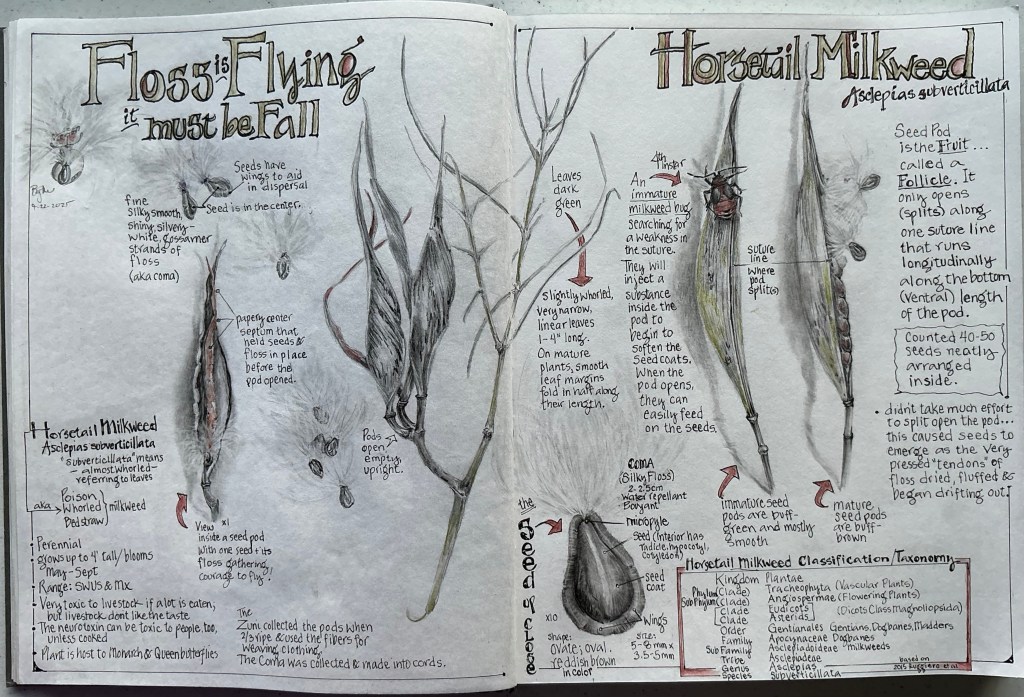
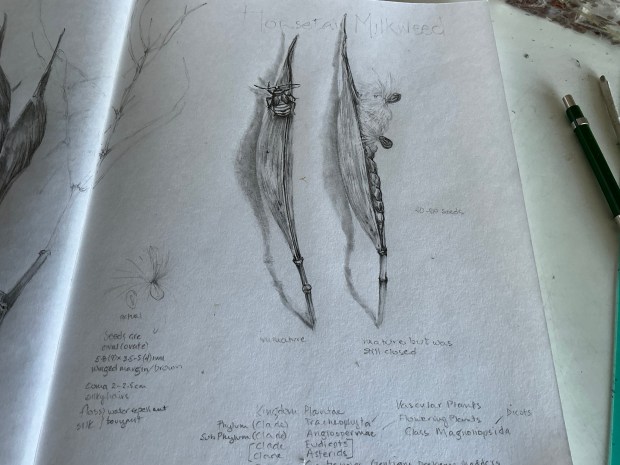
Like soft, fluffy snow!  Glistening orbs of silky gossamer are floating about the neighborhood, drifting hither and yon in the gentle breeze.  Suspended beneath each orb is a single reddish-brown winged seed that appears to coax its wind-propelled puff in a safe descent to the ground. But the white floss (the Coma) wants to fly, and it becomes a tug of war.  As the weight of the seed overwhelms the ability (and the desire) of the floss to carry it, their brief relationship is severed. But both get their wish …. the floss flies free as the seed drops to the ground, hopefully landing in an ideal spot to overwinter and sprout next spring.

Welcome Fall!  

When the air is full of Horsetail Milkweed parachutes and their ‘riders,’ I walk along the neighborhood roadways and collect a bounty of their new-crop seeds + floss to set free around our property. If they find the right soil, moisture, and light conditions for spring germination, the seeds will not only form the beginnings of a stand of these beautifully blooming, creamy-white milkweed flowers, but the plants might just play host to Monarch and Queen butterflies! 

Now wouldn’t that be dandy!

(Of course, mature seeds from new plants will undoubtedly entice a hungry crop of well-dressed Milkweed Bugs next Fall. That’s OK! They have to eat too!)

Before hint of color

My Journal Pages ……

For something different, instead of using ink and watercolor, all sketches on these pages were created in graphite. The pods, seeds and the milkweed bug were sketched from my collected samples using a mechanical pencil loaded with a fine point HB lead.  The touches of color were added with water soluble graphite.

Work in Progress #1
Work in Progress #2

Thanks for stopping by ….. And Have a Fabulous Fall!
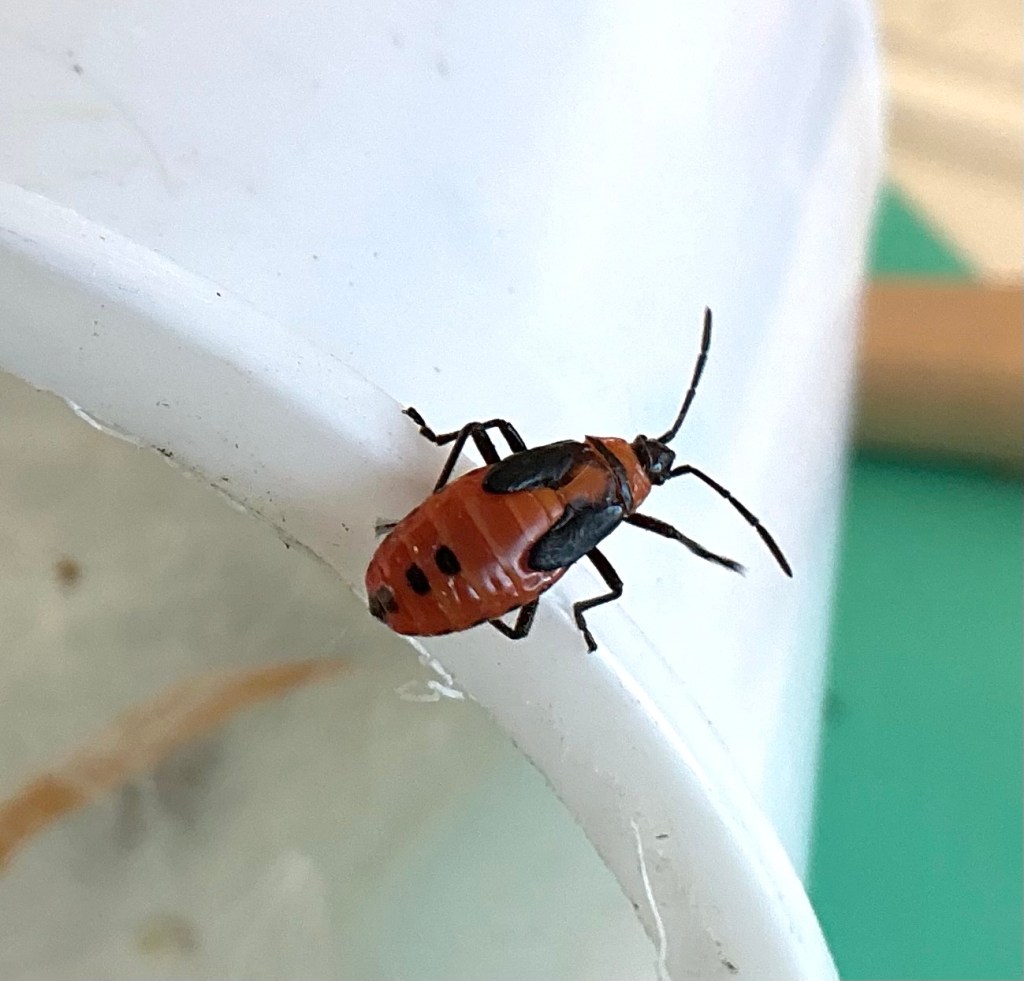
Large Milkweed Bug

International Nature Journaling Week 2023 ……… A Sensory Safari ….. Day 2: Texture

June 1 – 7, 2023

Well it didn’t take me long to get hooked on this year’s International Nature Journal (INJW) theme, a “Sensory Safari.” Both Day 1: Color, and Day 2: Texture, offered a wealth of inspiration, ideas and helpful tips and techniques about how to discover nature “like a pro,” and how to better capture observations in my nature journal. This is exciting stuff, y’all!

It’s not too late to get involved and there’s no cost for participants, so check it out! All workshops and resources, the schedule and links to videos are available at  https://www.naturejournalingweek.com/

Day 2: Sense of Touch – Texture in Nature

Introductory Session on Texture
The natural world is full of texture ….. from tree bark, fresh Spring and crunchy Fall leaves, the bumpy outsides and fuzzy insides of a sycamore seed ball, to a cactus pad covered in spines. The texture of the fur on my dog is coarse, but closer to her skin it’s soft and silky. How many times have you plucked a downy soft dandelion “clock,” and then in a puff, propelled the seeds aloft, exposing its dimpled platform? You may readily run barefoot across a lawn of bluegrass, but think twice before doing so on a field of granite pebbles!
Your conscious and intuitive interactions with the natural world are influenced by texture. For example, your willingness to touch the smooth textured skin of a dolphin probably outweigh your desire to “pet” the knobby skin of an alligator.
One of the many suggestions I learned during the introductory session related to encounters with a natural object. It’s so important to take your time in nature and observe first with your eyes, textures of the familiar and the new. Then, if it’s safe to touch, do so, and ask yourself if your visual and tactile experience are the same or different? And then think about how to describe what you learned?

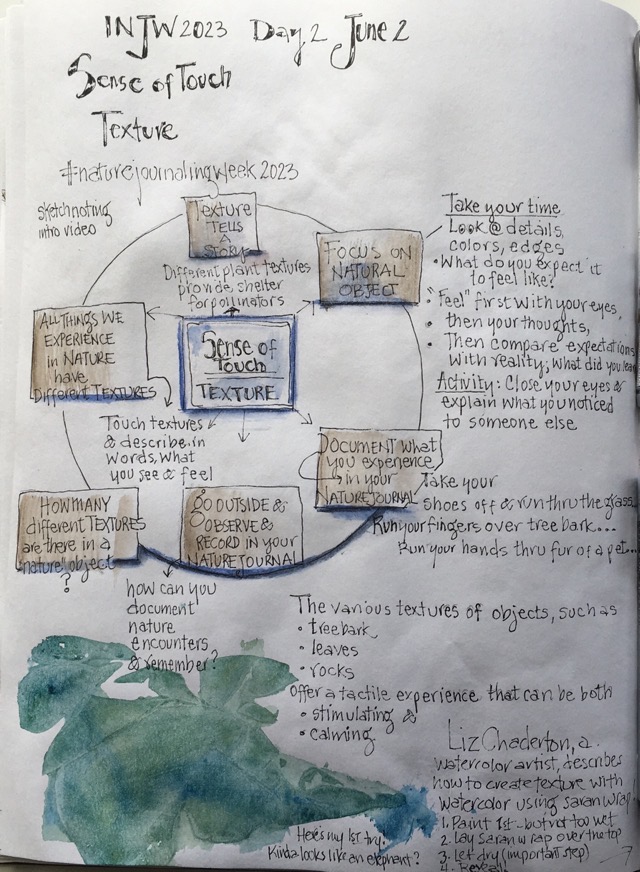
My sketch notes from the materials discussed during the introductory session. Some Brilliant stuff here!

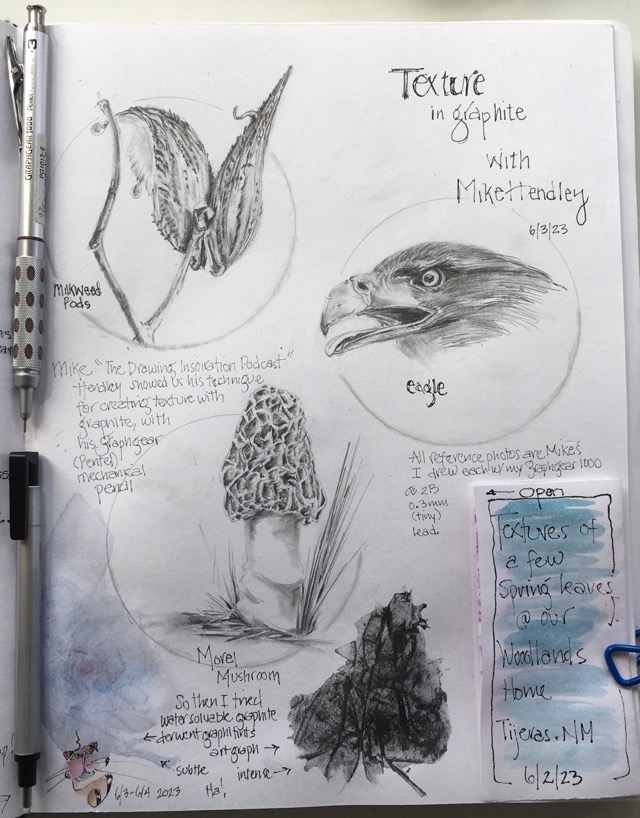
The live video workshop with artist Mike Hendley, involved techniques in graphite to depict various textures found in nature. He emohasized how careful observation revealed an object’s texture, and demonstrated a number of different pencil strokes to achieve a realistic effect.

My journal page with graphite sketches I did along with Mike during the love workshop. Ooooo ….. I do love working with graphite!
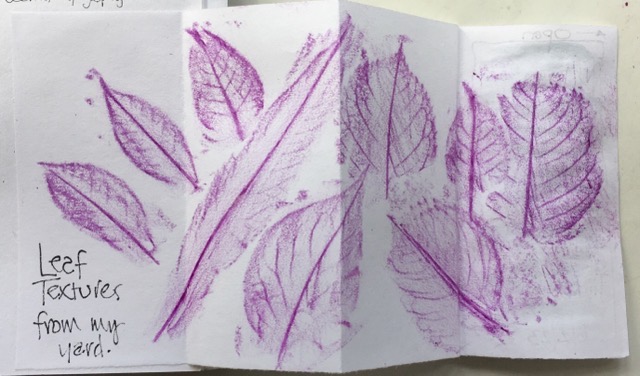
Here’s what’s inside of the little accordion booklet attached to the page above. This was a fun and easy activity, suitable for anyone able to hold a crayon!


Thanks for taking a look! As always, I hope my pages spark in you a sense of curiosity and wonder, and that you would like to learn more. A good place to start is by visiting the INJW home page at https://www.naturejournalingweek.com/.

#naturejournalingweek

A Prickly Situation ….. A Renovating Wren

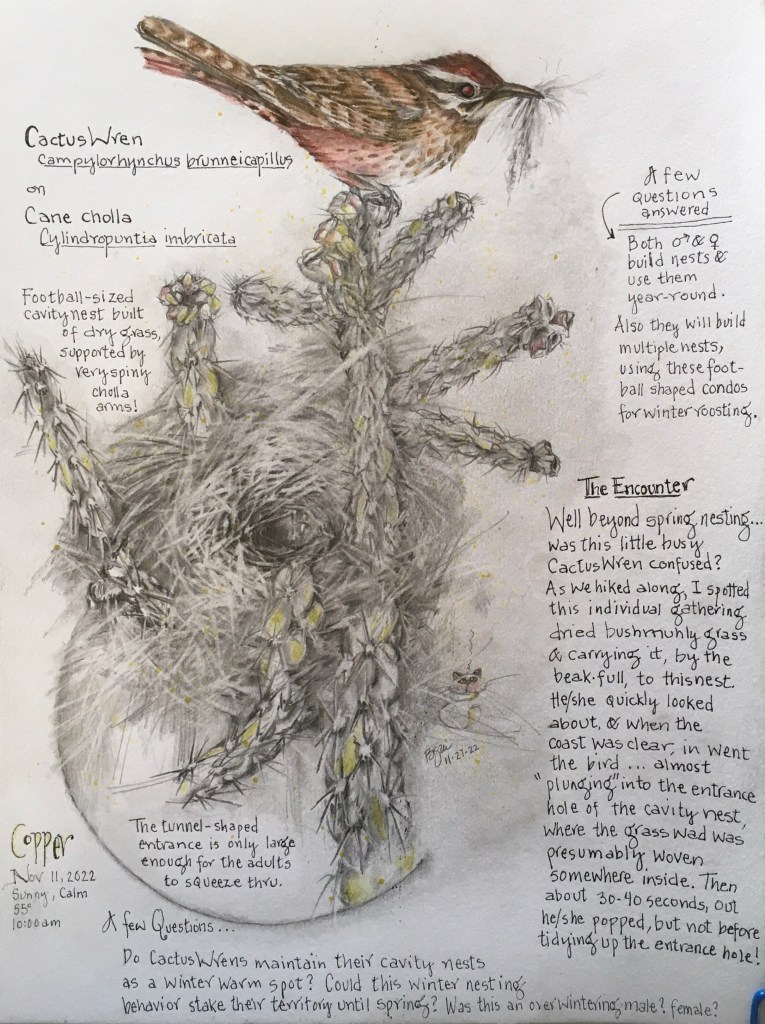
For years we’ve hiked (carefully) past hundreds of stately cane chollas, many with what looks like wads of dried grasses caught tightly in and around the numerous spindly and haphazard arms that grow all over this desert cactus. On closer examination, we’ve discovered the cholla does not actually capture grasses blowing in the wind.  Instead, an industrious and very chatty little bird collects great quantities of dried grass to build a football-sized cavity nest woven protectively and securely on and between    the many arms of a cholla. 

Meet the Cactus Wren.  

Full journal page

Once you’ve heard this gregarious wren chatter and sputter hilariously, you’ll never forget it’s call! As we were walking along the trail one day, I instantly recognized a wildly vocalizing cactus wren. Scanning the skyline (because I know they also love rattling from a perch), he readily showed himself, and did not shy away as I approached. He was calling from the highest (10 feet) arm of a pretty stout cholla, and then quickly jumped down into the center of the branches to inspect an old nest.

This nest may have been old, but apparently this little guy felt a facelift was in order and began tidying up the tunnel-like entrance. He then collected a wad of grasses he’d plucked from the entrance and plunged himself down the tunnel, grasses included! What? What was this crazy bird doing …… nest building?

Turns out cactus wrens build several nests in the spring within their territory, and maintain them year-round. I have to believe they use their nests throughout the cold winter months to keep warm, and it looked like this guy was fixing up the interior of this particular nest with super soft bushmuhly grass stems. I would’ve loved an invitation to peek inside, but hiked on, leaving the cactus wren to his chores.

I’ve been by this nest several times in the past few weeks, hoping to catch the wren at home, but to no avail. Maybe he’s tending another nest somewhere else, as this one is in disarray. 

The Sketch
My sketch, mostly from memory, was done all in graphite using the “subtractive” technique. I don’t usually sketch in his manner, because it can get quite messy ….. laying graphite down then using my mono zero eraser to create the image …. but it was an effective way to illustrate the complexity of the nest and so many cholla spines.  Let me know what you think!

November 27, 2022