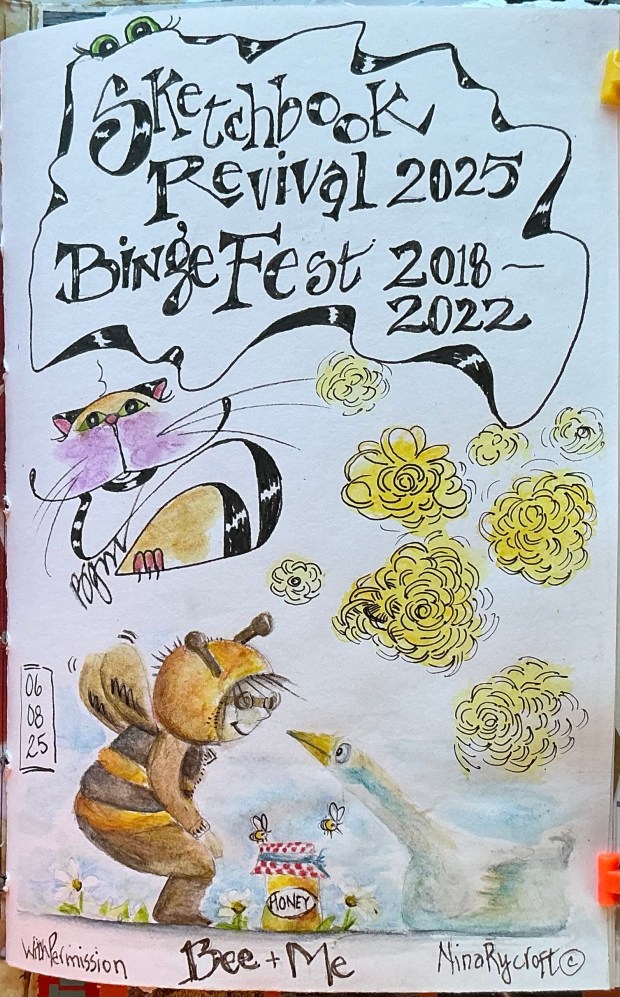
What a whirlwind celebration! Sketchbook Revival (SR) 2025 Binge Fest was so much fun. And Wow! Two jam packed weeks of creativity was over in the blink of an eye!
Karen Abend, SR creator, host extraordinaire, and wonderful artist, came up with a brilliant idea for the SR 2025 session. I would swear the creative gears inside her head were spinning with delight as she declared, “Yureka! I’ve got it!”
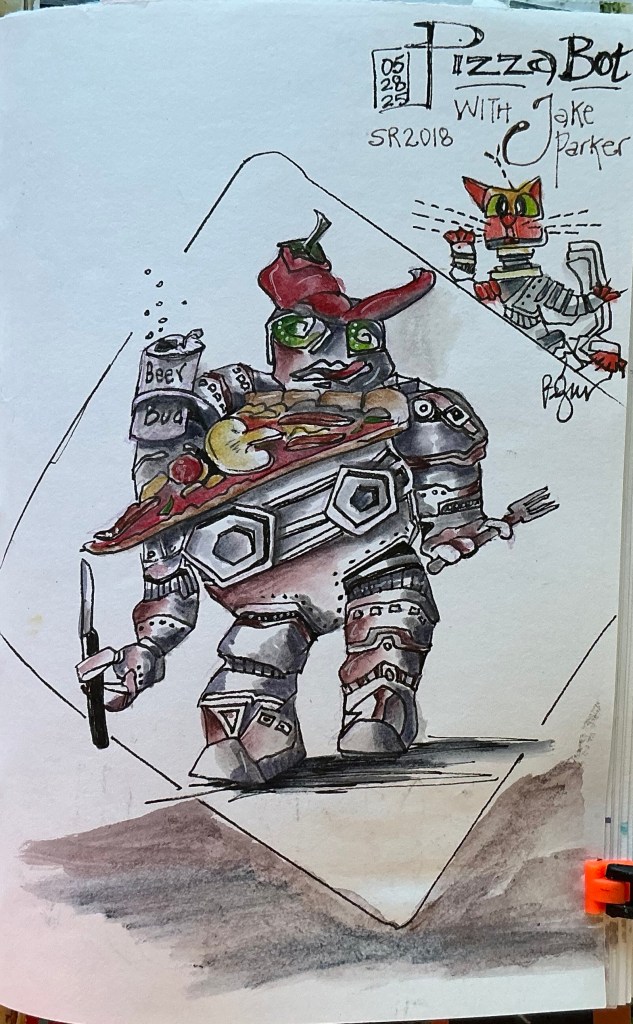
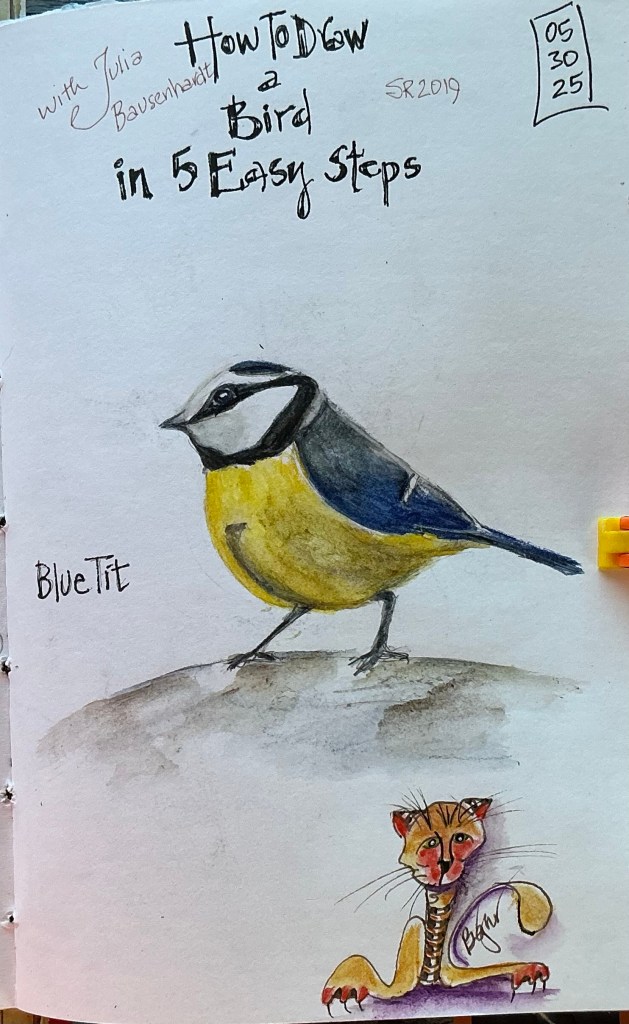
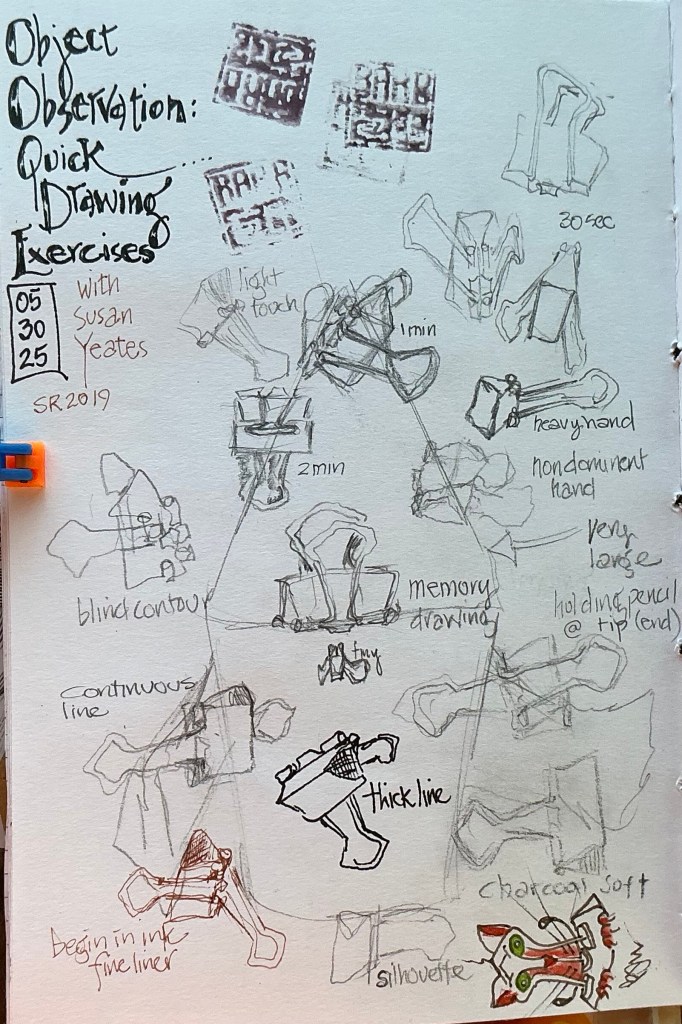
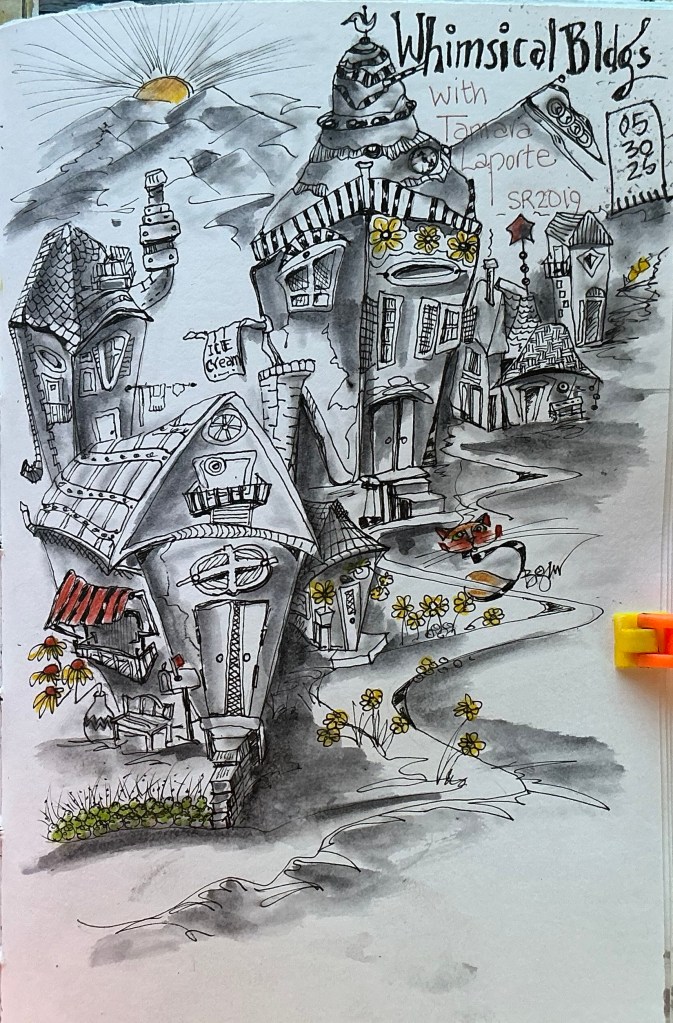
Beginning on May 27th thru June 9th, Karen generously opened up the SR historic vault and set free all of the workshops conducted the first 5 years of SR (2018-2022)! That unbelievable offering came to more than 130 one-hour-long workshops of inspiring, hands-on, and creative play time all instructed by well-known experts in artistic fields associated with Sketchbook Journaling.
Challenge presented ……. Challenge accepted.
Since I’ve been participating in SR each year since 2018, and attended most of these workshops in the past, my goals and strategies to tackle the challenge were these:
Complete a minimum of 4 workshops daily;
Two workshops should involve a project outside of my comfort zone, such as portrait drawing, fantasy, word play, collage, and properly stitching my own SR sketchbook so it wouldn’t fall apart during the 2-week challenge, etc.;
Two workshops should involve projects within my comfort zone, such nature subjects, urban sketching, whimsey, and lettering, and those using watercolor pencils, graphite, and ink;
Develop fresh, interesting, and imaginative sketches during the workshops;
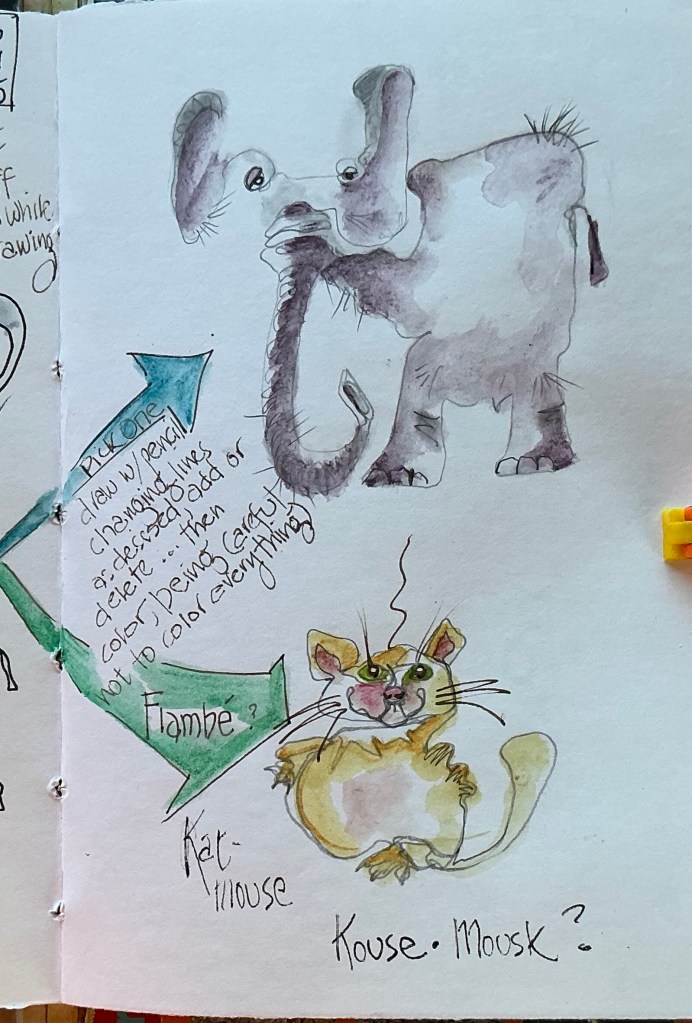
Allow Flambé to play along;
Slow down, breathe, and enjoy the 2-week marathon without becoming overwhelmed;
Recognize and gather take-away tips and techniques to bring into my Nature Journaling practice and Zentangle storytelling.
Keep sketching and sharing.
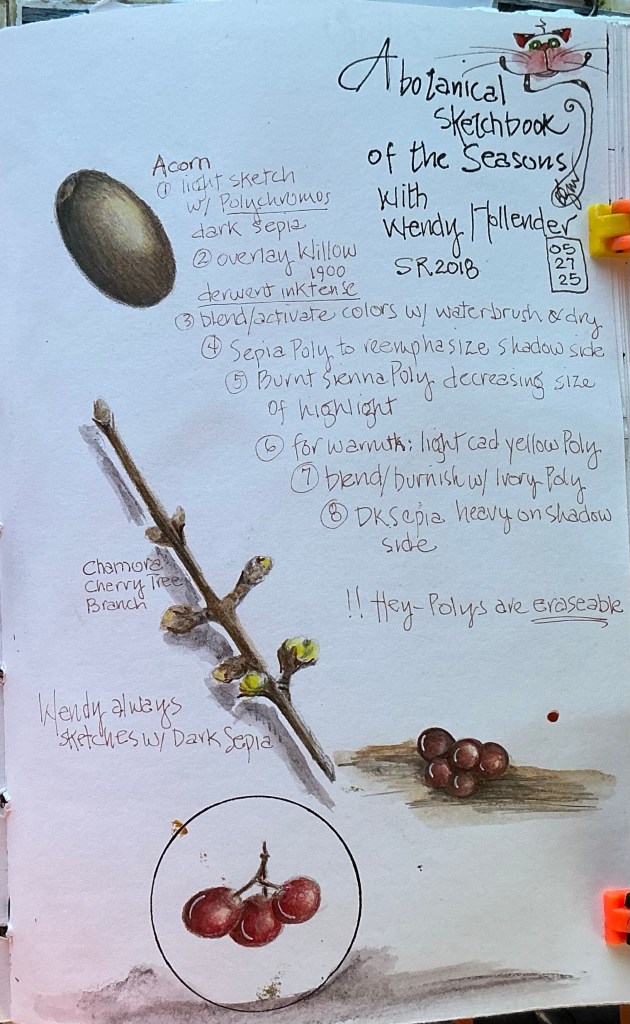
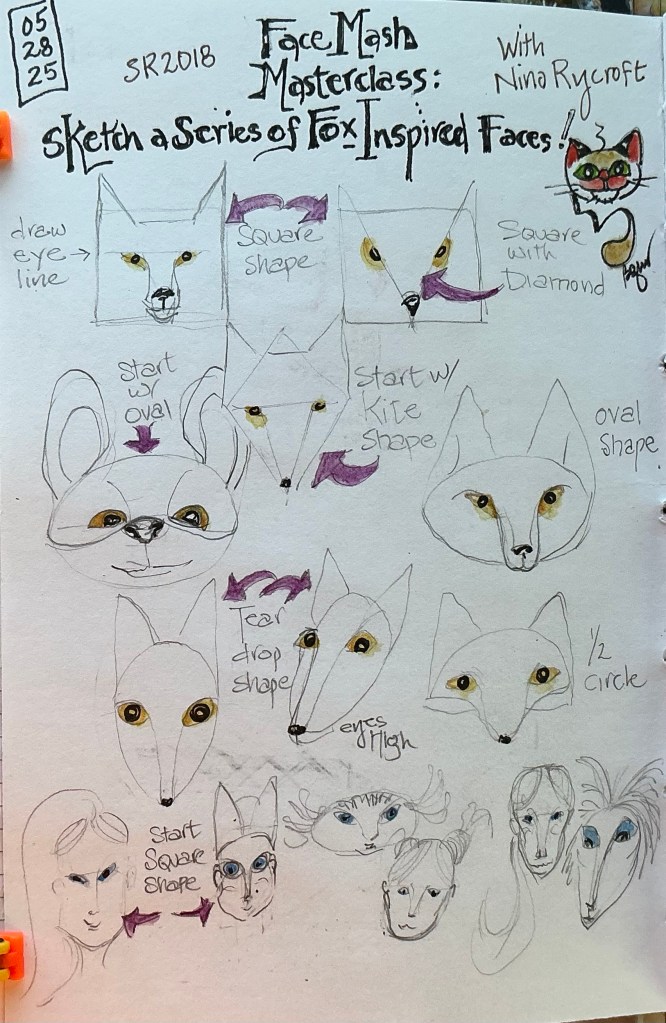
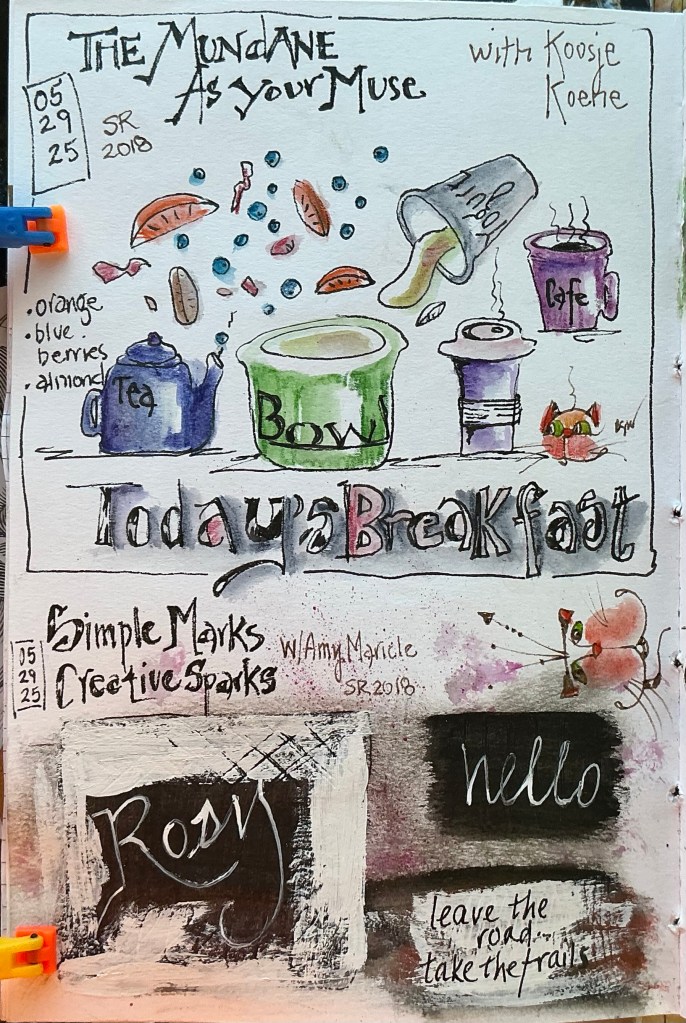
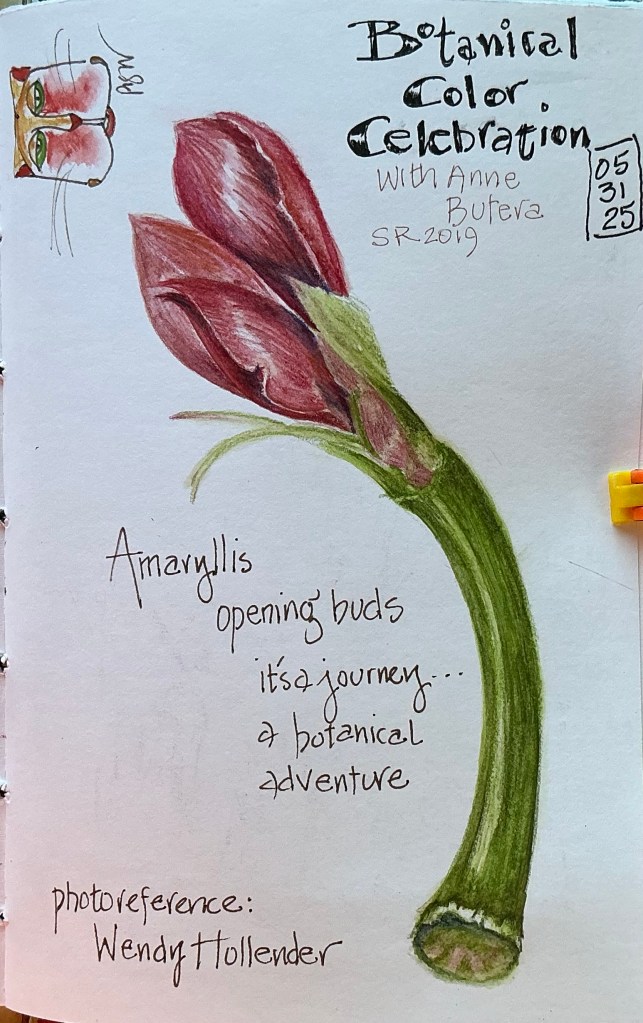
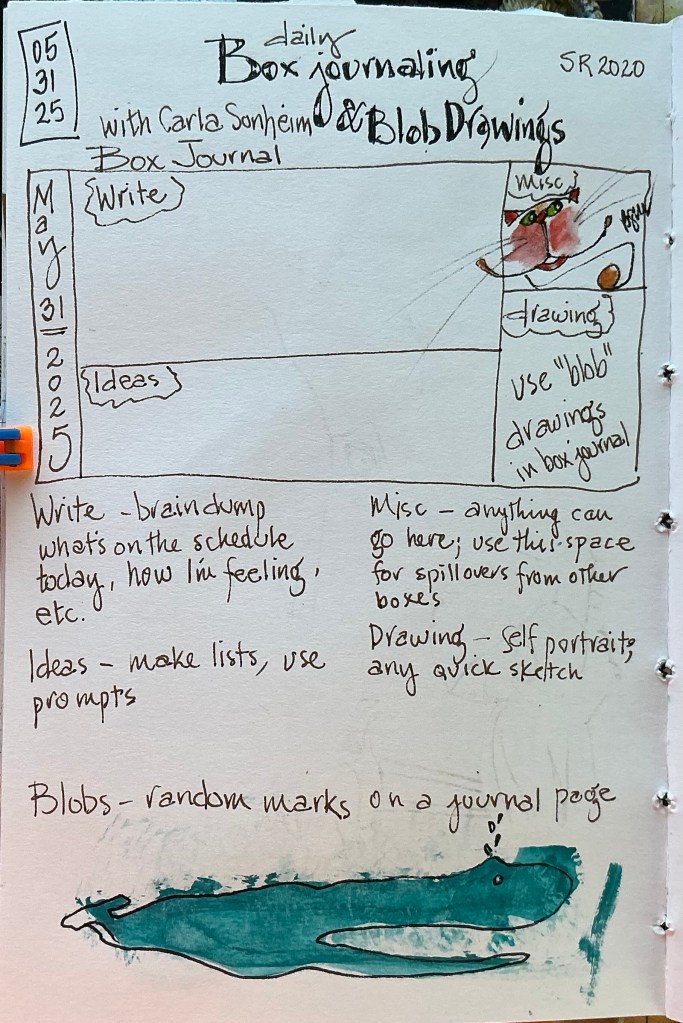
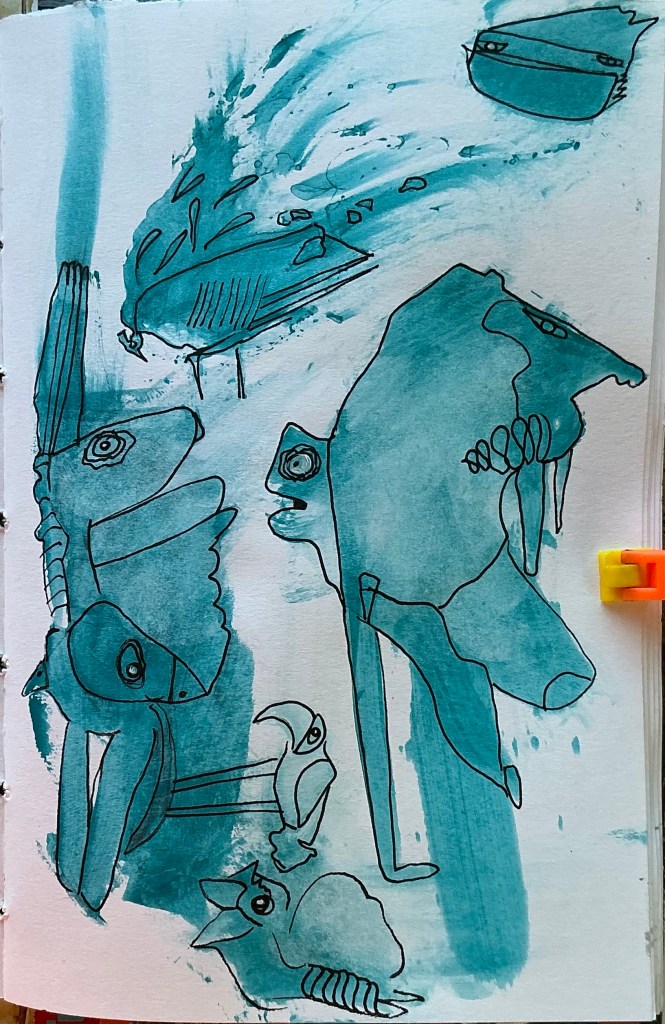
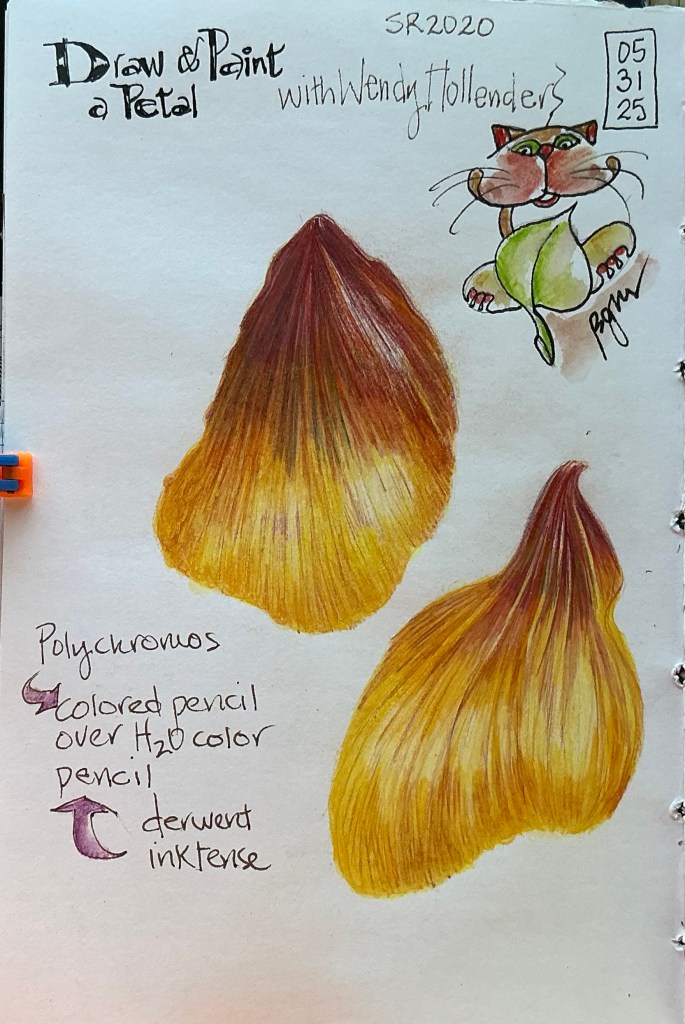
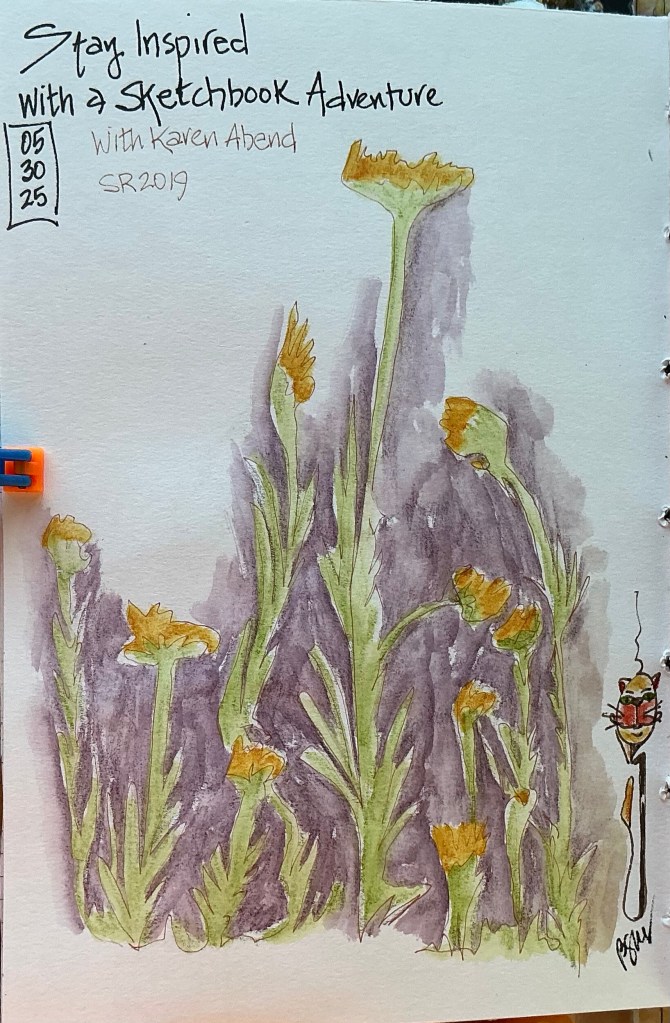
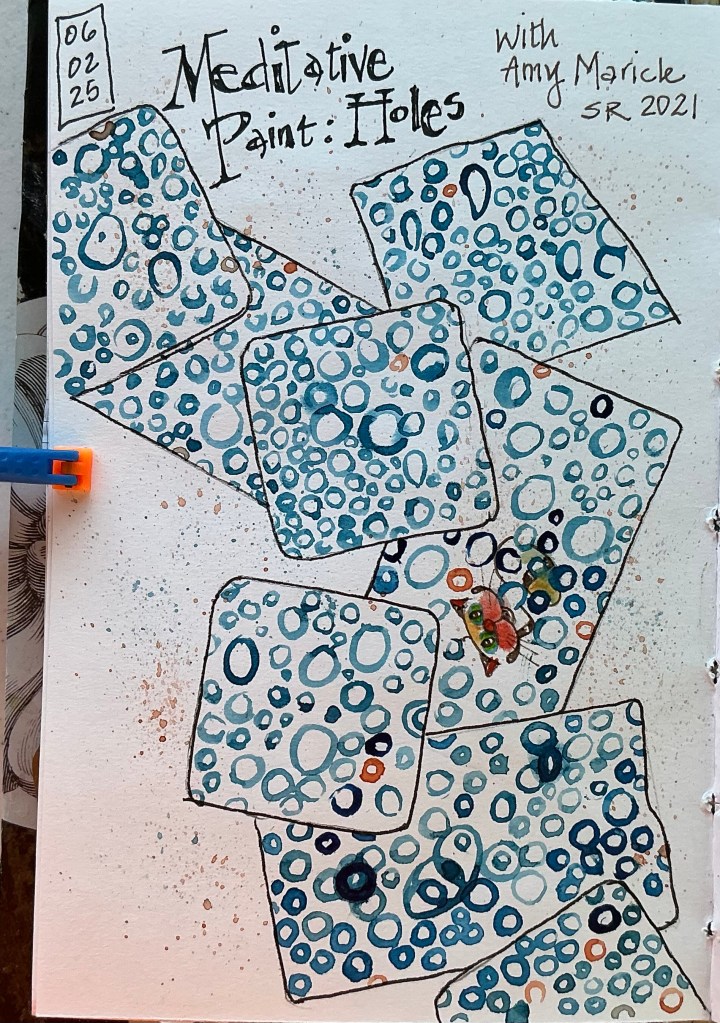
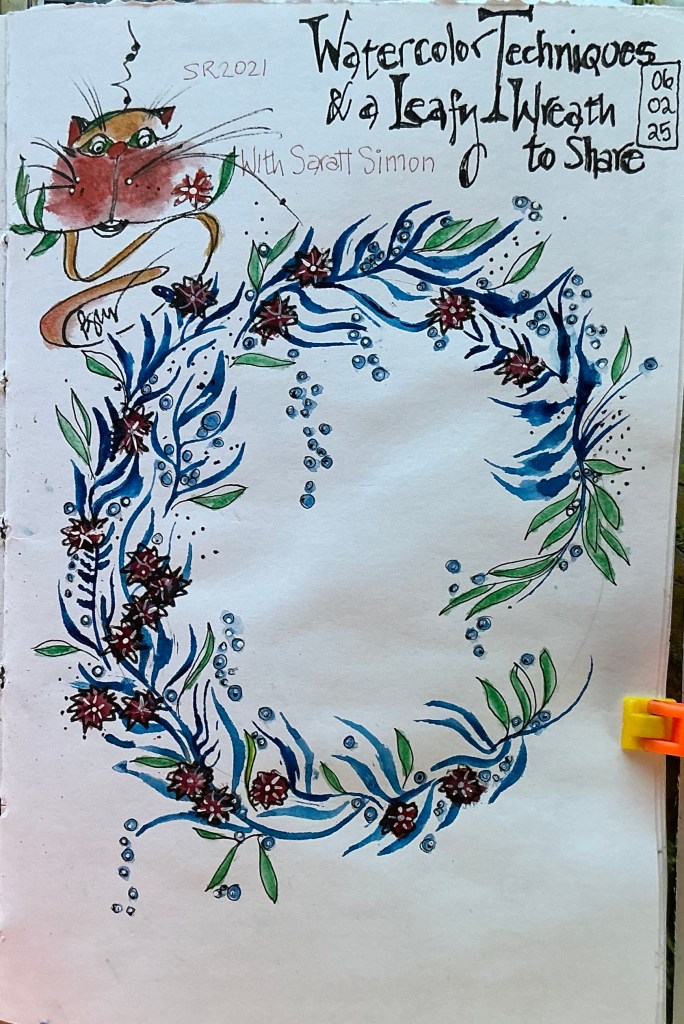
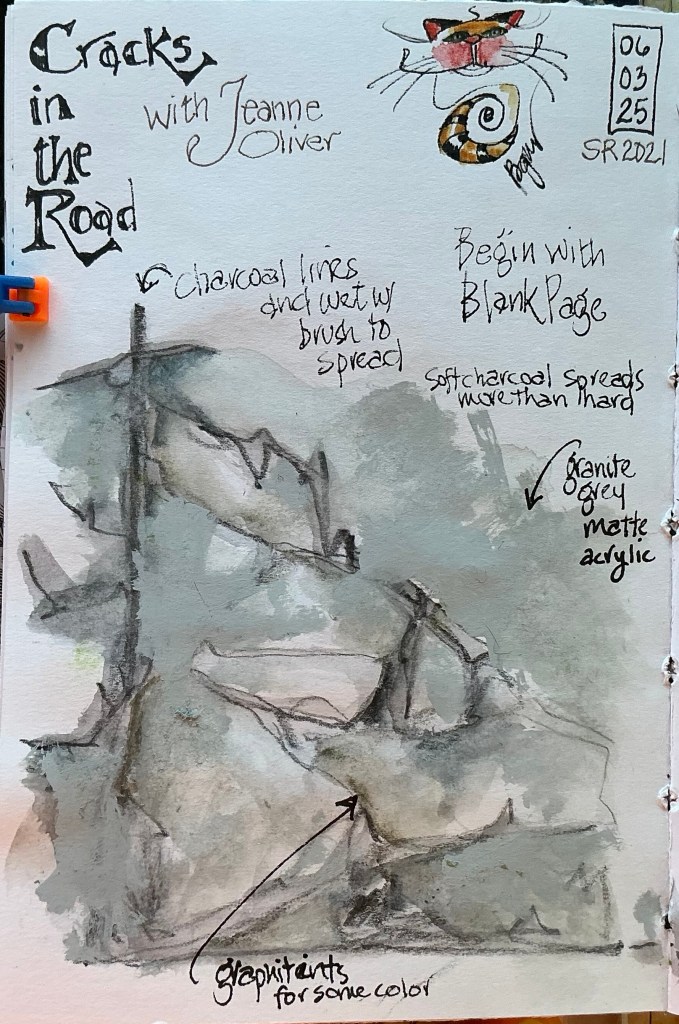
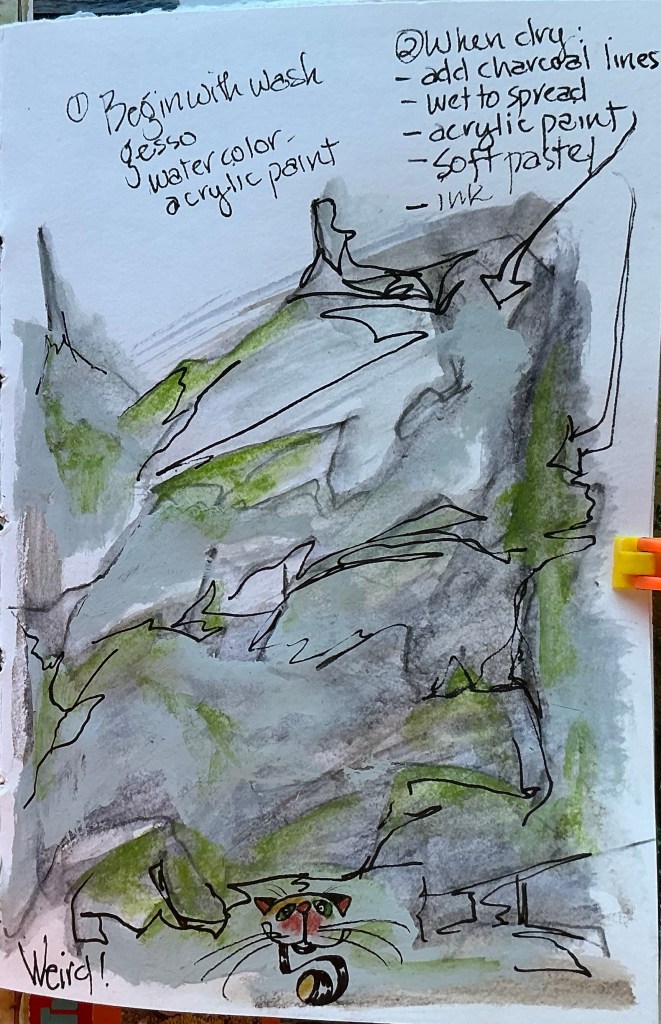
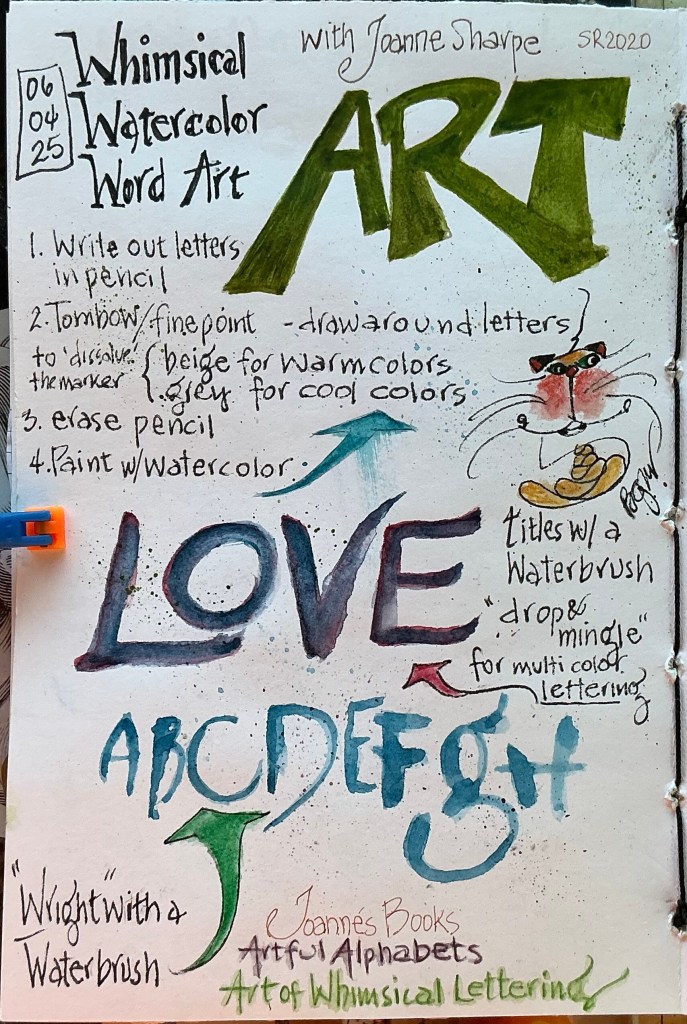
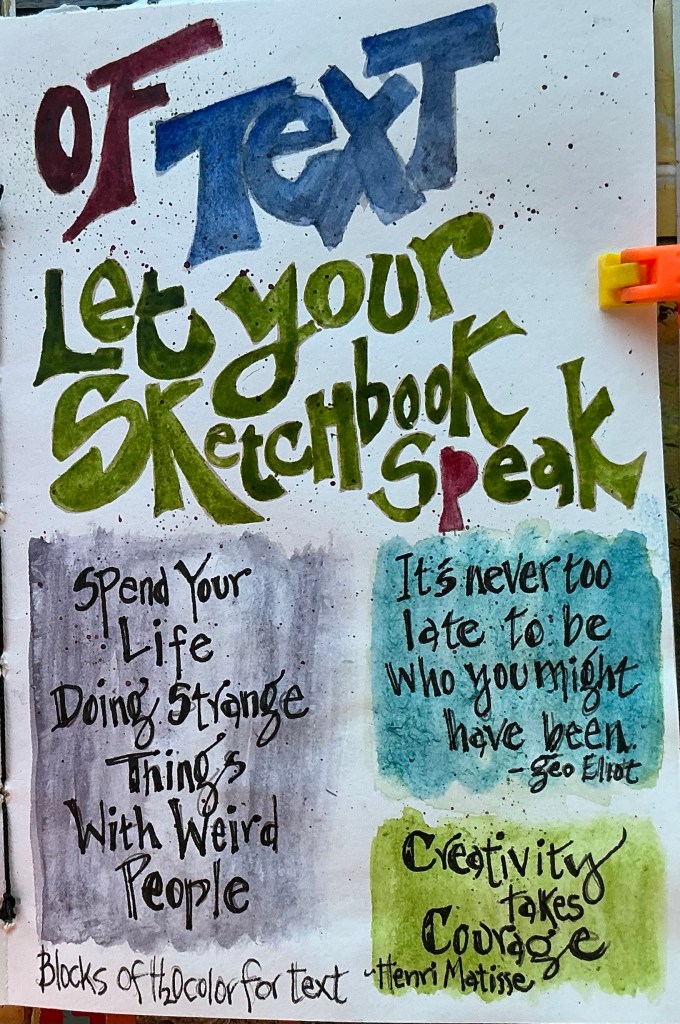
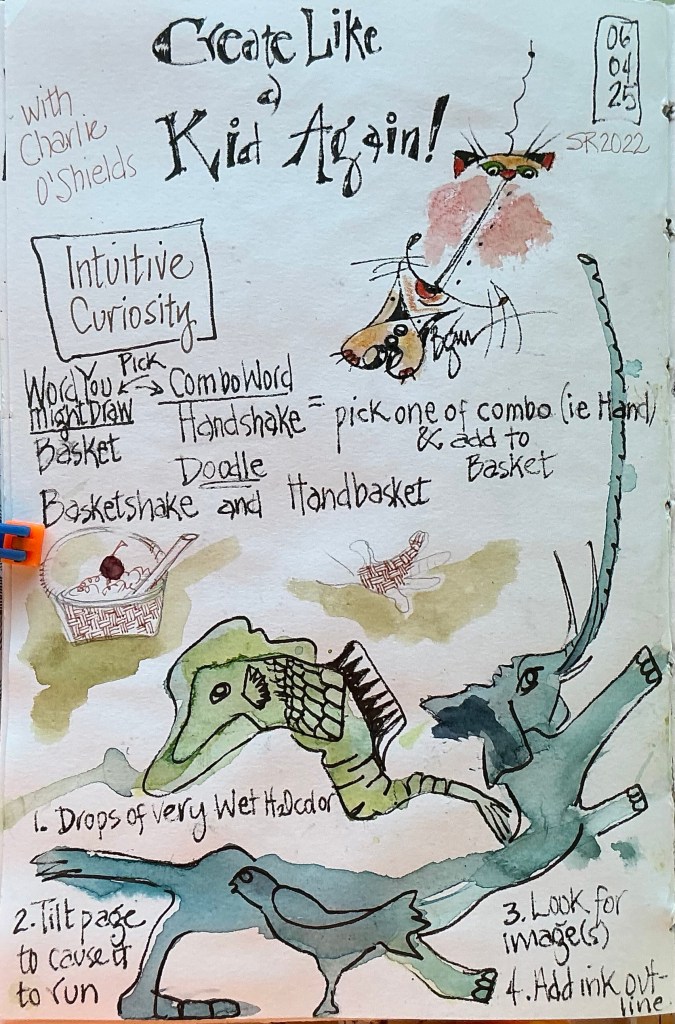
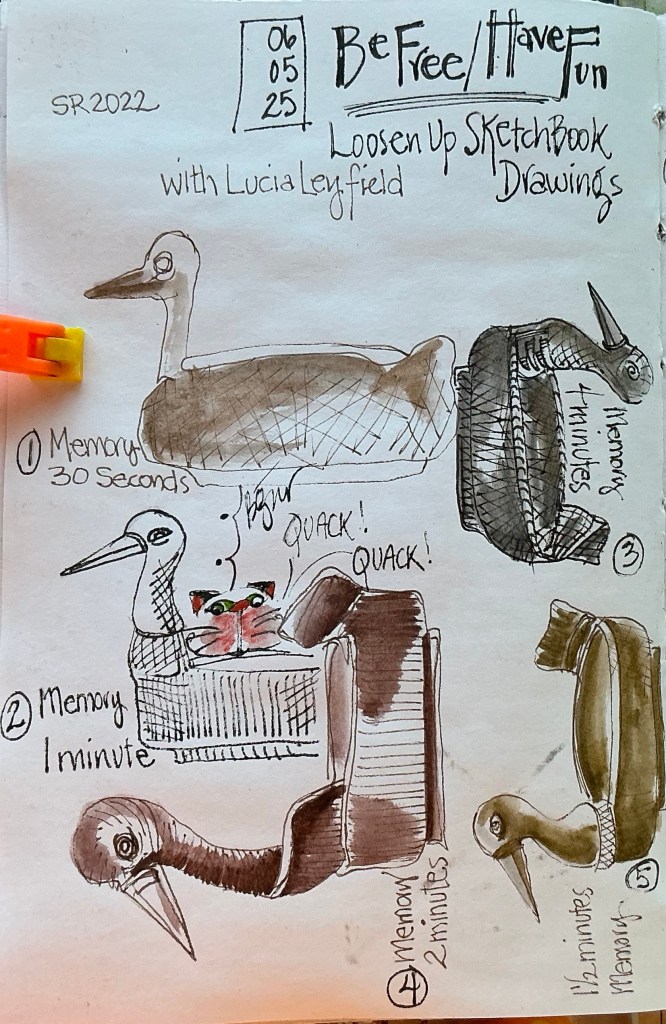
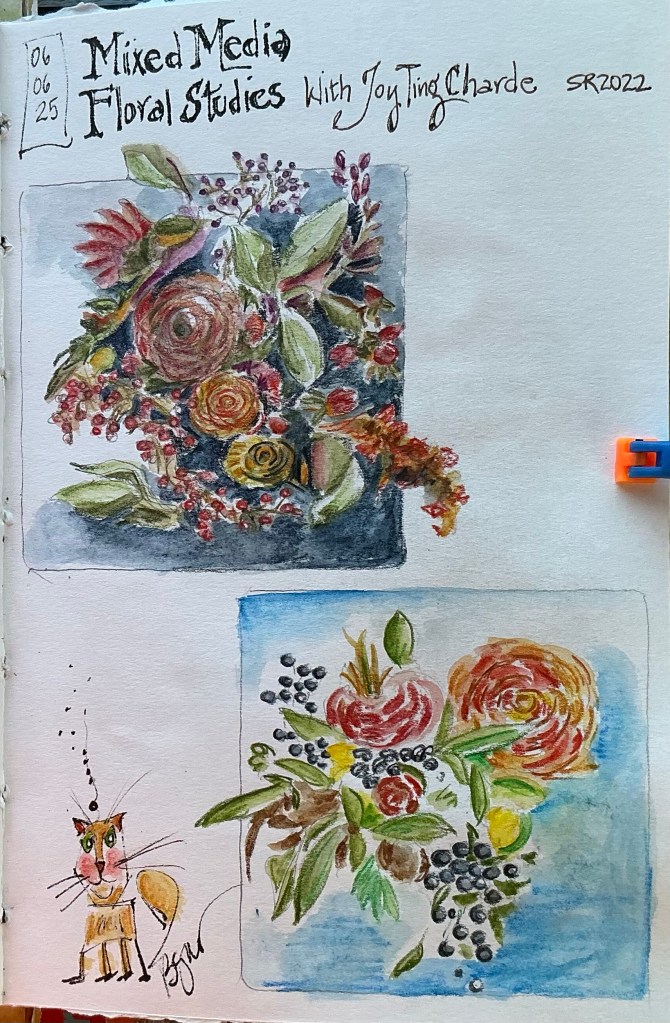
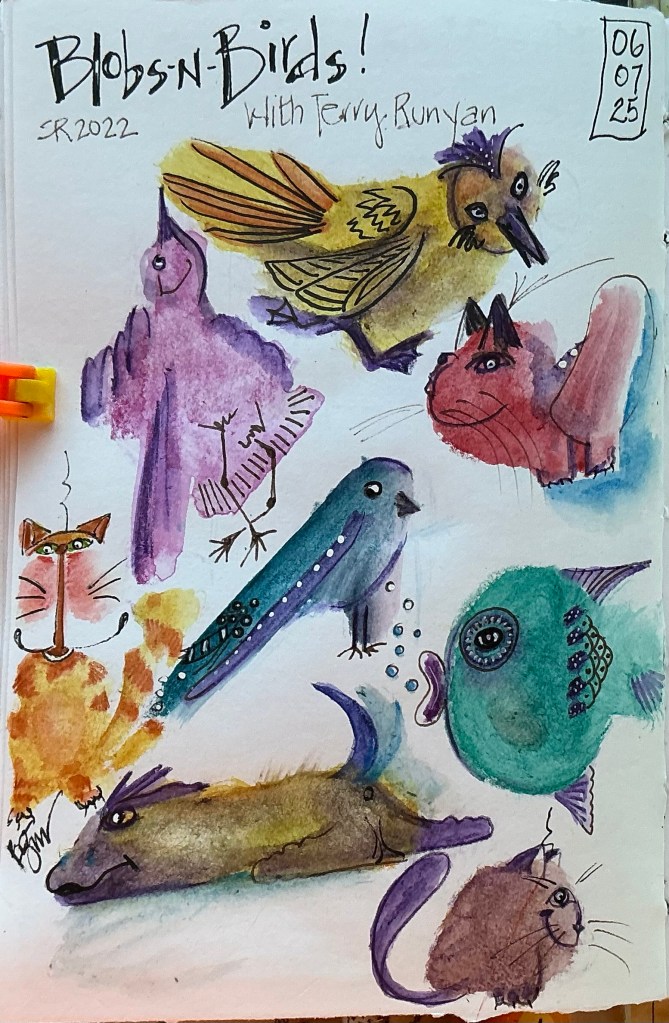
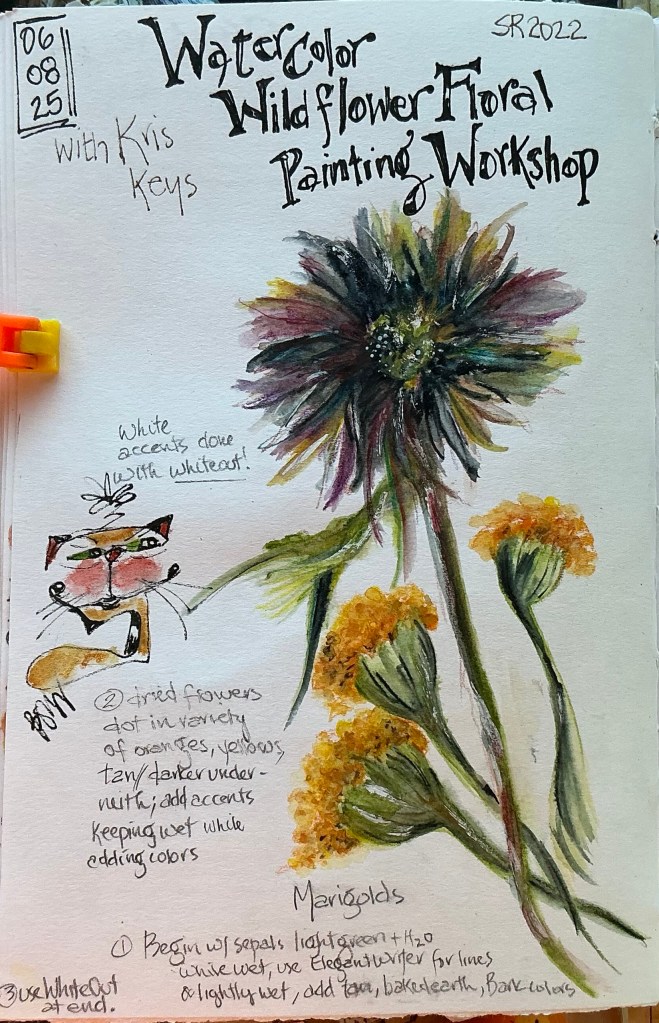
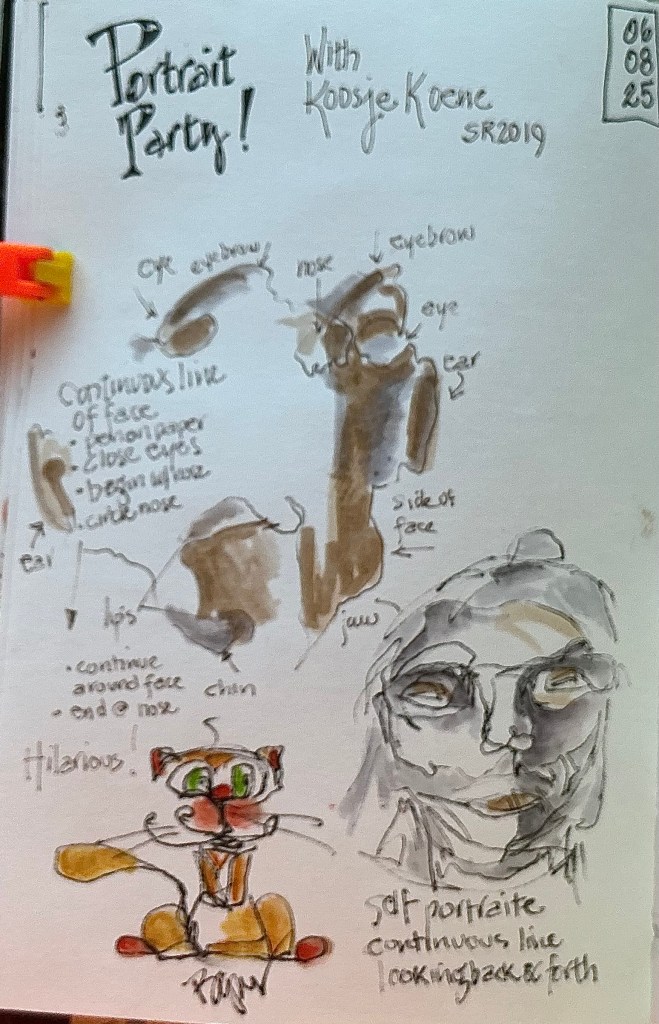
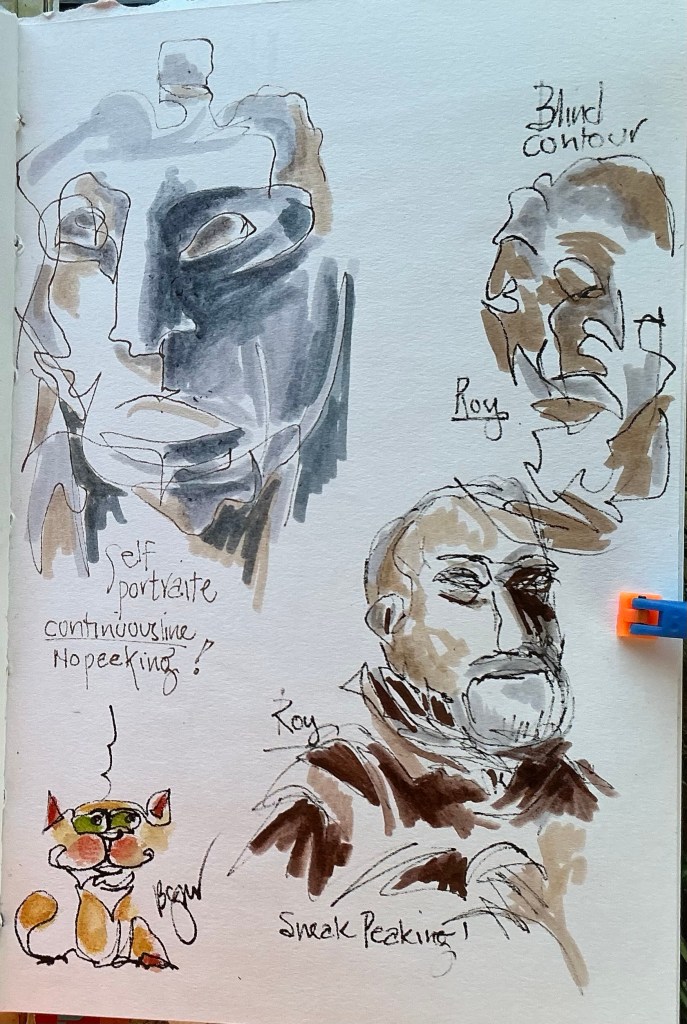
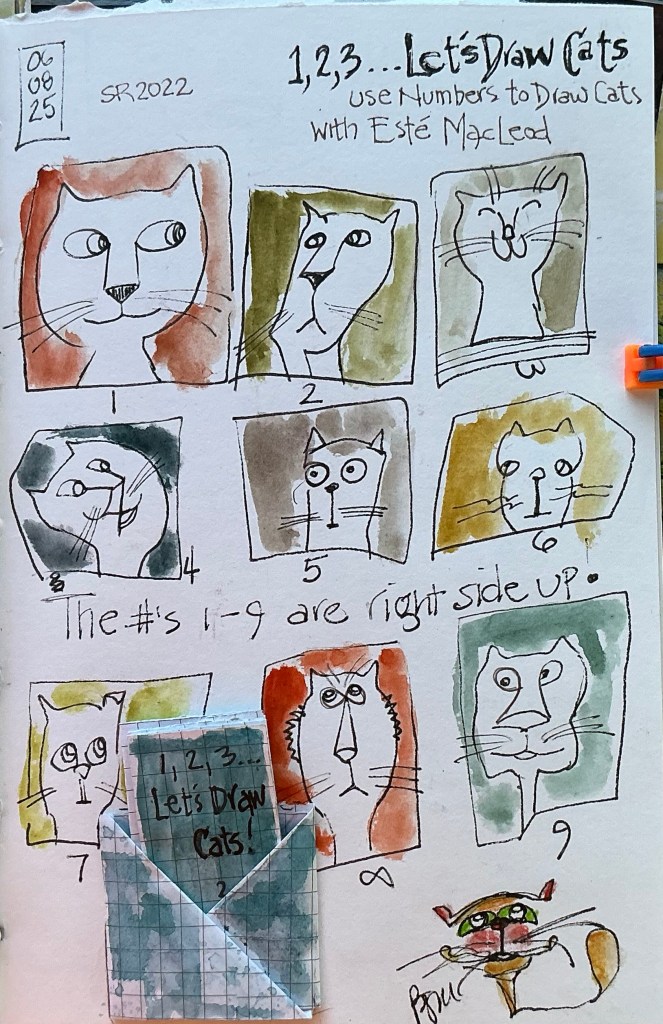
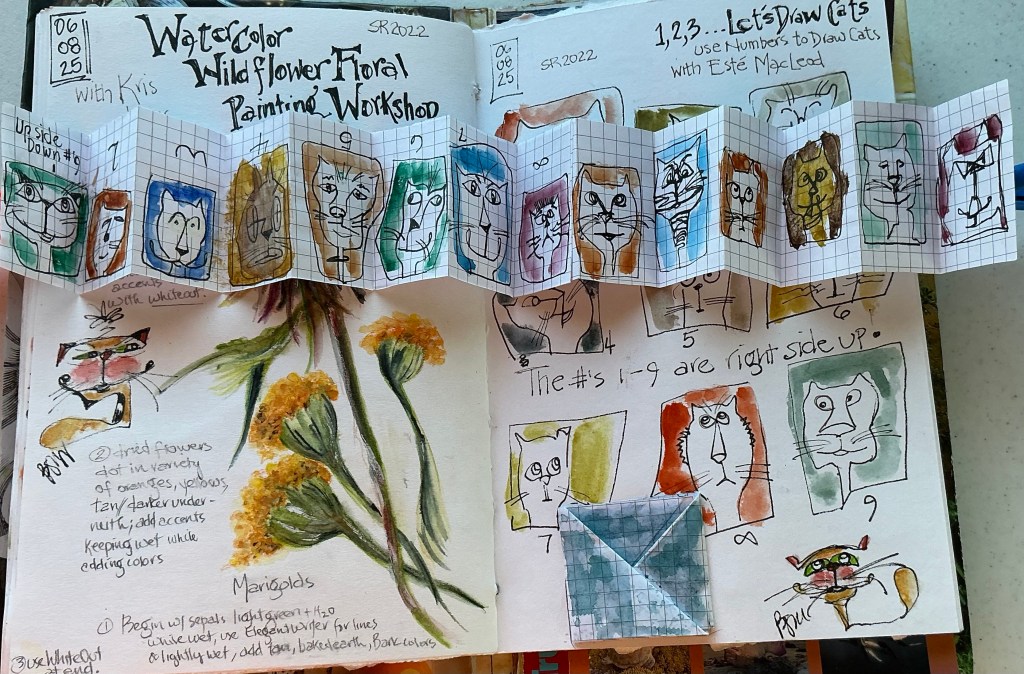
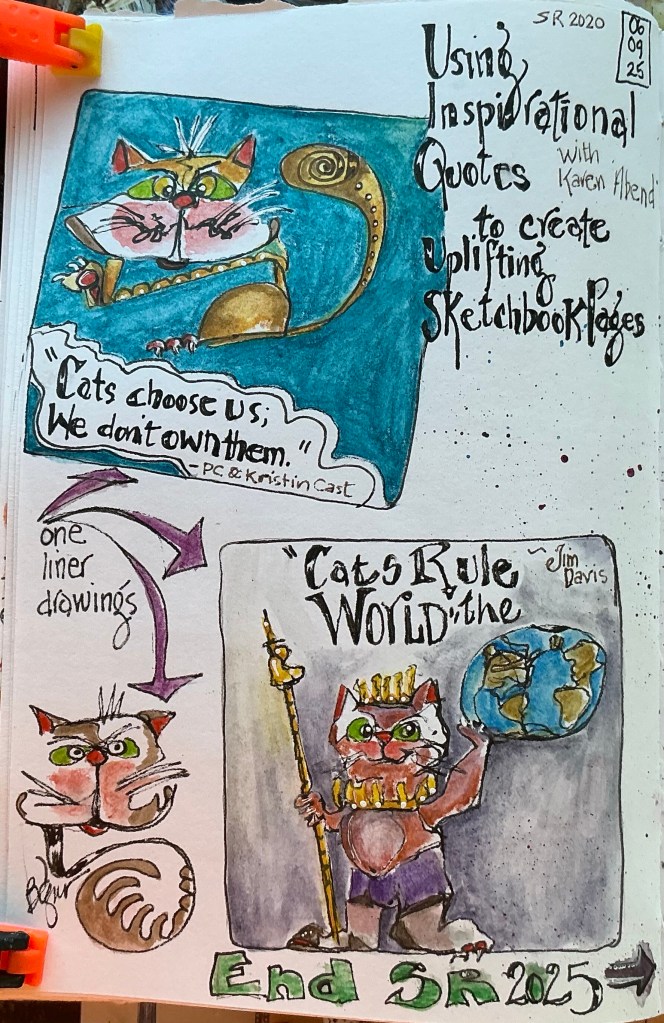
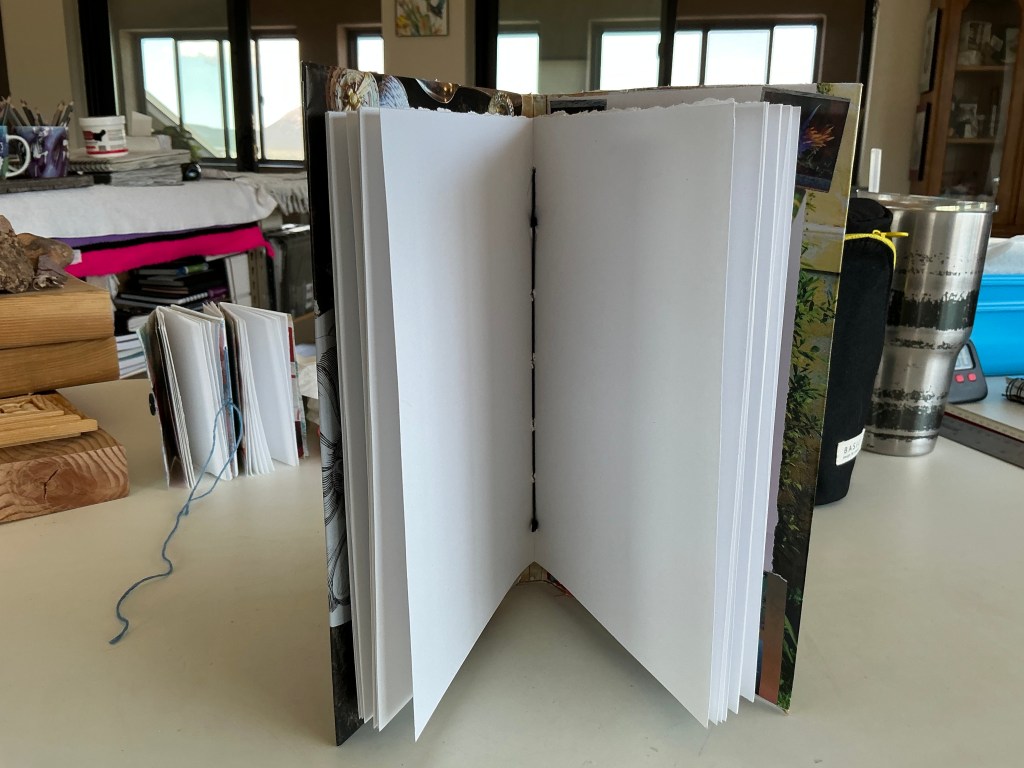
After two weeks of play, I was able to fill up my handmade and successfully stitched SR 2025 sketchbook! With a total of 46 pages completed (doubling up workshop projects on a handful of pages), including several pockets with inserts, I was pretty happy (and a bit exhausted).
If you’ve participated in SR in the past, or maybe took on the 2025 challenge as your first time, you know how intense (in an exhilarating way) it can become. If not, and would like to learn more, check out this link
This link will take you to Karen Abend’s website where you can ask for more information about Sketchbook Revival. https://karenabend.com
Hope my collection made you smile and laugh! I certainly got a kick out of the experience.
Well, until Sketchbook Revival next year, thanks for coming along!
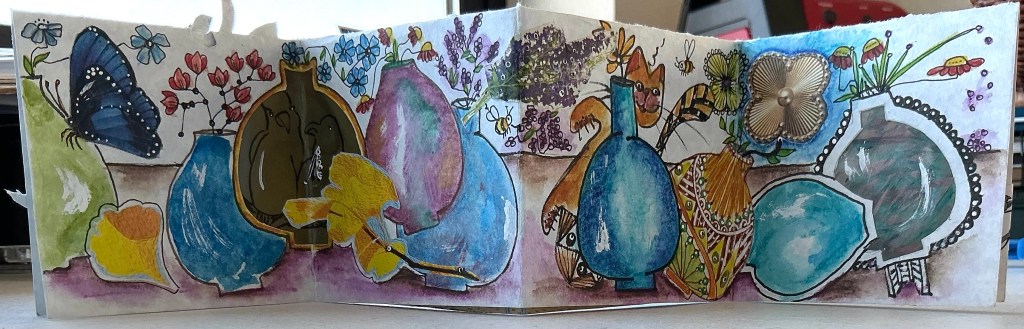
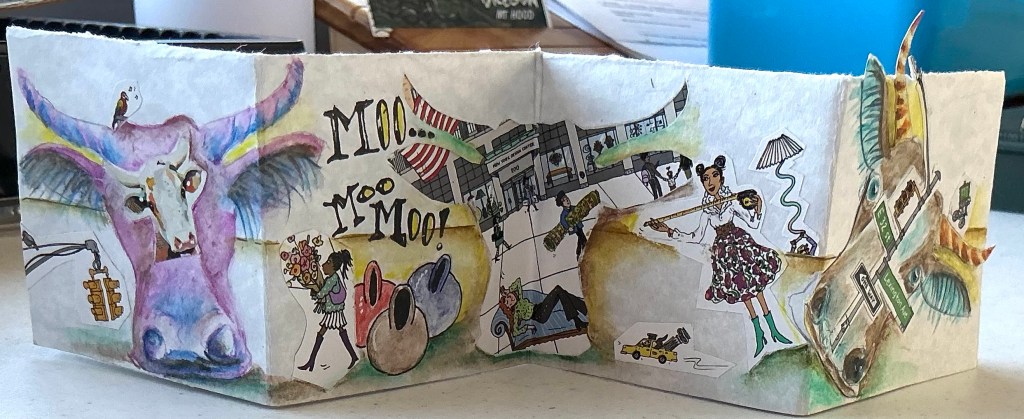
Front and back of the concertina book that tucks into the pocket above.My hand sewn, one signature SR 2025 Sketchbook.
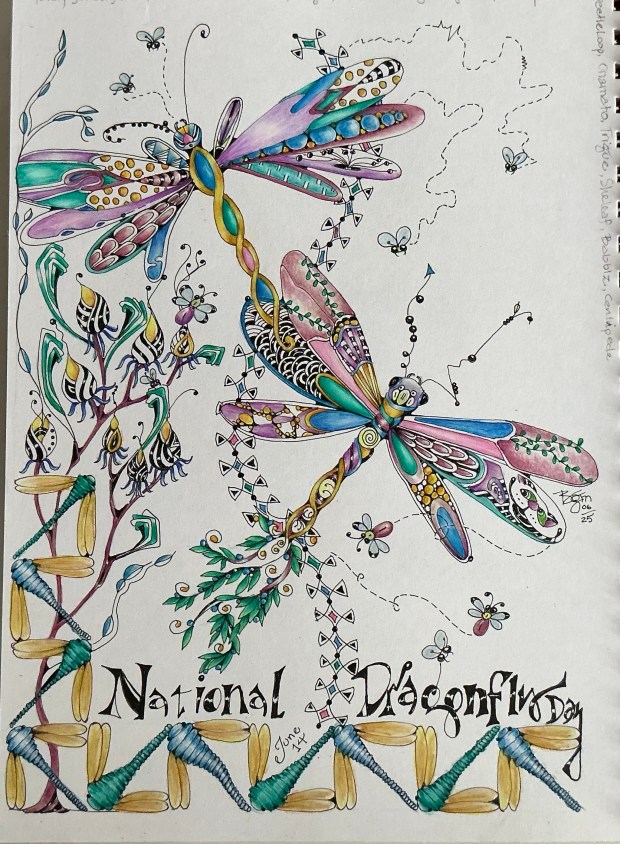
Always landing on the 2nd Saturday in June, the annual dragonfly celebration pays tribute to this fascinatingly unique and beautiful insect that’s been flying over our planet for nearly 300 million years. Wow!
There’s no mistaking the fossil record. Dragonflies have populated the airspace for nearly 300 million years, some with 3-foot wingspans. Paleontologists say they may have had 6-8 foot wingspans, making them the size of a bald eagle!
As scary as that may have looked to their prey, the 2-5 inch wingspans of modern dragonflies, combined with their body makeup, make these animals some of the most accurate and ravenous hunters known today.
It’s a warm summer day and the air above the wetlands is full of countless insects such as mosquitoes, true flies, mayflies, and midges. Perched motionless on a tall reed is a metallic colored dragonfly, and she’s hungry. To feed an insatiable appetite, she’s always on the hunt for her next meal. To satisfy her hunger, she has evolved into one of the most skilled predators in animal kingdom.
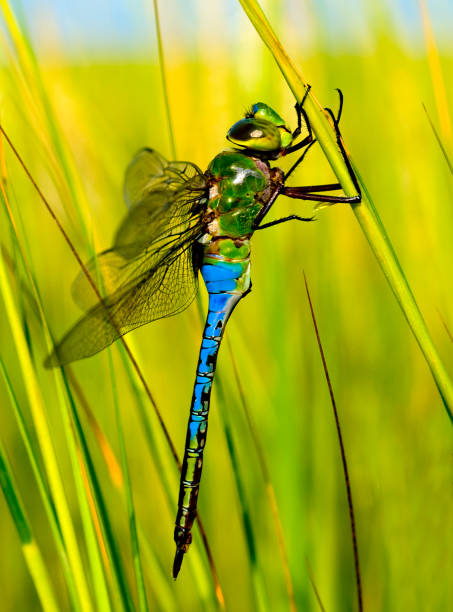
A Green Darner Dragonfly hangs onto a blade of marsh grass
But are dragonflies really that good? And if so, why?
Consider the proverbial ‘King of the Jungle;’ lions are frequent hunters, but might be successful only 20% of the time. Birds of prey, like owls, falcons and hawks, average a 25% success rate. But dragonflies catch their prey 95% of the time! Now I’d call that amazing. Dragonflies owe their survival to two key characteristics:
Eyes – in addition to three simple eyes, dragonflies (and bees) have two large compound eyes; the largest of any insect. With 30,000 facets per eye, both compound eyes together cover most of their head. This multifaceted eye makes a dragonfly acutely sensitive to movement. Because each of the 30,000 facets face a different direction, dragonflies have almost a 360 degree field of vision. This means they can see you from behind as they wing on by. ……. And speaking of wings! ………
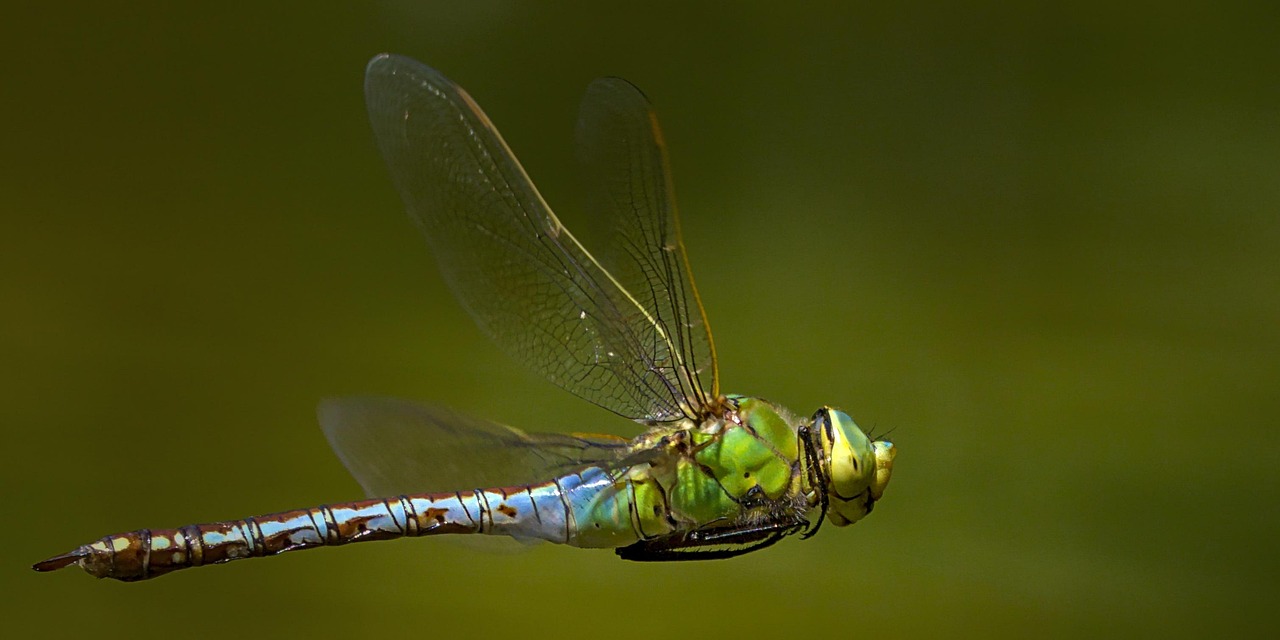
Wings – When compared to all other insects, dragonflies are the most skilled, agile, and the fastest fliers of all insect species. With muscles attached directly to their wings, they not only can fly at speeds up to 35 mph, but are able to maneuver like a helicopter. They can fly straight up or down, forward or backward, side-to-side, upside down, and can even hover and pivot in place while keeping perfectly level. To understand how dragonflies achieve backward flight, high speed cameras revealed they angle their bodies vertically, at a 90-degree angle to the horizon. They’re also capable of independently moving and twisting each of their four wings to improve flight control.
Look! A Mosquito Hawk!
It’s been reported that one adult dragonfly can capture and eat from 30 to 100 mosquitos a day, earning them the name ‘’Mosquito Hawk.” Considered such prevalent mosquito predators when they are adults, a dragonfly nymph feasts on mosquito larvae too, devouring as many as 40 a day!
A variegated meadowhawk
And How About these Dragonfly Fun Facts!
A dragonfly is classified as an Odonata, which is the family of flying insects that includes dragonflies and damselflies. Odonata means “toothed one” in Greek. However, dragonflies don’t have teeth. The name refers to its serrated mandible, which comes in handy for holding and crushing prey.
There are around 5,000 species of dragonflies around the world.
Dragonflies can live for years underwater as predatory larvae (aka nymphs). At the end of its larval stage, the nymph crawls out of the water, its exoskeleton cracks open releasing its abdomen (which had been packed in like a telescope), then out come its four wings and its entire body dries and hardens over the next several hours.
Most adult dragonflies live for only a few weeks, but some do live up to a year.
Dragonflies can live in the winter but are normally small and stumpy in size.
Dragonflies use both their feet and mandibles to catch their food.
When dragonflies mate, the pair first forms a flying, loop-like structure known as a mating wheel or mating circle. Then the male grasps the female’s neck with claspers on his abdomen to transfer his sperm. Sometimes, he will continue to guard the female from other males until she lays eggs in the water. If a female doesn’t consent to mating, she might play dead. Or, she might wrestle away her suitor by twisting, shaking, flying backward or clinging to a reed to prevent takeoff. In some cases, the female might even take control of the flight, then dunk the male into a body of water, buying herself time to flee.
Mysterious swarming behavior – sometimes 100’s of dragonflies of different species will gather in swarms, possibly to locate new and/or better habitat, for feeding, or migration. Not much is known about this short-lived behavior, but it is being studied by members of the Dragonfly Swarm Project. You can read more about the Swarm Project here: https://thedragonflywoman.com/dsp/ And you can report seeing a swarm through this website: https://thedragonflywoman.com/dsp/report/
The Scarlet Dwarf is the smallest known dragonfly. Less than two centimeters long, it’s only 0.59 inches long (15 millimeters), and has a wingspan of about 0.79 inches (20 millimeters). These dragonflies are native to Southeast Asia, as well as China and Japan.
Many species of dragonflies migrate annually. To track them, scientists attach tiny transmitters to their wings with a combination of eyelash adhesive and superglue. One of their findings revealed the two inch dragonfly called the globe skimmer has the longest migration of any insect — flying up to 11,000 miles across multiple generations between India and Africa. Aided by winds, the globe skimmers cross the Indian Ocean stopping at islands along the way. They have even been spotted at altitudes of around 20,000 feet in the Himalayas.
Of the 445 kinds of dragonflies in North America, only 9 of these species (or 2%) migrate regularly. One of these species is called the green darner which migrates in swarms. They complete a multi-generational migration from Canada and the northern U.S. to the Gulf Coast and Mexico in late summer and fall, and then return again in the spring. By tracking the migration, it was found their journey covered over 800 miles one way. To accomplish this feat, they travel only every third day, averaging 7.5 miles per day.
The International Union for Conservation of Nature (2021) found that 16 percent of the 6,016 species of dragonflies and damselflies that were studied are at risk of extinction as they lose the freshwater breeding grounds needed to maintain their populations. Clearing of forests in South and Southeast Asia as well as in Central and South America has driven habitat loss for the insects, and in North America and Europe, dragonflies are most threatened by pesticides and climate change.
Mosaic darner
The Good Luck Insect
Not surprisingly, the dragonfly has symbolic meaning in almost every part of the world. Many cultures believe this insect symbolizes good luck. Because dragonflies have such short lifespans, they also represent new beginnings and change, especially for strength, growth, courage, and happiness. A few ancient cultures say dreaming about a dragonfly indicates you are in a powerful transition in your life.
Here’s a Few of those Symbolic Dragonfly Beliefs. Do you know of more?
Native Americans believe a dragonfly symbolizes life transformations.
South American cultures believe the dragonfly symbolizes good luck and prosperity, and many artists include the dragonfly in their work.
European cultures see the dragonfly as a symbol of change and adaptability, and are included in many of their folklore stories and beliefs.
Asian cultures believe the dragonfly represents good luck, prosperity and new beginnings.
South Africans believe dragonflies are a sign of spirits and bring good luck. Africans also hold dragonflies in high regard because they are water gods who bring rain.
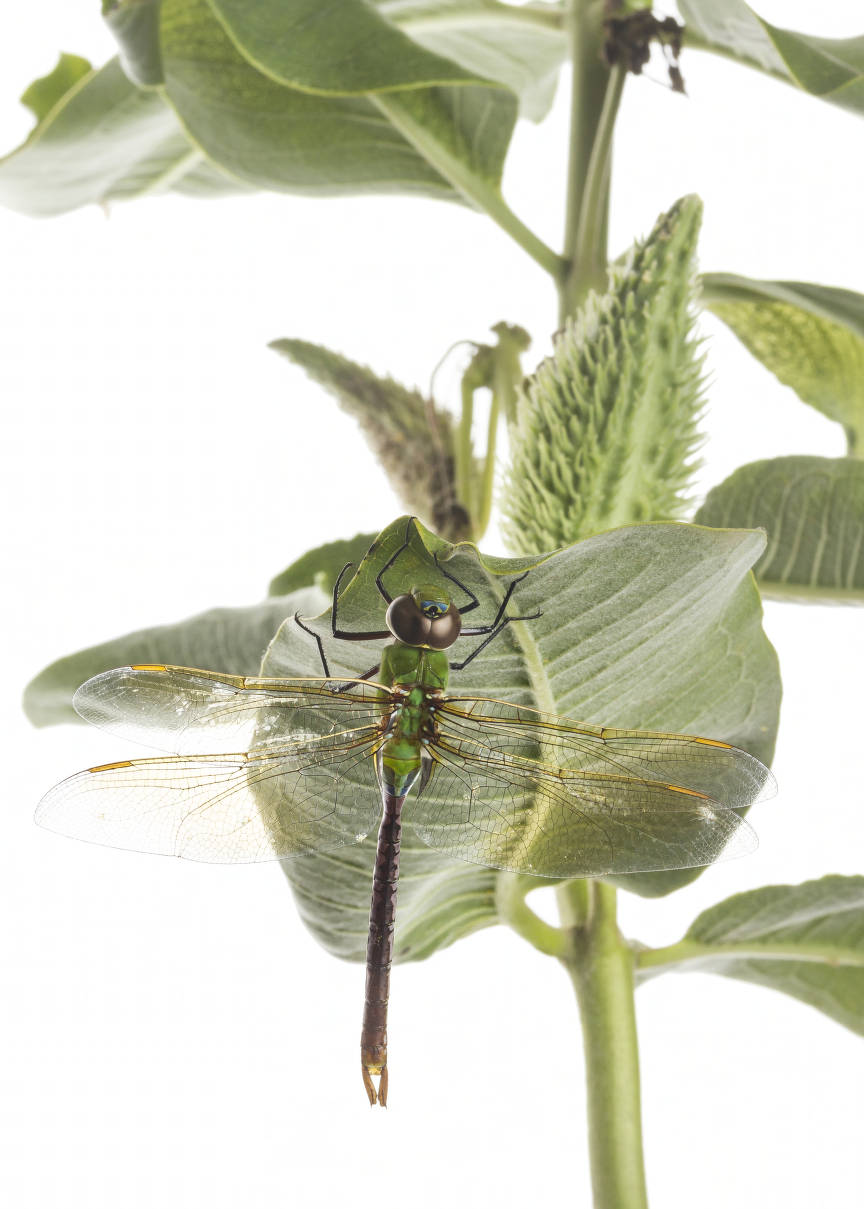
A South Dakota dragonfly resting on a milkweed
How Will you Celebrate National Dragonfly Day? Here’s a few ideas:
Learn about the species of dragonflies near you.
Visit your local wetland habitats to observe dragonflies, as nymphs and as adults.
When you travel in the summer, search out new-to-you species of dragonflies and record your observations.
Learn about the symbolism of dragonflies in your own culture.
Sketch or paint a dragonfly in its habitat.
Photograph a dragonfly and share on social media using #NationalDragonflyDay.
It was great fun and so eye-opening to learn about this species. A few months ago I watched a nature program about dragonflies and how they fly like stunt pilots. It was fascinating, and gave me a whole new appreciation of these insects. Can you imagine living in the dragonfly’s world 300 million years ago? Wonder if they could also fly like a helicopter?
Please share your dragonfly stories. Have you ever tried to catch a dragonfly? Have you seen one flying upside down or hover? What colors of dragonflies have you seen? Let me know if you enjoyed this post about dragonflies, and give it a Like!
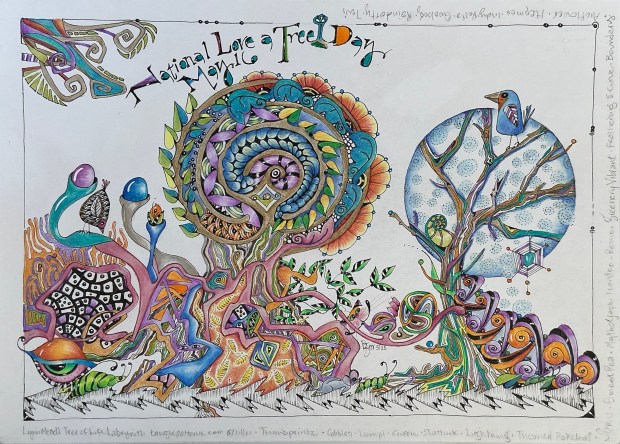
And many thanks to Lynn Mead for sharing her Tree of Life Labyrinth pattern. Super fun to give a whirl! The easy to follow directions can be found on tanglepatterns.com posted 08/14/2021
Today, May 16th, just so happens to be National Love a Tree Day! It’s the official day to celebrate all of life’s joys brought to us by the trees we share this planet with. Whether you love reading in the shade or taking a bite out of a fresh fruit pie, National Love a Tree Day encourages y’all to get outside and enjoy a tree.
A Changing Landscape
We all know many tree species live many many years; some live to be several thousand years old. According to the U.S. Forest Service, about 766 million acres of forest land exists in the United States today, a number that’s held steady since 2012. But the nature of our forests has changed over the last 400 years, due to changes in management practices and demand. Population growth, rural and urban development, along with a variety of land uses (like conversion of forests to agriculture use) resulted in a steady decline of forested acres between 1630 and 1910; a decline from 1,023 million acres to 753 million acres or 46% to 34% of the total land area in the U.S. Since that time until the present, where people choose to live and how the land is used has been constantly changing. While some urban forests increase, other areas see a decline. Tree planting programs improve landscapes but human activities and population growth continue to impact these ecosystems.
We All Benefit from Trees
Trees provide more than just beautiful landscapes and a shady canopy on a sunny day. They play a significant role in reducing erosion and moderating the climate as well as give us oxygen. Large quantities of carbon are stored in their tissues as trees remove carbon dioxide from the atmosphere. They provide habitat and structure for strong ecosystems.
How to Observe National Love a Tree Day
This is a good day to plant a new tree native to your area, or spend some time enjoying the beauty of the trees, Take time to learn how to care for the trees you have, too, whether you live in the mountains or the desert. Write down all the reasons trees are important to you. If you have a favorite tree, or a tree you’re not familiar with, begin a little research project about that (or those) species, and journal about your findings.
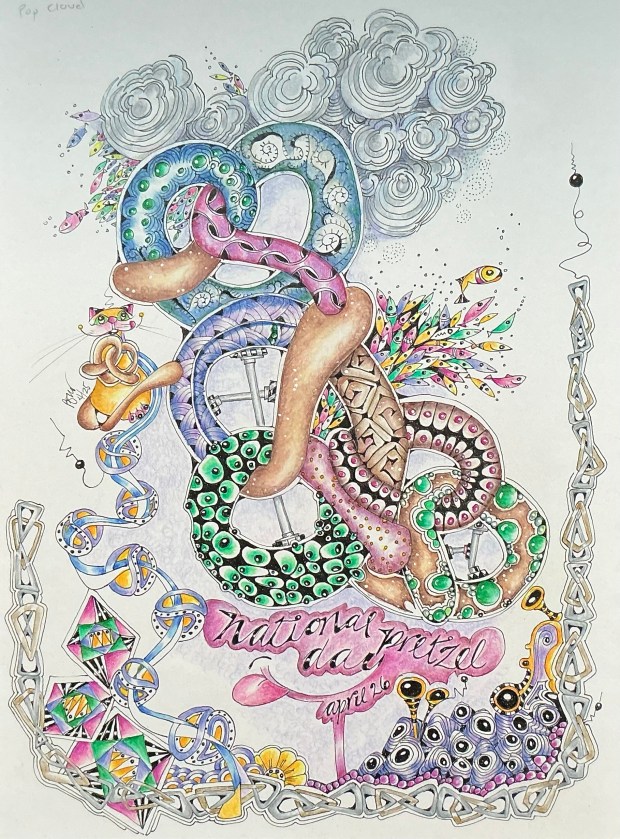
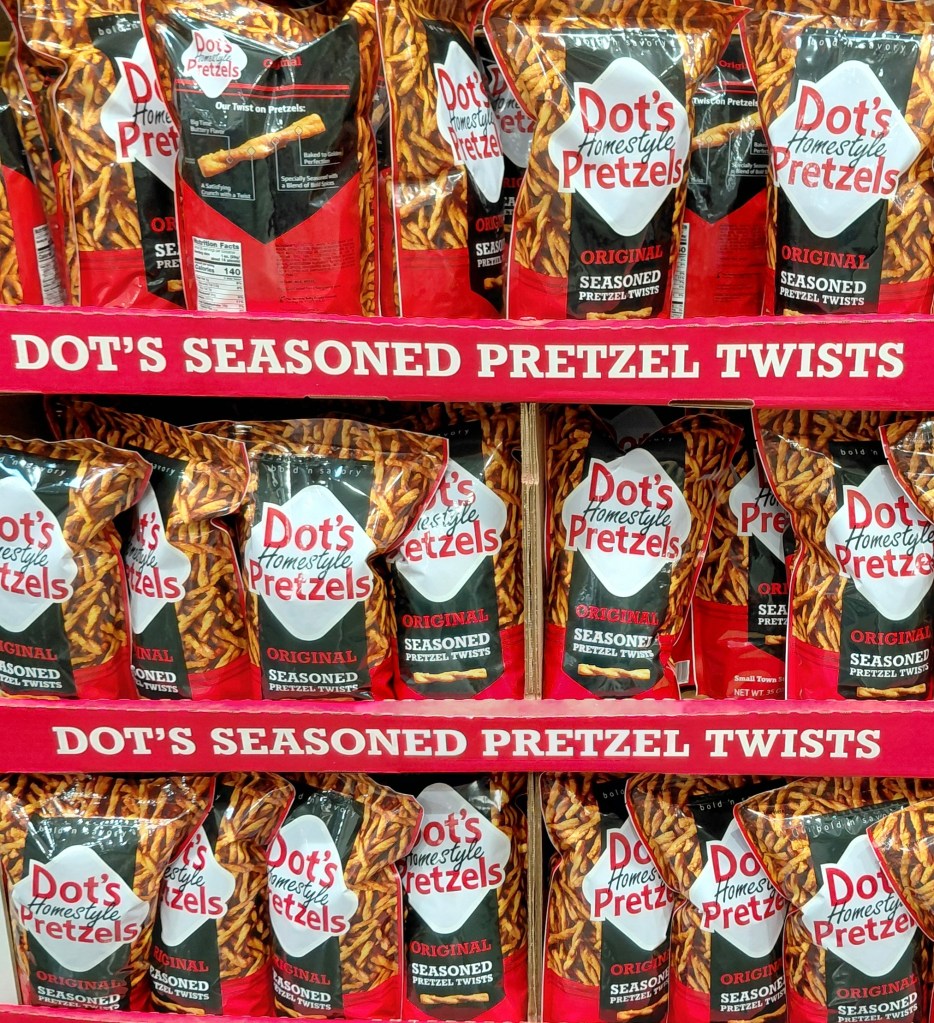
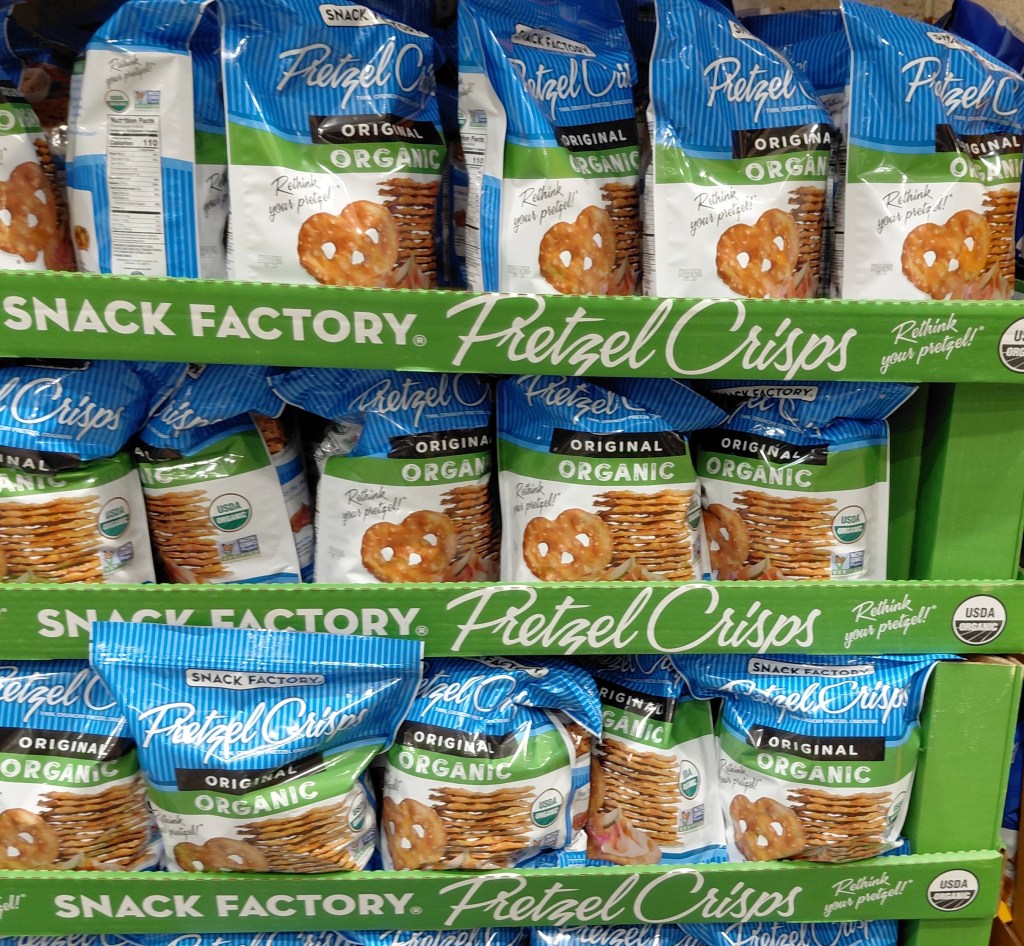
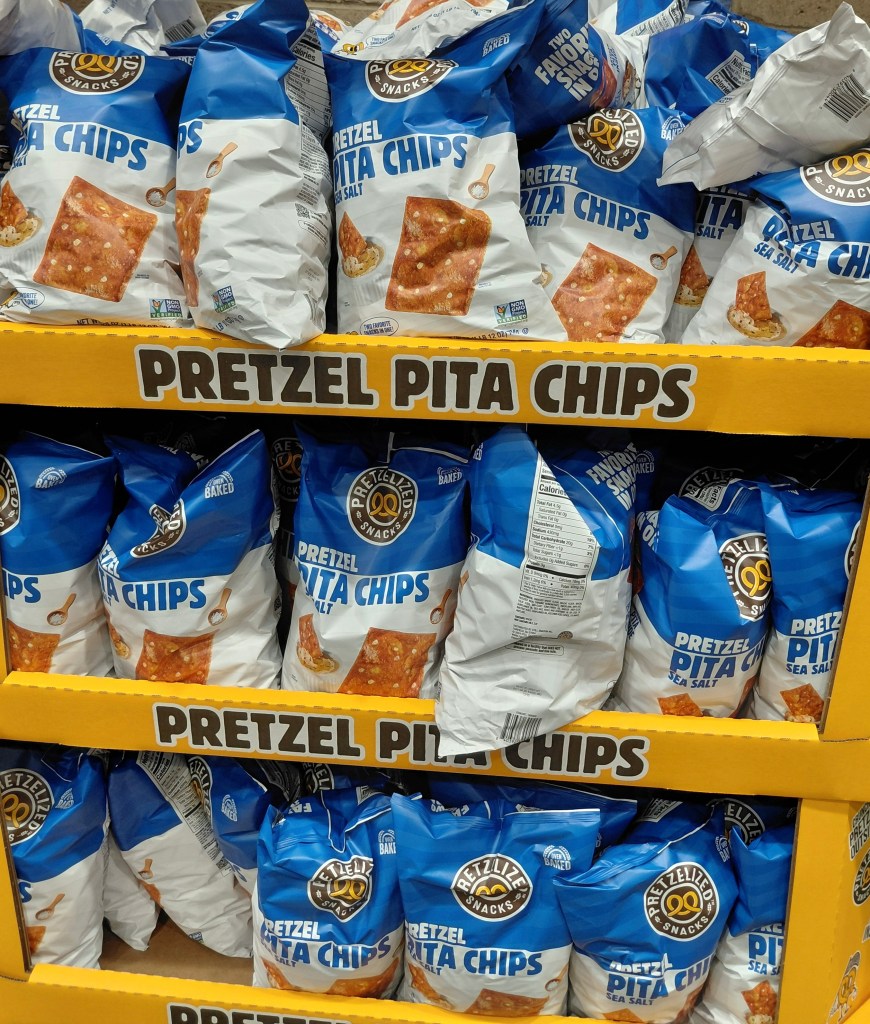
Put down that can of chips or box of square crackers and show your love for one of the most versatile snacks ever …… the Pretzel! Whether you like the snap of crispy twists or prefer them soft and chewy, grab your favorite and join the National Pretzel Day celebration today, April 26th.
Pretzel historians offer a few origin stories, but usually share the most likely and often told legend from the Roman Empire. Apparently in 610 A.D., an Italian monk wanted a way to reward his child students for memorizing their prayers. Instead of baking loaves of morning bread, the Monk twisted thin strips of the dough into symmetrical loops by intertwining or knotting the two ends before folding them back on each other (today’s familiar “pretzel loop”). The shape he made was said to resemble a child with his arms crossed in prayer. The Monk called his invention ‘pretiola’ meaning ‘little rewards’.
From then on, these soft ‘little rewards’ became popular in Austrian bakeries and in all of Germany, and so on throughout the world.
Not being satisfied with baking only soft pretzels, in 1850, Julius Sturgis bought a hard pretzel recipe from a local tramp (wonder why a tramp would have such a recipe? Thoughts?). After baking and baking, and perfecting the recipe, it was clear to Julius the hard pretzel was a success. The pretzel’s popularity quickly spread, inspiring many other bakers in central Pennsylvania to make their own versions of the hard pretzel. But the original ‘Sturgis’ hard pretzel was a keeper. In 1861, the Julius Sturgis Pretzel Bakery, located in Lititz, Pennsylvania in the heart of Pennsylvania Dutch Country, became the first commercial pretzel bakery in America.
Naturally, die-hard fans of the warm/soft pretzel weren’t won over by the overwhelming appeal of the hard/crispy version. With the soft pretzel market still alive and growing, by the 20th century soft pretzels became very popular not only in Philadelphia, but in Chicago and New York as well.
The Pretzel of Today
How many shapes and flavors of pretzels can you think of? Here’s my lists …….
Hard pretzel shapes: traditional loop, thick and thin; stick shapes, both thin and in thick rods; twisted, clockwise and counterclockwise; round rings with and without knots; thick stumpy bite-sized nuggets, filled and unfilled; chip shaped and waffle shaped.
Hard pretzel flavors: salted, cinnamon sugar, peanut butter, peanut butter and jelly, honey mustard, cheese, honey wheat, honey butter, ranch, ranch and jalapeño, garlic, sea salt caramel, sour cream and onion, and buffalo wing.
And for soft pretzels …… it’s all about the dipping sauces and coatings: Of course there’s yellow mustard, garlic mustard, melty cheese, melty beer cheese. But there’s also chocolate dipped, aioli, truffle hot sauce, buffalo ranch, cinnamon sugar, and marinara.
Can you add more?
Pretzel Fun Factz!
Pennsylvania is the center of American pretzel production for both hard and soft pretzels, producing 80% of the nation’s pretzels.
Today, the average Philadelphian consumes about twelve times as many pretzels as the national average.
Philadelphia opened a privately run “Pretzel Museum” in 1993.
The annual United States pretzel industry is worth over $550 million.
The average American consumes about 1.5 pounds of pretzels per year.
How will you celebrate National Pretzel Day 2025? Here’s a few ideas …..
Enjoy a bag of your favorite hard pretzels, and gift one to a friend.
Visit your local bakery or even the mall to sample their selection of warm soft pretzels.
Try a game of “Toss the Ring” with ring-shaped pretzels.
Go on a pretzel scavenger hunt.
Host a pretzel and beer party for your neighborhood.
Bake a batch of soft pretzels for the party and have everyone bring their favorite dipping sauce.
And now ………
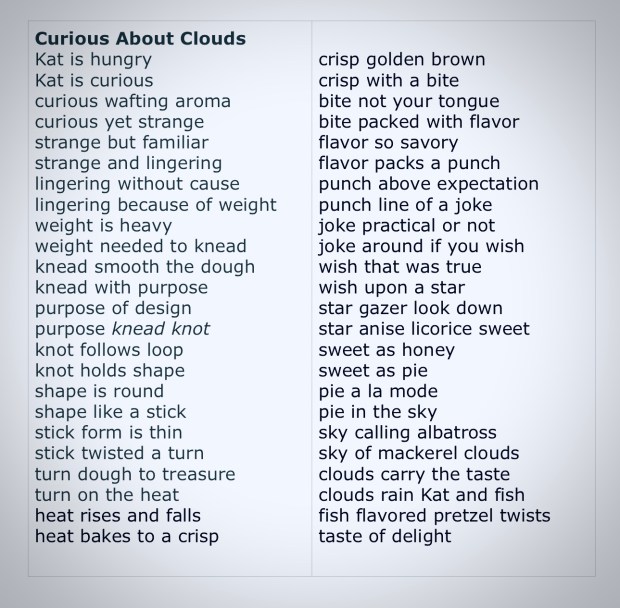
Curiously, Flambé has been following my post with fascination. Always hungry, could it be she’s developing pretzel cravings? What baker, in their right mind, would ever scent a batch with eau de fish? If a pretzel maker thought mackerel flavored twists would ever be popular, they might just be crazy (or not?). Becoming more famished by the minute, Kat insisted on explaining her ‘irrational’ excitement in a “Blitz” poem (a style created by Robert Keim.1). She felt this poem style not only suited all the twists and turns found in a properly-constructed pretzel loop, it best expressed the twisting and turning pathway her mind took to explain herself and help us “get it!” What do you think?
1 Shout out to Michele Lee, My Inspired Life blog post dated 04/05/2025, for sharing her amazing Blitz poem and providing the rules to create one too. Thanks Michele!
As always. Thanks for stopping by!
Here are the guidelines for the Blitz poem, created by Robert Keim:
Line 1 should be one short phrase or image (like “build a boat”)
Line 2 should be another short phrase or image using the same first word as the first word in Line 1 (something like “build a house”)
Lines 3 and 4 should be short phrases or images using the last word of Line 2 as their first words (so Line 3 might be “house for sale” and Line 4 might be “house for rent”)
Lines 5 and 6 should be short phrases or images using the last word of Line 4 as their first words, and so on until you’ve made it through 48 lines
Line 49 should be the last word of Line 48
Line 50 should be the last word of Line 47
The title of the poem should be three words long and follow this format: (first word of Line 3) (preposition or conjunction) (first word of line 47)
Many Hearty Thanks, Sharing Creative Ideas, Answering the ‘Kat’ Kwestion
April 1, 2025
Completing my 15th sketchbook, and beginning the next one is always cause for celebration! To do so, Kat and I thought it would be especially fitting to shout-from-the-treetops enthusiastically, THANK YOU! Thank you all, my loyal subscribers, for coming along on my interesting, hopefully educational, sometimes crazy, always curious nature journaling adventure.
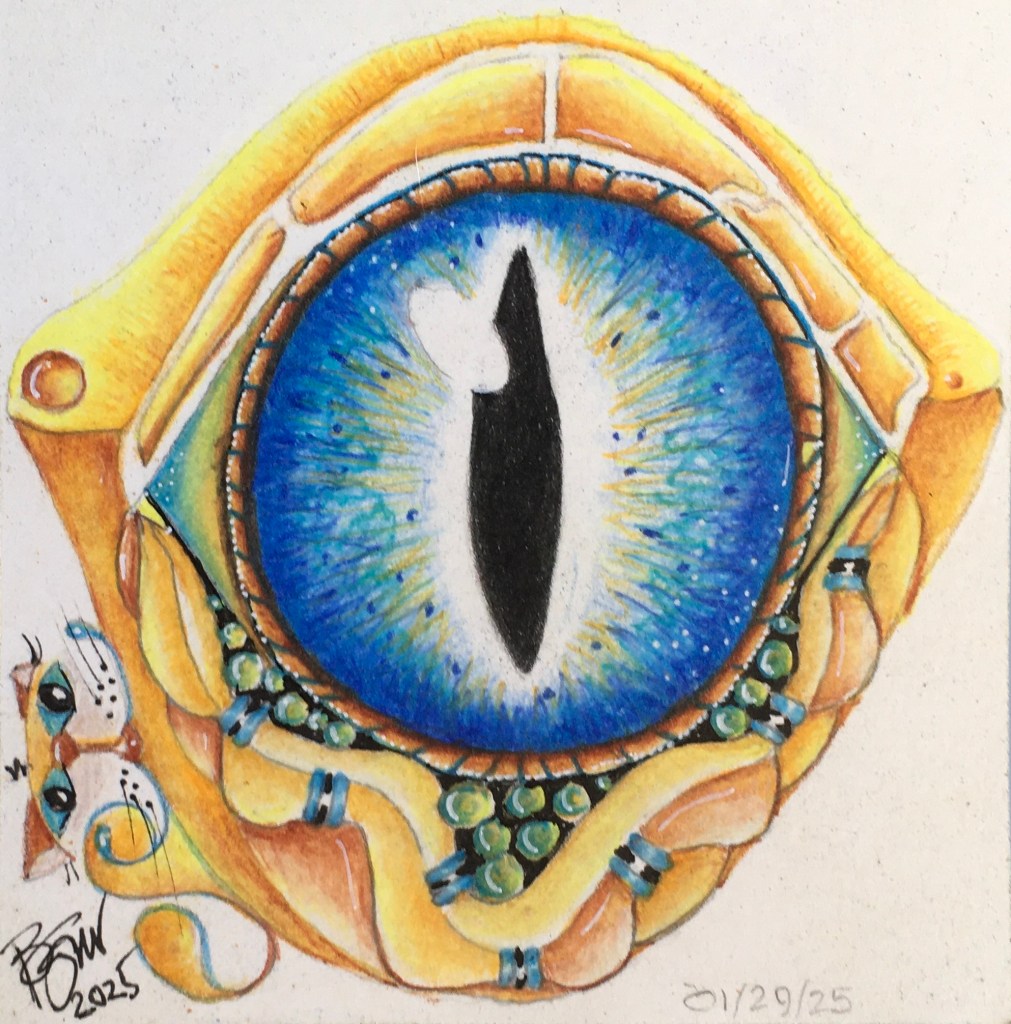
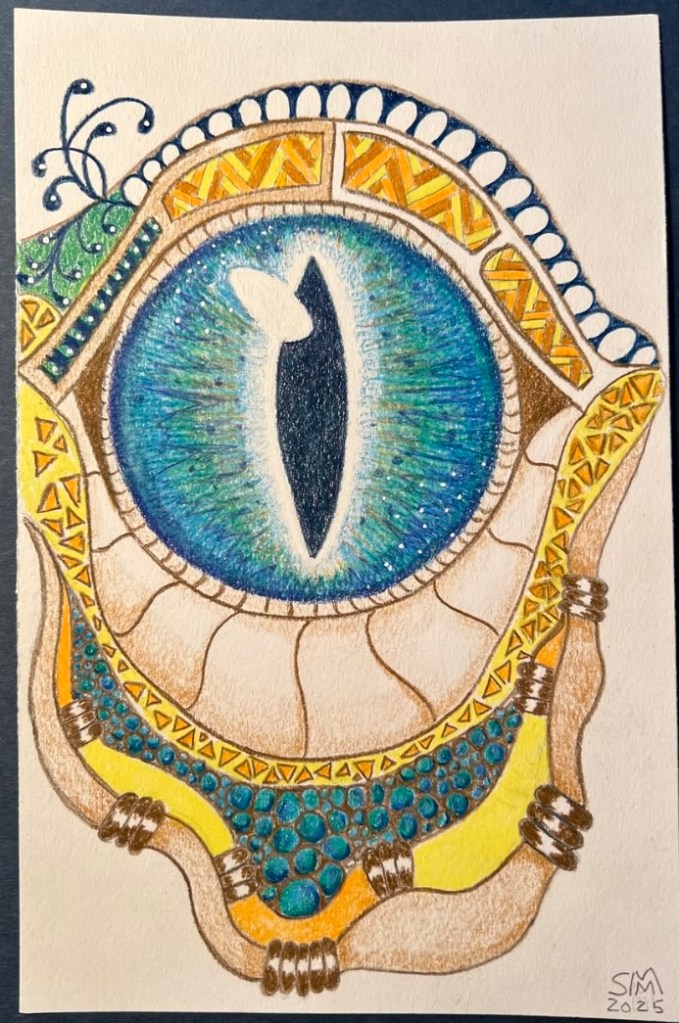
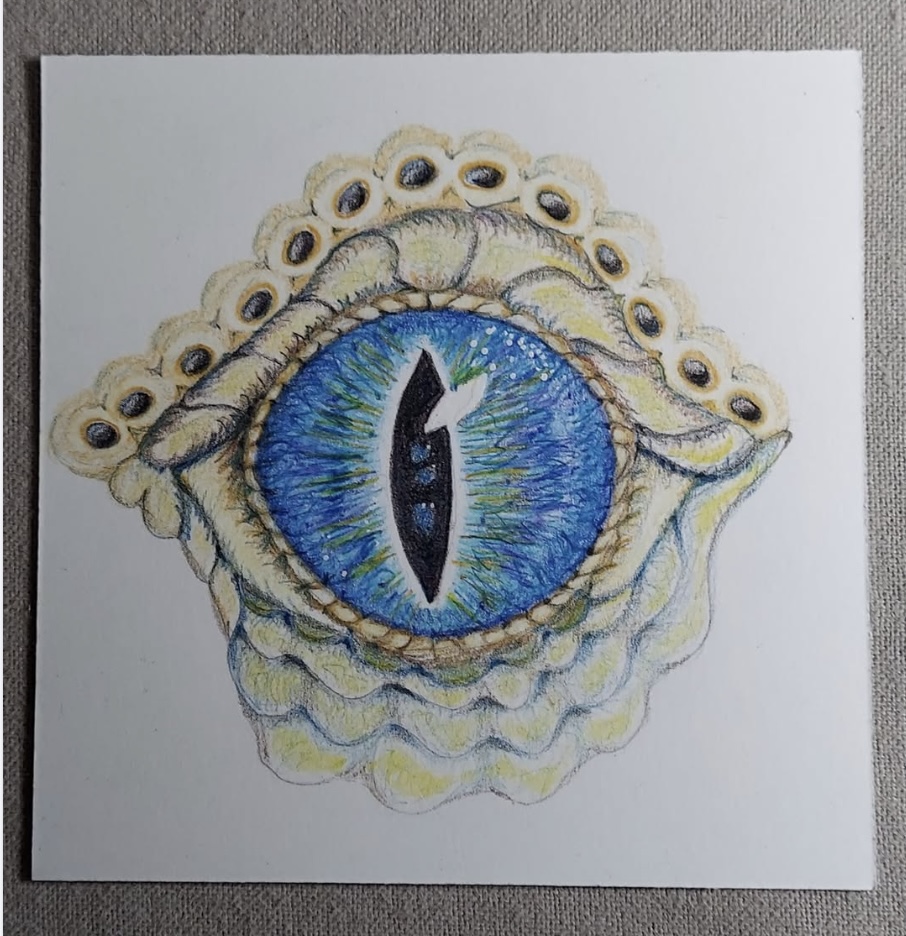
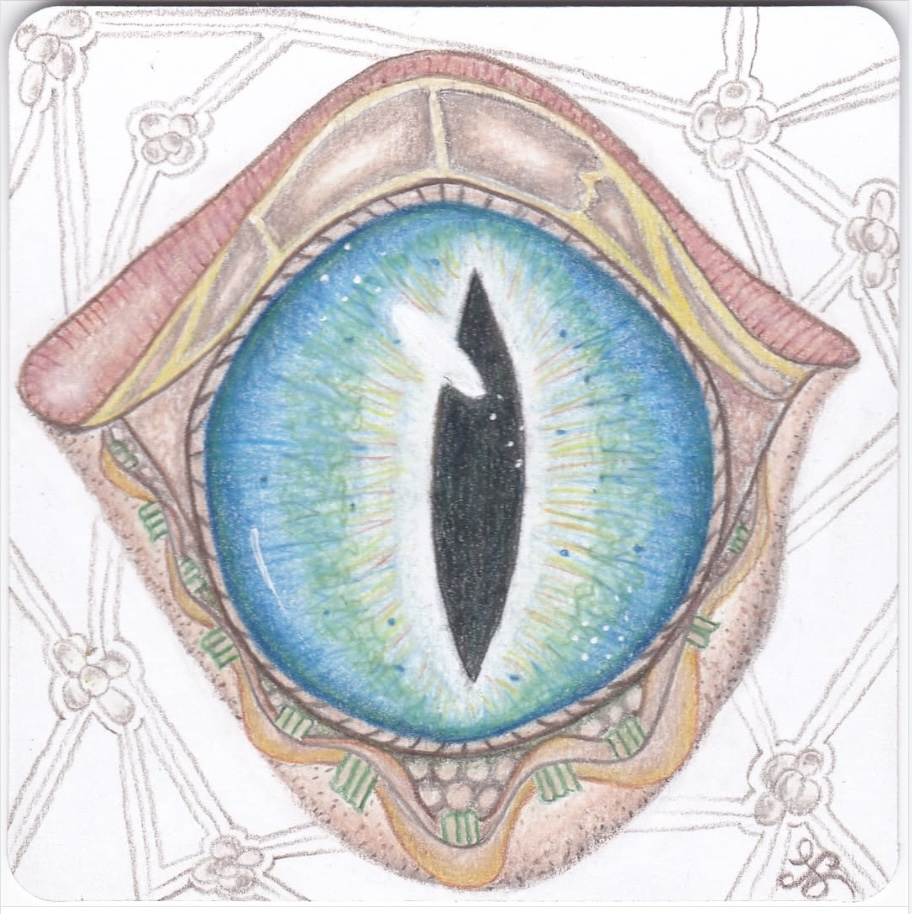
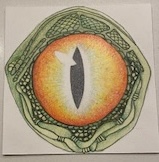
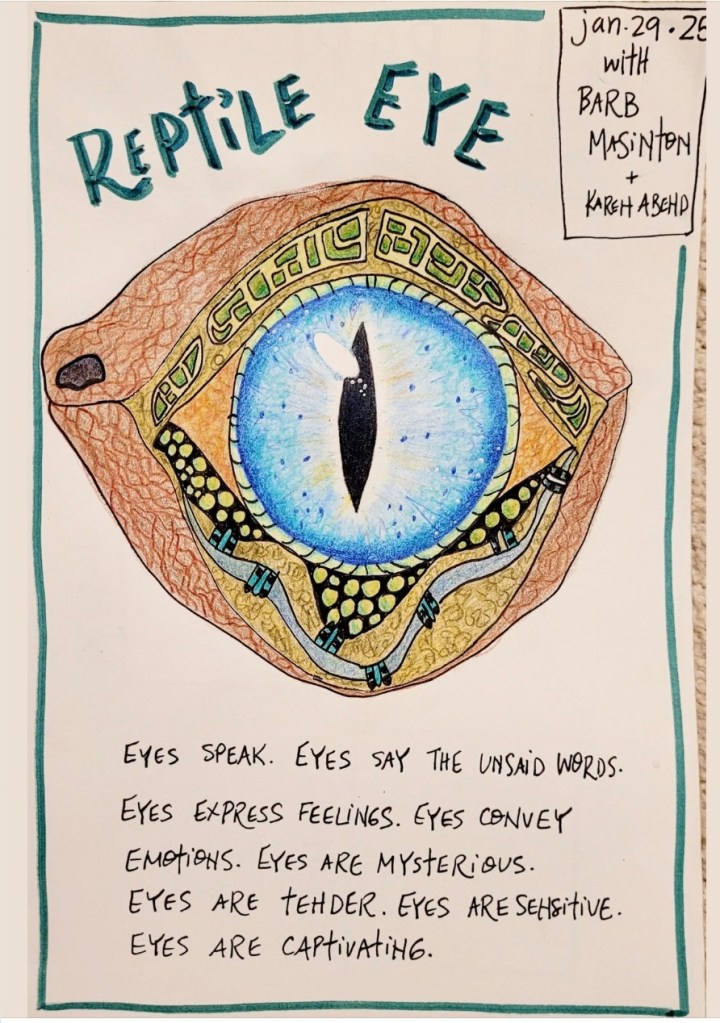
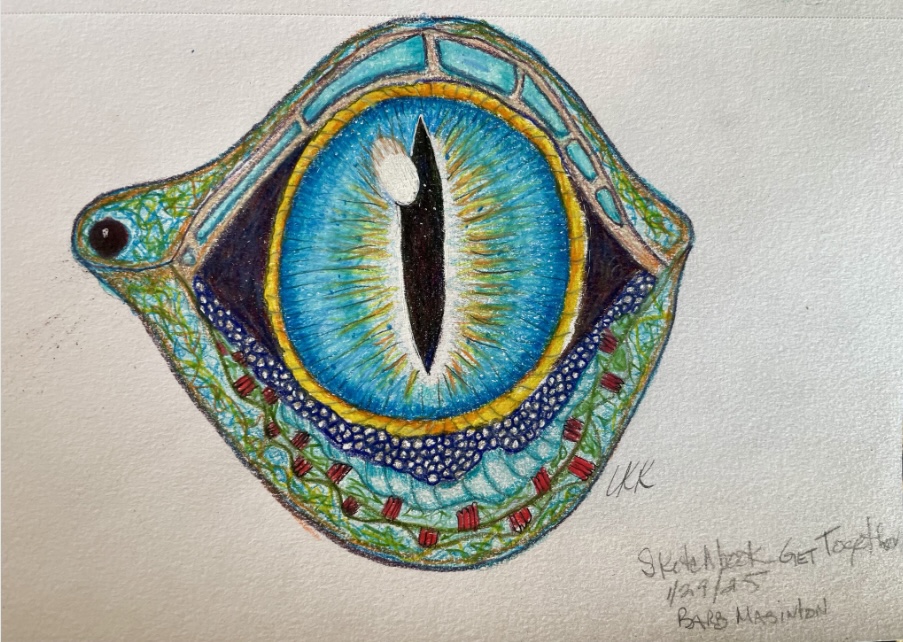
My recent webinar class, “Create a Colorful Reptile Eye1,” sponsored by Host Karen Abend (of Sketchbook Revival fame), generated many new subscribers to my web page and blog, “A Curious Nature.” Wow! And Thanks so much. A special thanks to those who attended the live and/or recorded class. I loved seeing so many colorful lizard eyes (a sampling below). They were incredible!
Sharing the Wonder of Nature
With all the past and current activity on my blog, I feel so fortunate and very encouraged to carry on. Even though new postings have been random lately, there’s lots of works-in-progress soon to be shared. Meanwhile, comments including what you like about my posts and what you’d like to see more of, are always appreciated. What inspired you to subscribe to this blog? If it’s just enjoy, that’s perfect! Or maybe you’d like tips to develop a regular or even a daily creative practice, how can I be more encouraging? I’d love to know if you are an active nature journaler or tangler, or express yourself by creating art in other ways, such as through music, poetry, or storytelling. Send me your ideas by commenting on this or any future posts. I’ve created my webpage and blog because of my insatiable curiosity about the natural world. It’s extraordinarily fun to go beyond learning what the names of flowers, animals, rocks, and clouds are. The excitement of wondering and discovering answers for all the why’s, who’s, when’s, and how’s is so rewarding. Sharing is my joy!
Explaining Kat
Thinking new subscribers may be puzzled by my constantly mentioning Flambé or Kat or both, now might be a good time for explanation and background (and perhaps provide a refresher for those who’ve been following along from day 1 of my blog):
In 2014, a young stray calico cat showed up one day on our doorstep when we (Roy and I) lived in Oriental, North Carolina (U.S.A.). This little wild miss seemed to magically appear from our backyard woods, perhaps in search of a meal or a friend. She sat and meowed for a few minutes, but when we opened the door, she ran away. Efforts to get close to her when she returned several times during the week were futile. Then one day she vanished and never returned. Not knowing what may have happened to this pretty kitty, Roy thought a nice remembrance of her visit would be to add a small cat sketch to my next drawing. A dandy idea!“But only one drawing,” I thought? It was at that moment that Flambé appeared on my creative doorstep, and has never left!
Flambé, aka Kat, is always smiling, popping in and out of all my art, regardless if the piece is imaginatively & whimsically tangled or a serious nature study. Along with forming the best part of my signature “chop,” she’s the heroine of some pretty wild and crazy tangled misadventures, sometimes pushing Kat’s 9-lives threshold to satisfy her insatiably curious nature (and appetite). Flambé adores being noticed, whether she hides inside the story, or shows up front and center. She makes everything creative more fun. Flambé may be just “Kat,” but she’s my inspiration for and reminder about the value of komic relief, and makes the perfect konstant kompanion!
Whew! That’s all for now. Hopefully your questions about this blog, inspiration and Kat have been answered. If you’re craving to learn answers to other related topics, let me know. Meanwhile, Flambé and I wish you an exciting and creative remainder of the year ….. have times full of happiness, creativity, and memorable adventures, but most of all laughter and fun!
Hope to hear from you soon, and as always, thanks for stopping by!
Meow!
1Unfortunately, the class or recording are no longer available for viewing. But I may have another live demo class some day in the future. If so, you can be sure the announcement will show up on my blog.
Date: January 29, 2025 ….. Time: 10:00 am Mountain Standard Time
January 23, 2025
Yes! You read that right. In less than a week I will be sharing my colored pencil secrets for creating a glowing, jump-off-the-page, reptile eye. During a live 2 hour workshop, hosted by Karen Abend – founder of Sketchbook Revival – you’ll be drawing along with me while learning colored pencil techniques and some cool facts about reptile eyes. But to play along you must register to join the fun.
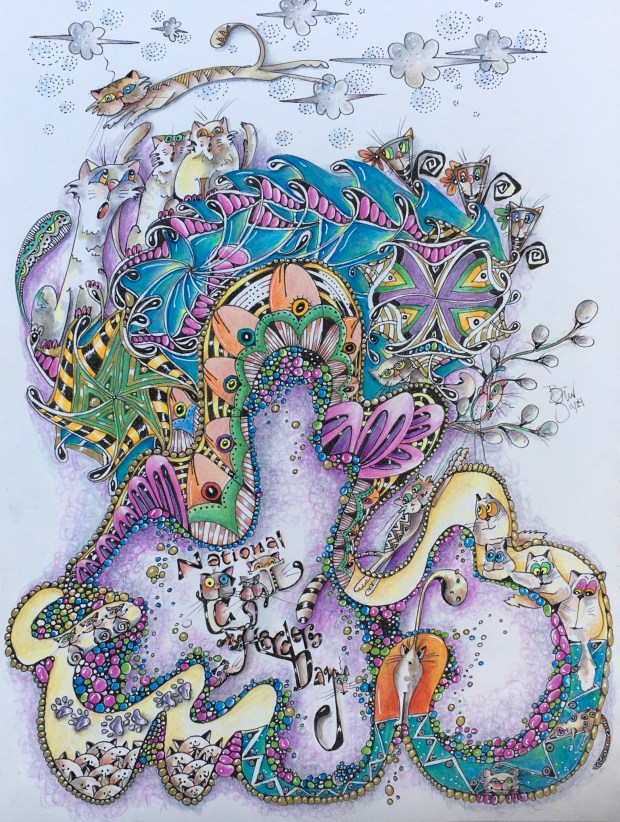
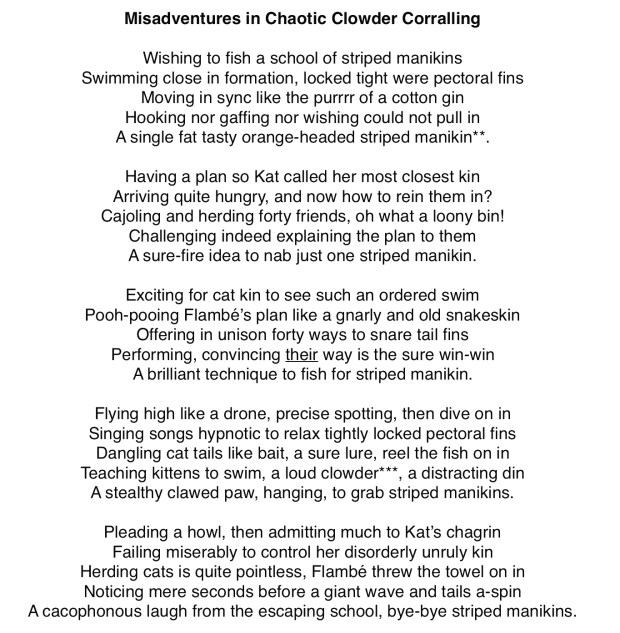
You don’t have to be a cat lover to celebrate National Cat Herders Day. The only requirement is to know someone or even be that someone who’s attempted to accomplish a complex task by controlling the uncontrollable, organizing the disorganized, or bringing to order a disorderly cast of characters, akin to like trying to herd cats*. From parents and teachers to project managers and team leaders, this humorous observance pays tribute to those willingly and persistently taking on the challenge of controlling difficult or chaotic situations. Show the love and appreciation for people in your life, and quite possibly yourself, who take on any impossible or frustrating task with patience and humility.
Zentangle patterns used: Choir, Ease, Windflower, KittyKitty, Fragment oA6, Apichu, Budlite, Cat-kin, CD Joy, Cloudy Day, Raindotty
*The origin of the phrase “like herding cats” likely came from the opening scene of Monty Python’s Life of Brian (1979). In this scene, shepherds are discussing sheep and the topic strays to cats: “Can you imagine a herd of cats waiting to be sheared?”
___________________________________
**A fish manikin is a form carved from wood or foam by taxidermists used to mount a trophy fish. Flambé’s school of striped manikins all looked like trophies to her! If only she could’ve herded her cat kin into an attentive and cohesive group long enough to teach them her sure-fire plan for breaking up that school of fish …….. maybe, just maybe she would’ve had a striped manikin to Mount on the wall of her den!
___________________________________
***A clowder is a real thing! It’s what “they” call a group of cats. Honest. But then being naturally curious like my sidekick, Flambé, I wanted to know how many cats are needed to make a clowder. Here’s what I learned:
“Three or more cats make up a clowder, which makes sense. After all, three is a clowd—er, crowd. Jokes aside, this is mainly because the word “pair” covers pretty much any group of two, and if a cat is by themselves, then they’re just … a cat.”
But that doesn’t explain how these feline groups are ever formed ……. after all, wouldn’t that be a frustrating endeavor and quite nearly impossible …… exactly like Herding Cats?
I’ll let you be the judge, but please let me know!
Chaos Never Dies Day is an annual holiday observed on November 9th that reminds us that chaos and disorder are natural and inevitable parts of life. The day encourages us to embrace the chaos and find humor, creativity, and resilience in the face of uncertainty and unpredictability. It’s a time to let go of perfectionism, embrace imperfection, and enjoy the ride.
Flowing from Flambé’s depiction of the chaotic world that lives between her pointy ears, emerges 16 simple continuous line shapes. Can you find them all?
(If you’d like a little help finding these shapes, the answers can be found at the end of this post. But only peek after you’ve given the illustration a thorough looking over.)
Of course, Kat has embedded herself within the chaos; her discovery makes for 17 total shapes.
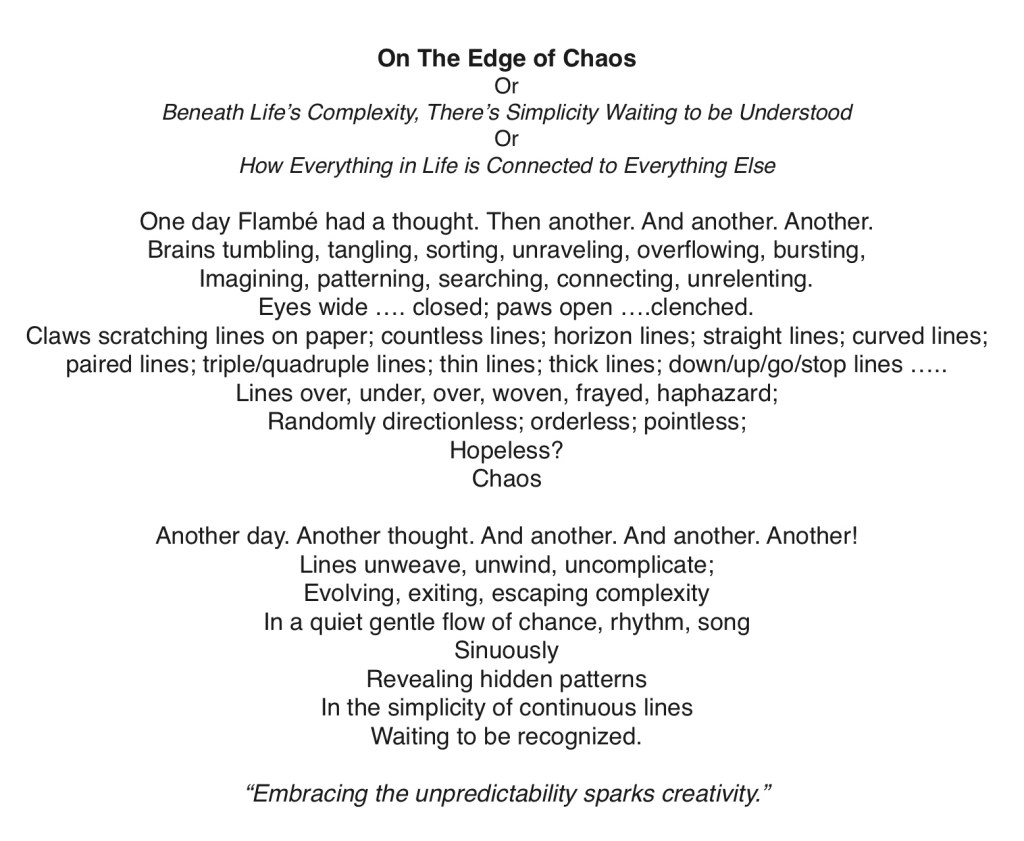
Flambé’s thoughts on Chaos to Creativity OR an attempt to interpret her scratched lines on paper, in the above illustration.
A few of my elementary thoughts about Chaos and Chaos Theory
Now that Flambé has delighted and (most likely) confused you on the Nature of Chaos, allow me to reflect on my first exploration into the fascinatingly mind bending subject of Chaos Theory. Having never given much thought to the Theory, per se, I’ve always pictured “chaos” as something hectic and uncontrollable. A state of unruliness, mayhem, or disarray liken to natural disasters, mob pandemonium, mass shootings. Sound familiar? We’ve all likely been witness to an unfathomable situation and declared our world to be in “complete and utter chaos!” But there’s more, a lot more to Chaos Theory, where it is encountered and how it affects us.
When my reference list of lesser known Annual Days revealed November 9th is celebrated every year as “Chaos Never Dies” day, I was appalled. I mean, really; who wants to live in a world of ever-present and everlasting chaos?
But from the description of this Day, it appeared there was a positive side to chaos, piquing my curiosity. Anything that can make us laugh and inspire creativity has to be awesome! So began my last few weeks of intense study and pouring over countless YouTube videos to learn about Chaos Theory.
The more I read and viewed educational videos proclaiming to explain Chaos Theory in easy-to-understand language, the more confusing it seemed. The language was English, but the concepts seemed abstract to me …….. well, they were just plain chaotic! (This caused me to laugh!). It would be easy to spend a lifetime trying to “get it.” I’ll just have to keep learning!
So far, I learned about many familiar and new terms associated with Chaos Theory. These include the Butterfly Effect (highly central to Chaos Theory) which shows the connection between disorderly and highly organized things, like how the flap of a butterfly’s wings can lead to a string of events that can form a hurricane! It’s complex, but emphasizes (among many things) that we can’t know the consequences of seemingly simple systems due to unpredictable variables. That leads to Heisenberg’s Uncertainty Principle, Feedback Loops, Fractals, Probabilistic and Deterministic modes, etc.
Are you still with me?
In a nutshell, Chaos Theory “provides a scientifically quantifiable but simultaneously poetically suggestive way of looking at how almost everything in life is connected to everything else.”
We live in a “chaotic” world, and how we react and/or adapt to its unpredictability and complexities matters. But as someone (?) once said, “Embracing unpredictability sparks creativity.” What does Chaos spark in you?
The images of all Continuous Line drawings and their order of emergence.
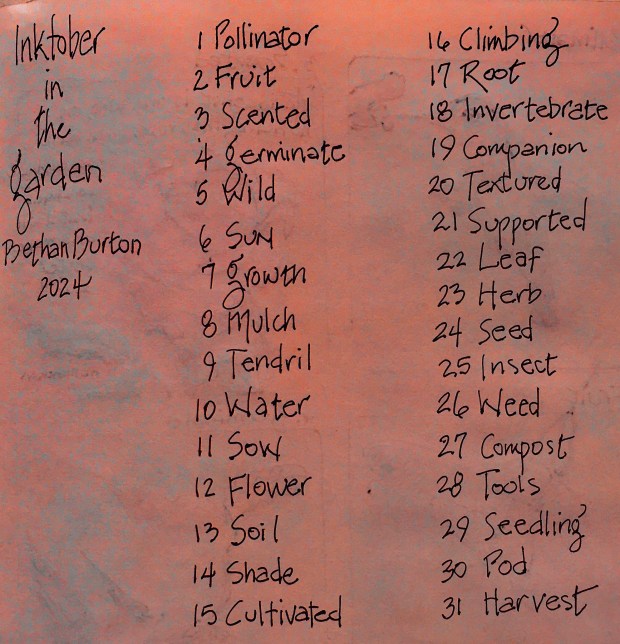
Searching for a theme to follow during Inktober 2024, I was delighted to learn one of my favorite podcasters and nature journal educators, Bethan Burton, shared her original list of 31 prompts. Named “Inktober in the Garden,” she cleverly chose each word to represent a different phase or activity encountered while gardening. To quote Bethan, the prompts are “aimed to get us thinking in different ways about the beauty of our cultivated space.”
Living in Brisbane, Queensland, Australia, where it’s now Spring, Bethan’s garden theme was very timely for her. However, October in central New Mexico where I live, is smack dab in the middle of Fall, so I relied on past gardening experience to create my daily ink drawings.
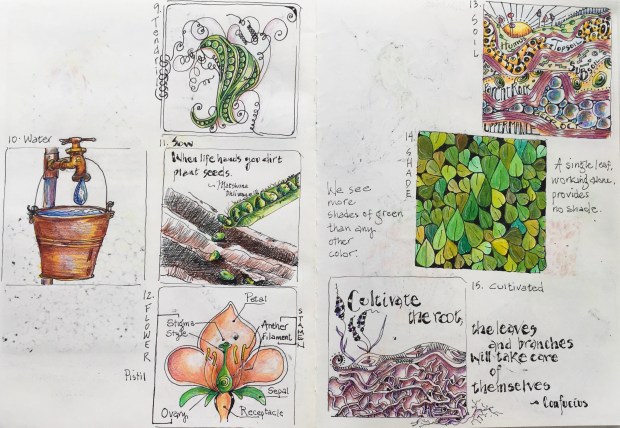
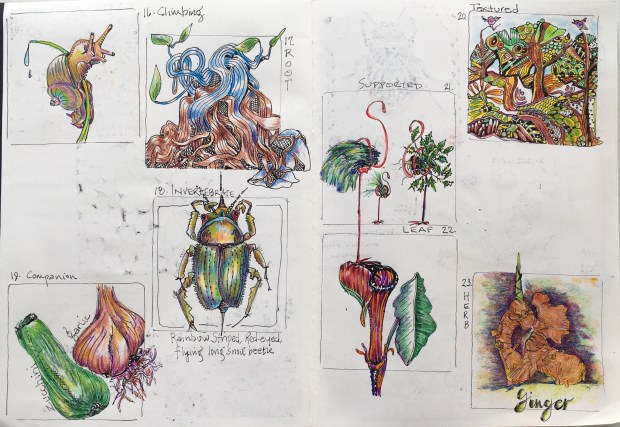
I hope you enjoy my 31 Inktober2024 tiles, inspired by Bethan Burton’s “Inktober in the Garden” prompts. I decided to only complete one tile/day; in the morning while sipping a cup of tea, I’d sketch a drawing with only ink (using a Pilot Varsity nib pen). Then later in the evening I added the color coaxing pigment from my limited number of Venus Spectracolor colored pencils (the remains of a 40+ year old set which constantly break and refuse to blend).
A big thanks to Bethan for sharing her Inktober2024 prompt list, and for being a constant inspiration through her podcast Journaling with Nature, and for bringing the world-wide nature journaling community together for her annual International Nature Journaling Week, where we can explore, share and celebrate a passion for nature. To learn more about Bethan and nature journaling through her podcast, participating in future International Nature Journaling Week, sign up for her Blog and Newsletter, follow her YouTube Channel and Instagram account, visit her website at: https://www.journalingwithnature.com
Here’s a bit more about this thing called Inktober
Inktober was originally created by Jake Parker in 2009, and since then has been deemed an annual event that takes place throughout the month of October. The rules devised for participants were, and still are, pretty simple …… Every day 1) make a drawing in ink; 2) post or share it; 3) hashtag it with #inktober; and 4) repeat.
Since 2009, there’s been an official prompt list shared every year by Jake and his Inktober group (https://inktober.com). But there are also many alternate lists generated, which participants can follow if they wish, or they can choose to work from their own prompts. Also since 2009, participants have not only worked in only ink, but have created colored drawings. Actually any media is fair game (wonder if anyone uses collage?), as bending the simple rules seems to be the norm. As Jake notes on the Inktober webpage, “you can do it [Inktober] daily, or go the half-marathon route and post every other day, or just do the 5K and post once a week. What ever you decide, just” remember “Inktober is about growing and improving and forming positive habits, so the more you’re consistent the better.”
And if you’re interested in participating in future Inktober events, just do it! Find a prompt list or create your own, and join the month-long party beginning each year in October!
This concludes my 9th year of Inktober! As always, thanks for stopping by!
























 a curious nature