Wow, where did the year go? It seemed like only yesterday I was sharing 31 EggTober 2025 paintings as my creative twist on the annual Inktober challenge. For Inktober 2026, it was fun to take a more traditional approach and follow the official prompts list for the month. In a parallel challenge, I also took on the official Zentangle prompts, learning a few new patterns during the month.
To complete both lists by month’s end, and get some nature journaling done too, I found two inspiring templates, each designed with enough cubbyholes to contain all 62 prompts.
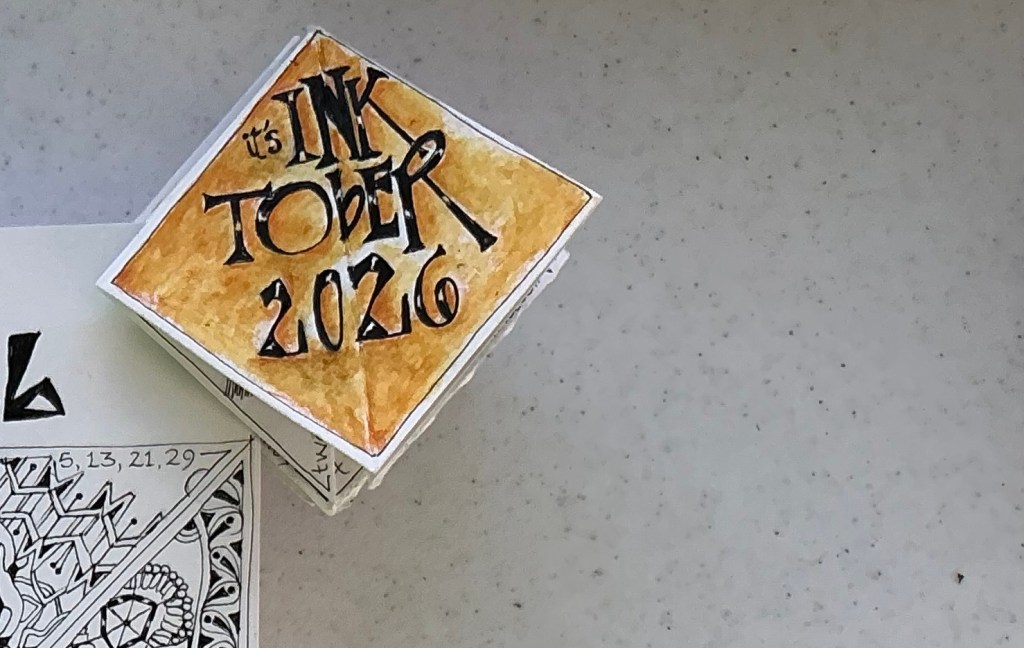
Cover of my 3-Square Fold booklet
To prepare for the Official Inktober 2026, I followed a step-by-step, 12-minute YouTube tutorial titled, “3-Square Fold.” This clever approach begins with three equal squares of paper (of any size) that are glued together in a certain way, and then folded down to make a standalone square-shaped booklet. It’s the specific folding method that defines 31 internal square- and triangle-shaped spaces, a front and back cover, and a spare square for notes, table of contents or whatever you wish. My three initial squares were 12cm x 12cm each, as suggested in the tutorial. This size resulted in a much smaller area than I typically work on, causing my illustrations to be small and simple. It was good practice though. However, if my squares were larger — even 18cm2 — my illustrations would’ve had more breathing room. But after having so much fun making this Inktober container, I made two more booklets to have for future projects! To give this folded paper booklet a try, click this link.
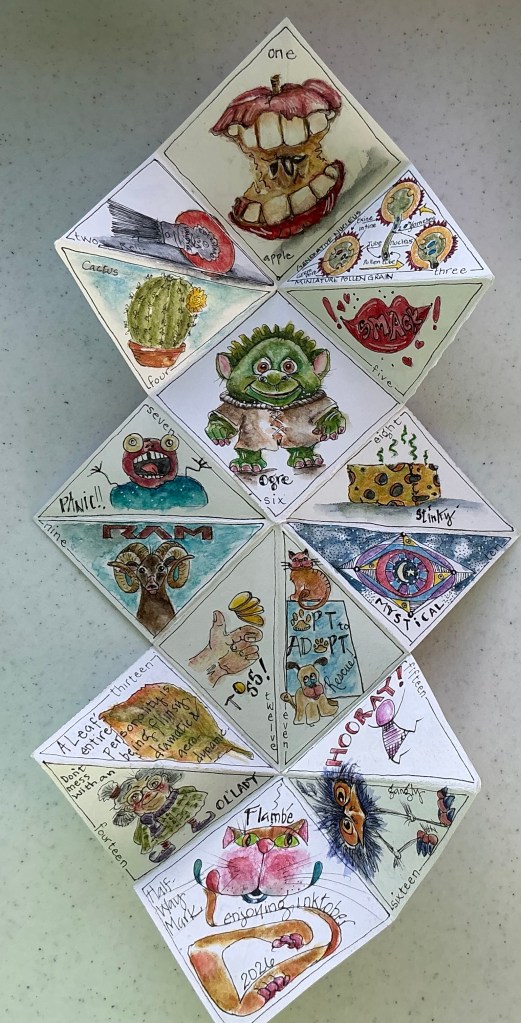
The unfolded 3-square fold booklet showing Illustrations for Inktober 2026 prompts 1-16 and a nod to Flambé
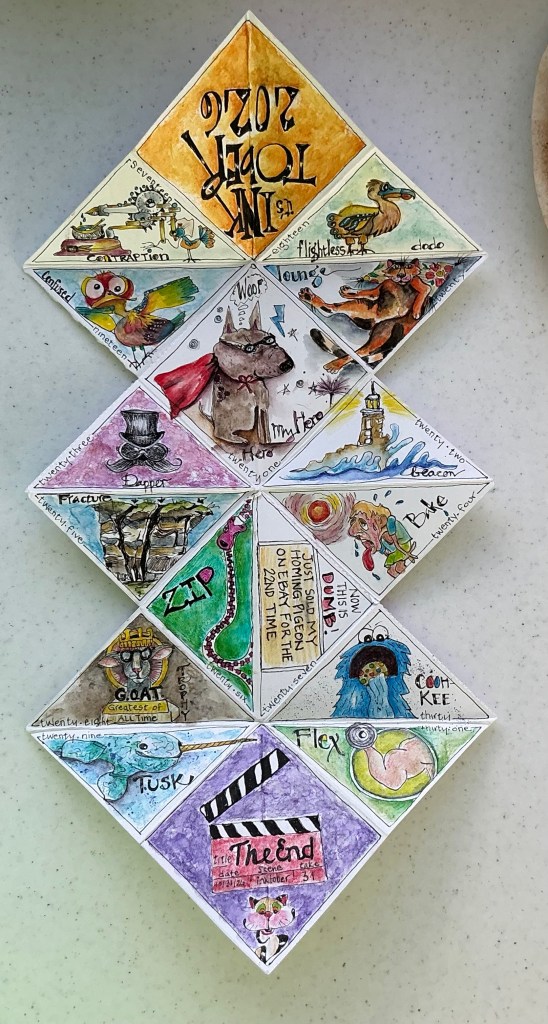
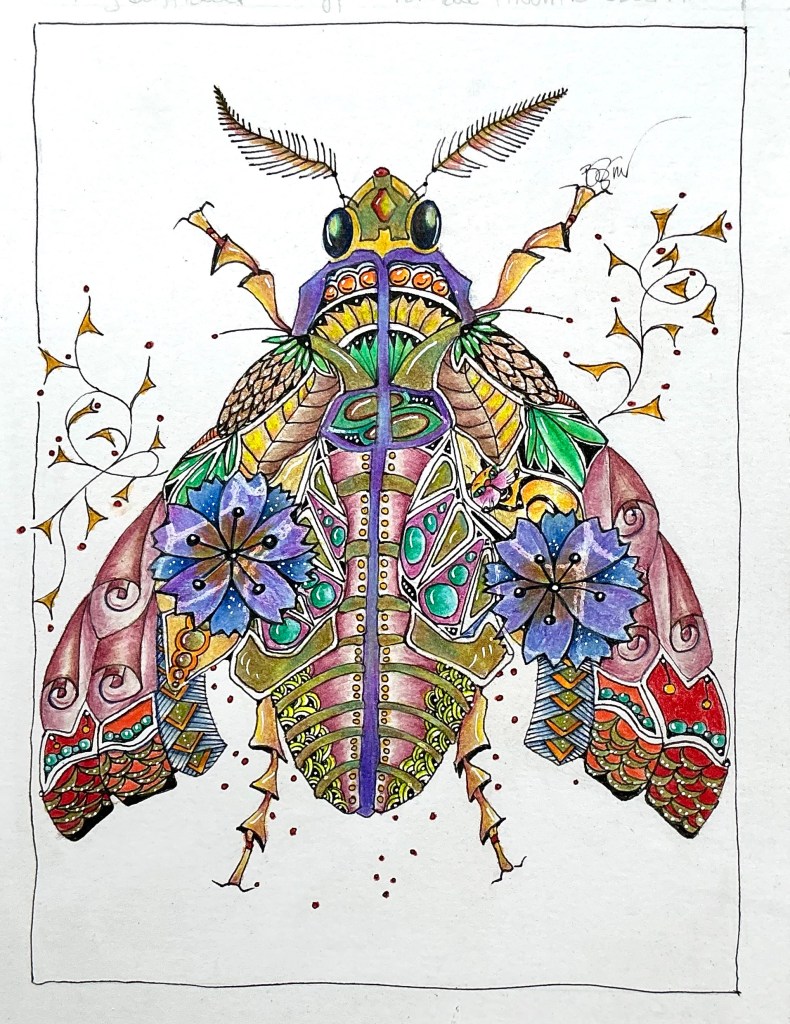
All of my illustrations were colored with watercolor pencils after drawn in ink.
Unfolded 3-square fold booklet, flip side showing Inktober 2026 prompts 17-31 along with front and back covers
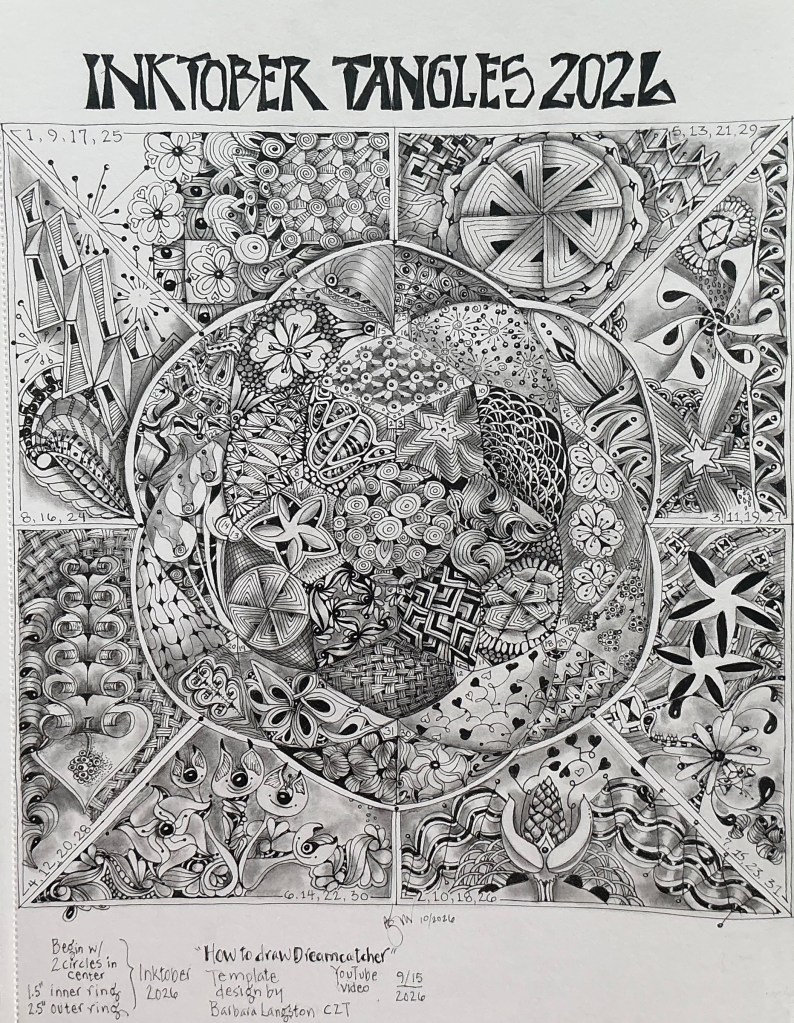
The finished Dreamcatcher design holding all 31 Zentangle patterns inside the Dreamcatcher, and in the 8 perimeter blocks – this image shows hours and hours of shading! Let me know if you spotted Flambé!
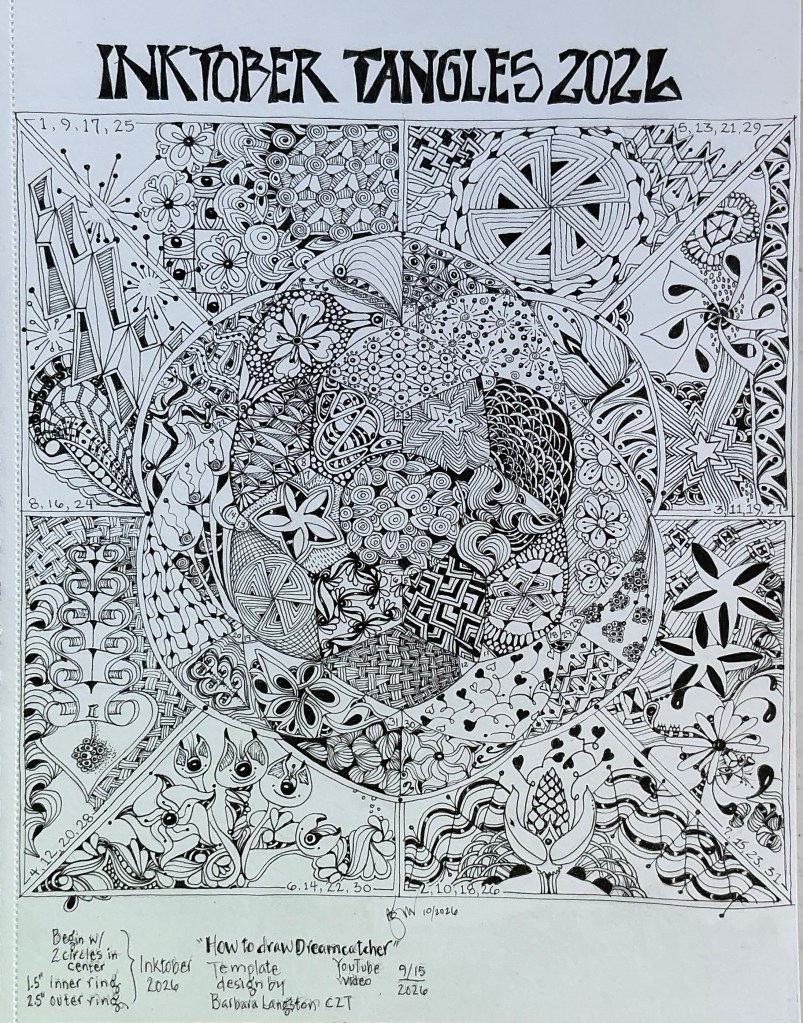
To prepare for the Official Zentangle Inktober Tangles 2026, I stumbled upon a lovely Dreamcatcher design developed by Barbara Langston—CZT (Certified Zentangle Instructor). Barbara’s 22-minute, step-by-step YouTube tutorial titled, “How to Draw the Dreamcatcher Template for Inktober Tangles” was designed to hold a space for each of the 31 patterns. My 9” x 12” paper size allowed me to place the Dreamcatcher into a 9” x 9” square, leaving room around the perimeter for eight large blocks. In these blocks I redrew up to five of the 31 patterns, in random order and without any repeats. This turned out to be a very busy and very full page — one that really satisfied my extreme love of detail! Call me crazy! To try your hand at drawing this easier-than-it-looks Dreamcatcher, click this link.
All of the Zentangle patterns were drawn with a 005 micron pen.
This image shows the finished line work only – the ‘before’ look before all the shading shown in the previous image
As always, participating in the annual Inktober challenge was fun, rewarding, and motivating. And this year, by following official prompt lists, it was a great way to supplement my daily drawing practice with subjects very different from nature journaling.
Oh, and this year I followed the progress of several good friends who also had a great Inktober experience …Chris, who dared to draw the Dreamcatcher with perimeter blocks. She did a beautiful job filling up her page with all 31 Zentangle patterns, adding perfect touches of gold accents! ….. andLunnette, who jumped outside the traditional ‘box’ with her “Leaf-tober.” Her challenge was to draw an Autumn leaf-a-day collected from her neighborhood.
Drop a comment to this post if you’ve ever participated Inktober, how you defined your unique challenge, and if you had fun.
Hope you enjoyed my Inktober 2026 creations.
Thanks for stopping by!
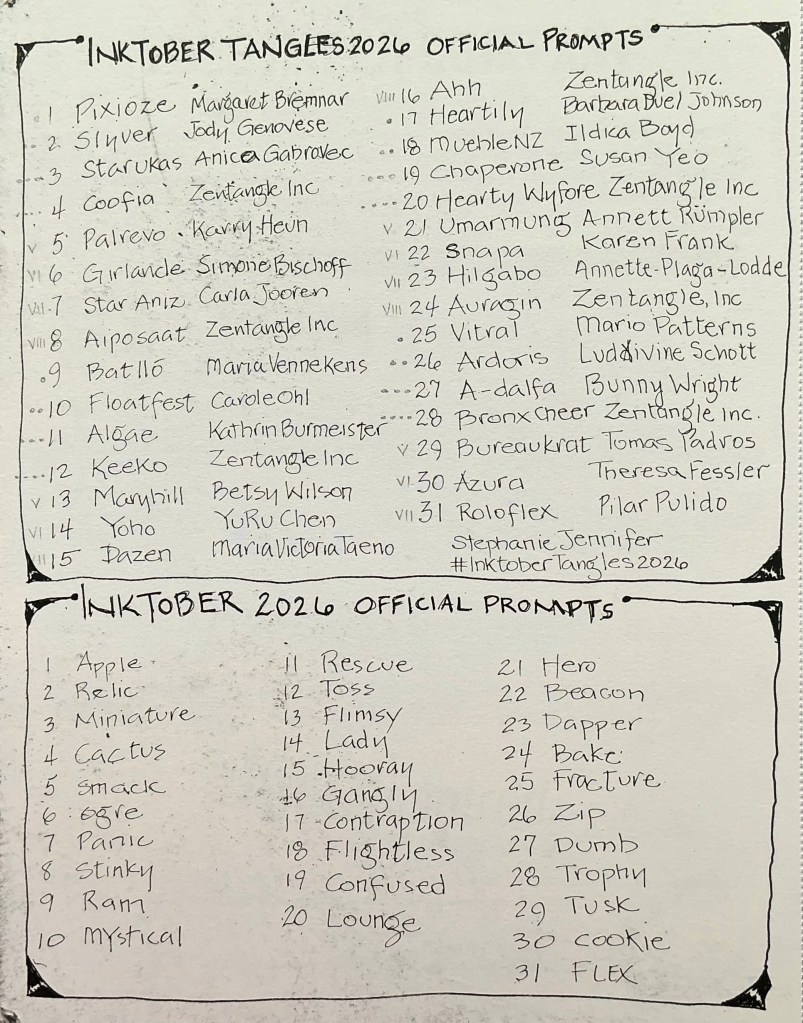
My hand written official prompts lists for Inktober 2026
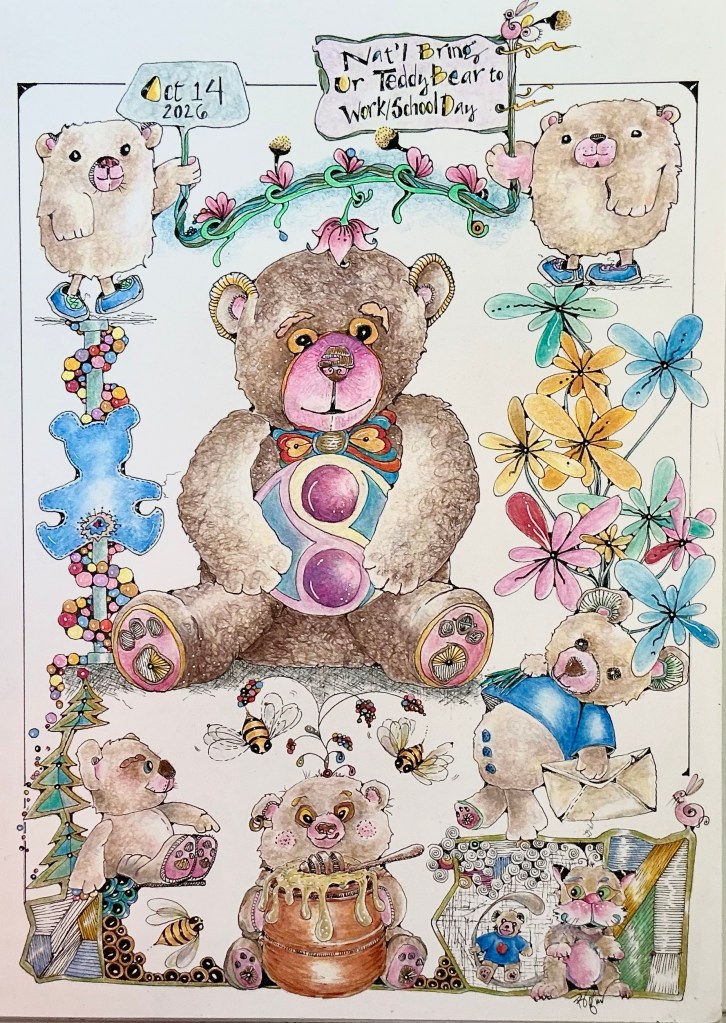
Is that a Teddy Bear peeking over your colleague’s monitor? Do you know a teacher who just sat a 4-legged Teddy on their desk? Who was that father pushing his fuzzy Bear down aisle 7A selecting a breakfast cereal? Really … a stuffed Bear hitching a ride-with-a-view from the top of a backpacker’s backpack as she climbs Mount Amazing? Why yes! But don’t be alarmed. It’s National“Bring Your Teddy Bear to Work/School”Day (or wherever you spend the day). This heartwarming National Day is a dedicated to embracing (literally) nostalgia and fun.
Celebrated annually on every second Wednesday in October, National“Bring Your Teddy Bear to Work/School”Day is your official permission slip to let your cherished childhood companion tag along with you all day long. And quite likely you’ll find Teddy to be the best coworker or classmate, shopping trolley companion or hiking buddy you could ask for!
Do you remember your first Teddy Bear? Did he instantly became your first, and likely your forever, best friend? He was the one who knew all your secrets, stayed awake nights to keep the closet monsters at bay, and comforted you when sad, scared or sick. Teddy was always there. He was the keeper of your childhood tears and your biggest cheerleader.
As serious adults we spend our days working endlessly to meet deadlines and perform countless grown-up duties, returning home each night exhausted. But somehow we carry on thanks to the simple, comforting presence of our Teddy Bear, who always greets us at the end of each day. Such a welcome breath of fresh, fuzzy air! So why not, at least for one day, allow that best friend to join you at work or school, the market or even the great outdoors. It isn’t just silly—it’s a celebration! It’s guaranteed to put a smile on everyone’s face, spark the imagination, and start a conversation. It’s a stress-ball with a soul, a furry, low-maintenance mood booster, and a pure and simple delight.
How a Stuffed Bear Became a Toy Icon
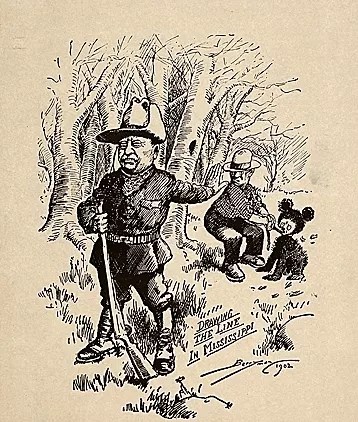
Teddy’s story begins, surprisingly, with a hunting trip and a moment of presidential sportsmanship. It was 1902, and President Theodore “Teddy” Roosevelt was hunting bear in the great state of Mississippi. After an unsuccessful day, his hunting party managed to corner and tie up a bear to a tree for the President to shoot. But Mr. Roosevelt, an avid hunter, refused to kill the bear, declaring it unsportsmanlike.
Word of the incident leaked to the press and the story quickly became national news. Even Clifford Berryman, a well known political cartoonist of the times, immortalized the moment in The Washington Post (11/16/1902) with his cartoon depicting Roosevelt turning his back on the tethered bear. The cartoon became an instant classic.
The C. Berryman cartoon as it appeared in The Washington Post, November 16, 1902 (NPS)
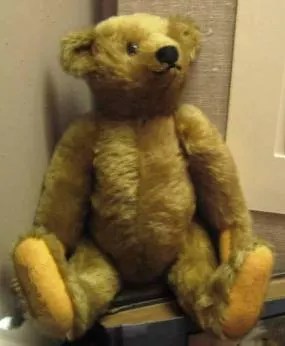
Instantly inspired by the Berryman cartoon, Morris Michtom, a New York candy store owner, along his wife Rose, created a stuffed bear cub. Michtom sent the bear to Roosevelt and asked for permission to call his creation “Teddy’s Bear.” The President agreed, and voilà … a toy icon was born!
A replica of the first Teddy Bear created by Morris and Rose Michtom (NPS)
How Can I Join the Fun?
Don’t let your Bear be a wallflower! Unabashedly introduce him to colleagues, classmates, and everyone you meet on this National Day.
As a new employee or teacher’s aide, Teddy will need a name tag and a fun job title like “Chief of Snack Inspection” or “Director of Naps.” At the food store, ask if he can volunteer to sample and rate speciality products like gummy bears, animal crackers, or “bear claw” pastries, to increase sales of these “bear-y delicious” treats. As a hiking buddy perched high on your backpack, Teddy can be your rear-view lookout — alerting you to dangers stealthily approaching from behind.
Have a little fun and take a photo your Teddy Bear “working” at the copier, “attending” a meeting, or “reading” a book in the library. Teddy might like to “push” the shopping cart, “point” at his favorite honey on the shelf, or “scan” items at the self-checkout station. Don’t forget to loan him your binoculars so he can “look” far down the trail for danger, or share your camera so he can “take photos” of the black bear mom and her three cubs standing right behind you!
This is the perfect day to give a Teddy Bear to someone who needs a friend or a little encouragement. Organize a collection of new Teddy Bears to donate to a local children’s hospital, shelter, or first responders.
Share the fuzzy fun online by posting pictures and stories using the hashtag #BringYourTeddyBearToWorkSchoolDay.
………………………………………………………………………………………………………
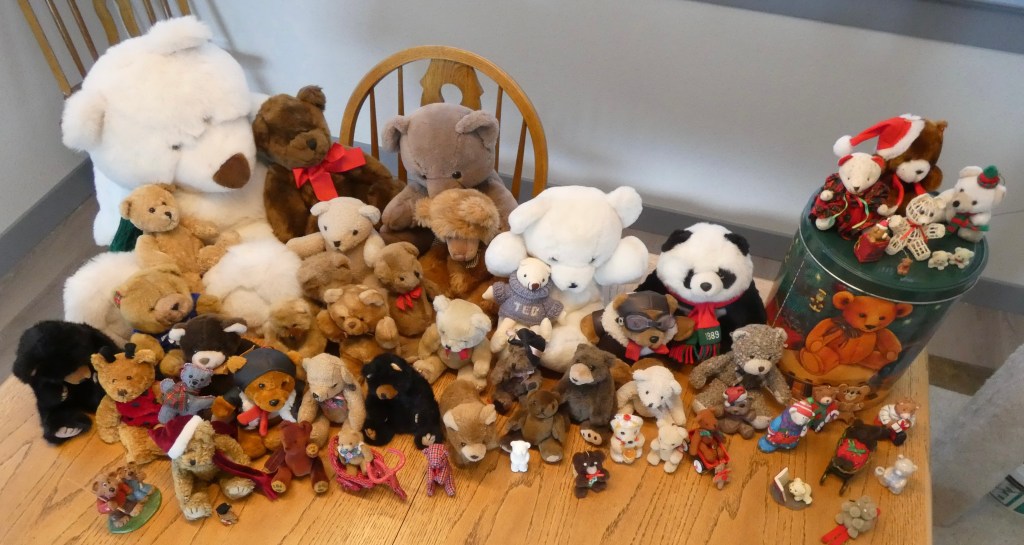
This amusing little post is dedicated to my sister-in-law, Larrie Jean — one of the most wonderfully influential and inspiring women I’ve ever had the good fortune to know and love. Her curious nature about the world and her sense of humor and good fun, resulted in her love of nearly everything imaginable, including Teddy Bears! When I discoveredNational “Bring Your Teddy Bear to Work/School” Daywas an officially-designated National Day, I absolutely knew she would’ve celebrated with wild abandon, and most likely with each and every Teddy in her collection! As the caretaker ofLarrie Jean’s Bears (thanks Wendel!), from this year forward I’ll invite at least one of her Teddy Bears to spend this fun day with me celebrating a love of life and the “silly” in us all!
A sampling of Larrie Jean’s Bears
………………………………………………………………………………………………………
What is your Teddy Bear doing today?
As always, I couldn’t ‘bear’ it if you hadn’t stopped by!
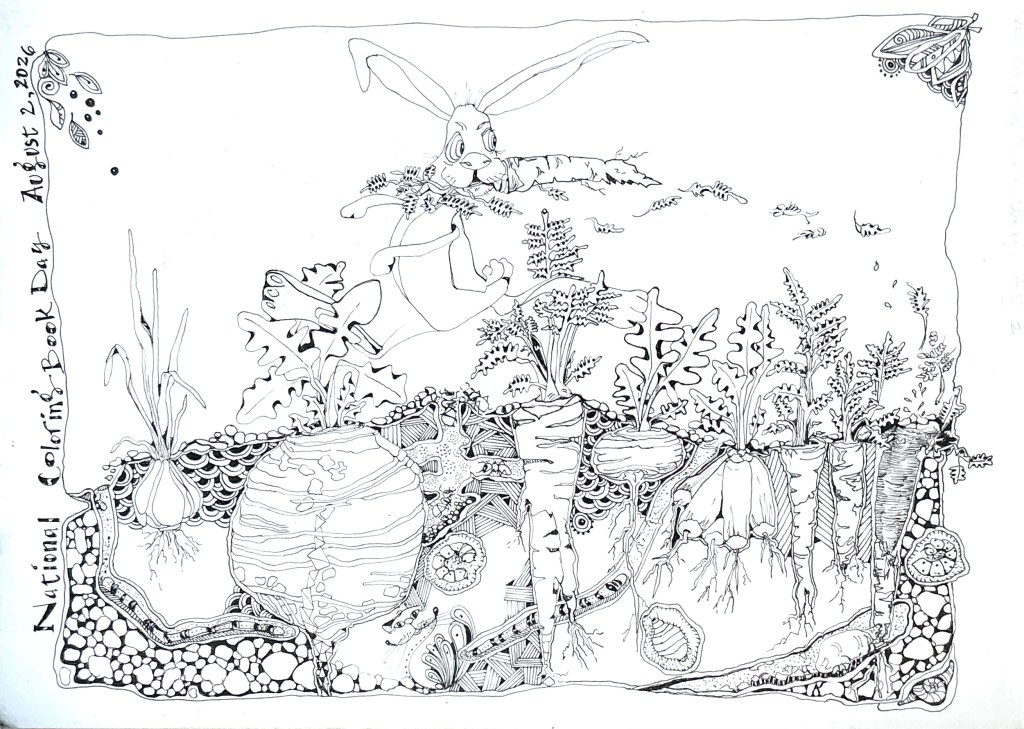
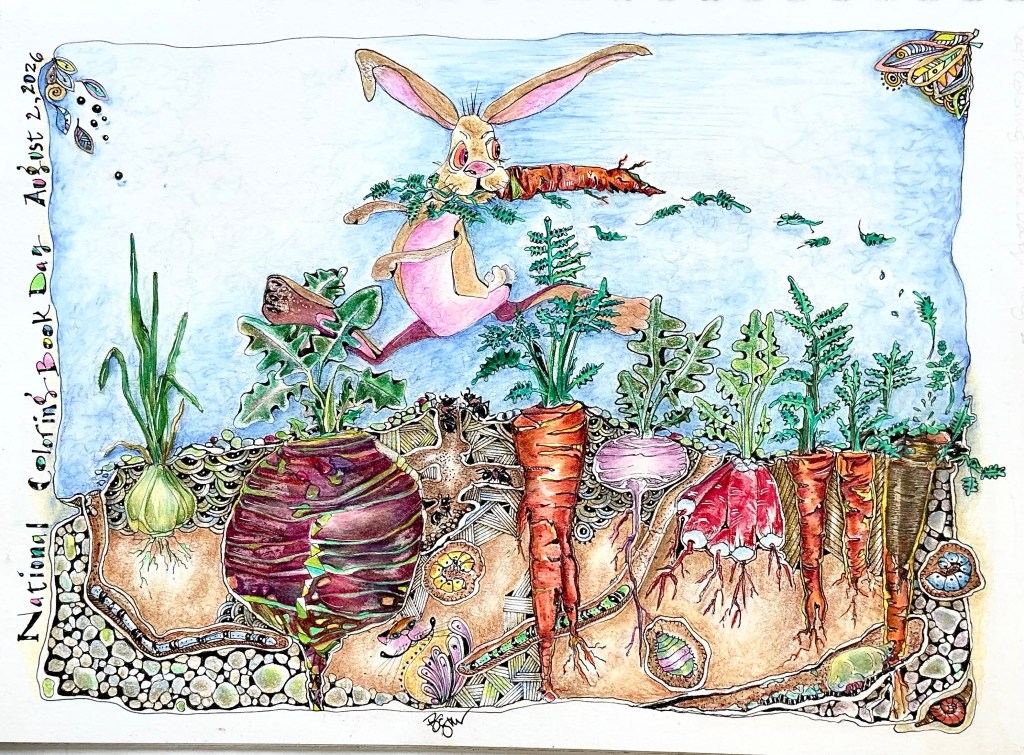
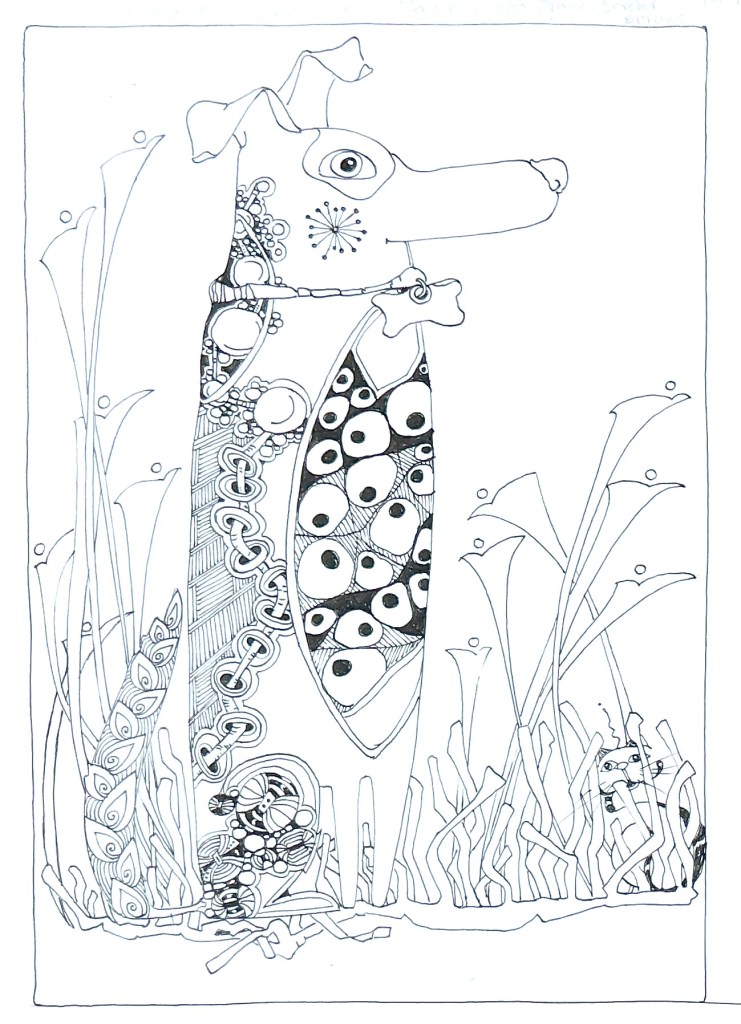
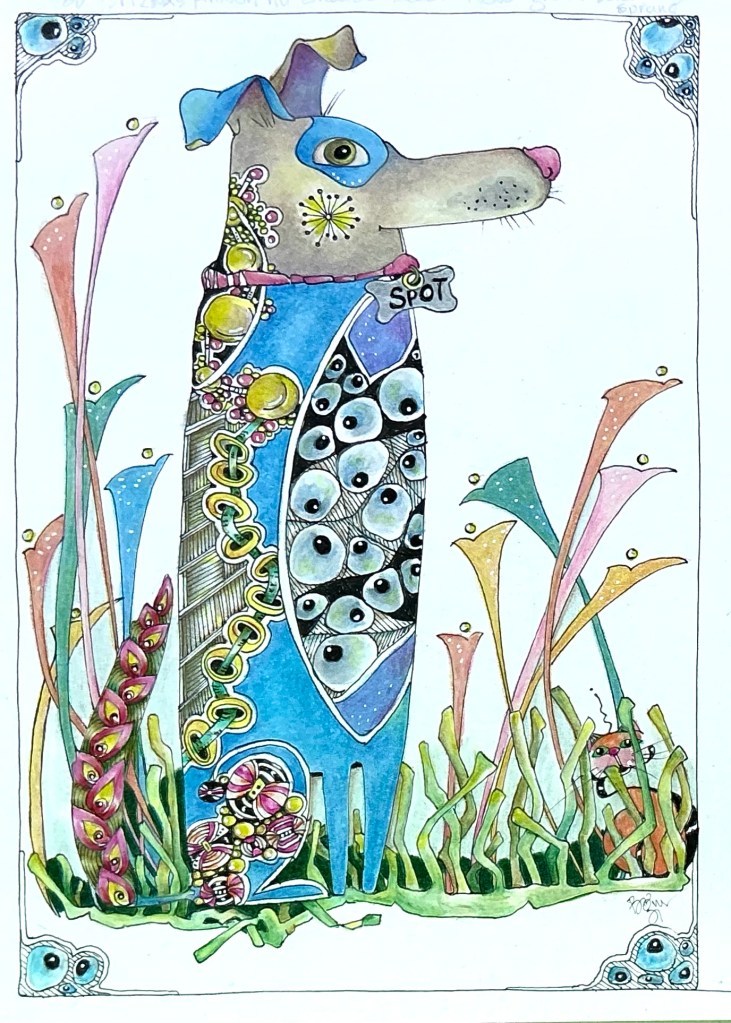
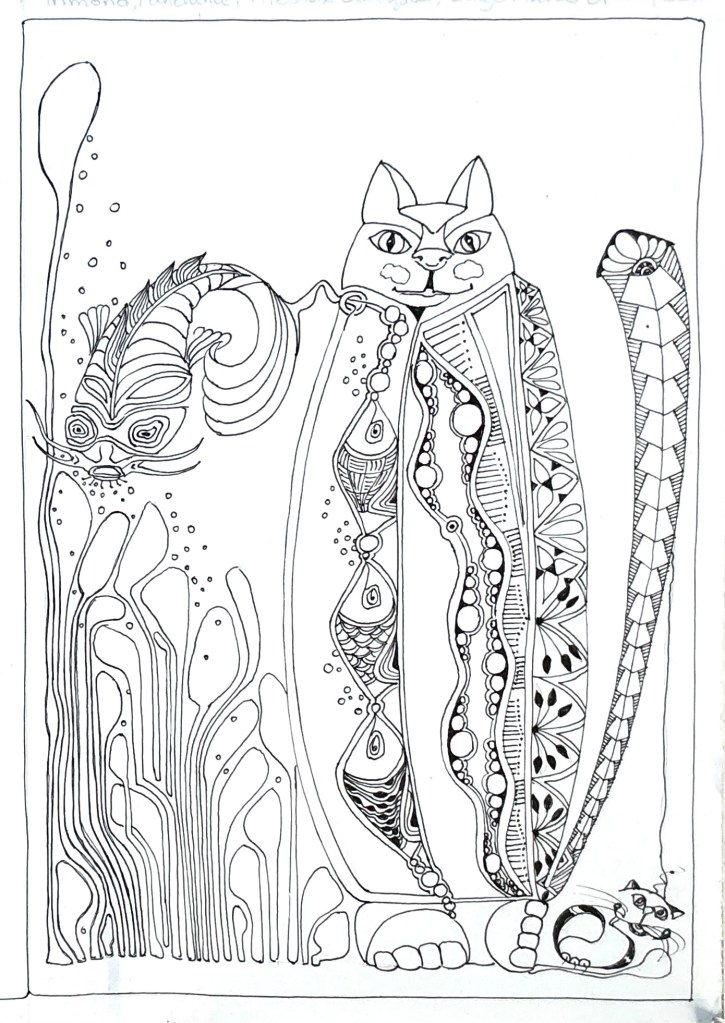
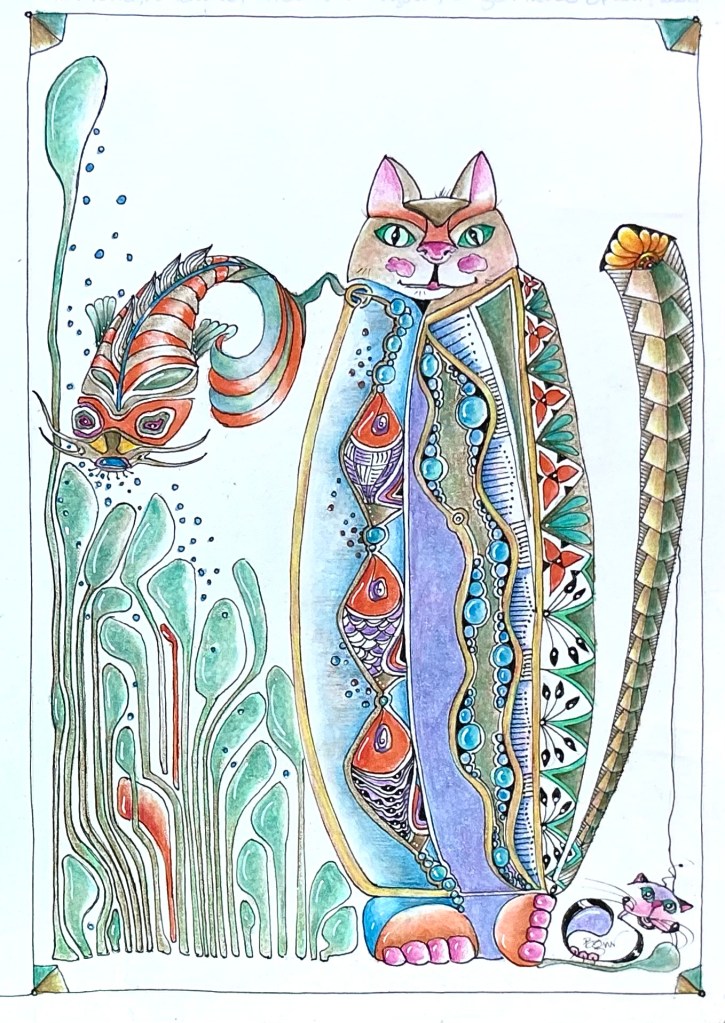
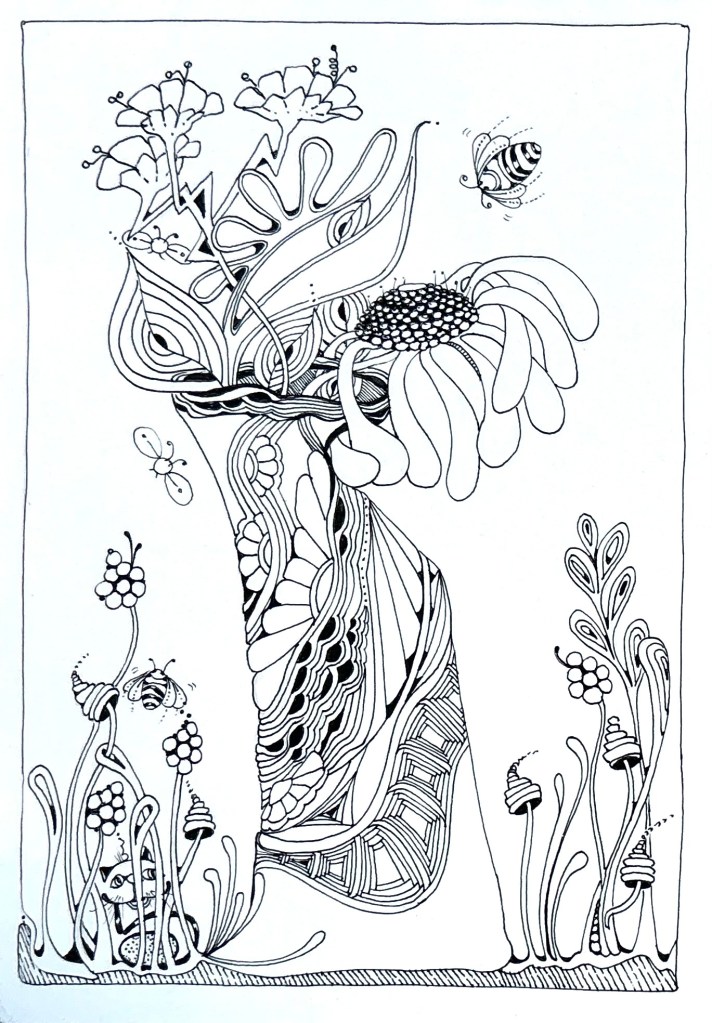
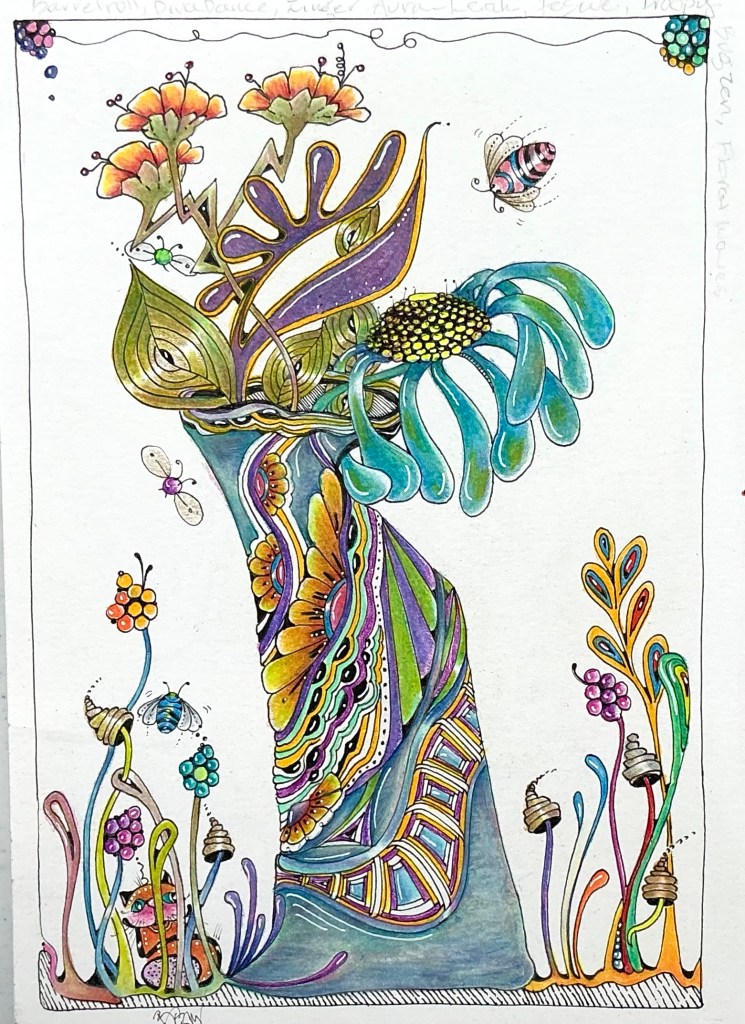
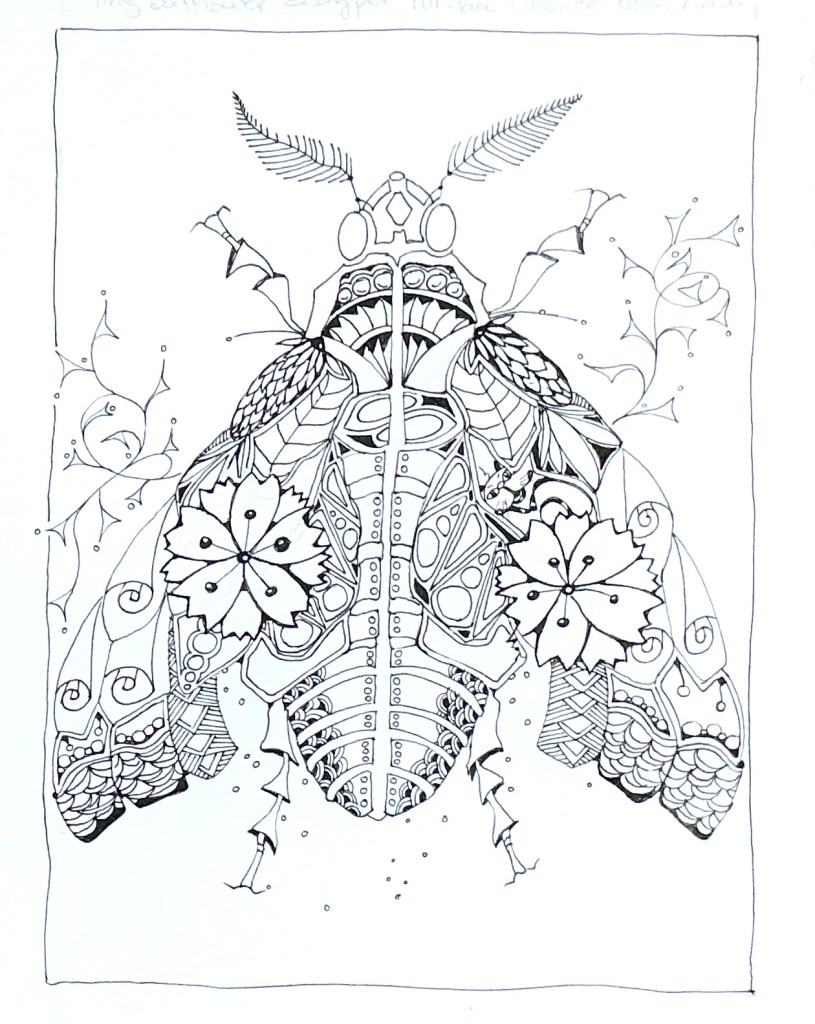
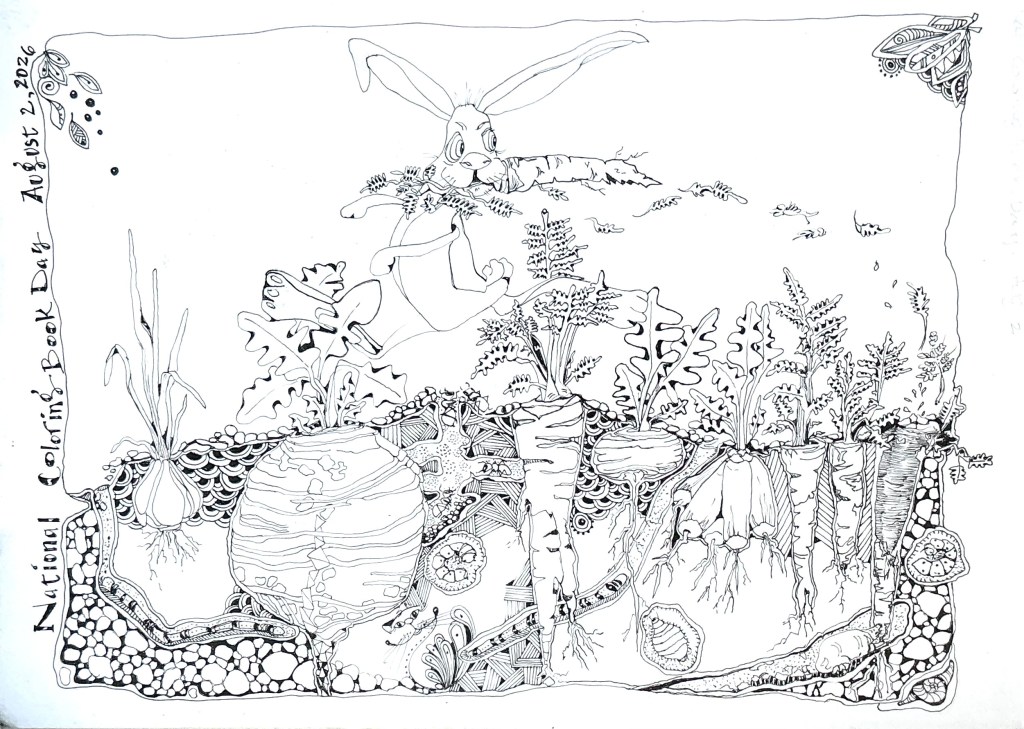
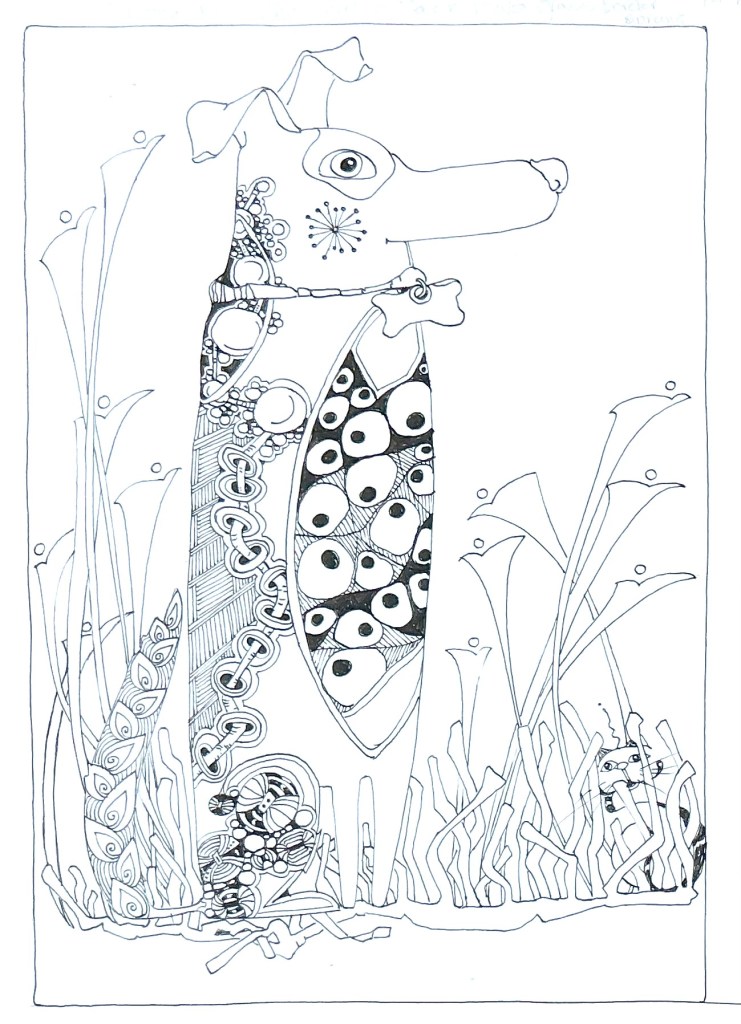
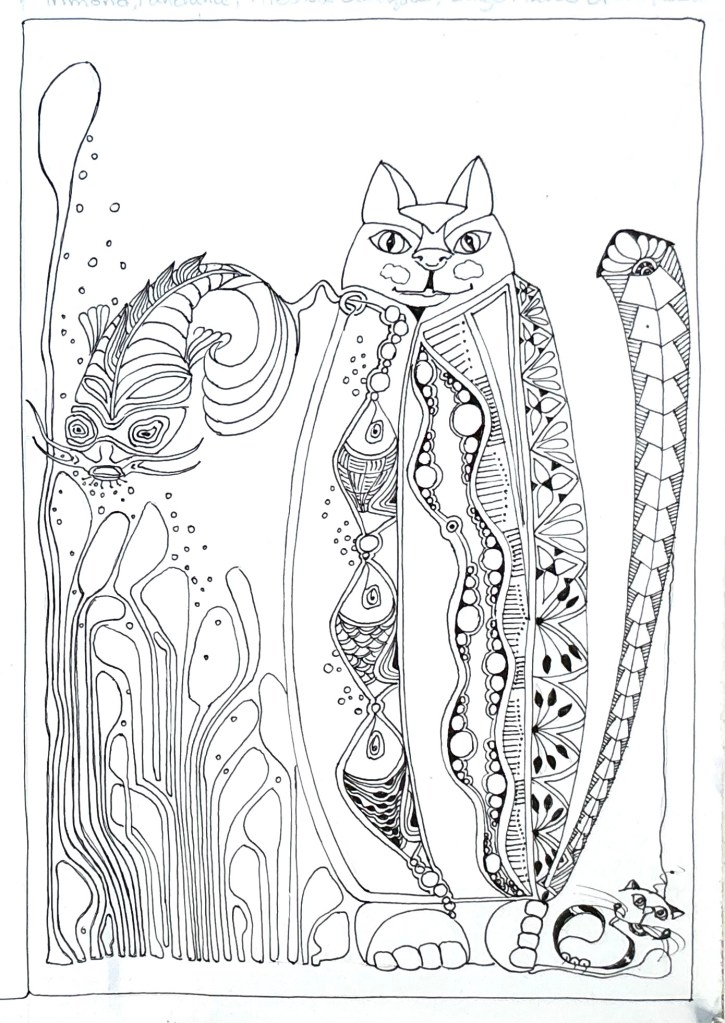
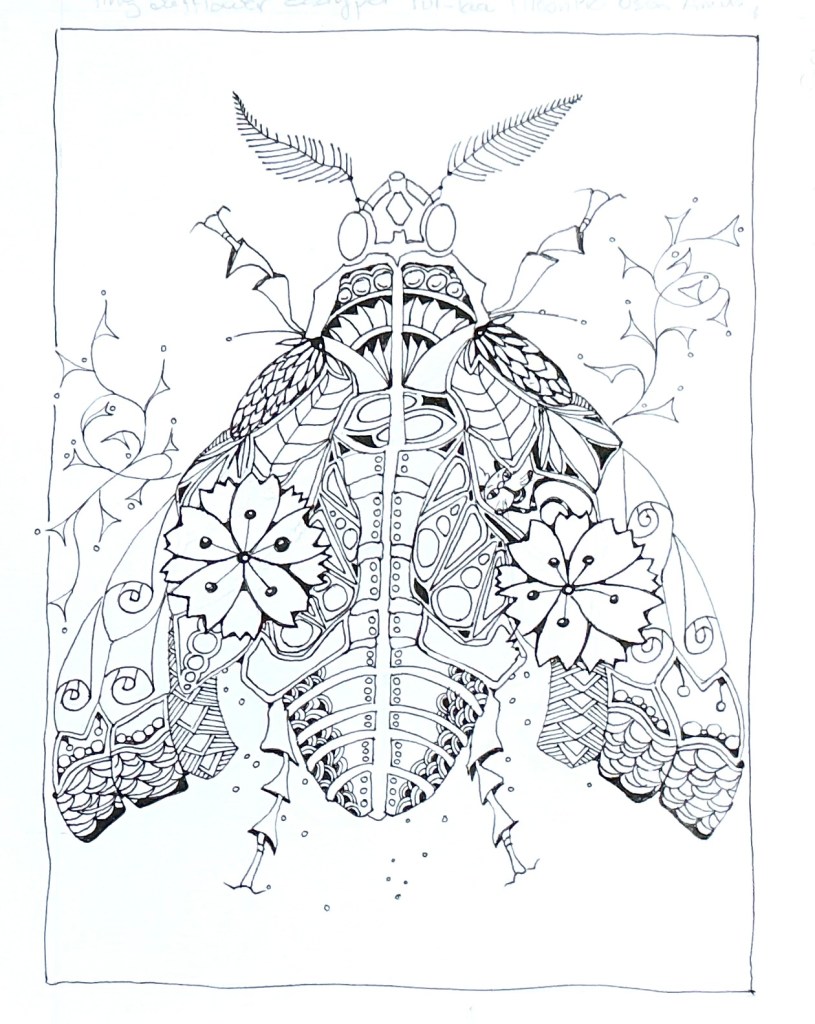
August 2nd was National Coloring Book Day, and to celebrate I shared five of my tangle-inspired black-and-white drawings on July 31st. Several of you have dared to accept my challenge to download and color one or more of the drawings, and they are awesome! I’d love to see more of everyone’s colorful pages. Meanwhile …
There’s no rush to color any or all of those drawings; you’ll always have access to each image. Enjoy!
As promised, below are my colored versions of those same drawings.
Who doesn’t remember coloring as a kid? Not only on brilliant bright white walls (haha!) but especially in a favorite coloring book. An activity that’s been popular with children for decades, adult coloring became a “thing” in the early 1960s. Anyone taking the time to color, find it fun and often educational. But the subtle benefits of coloring for both children and adults go much deeper.
Origin of National Coloring Book Day – Founded in 1941, Dover Publications, a company that’s been publishing adult coloring books since 1970, declared a National Coloring Book Day in May 2015. Taking their lead, and to make the day official, the Registrar at National Day Calendar declared National Coloring Book Day to be observed annually on August 2nd.
The year was 1879 when the first-of-its-kind “coloring book,” The Little Folks’ Painting Book, was published by McLoughlin Brothers (today known as the Milton Bradley Company). This book, meant to be painted with watercolors, became very popular — so much so that during the 1880s-1920s, educators and illustrators created a flurry of drawings for many more painting books that everyone could afford, not just the rich. These books, illustrating a wide range of topics, was a way to democratize art by making art available to all and encouraging artistic creativity, especially among children.
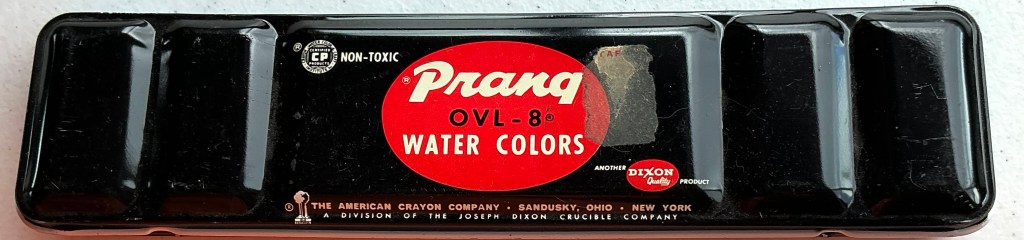
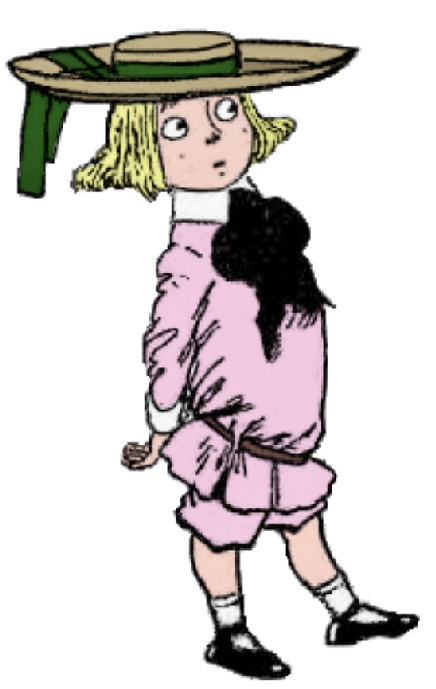
Of course there were other pioneers in painting books, such as including Louis Prang1 (I still have my first set of Prang watercolors!) and Richard F. Outcault2 (of Buster Brown fame).
Enter the Crayon! – Even after wax crayons were mass-produced in 1903 (read about the fascinating history of crayons in my 2024 post Happy National Crayon Day), the painting books were still largely designed to be painted. The transition of painting books to coloring books finally happened between the 1930s and 1940s, although the books were still designed to be painted as well as colored. This period of time is usually referred to as the golden age of childhood coloring.
Make Way Kids! – In 1961, adult coloring books became a cultural phenomenon with the release of The Executive Coloring Book, a satirical guide meant to mock corporate conformity. This somewhat controversial coloring book paved the way for the massive obsession with adult coloring books in the 2010s.
Learning Through Coloring – A picture is worth a thousand words! Since the 1980s, several publishers have produced educational coloring books intended for studying graduate-level topics like anatomy and physiology. This approach for teaching complicated subjects uses color-coding of highly detailed diagrams as a learning aid. Examples include The Anatomy Coloring Book, and others in the series covering topics in zoology, biology, human evolution, and botany. These coloring books and countless others specializing in educating people of all ages often have textbook quality descriptions accompanying each image.
Coloring as Meditation, and Other Benefits – It’s long been known that the practice of coloring in a coloring book, is a great way to relax, reduce anxiety and stress, and release your inner child in ways similar to meditation. Coloring helps create focus, and can develop fine motor skills and vision. Coloring books are often used as tools in rehabilitation of accident victims to aid recovery of hand-eye coordination. They are used with autistic children both for entertainment and for their soothing effect. Coloring books are also used to reduce the trauma of hospitalized children by explaining complicated medical conditions and/or their upcoming surgical procedure.
With so many colors and designs to choose from, coloring books offers enjoyment in so many settings, especially since they’re portable and come in a variety of sizes.
Take coloring books on vacation with you for rainy days or to document a fun memory.
Coloring books make great gifts any time of year. When someone visits, be sure to leave a coloring book and colors in the guest room for downtime. At the office, keep a variety of books in the breakroom for co-workers to fill up.
Next Steps – To get your National Coloring Book Day celebration off to a fun start, you’re invited to:
pick one (or all) of my illustrations to download and print — or create your own;
color it (them) with any single or combination of media you like or have never used before. Try watercolor with colored pencil. How about watercolor pencil! Use colorful ink markers for a vibrant effect. Choose pastels or even pan pastels, or both. Water soluble inks or tinted graphite might be your cuppa tea;
share your colored page(s) with me by emailing barb.masinton@gmail.com so I can post them on my blog (if you give me permission) AND/OR share your page(s) on social media – tagging #NationalColoringBookDay (keep following my blog to see how my colored pages turn out);
add a comment to my post letting me know if you accepted my invitation and describe your experience … did you realize any of the benefits of coloring described in my post? Most of all, did you have fun?
Happy National Coloring Book Day!
1Louis Prang (1824 – 1909), often referred to as the “Father of the American Christmas Card,” was a German-American printer whose goal was that every child have access to safe art tools. He created Prang watercolors in 1856 — affordable, non-toxic, moist pan watercolor sets designed specifically for public school student art education. As the founder of the Prang Educational Company in 1882, he supplied classrooms with all sorts of art supplies, launched art textbooks, and developed the Prang Method of instruction in the 1870s and 1880s. The American Crayon Company acquired Prang’s art lines in 1909, eventually becoming part of Dixon Ticonderoga.
My first watercolor set …. Long, long …… long ago!Inside my Prang watercolor set — the original pans but not the original brush (which wore out years ago).
2 Richard F. Outcault (1863 – 1928) was an American cartoonist who pioneered the modern comic strip. Creator of the character Buster Brown and his dog Tige, Outcault authored Buster’s Paint Book in 1907, launching a trend in using coloring books to advertise a wide variety of products, including coffee and pianos. In the early 1900s, Outcault licensed the name “Buster Brown” for use in a wide number of consumer products, including children’s shoes manufactured by the Brown Shoe Company (today known as Caleres, owner of Famous Footwear, Naturalizer, Dr. Scholl’s comfort shoes and a long list of luxury and athletic brands). Since 1904, the “Buster Brown” character and Tige have been Company mascots, appearing in television commercials (1940s and ‘50s) and in comics advertising their shoes. Both Buster Brown and Tige were revived with an updated, more contemporary look for a brief advertising campaign in the 1980s and 1990s.
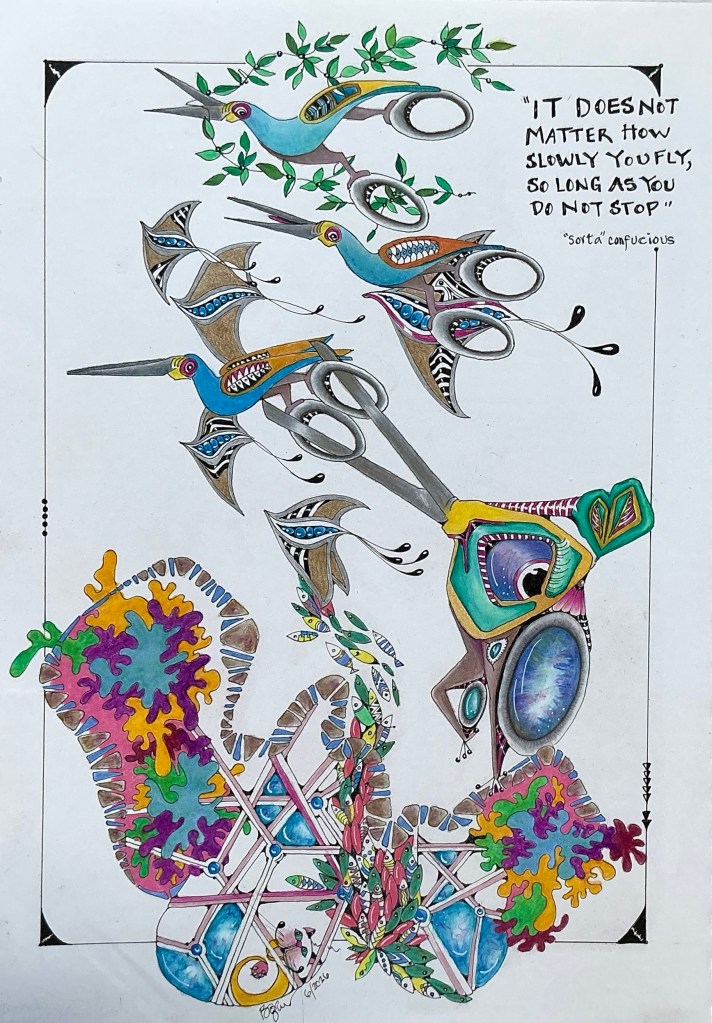
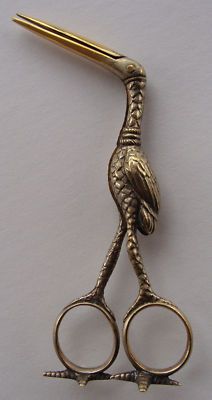
Today’s tangled drawing was not inspired by a special day of the week or month. Instead I was smitten by a recent scissors-shaped discovery. It began with a desire to create a nature-themed action piece, like birds in flight. As I mentally rabbit-trailed the many possibilities, it seemed important to think of a reason why my birds were flying in the first place. Maybe they were fleeing something, but what? Being momentarily distracted while addressing an envelope, my mind took an exit ramp while considering the name of our return address town of Tijeras. Excitedly recalling that “Tijeras” is Spanish for “Scissors,” I nearly decided my birds would be scissor-tailed flycatchers — gorgeously graceful birds — but a tad too obvious? Regardless, the notion of “scissors” stuck in my brain. So I returned to my main rabbit trail with thoughts of fanciful, yet desperate birds fleeing a pair of big scissors!
Those totally irrational thoughts focused my internet search for “flying birds and scissors.” As I wasn’t terribly optimistic about finding any interesting results, imagine my shock when after only a few short moments of scrolling I shouted ….. “Bazinga!”
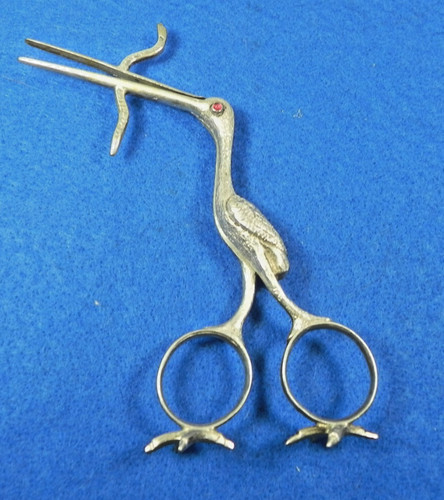
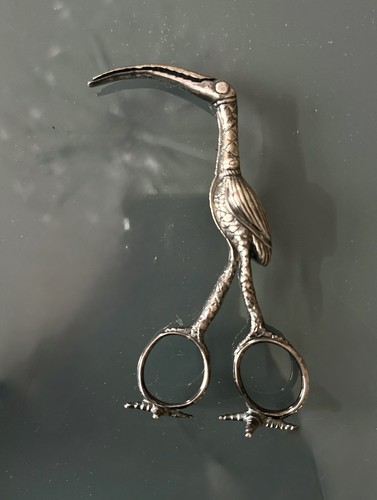
There, before my eyes, had to be one of the wonders of the world (and the answer to my flying-fleeing birds) ….. Stork Scissors! I never knew such a thing existed, but right then and there I began mentally designing and composing a tangled illustration of birds with scissors!
Of course I had to learn the why’s and what-for’s behind Stork Scissors and the use of such clever scissors in the shape of a stork who’s long bill actually forms the scissors’ blades. Here’s what I learned:
“Stork Scissors” (sometimes called crane or bird scissors) are used today as a classic sewing tool shaped like a bird. Even though they look decorative, those long, precise bird beak blades are very efficient for snipping tiny threads in embroidery and crafts.
But there’s oh so much more to the story.
It’s believed that the first Stork Scissors were used in the late 18th and early 19th centuries by midwives as medical clamps to stop blood flow in a newborn baby’s umbilical cord after birth. The original 4 – 6 inch long clamps were designed with a stork motif because of the bird’s folklore association with childbirth, good luck and hope. The head of the stork was mounted at a 45 degree angle and had a beak that was blunt and heavy. The handles looped to form the wings and body of the bird. Some clamps had an inlay of a little baby hidden inside the beak that appeared when opened. Also, Stork Scissors usually came with a set of forceps to help the midwife deliver the baby.
Once disposable clamps replaced them in the 1960s, the design of Stork Scissors as umbilical clamps began to change in shape and size. The 45 degree angle of the bird head was straightened so it aligned with the handle and the bird beak was sharpened into blades making the Stork Scissors an elegant and precision tool for sewing and needlework projects.
Fast forward to today ….. Since the vintage design was never copyrighted, charming and whimsical Stork Scissors have continued to be made under various brand names.
After checking various on-line sites for antique clamps (mostly EBay and Etsy) and modern scissor designs (Amazon, art supply stores), I found a wide range of prices. For $700, you can own a circa 1800s “stork midwife umbilical cord clamp” made of 800 sterling silver. Another antique sterling silver “stork bird clamp scissors” with baby inlay costs $300. Today’s versions, some highly rated, are mostly gold or brass color coated and may cost as little as $8.99 for a 2-pack.
Have you ever heard of Stork Scissors? If so, do you own a pair of vintage Stork Scissors or even a newly manufactured pair? Maybe you’re even a collector of Stork Scissors. Seems that’s a thing! Do you think today should be designated as National Stork Scissors Day? Maybe not ….. but for me, this was a fun story to share and tangle!
The Tale of the Tangled Pot: Recognizing our Deeply Rooted and Inseparable Connection with the Natural World Through the Practice of Nature Journaling
June 14, 2026
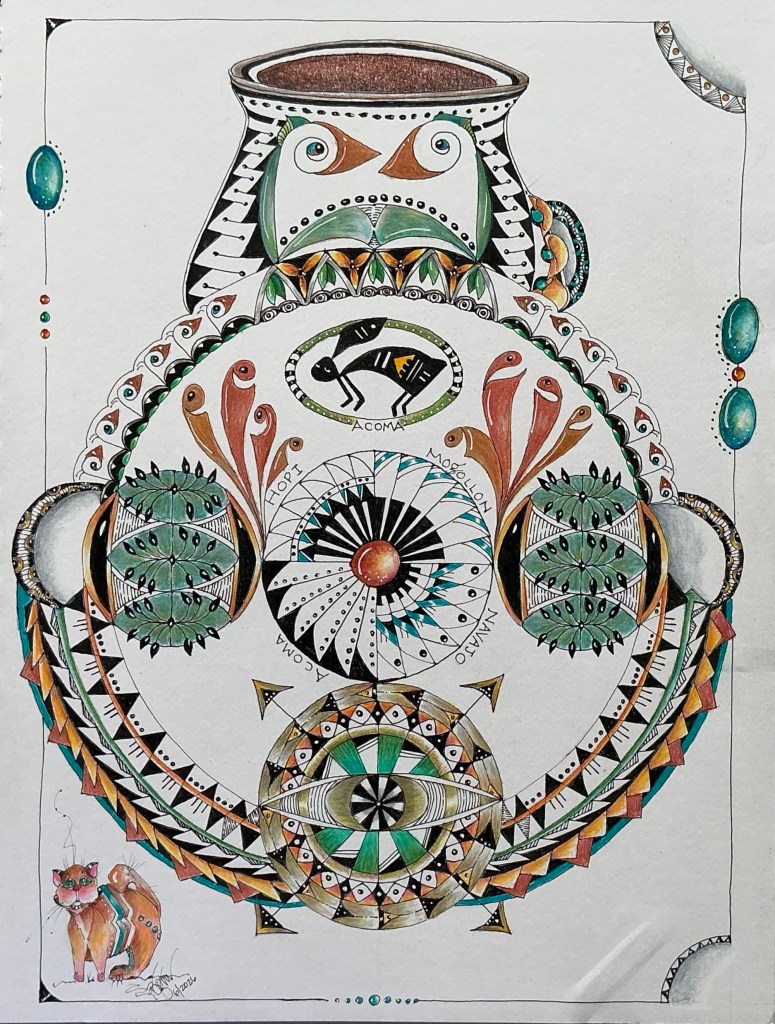
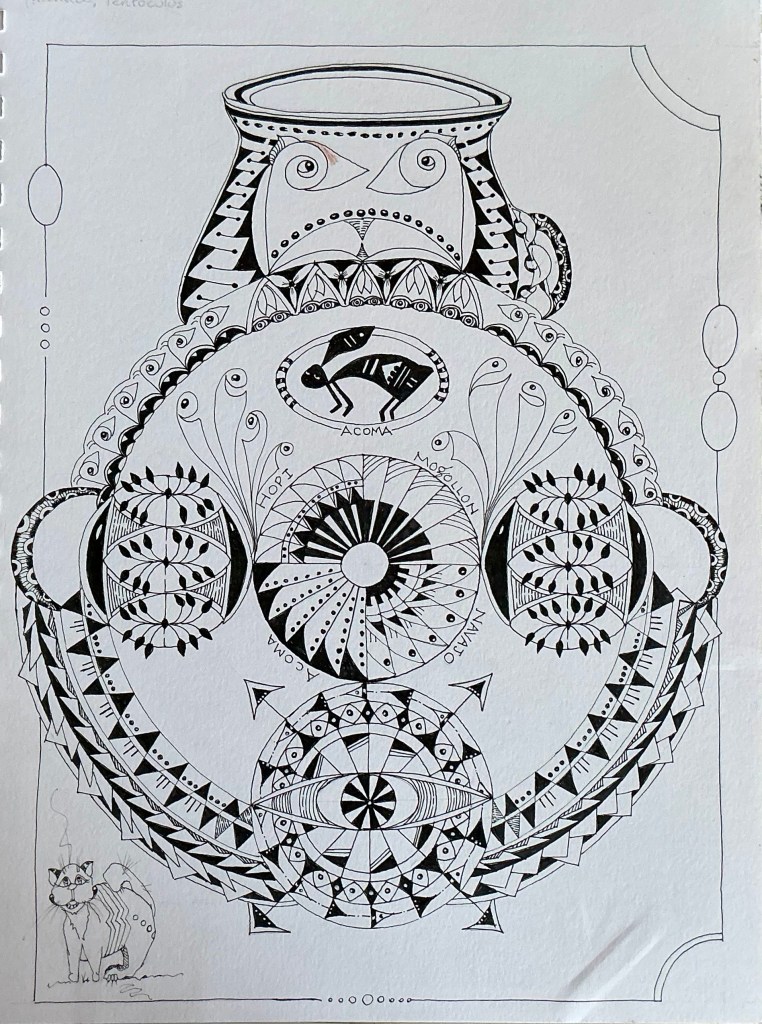
Zentangle patterns: Mogo, Sage, Roadrunner, Agave, Lazy Leaf, Monsoon, Zona, Voyage, Hokam (patterns created by Angie Gittles). Also added Hahna and Tentoculus. All patterns found on tanglepatterns.com
Living in the desert Southwest, inspiration for many of my Zentangle work comes from the representative art created by the indigenous peoples of New Mexico and the Four Corners region. Their deep connection with nature was often expressed in ancient rock art and on handcrafted pottery in ways that amaze. It takes me back to a different time and place; where their way of life was deeply rooted and inseparable from the natural world; where survival required an understanding and appreciation of the countless interdependent components required for the productive function and evolution of complex ecosystems.
Fast forward to today. Our fast-paced, stress-filled, consumer-centric lifestyles, full of techno-gadgets (demanding so much of our attention), and instant gratification, offers people a cushy arm-chair view of the world. Why put down those phones or turn off the TV, when we can safely and comfortably “witness” nature from our homes? Better yet, why not?
While pondering that question, many compelling reasons came so easily. Just being present in nature can be calming; relaxing; stress-reducing — we slow down, taking time to observe our natural surroundings. By really “seeing” local ecosystem(s) with all of our senses, we experience awe and wonder and make meaningful memories. Our once dormant skills in curiosity and critical thinking come alive as we learn about the integral connectedness of nature’s many and diverse components. By understanding and valuing how our connectedness to nature always has been and always will be critical not only to our very survival, but to the survival of all species, we realize the ability of all living things to thrive benefits from natural ecosystem services that provide things like clean water to drink, clean air to breathe, food to eat, and a habitable climate. These vital services are priceless. All nature asks is that we keep it healthy. First-hand personal exposure to the natural world fosters appreciation, love, and a desire to nurture and protect nature; an investment in the future of all life on Earth.
Observing the Natural World through the Practice of Nature Journaling
People have been observing, learning, and recording nature around the world for millennia. The oldest known cave art (pictographs) with paintings of wildlife, primitive humans, and human-bird hybrids hunting pigs, was discovered on an Indonesian island, and dates back almost 70,000 years. The oldest known rock carvings (petroglyphs), created by the Aborigines of Western Australia 40,000 – 50,000 years ago, depict wildlife and hunting parties. The oldest known petroglyphs found in North America were carved into boulders by still-unidentified humans that lived in the Winnemucca, NV area (east of Reno) between 10,000 and 14,800 years ago; their rock art represents leaves and trees. The oldest pictographs and petroglyphs found in New Mexico were made by Ancestral Puebloans and other Indigenous groups between 3,000 to 4,000 years ago in the Guadalupe Mountains/Carlsbad Region (southern NM) and depict hunting parties, wildlife and other natural elements.
The travelers, explorers and settlers that arrived in North America significantly influenced nature recording. They kept journals, field notes, and artistic renderings tracing a rich history of scientific inquiry and ecological changes spanning early colonial times to the formal natural history expeditions of the American West. For example, John Lawson (1709) and Mark Catesby (1731-1743), each published a book with their observations of the flora and fauna of the eastern colonial colonies (Catesby) and the southeast (Lawson). Extensive and diverse nature observations were recorded by all members of the Lewis and Clark Expedition (1804-1806), and by John James Audubon (1827-1838) with a focus on birds in their natural habitats. These and many more examples of “journaling nature” provided an understanding of the complex ecosystems that existed between two oceans, and was indispensable to the successful settling of North America.
Today’s Practice of Nature Journaling — paying attention, recording observations, asking questions, noticing changes, and reflecting on the natural world — is nearly identical to historical journaling practices, with some healthy advantages for mind and body. For example, Nature Journaling offers much needed mental, cognitive, and emotional relief, particularly important in today’s world. It also provides a screen-free way to reduce stress, encourage mindfulness, and sharpen observational and critical thinking skills. By intentionally immersing ourselves in nature — by being fully present — we can experience these benefits, and more. We find our place in nature by making connections and understanding how we are an integral and inseparable part of the environment around us.
“Walking” thoughtfully and gently in nature inspires us to nurture and protect what we are all part of, instilling in us a deep appreciation for the natural resources essential for the survival of our ancestors, as well as for our survival today and for future generations.
……………………………………………………………………………………………………
Zentangle patterns: Mogo, Sage, Roadrunner, Agave, Lazy Leaf, Monsoon, Zona, Voyage, Hokam (patterns created by Angie Gittles). Also added Hahna and Tentoculus. All patterns found on tanglepatterns.com
Many thanks to Angie Gittles, a Certified Zentangle Teacher, for developing the step-outs to an abundance of patterns inspired by Indigenous Peoples of the Southwest. Her inspiration inspired me to weave 10 of her different designs into a stylized pot to honor and encourage such an important way of life. In doing so, I took my time, taking many deep breaths during the process, and thought about the days when appreciating and expressing nature was a natural way of living.
……………………………………………………………………………………………………
Resources and a Few Important Tips
Whether you consider yourself a “Nature Journaler” and would like to learn more, or are interested in how to begin, there are countless resources and examples to refresh your skills or to get you started. Borrow a library book, such as Nature Drawing by Claire Walker Leslie, Keeping a Nature Journal by Leslie Roth, or Nature Drawing and Journaling by John Muir Laws.
To get started in journal sketching or to improve your skills, check out the following: Discovering the Art of Field Sketching by Kristin Link, Botanical Drawing using Graphite and Colored Pencil by Sue Vize, or The Artist’s Guide to Sketching by James Gurney and Thomas Kinkade.
Of course there hundreds of thousands of on-line resources and social media sites about Nature Journaling and related topics. But beware the pit trap ….. lest you get caught up in doom of perpetual scrolling, never to get a breath of fresh air in the light of day!
If you’re unsure about becoming a “Nature Journaler,” know that anyone can head to the woods, the backyard, or sit by a window. You don’t have to travel hundreds of miles to visit a National Park ….. nature is everywhere! All you need is a pencil and piece of paper, the curiosity to see what’s around you, and the desire to slow down and observe with all your senses. There’s no right or wrong way to journal in nature, but when you do, be fully present; take the time to really “see” your surroundings. Just committing to turning off your screens to nature journal for 5 minutes a day will be perfect for you!
……………………………………………………………………………………………………
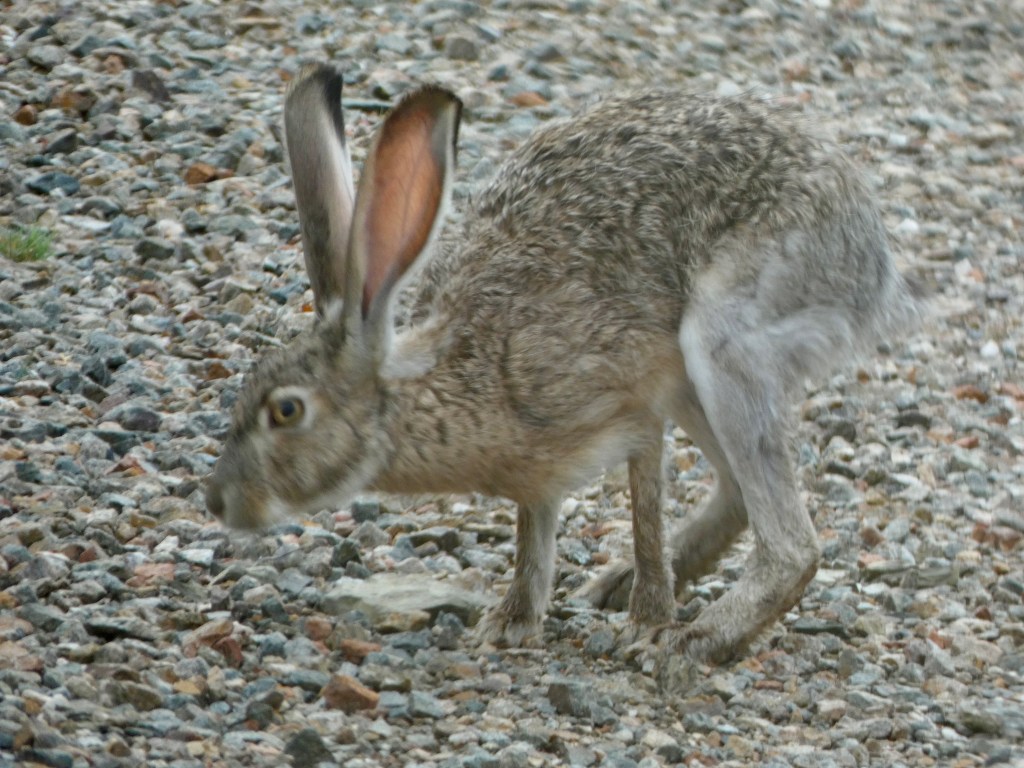
Black-tailed jack rabbit on the move!
Hope you enjoyed my Tangled Pot. As I always do while nature journaling, when creating these kinds of Zentangle-inspired works, my automatic slow-down mode becomes engaged, allowing me to think about possible directions I can take to complete a page. Sometimes the path is direct, but more often a world of rabbit trails leading to deep holes opens up before me, and I gotta take the plunge. That’s exactly what happened while tangling the Pot. And that’s what got me thinking about— how our ancestors used to live in nature, how art represents nature— how nature is endlessly tangled up in life— how today’s values take a back seat to our crucial connections with nature—how nature journaling can be used as a tool to restore gratitude and appreciation for nature—how, without nature, life as we know it would not exist.
I’m going to turn off my computer now and go enjoy a walk in nature with my journal. Are you inspired to do the same?
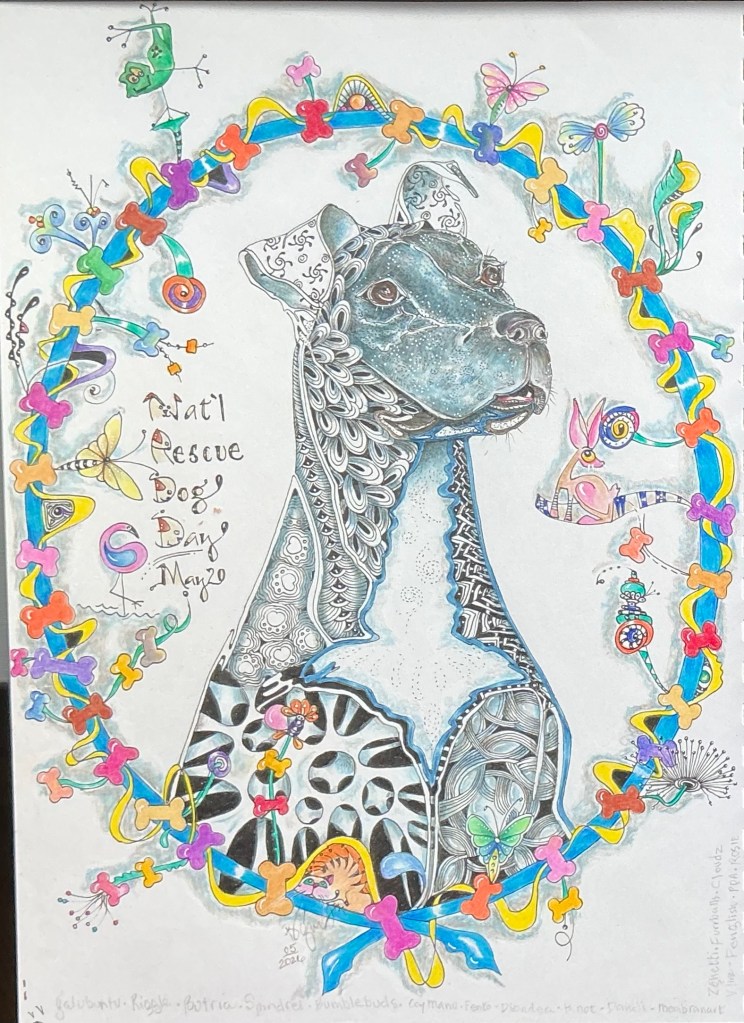
All the benefits of being adopted by an immeasurably lovable canine is celebrated annually on May 20th ….. National Rescue Dog Day!
Officially designated as a National Day on May 20, 2018, to honor the inspiring ways rescue dogs become a part of the human family, the Day also increases awareness about the number of dogs in shelters. Given a chance, rescue dogs fill their forever homes with unconditional love and unabandoned joy with every belly rub.
#NationalRescueDogDay
According to the ASPCA1, approximately 3.3 million abandoned and abused dogs enter shelters every year, each one needing a forever home. They are Rescue Dogs and their potential is limitless.
Always able to nuzzle, fetch, kiss or beg their way into your heart, rescue dogs provide comfort, security, and friendship as family pets. And with training, they can:
restore independence of people with disabilities as service animals;
provide comfort as a best friend to the elderly and infirmed;
make excellent teachers by showing children about caring and kindness;
provide a variety of therapeutic benefits to people with autism, mental illness, PTSD, anxiety, and depression;
rescue us from dangerous situations, help us investigate the cause of a fire, search for missing persons.
When it comes to our four-legged friends, they improve the human condition by leaps and bounds, barks and yips. It is hard to imagine a more helpful, worthy companion. Bring out the treats!
How to Observe National Rescue Dog Day
Get involved in the lives of rescue dogs. Here’s a few ways to share your puppy love.
Volunteer at your local shelter by taking dogs for walks, grooming, and giving them plenty of affection.
Make donations, from financial to providing things like blankets, toys, food, treats, and leashes.
Consider fostering. Many dogs abandoned in shelters require some medical care or rehabilitation in a home setting before an adoption can take place.
If there’s room in your life for a rescue dog, consider adoption and giving one a forever home.
Is there a rescue dog in your life? If so, share your story. Here’s mine!
Luna – from Felon to Forever Furbaby!
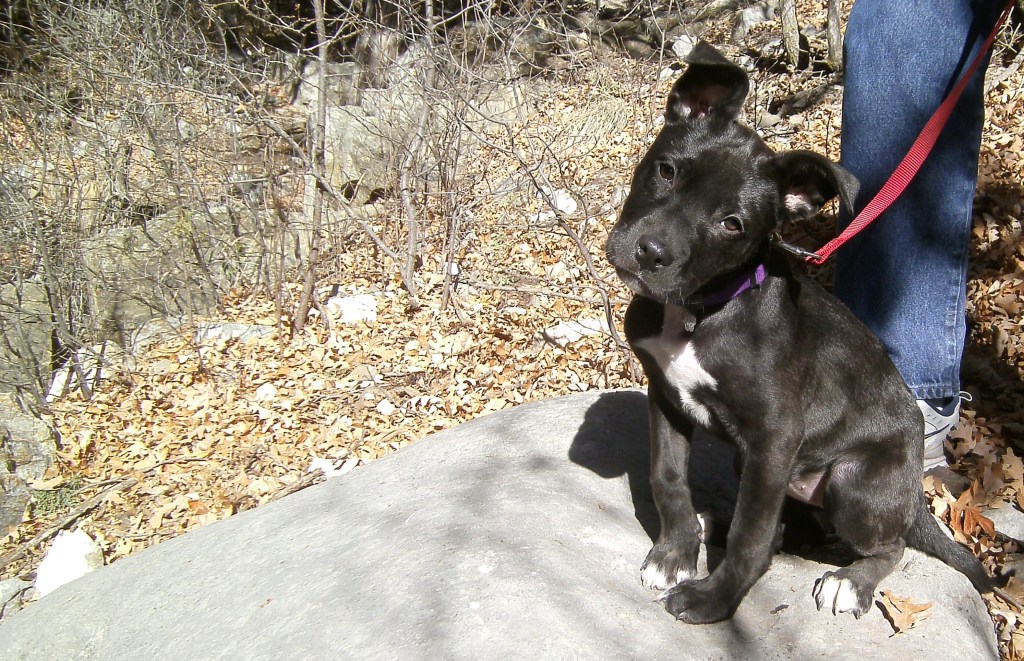
Luna on her first hike – January 2018
The year was 2017… we’d moved cross-country 2,000 miles to New Mexico, bought a home, felt settled in by December, then realized things were too quiet. We had somehow lived two full years without a dog in our lives and decided to begin our search for a furry companion. By mid-January 2018, we had visited several local animal shelters, but there were no puppies or even young dogs available for adoption. But when we toured the Los Lunas shelter an hour south of us, our luck changed. In a very small cage, separated from the big dog kennels, was a small puppy hugging the back wall of her cell and looking very scared. We asked the attendant why the pup seemed to be isolated from the general kennel population, and he replied, “she’s being held for 30 days for the owner to claim her.” We asked if he knew when the puppy would be released for adoption, and then left to check on the date. Meanwhile, we had some time to get a better look at this little pup! She appeared to be a pitbull cross, all jet black except for a few white paws and a bright white blaze under her chin down to her chest. As she greeted us with kisses and butt wiggles, we decided this girl was as cute as could be! We were in love! No matter how much longer her incarceration might be, we would wait.
The attendant returned with a big smile on his face and said this was the pup’s lucky day because “today is her release day; she can be adopted!”
Of course we wanted to take her for a test drive, so as she was being removed from the cage and leashed up, we asked, “but really, why the 30 day sentence? What’s her back story?” He smiled then chuckled a bit before saying, “it all began in Albuquerque.”
“There was a group of kids looking for a joy ride through town. Not having their own car, they stole one and began racing around neighborhoods at break-neck speeds. It wasn’t long before the driver wrapped the car around a light pole. Not wanting their fun to end, they stole a second car and resumed their fast touring of another neighborhood. By this time the cops had caught wind of the speeding car and began their pursuit. The young driver, seeing two fast approaching cop cars, headed for the nearest I-25 on-ramp and punched it. Knowing they’d be in deep do-do if caught, and still with a sizable lead, they flew off the next exit and entered another neighborhood, coming to an abrupt stop in someone’s front yard but not before taking down their fence! Car #2 wrecked. Without blinking twice, the kids stole the closest car they saw, fired it up and raced away, getting back on the interstate and headed south, out of town. In about 5 minutes, the cops (now there were 5 cars in pursuit) were back on course, finding themselves in a high speed chase, determined to stop the kids before anyone got hurt.”
“It’s 20 miles from the south end of Albuquerque to Los Lunas, and those kids drove that stolen car almost the entire distance at speeds exceeding 110 mph. Then something happened ….. either the driver lost control or a tire blew, but just before the exit the car careened off the highway, hitting a ditch and rolled and rolled, coming to rest upside down. Car #3 totaled! Well, the cops were instantly on the scene and able to not only pull those four kids safely from the vehicle but retrieved a pretty shook-up puppy too!”
“Everyone involved, including the puppy, was charged and sent to jail … the kids for reckless endangerment and grand theft auto, and the pup for aiding and abetting. And because the kids wouldn’t admit to the puppy being theirs or to stealing her, the cops brought her to us (the shelter) and made us lock her up for 30 days without bail. So you see, the puppy could’ve been with them from the very beginning of the escapade or just happened to be in one of the stolen cars, a victim of dognapping.”
We adopted that little girl on the spot, and forgave her if she was, in fact, a member of the gang of felons. But we prefer to think we rescued and rehabilitated her from a life of crime. After a quick stop at the Los Lunas PetSmart to buy now-urgent supplies (like puppy food), we headed home with that adorable bundle of fur sitting on my lap looking at us with big brown eyes. I said, “what should we call her?” Verbally tossing about a few silly names, the perfect one came to us both simultaneously ….. “Let’s call her Luna!” It all made sense …. we rescued her in the city of Los Lunas on January 16, which happened to be the day/night of a new moon – the darkest phase facing earth, and our little girl is the darkest black we’ve ever seen. To close the loop of coincidences, in Latin “Luna” means “the moon.” Besides, she perked right up when we called her by name!
Luna today …. A most excellent trail dog! Always looking out for sneaky snakes on her her daily hikes
And the rest is history. Veterinarians have agreed she must be a pity/lab mix, and was probably about 4 months old when joined our family. Today Luna is about 9 years old, still acts like a puppy, sits on the couch, chases squirrels away from the bird feeder, hikes a trail every day with us and alerts us to snakes, loves everybody (including her two cats), always gives us the best kisses, and is the sweetest best friend we’ve ever known!
………………………………………………………………………………………………
Please remember to spay and neuter your pets. Overpopulation is the number one reason shelters exist.
As always, thanks for stopping by!
1 American Society for the Prevention of Cruelty to Animals
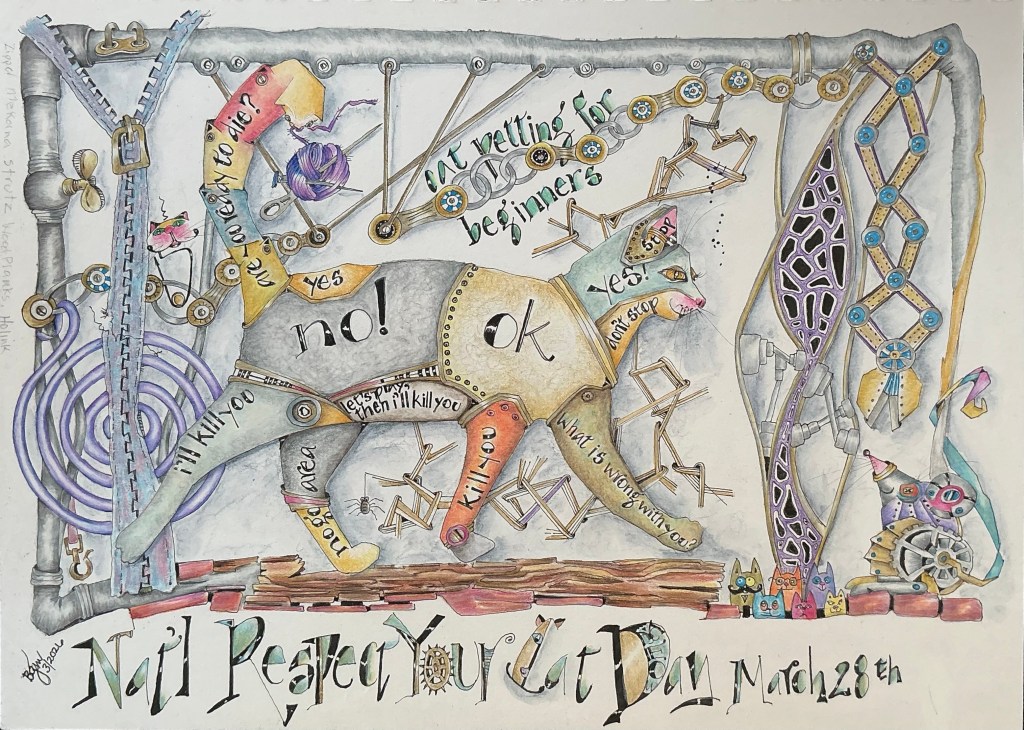
Zentangle patterns: Zipper, Mekorna, Strutz, Wood Planks, Holink, and a wild assortment of Zentangle steampunk patterns and steampunk ideas.
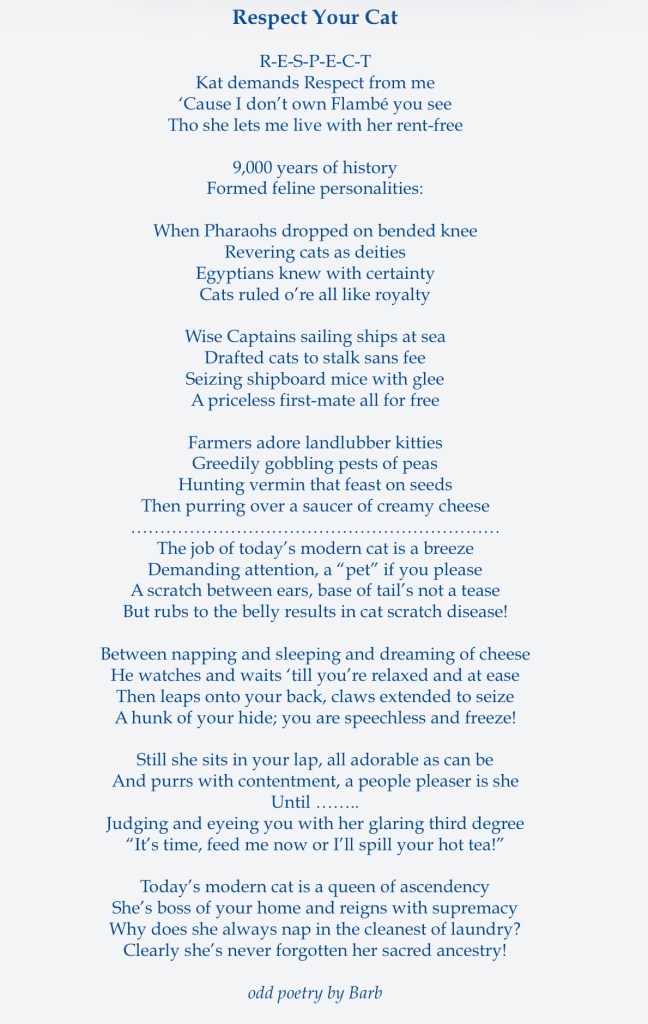
On March 28th, we stop pretending we’re the bosses and lean into the reality of National Respect Your Cat Day. On this National Day, acknowledge the truth: Your cat is better than you. Well? Someone had to say it! And if you don’t believe it, just ask your feline friend!
Do you ‘own’ your cat? Or does your cat ‘own’ you?
If you answered “Yes” to the first question, you may be utterly and completely confused about the subordinate role you play in the life of your resident feline. If you said “Yes” to question #2, and have willingly resigned to to being a pushover due to unconditional love, you obviously are an experienced cat chaperone.
If you’re contemplating becoming a first time cat owner, well, good luck and have fun! Oh, and here’s some tips not only for living happily with a cat, but perhaps there’s a few ideas for all feline chaperones on how to celebrate National Respect Your Cat Day. These pointers will hopefully help you avoid catching a good swat in the process:
Keep an open door policy in your home. Once you acknowledge that a closed door (even a bathroom door) is a personal insult to a cat, you will avoid an irritable feline. Just because a cat is hanging out in a room for a long period of time doesn’t mean they want to stay there. They like to travel freely when they choose to.
Use a slow blink when looking at your cat. In their language, blinking slowly is the ultimate sign of respect, trust, and true friendship. If you encounter your cat while wondering through your house, stop and make intense eye contact, then offer him a slow-blink to maintain your friendship.
Respect the nap-zones. Cats spend up to 15 hours a day napping. Let them sleep where they want. If they fall asleep on your laptop, you obviously don’t need to check your e-mail. Are they sleeping on your lap? Moving before their nap is over will cause you to get claws poking through your jeans, causing the most hideous scratch. A cat knows their worth. Let them nap.
The petting rule. Know the difference between a “nice” pet and a “you can quit now” pet. If you want be sure your cat is up for some affection, we recommend petting the cat for about 5 seconds, then pulling your hand away. If your cat wants more, they’ll show you with a bossy nudge. If they want to be left alone, they’ll probably swat at you.
Say your sorry. Has your cat every fallen off of a counter? Did they look at you like you pushed them? Of course you did! Cats don’t just lose their balance. You’re the problem (even if you’re not). Just say you’re sorry so they can move on with their day.
Who was the creator of National Respect Your Cat Day?
No one knows for sure. The most likely possibility is this day was founded by a cat who learned how to type while its human fell asleep on the keyboard.
Afterward …..
In addition to owning our 9 year old pit/lab ‘puppy,’ Luna, Roy and I share our home with two 12 year old indoor cats, Odo and Dax, a brother and sister we adopted as kittens from a shelter in North Carolina. When we moved to New Mexico in 2017, both cats rode in the car with me. For four long days and 2000 miles across country, the three of us ‘enjoyed’ many boisterous sing-alongs and stimulating conversations! Roy’s journey was much more peaceful!
Over the last 53+ years we’ve joyfully chaperoned ten cats total. All wonderful, all different, all lovable and unforgettable! The names of those we hold in our memories were Popeye, Poopsie, Tails, Fishbait, Darwin, Grizzz, Newt (who was our sailor cat and Captain aboard the S.V. Waterdog), and T.O.O.
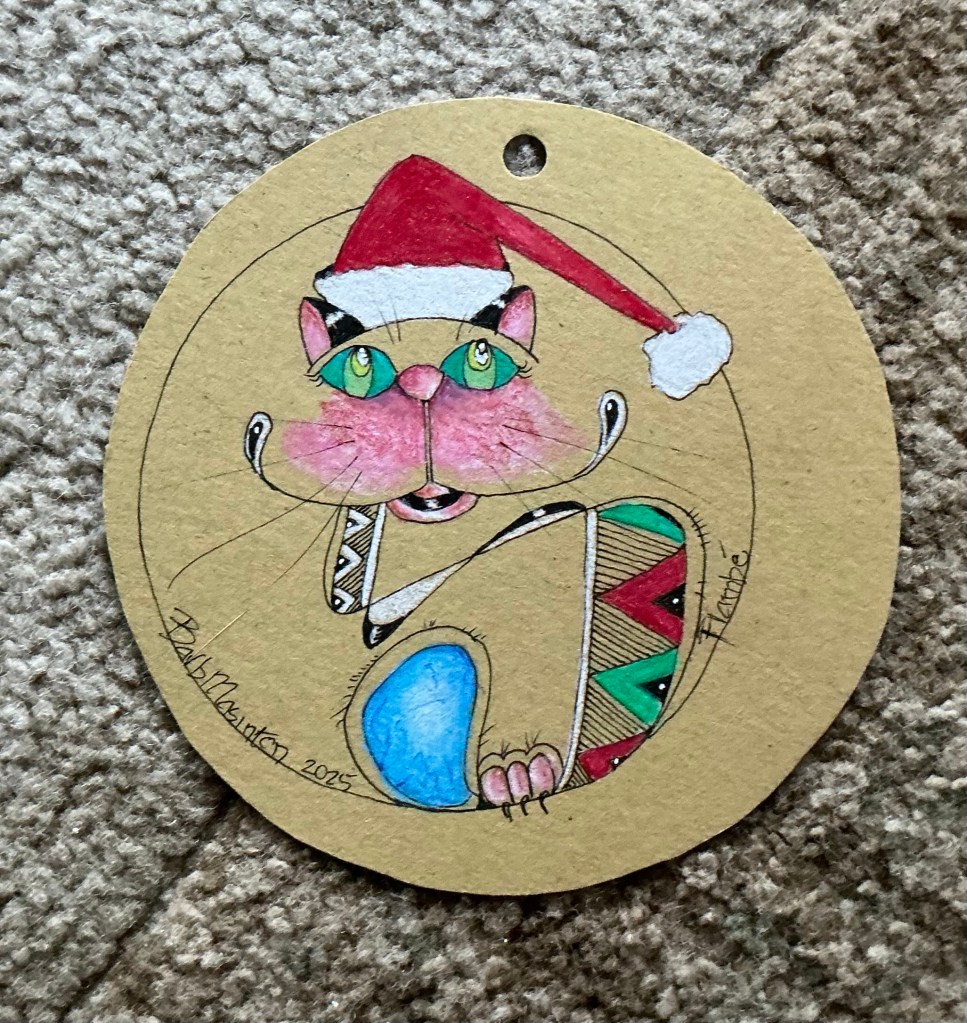
Now we have Odo and Dax to carry on their legacy, and with Luna (and Flambé, of course!) we love and adore them all!
Share you cat stories, and what you do to “Respect” your feline family!
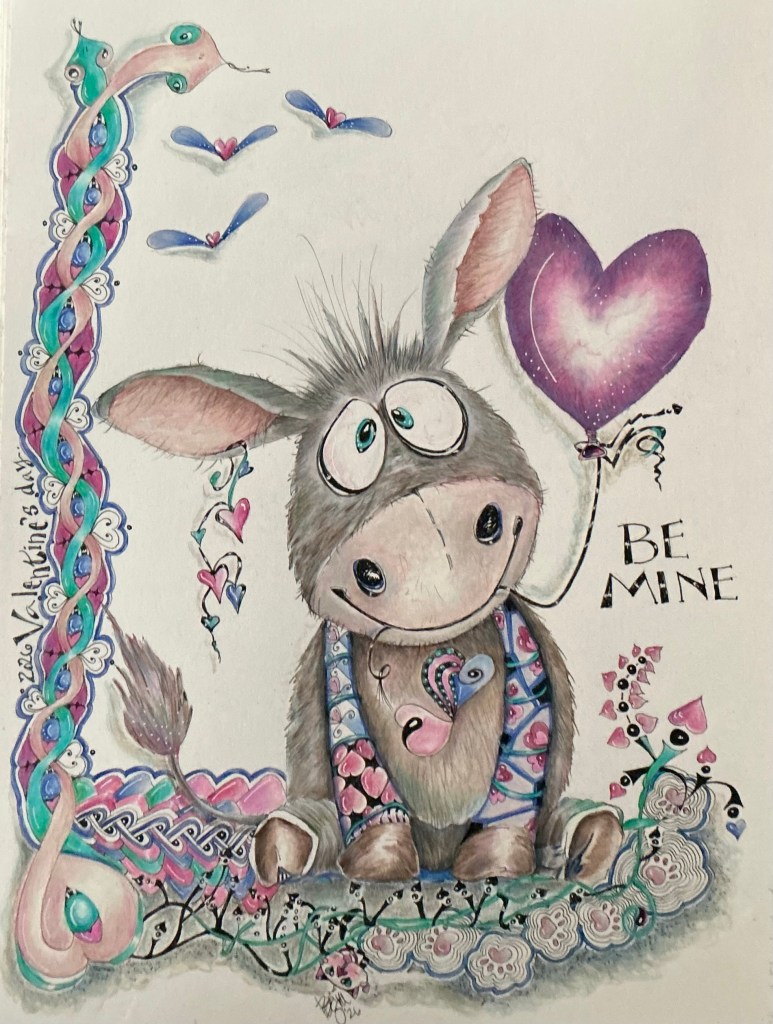
Burro-ito Jack galloped by our place this morning to wish y’all a Happy Valentine’s Day! And then he excitedly ‘brayed’ — in Conversation Heart 💜 style — BE MINE! …. KOOL KAT! … MARRY ME! … CRAZY 4 U! … BUY N BULK! … QT PIE! … U ROCK! … XOXO! … SAY YES! … HEE HAW! …… (knowing what a sweet tooth he has, I finally offered him a box full of those sugary hearts just to hush him up)
Since Jack brought up such a sweet subject, did you know ………………….
Conversation Candies got their start as medical lozenges?
Weirdly enough, the story began in 1847 when a Boston pharmacist named Oliver Chase invented a machine that simplified the way sore throat lozenges could be made. Then Ollie had another great idea. Instead of making lozenges, why not use the machine to make candy? Why not, indeed! And just like that, his invention became America’s first candy-making machine. Soon after, Oliver founded the New England Confectionery Company, or NECCO, and the candy ‘lozenges’ soon became what we know today as NECCO wafers. (I didn’t know that’s what NECCO stands for! Did you?)
But that’s not the end of the story.
Conversation Candies get sentimental!
For almost 20 years, the pharmacist-turned-candymaker kept cranking out sweet NECCO wafers. But when 1866 rolled around, and fascination with those lozenge-shaped candies waned, it was Oliver’s brother, Daniel Chase who had a brilliant idea. “Let’s print sentimental messages on each wafer!” And that’s what he did. Because the candies were larger than today’s versions, printed sayings and phrases could be long. While Dan was busy creating witty messages that could stoke the flames of love or warn off flaky suitors, big brother Ollie redesigned his candy-making machine to “pretty up” the wafers. So sayings like “Married in white you have chosen right” and “How long shall I have to wait? Please be considerate” were now emblazoned on a pastel, scalloped NECCOs. It seemed everyone had fallen in love with these redesigned Conversation Candies.
Conversation Candies Evolve
Sales skyrocketed over the next 36 years, but before long, the brothers Chase decided one more key innovation was needed. In the winter of early 1902, just in time for Valentine’s Day, they transformed those pretty pastel colored, scalloped wafers into heart-shapes. Perfect!
Conversation Hearts Today
More than 8 billion Conversation Hearts are manufactured each year by NECCO. Their size may be smaller, and the sentiments much shorter, but each packed-full box has approximately 45 sayings like “True Love,” “Hug Me” and “You Rock.” NECCO even let’s you can personalize your own sayings, too. And in case you need to know …. that secret supply of Conversation Hearts you stashed away last year are still “fresh” as they have a shelf life of five years. Oh goody!
Happy Valentine’s Day! Hope you enjoy your box of Conversation Hearts (but don’t forget to make a dentist appointment!).
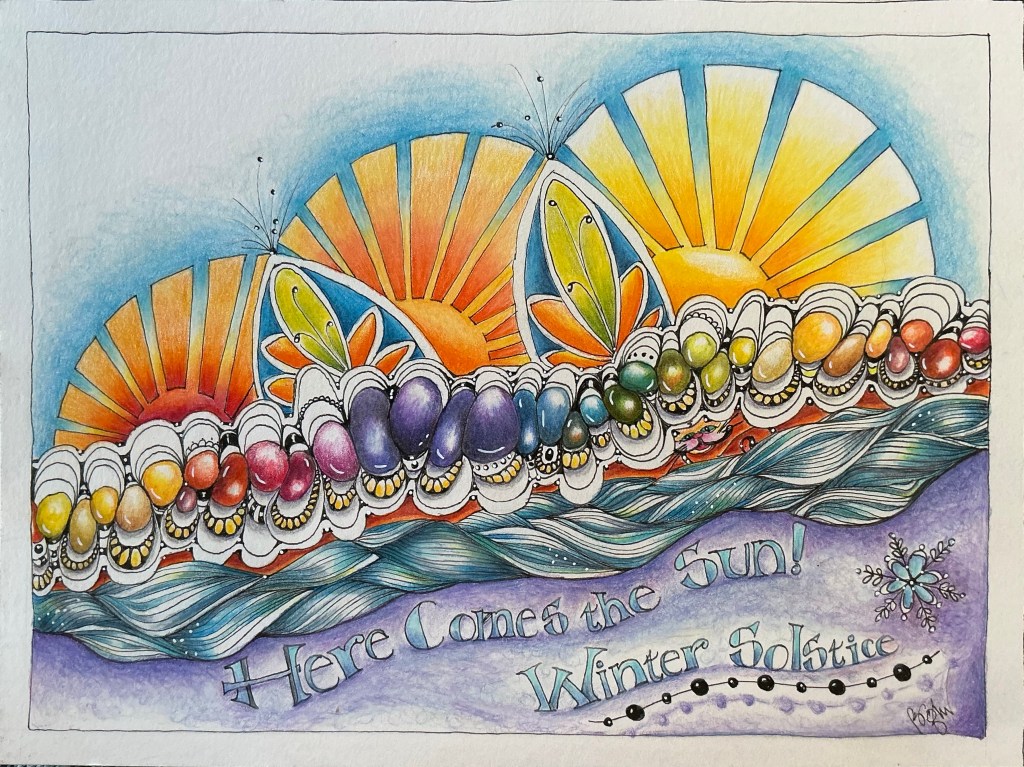
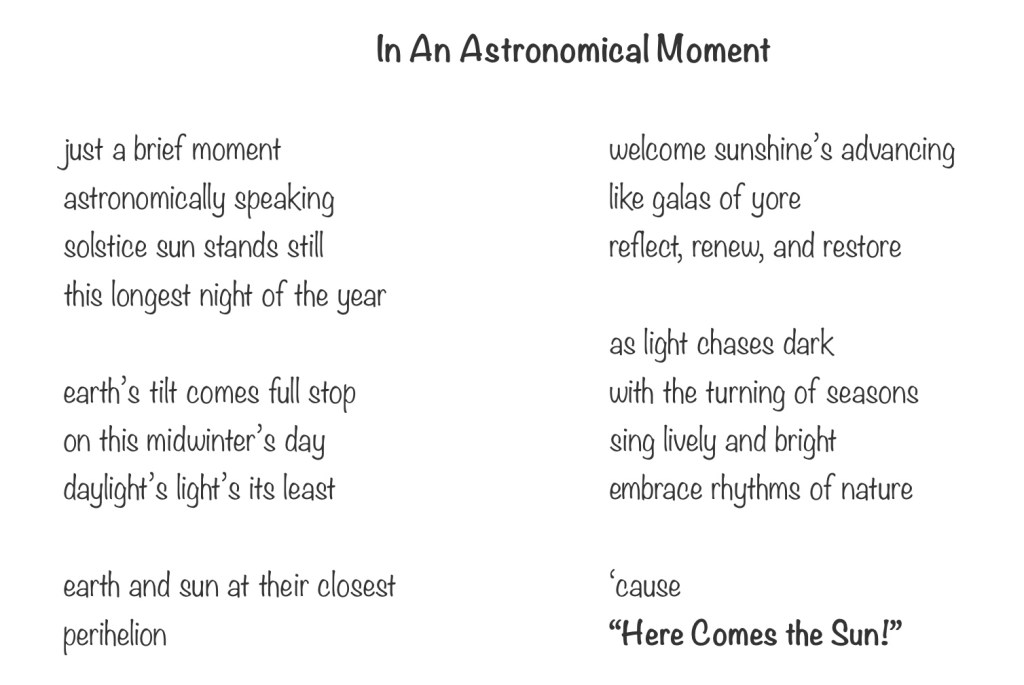
Here’s a Few Fun Facts surrounding our Winter Solstice
Did you know ……
In Latin, ‘solstice’ translates into ‘sol’ meaning the sun, and ‘sistere’ meaning to stand still.
“For only one brief astronomical moment in time, the sun stands completely still.”*
*In reality, the sun never stands still. If it did, from our perspective, that would mean the earth suddenly stopped orbiting and rotating. Not desirable!
Did you know ……
The winter solstice is often called midwinter, the longest night, or the shortest day. It refers to a moment in time in which the period of daylight is at its shortest. In the Northern Hemisphere, this always happens between December 20 and 23. On this day, the 23.5 degree tilt of the earth’s axis of rotation engulfs the North Pole in continuous darkness or twilight.
Did you know ……
Yule is an ancient pagan season rooted in Norse, Germanic, and Celtic traditions, originally celebrated around the winter solstice. It honored the rebirth of the sun, the endurance of life during deep winter, and the protective power of fire and community. Yule symbolically bridged darkness and the gradual return of light. Today’s modern holiday customs, such as candles, feasting, evergreen decorations, and gatherings, have been influenced by those Pagan rituals of the past. And today, the blending of Yule’s myth and cultural memory appeals to those seeking grounding rituals, nature-based practices, and a deeper connection to seasonal cycles.
For more fun facts about Winter Solstice, check out these past posts shared on December 21, 2022 and 2024.
……………………………………………………………………………………………………………………
Thanks to all for following my creative adventures over the past year(s). Your thoughtful comments and likes are truly appreciated. I’m looking forward to another full year of learning and sharing information about our fascinating natural world. As always, thanks for coming along!
Wishing everyone all the best this winter season and brilliant sunshiny days in the coming year.