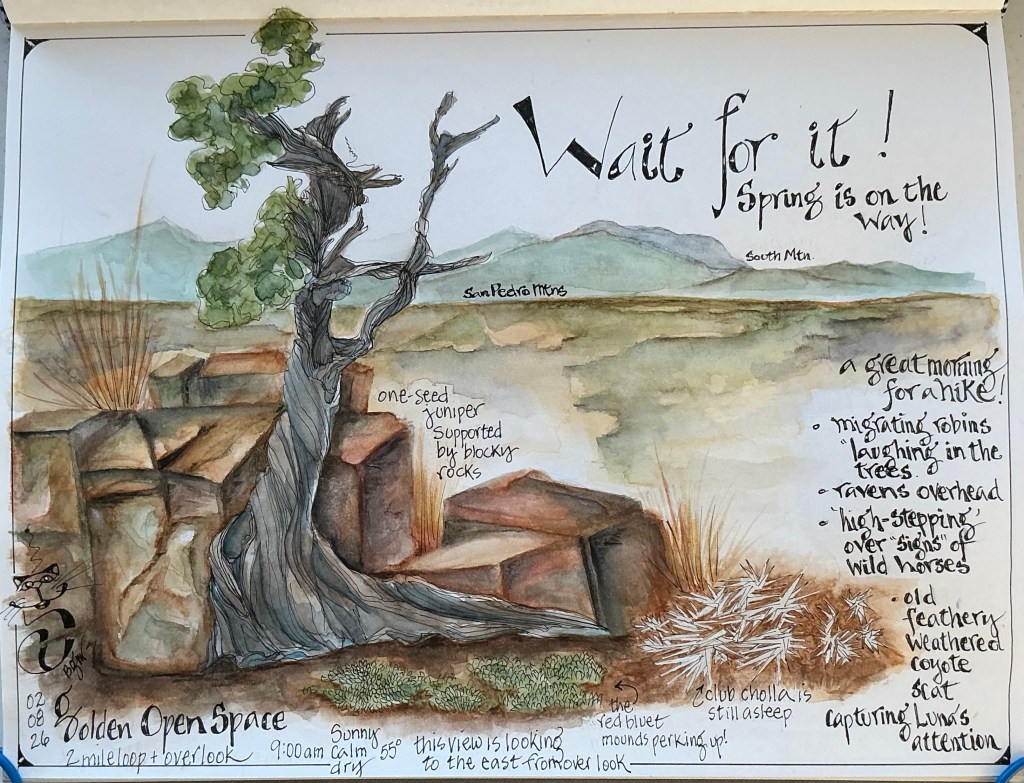
One of my virtues is impatience ……. when it comes to Spring ….. and its arrival ….. finally.
Admittedly, winter has its perks. After a long, hot summer and fall, winter’s crisp air is a mood lifter, and cooler air temps allow for cozy sleeping under piles of blankets. Longer nights mean my favorite constellations hang in the sky longer, and somehow the moon always seems brighter and friendlier. In New Mexico, winter hiking about is more casual without having to watch every step for rattlesnakes, and certainly any snowfall we’ve been fortunate enough to get helps recharge water tables, tempers our risk of wildfire, and is absolutely beautiful to watch while falling.
But ….. since Winter Solstice and with daytime hours lengthening, I’m ready for Spring. And the closer it gets, my impatience for the upcoming change in season is obvious. My nature journal, pencils and 10x magnifying loop are packed and ready, each daily hike begins by plucking from a yucca one of last year’s flower stalks to poke the ground for signs of growth, and I’m anxious to snap photos of any passing migrating bird or resident roadrunner in search of a perfect nesting spot.
Meanwhile, I’m thankful for my late winter attack of impatience, because it get’s me out there every day, in anticipation of the first flower bud!
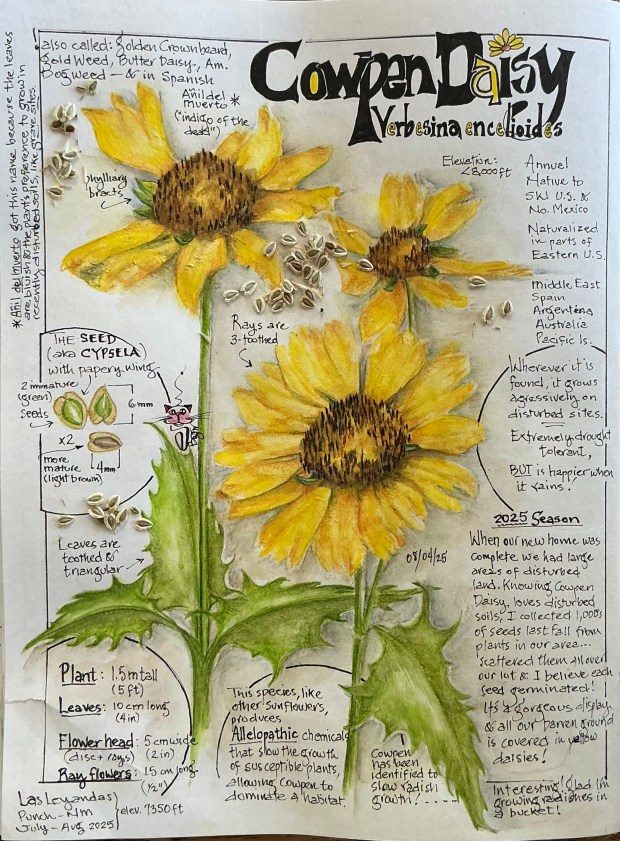
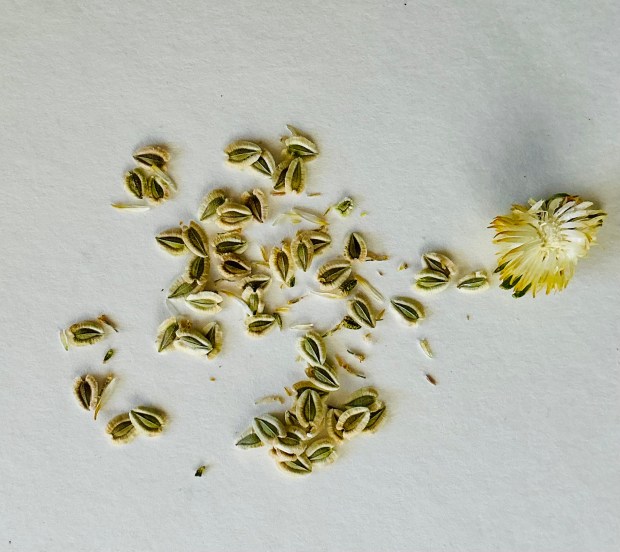
It was the Fall of 2024. A small cluster of Cowpen Daisies (Verbesinaencelioides) flourishing on the severely disturbed ground surrounding our new home was going to seed. Waiting several weeks until the migratory birds ate their fill, I spent an hour or so collecting as many remaining dried seeds (cypselas) as possible, stuffing full two quart-sized ziplock bags. About 1/3 of the seeds I scattered around the house where they would overwinter on the ground. The rest were poured into large pill vials that were labeled with species name, location, and date, then placed in the refrigerator to simulate cold storage until Spring.
Cowpen Daisy cypselas (seeds) 08/04/2025 at Punch
It was late April 2025. The chances of heavy frost seemed a distant memory. My fingers crossed, I chose a sunny 42 degree morning to liberate those refrigerated seeds from 6 months of cold storage, and scattered them in disturbed areas not seeded last Fall. Then I waited like an expectant parent, watching for signs of germination, worrying that runoff from late season snows might wash away my scattered seeds, expecting that flocks of migratory birds would gobble them all up, and hoping for gentle rain showers to swell those thousands of seed coats to aid those tiny embryos in growing their first roots (radicles) and first leaves (cotyledons).
Then early June 2025. Success! Cotyledons were literally popping up everywhere, which meant the radicles were already expanding into the soil. They were especially crowded where I’d scattered all the cold storage seeds, and germination was obvious where seeds had been scattered the Fall of 2024. By early July, those Cowpen daisies were crowding out many of the other native species I’d also seeded in the same areas.
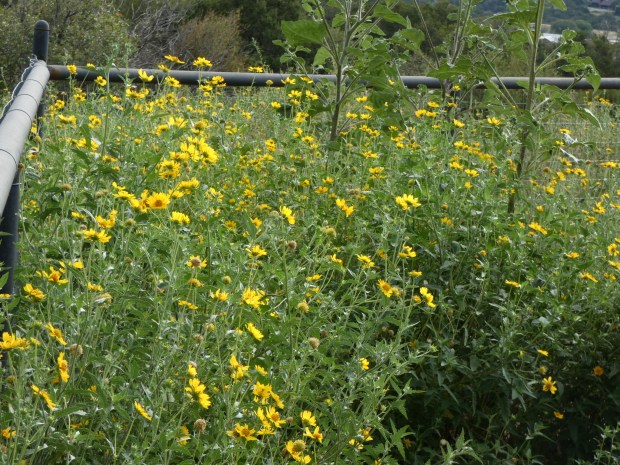
Backyard and overflow Cowpen Daisies, robust growth after Fall 2024 seeding (08/03/2025)
And now it’s early August 2025, and what a dazzling show! Even though the sunflower yellow flowers of Cowpen Daisy are small (2” wide), there are up to 75 long-stemmed flowers on each plant that can grow from 4-5’ tall! They are so dense, the backyard fence is hardly visible, our walking paths are totally draped with 4” long leaves, and if there’s a rattlesnake lurking around under our massive Cowpen Daisy canopy, we’d probably (hopefully) hear him well before he slithered into view!
Goals and Lessons Learned
I’ve learned a lot by parenting these Daisies; from the best time to scatter seed (in the late Spring following cold storage) and where (not so close to other desirable natives or pathways), to managing the mass of growth (by organizing through selective removal). Our initial goal of seeding and growing native plant species was to attract and help feed wildlife (pollinators, reptiles, rodents, birds and mammals), and we are optimistic that achieving this goal long-term seems realistic with the success we’ve had to date. However, because so many of our native plants are losing the battle against habitat loss caused by invasive species encroachment and takeover, land development, and climate change, we will continue to explore ideas to expand our initial goal to address the habitat situation. As we gain insight about the best native plants to grow to help restore our disturbed soils, we will learn and share with our neighbors those species that: are drought tolerant; aid in building soils; are effective at invasive weed suppression; provide wildlife benefits; and increase plant diversity.
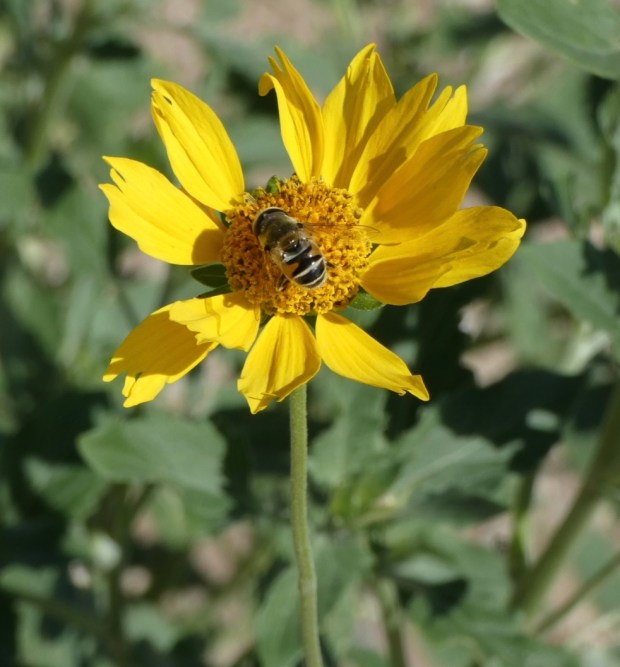
Cowpen Daisy and pollinator 08/01/2025 at Punch
Happy – Happy – Happy! Will I be collecting Cowpen Daisy seed again this Fall? You bet! Having all that sunshine yellow around our home is thrilling. Every morning all those thousands of sunflower faces looking East towards a new day are about the happiest sight ever! And having such wild, uninhibited growth of a native annual out our back door has been ideal for observing the pollinators that benefit from the abundant nectar and pollen, enjoying the aerial acrobatics of several phoebe families that have been feasting on those pollinators, and promises to be a perfect spot for bird watching this Fall when all those cypselas ripen into high protein food.
Can’t wait!
Do you ‘know’ a special native plant? How about a native butterfly garden? Are you a bird watcher? Maybe you enjoy the occasional deer, coyote, or bobcat wander through your yard? Please share your favorite wildlife encounter!
As always, thanks for stopping by!
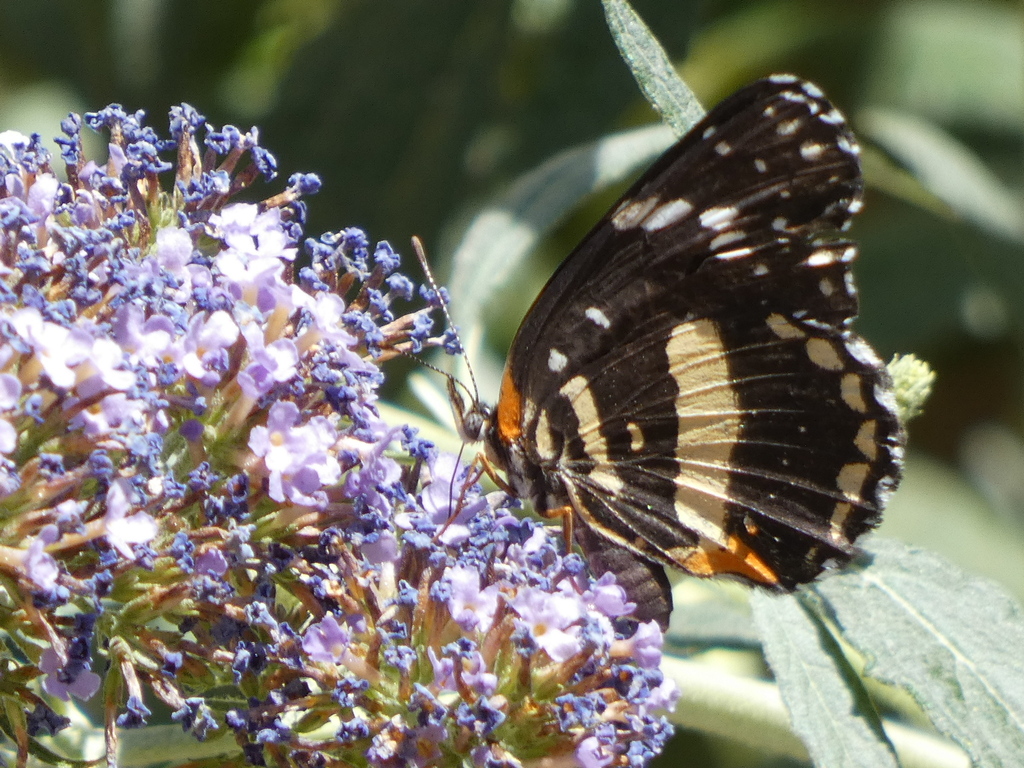
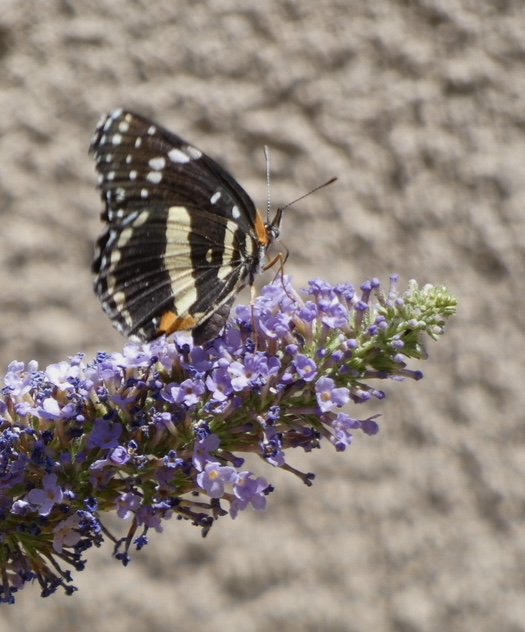
Bordered Patch (my photo/2023 – on butterfly bush)Bordered Patch catBordered Patch (my photo taken 2023These dandy little butterflies, the Bordered Patch, often choose the Cowpen Daisy as their larval host. (The butterfly nectaring on butterfly bush flowers are from my home collection)
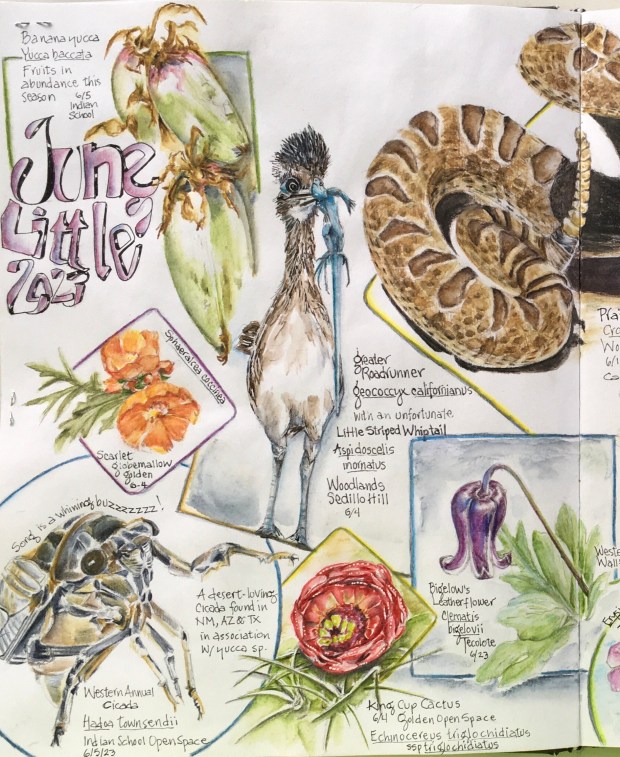
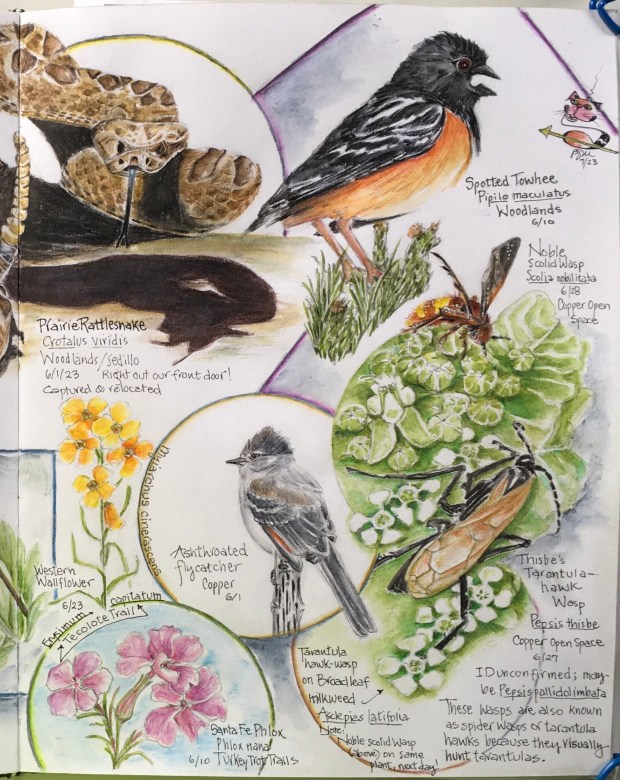
June was the month of bugs (from the big tarantula hawk wasps, to the microscopic gnats), withering flowers, disappearing birds, and snakes! We seemed to encounter an extraordinary number of snakes this month, including gopher (bull) snakes, diamondback rattlesnakes, patch nose snakes, garter snakes, and one very scary prairie rattlesnake. Read on for that story.
Another close-up
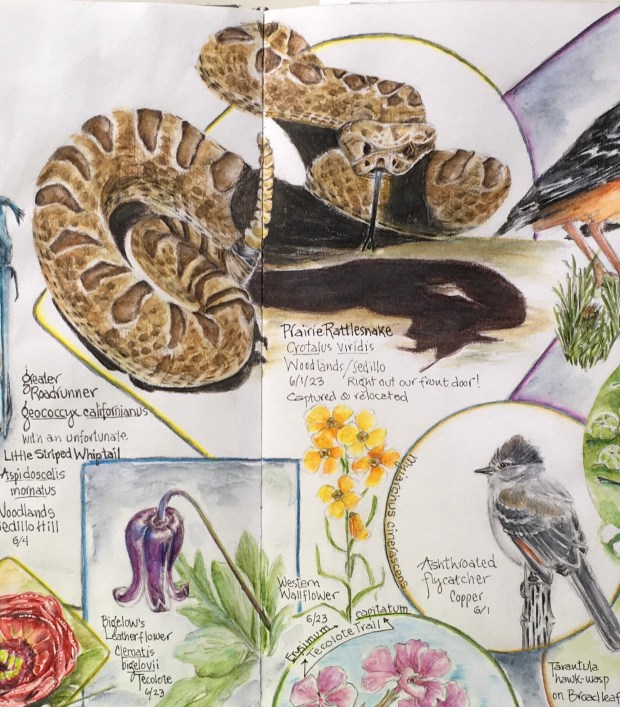
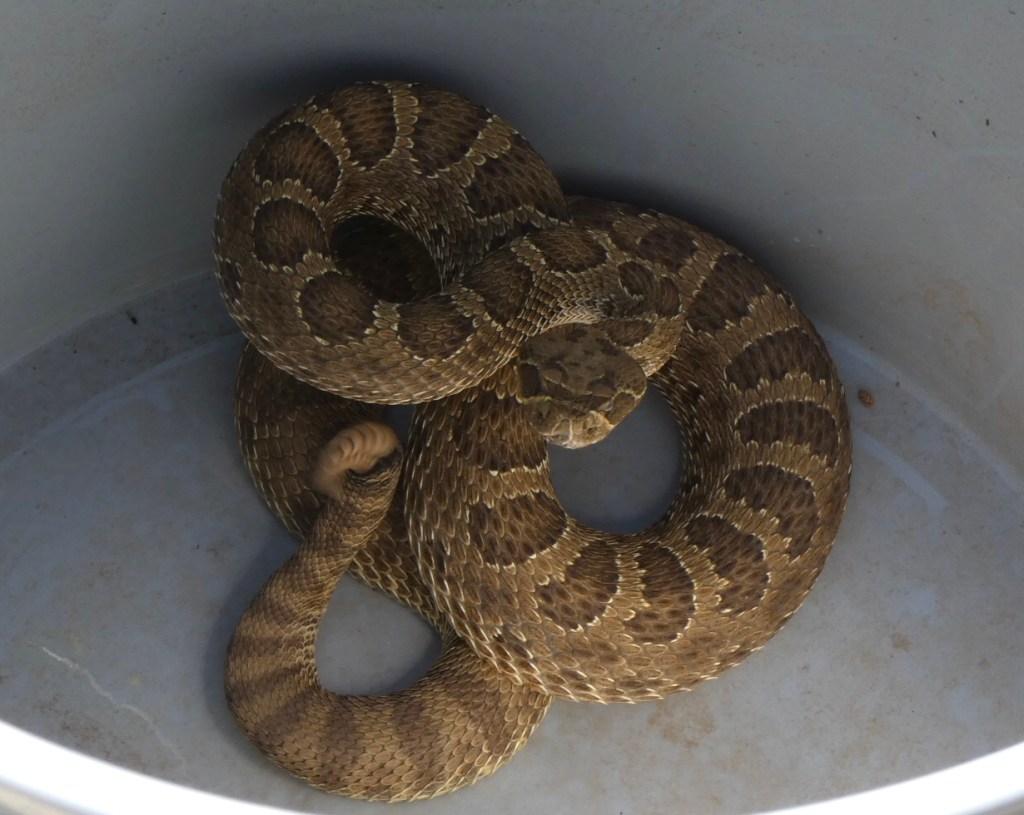
Luna and the Prairie Rattler! Our scariest encounter was with a 3-foot prairie rattlesnake right in our front courtyard. One day he had crawled out from the shade of a blue spruce to warm up in the morning sun. It was Luna that had changed his demeanor from placid to pissed off. Prairie rattlers don’t typically alert trespassers; that’s the secret to their hunting success, and Luna didn’t recognize the danger. She began sniffing around and unintentionally violated his personal space. The snake responded by instantly coiling and violently rattling his tail. The noise seemed deafening and was definitely alarming. As I came running to Luna’s rescue, Roy noticed the commotion and quickly arrived with snake stick and bucket in hand. By this time the snake had backed into a corner, furiously rattling, but was relatively easy to capture. Snake temporarily out of the way, we then carefully checked Luna for signs of snake bite (none detected! Lucky Luna).
Another close-up
Another close-up
Now back to the snake in bucket. It had taken less than 30 seconds for Roy to capture and slip him into the 5 gallon bucket. It was then that I was able to take my first photos, from a respectable distance just in case the snake decided to leap clear of the bucket!. If looks could kill, well ………….. About 15-20 photos later, the bucket lid was secured in place, and we took the snake for a little ride about a mile from home where he was carefully released in an uninhabited area, unharmed.
After release
Again, a big shout-out to “Made by Fay” for the inspiring “Littles” idea! Stay tuned for the next installment of “Littles.”
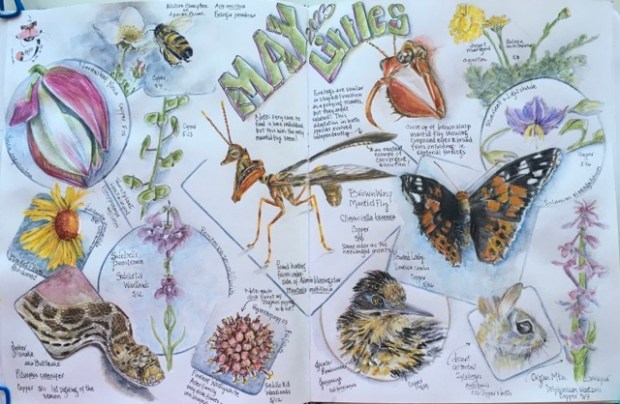
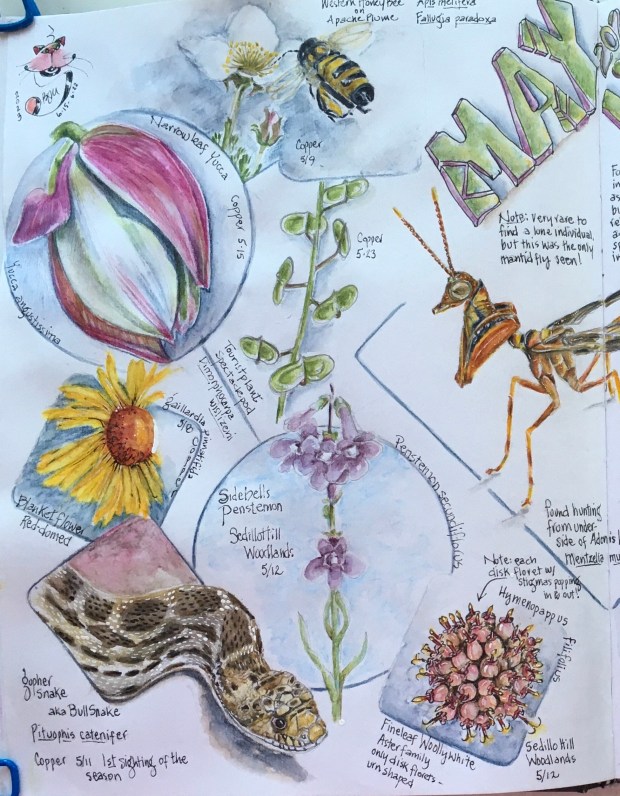
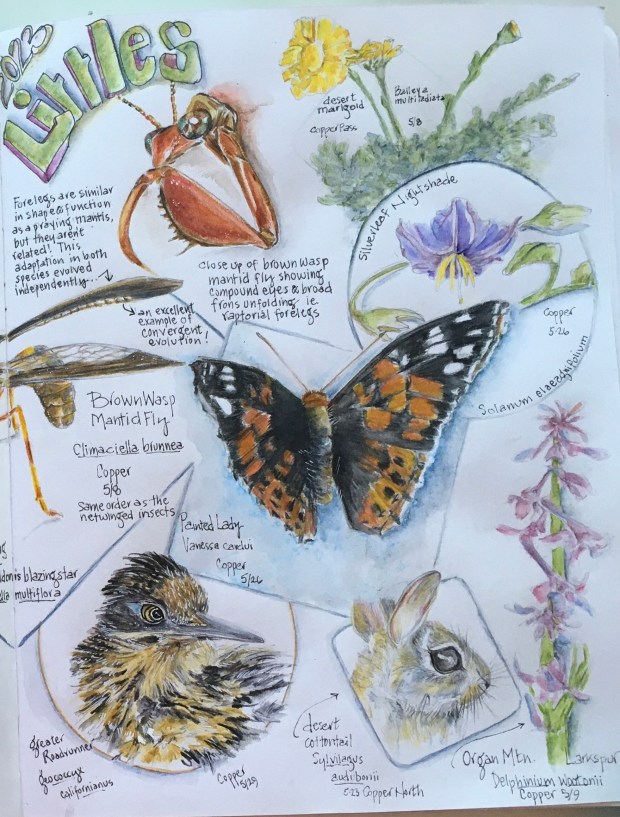
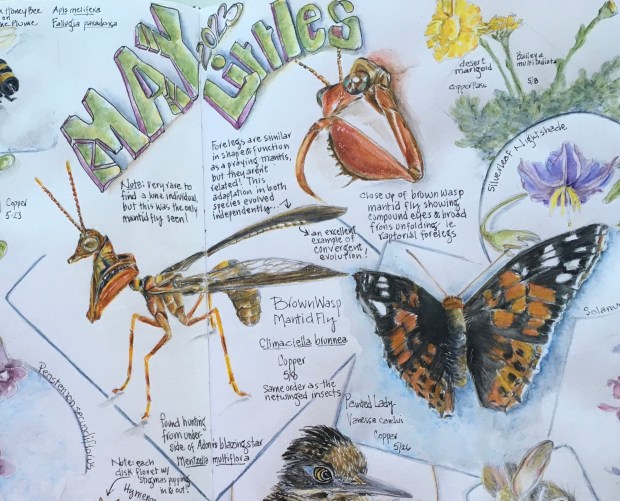
April may have been amazing, but it was nothing compared to the explosion of life during May. My 2-page spread doesn’t even come close to representing all that we encountered throughout the month. And the 15 species I chose as “picks” aren’t even a third of those making an appearance …… enter stage left and right!
Noticeably missing was the black chinned hummingbird. They arrived mid-May, and began defending breeding territories. One of these years, I hope to find one of their miniature nests to see what building materials the hummers use. Until then, their aerial performance is always breathtaking!
Close-up
Then there was the morning Luna nearly stepped right in the middle of a really upset, hissing and striking prairie rattlesnake, practically right out our front door! It was a scary few moments until we determined Luna did not get bit! Whew. Roy expertly wrangled up the guy, herding him into a 5-gallon bucket, and relocated him a safe distance away. (I may cheat and add him to my June “Littles,” if you don’t mind, along with the first rattlesnake encounter of the season! Gotta love the desert.)
Another close-up
Included in the long list of flowering plants, was prickly pear cactus. Several species began opening their buds to reveal 20-30 delicate waxy yellow to apricot colored petals per bloom. It didn’t take long for the pollinators to find these delicacies!
And Another close up
Blooming in the foothills (5,000’ up to 7300’ elevation), there was milkwort, fleabane, scarlet globemallow, banana yucca, sundrops, milkweed, paintbrush, golden weed, common hoptree, puccoon, several species of pink-flowered hedgehog cactus, blazingstars, bee blossom, tahoka daisy, NM thistle, ……. etc. I could go on and on! And even at nearly 9,000’ elevation, rock jasmine, valerian, creeping mahonia, prairie bluebells, pasque flower and dwarf lousewort were all in bloom.
All in all, a bountiful full-on Spring bloom!
A big shout-out to “Made by Fay” for the inspiring “Littles” idea! Stay tuned for the next installment of “Littles.”
Seems we’re now beyond the first exciting blush of Spring ….. the first new leaf, the first flower bud, the first darkling beetle; the first feather duster seed head of the Apache plume, the first hummingbird territorial battle, the first frantic squirrel noisily defending her nest.
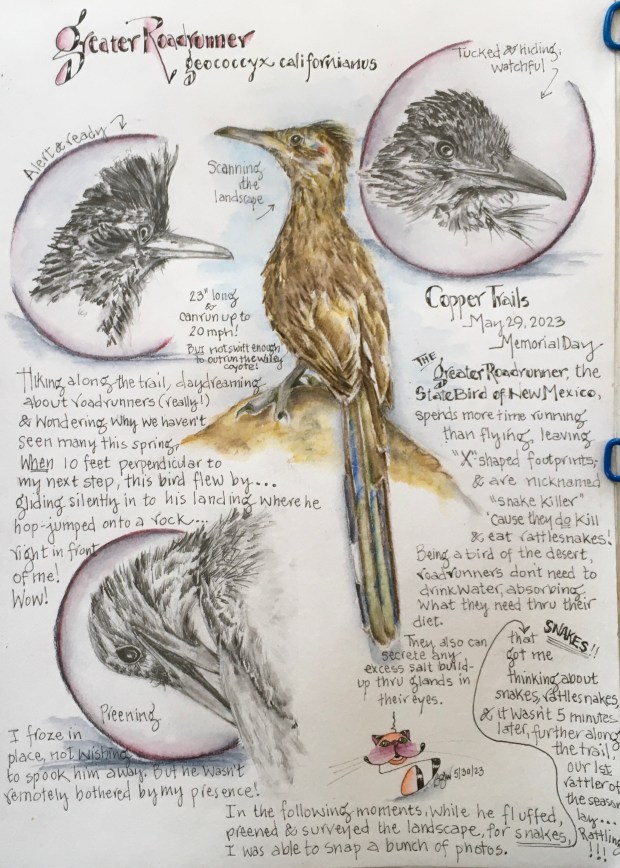
Having logged all the new flower species, insects, birds and mammals encountered on our favorite local trails, it’s now easy to daydream while hiking; easy to let your guard down and wonder about things like “where are all of the snakes hiding?” and “why haven’t we seen any roadrunners?”
It was while pondering these interesting questions along a stretch of trail bordered by oak scrub, that out of the blue, a short 10 feet in front of my next step, a roadrunner glided by and hop-jumped aboard a granite boulder! Shocked at how close and calm he was, I froze in place, not wishing to spook him. Having such a magnificent bird so close is a rare (for me) and crazy cool encounter. After a moment of stillness and observation on both our parts, I dared to take a photo. That bird didn’t care one bit, and was so incredibly unconcerned about my presence that he began preening his feathers, ruffled and shook, and started scanning the landscape for lunch.
Well, about a dozen or more photos later, it was time for me to resume my hike and catch up with Roy and Luna. I excitedly shared my encounter and photos with them (Luna wasn’t impressed) and wondered again, out loud, why we haven’t seen any rattlesnakes yet. Surely that roadrunner was hungry.
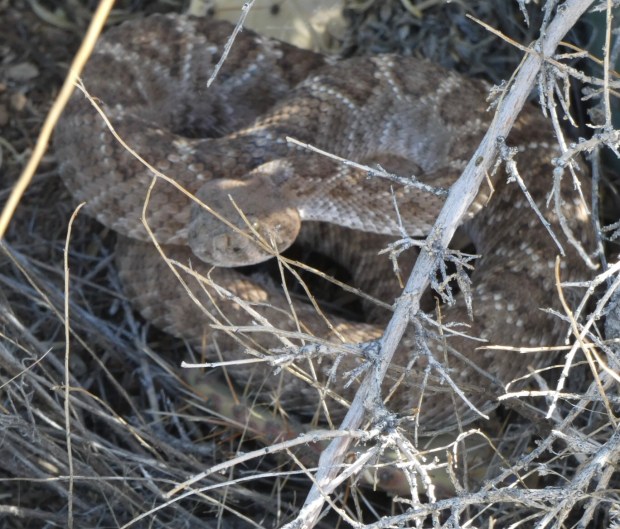
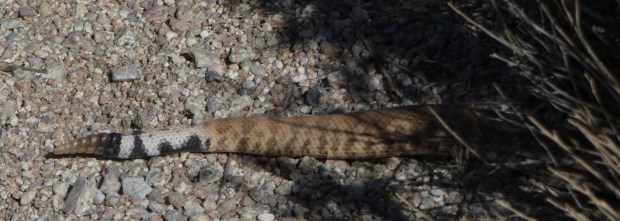
…… and then, out of the blue was the snake! About 5 minutes further along the trail was a 3 foot western diamondback rattler with 7 furiously rattling buttons on the tip of his tail! Luna jumped sky high, Roy came to a skidding stop, and I quickly (but oh so cautiously) approached to take photos! A very cranky snake he was too!



 a curious nature