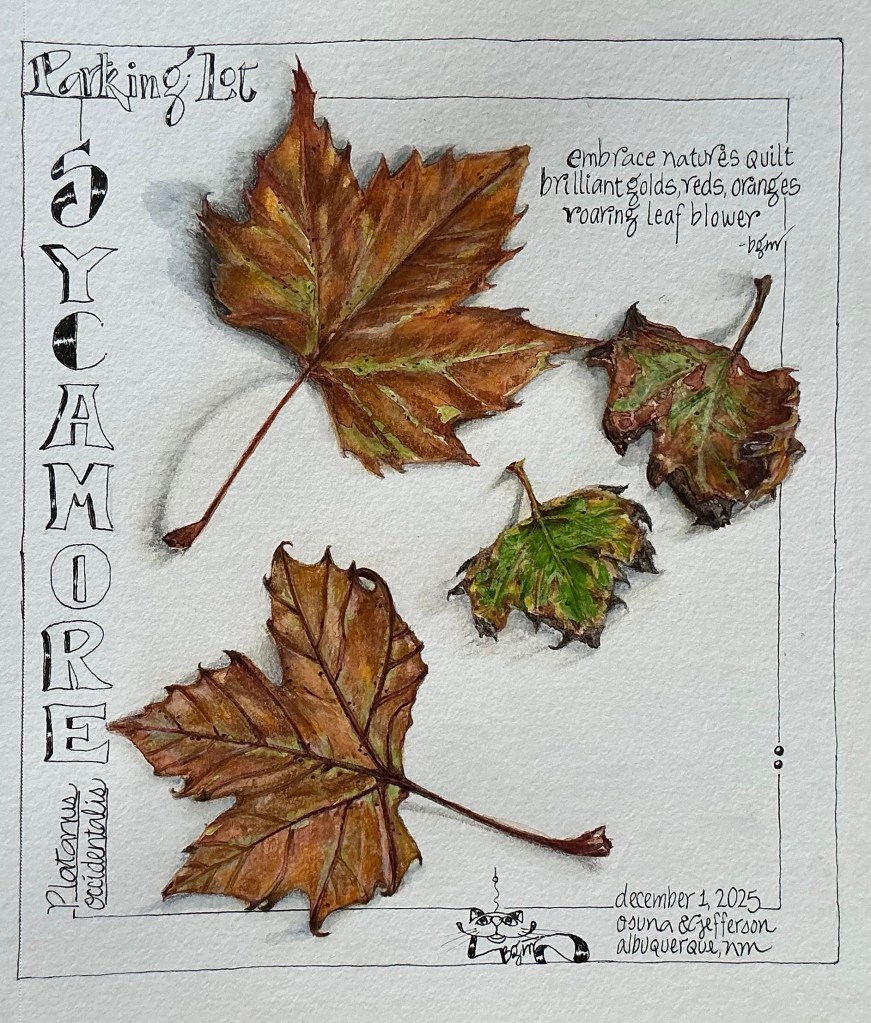
Parking Lot Sycamore

December 7, 2025

My search for still-beautiful Autumn leaves, half hanging, half fallen to the ground, took me to Albuquerque where temperatures hadn’t yet dipped below zero. Striking ‘gold’ in a large vacant parking lot next to a Disc Golf course, are at least 30 full-grown Sycamore trees with what looked to be full canopies of foliage still clinging tight. But for all the leaves yet to fall, there must’ve been 50x that number covering the ground. The morning breeze was causing the recently-fallen leaves to skid across the pavement in jerky movements, coming to rest in the parking lot’s gutters. 

It was in these ankle deep gutter piles where the range of leaf sizes, colors and patterns were found. These 1” to 10” broad, palmately veined and ragged-toothed leaves appeared locked together like pieces from a newly-opened 5000 piece jigsaw puzzle. And, oh my! The lid to the box just blew away! Now I was faced with a dizzying jumble of multi-colored golden-yellows, burnt oranges, Ruddy duck rust, fading-to-spring greens and saddle browns. It was from these ankle deep gutter piles that I collected Autumn leaves for this project.

Lost in thought, I overlooked the white noise of the city ……. traffic mostly, constantly humming and impatiently honking ……. until a painful ringing in my ears invaded the relative calm of the morning.  No longer able to think, I turned around and found an invasion of leaf blowers!  Never was there a more loudly screaming, obnoxiously noxious sound. Coming closer and closer, louder and more insistent, their ear-muffled and gas-masked operators approached without hesitation, each blowing away (to where?) every bit of the “unsightly and offending” leaf-litter in their path. 
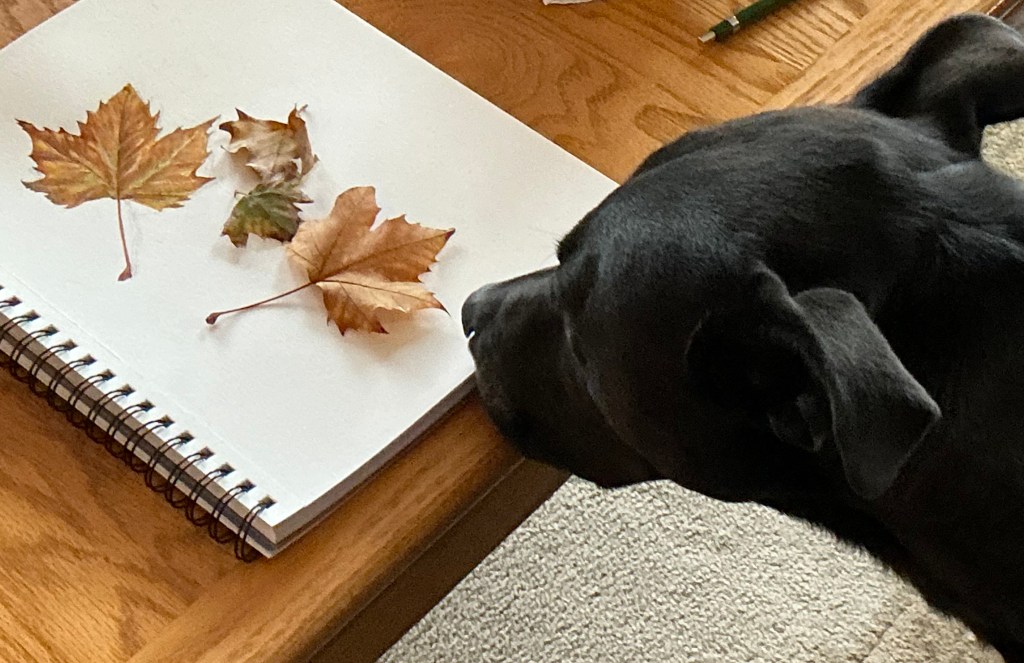
Luna approving of my Sycamore leaf selection

Dang-blasted! 

It finally dawned on me this Friday morning that the vacant parking lot only opened for use on Sunday’s. Not agreeable to working weekends, the leaf blower operators were determinedly cleaning up the “messy” lot for the regular Sunday crowd. I was in their way. 

Saving as many fallen Sycamore leaves as my collection bags could hold, and silently wishing all remaining leaves a happy landing somewhere on a nutrient-needy plot of land, I ran for the quiet of my car.

My Fallen Leaf Project

Using Sycamore leaves collected from that vacant Albuquerque parking lot, I tried my hand at a new technique; combining watercolor layers with layers of colored pencil. Using my new set of Van Gogh watercolors, I began each leaf with a layer of plain water followed by a light base layer, mixing Azo yellow medium with a touch of Yellow ochre. The bottom leaf (which was the underside of the top leaf) was duller and lighter in color, calling for a bit of Permanent lemon yellow. Allowing that layer to dry, I used various earthy colors from my set of Faber-Castell Polychromos colored pencils over the watercolor wash, mixing and matching the colors of my pencils with the actual leaf colors. This step tended to leave some areas uncolored with the pencils, so I applied another watercolor wash with Sap green, Burnt Sienna+Yellow ochre, and/or Madder lake deep+Azo yellow medium. I finished each leaf with a Dark sepia colored pencil outline, tipped the leaf margins with Dark sepia, and added shadowing first with Payne’s grey watercolor then Dark sepia colored pencil.
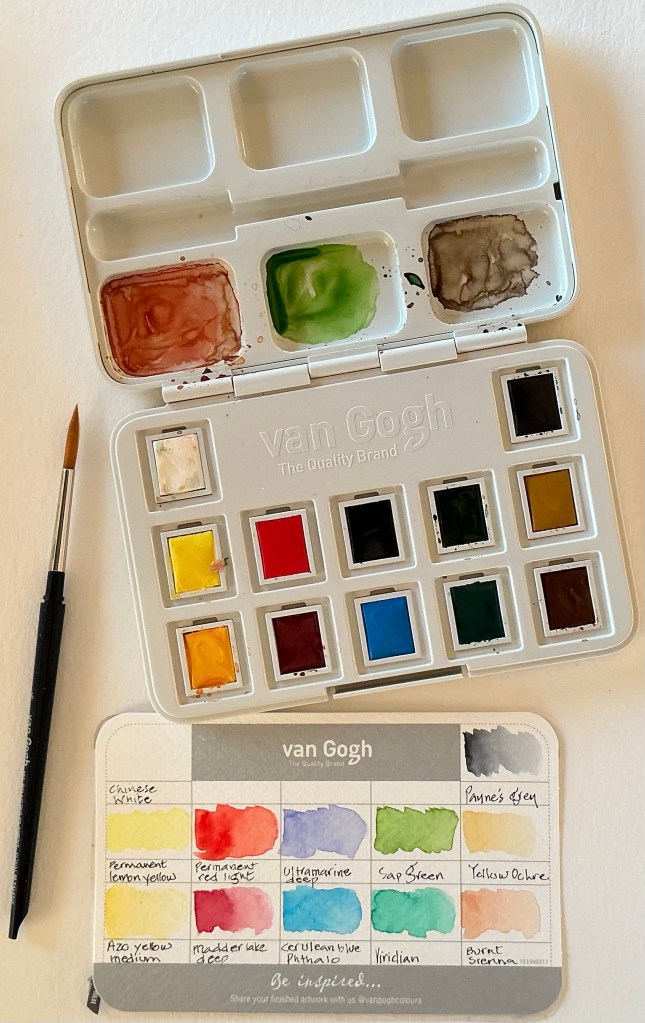
12 half-pan watercolor set and color swatch

The leaves were painted on 140# Canson XL Watercolor paper
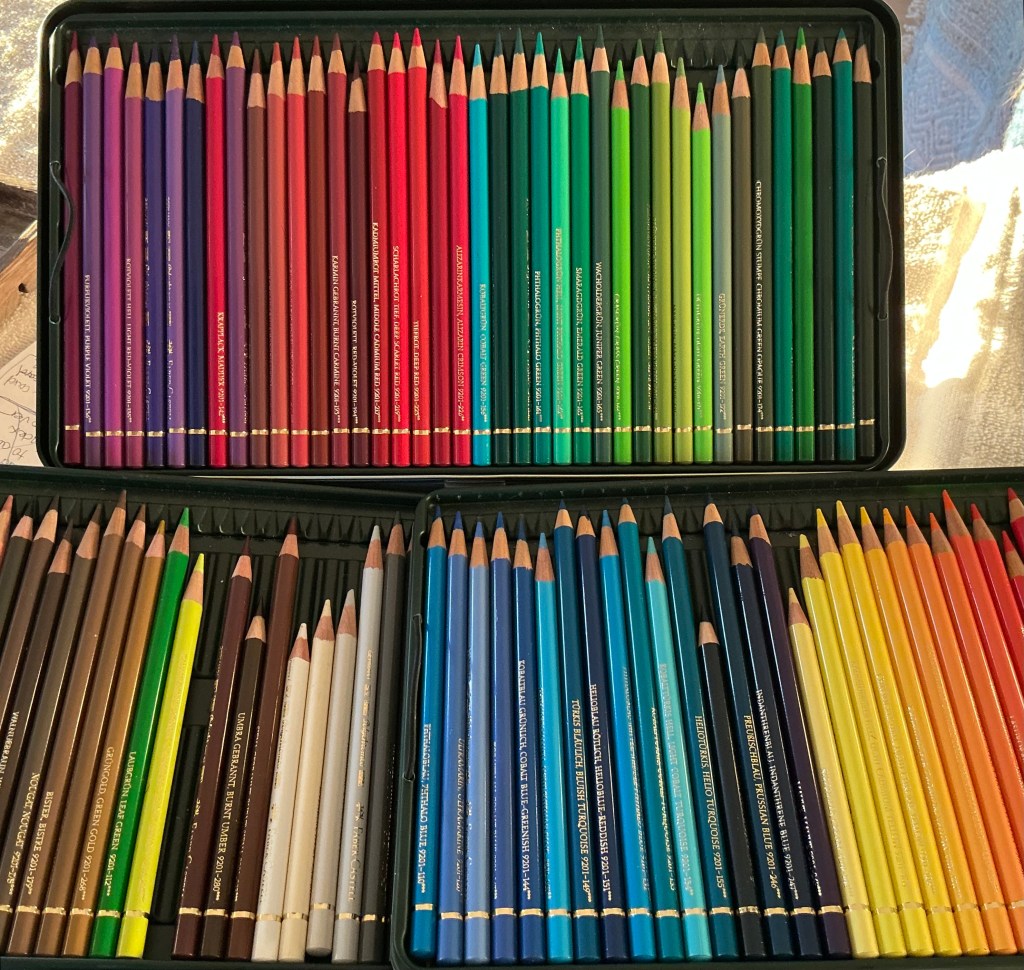
Faber-Castell colored pencil set

If you have and questions or comments, please let me know. If you use this combined media technique, any tips you’d like to share would be greatly appreciated too.

…………………………………………………………………………………………

I’d like to send a shout-out and my deep gratitude to Wendy Hollender, botanical artist/illustrator/teacher extraordinaire, who announced in her newsletter free access for over a week to 19 of her bite-sized video lessons. Designed as companions to her book, The Joy of Botanical Drawing, each lesson focused on a different botanical subject and how to artistically render them using watercolor and colored pencil combined. I’ve always wanted to learn this technique and gave it a try with her leaf examples and then mine. Incorporating both media into the same painting was very challenging and way out of my comfort zone. 

Thanks so much Wendy, for such wonderful lessons and your fabulous companion book! With lots more practice, my goal is that some day my botanical art looks as natural, skilled and professional as yours.

…………………………………………………………………………………………

As always, Thanks for stopping by!
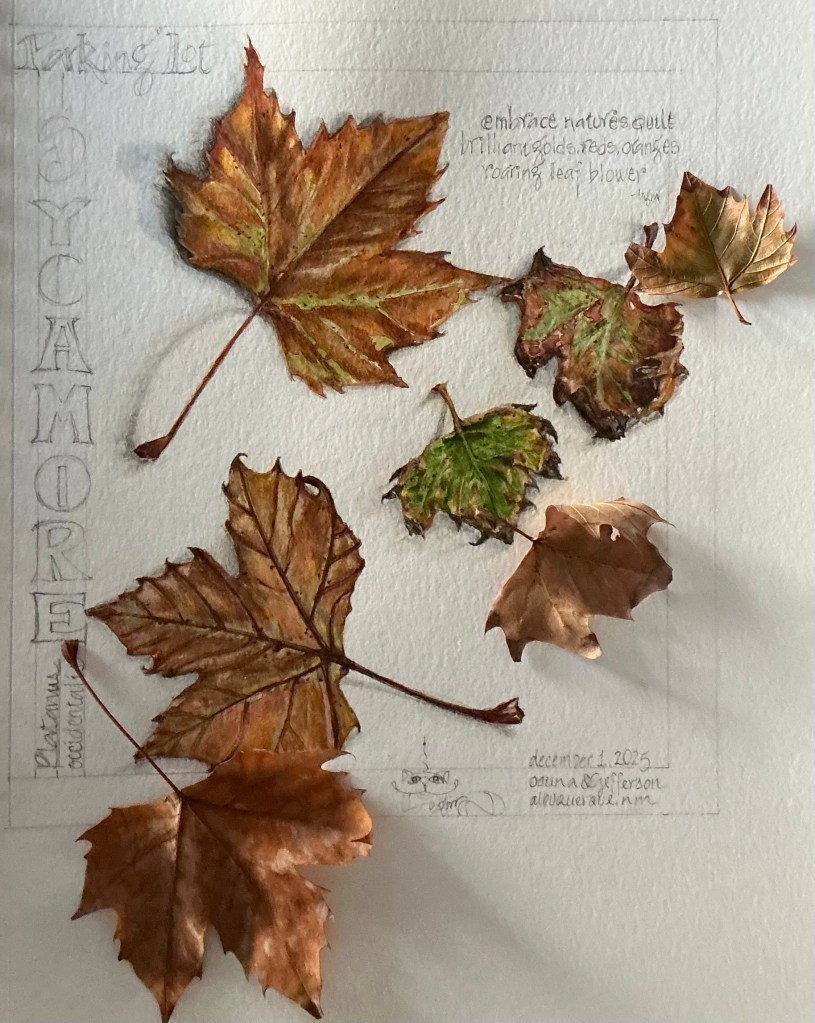
Draft final page with actual leaves lying on top

Dance of the Bagworms

May 9, 2025

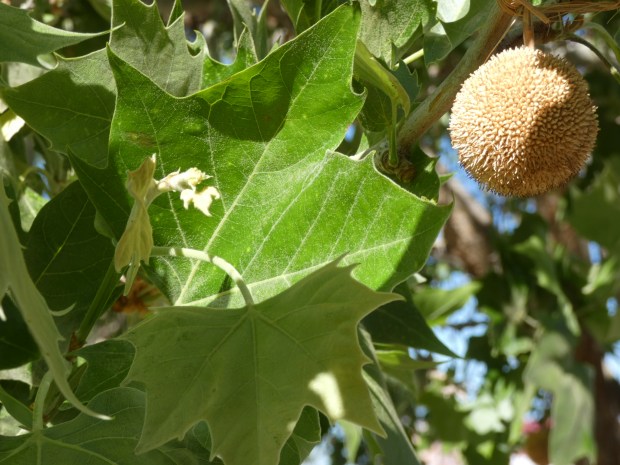
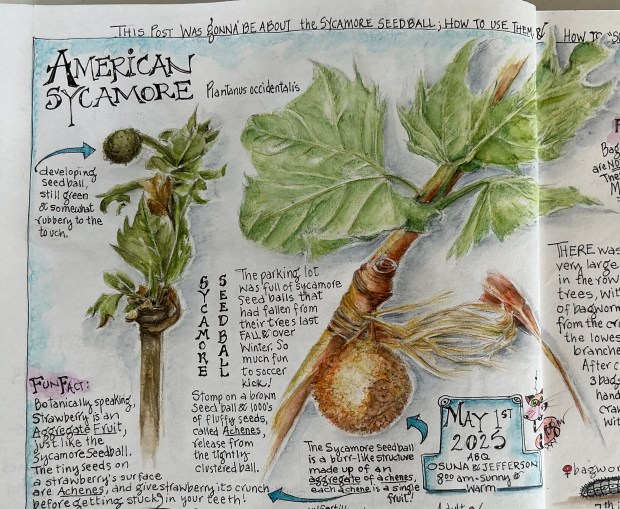
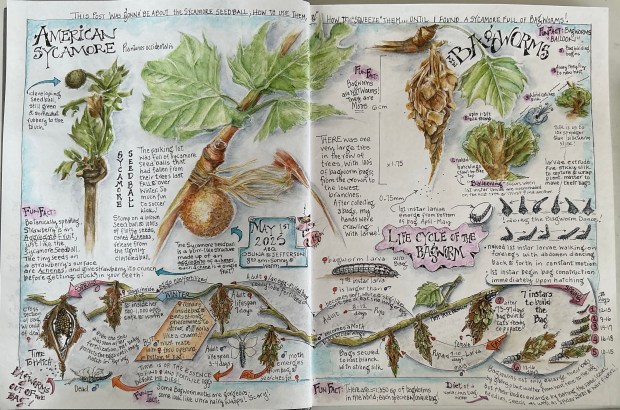
On a warm Spring morning, wandering around a grove of American Sycamore, I became curious about these magnificent trees: where in the US are they native; why are some leaves larger than the palm of my hand and some half the size; what about those odd pingpong sized seedballs lying on the ground everywhere you look ….. why don’t they roll away in search of an ideal spot to pop open so the seeds can germinate …… when the seedballs are kicked, stepped on or crushed beneath a car tire, do the 1,000’s of seeds inside blow away to sprout ….. are the seeds (all or some of them) even viable ….. do the seedballs make a good ink or dye or maybe they’re edible or even medicinal……. what, if any wildlife species eat the seedballs or seeds; and ooooohhhhhhh, sycamore bark! Why does this tree’s bark flaunt a pastel palette of greens, yellows and pinks. These and many more questions came to mind that it seemed about time the American Sycamore became a subject for my nature journal, until ……………..

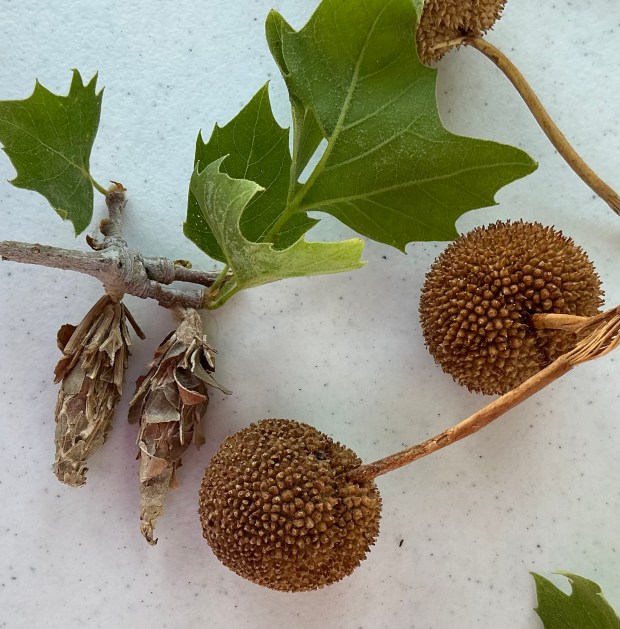
There! In the tree above my head, I spotted a most curious thing. Parting a few of that sycamore’s beautiful Spring green palmate-shaped leaves was a bundle of dead brown and beige leafy bits and sticks all haphazardly glued together. Wishing to get a closer look at that elongated ornament shaped “thing,” I found it was securely suspended from a branch. Trying to puzzle out this fascinating mystery while searching for my pen knife, a stiff breeze blew through the tree. It was then a I noticed hundreds of those 2-3” long bundles all over the tree; from the base to its crown!

Curiosity is the Essence of Nature Journaling

What continues to draw me to nature and nature journaling after so many years are the surprises in the familiar and in the unknown. I know well enough that new encounters in nature are infinite; you just have to open your eyes and look.  Having learned by carefully observing what appears to be familiar, often leads to new discoveries. That’s when my curiosity kicks into high gear ….. when it’s time to engage in some serious poking around to figure something out; to learn what the “thing” is. 

Curiosity, for me, is the very heart and soul of nature journaling. The ‘art’ of curiosity even precedes skill in observation. It’s what drives me out the door in the morning and fuels my exploration. Curiosity fills the mind with countless questions if for no other reason but to develop a deeper understanding of the natural world. 

But I “wax philosophical.” Needless to say, my curious discovery on that warm and breezy Spring morning prompted an abrupt change of mind for my next blog post (this post). Anxious to learn about the “thing” suspended from a tree branch, probably minding its own business, I proceeded to cut it down (along with two more) and popped them in a bag along with a few sycamore leaves and seedballs.

Later that same day …….

Upon completing my journal sketches of sycamore leaves and seedballs, and posting a few photos to iNaturalist for an initial ID, it was time to take a closer look at my discovery. Reaching into the bag for one of the “things” (wiping my hand free of spider webbing?), I placed it on my examination table surrounded by several hand lenses, a larger magnifying glass, a penknife, and 2 pairs of tweezers. Before beginning the dissection, I noticed about a dozen black pepper-sized bits moving about the “thing.” Thinking tiny spiders had come from the bag, I didn’t give them a second thought (should’ve been curious!).

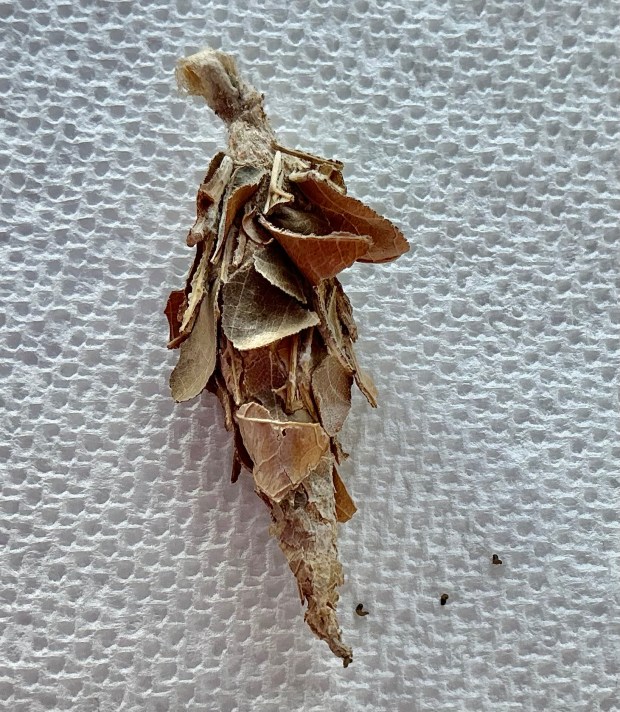
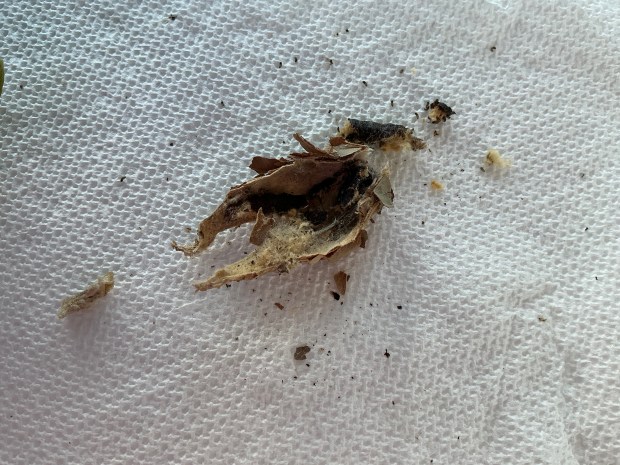
This bagworm bag was the subject of my dissection. Notice the pepper-sized black dots next to the bag ….. those are wiggling 1st instar larva.

iNaturalist ID Pick :::::::::::::: BAGWORM MOTH ::::::::::::::: iNaturalist ID Pick

(awaiting genus/species ID)

A Bagworm Moth!

How cool is that!?!

The opened bag of a female Bagworm moth. She’s very dead, but her progeny are escaping as fast as they can.

Dissection resumes ……

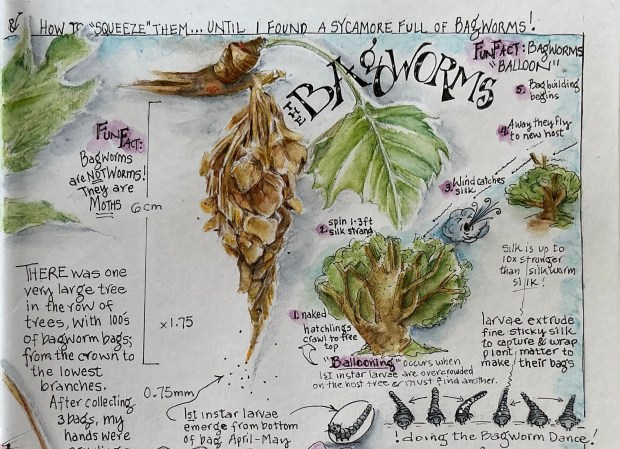
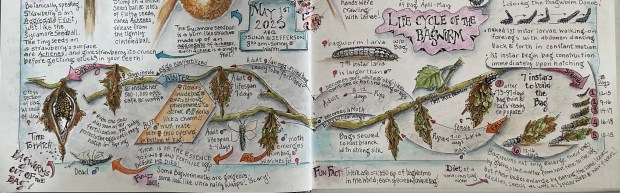
After finding out the “thing” I’ve been pondering over is the Bag of a bagworm moth, I learned the Bag was built during last Spring, Summer and Fall by either a male or female bagworm moth. If a male, the Bag would be empty; if a female, the Bag would contain her remains …. she would’ve died last fall after a male fertilized 500-1,000+ eggs she overwintered inside her body until Spring when newly-hatched larvae would emerge from the bottom of the Bag and begin the species’ life cycle all over again.

The Bag, that took about 10 minutes and all my dissection tools to open, contained the black and mushy remains of a female and 100’s of wiggling/dancing larvae! They were on the move; escaping from the now wide open Bag, and quickly covering my examination table like a pepper grinder out of control.

And my effort to open the Bag? This made sense after reading about the high tensile strength of the silk they produce. These thin strands of silk, 10x stronger than that produced by silkworms, is used in abundance to construct their Bags.

The coolest thing ever! Notice the either late 2nd or early 3rd instar larva, no longer naked, but swaddled in very chewed up leafy bits glued together with strong silk. This dude was hiking up a sycamore branch, continually chewing, wiggling, and gluing.

After disposing of all the naked 1st instar larvae waggling and dancing across my examination table, I placed the dissected Bag, the two whole Bags, and collected leaf material into a clear plastic ziplock to observe what would happen. Over 10 days, the number of larvae multiplied and the naked 1st instar caterpillars grew in size (at least to 2nd instar) while building their individual Bags from tiny bits of leaf litter! Their wiggling dance seemed to be the way their silk strands wrapped and secured leafy bits around their bodies. It’s been fun to watch all the activity.

Have you ever encountered one or more of the 1,350+ species of bagworm moths? What materials were their Bags made from? Please share your experience with these fascinating members of the butterfly/moth family of insects.

As always, thanks for stopping by!