An Albuquerque Park Mystery #26 —Mystery Solved!
September 8, 2026
It’s not about what it is, it’s about what it can become. — Dr. Seuss, The Lorax
The creation of a thousand forests is in one acorn. — Ralph Waldo Emerson
Super thanks to Dana P., a regular reader of my blog and a very savvy observer of my recent post, Acorn or Gall? Dana instantly recognized the mystery oak as Bur Oak (Quercus macrocarpa) from my sketches of the leaves and acorn! “Way to go Dana!!! I’m so grateful you commented and then generously allowed me to share your photos.”
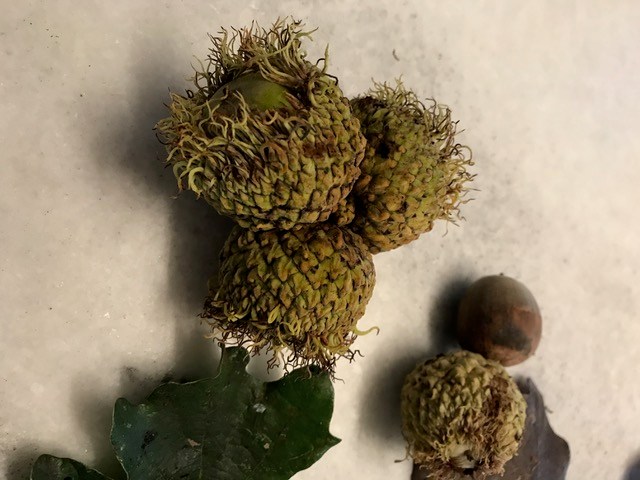
So, those shaggy pale green balls growing from the ends of many leafy branches are acorns after-all. The acorn I collected was apparently immature; that scary-looking tentacled orb was the cap (cupule) still tightly enclosing the growing fruit (the nut).
Dana has a lot of experience growing Bur Oak, some of which were germinated from collected nuts (see Dana’s photo below). Now we all can see how a mature acorn appears when nuts are ready for harvesting. (I still think they are the weirdest acorns ever, don’t you?)
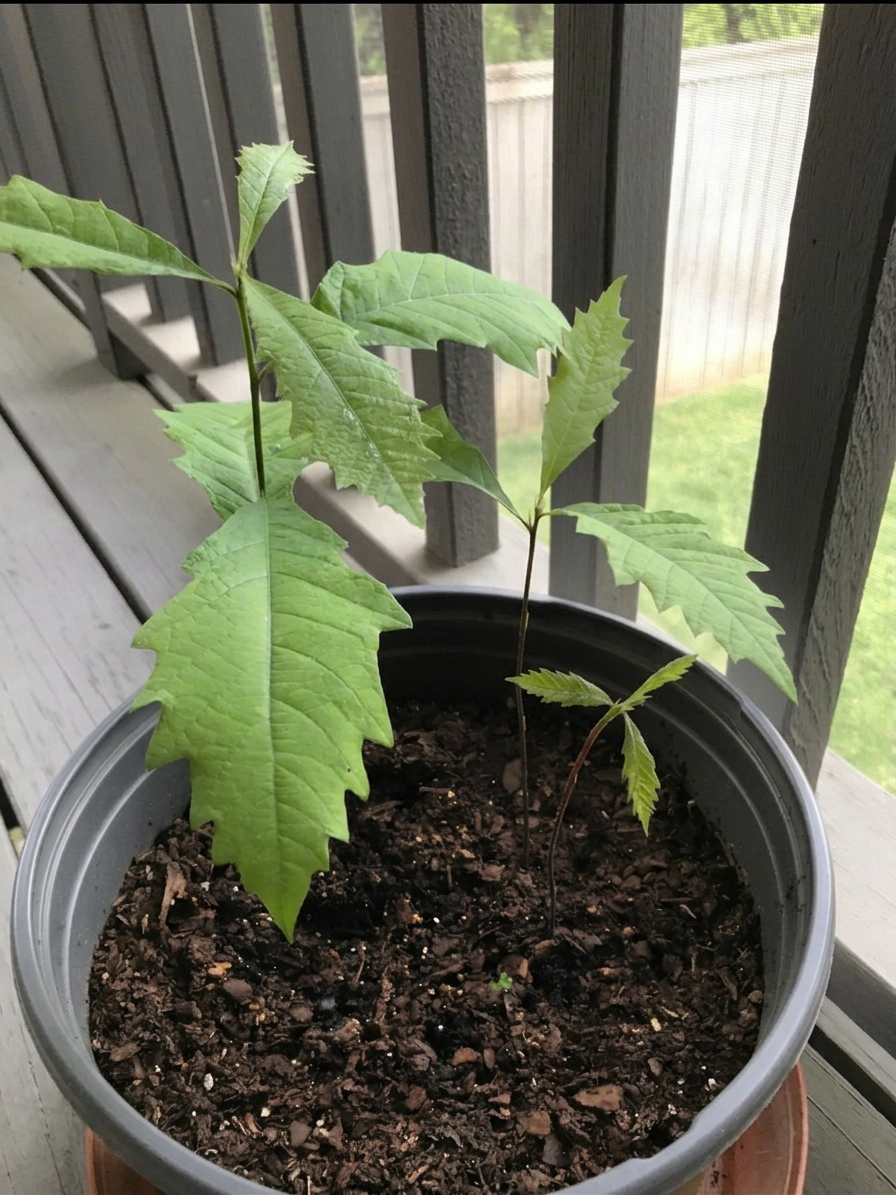
The next photo proudly displays three ‘baby burs’ that sprouted from Dana’s successful germination efforts. The nuts, harvested in the fall from a very old Bur growing in Nashville, Tennessee, were planted in the pot and allowed to overwinter outside, on a screened-in porch to prevent squirrel-theft. They emerged as little trees the following spring. These healthy sprouts in the photo have been happily living in east Texas for the past four years and have grown to four feet tall!
And now for a bit of acorn anatomy (you knew I couldn’t resist!).
The term “acorn” refers to the entire unit; the cap (cupule) and the oak fruit (nut).
Exterior Parts
Cupule – the botanical name for the acorn’s ‘hat.’ It’s the cup-shaped or bowl-like cap made of hardened, modified leaves called bracts. The outside features scales that can be flat and smooth, bumpy and warty, or loose and fringed depending on the oak species. The cupule protects the nut and helps attach the acorn to the tree branch while it grows.
Pericarp – the hard, tough outer shell that encases the inner kernel of the nut.
Stem – the tiny twig attachment point at the base of the cupule.
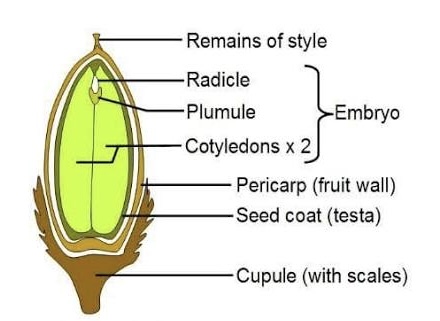
Interior Parts
Seed Coat (testa) – the thin, papery layer just inside the outer shell that directly covers the nut meat.
Cotyledons – two large, fatty seed leaves that store starches, proteins, and fats to feed the growing plant (and wildlife).
Embryo – the tiny baby oak tree nestled between the two cotyledons at the pointed end of the nut, consisting of the plumule (future shoot) and radicle (future root).
……………………………………………………………………………………..
Always be Curious
As always, thanks for stopping by!

