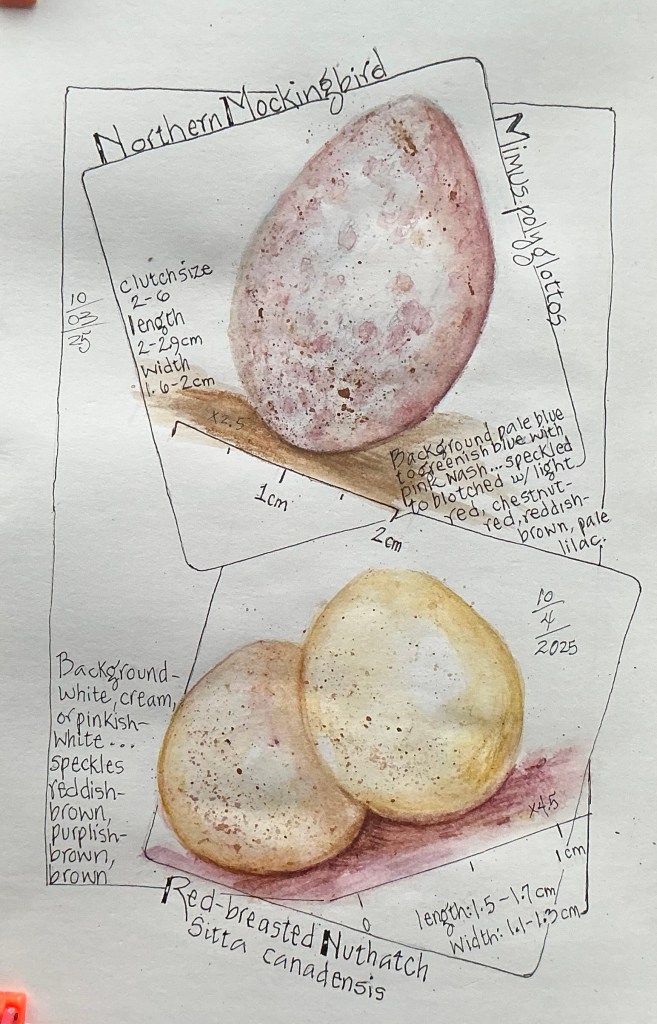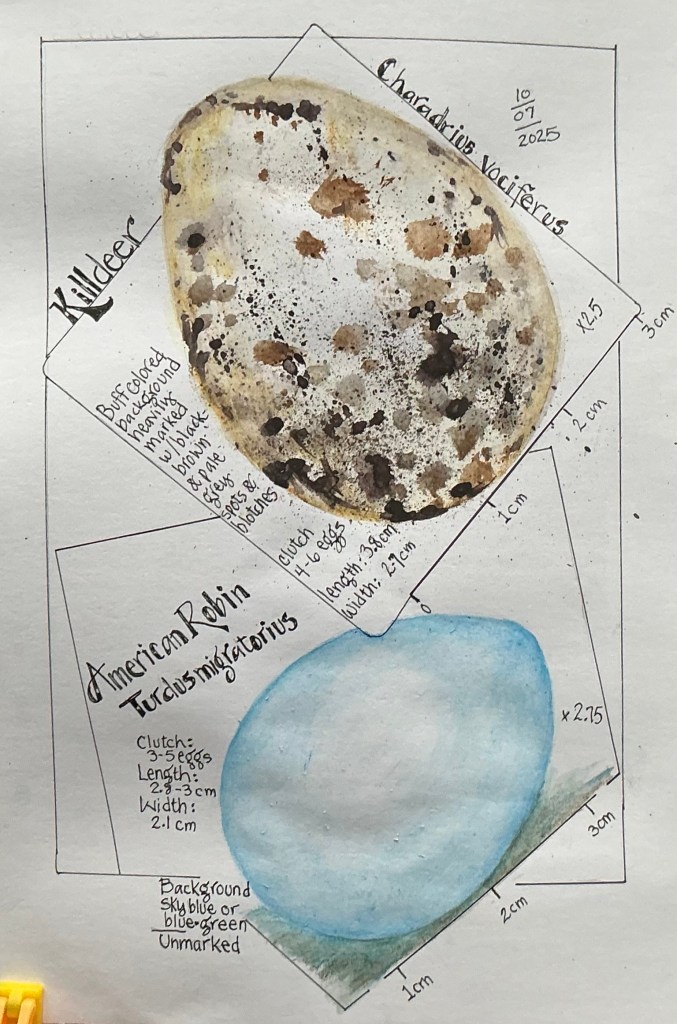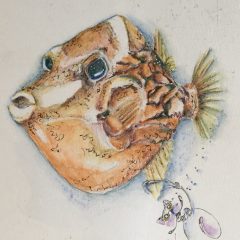
EggTober 2025/Submission Three ….. Days 17 – 24

October 25, 2025

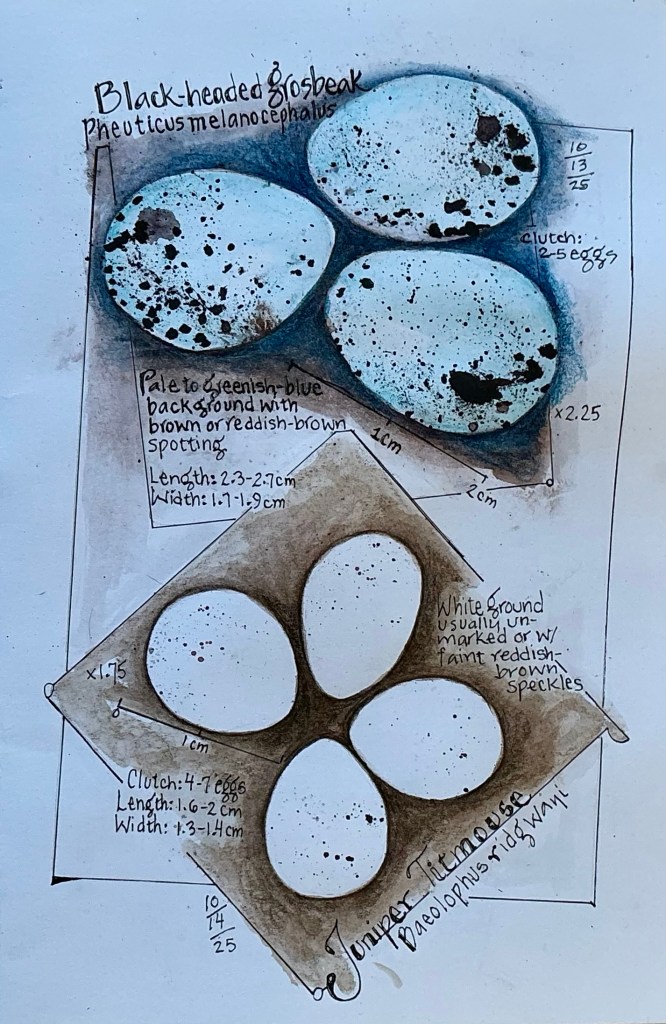
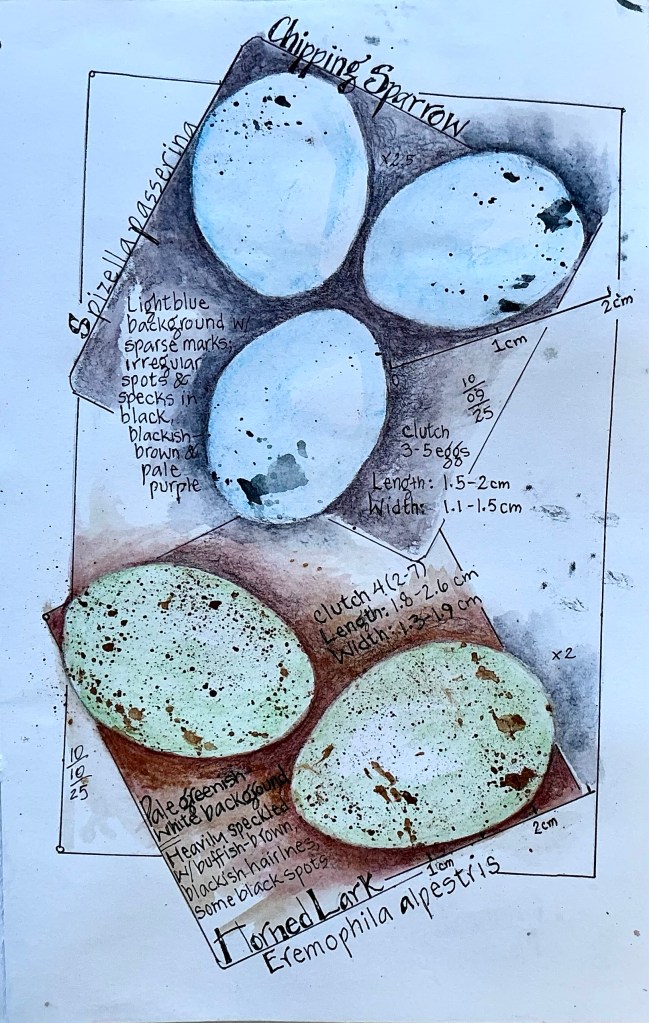
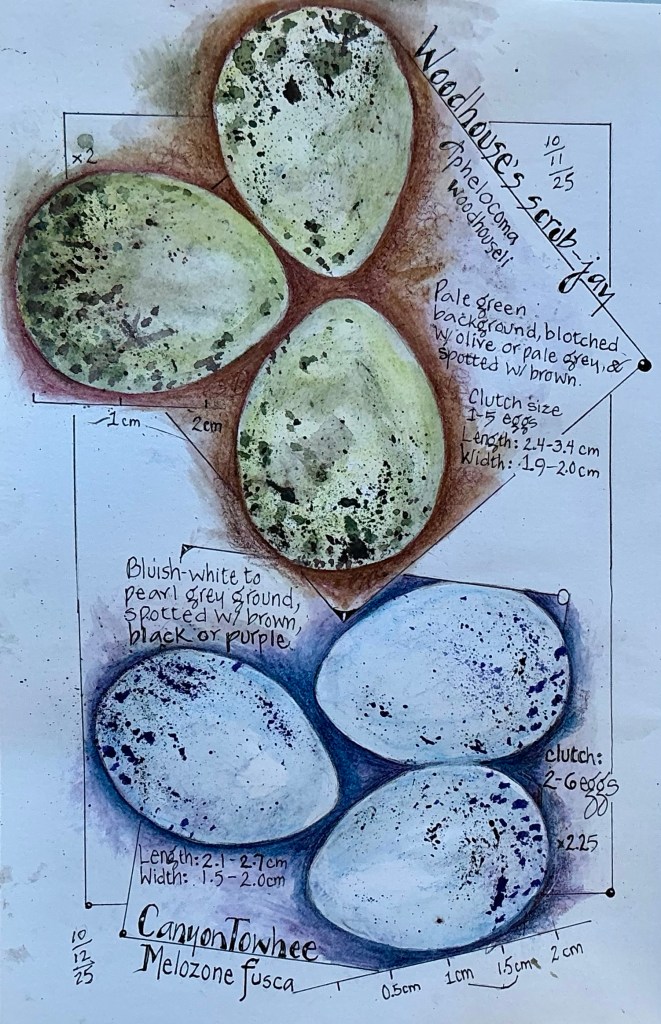
October is ‘flying” by! It seems amazing how quickly my Inktober 2025 sketchbook is filling up with daily EggTober watercolor paintings of bird eggs. Week three is now complete, and the eggs of eight more breeding birds of New Mexico can be viewed below. As with Submissions One and Two, included are a few fascinating facts about bird eggs, this time with a focus on the eggshell. 

In case you missed my first and/or second EggTober posts, and would like to catch up, click the following link(s) to read Submission One, and/or Submission Two.
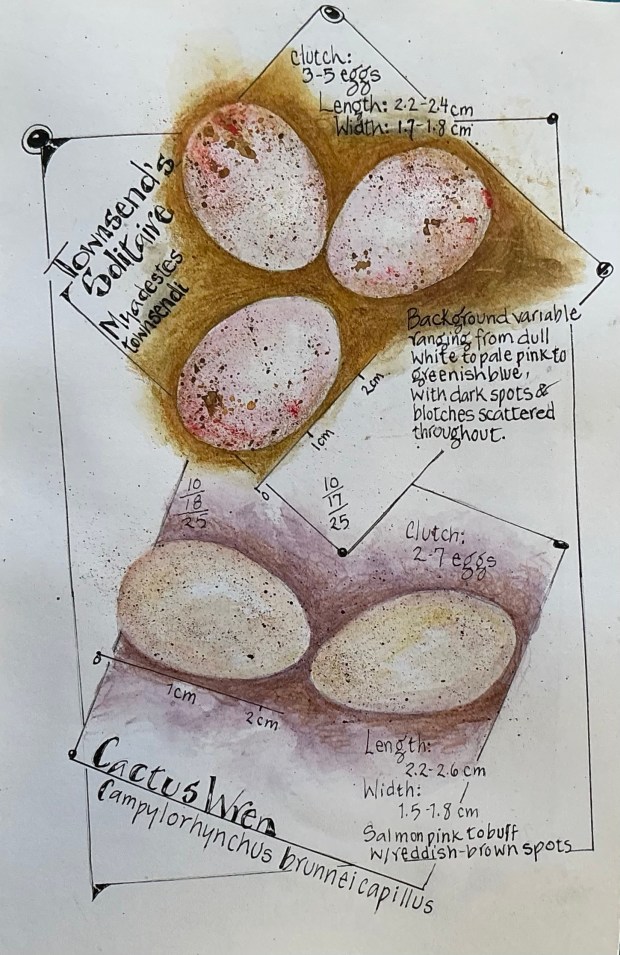
October 17th & 18th

A Bird’s Eggshell 

At first glance, you may think all bird eggs are covered in a hard, solid shell. You would be right about the shell being hard, but have you ever taken a close look at the shell surface? The outer shell appears to have dimples, a bit like a golf ball. Those dimples are pores in the eggshell. Bird eggs are considered “amniotic” which means their eggs not only have a hard shell; they have a porous membrane to allow for oxygen and carbon dioxide exchange. Also, an important characteristic of amniotic eggs is they resist dehydration, which is why birds can lay them on dry land. So, is the porous membrane sandwiched between the eggshell and the ‘egg white’ (albumen), and why?

In Submission Two, I noted that the typically oval-shaped bird egg is able to withstand the weight of the incubating parent(s); the shell having the strength and resilience to withstand external pressures which minimizes the chances of the developing embryo becoming deformed or suffering bone fractures. So, just how thick must an eggshell be, yet still allow the developing embryo to breathe? 

What are the main functions of the eggshell?

The shell of an egg contributes to successful formation and development of the embryo, by providing protection, respiration and water exchange. The eggshell is also the major source of calcium for the development of high-calcium consuming organs, like the skeleton, muscles and brain. 

But what we think of as the eggshell, is actually Eight Separate Layers (!) that stack together from the outside of the egg to the inside where layer eight meets the albumen. It’s through these layers that the embryo breathes. 
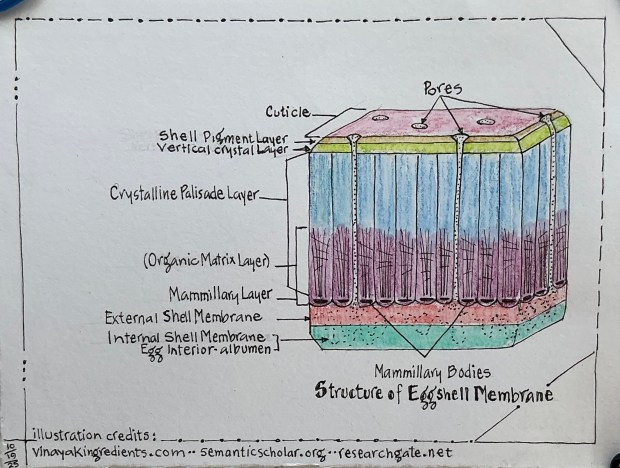
These layers, from the outside in, are the Cuticle layer with Pores, Shell Pigment layer, Vertical Crystal layer, Crystalline Palisade layer, Organic Matrix layer, Mammillary layer with Mammillary Bodies, External Shell Membrane layer, and Internal Shell Membrane layer. These will be summarized below. I’m also compiling a more complete description of each layer and detailing their importance, which should be complete and posted before the end of the month.

But before taking a brief ‘look’ at the eight eggshell layers, I wanted to share a snapshot about their thickness ….. because, quite frankly, I couldn’t imagine how all those eight layers manage to fit!

Eggshell Thickness

Most bird eggshells must be thin enough for the chick to peck through when it hatches, but at the same time it must be thick enough to bear the weight of the growing embryo inside, and the weight of the parents incubating it.  The thickness of eggshells varies among species and individual birds, but also among individual eggs laid in a clutch. Eggshell thickness is also influenced by factors like the bird’s age, diet, and where the measurement is taken on the egg. In general, bird eggshells are usually 5% thicker at the mid-section of the egg (the area called the equator) than the ‘bottom’ (the sharp egg pole) and ‘top’ (the blunt egg pole) ends.

To ‘illustrate’ how thickness varies by a few species, the egg of a Blue-tailed Emerald (a species of hummingbird that lays an egg with one of the thinnest recorded eggshells among all bird species) has a shell that’s 0.029 mm (0.0011 inch) thick. Compare that with an Ostrich egg, the largest egg with the thickest eggshell in the world, measures in at 1.92 mm (0.08 inch) thick. For many common species, like the Mallard, shell thickness is around 0.337 mm (0.013 inch); a domestic chicken eggshell varies from 0.33 – 0.36 mm (0.013 – 0.014 inch) thick. 

It may be helpful to relate these small sizes in eggshell thickness to an average human hair, which can be anywhere from 0.06 mm (0.0024 inch), to 0.10 mm (0.004 inch) thick. I’m still amazed how an eight-layered eggshell happens!
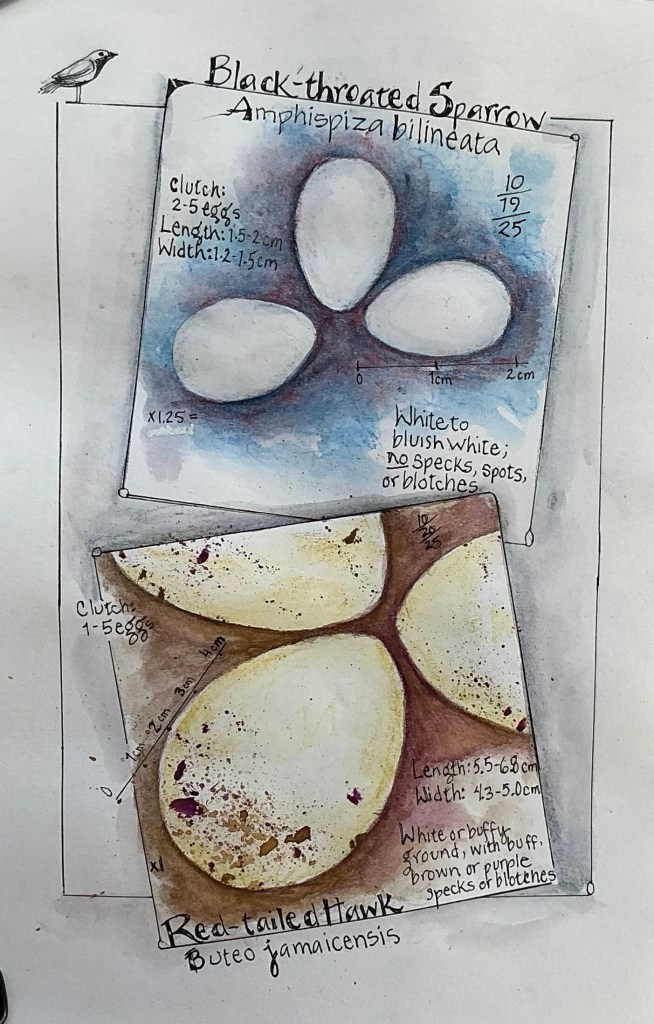
October 19th & 20th

Structure and function of eggshell layers: Cuticle layer and the Pores, Shell Pigment layer, Vertical Crystal layer, Crystalline Palisade layer

Cuticle (aka Bloom)

The Cuticle’s primary functions are to act as a physical and chemical barrier against invading microbes, protect the eggshell pores, and regulate the exchange of gas (Oxygen and Carbon Dioxide) and moisture (water vapor).  The Cuticle also affects the egg’s wettability, which helps prevent water and bacteria from entering, and fine-tunes the eggshell’s appearance, including ultraviolet (UV) reflectance. 

Eggshell Pores

The texture of the outer eggshell is due to the Pores that form openings in the Cuticle. Depending on species, there can be anywhere from 7,500 to 17,000 Pores covering an eggshell, most located at the blunt end of the egg (the top end where the air cell is located). Each Pore is connected to a Vertical Pore Canal that penetrates the next five eggshell layers, down to the External Shell Membrane. The shells of most bird eggs have simple, straight pore canals that widen slightly toward the openings through the Cuticle. The exceptions are found in swans and the ratites (the group with ostriches and emus), where their Vertical Pore Canals are highly branched. Covering the exterior opening of the Pores of all bird species (except pigeons and doves [hmmmm ….. wonder why]) are tiny plugs or caps, which may act as pressure-sensitive valves. 

The Pores and their canals provide a critical passageway for gas and moisture exchange between the inside and outside world. This exchange allows the developing embryo to breathe by taking in oxygen and releasing carbon dioxide and water vapor.

Shell Pigment Layer

The Shell Pigment Layer serves multiple critical functions, including camouflage, thermoregulation, and protection for the developing embryo. The colors and patterns come from two main pigments, protoporphyrin (brown/red) and biliverdin (blue/green), and their function varies depending on the bird’s environment and nesting behavior. 

Vertical Crystal Layer 

The Vertical Crystal Layer provides mechanical strength and structural integrity.  Its tightly packed, vertically oriented crystals form a dense, outer layer that protects the embryo from physical shocks, while also being integrated with the Palisade Layer (below) to form a tough, ceramic-like structure. This outer layer’s density and arrangement make it resistant to impact.

Crystalline Palisade Layer

The Crystalline Palisade Layer serves two primary functions: providing mechanical strength and regulating gas exchange for the developing embryo. This is a thick, mineralized layer, that forms a dense matrix of calcium carbonate crystals, and is critical for protecting the egg’s contents while also aiding metabolic processes (i.e. all the chemical reactions within the embryo that are essential for life).
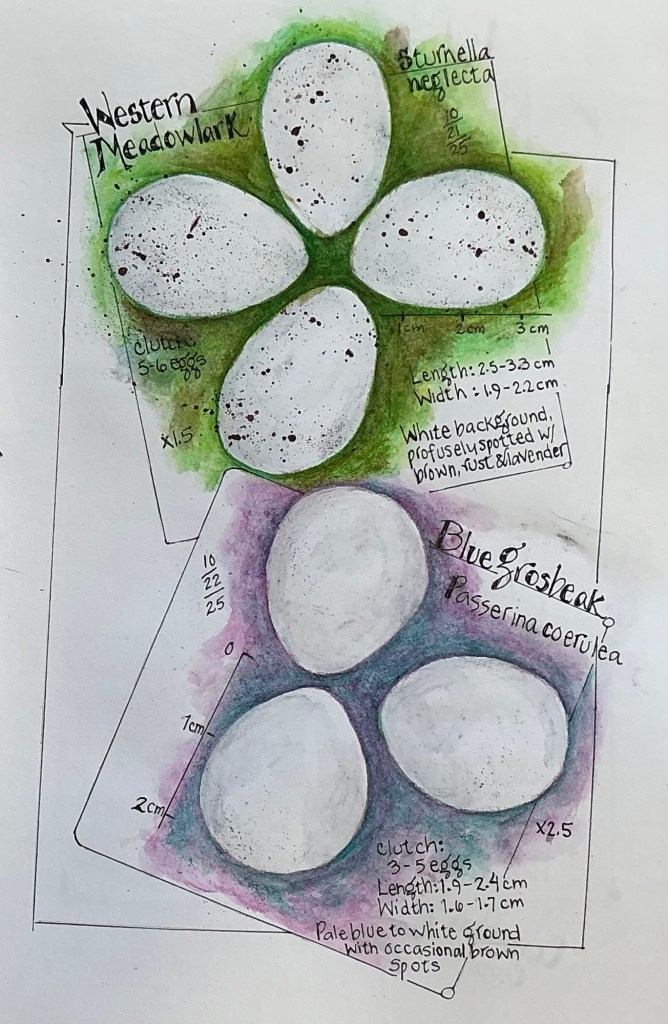
October 21st & 22nd

Structure and function of eggshell layers: Organic Matrix layer, Mammillary layer with Mammillary Bodies, External Shell Membrane layer, and Internal Shell Membrane layer

Organic Matrix Layer

The Organic Matrix Layer plays a crucial role in controlling biomineralization, forming the shell’s microstructure, and providing antimicrobial defense. Consisting of proteins, glycoproteins, and proteoglycans, this layer acts as a scaffold that controls the eggshell’s strength and protective properties. 

Mammillary Layer and Mammillary Bodies

The Mammillary Layer and Mammillary Bodies form the foundation for the rest of the eggshell. Their primary function is to provide the calcium for the embryo’s skeletal development. This inner layer is composed of calcite microcrystals that dissolve easily, allowing the embryo to extract about 80% of its calcium needs before hatching. 

This layer also helps during the “pipping” process because its globular texture makes it easy to crack and break through the shell from the inside. Pipping is the,process where the chick breaks through its eggshell to hatch. There are two phases during pipping:  internal and external. Internal pipping is when the chick breaks through the Inner Shell Membrane Layer (see below) to reach the air cell and take its first breath followed by chirping! This first phase not visible from the outside and can take 12-24 hours. External pipping is when the chick uses its egg tooth to peck a visible hole or holes in the eggshell, a process that can take a few hours to a few days, requiring the chick to rest frequently… those outer layers of shell are hard. The long time due to the chick needing to rest This can take anywhere from a few hours to a couple of days. The final step is “zipping,” where the chick turns in the egg, cracking the shell into two halves to fully hatch.

External Shell Membrane Layer

The External Shell Membrane Layer functions primarily as a barrier to protect the egg’s contents from bacterial invasion and to prevent moisture loss. This membrane is made of proteins and acts as the first line of defense after the Cuticle, preventing microorganisms from entering the egg. 

Internal Shell Membrane Layer

The Internal Shell Membrane’s primary functions are to provide a barrier against bacterial invasion and to support the formation of the hard eggshell. It also helps prevent excessive moisture loss while allowing gases to pass through, a process that becomes more significant when the External and Internal Shell Membrane Layers separate to form an air cell. 
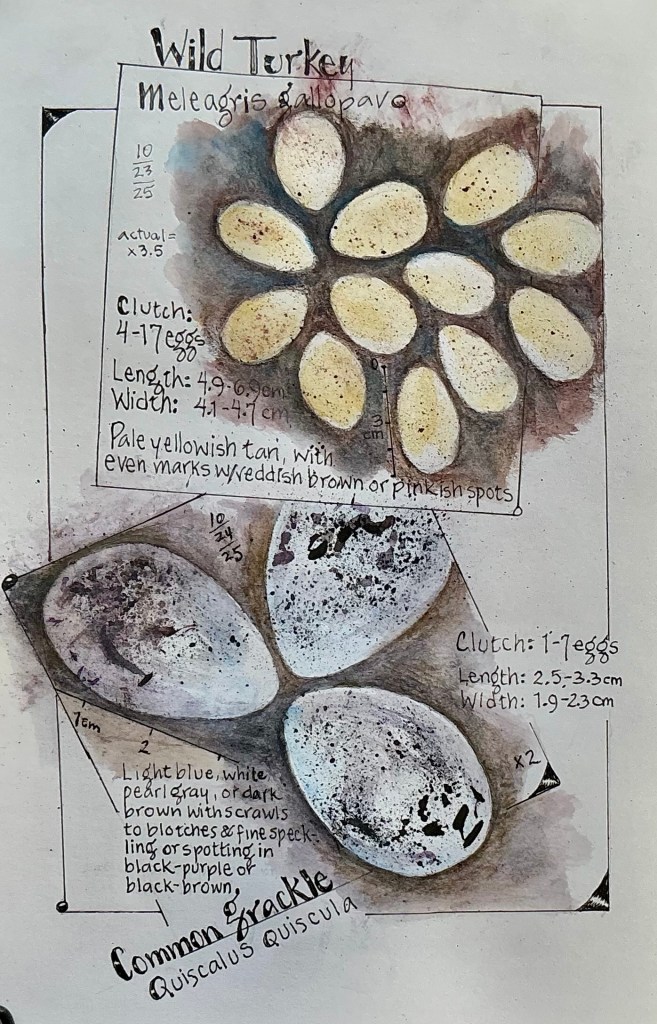
October 23rd & 24th

Summary

Eggshells! I never knew they are such complex structures with many unique features.  And eggshells are unfathomably critical to the development and survival of the embryo right up until the moment they “Pip” their way into the world. Without their bioceramic characteristics, microscopic pores, front-line bacterial defense systems, color patterns, and their surprising strength despite the shell’s thinness. birds might be something completely different or perhaps might not ‘be’ at all. Something worth pondering!

Hope you have enjoyed Submission Three of EggTober! If so, please leave me a comment.  And as always, thanks for popping in! 

p.s. Stay tuned for Submission Four, landing in your in-basket next week!
EggTober 2025/Submission Two ….. Days 9 – 16

October 16, 2025

EggTober progress continued, with zeal, as I worked my way through week two. See for yourself! Check out the bird eggs that randomly popped up from my list of nesting birds of New Mexico. As with Submission One, included are a few fascinating facts about the shape of bird eggs to go along with week two birds. 

If you missed Submission One of my EggTober post and would like to catch up, click here.

Egg Shape

The typical oval-shaped bird egg isn’t coincidental. Evolution, influenced by factors such as bird genetics and environmental influences, produced a “smart egg;” a perfectly shaped package just right for survival …….. 

October 9th and 10th

1. Structural Strength

The oval shape provides greater strength and resilience, reducing the likelihood of breakage during incubation. It withstands external pressure more effectively, minimizing deformation or fractures in the developing embryo.

October 11th and 12th

2. Optimal Space

The oval shape maximizes the volume available for the embryo, ensuring proper development and sufficient reserves of nutrients, including proteins.

October 13th and 14th

3. Temperature Distribution

The oval shape promotes the even distribution of heat. When a female bird incubates the egg, her body heat is utilized to maintain warmth. The egg’s oval shape aids in evenly disseminating her body heat, ensuring a consistent temperature for the embryo throughout the incubation process.

October 15th and 16th

4. Prevents Rolling

The blunt, flat end of the oval egg shape helps prevent rolling within the nest. This stability safeguards the eggs, preventing them from accidentally falling from the nest or assuming an improper position.

Summary

While most bird eggs exhibit an oval shape, slight variations in shape do occur among different species. These variations are influenced by the birds’ lifestyles and specific incubation requirements. Overall, the oval shape plays a vital role in the reproductive ecology and physiological adaptations of birds.

Hope you have enjoyed Submission Two of EggTober! If so, please leave me a comment.  And as always, thanks for popping in! 

p.s. Stay tuned for Submission Three, landing in your in-basket next week!
Native American Day/National Indigenous Peoples’ Day

October 13, 2025

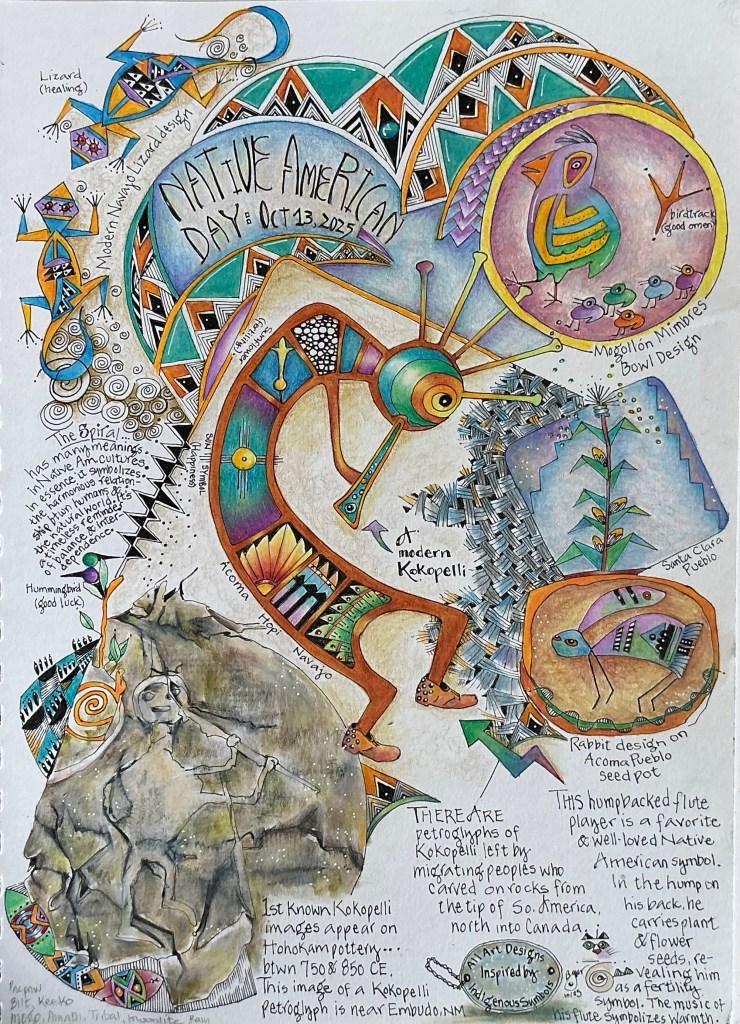
Today is the second Monday in October ….. a day to pause and honor the deep roots, rich cultures, and enduring spirit of the first peoples of this land. Native American Day celebrates the history, contributions, and resilience of Native American tribes all across the nation.

Yesteryears

Native American Day honors all Native Americans. South Dakota led the way, officially changing Columbus Day to Native American Day in 1990 after a “Year of Reconciliation” was declared by Governor George S. Mickelson. California soon followed.  In recent years, the movement has gained national momentum. Many states and cities have chosen to celebrate Indigenous Peoples’ Day on the same date. Then in 2021, President Joseph Biden issued the first-ever presidential proclamation for National Indigenous Peoples’ Day, marking a significant step in acknowledging and respecting the history and contributions of America’s first inhabitants.

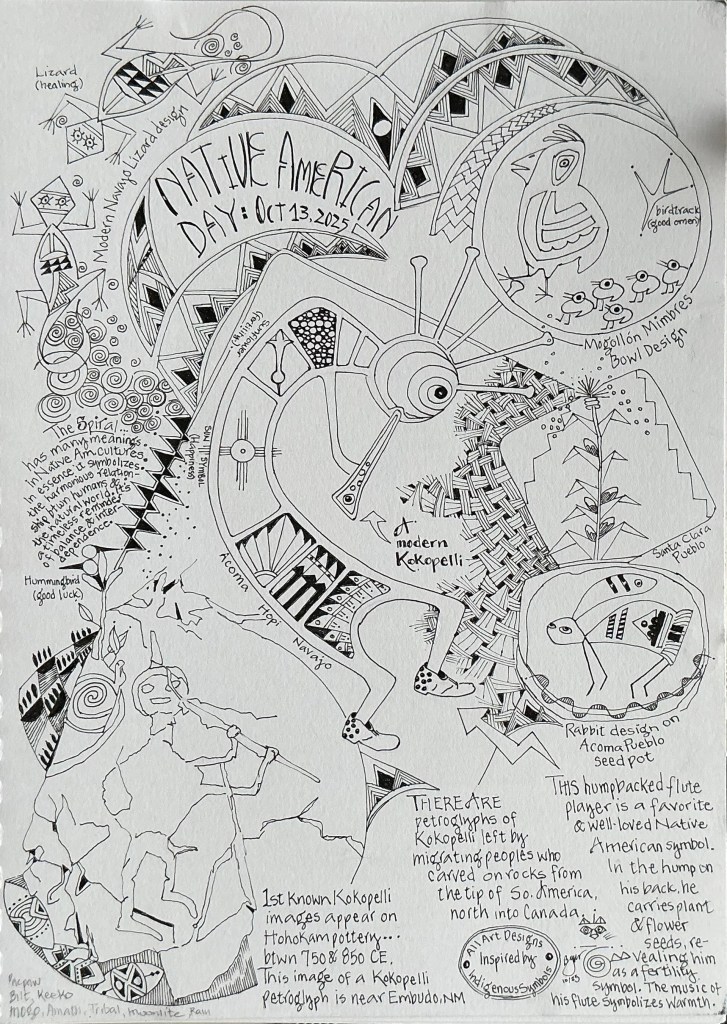
Zentangle patterns: Pacpaw, Bilt, Keeko, Mogo, Amath, Tribal, Moonlite, Rain

Present-day

Celebrating the second Monday in October is more than acknowledging the past ….. it’s a day to recognize the living cultures that continue to enrich our country’s tapestry. It’s an opportunity to move beyond stereotypes and learn about the diverse traditions, languages, and stories that have shaped this continent for millennia. Native American Day also highlights the efforts to revitalize and preserve hundreds of indigenous languages, each one a unique expression of culture and knowledge.  When we celebrate Native American Day, we celebrate the incredible diversity of traditions. Instead of a single culture, there are hundreds of distinct nations, each with its own unique customs.

Storytelling and Art Making

Native Americans have a powerful storytelling tradition of oral history, where foundational stories, lessons, and legacies were and still are passed down through generations. Many of these stories of life and culture are told through artwork, from ancient pictographs (rock paintings) and petroglyphs (images cut into rocks by pecking, incising or abrading) created by the indigenous peoples that lived throughout America, the intricate beadwork of the Plains tribes, the iconic pottery of the Pueblo peoples of the Southwest, to contemporary painting and sculpture. Native art is a cornerstone of American culture.

New Mexico Rock Art

Images painted on and carved into rock that were used in ancient storytelling can be found throughout my home state of New Mexico. Many of these sites are protected and preserved by federal designation as National historic landmarks, National Parks, and by the Bureau of Land Management as Areas of Critical Environmental Concern, and as a significant part of our Archaeological heritage. 

Traditional cultures and customs continue to fascinate me, and in “drawing” attention to the important contribution rock art has and continues to play, I wished to shared some of the designs (symbols) created by Native American tribes indigenous to the 4-corners region of the Southwest, with focus on those found in New Mexico. The Kokopelli symbol, the dancing flute player, is a familiar and favorite character throughout the area and has many meanings tied to fertility and harvest.  The symbol depicted shows Kokopelli with a hump in his back where he carries seeds ready for planting, while he plays his flute, a symbol of warmth. He also carries a sunflower disk flower (the ‘complete’ inflorescence) to display fertility, the Sun symbol for happiness, and several crop symbols designed by the Acoma, Hopi, and Navajo.   

A Kokopelli created in 2017 … on toned grey paper and colored with Prismacolors

The very first known Kokopelli images appeared on ancient Hohokam pottery, dating from between 850 and 750 C.E. The drawing of the Kokopelli petroglyph, in the bottom left of my panel, is inspired by one of these first images that was discovered near Embudo, NM.

Ideas to Celebrate Native American Day ….. Learn, listen and engage by …..

.…. reading a book by a Native American author, such as Louise Erdrich, Sherman Alexie or Tommy Orange,

….. exploring a museum or a state historic site to learn firsthand about the lives and history of the region’s tribes,

….. purchasing authentic arts, crafts, and goods from Native artists, which directly supports and helps preserve their cultural practices,

….. attending one of many community- or university-hosted talks, film screenings, or celebrations such as a  powwow

Thank you very much for stopping by!

EggTober 2025/Submission One ….. The First 8 Days 

October 8, 2025

Having participated in the Inktober for years by creating a daily drawing or painting throughout the month of October, I’ve found the challenge fun, rewarding, and motivating. However, rarely sticking to “ink only” creations and/or following the official prompts, I’ve shamelessly adopted a variety of approaches shared by others, have different media, or made up my own prompts. For me, this has added an elevated level of complexity that’s so appealing and somewhat wild!

In the past, my “Inktober” art has been about themes, like using a new Zentangle pattern a day that has a name beginning with “Q” or “Z” or “M” ……. or picking different botanical patterns. I’ve played with mixed media, watercolor, watercolor pencils, colored pencils, graphite, and (yes) ink to create a flower a day, rocks, mushrooms, candy, modes of transportation, the alphabet, fonts, portraits of famous people, etc. I’ve found the challenge is a great way to loosen up and try subjects I’m not comfortable or familiar with, while not worry about silly mistakes. 

So, each year I look forward to Inktober, and this year was no exception. 

This year I went way “out on a limb” and switched it up a bit.

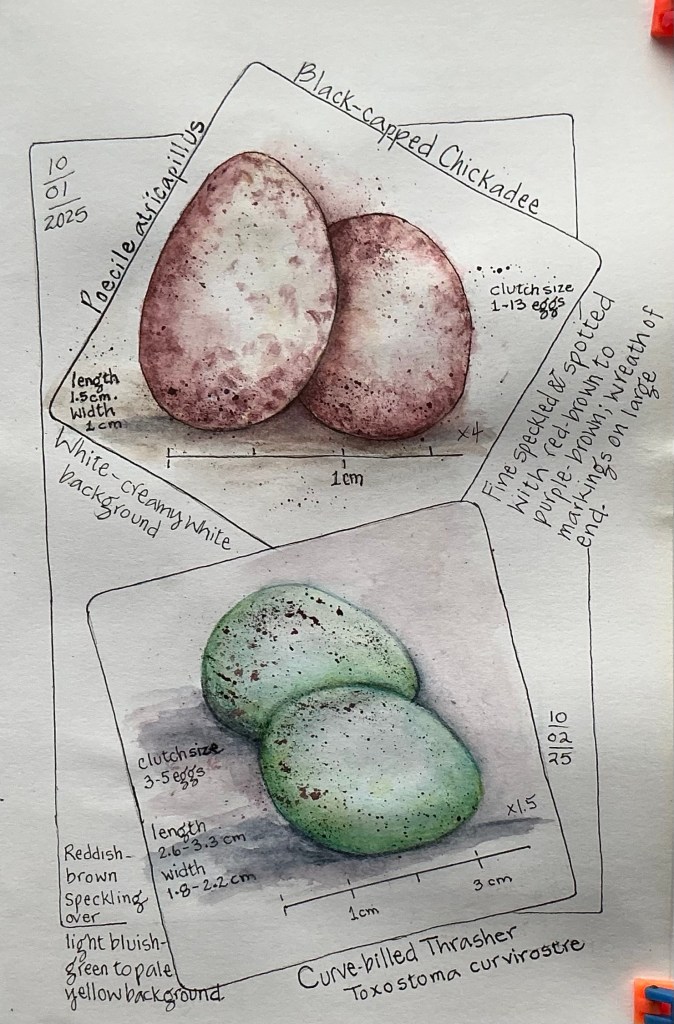
This year I’ve named my personal 31-day challenge EggTober! And in keeping true with my love of nature, nature journaling and curiosity, each morning I’ll be randomly pick from a list of birds that nest in my home state of New Mexico and will draw one or several of of their eggs. 🥚 

Here’s my progress so far and a few fascinating facts about bird eggs.  At the end of my post, you can read about my process and materials used.  

Did you know that two pigments are responsible for most eggshell colors: biliverdins, which make blue-green hues; and, protoporphyrins, which make the background hues of rusty yellows, reds and browns.  

Eggshells that have markings like spots, blotches, speckles, or lines, have more protoporphyrins. These markings help camouflage eggs, especially those laid by ground-nesting birds.

The largest known bird egg belonged to the extinct elephant bird. This flightless bird, which stood about 10 feet (3 meters) tall and lived in Madagascar until the 18th century, laid eggs about 11 inches (28 centimeters) long. That’s about the size of an American football!

Bird eggs can be oval, to round, to pear-shaped, depending on the species of bird laying the eggs and where. Many sea birds nesting on cliffs tend to lay more pear-shaped eggs which helps keep them from rolling off steep ledges. It’s said that pushing one of those eggs, because it’s so heavy at one end, will cause it to spin in a circle.

Eggshells are largely made of calcium carbonate, and if hatched without their final ‘spray-paint’ of color, will look pure white to the human eye.  But some white eggshells contain ultraviolet colors visible to birds. (Wonder why?)

Process and Materials

Of course, given that it’s Autumn, and impossible to find any active bird nests housing unhatched eggs, I’ve formulated Plan B. For my references I’ll be relying on digital natural history museum egg collections, on-line bird identification resources, fascinating facts about bird eggs, several key references from my personal library, and other sources, to learn and satisfy my long held love of birds, their incredible eggs, and the egg-laying process. 

Staying as true to real life as possible, approximate egg shapes will be colored with Derwent Inktense watercolor pencils. For consistency, basic information specific to each individual bird species’ typical egg (clutch size, length and width, background (ground) color(s) and marking color(s) and patterns) will be included. For future reference, I’ve handmade a small booklet that will hold two species’ eggs/page. At the end of October, I’ll then add a title page, table of contents, and a list of references.  

And finally, for now, it’s entirely possible that my process and materials may be changed on a whim! So stay tuned as EggTober unfurls!

If you are an Inktober participant, or have never heard of this month-long creative event, please let me know!

As always, thanks for stopping by!