April 27, 2026
White-point Vetch (Oxytropis sericea var. sericea)
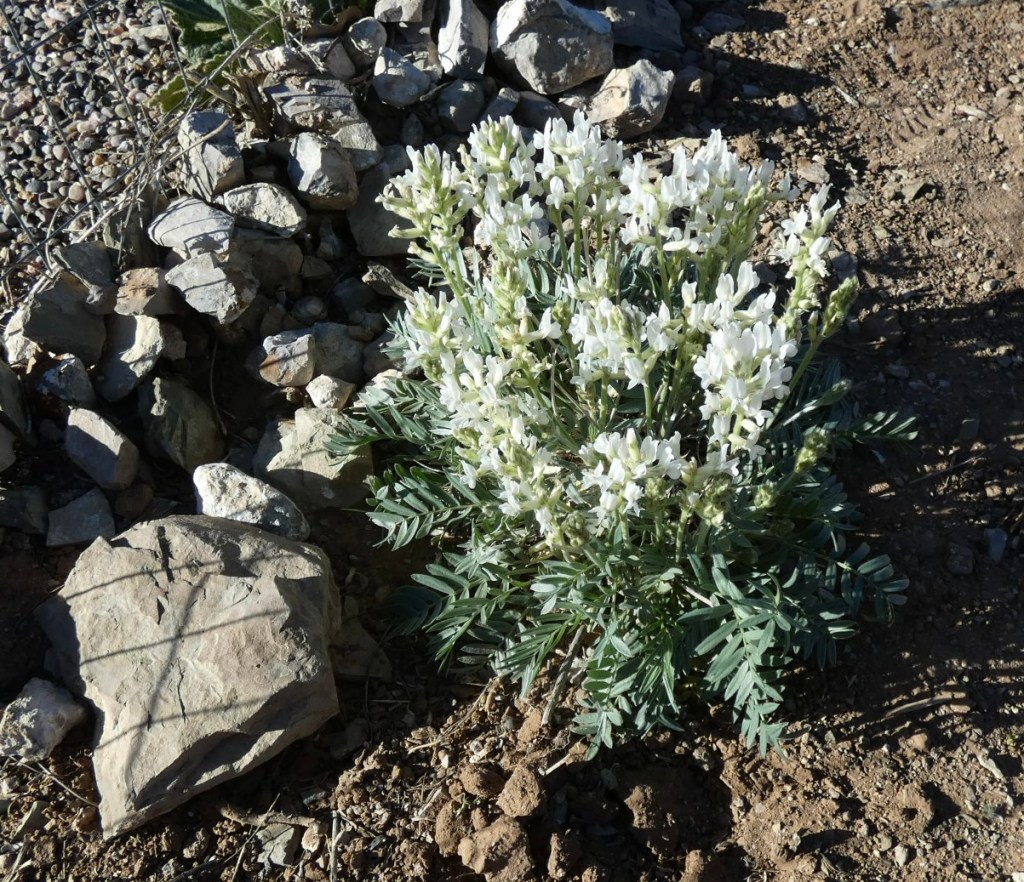
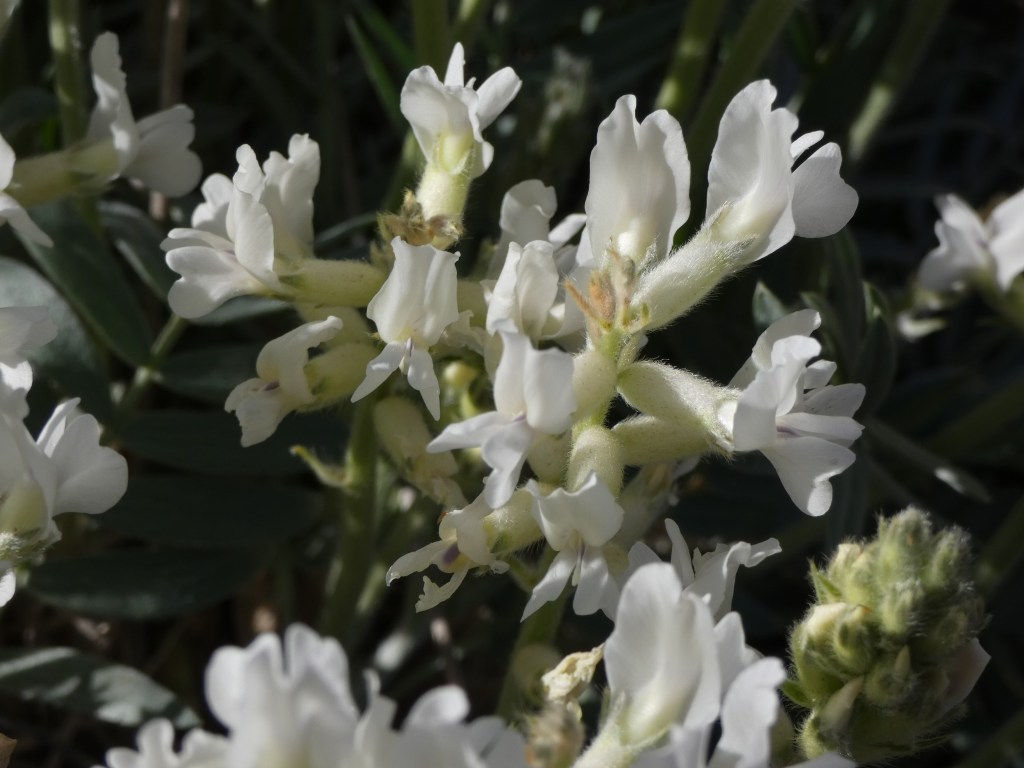
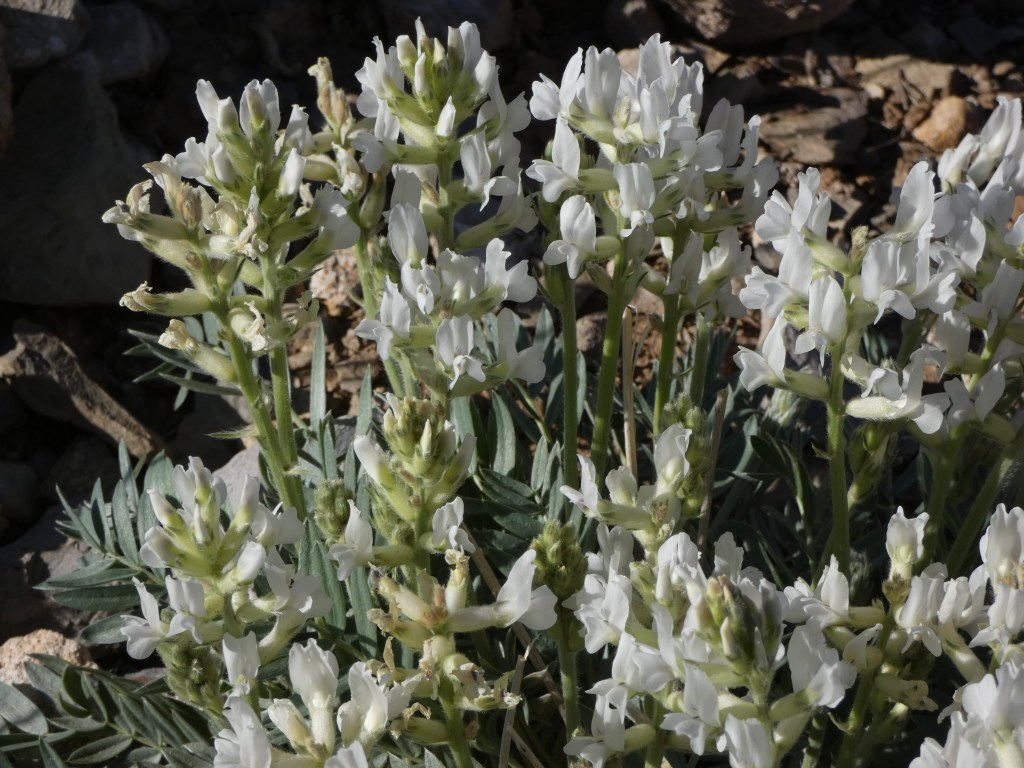
One of the first flowers to bloom in the spring, white-point vetch forms a dense bouquet of brilliant white, pea-shaped flowers that grow on 12 inch tall stalks arising from many basal, soft-hairy compound leaves.
Beautiful to look at ….. POISONOUS if ingested …
….… especially if you’re a cow, horse, sheep, goat, elk or mule deer
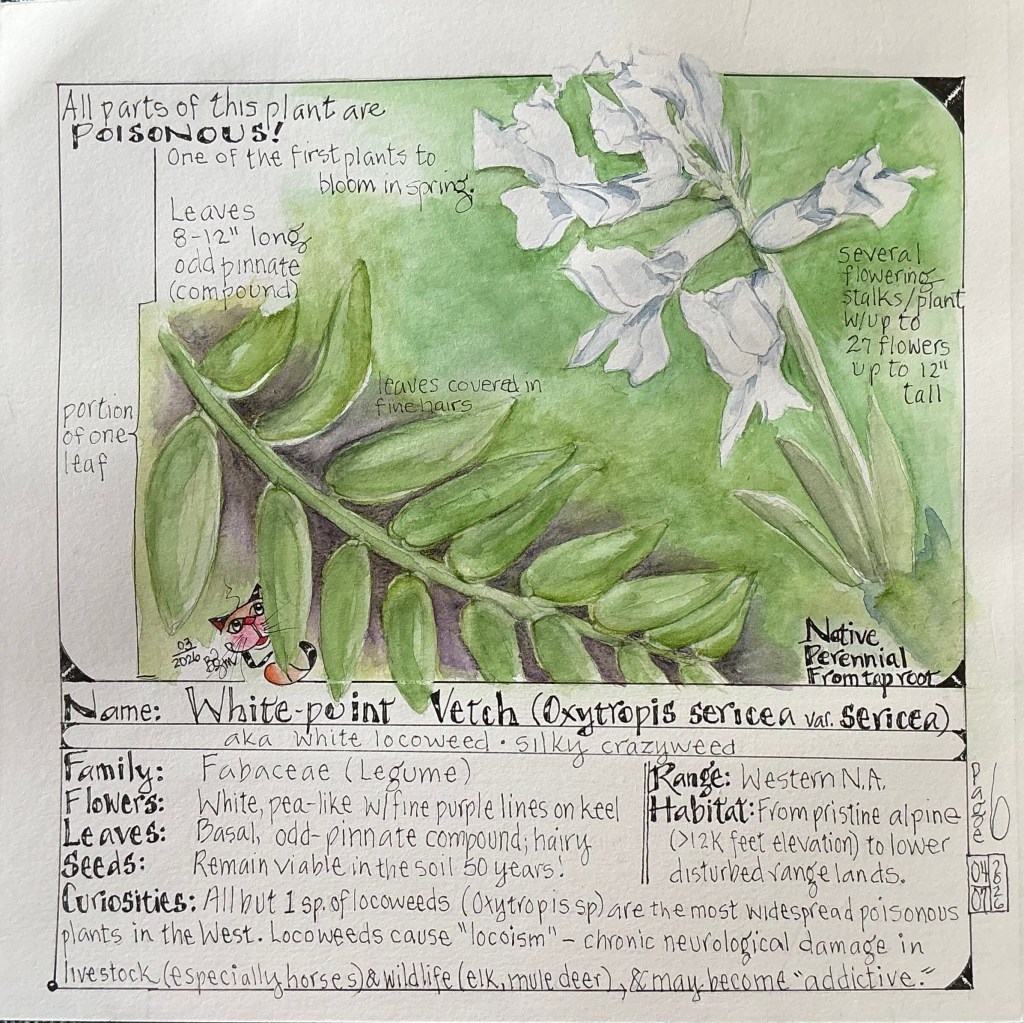
All parts of white-point vetch (aka white locoweed) are poisonous at all times, even when dried. The culprit is an alkaloid toxin called Swainsonine, which inhibits enzymes essential for normal carbohydrate and glycoprotein metabolism in cells. This causes carbohydrates to accumulate in the brain and most other organs preventing normal cell function. Depending on how long the locoweed is eaten, the affected cells can be permanently damaged; one to three months of heavy consumption can cause death. Also, Swainsonine is present in the milk of lactating animals affecting their nursing youngsters.
Are locoweeds naturally poisonous? Well, yes, in a way. But the poison isn’t made by the plant itself. Swainsonine is produced by a fungus (Undifilium oxytropis) that acts as an “endophyte,” happily living between the plant’s cells of certain locoweeds in the genus’ Astragalus and Oxytropis. This fungus, thriving at high elevations on Western US rangelands, coexists symbiotically with the host plant, causing little to no harm to the host locoweed. In fact the host may even benefit from the fungus by receiving enhanced drought tolerance, as well as a “don’t eat me” sign to all hungry ungulates. Meanwhile, the fungus goes about its business of keeping the plant well stocked with Swainsonine. Only the species of locoweed without the endophytic fungus are not poisonous. Review the list at the end of my post to learn which Astragalus and Oxytropis species are known to cause “locoism.” (But the real lesson is to be wary of all species in these two genus’ until you seek expert identification.)
Symptoms of locoism in ungulates: Malabsorption of essential minerals and vitamins in the intestinal tract. Decreased appetite and weight loss. Decreased liver function and damage due to elevated liver serum enzymes. Calves, lambs, and foals may be born with deformed legs. Abortions and fetal death are common. Other general symptoms include depression, blindness, loss of coordination, emancipation, tremors, paralysis, constipation and deterioration of the coat.
Abnormal behaviors emerge, such as sudden changes in temperament, aggressiveness, ataxia, falling over unexpectedly, violent reaction to routine management practices such as putting on a halter or refusing to go through a chute. Horses become very depressed and sleepy, and often show more severe neurological effects of locoweed poisoning than cattle and sheep.
Specific to cattle, the major problem encountered with locoweed poisoning is decreased fertility characterized by lower conception and calving rates; semen fertility of affected bulls is also decreased. In addition, cows and bulls consuming locoweed experience reduced libido, behavioral changes, weight loss, and heart failure. Typical findings in calves are decreased growth rates resulting in lower weaning weights. Some calves may be born weak and die shortly after birth.
There is no effective treatment for locoweed poisoning! Recovery depends on the duration of ingestion and severity of the lesions. Locoed horses are considered permanently affected.
So why do animals eat poisonous locoweeds when other non-poisonous forage is available? One reason is locoweeds are palatable and have a similar nutrient value to alfalfa. Also, they become habituated to eating them from each other. Once one animal starts to eat locoweed others follow. Removing animals that are locoweed eaters from the herd can reduce the chances of other animals ‘learning’ to eat the plant through social observation.
Is the toxin Swainsonine poisonous to humans? While primarily a risk to livestock, unintentional human exposure, usually through ingestion or smoking, can cause hallucinations, severe liver damage, or even fatal poisoning.
From what I’ve read, people seeking to get “high” from Jimson weed (a Datura species), aka “loco weed,” often mistake a true “locoweed,” (like Oxytropis sericea) for the Datura, even though they look nothing alike. As they begin smoking the leaves or any other part of O. sericea, they can experience severe and rapid hallucinations, delirium, intense paranoia, psychosis, anxiety, agitation and disorientation as their heart races, pupils dilate, vision blurs, and a high fever sets in. Chronic ingestion inhibits cellular enzymes, potentially leading to long-term neurological impairment, reproductive dysfunction, and severe organ damage.
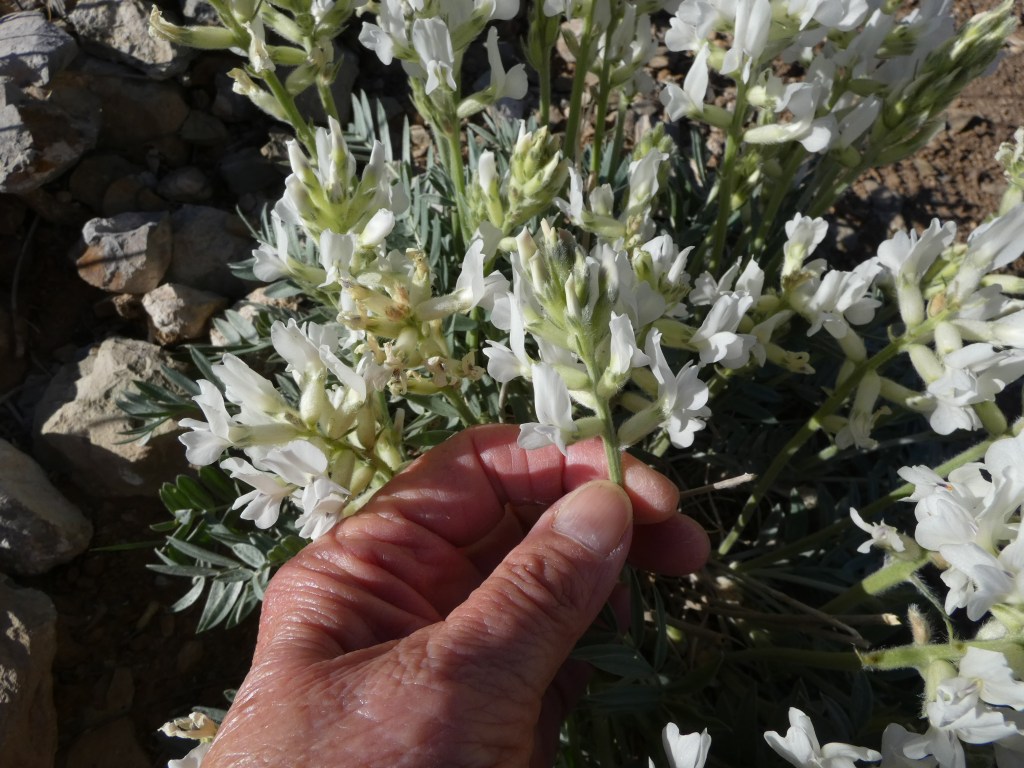
My hand carefully holding a flower stalk. This shows just how large the flowers are. Notice there are quite a lot of buds present at the flower stalk tip. (I did wash my hands after handling the plant)
………………………………………………………………………………………………
Well, that’s a lot of scary stuff! Let me end my post with something light-hearted and laughable from the Wild Wild West — something unbelievably crazy involving the extreme measures that were taken by Colorado ranchers during 1881 to 1885, to prevent their livestock from dining on poisonous locoweed.
Locoweed—The Most Infamous Plant of the Southwest!
As early as the 1800s, livestock growers in the west considered the presence of “weeds” (whether native or non-native) on rangelands an unwelcome nuisance, especially if they outcompeted the growth and availability of “desirable” plants (forage) needed to feed their herds. And if a tasty “weed” or two turned out to be poisonous to their livestock, then its elimination was critical. This was the case with white-point vetch, aka white locoweed (Oxytropis sericea), and its close relative, purple locoweed (O. lambertii), both native perennial species found throughout the intermountain west. Ranchers in the late 1870s were shocked by the skyrocketing deaths of their livestock that were eating locoweed. And in Colorado, ranchers demanded action.
This is a true story of locoweed, the first “weed” for which the 1880s Colorado legislature enacted radical management regulations; the first “weed” where detailed steps were laid out to not only control locoweed, but eliminate all signs of this poisonous plant from Colorado rangelands.
The following is an excerpt from an article written by Charles Bryant, Huerfano County’s (Colorado) Noxious Weed Manager, and printed in “The Learning Ledger” on June 2, 2025.
A young bouquet of White-point vetch was nearly 10” tall, with more growth expected.
One of Colorado’s Most Loco Laws ………
….. the ‘Loco’ or Poison Weed Act of 1881
“At the time of enactment, Colorado had been a state for less than five years and was the epitome of the “Old West,” with the livestock industry being one of the primary drivers of the newly-formed state’s economy. Because of the impact locoweed was having on the health of livestock by 1881, Colorado legislators became preoccupied with the native Oxytropis species.
“The 1881 “Loco or Poison Weed Act” (Act) allowed citizens to “dig up not less than three inches below the surface of the ground any ‘loco’ or poison weed during the months of May, June or July and shall receive a premium of one-half cents per pound for each pound of such weed dug up, to be paid out of the state treasury as hereinafter provided; provided, that such weed shall not be weighed in a green state, but shall be thoroughly dry when weighed.”
“The Act went on further to describe how locoweed bounty hunters of the state were to deliver their dried loads of locoweed to their county clerk within two months of their digging. Upon delivery to the clerk of the county where the weeds were gathered, the clerk was to weigh the load and require those seeking reimbursement to sign an oath stating: “I do solemnly swear that the weed here produced by me this day is ‘loco’ or poisonous weed of X amount of pounds, dug up by me within two months last past.” Upon the recitation of this somber oath the county clerk was to “forthwith destroy such weed by burning” and issue a certificate for payment that was to be paid by the county, with the county later being reimbursed from the state treasury after their submission of an annual report that detailed the amount of locoweed gathered and to whom bounties were paid.
“By 1885 it became glaringly apparent that the locoweed bounty program was unsustainable, to say the least, and rife with fraud. The February 12, 1885, edition of the Rocky Mountain News lambasted the “loco industry” and pointed to the handsome sum of $8,727.27 that had been paid out in one month alone to El Paso County, equivalent to over $283,333 in today’s dollars. The coverage went on to question how over half a million pounds could be collected in El Paso County in a month, and stated that the monthly locoweed bounty expenditures for El Paso County matched the total monthly operating cost of the Colorado State Penitentiary. Only six days after this scathing review, Colorado legislator Rep. Abraham Bergh of Park County led the repeal effort of the Act, and the state finally did away with perhaps one of the most “loco” laws to ever be enacted in Colorado.”
Are you familiar with your local locoweeds? If so, I’d love to know which species you’ve encountered and if they’re on the list (below) of those known to cause locoism?
After learning more about the poisonous nature of locoweeds, next time you discover one, will you think twice before handling the plant? (And please, if you do, be sure to wash your hands!)
Hope you enjoyed this post! Thanks for stopping by!
Astragalus and Oxytropis species known to cause locoism: Astragalus lentiginosis (spotted loco), A. mollissimus (woolly, purple loco), A. wootonii (Wooton loco), A. thurberi (Thurber’s loco), A. nothoxys (sheep loco), A. dyphysus (blue loco, rattlewood), A. earlei (Earle’s loco), A. argillophilus (half moon loco), Oxytropis sericea (white-point vetch, white loco), O. lambertii (purple point loco), O. bessyi (Bessy point vetch), and O. campestris (field loco).
(I’m thinking that just because these species are known to have the poisonous toxin Swainsonine, it might be best to err on the side of caution and treat Astragalus and Oxytropis species as suspect? Do you think so too?)
References