Sunflowers!🌻 Absolutely the happiest flower on Earth. Wouldn’t you agree?
Sunflowers, a symbol of adoration, loyalty, and longevity, represent happiness, friendship, and intelligence. Much like the sun, sunflowers reflect vibrancy and an energy of life. While National Sunflower Day is the official day to celebrate these beautiful flowers, why not declare the entire growing season reason a-plenty to radiate your inner sunshine and mirror the smiling faces of every sunflower encountered!
Then and Now
Did you know sunflowers have been around since about 1000 BCE? In the U.S. indigenous peoples used sunflowers as a valuable food source, for oil, paint, and textiles, and during ceremonies. Some archaeologists even believe sunflowers may have been cultivated before corn. Today, sunflowers are still used for food (seeds, salad mixes) and beverages (tea), cooking oil, in beauty and skin care treatments, for medicinal purposes, and for hobbies and crafts.
Annual Sunflower over 6 feet tall!
The sunflower crop
The U.S. is a mass producer of sunflowers, particularly in the plains states, and is a major crop in both North Dakota and South Dakota. The average cultivated sunflower plant is five to six feet tall, and the central face of disc flowers can grow bigger than a human head. As the weight of the sunflower head becomes heavy, it begins to fall forward causing the petals to fall off. Shortly after the harvest begins. On average, one sunflower can produce up to 2,000 seeds per head. In 2022, North Dakota produced 762 billion pounds of sunflower seeds!
The Happiest and the most Intelligent flower
Have you ever noticed sunflowers track the sun, from sunrise to sunset? It’s true! Sunflowers follow the sun’s movements throughout the day. You may notice that before sunrise, a sunflower is in sort of a sleeping position with its head slightly down. As the sun comes over the horizon, the flower awakens and slowly lifts its face to ‘look’ directly at the rising sun. As the day progresses and we observe the sun moving from east to west, so too does the sunflower by turning its face in sync with the sun’s apparent movements until sunset.1 When the sun sets in the evening, sunflowers nod off to sleep, but not before untwisting themselves and slowly return to face the east. Ingenious!
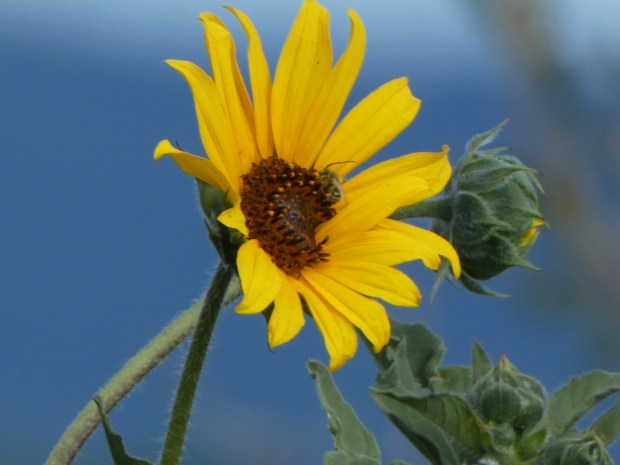
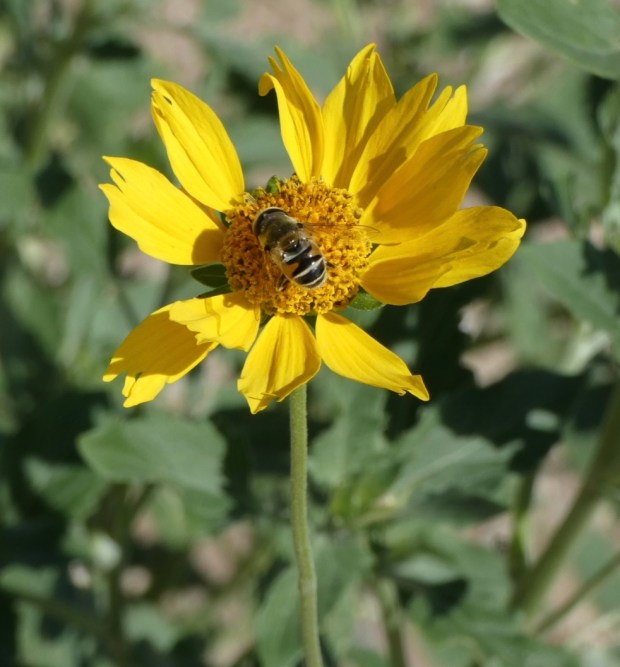
This charmer is called Cowpen Daisy
1 However, on very hot days, sunflowers tend to avoid looking directly at the sun to keep from overheating. And I’ve noticed on cloudy days, sunflowers may appear confused about the sun’s location, seeming to make their best guess on which way to face.
A season of yellows and oranges
Although you can find flowers in the Aster (sunflower) family in the Spring, August is the peak growing and blooming season for these cheerful plants. Brilliant displays of yellow flowers welcoming the morning sun can be found wherever sunflowers grow. Witnessing fields of sunflowers is guaranteed to lift your spirits as you oooooh and aaaaaaaah at their breathtaking beauty.
A trio of cowpen daisies
Ideas to celebrate a day, week, month or year of sunflowers
Spend a day with a wild sunflower and watch its face track the sun.
Take a drive to view fields of sunflowers to see their true beauty in mass.
Give a bouquet of sunflowers to a friend to brighten their day.
Add sunflower petals and seeds to your salad.
Create a painting of your favorite sunflower and frame it to enjoy year-round.
Try your hand at a Zentangled sunflower bouquet ….. there are as many pattern possibilities as there are blooming sunflowers!
Plan a road trip to North Dakota in August and coordinate places to stop to visit sunflower fields and get updates from local farmers who cultivate sunflowers.
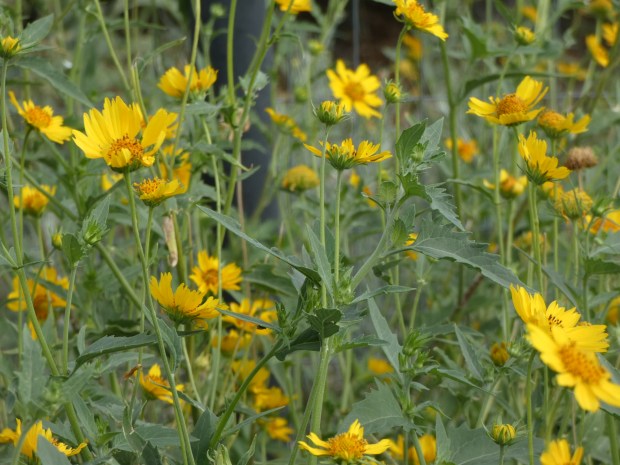
A collection of cowpen daisies in my backyard.
If you missed celebrating this year’s National Sunflower Day, no worries! Every time you come across any sunflower, of any size, anywhere, pause and hold a personal celebration in honor of its splendiferous magnificence!
As always, thanks for stopping by!
Sunflower photos were taken in our backyard ….. all volunteers too!
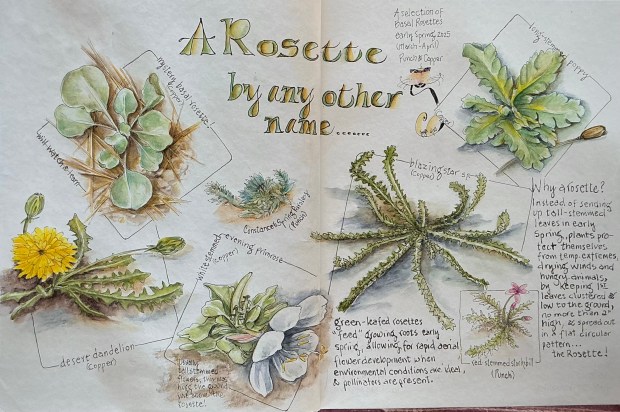
A selection of basal rosettes that popped out of the ground this Spring.
Have you ever noticed a dandelion? Oh sure …… you’ve seen hundreds, probably thousands of those ubiquitous sunburst yellow flowers blanketing a lawn or brightening an abandoned field. But before all that brilliance magically appears, have you ever looked below all those flower stalks? Have you ever noticed a dandelion before it blooms?
It’s early Spring in the mountainous areas of central New Mexico, and it seems like the high desert is slow to bloom this year. Anxious to spot even a hint of green during this transition time is always challenging, but if you look closely …….. Tucked beneath dry grasses and piled-high tumbleweed skeletons wedged next to swelling cholla you’ll find the green. Clusters of new leaves hugging the ground no more than an inch high, are beautifully arranged in a circular pattern like the unfolding petals of a rose.
Rosettes!
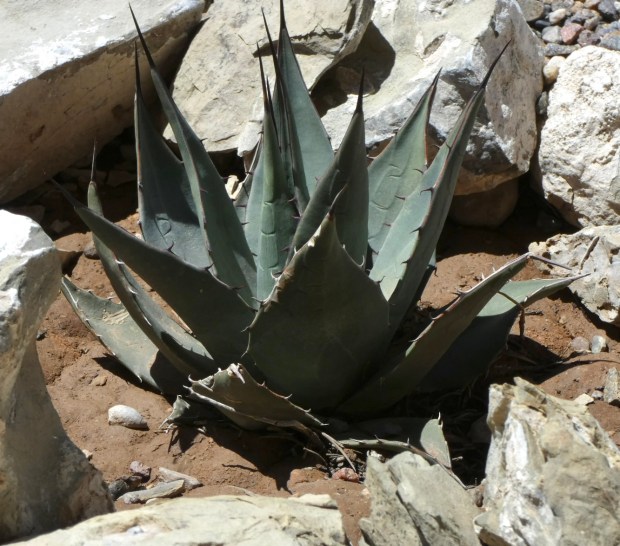
Rosette arrangements are found throughout nature,1 but in the flowering plants they are particularly common in the following families: Asteraceae (like dandelions), Brassicaceae (like cabbage), and Bromeliaceae (like pineapple). Many other families display the rosette morphology too. The needle sharp leaves of yucca and the bayonet-shaped leaves of century plant (in the Agave family) form tall rosettes. The intricate leaves of wild spring parsley (a tiny member of the Parsley family) and the petite red-stemmed stork’s bill (Geranium family) both form ground-hugging rosettes.
A century plant displaying a beautiful basal rosette.
Where Rosettes Form
Basal Rosettes grow close to the soil at or near the plant’s crown (the thick part of the stem where the roots attach). Their structure is an example of a modified stem in which the internode gaps between the leaves do not expand, ensuring all the leaves stay tightly bunched together and at a similar height. A protective function of a basal rosette makes it hard to pull from the ground; the leaves come away easily while the taproot is left intact (have you ever tried to pull a dandelion without snapping off the root?). Generally speaking, basal rosettes improve a plant’s odds at survival. For example, overwintering rosettes, like the basal leafy growth produced in year #1 of the 2-year life span of giant mullein, protect the plant and its roots from extreme cold temperatures. Emerging Spring rosettes, like those found in long-stemmed poppy, also protect the plant from late winter frosts. Basal rosettes are also more protected from changes in microclimate, gravity, wind, browsing, and mechanical damage if they are closer to the ground than tall leafy stems would be. help in water balance and conservation, especially important during periods of drought.
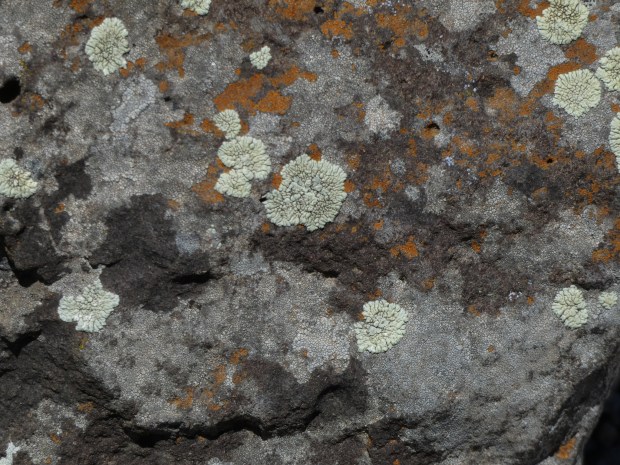
Lichen that has form small rosettes on rock.
But don’t only look down. Another form of rosette occurs when the internodes (those areas between leaves) along a stem are shortened, bringing leaves closer together as in lettuce and some succulents.2. And although not as common as basal rosettes, some plants form rosettes at the terminal or top end of their often naked stems, branches, or even trunks. One plant that does this is the native sedum called wild stonecrop. The top of the plant stems usually terminate in whorls or three fleshy leaves. Another example is the Hawaiian screwpine, which has a terminal rosette of sword-shaped leaves which sits atop an erect trunk, often supported by prop roots.
Know Your Local Rosettes
A number of desirable and undesirable (weedy) plant species produce rosettes, particularly basal rosettes. Being able to identify a species that pops up in the Spring by its rosette is so helpful in preventing a removal mistake by inadvertently digging them up. Many weedy, non-native plants gaze first at their world through rosette “eyes.” But not all plants with rosettes are undesirable. Do you know your local rosettes by their other names?
………………………………………………………………
1Rosettes are found throughout nature, not just in the flowering plants. Here’s some examples you may have seen or heard of:
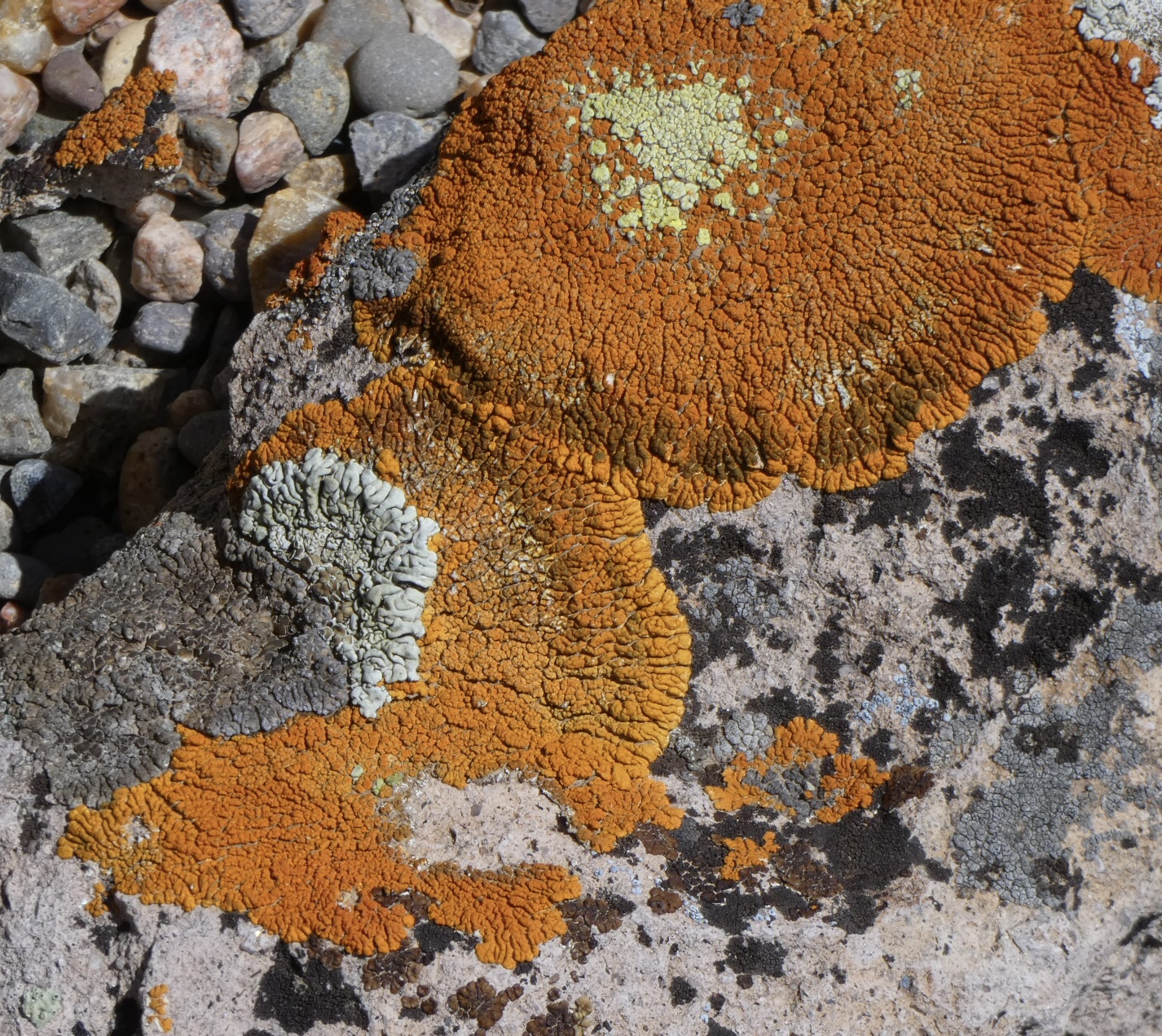
In bryophytes and algae, a rosette results from the repeated branching of the thallusas grown by plant, resulting in a circular outline. Lichens also grow rosettes.
Tiny wasps and midges can induce the development of galls that become leafy rosettes.
Jaguars, leopards and other feline species display rose-like markings on their fur, referred to as rosettes.
Malaria parasites are known to form spontaneous rosettes in uninfected red blood cells.
Neural rosettes in the human brain are being studied to learn how new cells are born.
It is unknown why the Rosette-Nosed Pygmy chameleon, at home in the mountains of Tanzania, has evolved a distinctive, rosette-shaped, fleshy protrusion on the end of its nose.
The Rosette nebula, named for its rosette-like appearance, is a beautiful collection of gas and dust 5,200 light-years from Earth in the constellation Monoceros the Unicorn, and stretches about 130 light-years across.
A gorgeous lichen decorated rock from Colorado. Note the rosette patterns of growth (the thallus)
2 The horticultural definition of a succulent describes a drought-resistant plant where the leaves, stems, or roots have become fleshy and their tissues are able to store water. Succulents include aloe, euphorbia, sedum, the garden favorite hen-and-chicks, and bromeliads. But horticulturalists do not include cacti in the succulent group. huh? Even though cacti are frequently found in books describing succulents based the definition of a succulent, succulents are not cacti. In agreement with that last statement are many botanical and other scientific experts. (Can this get any more confusing?). So basically some experts are lumpers, while other are splitters. Which are you?
Basal rosette of a yucca in the NM foothills.
P.S. Cacti have stems that are thickened fleshy water-storing structures, and are considered to be a stem-succulent group of plants. Are there any cacti species that develop leafy rosettes? Because the spines are the leaves, greatly modified, in all my rabbit-trailing thru the internet and perusal of my collection of botanical references I’ve yet to see any spines forming whorled/rosette-like patterns. If you have, please contact me immediately!
……………………..……………..😂…………………………………………
Are you ready to explore the wide diversity of rosette forming plants in your neighborhood? Get on out there before those circularly-arranged leaves become disguised by an overabundance of gorgeous wildflowers!
As always, thanks for stopping by! And Happy Earth Day (week)!
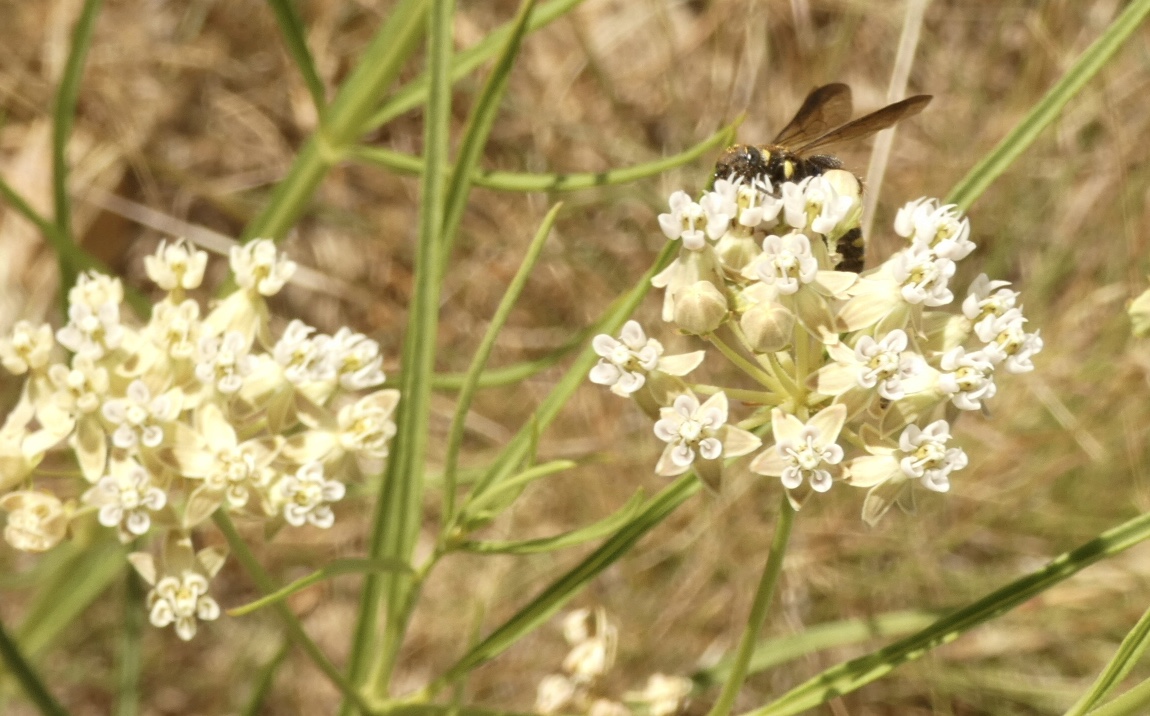
Wandering about the neighborhood one warm summer morning in 2018, I noticed a dense stand of plants lining a 20 foot section of road. What caught my eye were the umbrella-like clusters of pearly white flowers topping each slender stem. From a distance these plants resembled our native white-flowering yarrow. But I soon realized the narrow dark green leaves were not fuzzy; the tiny exotic-looking flowers were not daisy shaped. Unmistakably, this plant was a species of milkweed! And the flowers of more than 50 individual plants in this population were a-flutter and a-buzz and a-crawling with hungry insects!
What was this milkweed species?
This is the Winter Botany portion of this post. All that remains of last summer’s Horsetail Milkweed are stems and mostly empty seed pods clinging to short branches. But some of the seed pods still hold silky tailed seeds clinging to their open pods. Hundreds of seed pods line the roadways in our neighborhood.
It didn’t take long to confirm this plant as Horsetail Milkweed (Asclepiassubverticillata), a species commonly found along roadsides in pinyon-juniper woodlands. Knowing what to look for on future walks, over the next several years I was excited to find 30+ more populations of various sizes along neighborhood roadways! From 2018 until early summer 2024, I continued to monitor these seemingly abundant populations. The small numbers of seeds I collected in the Fall were planted in our yard, and every year I checked for the presence, variety and numbers of insects busy feeding on nectar as they pollinated the flowers.
During June 2024, when we moved only a few miles to the northeast, I was happy to see Horsetail Milkweed grew abundantly in our new subdivision. This prompted me to dig deeper into researching this species. Its been exciting to discover how important this milkweed is to native insects, including monarch and queen butterflies.
Photo (mine) taken in July 2022 of a blooming Horsetail Milkweed being enjoyed by a feeding wasp.
According to pollination ecologists, Horsetail Milkweed is especially valuable to large numbers of native bees. This plant species also supports conservation biological control by attracting predatory or parasitoid insects that prey upon pest insects.
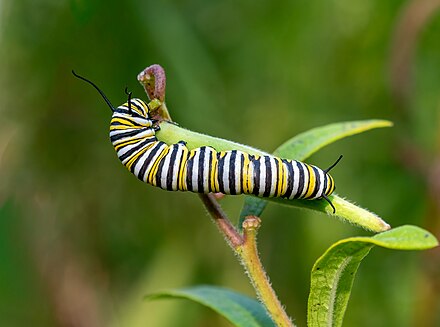
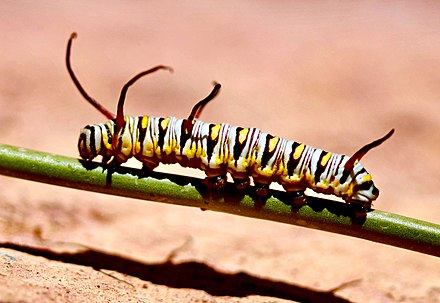
And Horsetail Milkweed is one of the favorite host plants for monarch and queen butterflies, all because it’s toxic! Producing an especially nasty tasting and potent neurotoxin strong enough to kill livestock, the caterpillars of these two butterflies have evolved to benefit from such a poisonous substance. Voraciously ingesting a diet of only milkweed leaves, obviously tasty to the larvae, makes them unpalatable to would-be predators, such as birds. The toxin from milkweed leaves has become their primary means of defense; definitely a benefit for such chubby, slow little caterpillars.
Monarch caterpillar (source: open commons)
Although central New Mexico isn’t in any of the major migratory routes of these butterflies, I have observed both species in our previous neighborhood. Since learning more about Horsetail Milkweed and it’s favored roadside habitat close to home, my hope is to provide actively growing plants throughout the summer (a safe distance away from roadside easements) for both the monarch and queen adult butterflies and their caterpillars ……. especially important when governing covenants of our previous and new subdivisions require the roadways be groomed (mowed down like a butch haircut!) on a monthly basis by subdivision landscape crews.
Because milkweeds are among my favorite of all plant species, mainly due to their complex flowers and the clever trickery they’ve developed to ensure pollination, I wrote about and illustrated two in-depth blog posts on this subject. Believe me when I say, “It’s overboard fascinating!”
Summer Botany: Meet the Milkweeds from July 2022. This is my first comprehensive look at milkweed flower structure, how pollination takes place, and the genus Asclepias.
Read on to learn more botanical information about Horsetail Milkweed AND how to find out if you live in Spring and/or the Fall Migration routes of the monarch butterfly AND where queen butterflies migrate to and from.
Characteristics and habitat requirements of Horsetail Milkweed
Horsetail Milkweed is a perennial species with a stout, woody rootstock. Plants readily spread by rhizomes (underground stems) producing dense communities. Cold-hardy to at least 0℉, this milkweed bounces right back in the Spring. Plants are also drought-tolerant once established, thriving in well-drained, sandy soil under full to partial sun.
Able to thrive in a variety of habitats and plant communities from 2500 – 8000 feet in elevation, Horsetail Milkweed grows among grasses, on sandy or rocky flats, on slopes, roadsides, and along trails in Chaparral, Semidesert Grasslands, Pinyon-Juniper Woodlands, Montane Conifer Forests, and in disturbed areas.
All of these characteristics and its adaptability to a wide range of habitats make Horsetail Milkweed one of the easiest milkweed species to grow.
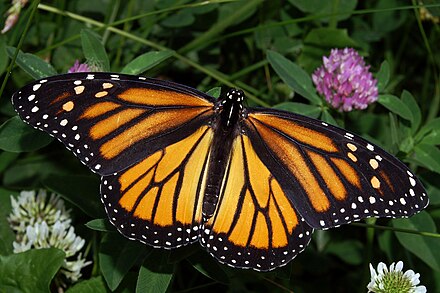
Monarch butterfly (source: open commons)
Monarch Butterfly
To learn if you live within the path of or close to spring and/or fall monarch butterfly migration routes, you can view a map or these route here:
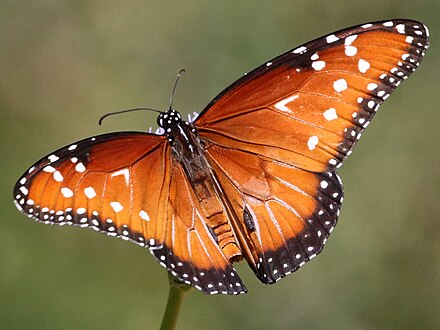
The queen is chiefly a tropical species. In the US, it is usually confined to the southern portion of the country. It can be found regularly in peninsular Florida and southern Georgia, as well as in the southern portions of Texas, New Mexico, Arizona, and California. Occasionally, the subspecies of the queen can be found somewhat north, in Kansas, Colorado and Utah.
Queen butterflies do not migrate as dramatically as monarch butterflies, but they do move short distances in tropical regions with dry seasons to higher elevations.
Winter can be challenging for nature journalers. Getting outside when it’s cold and windy, cloudy and dreary, snowy, icy or wet, are not ideal weather under any circumstances. And when everything looks brown and crispy and pretty much the same, the challenge to nature journal in the great outdoors grows exponentially. While these conditions make it difficult for spontaneous observing, I try to remember there’s always something remarkable to be discovered in nature, even in winter.
Who knew a little whack on the head would be just the thing to reawaken my curiosity?
Bundled in layers, leash in hand, Luna led me on her early morning walk around suburban Albuquerque. Having been along this route before, we’ve both made some interesting discoveries in the past. And as usual, this time was no exception for Luna. For me though, everything appeared brown, crispy and familiar. But I was inspired by and enjoying Luna’s sense of curiosity, and her encouraging tug on the leash.
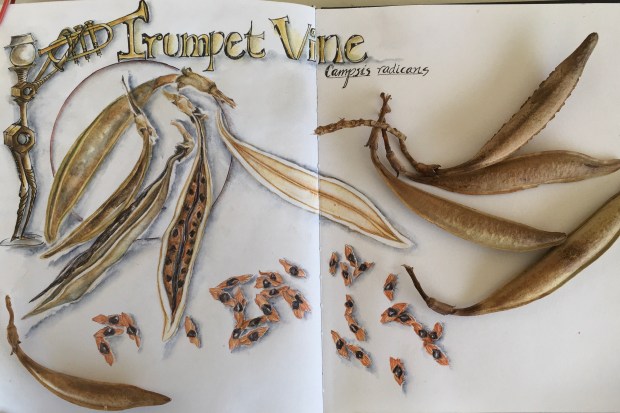
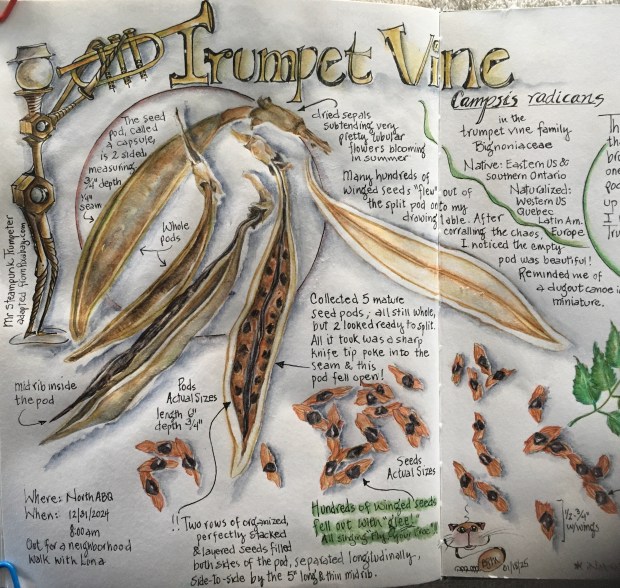
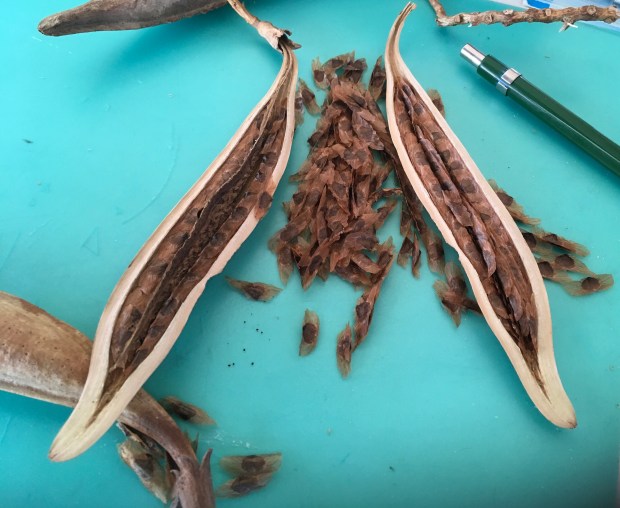
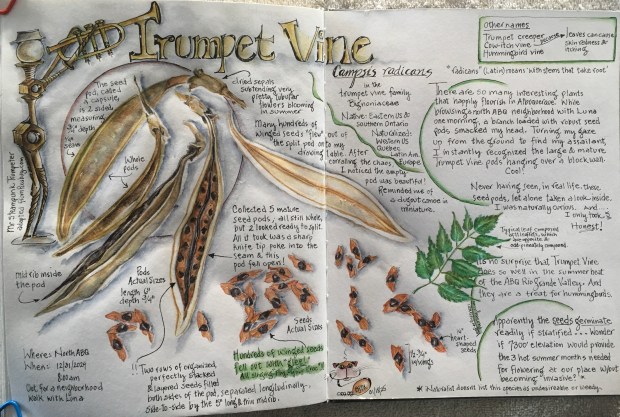
Nearing the end of our 2-1/2 mile walk, and mightily concerned I’d go home empty handed, we turned our last corner. It wasn’t 100 feet down the cement block-lined sidewalk that I abruptly stopped in my tracks. Something had lightly whacked me in the head! While the sound of rhythmic clacking rang out, I looked up, and to my surprise spotted the accidental assailant. Draped over the 6 foot wall, suspended from a hearty Trumpet Vine (Campsis radicans) growing in the hidden yard beyond was a string of pods resembling brown green beans. Long and plump and full of seeds, one of these pods had reached down low enough to make contact with to my head. (I say “reached” because that’s what my imagination said had happened.) Quickly awaking my sleepwalking brain, the effort made by the seed pod to get my attention paid off too. Silently whispering, “Pick me! Pick me!” it was as if the seed pod and its adjacent buddies either wanted to be harvested, or wanted to be featured in my nature journal (or both).
So I did ………… both!
I loved learning about and sketching these fascinating Trumpet Vine seed pods, while my mind was filled with the muffled notes of a trumpet. Tooo-too-too-toooooom!
Hope you enjoyed reading this story and browsing around my journal pages.
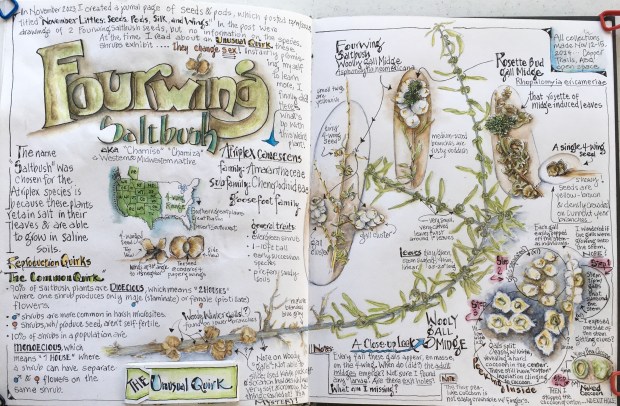
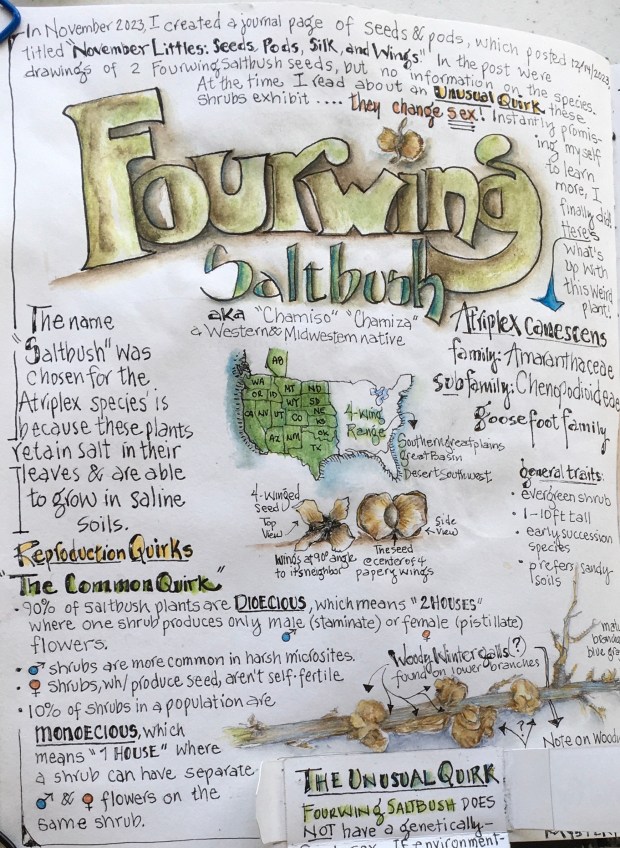
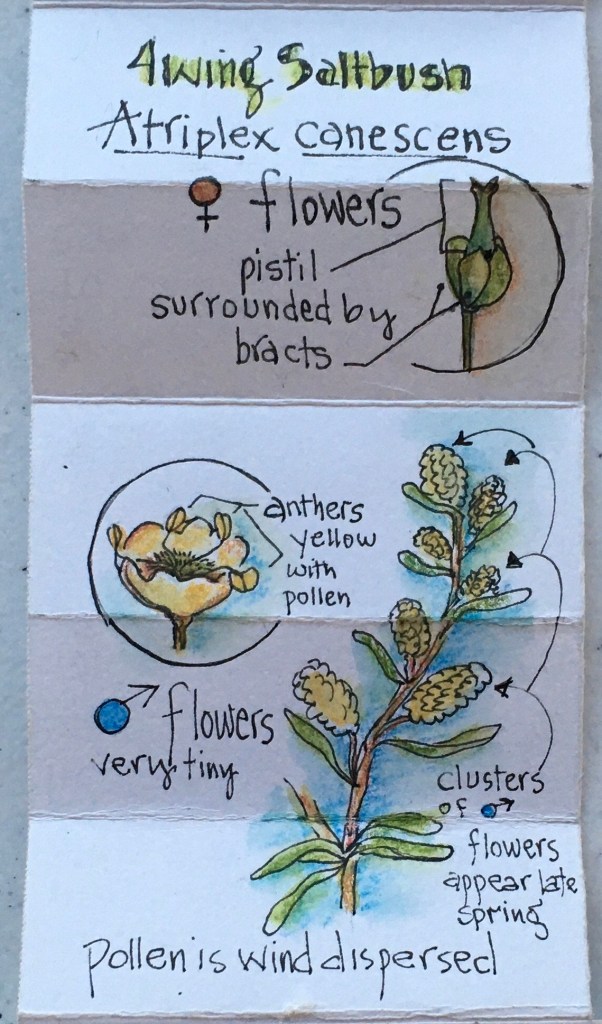
In November 2023, I created a journal page of seeds and seed pods, which posted on 12/14/2023, under the title November Littles: Seeds, Pods, Silk, and Wings. On that page was a small drawing of two Fourwing Saltbush seeds, absent any information about this plant species, Atriplexcanescens. At that time I remember finding a wealth of articles and research documents about this widespread shrub, but what really stuck in my mind was a very unusual quirk exhibited by this plant. Finally, a year later and WOW! I discovered Fourwing Saltbush has a reproductive superpower …… this species has the ability to change sex!
An Unusual Quirk
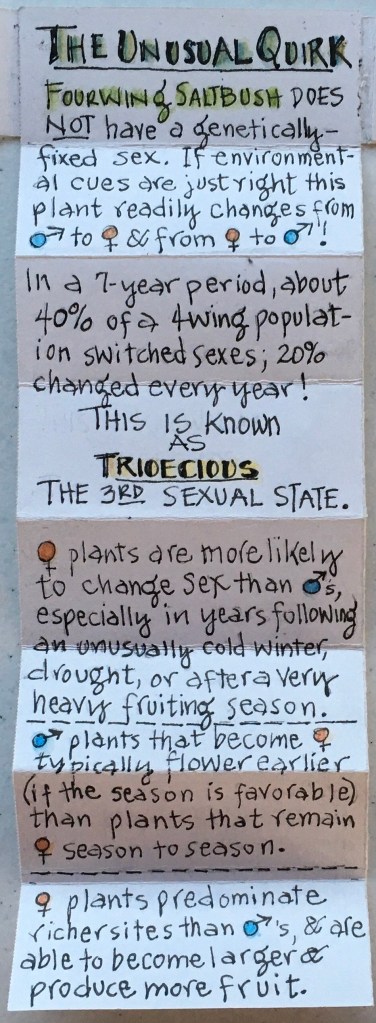
My first dive into the literature revealed that within a 7-year period of time, 40% of a Fourwing population switches sexes with 20% of a population changing sex every year. Botanically, this is known as Trioecious, or the 3rd Sexual State.
But clearly a bit of back peddling is needed ……. if Trioecious is the 3rd Sexual State in plants, what about the 1st and 2nd sexual states, huh? Yes, they exist …….. but before explaining them, which requires comparison with the more common sexual state in plants, I must describe this sexual norm.
And now for a little Botany 101 ……..
The Sexual Norm …… Plants with Perfect or Complete Flowers
You are likely familiar with plants like roses, tulips, lilies, garden strawberries, beans, peas and cabbage. If you’ve closely examined their flowers while inhaling their fragrant aromas, you may have noticed their centers have both female and male parts. These are known as plants with Perfect or Complete flowers (aka hermaphroditic or bisexual) defined by each individual flower having a fully functional pistil (the female part) and stamens (the male parts). Worldwide, about 90% of flowering plants have Perfect or Complete flowers.
Monoecious ….. the 1st Sexual State
Here again you are likely familiar with many plant species described as Monoecious (moh-NEE-shuhs). These include corn, all of the plants in the gourd family (i.e. cucumber, squash, watermelon), oak, birch, pine, spruce and dogwood. Monoecious, which means “one house” in Greek, describes plants having separate female and male flowers in different places on the same plant, often blooming at different times. Visualize corn growing in a field; the tassels are the male (staminate) flowers, and the corn kernels you eat are the female (pistillate) flowers. Around 10% of all flowering plant species worldwide are Monoecious.
Not to confuse the matter, but sometimes botanical experts refer to Monoecious species as Perfect or Complete because they have both male and female flowers on the same plant, even though these flowers are separate and considered sexually Incomplete (aka unisexual) by themselves.
Dioecious ….. the 2nd Sexual State
A plant species with individual plants in a population having only female flowers, and individual plants of the same species in the same population with only male flowers is called Dioecious (dahy-EE-shuhs). This Greek word meaning “two houses,” describes plants such as spinach, asparagus, sumac, currant, box elder, willow, holly, ginkgo, juniper and aspen. Only 5% of all flowering plant species worldwide are Dioecious.
Another confusing matter once again. There are botanical experts that refer to plant species with Perfect or Complete flowers as Dioecious because they require cross-pollination to produce seeds (fruit). Tree fruit species such as apples, pears, cherries and plums are common examples.
Trioecious ….. the 3rd Sexual State
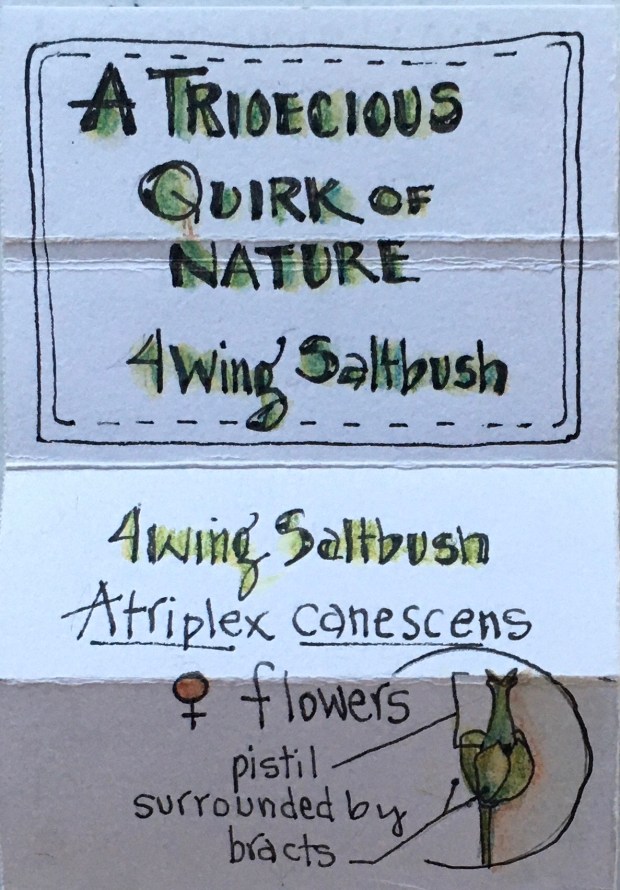
An extremely rare reproductive strategy among flowering plants, Trioecious (aka trimonoecious or “three houses”), is characterized by a species that can have Incomplete (unisexual) male, Incomplete (unisexual) female, and Perfect or Complete (bisexual or hermaphroditic) male/female flowers on separate plants in a population or even all on the same plant! Just over 3% flowering plant species worldwide are Trioecious (trahy-EE-shuhs).
This is where Fourwing Saltbush (Atriplexcanescens) enters the story
Primarily a Dioecious species, some Fourwing Saltbush populations have a Monoecious component ranging from entirely male (staminate) or female (pistillate) individuals to those that are Perfect or Complete (hermaphroditic or bisexual). And in this Dioecious–Monoecious–Hermaphroditic gender system, referred to as Trioecy, switching sexes occurs. To reiterate from an earlier paragraph, on average, in a 7-year period, about 40% of a Fourwing Saltbush population switches sexes with 20% changing from male to female or from female to male every year.
Reasons Behind and Benefits of Fourwing’s Sex Change Phenomenon
Fourwing Saltbush has evolved to be one of the most adaptable plant species found throughout central and the western US. It grows from sea level to 8500 feet elevation, and in a multitude habitats within a wide range of plant communities, no matter the successional stage. Fourwing can adapt to all soil textures, soil depths and all but the wettest of soil conditions. The species is able to tolerate hot (+100F) and dry (6” precipitation annually) summers, and bitter cold (-50F) and dry winters.
The ability of the species to adapt to such a wide range of physical and climatic conditions is, in part, due to this sex change phenomenon. Environmental stressors seem to be the major triggers resulting in Fourwing plants switching sexes. Female plants are more likely to change sex than male plants, especially following a drought, an extremely cold winter, or after a heavy fruiting season. Because fourwing is so tasty as range forage, overgrazing can also trigger a sex change, with male plants tending to dominate regularly grazed sites. Male plants that change to female typically flower earlier than plants that remain female season after season. And female plants dominate richer sites than do male plants, becoming larger and producing more seed.
Undoubtably there’s more environmental stressors, such as wildfire and other climate change-induced factors, that may result in Fourwing Saltbush to switch sex. I’ll be curious to learn what they are and how these triggers influence the adaptability and survivability of this robust species. And I’m excited get busy marking this season’s female and male plants that we see nearly every day, and will begin more closely observing these populations for gender changes and possible stressors that may have triggered these switches.
A Retrospective and Thoughts on Prospective Studies
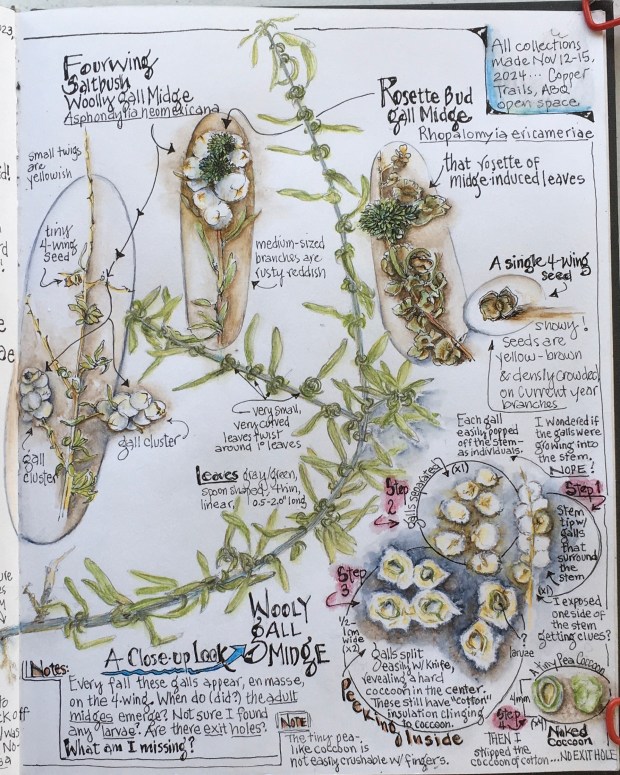
There’s so much to learn about Fourwing Saltbush that it seemed logical to tackle one characteristic at a time. Originally I had planned to discuss both the plant’s reproductive quirk and several of its common galls, but found there would be too much information for one post. While deciphering the complexities of the Fourwing’s sex change abilities, I found it necessary to describe certain key botanical terms in my buildup to the crucial piece of the puzzle ….. the Trioecious reproductive strategy. So this post focused on the first of my two journal pages; my beginning exploration into this plant. The galls illustrated on my second journal page, that could not be easily chopped away from the first page, serve as a preview of a future post about the fascinating Fourwing Saltbush.
And Finally ……….
For a shrub I used to describe as a messy tangle of branches haphazardly cloaked with unremarkable features like dusty little grey-green leaves, nearly invisible flowers, shreddy dull grey trunks and a chaotic canopy, Fourwing Saltbush has captured my imagination, respect, and love as an almost invincible survivor of our changing world!
Hopefully you found this interesting and informative. Bet you never look at flowering plants in casual ways again. Let me know if you are familiar with Fourwing Saltbush. Where does it grow? Have you ever marveled at the thousands of winged seeds densely crowded at the tops of these shrubs? And then satisfied an irresistible urge to strip dozens of skinny branches of those ripe seeds, tossing them in the air like confetti? If so, please share.
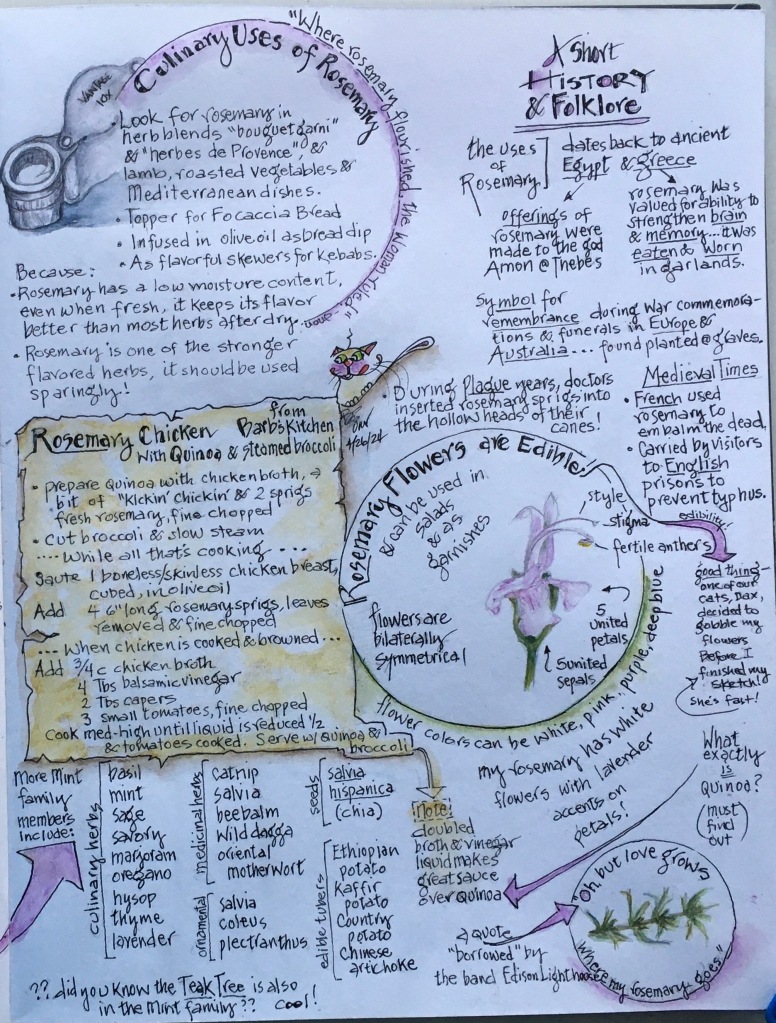
When trying to pin down exactly what’s so special about Herbs, a deliciously aromatic group of plants, I was stumped. Well, maybe not stumped, exactly. There are so many reasons to fall in love with Herbs, and picking one feature or even one Herb that’s especially special is nearly impossible. Best known for their culinary flavor enhancements, can you imagine pickles without Dill, pesto without Basil, salsa without Cilantro? What’s a dark chocolate circular pattie without Peppermint, or a cookie cutter man without Ginger?
Herbs excite memories, calm the mind, reduce inflammation. Does the aroma of sage conjur thoughts of Thanksgiving? Does a sprig of lavender make you sleepy? Does bold yellow turmeric soothe arthritic joints?
And many Herbs are decorative and lovely to look at, form beautiful shrubs, have gorgeous flowers.
But I keep coming back to the aroma. It’s hard to resist crushing the leaves of herbs like thyme or mint between my fingers. The essential oils released into the air and lingering on my fingers causes me to take a deep breath, inhaling the fragrance, embedding the aroma in my brain, resulting in a memory I can recall over and over again.
Herbs are Special!
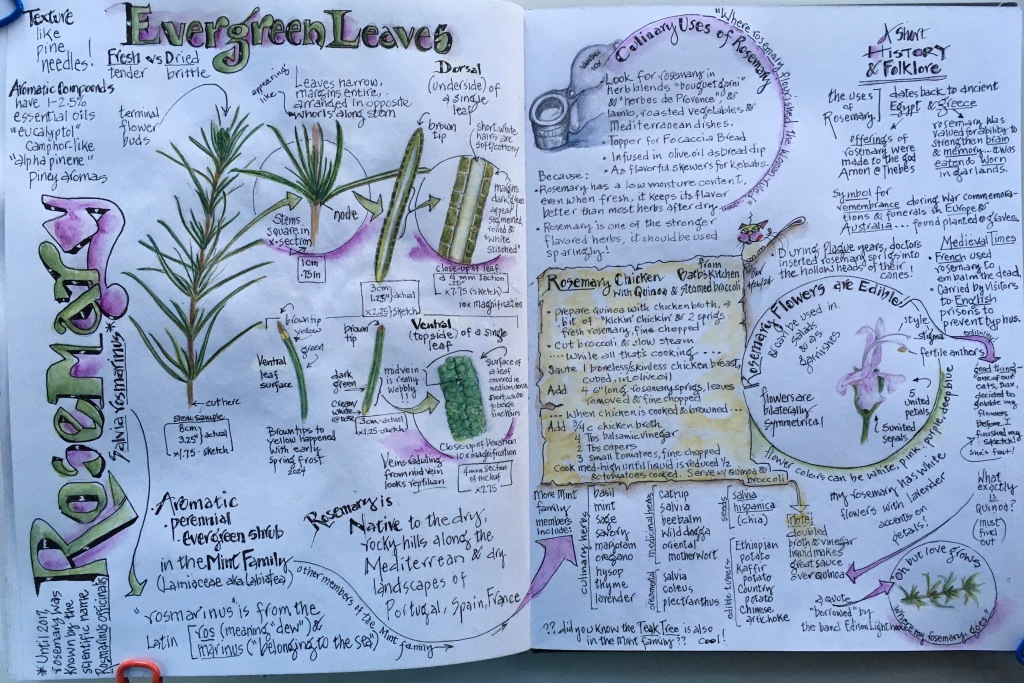
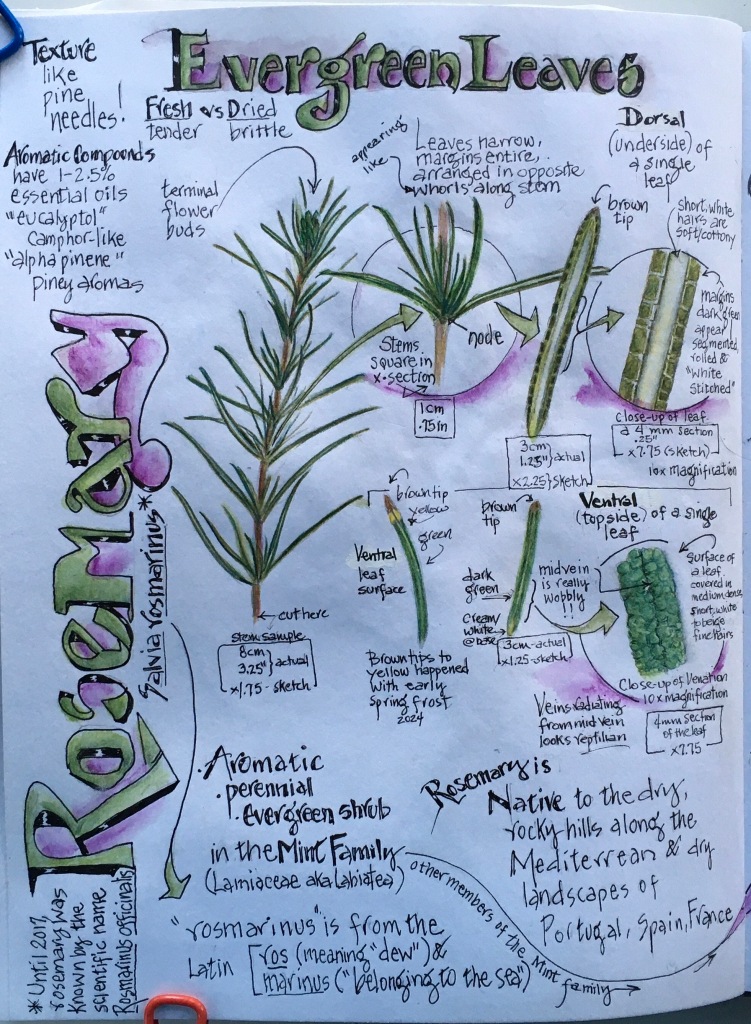
The Rosemary plant (actually a mini shrub) in my yard always invites my attention, and just this week it welcomed spring by coming into full bloom!
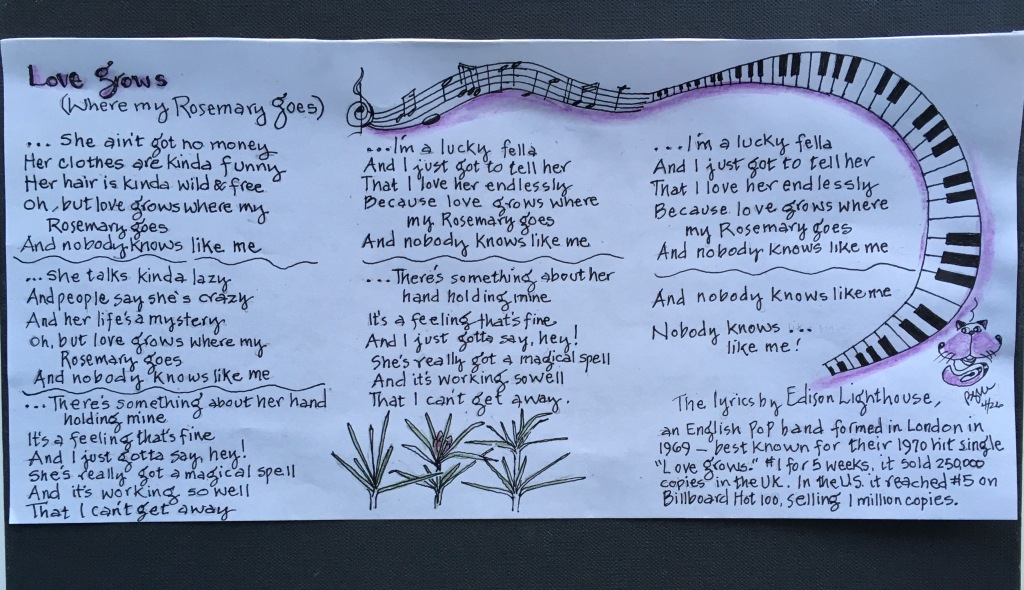
Who remembers this?! Now I can’t get it out of my head!
Do you have a favorite Herb? Why is it special? How do you use it? Please share! And thanks for stopping by!








 a curious nature