Great Mullein – Page 16 .. The 100 Day Project (2026)

August 19, 2026

If you’ve ever passed by a barren field, a somewhat rocky yet gentle slope, or a roadside waste area and noticed one or maybe many more very tall stems rising from a rosette of large fuzzy leaves, you were likely looking at Great Mullein (Verbascum thapsus), a non-native biennial plant of the Figwort family. Standing out as sentinels on landscapes across the U.S., this now-naturalized1 species was intentionally brought to North America by early European colonists in the 1700s primarily for its medicinal properties and as a fish poison.

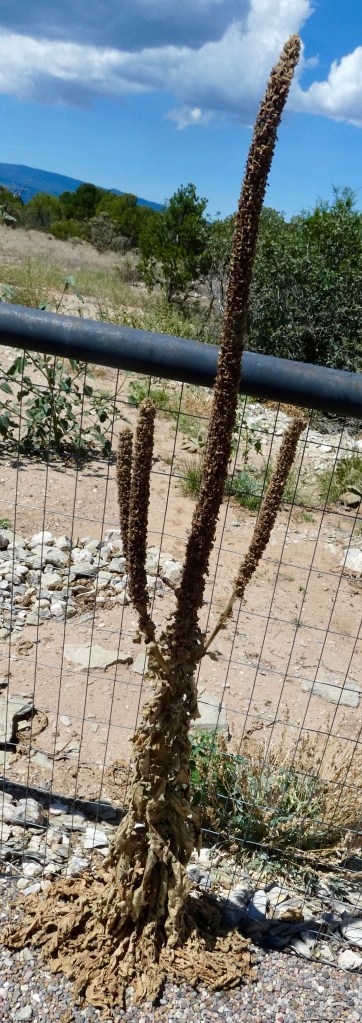
Two years ago while wandering down the “Trash Can” trail, just below the little rocky earthen dam stood an 8-foot tall Great Mullein. This wasn’t just any ordinary mullein though. The top 2 feet of the flower stalk was crowned with one of the most uniquely contorted, bent and folded mullein crests I’d ever seen. Magnificent!
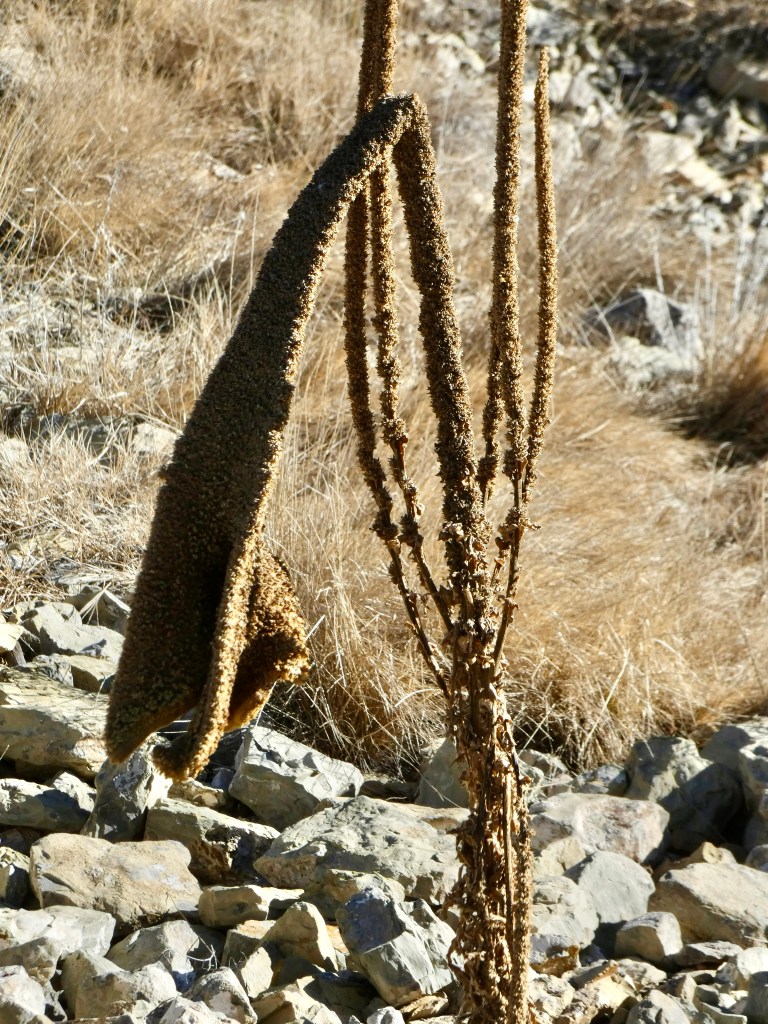
The “Trash Can” trail Great Mullein plant (long dried) with a very large, deformed flower stalk (a fasciation) that had bent from excessive weight.

The top-heavy mass, supporting scattered flowers and many hundreds of growing seed capsules had begun to dip and sway dangerously in the light Fall breeze. While watching and wondering what cause(s) of this rare and exaggerated growth, known as a “fasciation,” the heavy stalk moaned (really!). All I knew on that morning along that trail was that the stalk’s lean would soon take the entire plant to the ground. 
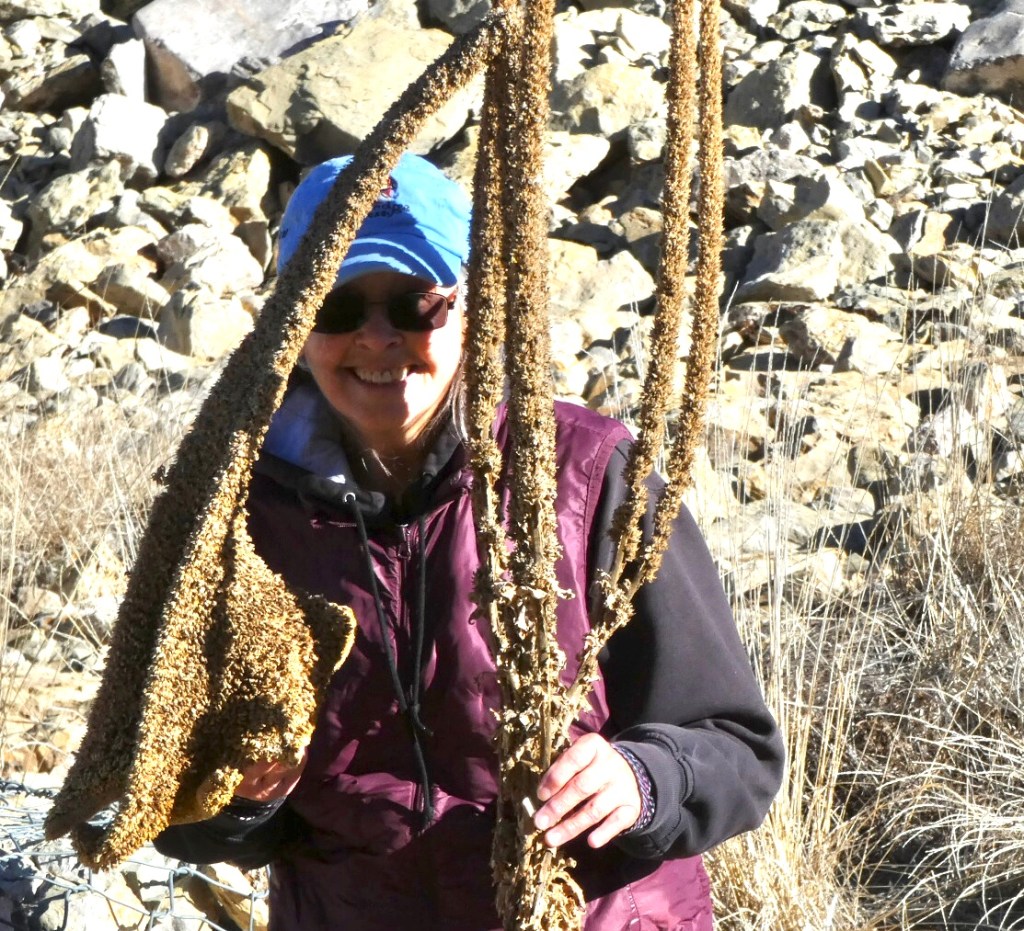
Rushing to the rescue, I grabbed onto the lower third of the stalk, hoping to somehow rotate the top 180°. It was at that moment, when nothing moved, I realized just how heavy that flower stalk was. Then, as my eye blinked only once, the upper 2/3rds of the plant broke and came crashing down …… fasciation and all!
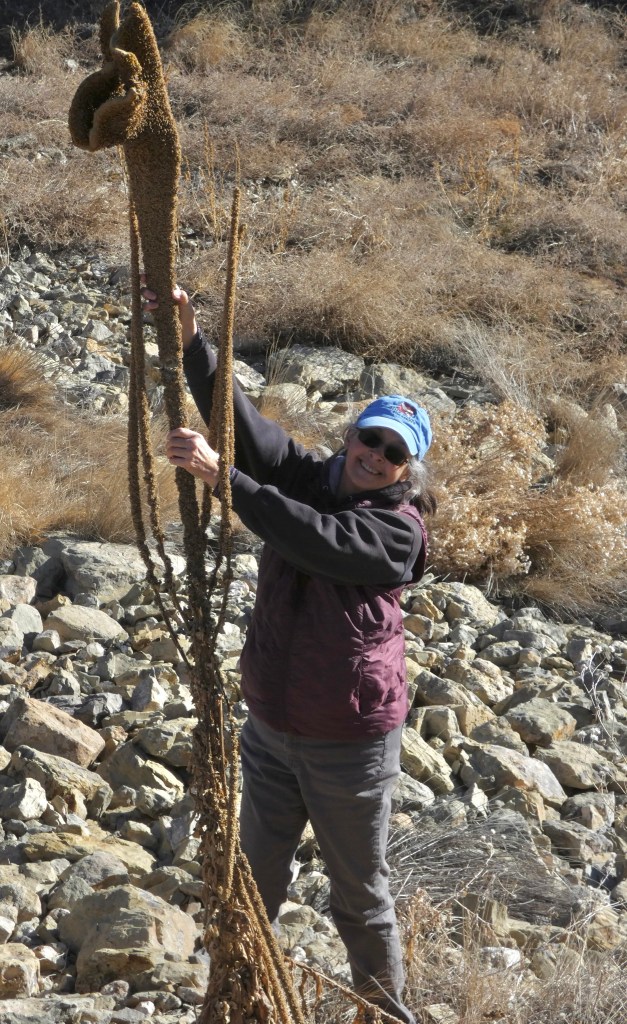
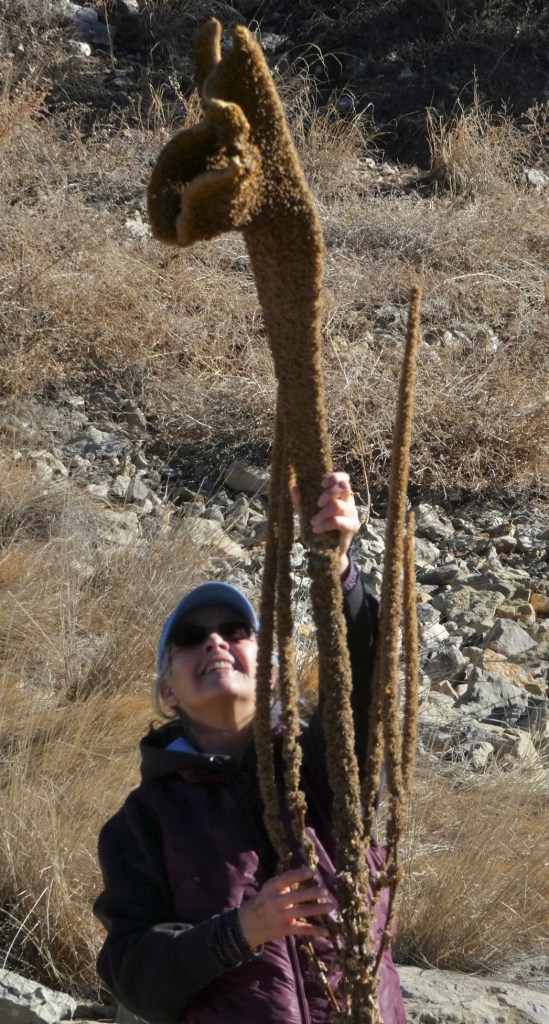
Lying on the ground in a heap (mullein pieces, not me), Plan B began to materialize. Here was my chance to learn if Great Mullein “fasciates” genetically. So I collected the still-intact contorted and folded crown with its many ripened seed capsules, and proudly carried it home where it spent the upcoming winter hanging out in a 5-gallon bucket while the seeds dried, became dormant, and experienced a natural dormancy-breaking winter, preparing them for Spring planting. So certain was I that my mother plant had passed her “fasciation genes” on to her seeds, that the flowering plants of her progeny would fasciate too. 
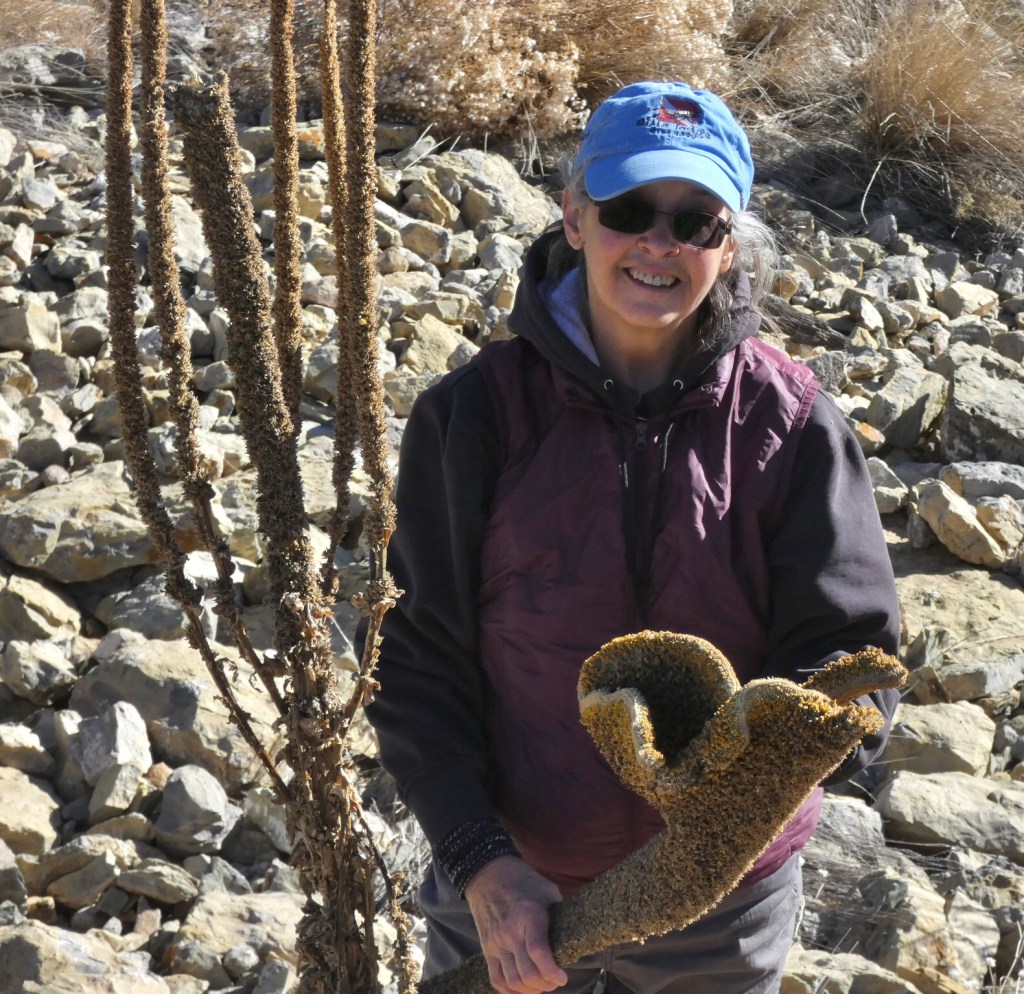
All my efforts were in vain ….. eventually the fasciated top of the flower stalk broke and crashed to the ground.

(Here’s an excerpt from my garden journal)

Spring 2025 ….. many minute seeds were scattered about our back yard.  

Summer 2025 ….. 8 seeds germinated into petite 1st year rosettes 

Winter 2025-2026 ….. 7 rosettes were robust enough to survive the winter

Late Spring 2026 ….. all 7 rosettes bolted, and flower stalks began growing; no sign of fasciation

Mid-Summer 2026 ….. woke one morning to find 3 had died — cause unknown (did they get too much hand watering?); only 4 flowering plants still alive; no sign of fasciation; Ladder-backed woodpeckers feasting on something inside countless seed capsules (some kind of insect?). (You can read about my mulleins’ visits from Ladder-backed Woodpeckers in my June 8, 2026 post here)
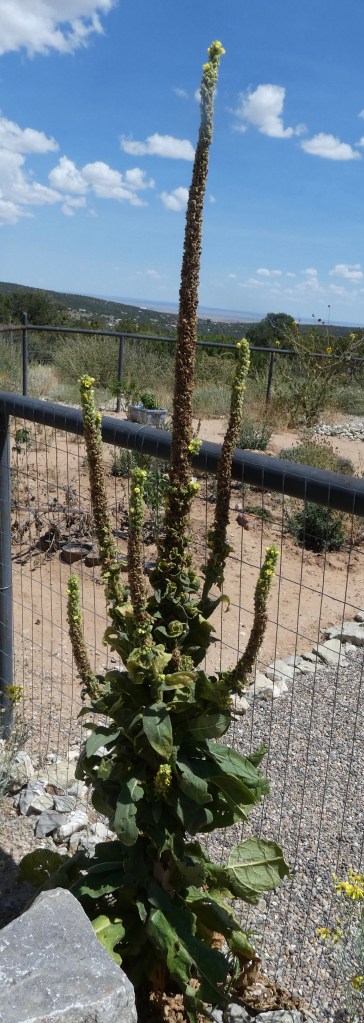
Of all the plants in our yard growing tall, with multiple flower stalks, this is the only one remaining alive at the time of this post.

Late-Summer 2026 ….. only 1 flowering plant still alive, still flowering, still plumping up seed capsules that are still feeding hungry woodpeckers (there’s so many capsules, they aren’t opening them all, so there may be seed left over for the next generation?)

Fall 2026 ………………. 

Thinking back on the last two years, it seems I have a slight case of Mullein Madness, judging from my apparent obsession with the fasciation (fascinating) characteristics of Great Mullein,Verbascum thapsus! If that’s as weird as contorted flower stalks, so be it. I’ll confess to this tho….. many happy hours were not only spent watching my mullein grow, but in combing the literature and published research in search of answers to my questions while learning so much about such a remarkable plant. 

Apologies in advance, but after reading the rest of this post (which is quite verbose), you too might just catch a case of Mullein Madness!
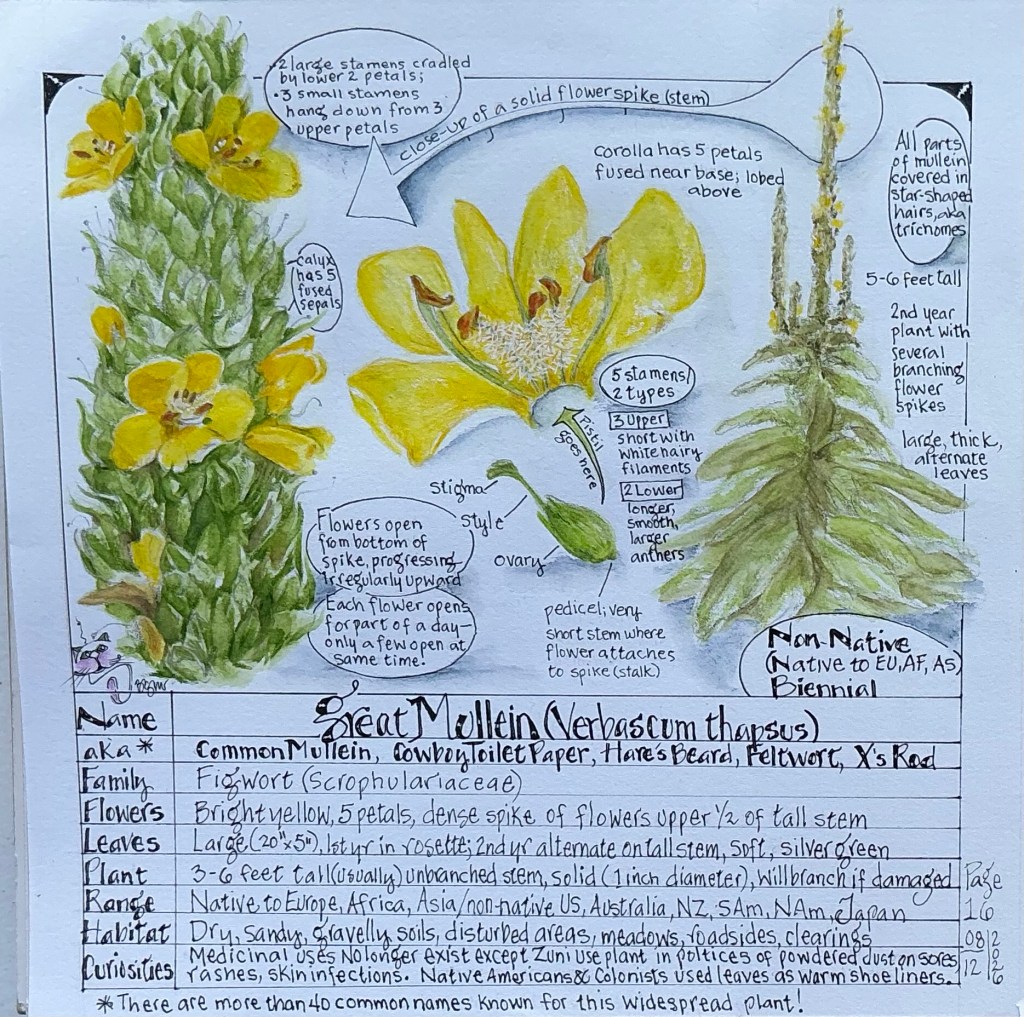
Great Mullein (Verbascum thapsus)

—aka—

 greater mullein, common mullein, mullein dock, cowboy toilet paper, hig candlewick, Indian rag weed, bullock’s lungwort, Aaron’s-rod, hare’s-beard, ice-leaf feltwort, velvet dock, and flannel; woolly, velvet and blanket mullein; beggar’s, Moses’, poor man’s, Our Lady’s and old man’s blanket

Home, Sweet Home

Native to Europe, North Africa and Asia, Great Mullein is an introduced (a non-native) species in the Americas, Hawaii, Australia, New Zealand, and parts of Japan.  

In the U.S., Great Mullein was imported very early in the 18th century and cultivated for its medicinal and Piscicide2 properties. By 1818, it had begun spreading so much that everyone thought it was native. By 1839, the species had spread as far west as Michigan; by 1876, it was growing in California. Today, Great Mullein is common in all 50 states. In Canada, it’s common in the Maritime Provinces, southern Quebec, Ontario and British Columbia, with scattered populations in between.

Happiness Was Watching My Mullein Grow

Life cycle: Great Mullein, a biennial (requiring two growing seasons to complete its entire life cycle), needs a winter dormancy period to flower. During its first year, a seed germinating in the spring or early summer develops a showy rosette of large leaves that grows from a taproot. After overwintering, the second year’s growth begins when a solid 1-inch diameter woody stem emerges from the rosette. This single pole-like stem, that can extend 6 feet tall or more, is covered in alternately-arranged leaves along the lower third of its length, becoming completely surrounded with a dense grouping of small flower buds that randomly bloom throughout the summer. Typically, only one stem forms, but if damaged during growth, branching may occur. After flowering and seed release the flower stalk(s) dries up and remains covered in dried brown seed capsules. Dried stalks and any seeds not scattered during fall may persist into the following spring or summer.

Habitat: Great Mullein grows in a wide variety of habitats, but thrives on well-lit disturbed soils, open meadows, and arid or overgrazed rangelands. Viable seeds, that can persist in the soil for hundreds of years, rapidly germinate in the spring soon after the ground warms up. While the mullein can also grow alongside existing plants, growth of the rosettes on bare soil is four to seven times more rapid than under vegetated conditions.

Flowers: Beneath the flower’s corolla (petals) is the deeply lobed, green calyx consisting of 5 hairy, triangular-shaped sepals. The bright golden-yellow saucer-shaped corolla (0.6–1.2 in) is formed from 5 slightly unequal petal lobes that are fused at the base. Attached on top of the petals are 5 stamens of two types: three shorter upper stamens covered in yellow/whitish hairs, and two longer lower stamens that are smooth. The pistil at the center of the flower consists of a superior ovary, a single slender green style, and a two-lobed stigma.  Flowering lasts up to three months from early to late summer. Flowers begin blooming from the bottom of the tall stalk (spike) and progress irregularly upward. Each flower opens for part of a day and only a few open at the same time around the stalk. They typically open before dawn and close in the afternoon.
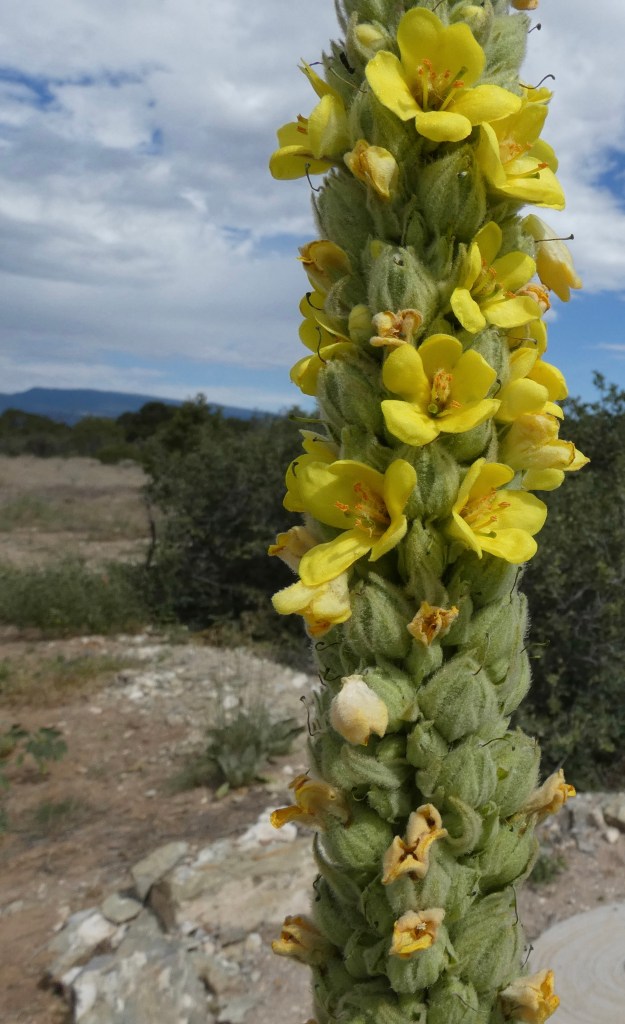
Great Mullein flowers. The lower flowers had closed the day before.

Pollination and Pollinators: Flowers are able to self-pollinate if they haven’t been pollinated by insects during the day. Even though many insects visit the flowers, only certain bees actually get the job done (such as halictid bees (usually dark black or brown, often metallic appearing sweat bees). Birds foraging for insects, such as the white-headed and ladder-backed woodpeckers, are known to feed from the seed capsules covering the flower stalk.

Seeds: Each tiny (<0.04 in) brown Great Mullein seed is marked with longitudinal ridges. Each flower produces a small, ovoid (0.24 in) capsule full of seeds that splits open with two valves when mature. Each plant produces hundreds of capsules that contain up to 700 seeds apiece, totaling anywhere between 180,000 or 240,000 seeds/plant. Seeds germinate in spring and summer on bare soil (or very close to the soil surface) when exposed to light, at temperatures between 10 and 40°C (50 and 104°F).

The seeds are generally too small for birds to feed on, although the American goldfinch has been reported to eat them.

(See the following section for more on seeds.)

Did You Know ………

They Call it Fasciation! If you’re familiar with Great Mullein, you may have noticed some flower stalks don’t always grow straight and tall. For some reason, some tops form weird shapes that may be flat or compressed, folded or ribbon-like, bulbous or crested. These plants have grown what’s called a fasciated flower stalk, the result of a rare developmental mutation. Scientists studying these unusual growths are trying to learn what triggers fasciation, but it remains a mystery.  They have, however, identified several potential vectors that may disrupt normal growth:
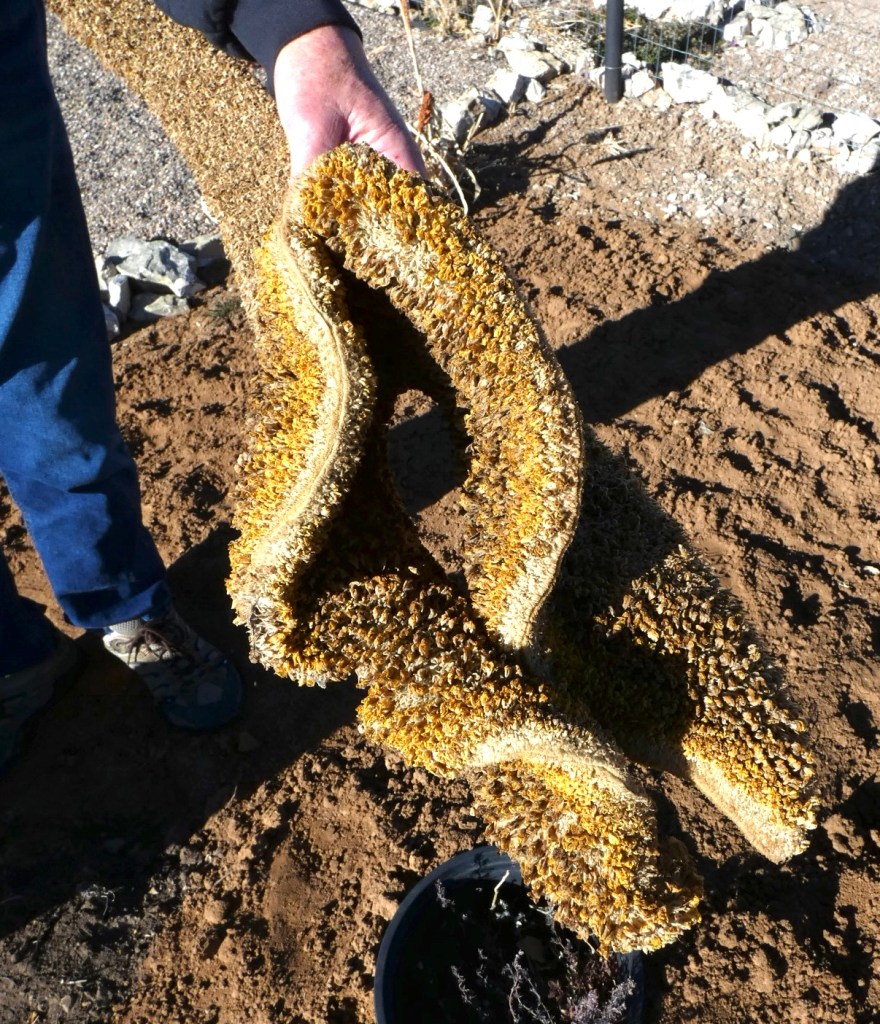
Roy holding the fasciated end of the “Trash Can” trail Great Mullein.

  • Pests and pathogens: Insect feeding, mite activity, or bacterial infections (like Rhodococcus fascians) can damage or trick the growth tip into abnormal widening, though some field tests found their presence on fasciated mullein as well as on normal plants.
  • Environmental stress: Severe weather shifts, frost, or chemical/herbicide exposure during early stalk development may shock the growing tip into expressing fasciation.
  • Physical injury: Mechanical damage to the growing tip is known to disrupt normal elongation, though specific studies carried out on some Great Mullein plants noted that physical damage actually reduced or did not trigger fascination.

And Now! Everything You Wanted to Know About Great Mullein Seeds

Did you know ….. some seeds that germinate in autumn may jeopardize the life of the plant? Rosettes getting a late start must grow to at least 6 inches in diameter or they are likely to die in winter. Regardless, all first year plants that do survive overwintering and go on to complete their life cycle, die at the end of their second year, with some exceptions. Under the best growing conditions, some individuals flower in the first year, only to die the same year. And some individuals, especially in the northern parts of the range, require a longer growing period and don’t flower until their third year. Curiously tho, three-year plants often produce fewer seeds than biennial and annual ones. While year of flowering and size are linked to the environment, most other characteristics appear to be genetic (fasciation is an example).

Did you know ….. decades-old seeds can readily sprout from bare ground, or after forest and range fires, long after Great Mullein plants have died. This ability to quickly grow or even colonize disturbed areas may provide some soil stability, but it does interfer with the natural succession of native species. 

Did you know ….. seeds don’t disperse far from a Great Mullein flower stalk? This means plants rarely establish in new areas without human intervention. Seeds scatter naturally when winds or animals move the stem causing 75% of the seeds fall within 3 feet of the parent plant; 93% fall within 15 feet.

Did you know ….. seeds are in the fossil record? Oh My! Discoveries of Great Mullein seeds have been reported from several important geological areas on the British Isles, including:

  • Cromer Forest Bed geological formation (Early to the early Middle Pleistocene [2 to 0.5 million years ago]) located in coastal areas of the Norfolk region of England; 
  • West Wittering in Sussex in fossil-bearing clay formed during the Eocene epoch around 46 million years ago; and the
  • Ipswichian interglacial layers falling within the Middle Paleolithic period 130,000 to 115,000 years ago.

Great Mullein Plays Host to Many Visitors

The Good, the Bad, and the Questionable Pests and Beneficial Insects, and Diseases

Represented by 29 different families!

Pests: The majority are western flower thrips (Frankliniella occidentalis), Lygus species such as the tarnished plant bug (L. lineolaris) and various genera from the spider mite family (Tetrantchidae).  Other common insects that feed exclusively on Verbascum spp. in general or V. thapsus (Great Mullein) in particular are: mullein thrips (Haplothrips verbasci), mullein moths (Cucullia verbasci), and common stalk borer moths (Papaipema nebris).

Beneficial Insects include predators, pollinators and specialized herbivores, such as:
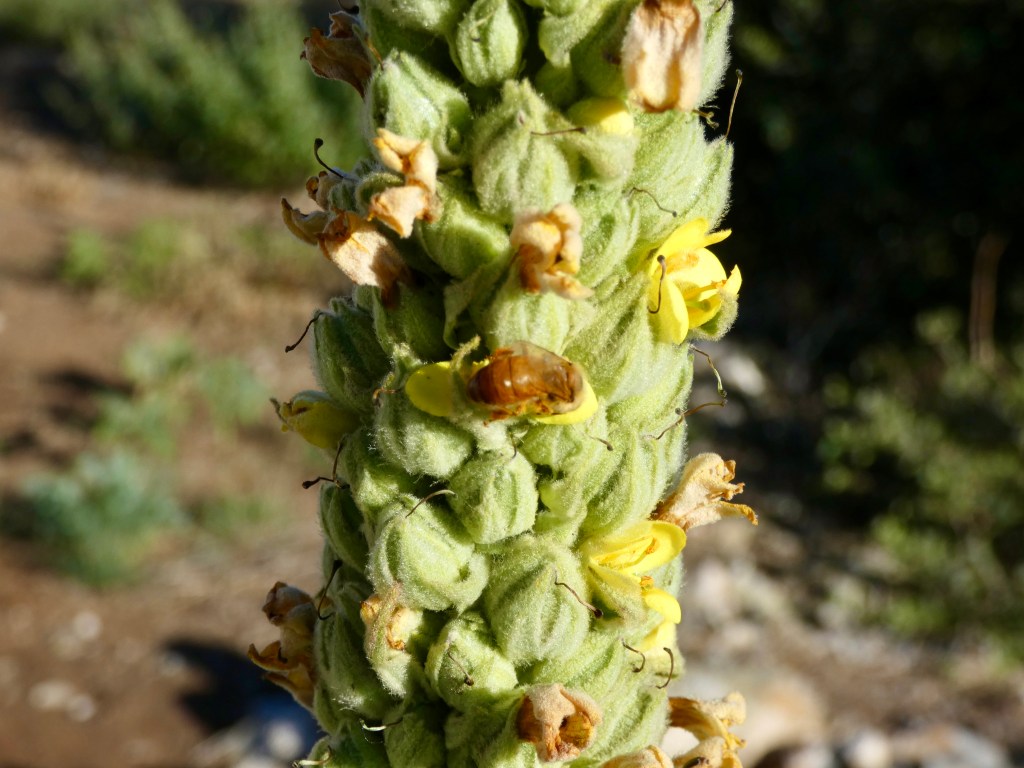
Honey bees were busy collecting pollen and nectar from my Great Mullein flowers. The flower stalks were a-buzz every morning and into early afternoon when the flowers were open.
  • Mullein plant bug (Campylomma verbasci) is hosted primarily in summer and permitted to feed lightly on the plant while actively preying on orchard aphids, mites, and thrips.
  • Leaf bug (Dicyphus hesperus) is hosted year-round as its primary habitat and food source in return for helping to manage greenhouse and agricultural pests like whiteflies and spider mites.
  • Minute pirate bug (Orius tristicolor) hosted solely as a platform to hunt thrips and other small pests on the foliage.
  • Predatory mites (Galendromus, Typhlodromus and Amblyseius spp.) hosted year-round on plant surfaces to hunt harmful plant-feeding mites.
  • Wool carder bees (Anthidium species) hosted as a casual visitor for purposes of gathering the dense, soft/woolly hairs from the plant’s leaves to line their nesting chambers.
  • Bumblebees, honeybees, hoverflies, butterflies hosted as frequent drop-in visitors throughout the growing season to gather abundant nectar and pollen from the flowers in return for pollination services. Special accommodations are always arranged for the following members of this visitor group known to successfully pollinate the flowers —  generalist short- and long-tongued bees, including certain bumblebee species (Bombus spp.), honeybees (Apis mellifera), and assorted solitary bees (small native, wild bees).
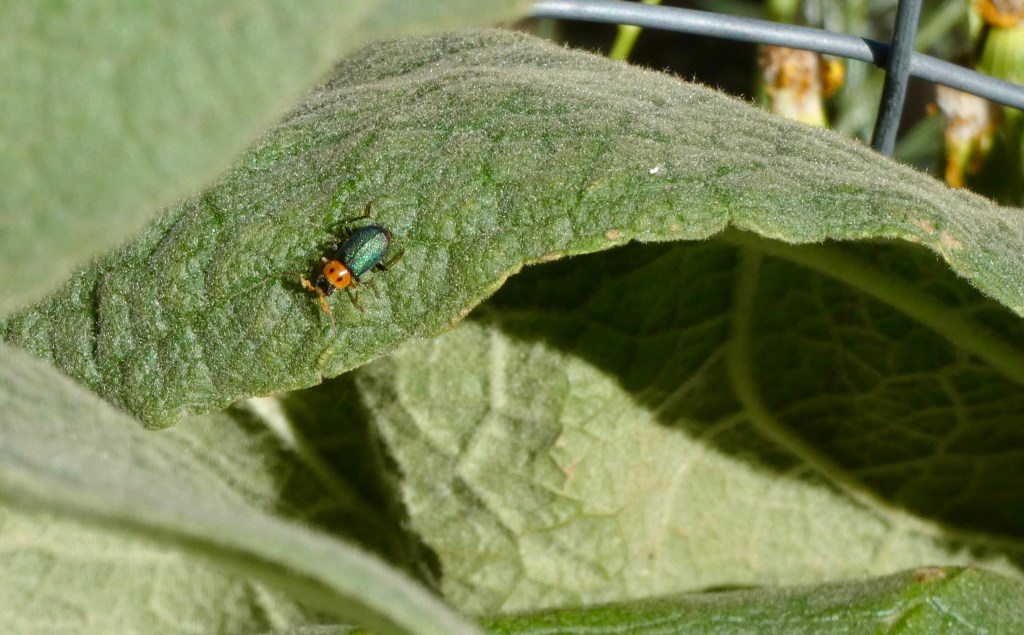
This colorful beetle is two-spotted melyrid (dollops bipunctatus), a predatory insect on mites, aphids and other harmful insects. They were common on the huge leaves on my Great Mullein plants.

Diseases reluctantly hosted by Great Mullein include cucumber mosaic virus — the cucurbit powdery mildew (Erysiphe cichoracearum), and root rot (Phymatotricum omnivorum), along with Cercospora verbasciola; Phoma thapsi; Phyllosticta verbaciola; Heterodera maroni; Meloidogyne sp.;  Mycosphaerella verbasciola; Ramularia veriabilis; Septoria verbasciola; and Oidium pyrinum.  These microorganisms not only impact the health of the host, but may impact other desirable plants in the area.

A Confusingly Questionable Insect — 

The Voracious Mullein Seed-Eating Weevil
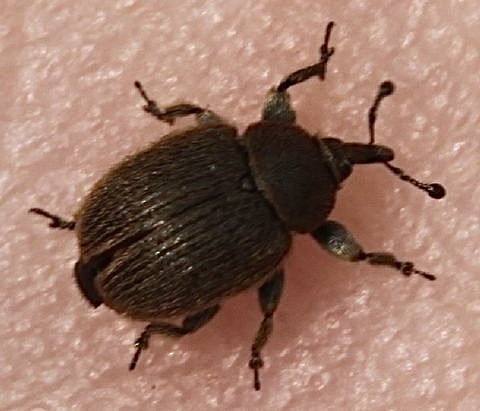
A mullein seed-eating weevil adult. They were found everywhere on all the mullein plants in the yard. Very small weevils made the plant looked like it had been covered in very fine pepper!

Great Mullein was clearly tricked into hosting the mullein seed-eating weevil (Rhinusa tetra syn. Gymnaetron tetrum) by this demure, sometimes brown to nearly glossy-black beetle that promised to nibble only on leaves and a few seed capsules for the entire 45 days of its adult life. Little did mullein know that this weevil was hiding a secret. When it came to the end of her days (coinciding with flower blossoming) there was only one thing left to do … deposit all 150-200 of her fertilized eggs, two-by-two, into as many flowers as possible, she does this for over an 11-day period, and then she dies. But about 1 week following egg laying, the eggs hatch into larvae (grubs) and commence consuming most of the ~700 seeds in the growing seed capsule. When they’ve about exhausted their food supply, the larvae pupate and finally emerge as adults ~25 days later. The adults remain on the host mullein, munching uninhabited seed capsules and leaves, for 45 days until the next batch of females lays their next batch of eggs, and on it goes, until …..  when the growing season winds down and winter begins to blow in, adult weevils that haven’t completed their life cycle will tuck into a dried seed capsule and hibernate. And larvae that have entered the pupa stage of their lives will remain as such, overwintering until late spring when warmer weather triggers completion of their metamorphosis and the adults can safely emerge, ready to begin feeding on 2nd year flowering mullein. 

Weevil Interlude

The mullein seed-eating weevil was accidentally introduced from Europe in 1876, to control the spread of Great Mullein. But back then and for many years following, the weevil was never intentionally used for that purpose. It happened “naturally” as the weevil spread throughout North America, making its living on Verbascum spp. it found on its journey. In more modern times, and because the weevil was never formally cleared as a released biological control agent, local land management and weed programs (such as in parts of the Pacific Northwest and Wyoming) informally recognize it as an already-established bio-agent since its larvae feed extensively on the seeds of Great Mullein.  In some regions where the plant is a designated noxious weed, the weevil is viewed as a helpful naturalized helper; in other states—like Colorado—it remains unapproved for intentional release due to a lack of formal ecological impact studies.
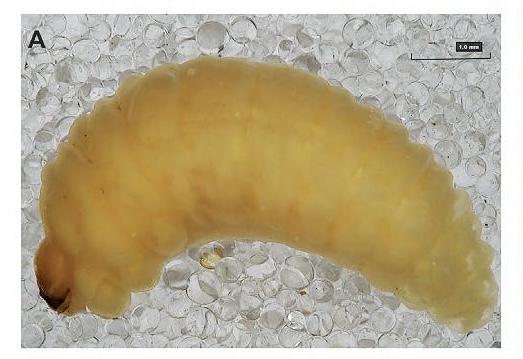
The larvae of the mullein seed-eating weevil. By researching the Great Mullein, I learned it was these grubs the Ladder-backed woodpeckers were picking from seed capsules.

Bumper-to-Bumper Weevil Interlude

It seems that using a non-native insect to control a non-native plant is effective in significantly reducing the number of Great Mullein’s viable seeds to limit the plant’s spread.  It is also a risky strategy, as many biological slip-ups have occurred in the past when a population of an introduced insect, having depleted its targeted food supply, develops an appetite for other, desirable-to-native-species plants. So far in the U.S., the mullein seed-eating weevil has only feasted on seeds of two Verbascum species—the Great Mullein (its clear favorite) and the equally-alien Moth Mullein (V. blatteria). Because the population of egg-laying adult female weevils doesn’t have enough eggs to lay in all of the hundreds and hundreds of mullein flowers, it’s probably unlikely they will run short of food in the near or far future.    

To Weed, or Not To Weed

And What to Do With Unruly Great Mullein

In all areas where Great Mullein has been introduced, it’s recognized as a weedy species. Considered Invasive3 across much of the U.S., Great Mullein is a state-listed Noxious4 weed in Colorado and Hawaii, and in several counties in Wyoming, Nebraska and Montana.  In these states it aggressively crowds out native plants in dry or open ecosystems. 

In other areas of the U.S., opinions on the ecological impacts of Great Mullein vary. Some land managers primarily view it as a short-lived pioneer species on heavily disturbed ground that eventually fades as native vegetation recovers; others classify it as a persistent invasive weed based on its seed longevity. Where agricultural crops are grown, impacts are generally considered minor — the ability of Great Mullein to outcompete most crops is limited because it’s shade intolerant and doesn’t survive tilling. Where it may become invasive, individuals are easy to remove by hand, even though populations are difficult to eliminate permanently.

Control Measures that Work: Mechanical methods that control the growth and/or spread of Great Mullein are the most effective. The best means is by hand pulling and hoeing, preferably followed by sowing of native plants. Regular cultivation is known to be adequate for the control of mullein. Tractor-mounted mowers or scythes can be used to trim the plants when they begin to flower. Repeated mowing prevents the flower stalk from bolting, but if mowing is discontinued then the plant will bolt and produce flowers anyhow.
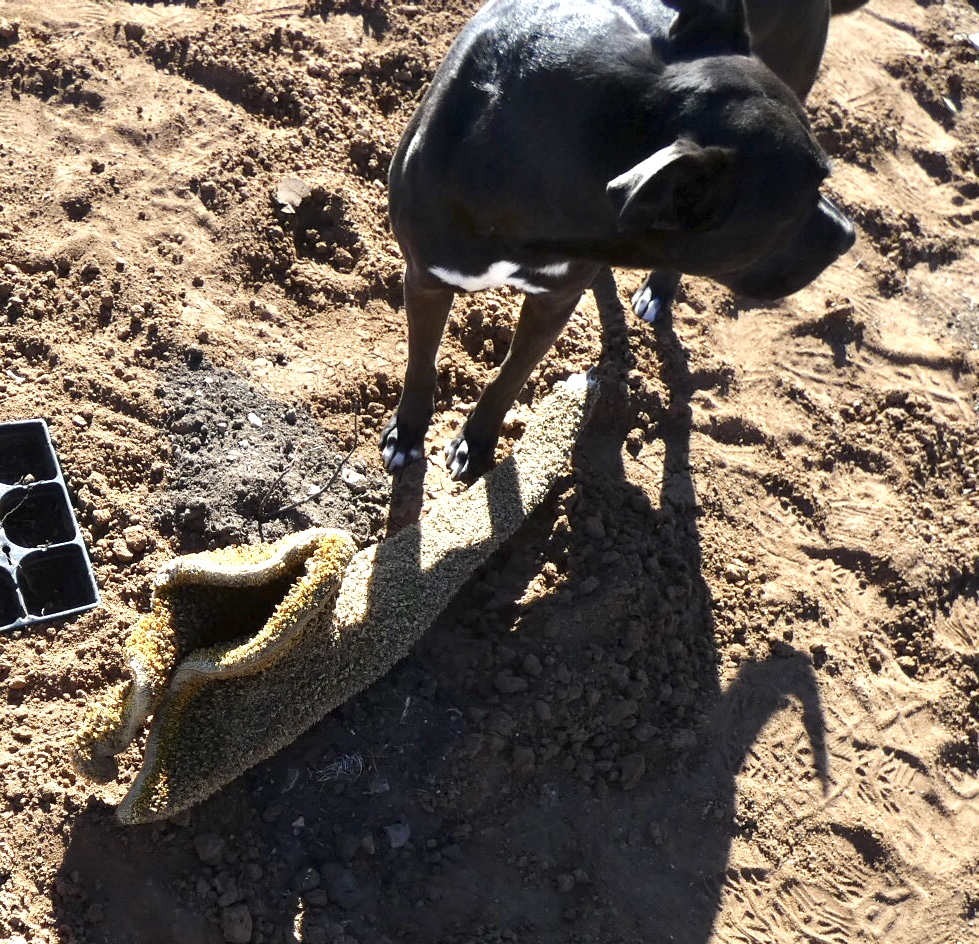
Luna standing next to the rescued fasciated flower stalk, keep watch for thieves!

Not Worth the Time or Effort: All parts of the plant are covered in dense, star-shaped hairs (trichomes). Cattle and sheep avoid grazing the plant because biting into these hairs is irritating. Goats may find the plant edible, but studies are inconclusive. Use of contact herbicides is impractical since the hairs cause the liquid to roll off. Ground herbicides when taken up by the roots will damage or kill the plant, won’t kill seeds stored in the soil from previous years, and also denude the ground creating ideal conditions for growing more mullein. It would take decades of annual applications to slow, let alone prevent, new plants from growing. The use of seed-eating chickens has been proposed for mullein control, but has not been studied.

Multi-Use Mullein

Although commonly used in traditional medicine, today there are no FDA-approved drugs made from Great Mullein. Non-medicinal uses, past and present, are curiously varied. 

Traditional Medicine

  • Dioscorides, an Ancient Greek pharmacologist and botanist, first recommended Great Mullein 2000 years ago as a folk medicine for pulmonary diseases. Leaves were smoked to attempt to treat lung ailments, a condition that in America was rapidly transmitted to Native American peoples. 
  • The Zuni used the plant in poultices of powdered root applied to sores, rashes and skin infections. An infusion of the root was also used to treat athlete’s foot. Any preparations meant to be drunk had to be finely filtered to eliminate the irritating hairs.
  • Oil from the flowers was used against catarrhs (inflamed mucous membrane(s) in an airway or body cavity) colics, earaches, frostbite, eczema, and other external conditions. Topical application of various V. thapsus-based preparations was recommended to treat warts, boils, carbuncles, hemorrhoids, and chilblains. The plant has been used in an attempt to treat colds, croup, sunburn, and other skin irritations. 
  • Great Mullein (V. thapsus) was in the United States’ 4th edition of the National Formulary from 1916 – 1936, stipulating that fluid extracts of dried leaves and flowers of the plant was approved as a pharmaceutical drug.

Otherwise Practical and Curious Uses

  • Roman soldiers are said to have dipped the flower stalks in grease for use as torches.
  • Romans extracted a yellow dye from the flowers to color women’s hair.
  • In some cultures, leaves have been used as wicks. 
  • Native Americans and colonists lined their shoes with the plant’s leaves to keep out the cold.
  • As with many plants, Great Mullein was linked to witches, although the relationship remained undefined. At the same time, the plant was also widely believed to ward off curses and evil spirits. 
  • As mentioned earlier, the seeds, which contain saponins, glycosides, coumarin and rotenone, are toxic to fish and have been widely used as piscicide since the plant’s introduction to the U.S. in the 1700s. Settlers threw the seeds and even the leaves into slow-moving water, allowing the chemicals to spread and stun the fish, causing them to float to the top making them easy to catch.
  • In modern times, Great Mullein is treated as an ornamental plant.
A first-year rosette turning into a 2nd year flowering plant.

Etymology

From the Greek word etymon, meaning 

“literal meaning of a word according to its origin”

Scientific Name: Verbascum thapsus

Genus Verbascum: Originally described by Carl Linnaeus in 1753, Verbascum was derived from the classical Latin verbascum, used for the plant by Pliny the Elder (CE 23-79), Roman author, naturalist, scientist, etc. However, the word “verbascum” was widely believed to be and accepted as a corruption of “barbascum,” from “barba” meaning “beard.” The genus name Verbascum, back then (as it does today), refers to the dense, hairy coating on the leaves and the bearded appearance of the plant’s stamens.

Species (specific epithet) thapsus: First used by Theophrastus (BC 371-287), Ancient Greek philosopher and naturalist, for an unspecified herb from the Ancient Greek settlement of Thapsos, near modern city of  Syracuse, Sicily ….. OR ….. it may have come from the ancient Tunisian city of Thapsus. 

A first-year rosette turning into a 2nd year flowering plant. Would these huge leaves make excellent shoe liners!?

Common Name: Great Mullein

“Great” was used in the plant’s common name to distinguish it from other more diminutive plants of the same genus Verbascum. “Great” refers  to the plant’s tall stature.

 “Mullein” evolved from Middle English “moleyne,” by way of the Anglo-French word “moleine,” which came from the Latin root “mollis,” meaning “soft.”

…………………………………………………………………………………………………

Wake up Now! Unless you’ve caught a case of Mullein Madness Fever!

Regardless, hope you found this interesting!

(I promise to write a shorter post next time)

As always, thanks for stopping by!
The End!

1 Naturalized – a non-native plant species brought from other regions that now reproduces and spreads on its own without human help, but doesn’t aggressively overrun native habitats.

2 Piscicide – a chemical substance that’s poisonous to fish. Piscicides are primarily used to eliminate a dominant species of fish in a body of water, done as the first step in attempting to populate the water body with a different fish species. They are also used to combat parasitic and invasive species of fish.

3 Invasive – a non-native species introduced to a new-to-it ecosystem where it spreads rapidly, outcompetes native species, and causes economic or environmental harm. Because it lacks natural predators or diseases in its new home, it easily takes over natural habitats, yards, farms, etc.

4 Noxious – any plant legally designated by a government agency as harmful to agriculture, public health, wildlife, or property. These plants grow aggressively, spread fast, and lack natural controls. While many are non-native invasive species, some native plants can also be classified as noxious if they cause severe damage.

References
ag.colorado.gov

botanical.com

botanical-online.com

britannica.com

cabidigitallibrary.org

discoveringfossils.co.uk

extension.oregonstate.edu

herbalgram.org

iNaturalist.org

iucngisd.org

npsot.org

pmc.ncbi.nlm.nih.gov

pnwhandbooks.org

sciencedirect.com

southwestdesertflora.com

starrenvironmental.com

uwm.edu

wikipedia.org

Plains Beebalm – Page 12 .. The 100 Day Project (2026)

June 18, 2026

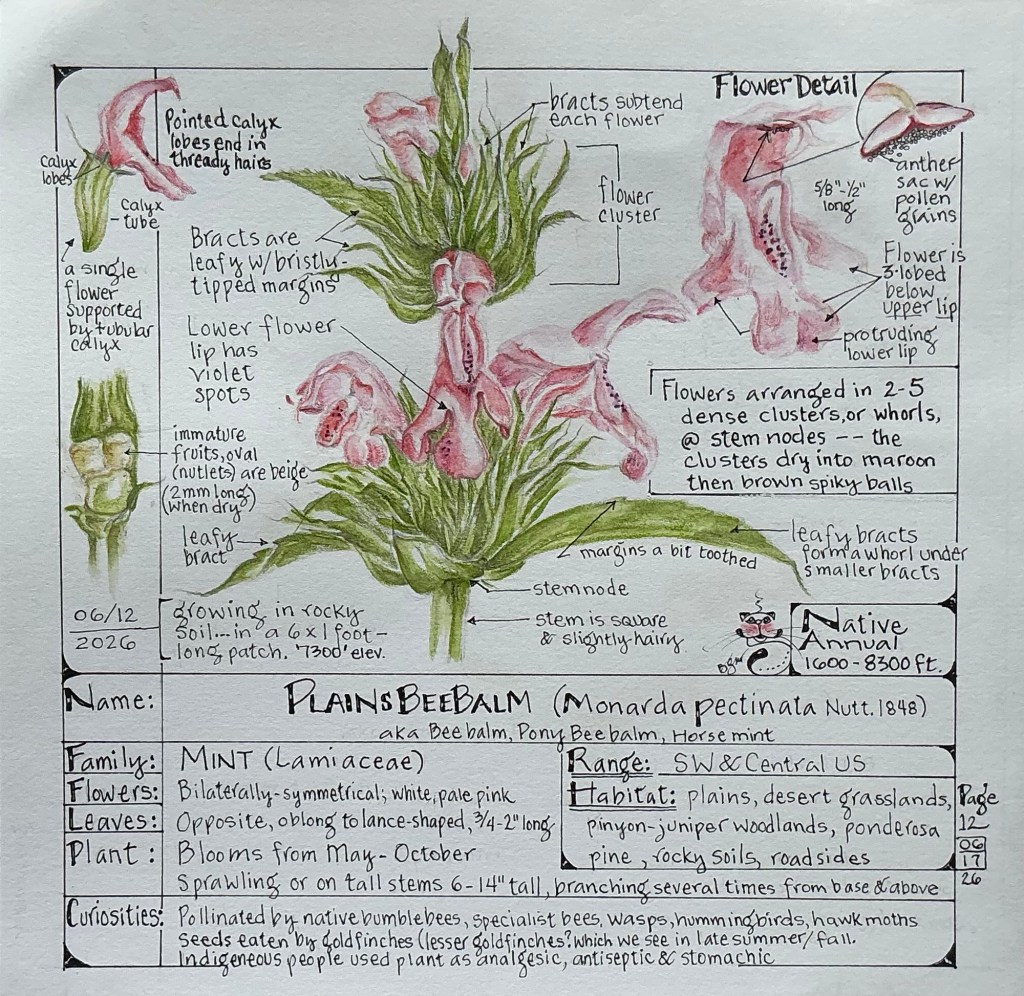
Plains Beebalm (Monarda pectinata Nutt. 1848)

aka Pony Beebalm

Etymology

Linnaeus named the genus Monarda to honor 16th century Spanish physician and botanist, Nicolás Bautista Monardes (1493-1588). Monardes never went to the Americas but was able to study medicinal plants in Spain, publishing the first systematic, in-depth book on medicinal plants and remedies brought to Europe from the Americas.

The species pectinata is derived from the Latin word pecten, meaning “comb.” The suffix -ata denotes possession or resemblance — so it translates loosely to “comb-like” or “having the form of a comb,” referring to the bristle-tipped bracts that sit below flower whorls. 

Monarda pectinata is commonly called Plains Beebalm (or Pony Beebalm) because of its historically recorded uses by Indigenous peoples as an analgesic and antiseptic qualities. 

Ethnobotanical and Culinary Uses 

Indigenous peoples used a plant infusion to treat coughs, colds, fevers, and stomach complaints related to digestion. A flower infusion was used as a wash on insect bites and stings. The plant was rubbed on the head to bring relief from headache. In addition, historic records document that groups, such as the Kiowa, used Monarda pectinata leaves as a perfume due to its strong scent, and were chewed while traveling.

The strongly aromatic smell of crushed Plains Beebalm leaves smell both savory and citrusy, similar to oregano or lemon. Sometimes called “wild oregano,” they can be eaten fresh, dried or cooked to season in salads or other foods. In spring the leaves may be boiled to make herbal tea.

Plains Beebalm blooming in our yard, in bright sunshine and rocky soils.

Pollinators

According to the Xerces Society for Invertebrate Conservation, all Monarda species attract a number of native pollinators such as specialist bees, bumble bees, predatory wasps, hummingbirds, and hawk moths.

A Few Fun Facts 

Desert Survivor: Although many Monarda species are moisture-loving, such as Wild Bergamot (Monarda fistulosa) found the along cool trails of Sandia Mountain, Plains Beebalm prefers hot, harsh, dry environments like desert washes, rocky slopes, and sandy pinyon-juniper woodlands.

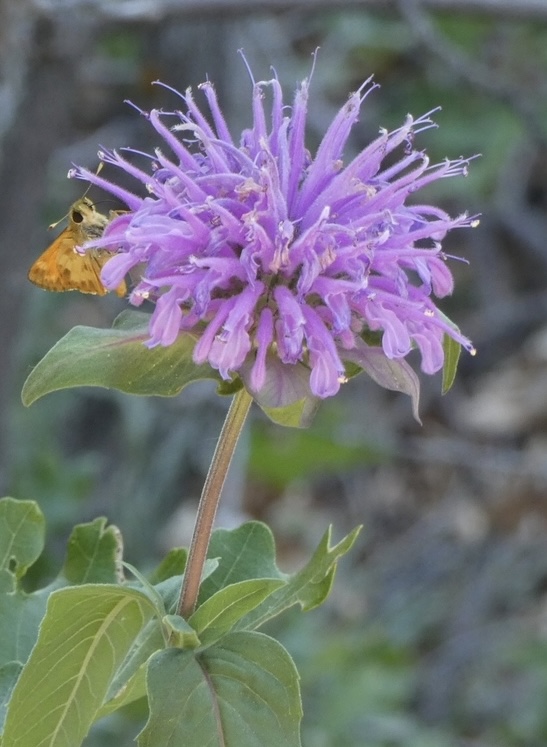
Wild Bergamot and a little skipper pollinator. Tecolote Trail, Sandia Mountain, NM. This Monarda species prefers living in moist soils under the shady canopy of white fir and ponderosa pine.

Mammal Resistant: While pollinators adore Plains Beebalm, its strong, minty-citrusy-oregano essential oils act as a natural deterrent, making the plant resistant to browsing deer and rabbits.

Pollinator Magnet: The tubular pale pink flowers of Plains Beebalm are an excellent nectar source for long-tongued native bees, butterflies, and hummingbirds, especially during the hot summer months.

Soothing Relief: Plants in the Monarda genus are commonly called “Beebalm” due to the soothing nature a wash application of the plant, especially the flowers, has on insect bites and stings — particularly bee stings. Turns out plants in the genus contain the active ingredient thymol, a natural antiseptic found in modern mouthwashes. 

…………………………………………………………………………………………………

Hope you found this interesting!

As always, thanks for stopping by!

References
commons.wikimedia.org

fws.gov

iNaturalist.org

npsnm.org

swbiodiversity.org

wildflower.org

yavapaiplants.extension.arizona.edu

Yanovsky, E., Food Plants of the North American Indians U.S. Department of Agriculture, Publication no. 237.

Rose Heath – Page 9 .. The 100 Day Project (2026)

May 9, 2026

Rose Heath (Chaetopappa ericoides)

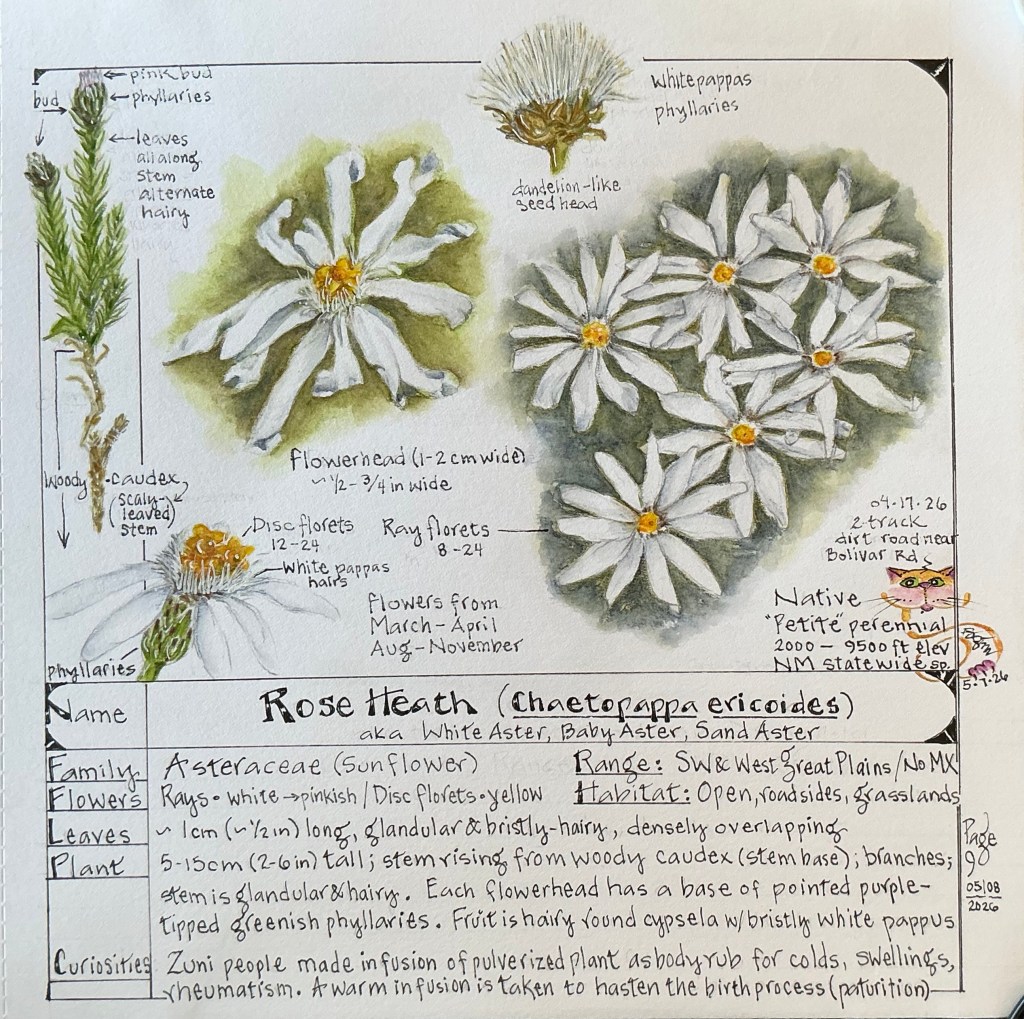
When the last Spring snow melts and the runoff soaks into the nooks and crannies of dehydrated soils, there’s a thirsty little shrub that eagerly drinks its fill. The leafy stems of this tiny shrub, so easily overlooked in the winter, rapidly grows on bare ground, around the drip line of pinyon and juniper trees, in the negative spaces between rocks and broken branches, and through beds of dried grasses. Then in a day or two a very small flower bud forms on the top of each stem, and in half a week the buds open simultaneously. What a spectacular display of brilliant white daisies ….. bouquets of light!

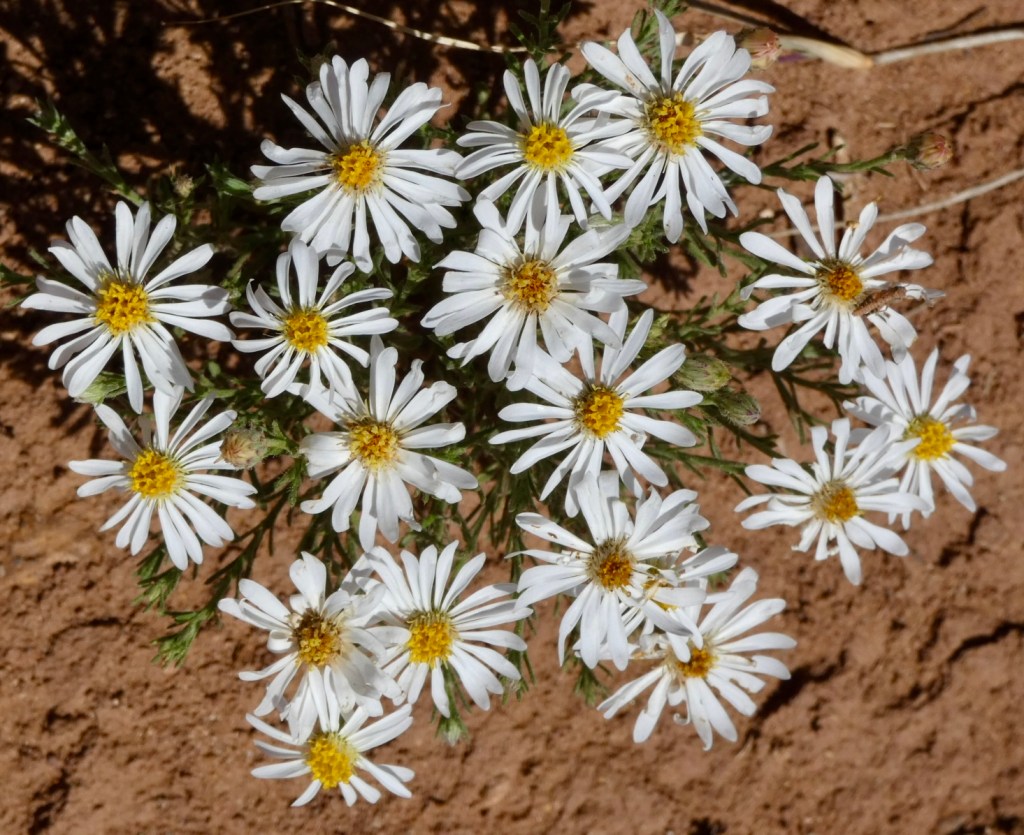
Barely ankle high, each flowerhead can have up to 24 white ray florets surrounding a rich buttery yellow center of 12-25 disc florets. And don’t fret if you notice the ray florets have curled downward in the evening. They magically unfurl to their full length by mid-morning the following day. 

This annual Spring show, which takes place all across the U.S. west and western Great Plains, is brought to you by the “petite” perennial called Rose Heath (Chaetopappa eriocoides). (Widespread and common in New Mexico, Rose Heath is adaptable to a variety of soils, elevation, and drought.)

The show typically begins in late March and continues into early May. And for those craving more, flowering resumes in August and can run until November; no charge. You just have to get out there and see for yourself!

Origin and Etymology – What’s in a Name?

Origin of the Scientific Name, Chaetopappa ericoides

Augustin Pyramus de Candolle, a Swiss botanist, named this genus Inula in the early 1800s. But in 1827, it was the American botanist John Torrey, who named the species Inula ericoides, from a specimen collected by botanist Edwin James along the Canadian River during Major Stephen Long’s Expedition of 1819-1820. Since that time, the species has undergone more than a dozen name changes including Leucelene ericoides (Edward Greene in 1896) and finally Chaetopappa ericoides (Guy Nesom in 1988). 

Etymology of the Scientific Name, Chaetopappa ericoides

The genus “Chaetopappa” is Greek for ‘bristly pappus’ (pappus refers to the score of tiny white bristles surrounding the disc florets; the same bristles, one per seed, that helps carry Rose Heath’s mature seeds up, up and away.  The species “Ericoides,” also Greek, means ‘similar (“oides“) to Heath’ (“eric”); i.e., the plant’s tiny, overlapping leaves are similar to those of some Heaths (Ericaceae is the scientific name of the Heath Family.)  

Common Name, Rose Heath

From the previous paragraph, it’s obvious where the name ‘Heath’ comes from, as Rose Heath does have stems and leaves very similar to a heath plant. But why ‘Rose?’ What I found is ‘Rose’ is Latin in origin, derived from “rosa,” referring to the flower. Because the daisy-like flowers of Rose Heath don’t resemble a rose flower, deeper diving was needed. I discovered that throughout history ‘Rosa’ and ‘Rose’ have represented love, passion, innocence, and beauty. So perhaps ……. ? If you’re familiar with Rose Heath or have seen photos of the plant in bloom, do you love or could you love its beautiful floral bouquets?  I think whoever thought to call this plant by the common name ‘Rose Heath,’ must’ve loved its stunning display!

…………………………………………………………………………………………………

Have you seen this beautiful plant, Rose Heath? 

As always, thanks for stopping by!

References
inaturalist.org

npsnm.org/wildflowersnm

Stevenson, M., 1915 Ethnobotany of the Zuni Indians. SI-BAE Annual Report #30, p.55 (as referenced by iNaturalist)

swbiodiversity.org

swcoloradowildflowers.com

National Sunflower Day

August 2, 2025

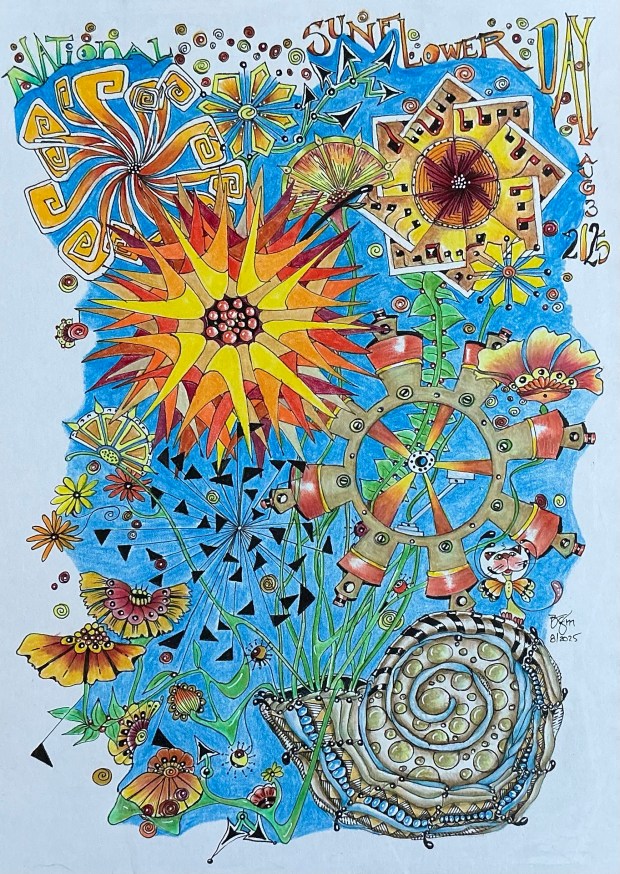
Zentangle patterns: Eeric, Dollpin, Alla, Citrus, Snowflower, Fancy Flower, Crizzy, Suru, KGI, Maryhill, Xplode, Lilyeyes, Odee, Sooflowers, Peaceout, Bulb Lantern, Arrowtree, Adobe

Sunflowers!🌻 Absolutely the happiest flower on Earth. Wouldn’t you agree?

Sunflowers, a symbol of adoration, loyalty, and longevity, represent happiness, friendship, and intelligence. Much like the sun, sunflowers reflect vibrancy and an energy of life. While National Sunflower Day is the official day to celebrate these beautiful flowers, why not declare the entire growing season reason a-plenty to radiate your inner sunshine and mirror the smiling faces of every sunflower encountered! 

Then and Now

Did you know sunflowers have been around since about 1000 BCE? In the U.S. indigenous peoples used sunflowers as a valuable food source, for oil, paint, and textiles, and during ceremonies. Some archaeologists even believe sunflowers may have been cultivated before corn. Today, sunflowers are still used for food (seeds, salad mixes) and beverages (tea), cooking oil, in beauty and skin care treatments, for medicinal purposes, and for hobbies and crafts.

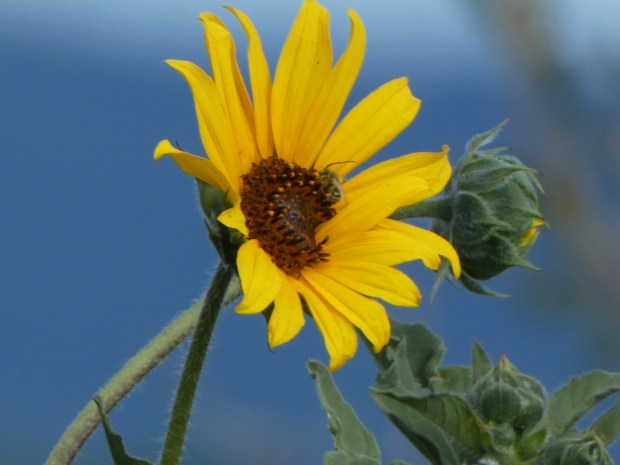
Annual Sunflower over 6 feet tall!

The sunflower crop

The U.S. is a mass producer of sunflowers, particularly in the plains states, and is a major crop in both North Dakota and South Dakota. The average cultivated sunflower plant is five to six feet tall, and the central face of disc flowers can grow bigger than a human head. As the weight of the sunflower head becomes heavy, it begins to fall forward causing the petals to fall off. Shortly after the harvest begins. On average, one sunflower can produce up to 2,000 seeds per head. In 2022, North Dakota produced 762 billion pounds of sunflower seeds!

The Happiest and the most Intelligent flower

Have you ever noticed sunflowers track the sun, from sunrise to sunset? It’s true! Sunflowers follow the sun’s movements throughout the day. You may notice that before sunrise, a sunflower is in sort of a sleeping position with its head slightly down. As the sun comes over the horizon, the flower awakens and slowly lifts its face to ‘look’ directly at the rising sun. As the day progresses and we observe the sun moving from east to west, so too does the sunflower by turning its face in sync with the sun’s apparent movements until sunset.1  When the sun sets in the evening, sunflowers nod off to sleep, but not before untwisting themselves and slowly return to face the east. Ingenious!  

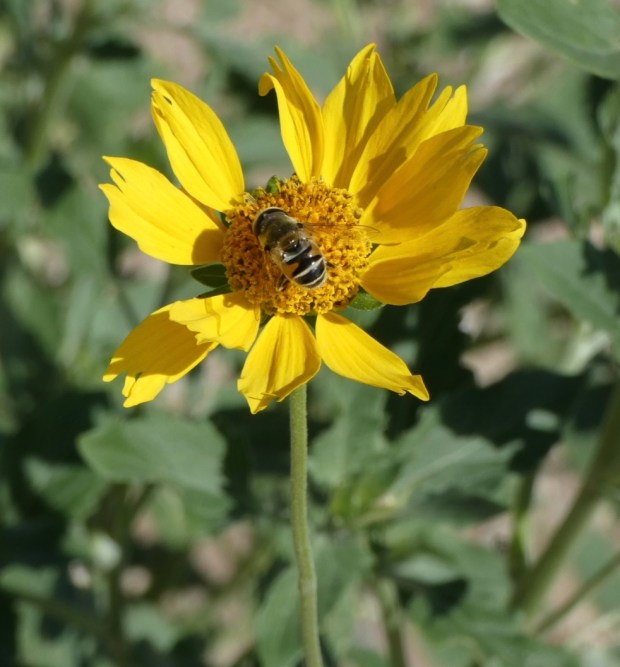
This charmer is called Cowpen Daisy

1 However, on very hot days, sunflowers tend to avoid looking directly at the sun to keep from overheating. And I’ve noticed on cloudy days, sunflowers may appear confused about the sun’s location, seeming to make their best guess on which way to face.

A season of yellows and oranges

Although you can find flowers in the Aster (sunflower) family in the Spring, August is the peak growing and blooming season for these cheerful plants. Brilliant displays of yellow flowers welcoming the morning sun can be found wherever sunflowers grow. Witnessing fields of sunflowers is guaranteed to lift your spirits as you oooooh and aaaaaaaah at their breathtaking beauty. 

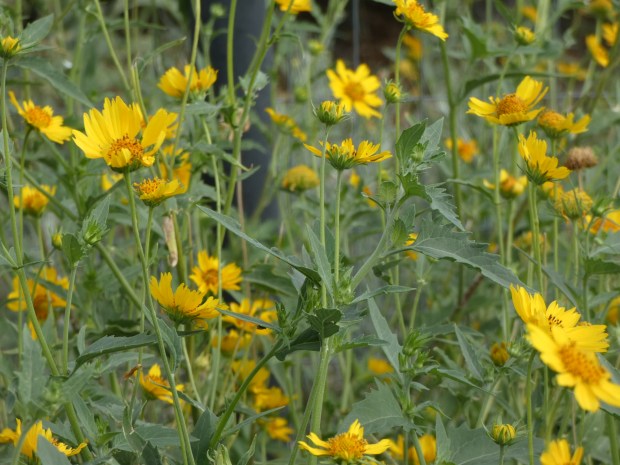
A trio of cowpen daisies

Ideas to celebrate a day, week, month or year of sunflowers

  1. Spend a day with a wild sunflower and watch its face track the sun.
  2. Take a drive to view fields of sunflowers to see their true beauty in mass.
  3. Give a bouquet of sunflowers to a friend to brighten their day.
  4. Add sunflower petals and seeds to your salad.
  5. Create a painting of your favorite sunflower and frame it to enjoy year-round.
  6. Try your hand at a Zentangled sunflower bouquet ….. there are as many pattern possibilities as there are blooming sunflowers! 
  7. Plan a road trip to North Dakota in August and coordinate places to stop to visit sunflower fields and get updates from local farmers who cultivate sunflowers. 
A collection of cowpen daisies in my backyard.

If you missed celebrating this year’s National Sunflower Day, no worries! Every time you come across any sunflower, of any size, anywhere, pause and hold a personal celebration in honor of its splendiferous magnificence!

As always, thanks for stopping by!

Sunflower photos were taken in our backyard ….. all volunteers too!

A Rosette by any other name …….

April 23, 2025

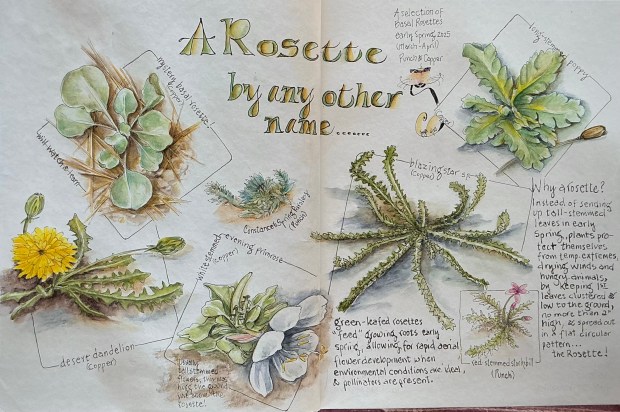
A selection of basal rosettes that popped out of the ground this Spring.

Have you ever noticed a dandelion? Oh sure …… you’ve seen hundreds, probably thousands of those ubiquitous sunburst yellow flowers blanketing a lawn or brightening an abandoned field. But before all that brilliance magically appears, have you ever looked below all those flower stalks? Have you ever noticed a dandelion before it blooms?

It’s early Spring in the mountainous areas of central New Mexico, and it seems like the high desert is slow to bloom this year. Anxious to spot even a hint of green during this transition time is always challenging, but if you look closely …….. Tucked beneath dry grasses and piled-high tumbleweed skeletons wedged next to swelling cholla you’ll find the green. Clusters of new leaves hugging the ground no more than an inch high, are beautifully arranged in a circular pattern like the unfolding petals of a rose.  

Rosettes!

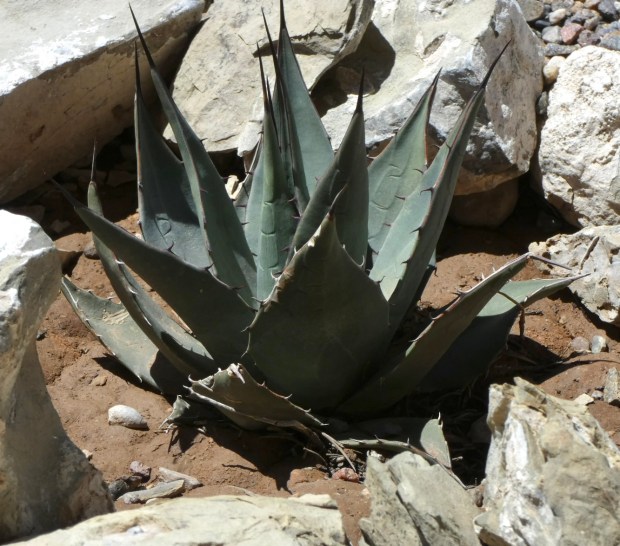
Rosette arrangements are found throughout nature,1 but in the flowering plants they are particularly common in the following families: Asteraceae (like dandelions), Brassicaceae (like cabbage), and Bromeliaceae (like pineapple). Many other families display the rosette morphology too. The needle sharp leaves of yucca and the bayonet-shaped leaves of century plant (in the Agave family) form tall rosettes. The intricate leaves of wild spring parsley (a tiny member of the Parsley family) and the petite red-stemmed stork’s bill (Geranium family) both form ground-hugging rosettes. 

A century plant displaying a beautiful basal rosette.

Where Rosettes Form

Basal Rosettes grow close to the soil at or near the plant’s crown (the thick part of the stem where the roots attach). Their structure is an example of a modified stem in which the internode gaps between the leaves do not expand, ensuring all the leaves stay tightly bunched together and at a similar height.  A protective function of a basal rosette makes it hard to pull from the ground; the leaves come away easily while the taproot is left intact (have you ever tried to pull a dandelion without snapping off the root?). Generally speaking, basal rosettes improve a plant’s odds at survival. For example, overwintering rosettes, like the basal leafy growth produced in year #1 of the 2-year life span of giant mullein, protect the plant and its roots from extreme cold temperatures. Emerging Spring rosettes, like those found in long-stemmed poppy, also protect the plant from late winter frosts. Basal rosettes are also more protected from changes in microclimate, gravity, wind, browsing, and mechanical damage if they are closer to the ground than tall leafy stems would be. help in water balance and conservation, especially important during periods of drought. 

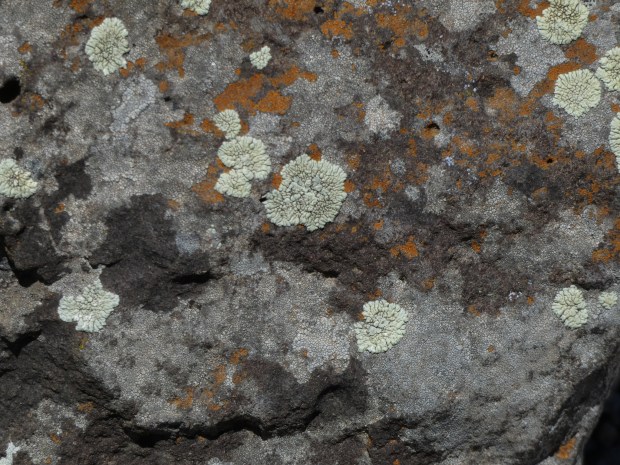
Lichen that has form small rosettes on rock.

But don’t only look down. Another form of rosette occurs when the internodes (those areas between leaves) along a stem are shortened, bringing leaves closer together as in lettuce and some succulents.2. And although not as common as basal rosettes, some plants form rosettes at the terminal or top end of their often naked stems, branches, or even trunks. One plant that does this is the native sedum called wild stonecrop. The top of the plant stems usually terminate in whorls or three fleshy leaves. Another example is the Hawaiian screwpine, which has a terminal rosette of sword-shaped leaves which sits atop an erect trunk, often supported by prop roots.

Know Your Local Rosettes

A number of desirable and undesirable (weedy) plant species produce rosettes, particularly basal rosettes.  Being able to identify a species that pops up in the Spring by its rosette is so helpful in preventing a removal mistake by inadvertently digging them up. Many weedy, non-native plants gaze first at their world through rosette “eyes.” But not all plants with rosettes are undesirable. Do you know your local rosettes by their other names?

………………………………………………………………

1  Rosettes are found throughout nature, not just in the flowering plants.  Here’s some examples you may have seen or heard of:  

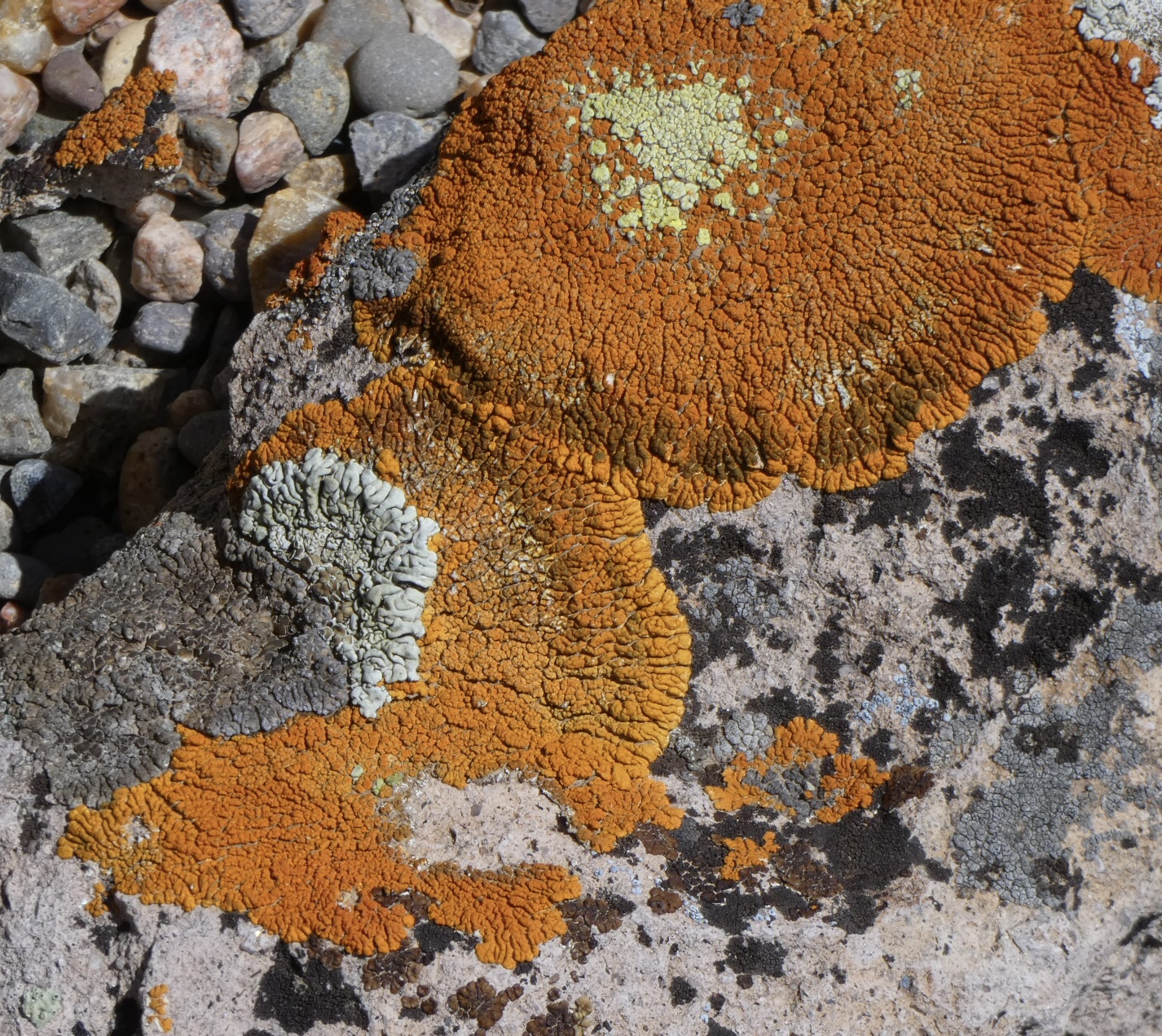
In bryophytes and algae, a rosette results from the repeated branching of the thallusas grown by plant, resulting in a circular outline. Lichens also grow rosettes.

Tiny wasps and midges can induce the development of galls that become leafy rosettes.

Jaguars, leopards and other feline species display rose-like markings on their fur, referred to as rosettes.

Malaria parasites are known to form spontaneous rosettes in uninfected red blood cells.

Neural rosettes in the human brain are being studied to learn how new cells are born.

It is unknown why the Rosette-Nosed Pygmy chameleon, at home in the mountains of Tanzania, has evolved a distinctive, rosette-shaped, fleshy protrusion on the end of its nose.

The Rosette nebula, named for its rosette-like appearance, is a beautiful collection of gas and dust 5,200 light-years from Earth in the constellation Monoceros the Unicorn, and stretches about 130 light-years across.

A gorgeous lichen decorated rock from Colorado. Note the rosette patterns of growth (the thallus)

  The horticultural definition of a succulent describes a drought-resistant plant where the leaves, stems, or roots have become fleshy and their tissues are able to store water. Succulents include aloe, euphorbia, sedum, the garden favorite hen-and-chicks, and bromeliads. But horticulturalists do not include cacti in the succulent group. huh? Even though cacti are frequently found in books describing succulents based the definition of a succulent, succulents are not cacti. In agreement with that last statement are many botanical and other scientific experts. (Can this get any more confusing?). So basically some experts are lumpers, while other are splitters.  Which are you? 

Basal rosette of a yucca in the NM foothills.

P.S. Cacti have stems that are thickened fleshy water-storing structures, and are considered to be a stem-succulent group of plants. Are there any cacti species that develop leafy rosettes? Because the spines are the leaves, greatly modified, in all my rabbit-trailing thru the internet and perusal of my collection of botanical references I’ve yet to see any spines forming whorled/rosette-like patterns. If you have, please contact me immediately!
……………………..……………..😂…………………………………………

Are you ready to explore the wide diversity of rosette forming plants in your neighborhood? Get on out there before those circularly-arranged leaves become disguised by an overabundance of gorgeous wildflowers! 

As always, thanks for stopping by!  And Happy Earth Day (week)!

Winter Botany: Horsetail Milkweed

February 1, 2025

Wandering about the neighborhood one warm summer morning in 2018, I noticed a dense stand of plants lining a 20 foot section of road. What caught my eye were the umbrella-like clusters of pearly white flowers topping each slender stem. From a distance these plants resembled our native white-flowering yarrow. But I soon realized the narrow dark green leaves were not fuzzy; the tiny exotic-looking flowers were not daisy shaped. Unmistakably, this plant was a species of milkweed! And the flowers of more than 50 individual plants in this population were a-flutter and a-buzz and a-crawling with hungry insects!

What was this milkweed species?

This is the Winter Botany portion of this post. All that remains of last summer’s Horsetail Milkweed are stems and mostly empty seed pods clinging to short branches. But some of the seed pods still hold silky tailed seeds clinging to their open pods. Hundreds of seed pods line the roadways in our neighborhood.

It didn’t take long to confirm this plant as Horsetail Milkweed (Asclepias subverticillata), a species commonly found along roadsides in pinyon-juniper woodlands. Knowing what to look for on future walks, over the next several years I was excited to find 30+ more populations of various sizes along neighborhood roadways! From 2018 until early summer 2024, I continued to monitor these seemingly abundant populations. The small numbers of seeds I collected in the Fall were planted in our yard, and every year I checked for the presence, variety and numbers of insects busy feeding on nectar as they pollinated the flowers.  

During June 2024, when we moved only a few miles to the northeast, I was happy to see Horsetail Milkweed grew abundantly in our new subdivision. This prompted me to dig deeper into researching this species. Its been exciting to discover how important this milkweed is to native insects, including monarch and queen butterflies.

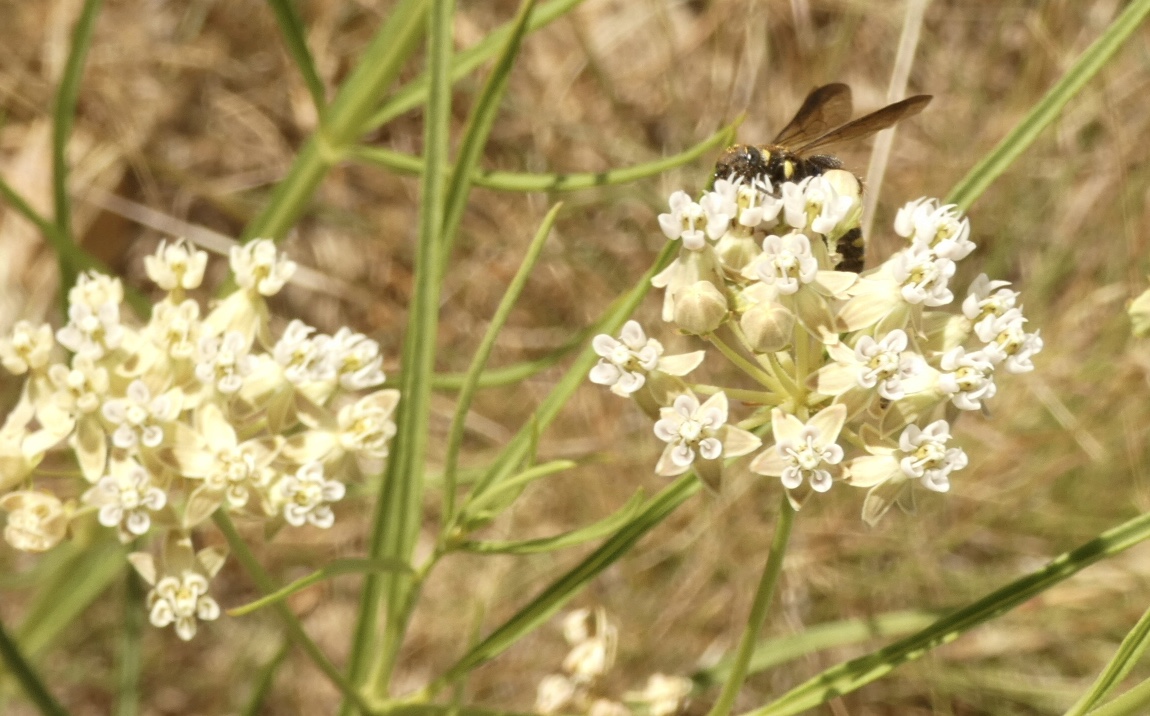
Photo (mine) taken in July 2022 of a blooming Horsetail Milkweed being enjoyed by a feeding wasp.

According to pollination ecologists, Horsetail Milkweed is especially valuable to large numbers of native bees. This plant species also supports conservation biological control by attracting predatory or parasitoid insects that prey upon pest insects. 

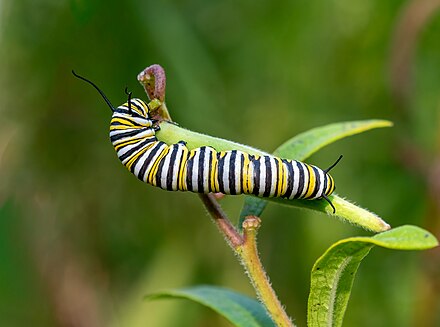
And Horsetail Milkweed is one of the favorite host plants for monarch and queen butterflies, all because it’s toxic!  Producing an especially nasty tasting and potent neurotoxin strong enough to kill livestock, the caterpillars of these two butterflies have evolved to benefit from such a poisonous substance. Voraciously ingesting a diet of only milkweed leaves, obviously tasty to the larvae, makes them unpalatable to would-be predators, such as birds. The toxin from milkweed leaves has become their primary means of defense; definitely a benefit for such chubby, slow little caterpillars.

Monarch caterpillar (source: open commons)

Although central New Mexico isn’t in any of the major migratory routes of these butterflies, I have observed both species in our previous neighborhood. Since learning more about Horsetail Milkweed and it’s favored roadside habitat close to home, my hope is to provide actively growing plants throughout the summer (a safe distance away from roadside easements) for both the monarch and queen adult butterflies and their caterpillars ……. especially important when governing covenants of our previous and new subdivisions require the roadways be groomed (mowed down like a butch haircut!) on a monthly basis by subdivision landscape crews. 

Because milkweeds are among my favorite of all plant species, mainly due to their complex flowers and the clever trickery they’ve developed to ensure pollination, I wrote about and illustrated two in-depth blog posts on this subject. Believe me when I say,  “It’s overboard fascinating!”

Check out the following posts …..

Surprise! A vine-y, twine-y desert milkweed discovery from July 2024, where I revisit milkweed flower structure and pollination and learn about a new-to-me genus, Funastrum.

Summer Botany: Meet the Milkweeds from July 2022. This is my first comprehensive look at milkweed flower structure, how pollination takes place, and the genus Asclepias.

Read on to learn more botanical information about Horsetail Milkweed AND how to find out if you live in Spring and/or the Fall Migration routes of the monarch butterfly AND where queen butterflies migrate to and from. 

Characteristics and habitat requirements of Horsetail Milkweed

Horsetail Milkweed is a perennial species with a stout, woody rootstock. Plants readily spread by rhizomes (underground stems) producing dense communities. Cold-hardy to at least 0℉, this milkweed bounces right back in the Spring. Plants are also drought-tolerant once established, thriving in well-drained, sandy soil under full to partial sun.
Able to thrive in a variety of habitats and plant communities from 2500 – 8000 feet in elevation, Horsetail Milkweed grows among grasses, on sandy or rocky flats, on slopes, roadsides, and along trails in Chaparral, Semidesert Grasslands, Pinyon-Juniper Woodlands, Montane Conifer Forests, and in disturbed areas.

All of these characteristics and its adaptability to a wide range of habitats make Horsetail Milkweed one of the easiest milkweed species to grow.

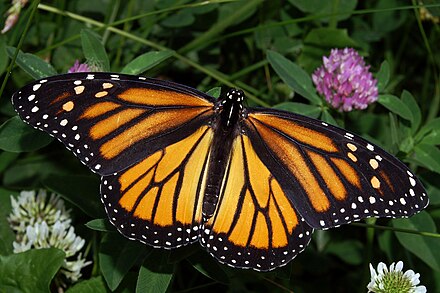
Monarch butterfly (source: open commons)

Monarch Butterfly

To learn if you live within the path of or close to spring and/or fall monarch butterfly migration routes, you can view a map or these route here:

https://www.monarchwatch.org/

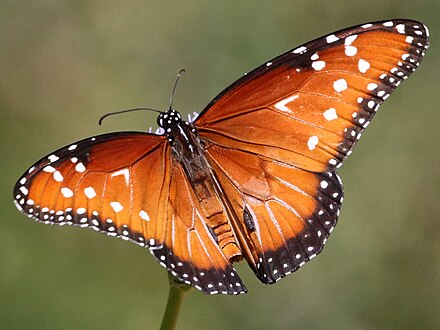
Queen butterfly (source: open commons)

Queen Butterfly

The queen is chiefly a tropical species. In the US, it is usually confined to the southern portion of the country. It can be found regularly in peninsular Florida and southern Georgia, as well as in the southern portions of Texas, New Mexico, Arizona, and California. Occasionally, the subspecies of the queen can be found somewhat north, in Kansas, Colorado and Utah. 

Queen butterflies do not migrate as dramatically as monarch butterflies, but they do move short distances in tropical regions with dry seasons to higher elevations.
Queen caterpillar (source: open commons)

As always, thanks for stopping by!

Pick Me! Pick Me!

January 20, 2025

Winter can be challenging for nature journalers. Getting outside when it’s cold and windy, cloudy and dreary, snowy, icy or wet, are not ideal weather under any circumstances.  And when everything looks brown and crispy and pretty much the same, the challenge to nature journal in the great outdoors grows exponentially. While these conditions make it difficult for spontaneous observing, I try to remember there’s always something remarkable to be discovered in nature, even in winter.

 Who knew a little whack on the head would be just the thing to reawaken my curiosity?

Bundled in layers, leash in hand, Luna led me on her early morning walk around suburban Albuquerque. Having been along this route before, we’ve both made some interesting discoveries in the past.  And as usual, this time was no exception for Luna. For me though, everything appeared brown, crispy and familiar. But I was inspired by  and enjoying Luna’s sense of curiosity, and her encouraging tug on the leash. 
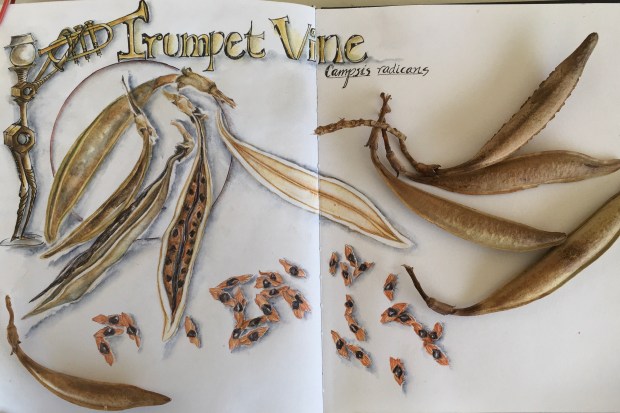
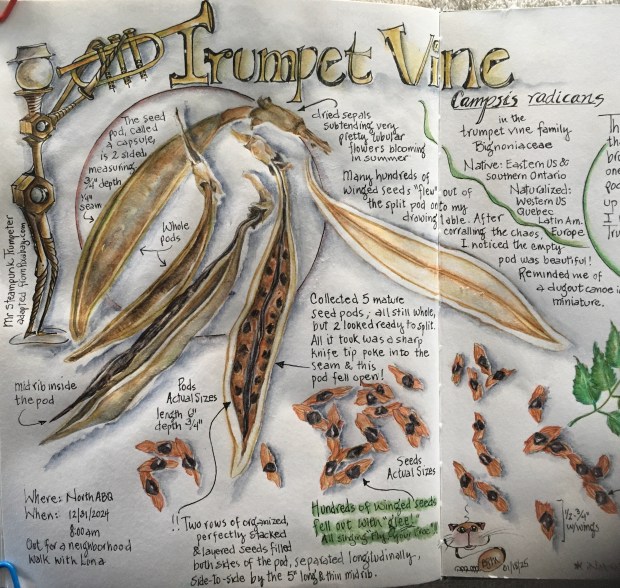
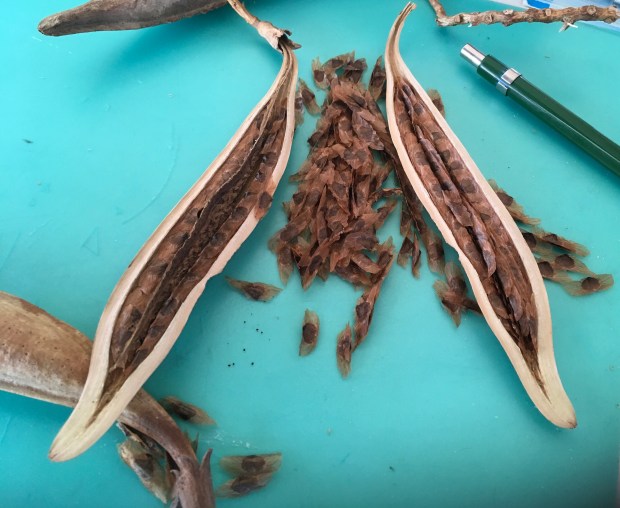
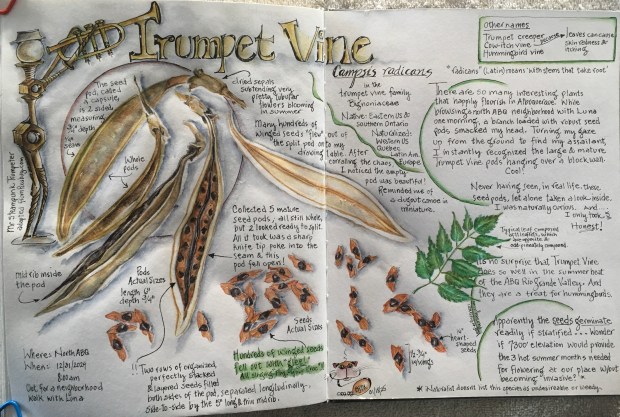
Nearing the end of our 2-1/2 mile walk, and mightily concerned I’d go home empty handed, we turned our last corner. It wasn’t 100 feet down the cement block-lined sidewalk that I abruptly stopped in my tracks. Something had lightly whacked me in the head! While the sound of rhythmic clacking rang out, I looked up, and to my surprise spotted the accidental assailant. Draped over the 6 foot wall, suspended from a hearty Trumpet Vine (Campsis radicans) growing in the hidden yard beyond was a string of pods resembling brown green beans. Long and plump and full of seeds, one of these pods had reached down low enough to make contact with to my head. (I say “reached” because that’s what my imagination said had happened.) Quickly awaking my sleepwalking brain, the effort made by the seed pod to get my attention paid off too. Silently whispering, “Pick me! Pick me!” it was as if the seed pod and its adjacent buddies either wanted to be harvested, or wanted to be featured in my nature journal (or both). 

So I did ………… both!

I loved learning about and sketching these fascinating Trumpet Vine seed pods, while my mind was filled with the muffled notes of a trumpet. Tooo-too-too-toooooom!

Hope you enjoyed reading this story and browsing around my journal pages.

As always, thanks for stopping by!

A Quirk of Nature: Fourwing Saltbush

November 25, 2024

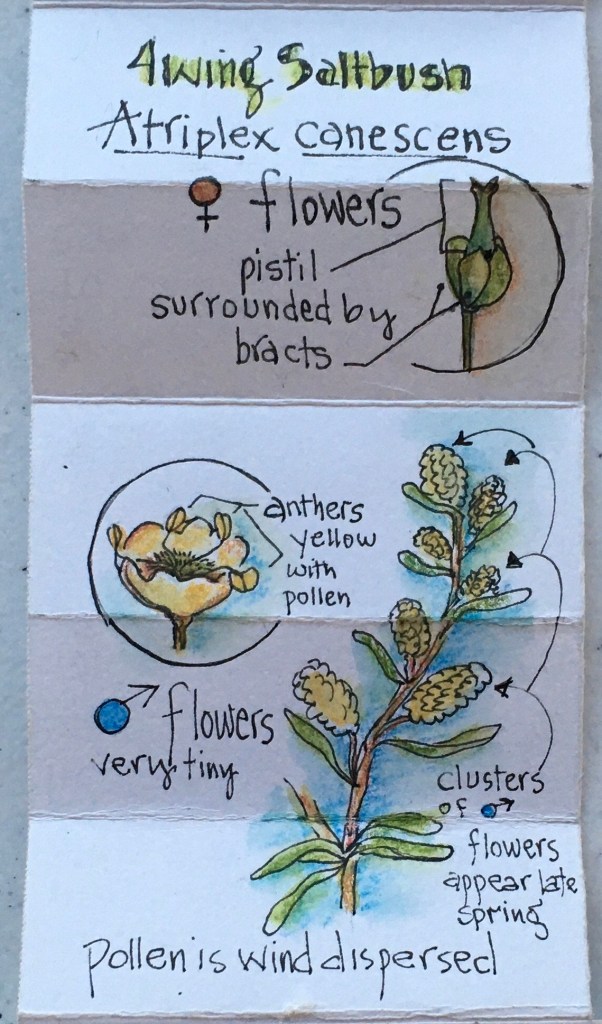
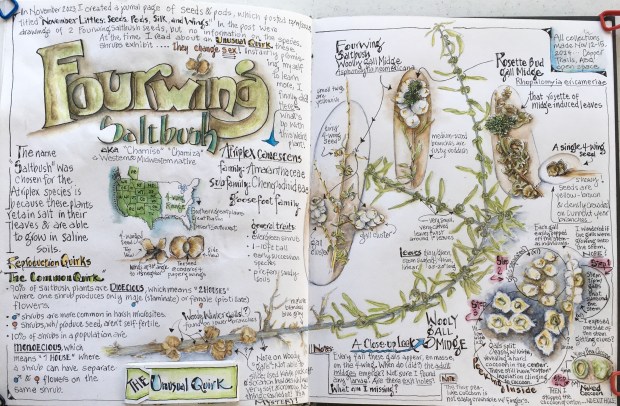
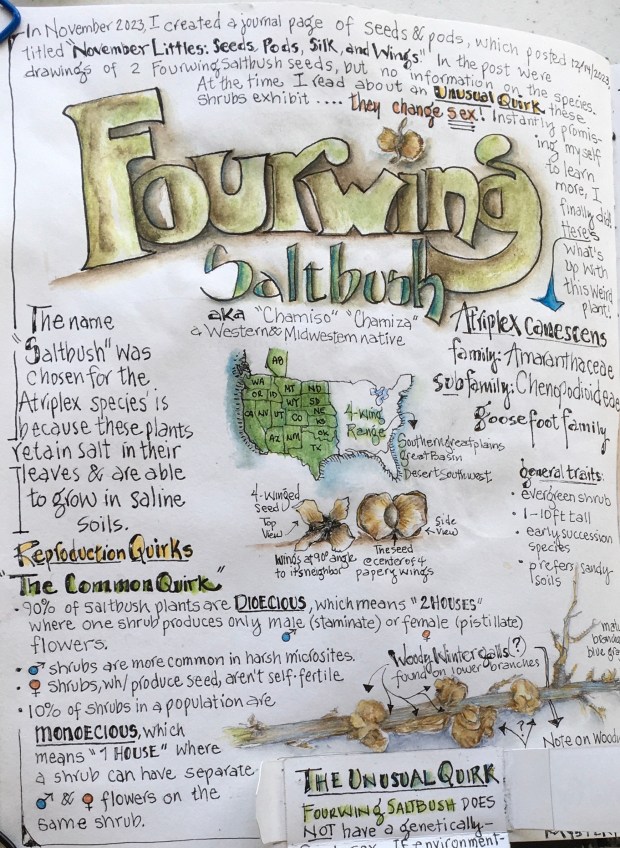
In November 2023, I created a journal page of seeds and seed pods, which posted on 12/14/2023, under the title November Littles: Seeds, Pods, Silk, and Wings. On that page was a small drawing of two Fourwing Saltbush seeds, absent any information about this plant species, Atriplex canescens. At that time I remember finding a wealth of articles and research documents about this widespread shrub, but what really stuck in my mind was a very unusual quirk exhibited by this plant. Finally, a year later and WOW! I discovered Fourwing Saltbush has a reproductive superpower …… this species has the ability to change sex!

An Unusual Quirk

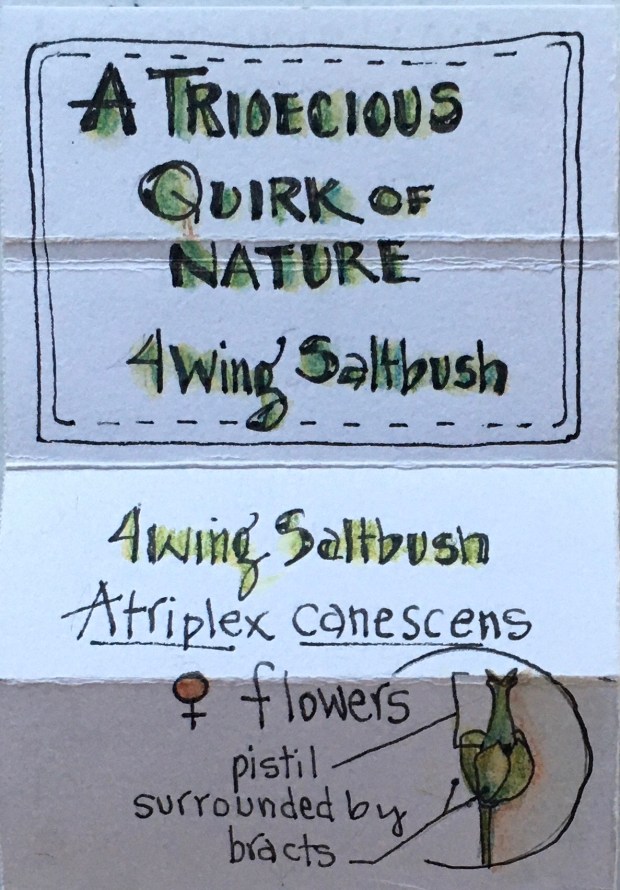
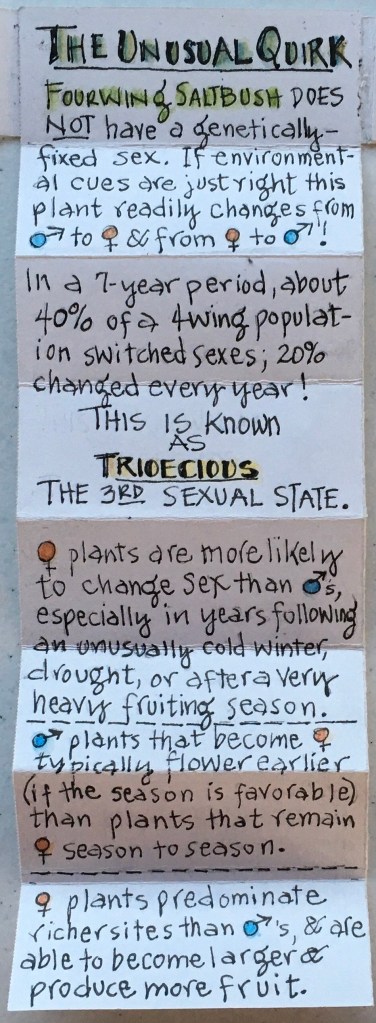
My first dive into the literature revealed that within a 7-year period of time, 40% of a Fourwing population switches sexes with 20% of a population changing sex every year. Botanically, this is known as Trioecious, or the 3rd Sexual State.  

But clearly a bit of back peddling is needed ……. if Trioecious is the 3rd Sexual State in plants, what about the 1st and 2nd sexual states, huh? Yes, they exist …….. but before explaining them, which requires comparison with the more common sexual state in plants, I must describe this sexual norm. 

And now for a little Botany 101 ……..

The Sexual Norm …… Plants with Perfect or Complete Flowers

You are likely familiar with plants like roses, tulips, lilies, garden strawberries, beans, peas and cabbage. If you’ve closely examined their flowers while inhaling their fragrant aromas, you may have noticed their centers have both female and male parts. These are known as plants with Perfect or Complete flowers (aka hermaphroditic or bisexual) defined by each individual flower having a fully functional pistil (the female part) and stamens (the male parts). Worldwide, about 90% of flowering plants have Perfect or Complete flowers.

Monoecious ….. the 1st Sexual State

Here again you are likely familiar with many plant species described as Monoecious (moh-NEE-shuhs). These include corn, all of the plants in the gourd family (i.e. cucumber, squash, watermelon), oak, birch, pine, spruce and dogwood. Monoecious, which means “one house” in Greek, describes plants having separate female and male flowers in different places on the same plant, often blooming at different times. Visualize corn growing in a field; the tassels are the male (staminate) flowers, and the corn kernels you eat are the female (pistillate) flowers.  Around 10% of all flowering plant species worldwide are Monoecious.

Not to confuse the matter, but sometimes botanical experts refer to Monoecious species as Perfect or Complete because they have both male and female flowers on the same plant, even though these flowers are separate and considered sexually Incomplete (aka unisexual) by themselves. 

Dioecious ….. the 2nd Sexual State

A plant species with individual plants in a population having only female flowers, and individual plants of the same species in the same population with only male flowers is called Dioecious (dahy-EE-shuhs). This Greek word meaning “two houses,” describes plants such as spinach, asparagus, sumac, currant, box elder, willow, holly, ginkgo, juniper and aspen. Only 5% of all flowering plant species worldwide are Dioecious.

Another confusing matter once again. There are botanical experts that refer to plant species with Perfect or Complete flowers as Dioecious because they require cross-pollination to produce seeds (fruit). Tree fruit species such as apples, pears, cherries and plums are common examples.

Trioecious ….. the 3rd Sexual State

An extremely rare reproductive strategy among flowering plants, Trioecious (aka trimonoecious or “three houses”), is characterized by a species that can have Incomplete (unisexual) male, Incomplete (unisexual) female, and Perfect or Complete (bisexual or hermaphroditic) male/female flowers on separate plants in a population or even all on the same plant! Just over 3% flowering plant species worldwide are Trioecious (trahy-EE-shuhs).

This is where Fourwing Saltbush (Atriplex canescens) enters the story

Primarily a Dioecious species, some Fourwing Saltbush populations have a Monoecious component ranging from entirely male (staminate) or female (pistillate) individuals to those that are Perfect or Complete (hermaphroditic or bisexual). And in this DioeciousMonoeciousHermaphroditic gender system, referred to as Trioecy, switching sexes occurs. To reiterate from an earlier paragraph, on average, in a 7-year period, about 40% of a Fourwing Saltbush population switches sexes with 20% changing from male to female or from female to male every year.

Reasons Behind and Benefits of Fourwing’s Sex Change Phenomenon

Fourwing Saltbush has evolved to be one of the most adaptable plant species found throughout central and the western US. It grows from sea level to 8500 feet elevation, and in a multitude habitats within a wide range of plant communities, no matter the successional stage. Fourwing can adapt to all soil textures, soil depths and all but the wettest of soil conditions. The species is able to tolerate hot (+100F) and dry (6” precipitation annually) summers, and bitter cold (-50F) and dry winters.  

The ability of the species to adapt to such a wide range of physical and climatic conditions is, in part, due to this sex change phenomenon. Environmental stressors seem to be the major triggers resulting in Fourwing plants switching sexes. Female plants are more likely to change sex than male plants, especially following a drought, an extremely cold winter, or after a heavy fruiting season. Because fourwing is so tasty as range forage, overgrazing can also trigger a sex change, with male plants tending to dominate regularly grazed sites. Male plants that change to female typically flower earlier than plants that remain female season after season. And female plants dominate richer sites than do male plants, becoming larger and producing more seed.

Undoubtably there’s more environmental stressors, such as wildfire and other climate change-induced factors, that may result in Fourwing Saltbush to switch sex. I’ll be curious to learn what they are and how these triggers influence the adaptability and survivability of this robust species.  And I’m excited get busy marking this season’s female and male plants that we see nearly every day, and will begin more closely observing these populations for gender changes and possible stressors that may have triggered these switches. 

A Retrospective and Thoughts on Prospective Studies

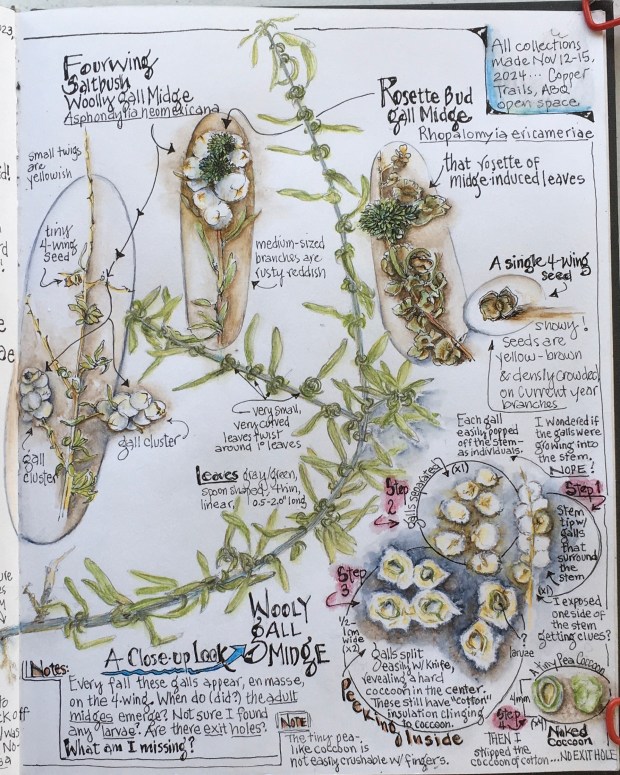
There’s so much to learn about Fourwing Saltbush that it seemed logical to tackle one characteristic at a time. Originally I had planned to discuss both the plant’s reproductive quirk and several of its common galls, but found there would be too much information for one post. While deciphering the complexities of the Fourwing’s sex change abilities, I found it necessary to describe certain key botanical terms in my buildup to the crucial piece of the puzzle ….. the Trioecious reproductive strategy.  So this post focused on the first of my two journal pages; my beginning exploration into this plant.  The galls illustrated on my second journal page, that could not be easily chopped away from the first page, serve as a preview of a future post about the fascinating Fourwing Saltbush. 

And Finally ……….

For a shrub I used to describe as a messy tangle of branches haphazardly cloaked with unremarkable features like dusty little grey-green leaves, nearly invisible flowers, shreddy dull grey trunks and a chaotic canopy, Fourwing Saltbush has captured my imagination, respect, and love as an almost invincible survivor of our changing world!

Hopefully you found this interesting and informative. Bet you never look at flowering plants in casual ways again.  Let me know if you are familiar with Fourwing Saltbush. Where does it grow? Have you ever marveled at the thousands of winged seeds densely crowded at the tops of these shrubs?  And then satisfied an irresistible urge to strip dozens of skinny branches of those ripe seeds, tossing them in the air like confetti? If so, please share.

As always, thanks for stopping by!

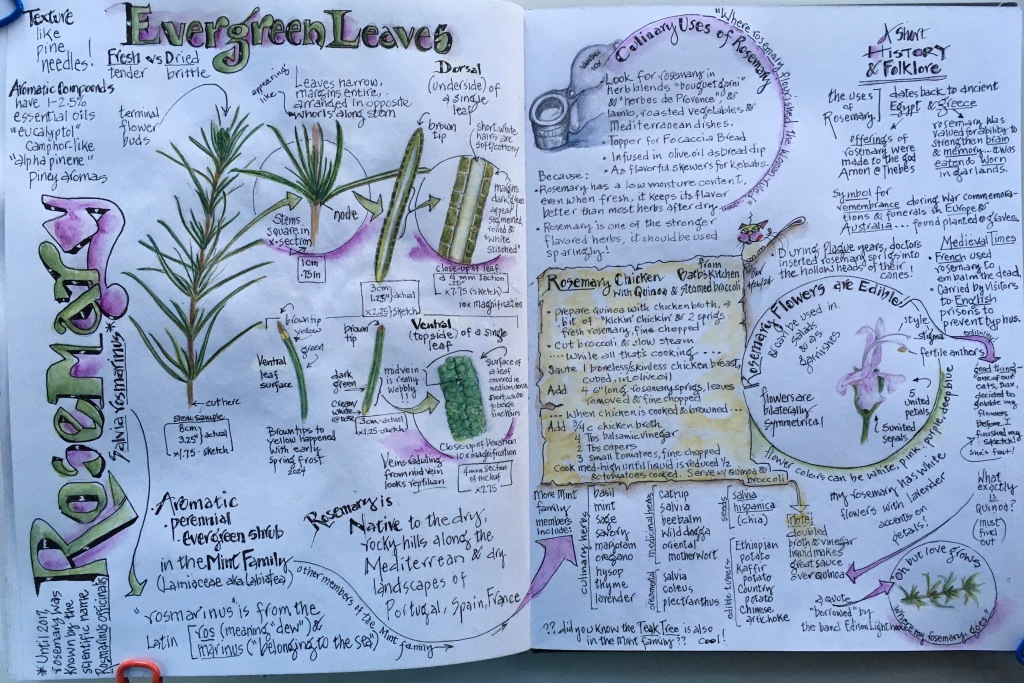
Rosemary …. Next Up in my Herb Series


April 27, 2024


When trying to pin down exactly what’s so special about Herbs, a deliciously aromatic group of plants, I was stumped.  Well, maybe not stumped, exactly. There are so many reasons to fall in love with Herbs, and picking one feature or even one Herb that’s especially special is nearly impossible. Best known for their culinary flavor enhancements, can you imagine pickles without Dill, pesto without Basil, salsa without Cilantro? What’s a dark chocolate circular pattie without Peppermint, or a cookie cutter man without Ginger?  


Herbs excite memories, calm the mind, reduce inflammation. Does the aroma of sage conjur thoughts of Thanksgiving? Does a sprig of lavender make you sleepy? Does bold yellow turmeric soothe arthritic joints?


And many Herbs are decorative and lovely to look at, form beautiful shrubs, have gorgeous flowers

But I keep coming back to the aroma. It’s hard to resist crushing the leaves of herbs like thyme or mint between my fingers. The essential oils released into the air and lingering on my fingers causes me to take a deep breath, inhaling the fragrance, embedding the aroma in my brain, resulting in a memory I can recall over and over again. 

Herbs are Special!

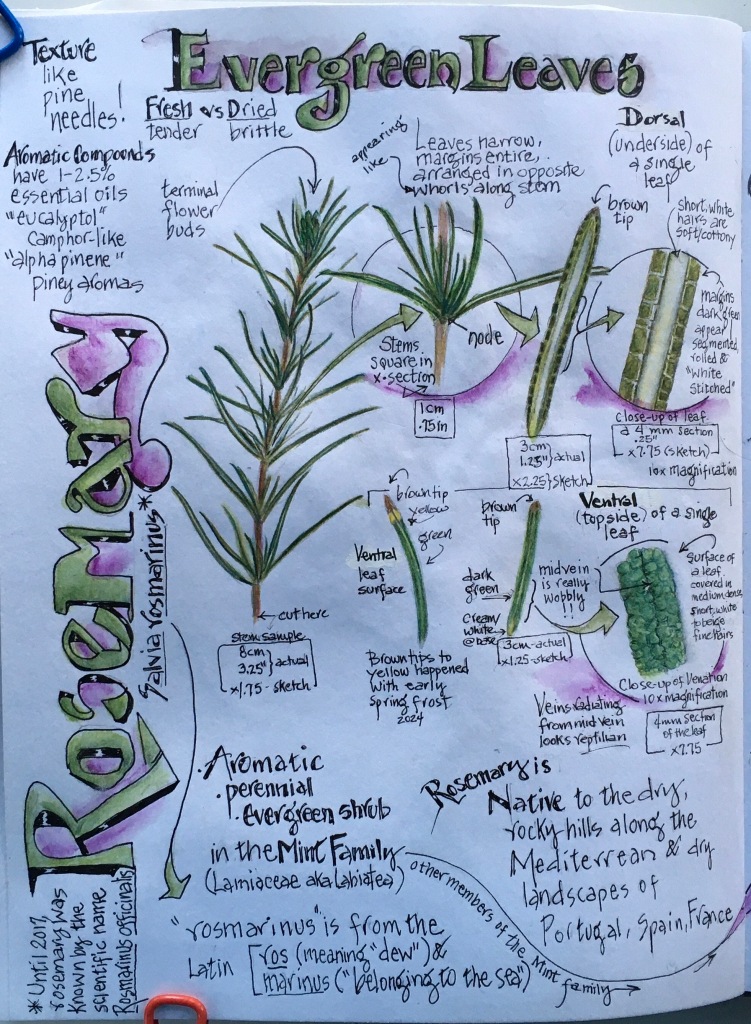
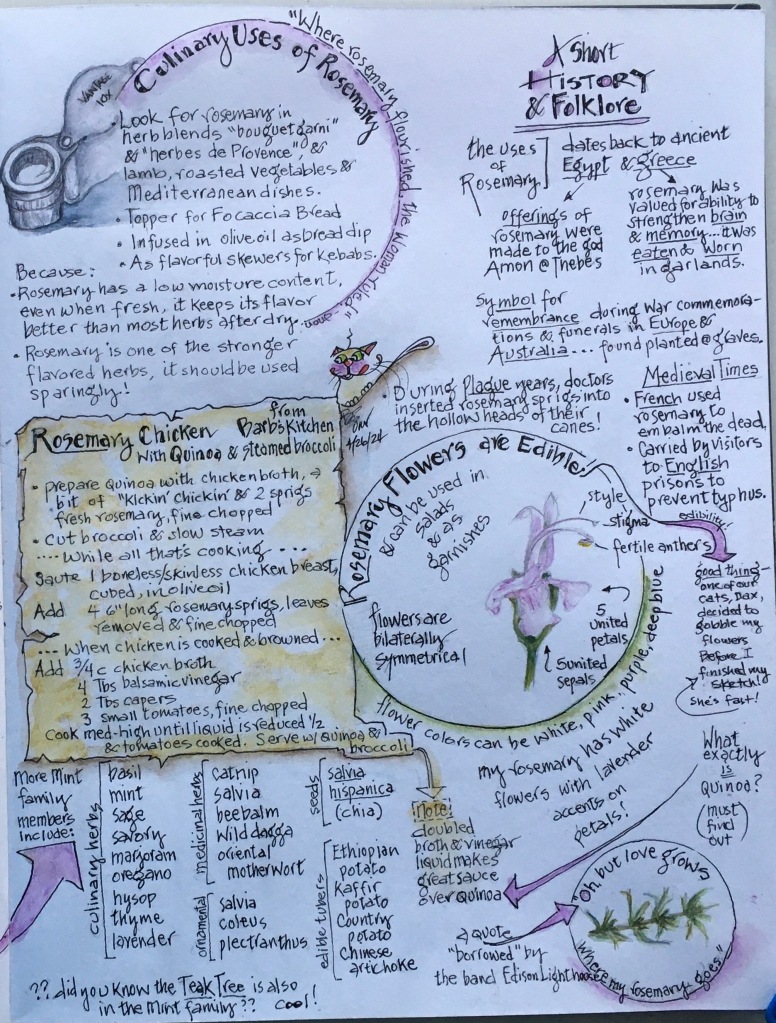
The Rosemary plant (actually a mini shrub) in my yard always invites my attention, and just this week it welcomed spring by coming into full bloom!

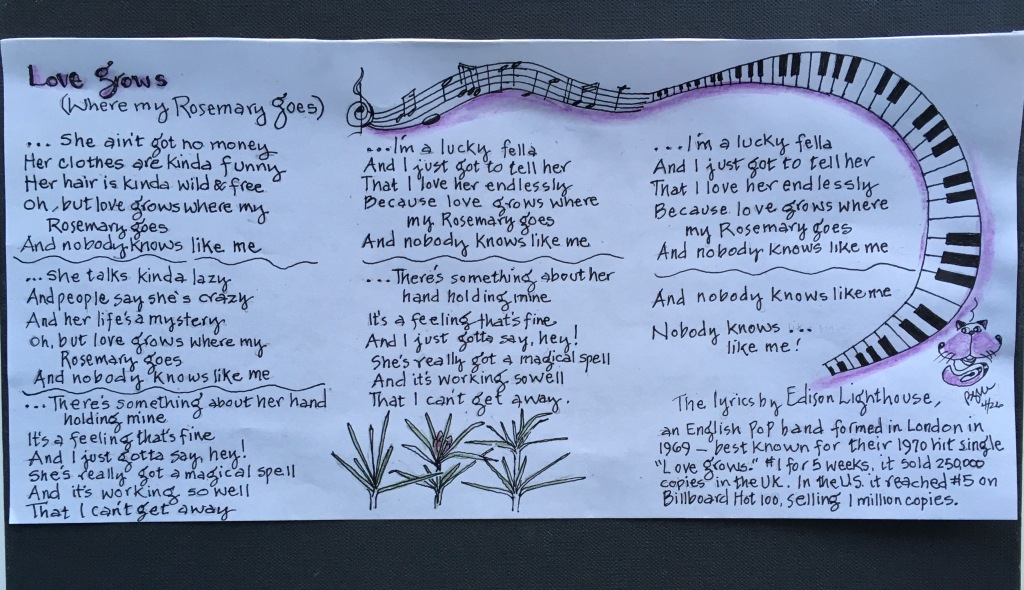
Who remembers this?! Now I can’t get it out of my head!

Do you have a favorite Herb? Why is it special? How do you use it?
Please share! And thanks for stopping by!