May 25, 2026
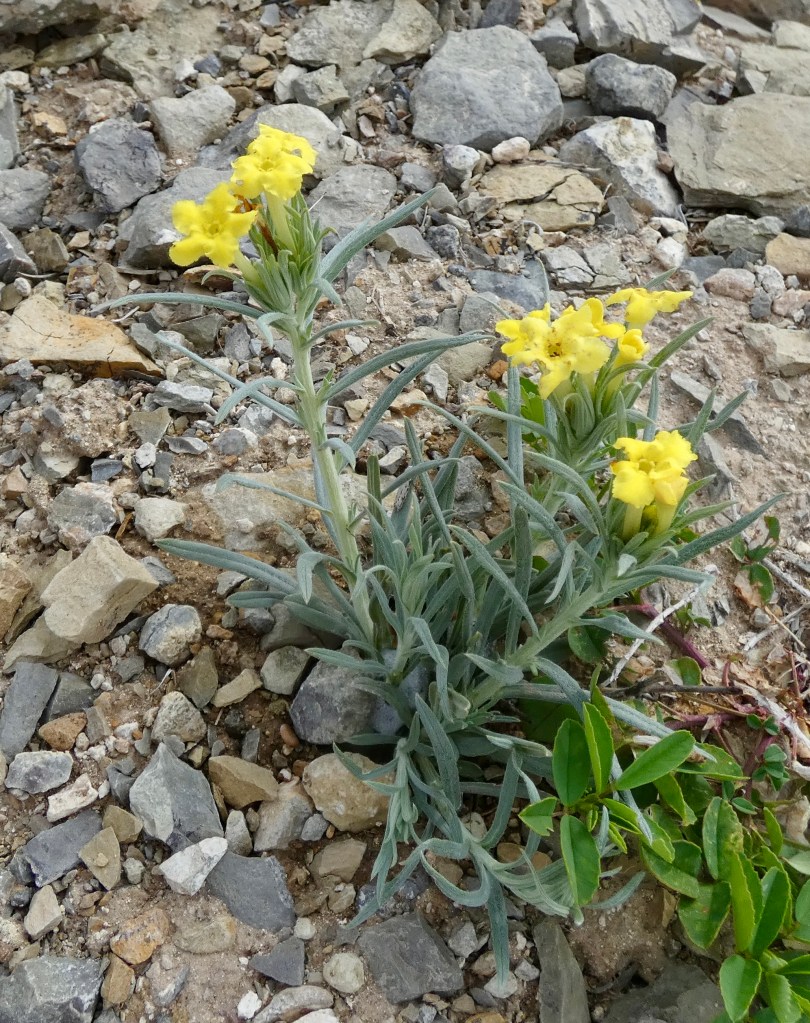
Narrowleaf Puccoon (Lithospermum incisum)
Etymology
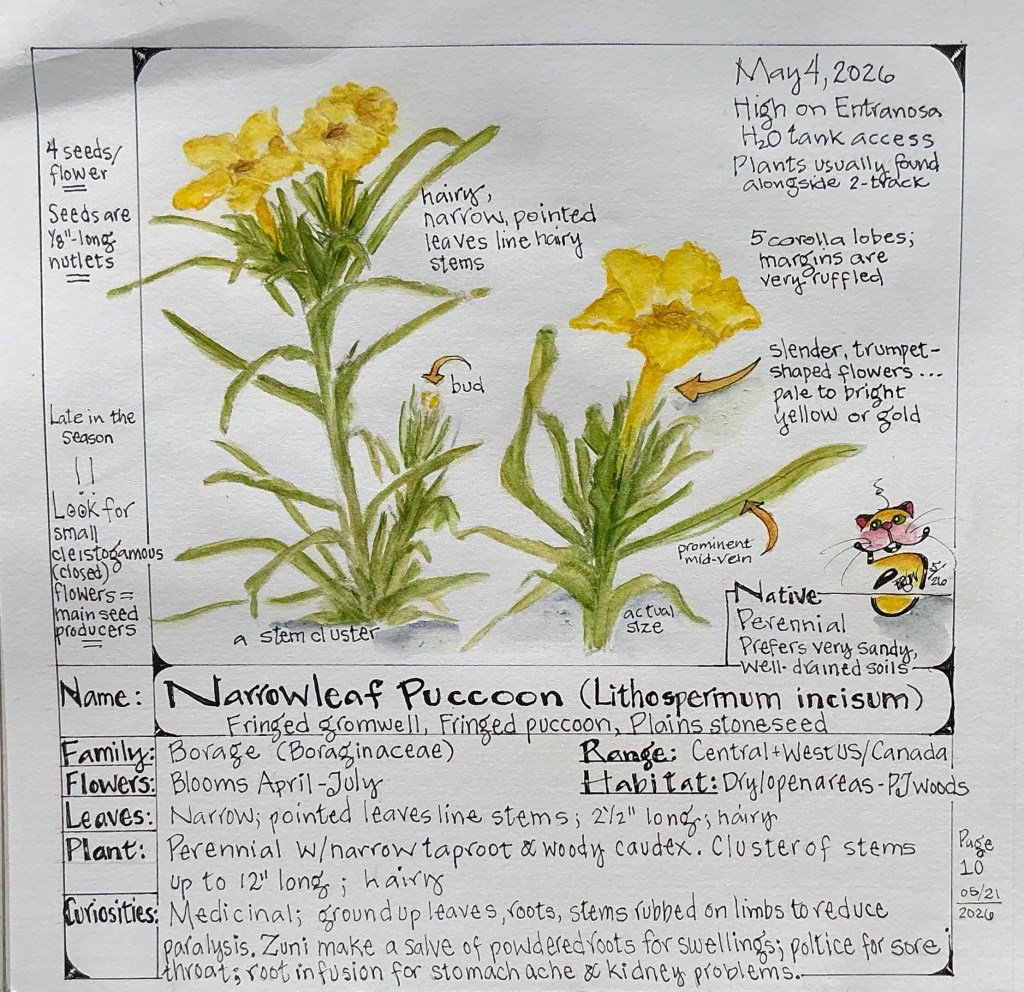
Lithospermum, the genus named by Linnaeus in 1753, is Greek for stone (“Lithos”) and seed (“sperma”), referring to the hard nutlets. And “incisum,” the Latin species name referring to the incised, fringed edges of the trumpet flowers, was named by Lehman (a German botanist) in 1818 from a specimen collected “near the rapids of the Ohio” by Andre Michaux (a French botanist and explorer) in 1802.
Puccoon evolved from “poughkone,” a word the Virginia Algonquian language used for plants whose roots yield a red or yellow pigment. The roots of Narrowleaf Puccoon were historically used as dyes ranging from purple to red to yellow.
A Two-Flower Strategy
Very showy and quite lovely, the sunshine yellow trumpet-shaped flowers of Narrowleaf Puccoon are hard to miss. They often cluster at the ends of 12-20” long stems where the floral tube is ringed by five frilly petal lobes. The flowers depend on pollinators like butterflies for cross-pollination which adds genetic diversity to the few seeds they produce. Botanically speaking, these traditional, open flowers with exposed reproductive parts are referred to as Chasmogamous.
Then later in the season, the Narrowleaf Puccoon produces small, petal-less flowers that remain tightly closed. These highly fertile, self-pollinating flowers account for almost all of the plant’s seed production. Botanists refer to this type of closed, often inconspicuous flower as Cleistogamous.
The“Stone Seed” Fruit
Because Narrowleaf Puccoon only produces the occasional fruit from its showy flowers, it takes a bit of searching around the plant’s lower leaf axils to locate a tiny group of up to four hard “stone seed” nutlets. Beginning growth inside the self-fertile, closed (Cleistogamous) flowers that are present late in the season, each egg-shaped nutlet, pitted across the surface, ripens to a shiny white.
Plant Propagation
Seed Germination – To grow Narrowleaf Puccoon from seed, nutlets should be collected in late summer. Soak them overnight in hot water then plant immediately. Because seed germination is sporadic and often disappointing, selecting a desirable location for planting is important. The plant grows best in very sandy, well drained soils found in the dry/open areas within our pinyon/juniper woodlands (though they do grow in soils with some loam or clay).
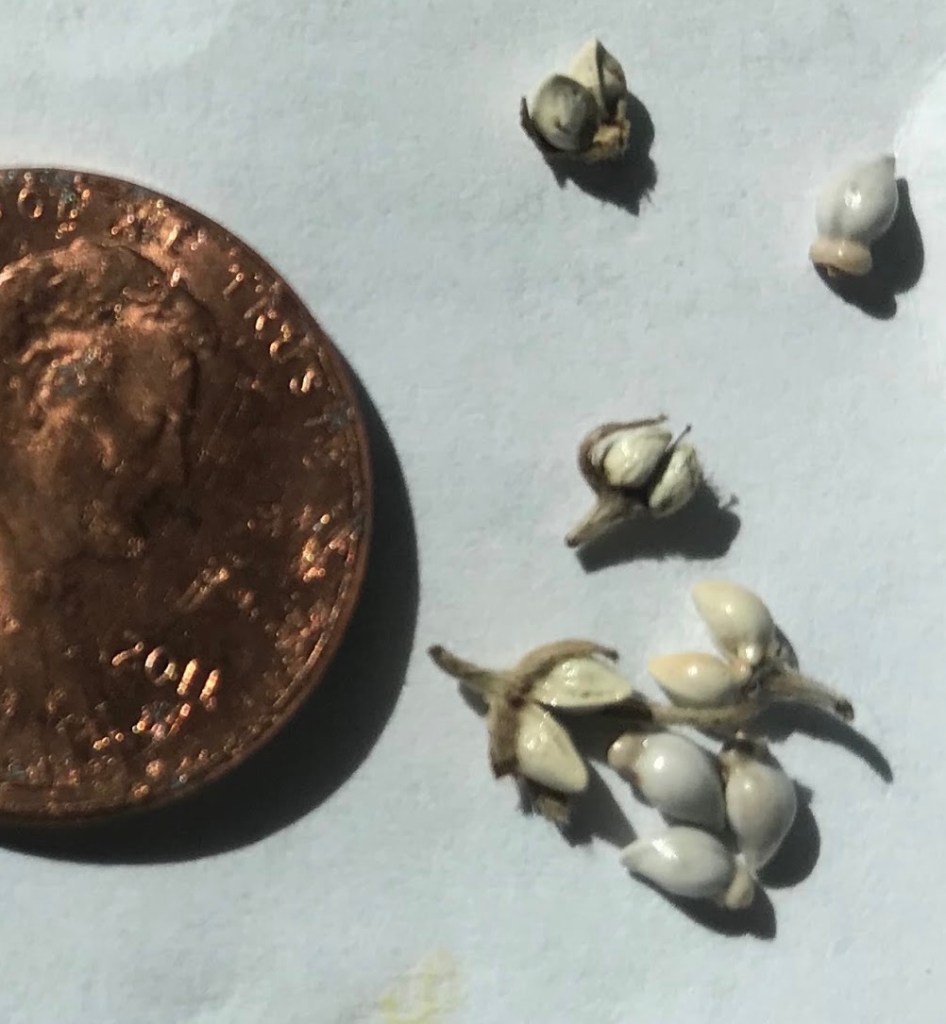
Photo edited from a post by
A Wandering Botanist
Root Cutting – A more successful method may be to take a 2-inch cutting of the taproot in the fall. Dip the cutting in a root stimulant and plant in a desirable location.
Suggestions for root stimulants
- Powdered Hormones: Highly cost-effective, have a long shelf life and easy to use. After you moisten the root cutting, just dip it directly into the powder (e.g., Garden Safe TakeRoot) and plant.
- Natural/DIY Options: Raw aloe vera gel and crushed, uncoated aspirin both contain natural growth-promoting enzymes. You can also use diluted willow bark extract, which is naturally rich in rooting hormones.
Plant Care – Narrowleaf Puccoon requires full sun and very little water, making it a good plant for xeric gardens or included with other native plants to establish a wildflower meadow.
Medicinal Properties and a Cautionary Note
The Navajo chewed the root of Narrowleaf Puccoon for coughs and colds. They, and the Zuni rubbed the plant’s finely powdered leaves, root and stem on the body to treat paralyzed limbs. An infusion of the root was used for stomach aches and kidney problems. The plant was eaten as an oral contraceptive, and a cold infusion of the pulverized root and seed was used as an eyewash.
Although Narrowleaf Puccoon does have medicinal properties, it contains potentially toxic alkaloids. Self-treatment involving this plant is strongly discouraged.
…………………………………………………………………………………………………
If you’ve seen Narrowleaf Puccoon, did you find their highly fertile, tightly closed flowers and/or the shiny white nutlets? Have you tried growing the plant from seed or root cuttings, and were you successful?
As always, thanks for stopping by!
Happy Memorial Day!
References


Another cheery sunshine yellow flower on a plant with medicinal properties! Fascinating two-flower strategy; 1 for pollinators and 1 for self-pollinating. Thanks for sharing this bright flower, Barb!
LikeLiked by 1 person
Sunny yellow wildflowers are all the rage in NM! So glad you liked the post, Karen! Thanks for the comments!
LikeLiked by 1 person
Many details to appreciate with your posts and talent, including how you keep your inner child alive. 😸 Thanks, Barb!
LikeLiked by 1 person
That’s absolutely, positively the most wonderful comment ever, Michele! My mantra (well, one of my many mantras) ……. Keep it Fun!
Thanks tremendously, my dear poetic genius!
LikeLiked by 2 people
You’re very welcome and thank you. You reminded me of my artist daughter who always stopped to admire flowers as a child, and other beautiful things. 🦋
LikeLiked by 2 people
🥰🎨
LikeLiked by 1 person