Pass the Mustard, Please!     Happy National Pretzel Day

April 26, 2025

Pretzels! Who doesn’t love pretzels? 

Put down that can of chips or box of square crackers and show your love for one of the most versatile snacks ever …… the Pretzel! Whether you like the snap of crispy twists or prefer them soft and chewy, grab your favorite and join the National Pretzel Day celebration today, April 26th.
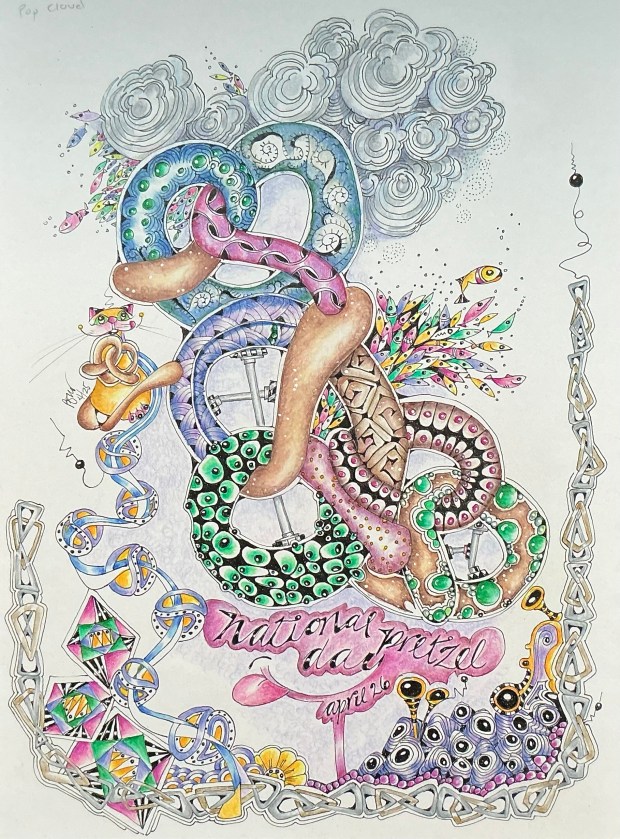
Zentangle patterns: Wakka, Triptd, Naf, Bzings, Wob, Shattuck, Aleuba, Tunnel Vizion, Reverse Lollywimple, Taco/Tearce, Tentoculus, Therefore, Tofube, Seedwayzxtra,Spangle, Strutz, Pop Cloud, Raindotty

Just where did this addictive snack come from? 

Pretzel historians offer a few origin stories, but usually share the most likely and often told legend from the Roman Empire. Apparently in 610 A.D., an Italian monk wanted a way to reward his child students for memorizing their prayers. Instead of baking loaves of morning bread, the Monk twisted thin strips of the dough into symmetrical loops by intertwining or knotting the two ends before folding them back on each other (today’s familiar “pretzel loop”). The shape he made was said to resemble a child with his arms crossed in prayer. The Monk called his invention ‘pretiola’ meaning ‘little rewards’.

From then on, these soft ‘little rewards’ became popular in Austrian bakeries and in all of Germany, and so on throughout the world. 

Not being satisfied with baking only soft pretzels, in 1850, Julius Sturgis bought a hard pretzel recipe from a local tramp (wonder why a tramp would have such a recipe? Thoughts?).  After baking and baking, and perfecting the recipe, it was clear to Julius the hard pretzel was a success. The pretzel’s popularity quickly spread, inspiring many other bakers in central Pennsylvania to make their own versions of the hard pretzel. But the original ‘Sturgis’ hard pretzel was a keeper. In 1861, the Julius Sturgis Pretzel Bakery, located in Lititz, Pennsylvania in the heart of Pennsylvania Dutch Country, became the first commercial pretzel bakery in America.

Naturally, die-hard fans of the warm/soft pretzel weren’t won over by the overwhelming appeal of the hard/crispy version. With the soft pretzel market still alive and growing, by the 20th century soft pretzels became very popular not only in Philadelphia, but in Chicago and New York as well.

The Pretzel of Today 
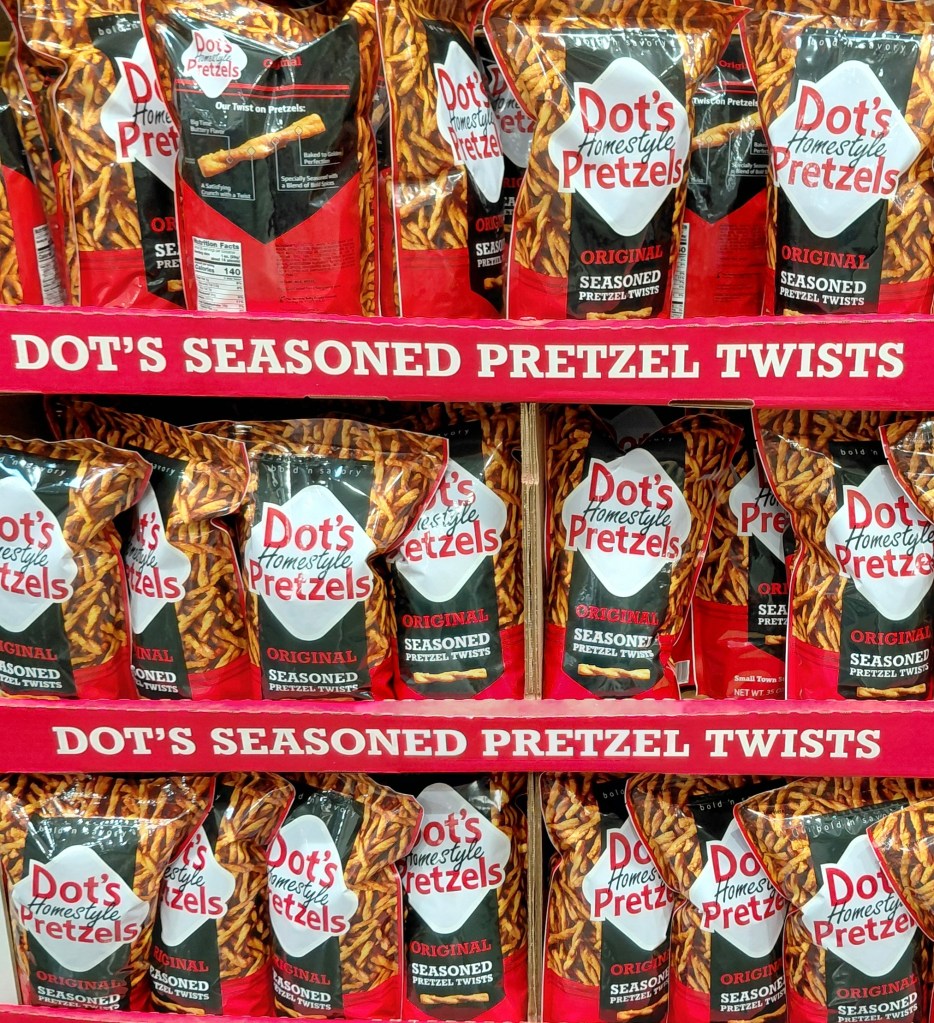
How many shapes and flavors of pretzels can you think of? Here’s my lists ……. 

Hard pretzel shapes: traditional loop, thick and thin; stick shapes, both thin and in thick rods; twisted, clockwise and counterclockwise; round rings with and without knots; thick stumpy bite-sized nuggets, filled and unfilled; chip shaped and waffle shaped. 

Hard pretzel flavors: salted, cinnamon sugar, peanut butter, peanut butter and jelly, honey mustard, cheese, honey wheat, honey butter, ranch, ranch and jalapeño, garlic, sea salt caramel, sour cream and onion, and buffalo wing.

And for soft pretzels …… it’s all about the dipping sauces and coatings:  Of course there’s yellow mustard, garlic mustard, melty cheese, melty beer cheese. But there’s also chocolate dipped, aioli, truffle hot sauce, buffalo ranch, cinnamon sugar, and marinara.

Can you add more?

Pretzel Fun Factz!

  • Pennsylvania is the center of American pretzel production for both hard and soft pretzels, producing 80% of the nation’s pretzels.
  • Today, the average Philadelphian consumes about twelve times as many pretzels as the national average.
  • Philadelphia opened a privately run “Pretzel Museum” in 1993.
  • The annual United States pretzel industry is worth over $550 million.
  • The average American consumes about 1.5 pounds of pretzels per year.
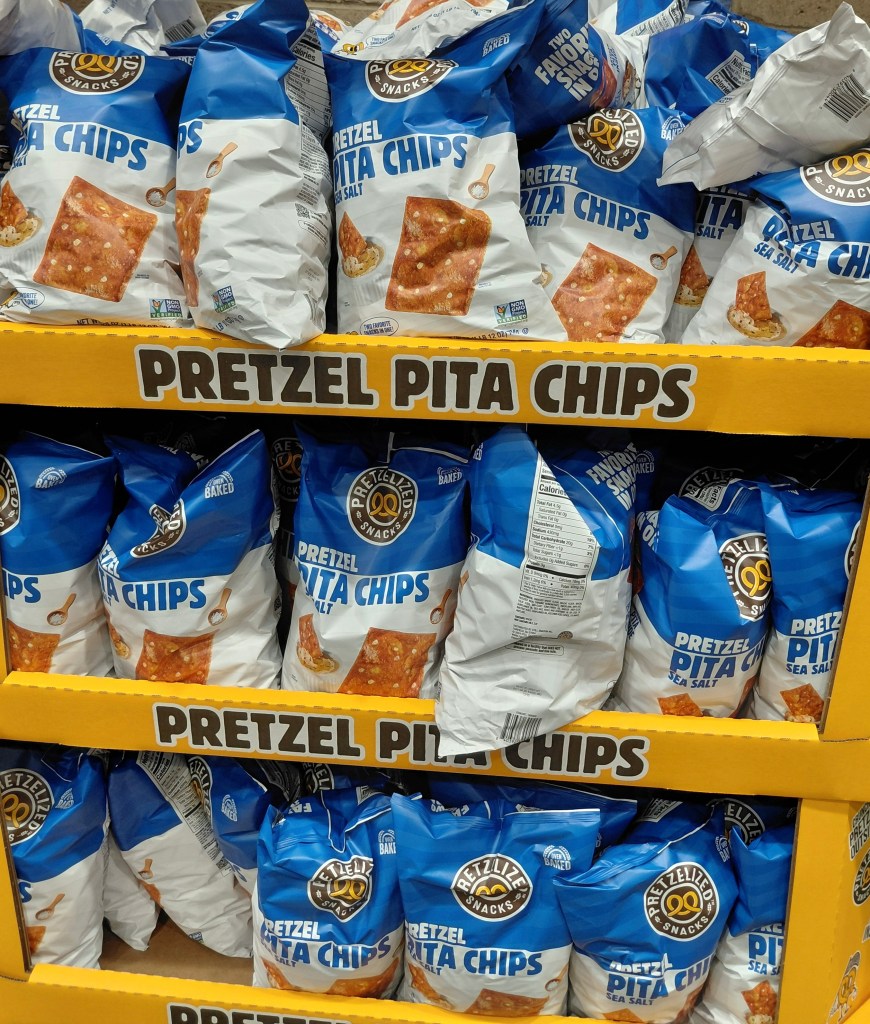
How will you celebrate National Pretzel Day 2025? Here’s a few ideas …..

  • Enjoy a bag of your favorite hard pretzels, and gift one to a friend.
  • Visit your local bakery or even the mall to sample their selection of warm soft pretzels.
  • Try a game of “Toss the Ring” with ring-shaped pretzels.
  • Go on a pretzel scavenger hunt.
  • Host a pretzel and beer party for your neighborhood.
  • Bake a batch of soft pretzels for the party and have everyone bring their favorite dipping sauce.

And now ……… 

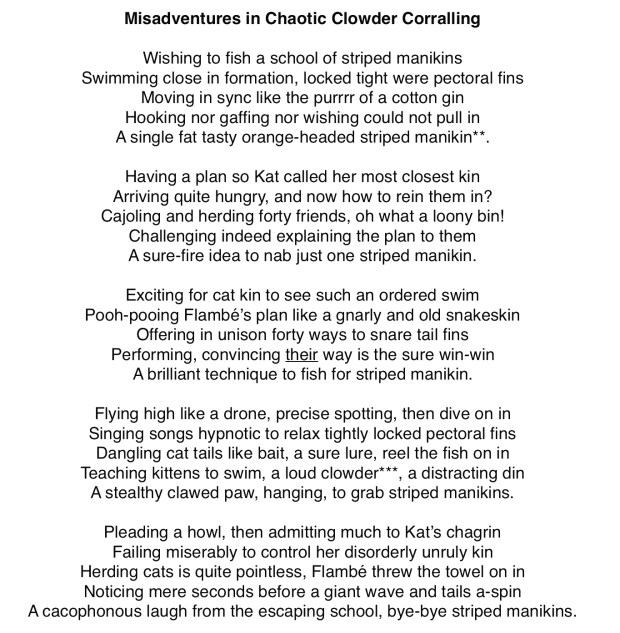
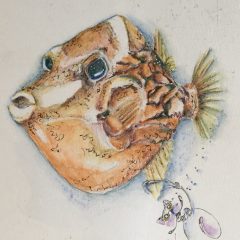
Curiously, Flambé has been following my post with fascination. Always hungry, could it be she’s developing pretzel cravings? What baker, in their right mind, would ever scent a batch with eau de fish? If a pretzel maker thought mackerel flavored twists  would ever be popular, they might just be crazy (or not?). Becoming more famished by the minute, Kat insisted on explaining her ‘irrational’ excitement in a “Blitz” poem (a style created by Robert Keim.1). She felt this poem style not only suited all the twists and turns found in a properly-constructed pretzel loop, it best expressed the twisting and turning pathway her mind took to explain herself and help us “get it!”  What do you think?
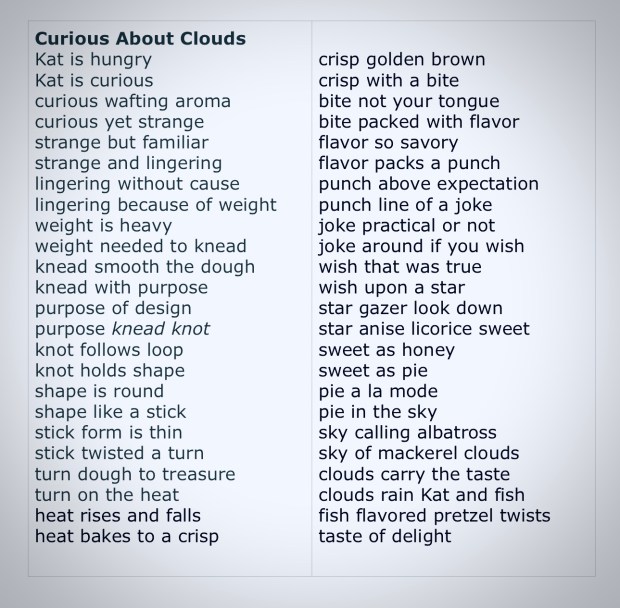
1 Shout out to Michele Lee, My Inspired Life blog post dated 04/05/2025, for sharing her amazing Blitz poem and providing the rules to create one too. Thanks Michele!

As always. Thanks for stopping by! 

Here are the guidelines for the Blitz poem, created by Robert Keim:

  • Line 1 should be one short phrase or image (like “build a boat”)
  • Line 2 should be another short phrase or image using the same first word as the first word in Line 1 (something like “build a house”)
  • Lines 3 and 4 should be short phrases or images using the last word of Line 2 as their first words (so Line 3 might be “house for sale” and Line 4 might be “house for rent”)
  • Lines 5 and 6 should be short phrases or images using the last word of Line 4 as their first words, and so on until you’ve made it through 48 lines
  • Line 49 should be the last word of Line 48
  • Line 50 should be the last word of Line 47
  • The title of the poem should be three words long and follow this format: (first word of Line 3) (preposition or conjunction) (first word of line 47)
  • There should be no punctuation
Happy International Day of Happiness

March 20, 2025

Every year on March 20th, the International Day of Happiness is celebrated by promoting the idea that part of humanity’s progress should include how to increase happiness and wellbeing. Wow! What a great idea. 

Just where did this great idea come from?

The year was 2011.  The members of the UN General Assembly collectively brainstormed ideas on how to recognize happiness as a fundamental human goal. From these exciting talks a resolution was born, calling for a more inclusive and balanced approach to economic growth promoting happiness as an essential part of progress.

The following year (2012) the General Assembly held the very first UN Conference on Happiness. From this event another resolution was adopted declaring International Happiness Day be celebrated annually on March 20th.

Inspired to find ways of enhancing human progress through happiness, in 2013 the world celebrated the first ever International Day of Happiness! 😃

Zentangle patterns used: Ailux, Bzings, Adobe, FloralySs, Bunnyline, N’Zeppel 

What is this thing called Happiness? 

The “pursuit of happiness,” a phrase found in the Declaration of Independence, is an ideal upon which America is based. Merriam-Webster defines happiness as having “a sense of well-being, joy, or contentment. When people are successful, or safe, or lucky, they feel happiness.” But reasons for feeling happy vary from person to person.  Are you happy when delighted or glad?   Do you experience happiness when sipping a cup of good coffee or tea? What about when your dog greets you at the door after a long day, or when your cat purrs in your face …. do these signs of affection make you happy? 

Research has shown people feel happy if they have good quality relationships, are passionate about their job and/or hobbies, and by helping others through volunteer work or random acts of kindness. Other factors influencing happiness might include your overall satisfaction with life, your mood at the moment, and your ability to meet basic needs related to health, work, and finances  (although having extra money does not necessarily make people happier).

Have you ever considered what things in life make you happy? Do these things just seem to happen randomly or do you intentionally seek out ways to experience happiness? Have you taken the pulse of your happiness meter lately? 

When there are large numbers of happy people, it can make communities and even entire countries happier places to live. Some of the happiest countries in the world include Finland, Denmark, Norway, and Iceland. Switzerland, New Zealand, Canada, and Australia also rank in the top 10 for the happiest countries. The United States ranked 19th.

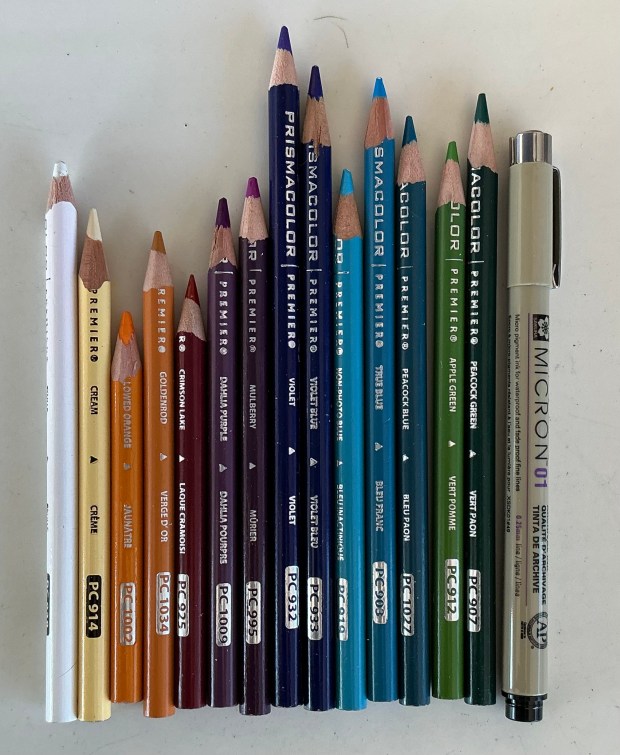
Prismacolor pencil colors used: white, cream, yellowed-orange, goldenrod, crimson lake, dahlia purple, mulberry, violet, violet blue, non-photo blue, true blue, peacock blue, apple green, peacock green. Inking created with Sakura Pigma Micron archival ink pen, size 01.

Looking for ways to observe this year’s International Day of Happiness? 

If the daily grind, never ending politics, or hearing about or even experiencing one natural disaster after another have got you down, I know the feeling. It’s high time to regain control of our inner selves and set free the happiness within. It may not be easy, but what better day to take on this challenge than March 20th, the official International Day of Happiness!

How to start? There’s probably as many ways to promote, create and achieve happiness as there are people in this world. If you already know what to do, great! But if you’re seeking ways to become a happier person and share your happiness with others, here’s some ideas I thought make good sense: 

To become a happier you:  Be kind to yourself, not overly self-critical or perfectionistic. Really savor your life experiences because this will intensify and prolong their enjoyment. Set meaningful goals for yourself that provide structure and purpose, give a sense of identity and increase self-esteem. Seek healthy challenges, stretching your abilities just a bit beyond your comfort zone to realize your potential. Build intrinsic motivation, rather than just relying upon doing things to please others. (‘Intrinsic motivation’ refers to the drive to engage in activities that are inherently interesting or enjoyable without external incentives or rewards.) Practice gratitude. Appreciate and make note of all the ‘ups’ (the good things) in your life rather than focusing only on the ‘downs’ or what you still desire. Be a problem-solver; avoid the temptation to vent, complain and reinforce negativity; instead, cultivate optimism and practice positivity regardless of circumstances. And last but not least, engage in random acts of kindness.

To promote happiness in others:  Take time to build and improve the quality of relationships with supportive people. Respond actively and constructively, celebrating when others share good news. Listen to others with 100% of your attention. Practice mindfulness, compassion and empathy. Maybe you can volunteer or help someone in need. And this is worth repeating ….. Take time to engage in random acts of kindness.

*************************************

For far too long, progress in the world has been all about the economy. But more people are realizing that happiness is also an essential part of progress. And come to find out, Flambé agrees! Especially when she can improve her relationships with the birds, bunnies, fish and frogs. Now if I can only teach her to sing instead of all that katter-walling she seems so fond of! Guess I’d better brush up on my constructive criticism? Hahahaha-Lalalalalalala-Hahahahaha!

Whatever you do on this day (and into the future), be sure to spread the happiness!

And as always, thanks for stopping by!

Pick Me! Pick Me!

January 20, 2025

Winter can be challenging for nature journalers. Getting outside when it’s cold and windy, cloudy and dreary, snowy, icy or wet, are not ideal weather under any circumstances.  And when everything looks brown and crispy and pretty much the same, the challenge to nature journal in the great outdoors grows exponentially. While these conditions make it difficult for spontaneous observing, I try to remember there’s always something remarkable to be discovered in nature, even in winter.

 Who knew a little whack on the head would be just the thing to reawaken my curiosity?

Bundled in layers, leash in hand, Luna led me on her early morning walk around suburban Albuquerque. Having been along this route before, we’ve both made some interesting discoveries in the past.  And as usual, this time was no exception for Luna. For me though, everything appeared brown, crispy and familiar. But I was inspired by  and enjoying Luna’s sense of curiosity, and her encouraging tug on the leash. 

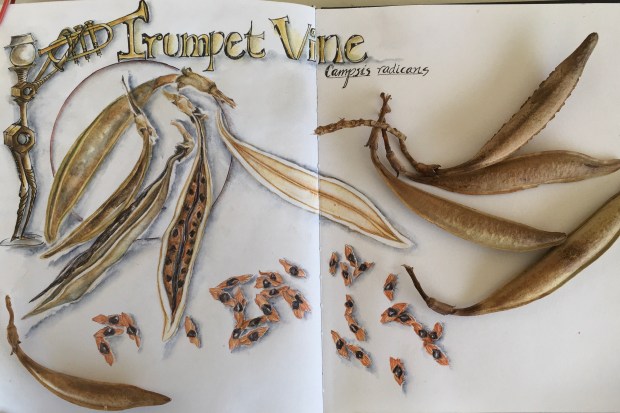
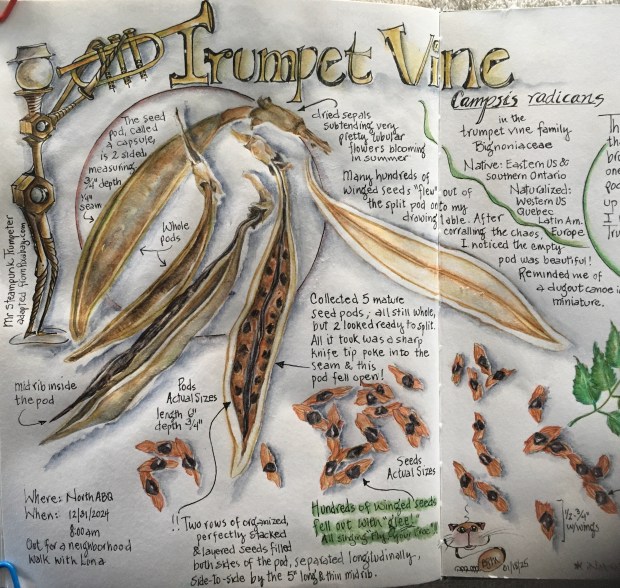
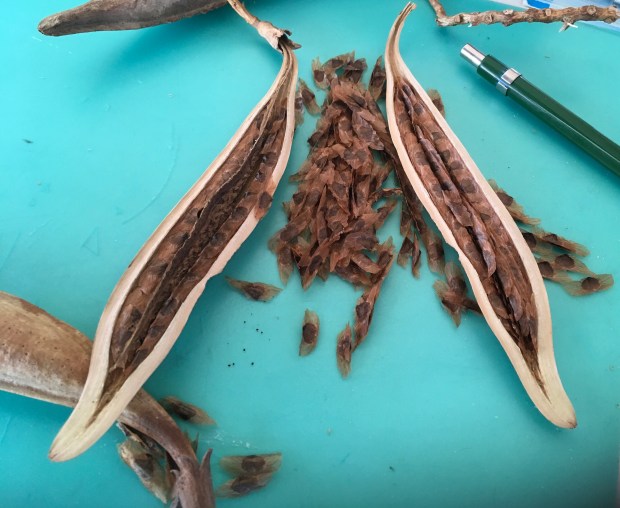
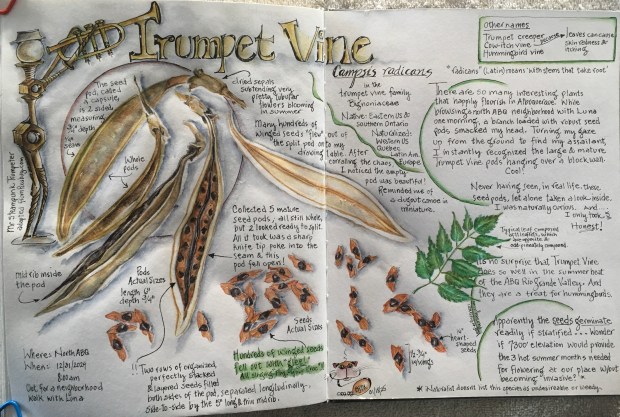
Nearing the end of our 2-1/2 mile walk, and mightily concerned I’d go home empty handed, we turned our last corner. It wasn’t 100 feet down the cement block-lined sidewalk that I abruptly stopped in my tracks. Something had lightly whacked me in the head! While the sound of rhythmic clacking rang out, I looked up, and to my surprise spotted the accidental assailant. Draped over the 6 foot wall, suspended from a hearty Trumpet Vine (Campsis radicans) growing in the hidden yard beyond was a string of pods resembling brown green beans. Long and plump and full of seeds, one of these pods had reached down low enough to make contact with to my head. (I say “reached” because that’s what my imagination said had happened.) Quickly awaking my sleepwalking brain, the effort made by the seed pod to get my attention paid off too. Silently whispering, “Pick me! Pick me!” it was as if the seed pod and its adjacent buddies either wanted to be harvested, or wanted to be featured in my nature journal (or both). 

So I did ………… both!

I loved learning about and sketching these fascinating Trumpet Vine seed pods, while my mind was filled with the muffled notes of a trumpet. Tooo-too-too-toooooom!

Hope you enjoyed reading this story and browsing around my journal pages.

As always, thanks for stopping by!

The Whimsy of Redefining Heartwood

January 10, 2025

After an unseasonably warm, almost spring-like December in the mountains of central New Mexico, January clearly has something else in mind. Winter! Windy days have resulted in bitter cold as they brought us cloud-cover and a few mini-snowstorms. 

The change in weather and absence of wildlife, combined with an abundance of dried vegetation is making it challenging to find nature journaling subjects. So a few days ago, I followed Luna around to see what was capturing her attention. Turns out burrowing rodents expanding their underground tunnels are leaving behind fresh mounds of soil with fascinating odors (to Luna, at least; I couldn’t smell a thing). 

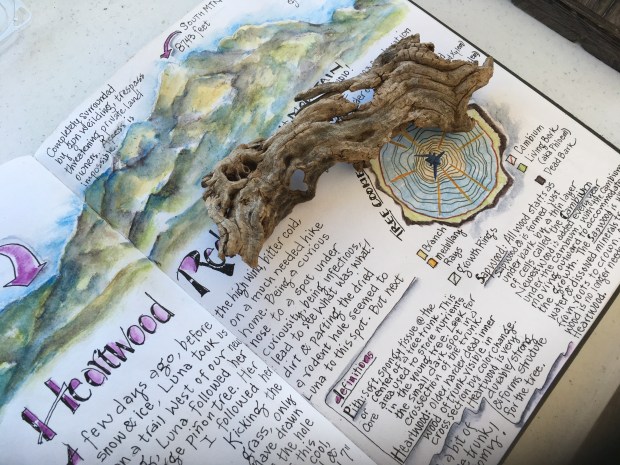
When one of her explorations led me under a good sized pinyon tree, I noticed a very interesting piece of bark lying on the ground. Turning the piece over and over, examining all the beautiful patterns in the wood, the colors, old bug holes, and woodpecker drillings, I was surprised and delighted to see a good-sized hole in the shape of a perfect Heart! Eureka! 

The 7” piece of pinyon bark …. Can you find the Heart?

Many things crossed my mind in that moment …… but the one word that stuck was “Heartwood!!” Could this small piece of bark redefine the meaning of heartwood? Could this tree have been wearing it’s true emotions on its bark in the form of a heart-shaped window?  

After a refresher on basic tree anatomy, and reconfirming that heartwood surrounds the core of the trunk, my imagination went wild.  Could that heart-shaped hole in the bark been the opening of a mysterious pathway through the inner workings of the tree?!!! If I could’ve returned the piece of bark to the exact place from where it fell, could the heartbeat of the tree be heard? 

My finished pages mostly about Redefining Heartwood, but also featuring the view of South Mountain (to the NE) as seen from our new home (including my studio) and the trail where the “Heartwood” bark was found.

While sketching the piece of bark with its perfectly-shaped heart, I wondered if peering at the inner workings of a tree through this window would make a fun children’s picture book? ….. Where the layers of a trunk and how they work would be experienced first hand by a child walking down the pathway?

After you stop laughing from all this nonsense, let me know what you think?

As always, thanks for stopping by (on my magic carpet ride!)

National Cat Herders Day!

December 15, 2024

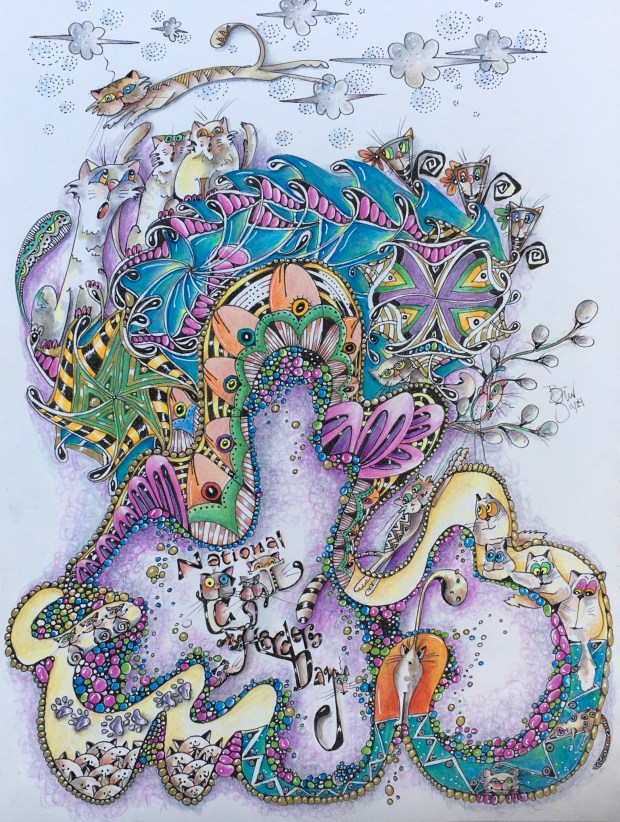
You don’t have to be a cat lover to celebrate National Cat Herders Day. The only requirement is to know someone or even be that someone who’s attempted to accomplish a complex task by controlling the uncontrollable, organizing the disorganized, or bringing to order a disorderly cast of characters, akin to like trying to herd cats*.  From parents and teachers to project managers and team leaders, this humorous observance pays tribute to those willingly and persistently taking on the challenge of controlling difficult or chaotic situations. Show the love and appreciation for people in your life, and quite possibly yourself, who take on any impossible or frustrating task with patience and humility.

Zentangle patterns used: Choir, Ease, Windflower, KittyKitty, Fragment oA6, Apichu, Budlite, Cat-kin, CD Joy, Cloudy Day, Raindotty

___________________________________________________________________

*The origin of the phrase “like herding cats” likely came from the opening scene of Monty Python’s Life of Brian (1979). In this scene, shepherds are discussing sheep and the topic strays to cats: “Can you imagine a herd of cats waiting to be sheared?”  

___________________________________

**A fish manikin is a form carved from wood or foam by taxidermists used to mount a trophy fish. Flambé’s school of striped manikins all looked like trophies to her! If only she could’ve herded her cat kin into an attentive and cohesive group long enough to teach them her sure-fire plan for breaking up that school of fish …….. maybe, just maybe she would’ve had a striped manikin to Mount on the wall of her den!

___________________________________

***A clowder is a real thing! It’s what “they” call a group of cats. Honest.  But then being naturally curious like my sidekick, Flambé, I wanted to know how many cats are needed to make a clowder. Here’s what I learned: 

“Three or more cats make up a clowder, which makes sense. After all, three is a clowd—er, crowd. Jokes aside, this is mainly because the word “pair” covers pretty much any group of two, and if a cat is by themselves, then they’re just … a cat.”

But that doesn’t explain how these feline groups are ever formed ……. after all, wouldn’t that be a frustrating endeavor and quite nearly impossible …… exactly like Herding Cats?

I’ll let you be the judge, but please let me know!

___________________________________

As always, thanks for stopping by!

On the Edge of Chaos …. Annual Chaos Never Dies Day

November 9, 2024

Chaos Never Dies Day is an annual holiday observed on November 9th that reminds us that chaos and disorder are natural and inevitable parts of life. The day encourages us to embrace the chaos and find humor, creativity, and resilience in the face of uncertainty and unpredictability. It’s a time to let go of perfectionism, embrace imperfection, and enjoy the ride.

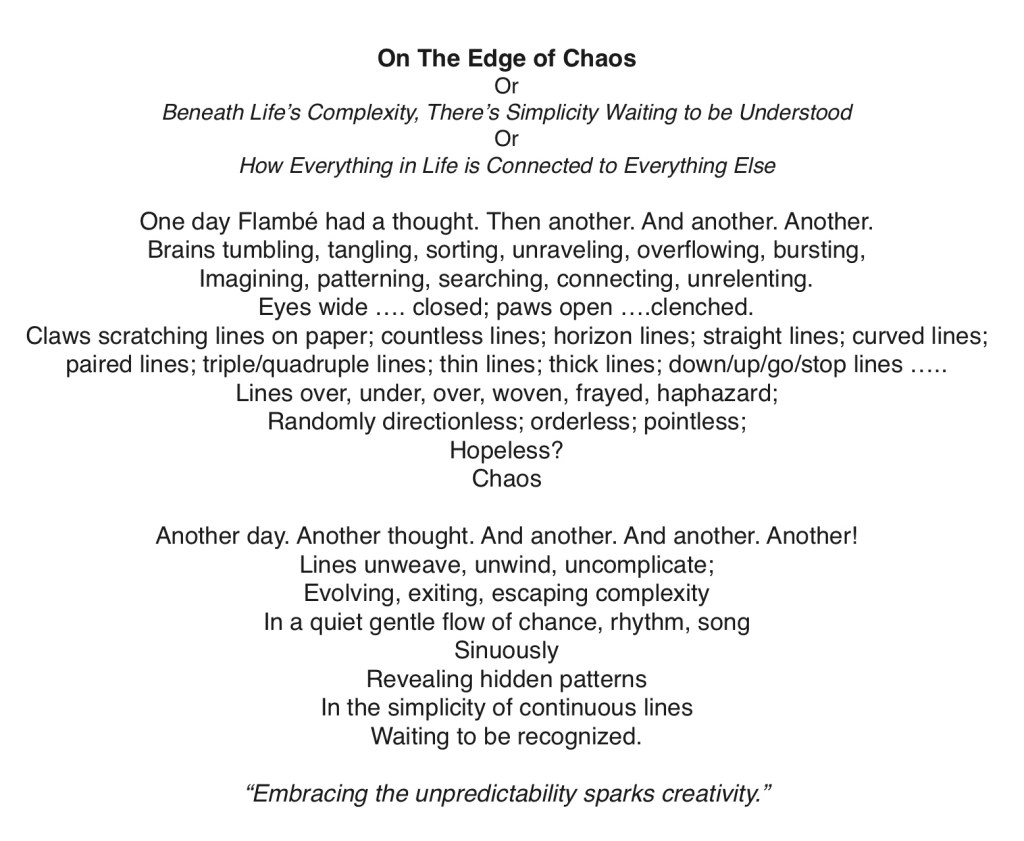
Flowing from Flambé’s depiction of the chaotic world that lives between her pointy ears, emerges 16 simple continuous line shapes. Can you find them all? 

Drawings and Zentangle patterns: Zip, Stacked Stones, Bekkwheat, Boxworth, Ellis Chuang Rabbit, Tomada Rooster

(If you’d like a little help finding these shapes, the answers can be found at the end of this post. But only peek after you’ve given the illustration a thorough looking over.)

Of course, Kat has embedded herself within the chaos; her discovery makes for 17 total shapes.

Flambé’s thoughts on Chaos to Creativity OR an attempt to interpret her scratched lines on paper, in the above illustration.

A few of my elementary thoughts about Chaos and Chaos Theory

Now that Flambé has delighted and (most likely) confused you on the Nature of Chaos, allow me to reflect on my first exploration into the fascinatingly mind bending subject of Chaos Theory. Having never given much thought to the Theory, per se, I’ve always pictured “chaos” as something hectic and uncontrollable. A state of unruliness, mayhem, or disarray liken to natural disasters, mob pandemonium, mass shootings. Sound familiar? We’ve all likely been witness to an unfathomable situation and declared our world to be in “complete and utter chaos!” But there’s more, a lot more to Chaos Theory, where it is encountered and how it affects us. 

When my reference list of lesser known Annual Days revealed November 9th is celebrated every year as “Chaos Never Dies” day, I was appalled.  I mean, really; who wants to live in a world of ever-present and everlasting chaos? 

But from the description of this Day, it appeared there was a positive side to chaos, piquing my curiosity.  Anything that can make us laugh and inspire creativity has to be awesome! So began my last few weeks of intense study and pouring over countless YouTube videos to learn about Chaos Theory. 

The more I read and viewed educational videos proclaiming to explain Chaos Theory in easy-to-understand language, the more confusing it seemed. The language was English, but the concepts seemed abstract to me …….. well, they were just plain chaotic! (This caused me to laugh!). It would be easy to spend a lifetime trying to “get it.” I’ll just have to keep learning!

So far, I learned about many familiar and new terms associated with Chaos Theory.  These include the Butterfly Effect (highly central to Chaos Theory) which shows the connection between disorderly and highly organized things, like how the flap of a butterfly’s wings can lead to a string of events that can form a hurricane! It’s complex, but emphasizes (among many things) that we can’t know the consequences of seemingly simple systems due to unpredictable variables. That leads to Heisenberg’s Uncertainty Principle, Feedback Loops, Fractals, Probabilistic and Deterministic modes, etc. 

Are you still with me?

In a nutshell, Chaos Theory “provides a scientifically quantifiable but simultaneously poetically suggestive way of looking at how almost everything in life is connected to everything else.”

We live in a “chaotic” world, and how we react and/or adapt to its unpredictability and complexities matters.  But as someone (?) once said, “Embracing unpredictability sparks creativity.” 
What does Chaos spark in you?

The images of all Continuous Line drawings and their order of emergence.

As always, thanks for stopping by!

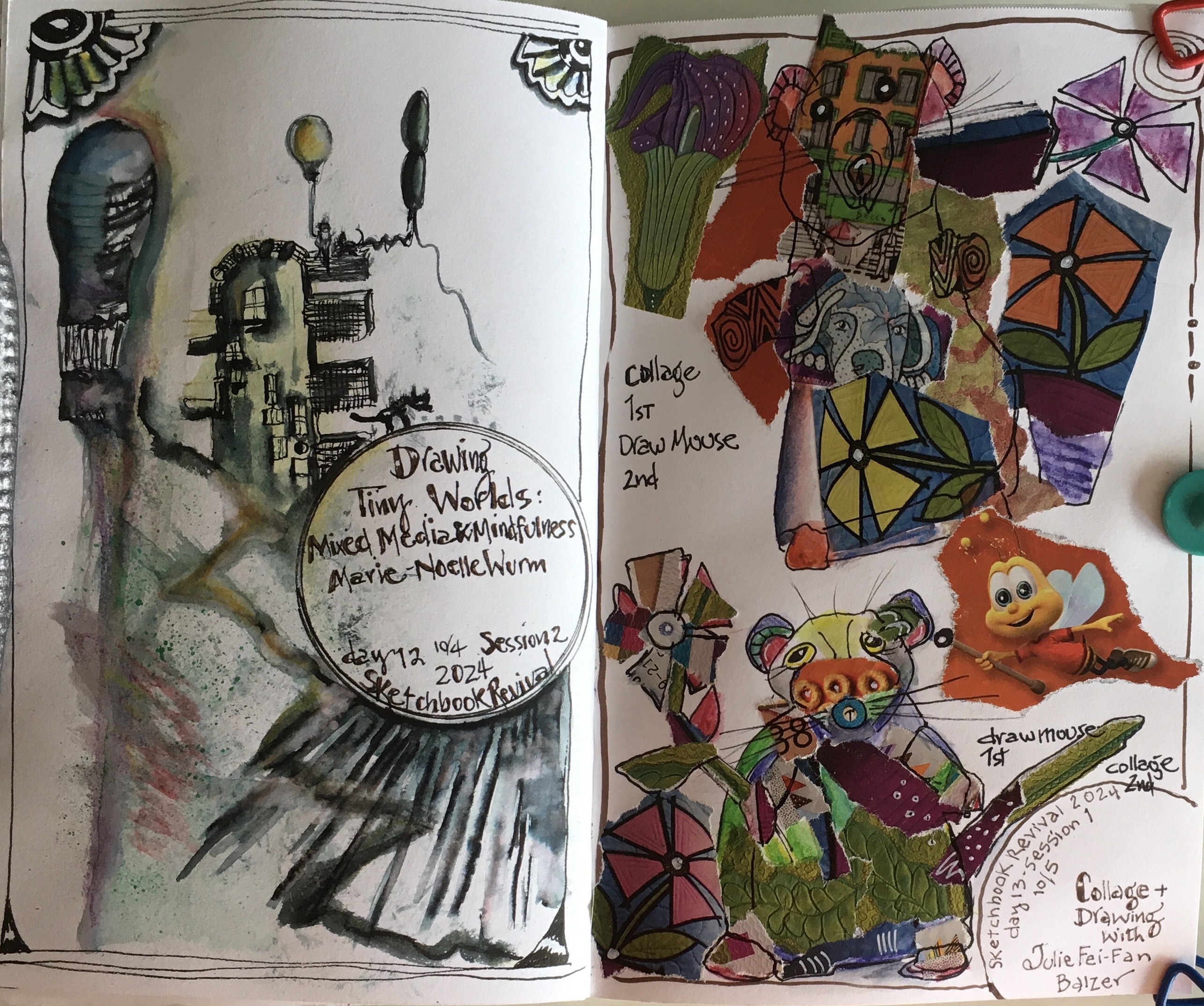
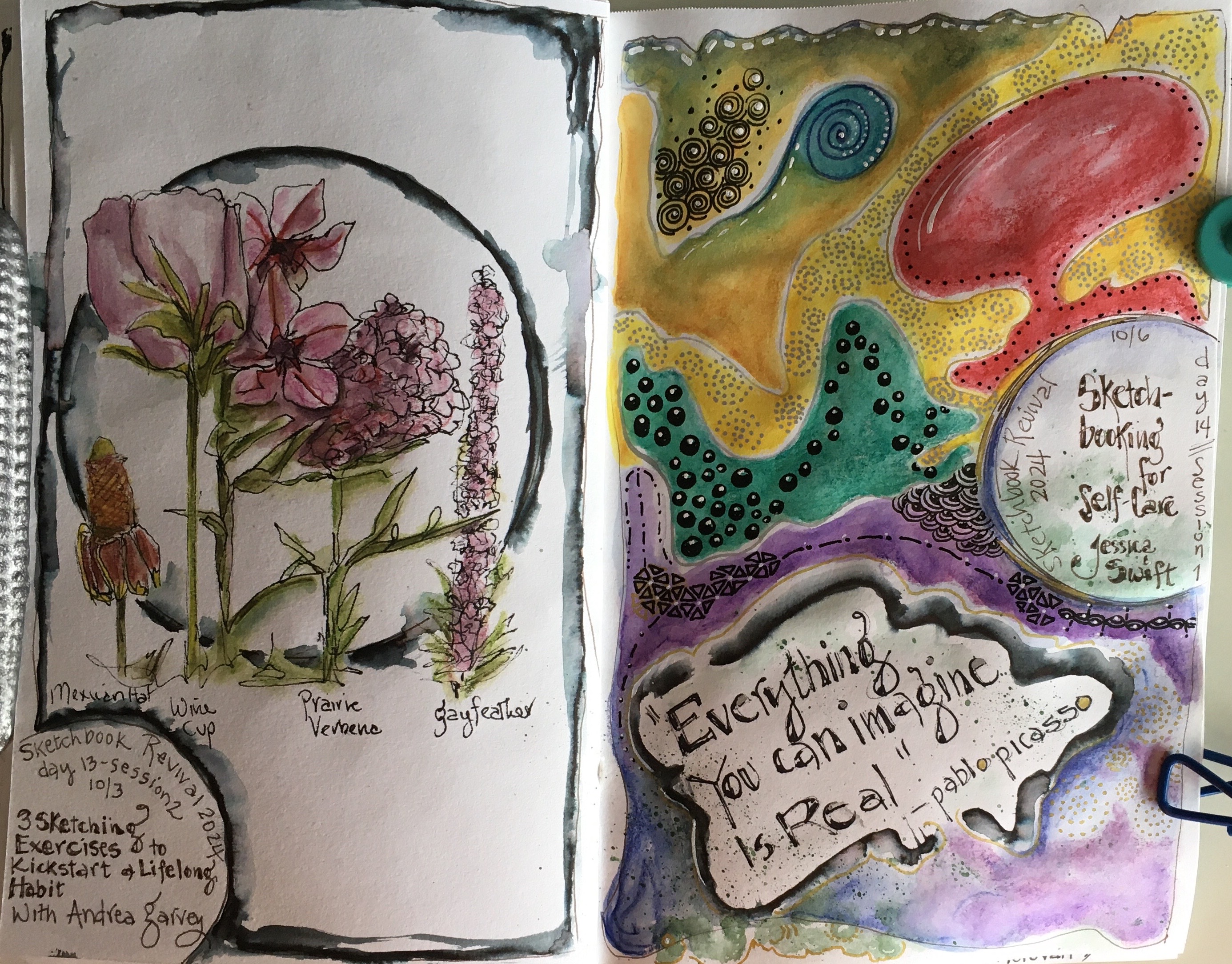
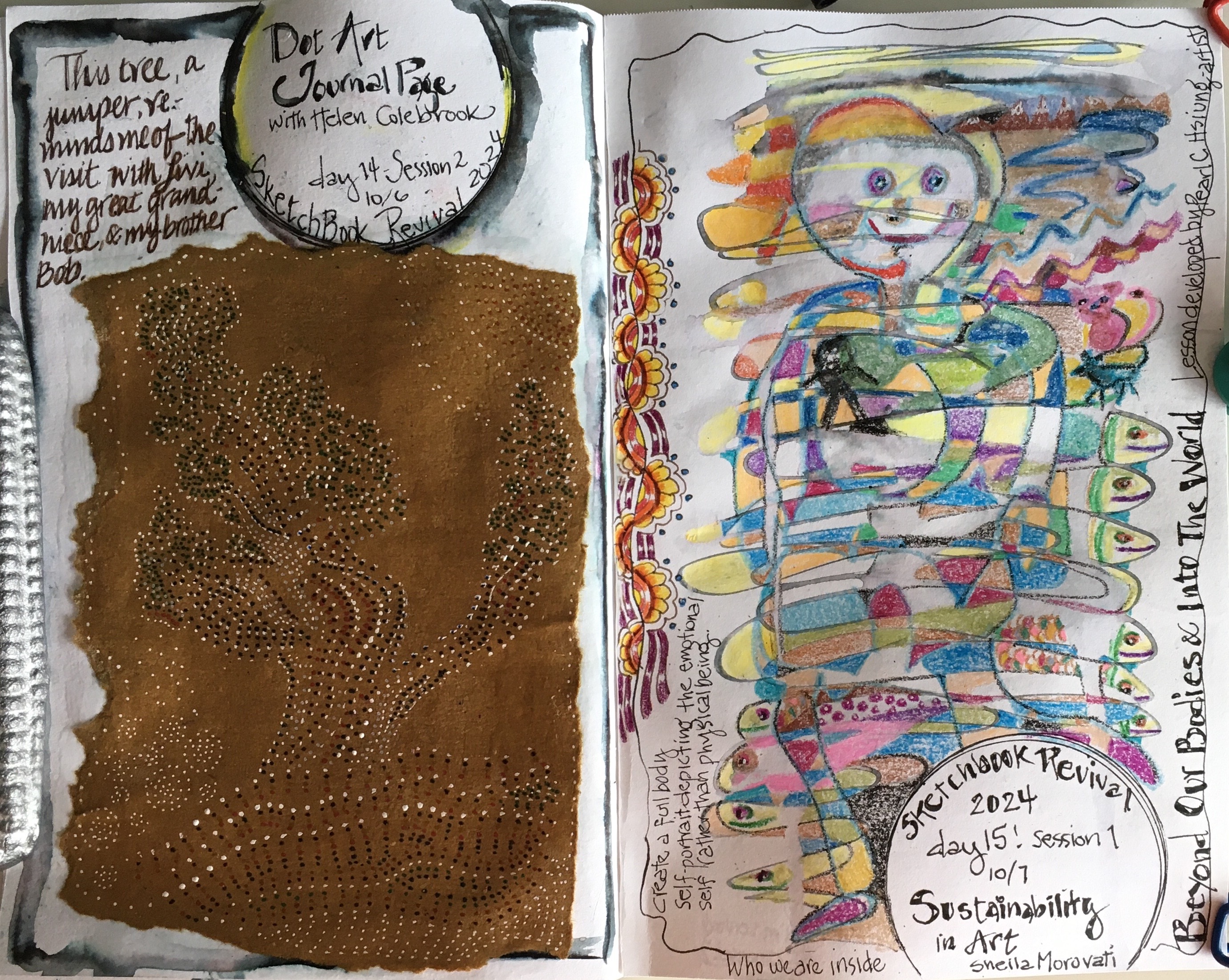
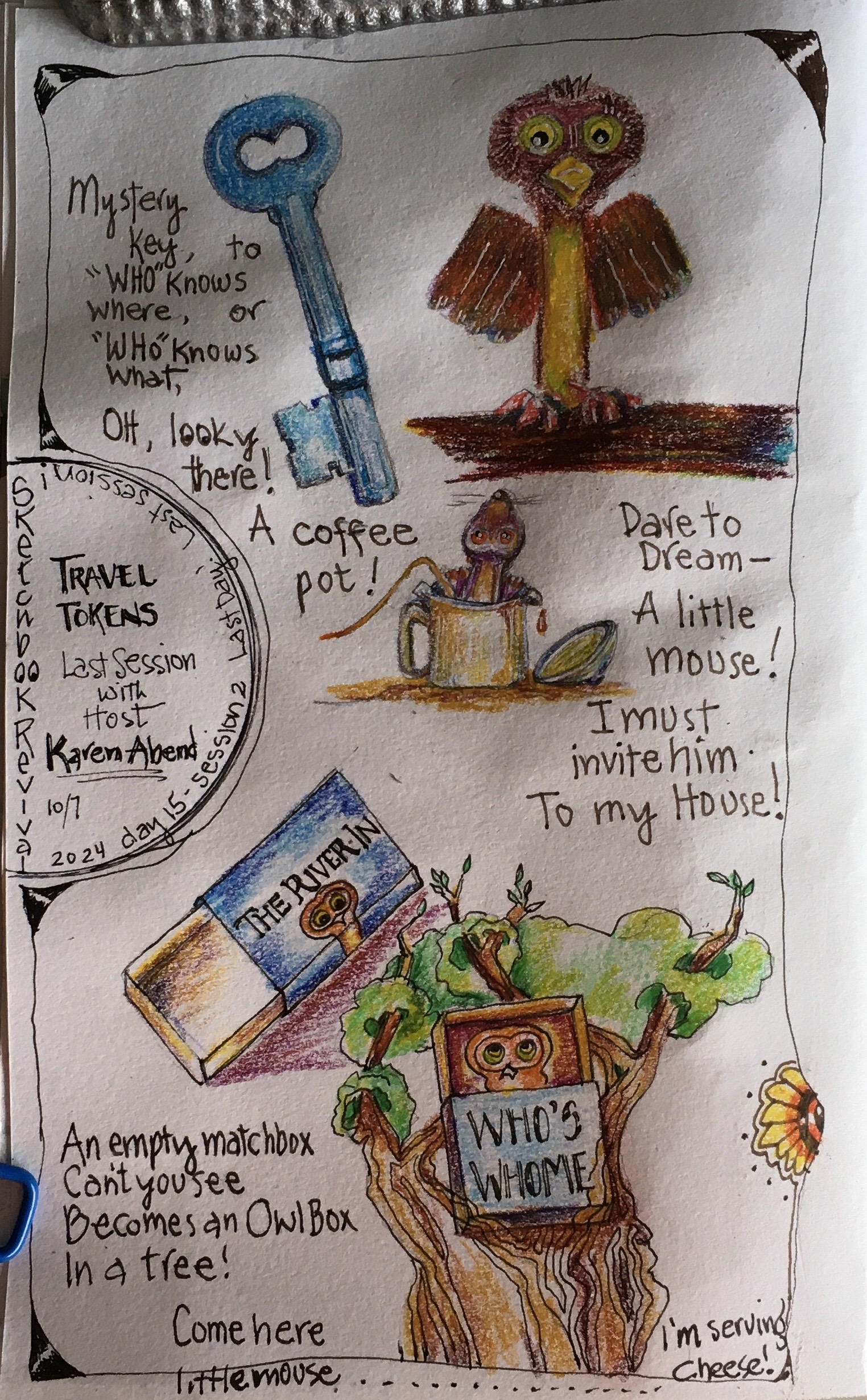
(Updated) Sketchbook Revival 2024! 15 Days of Priceless Fun


****************Notice*******************

Photo display correction has been made in this second post, which has the identical in text as the first post presented earlier in the morning, please disregard the first post and apologies for any confusion. Barb


September 23 – October 7, 2024
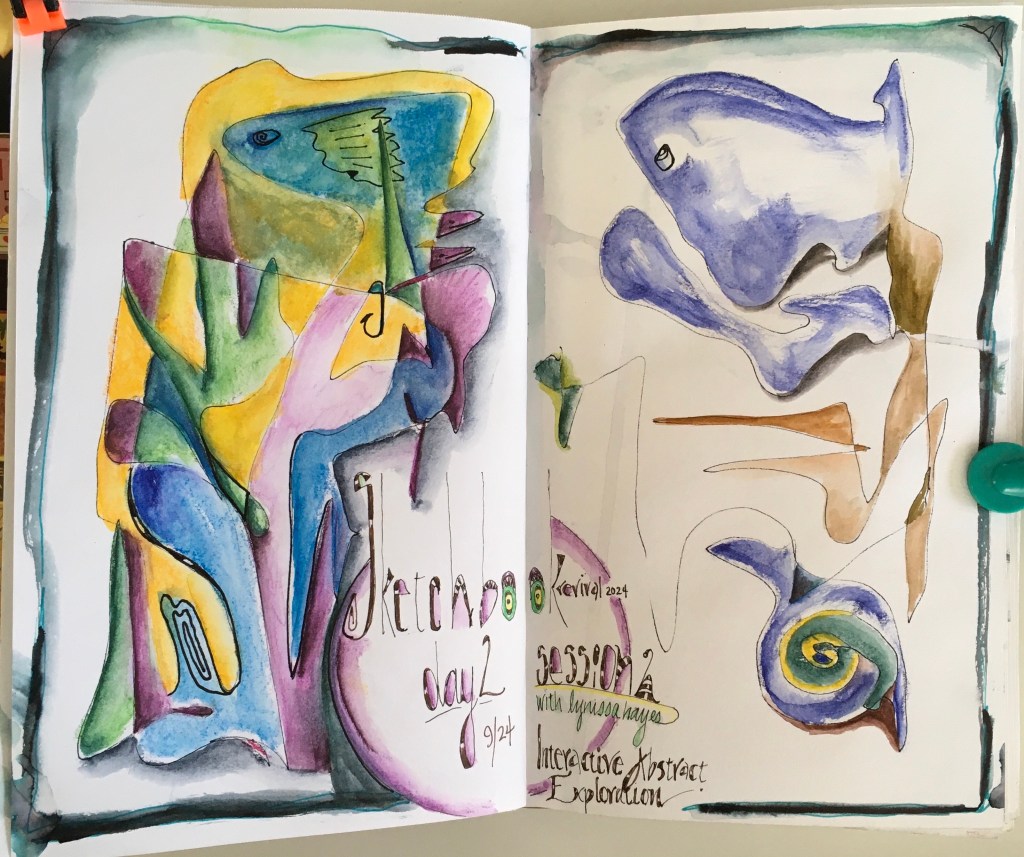
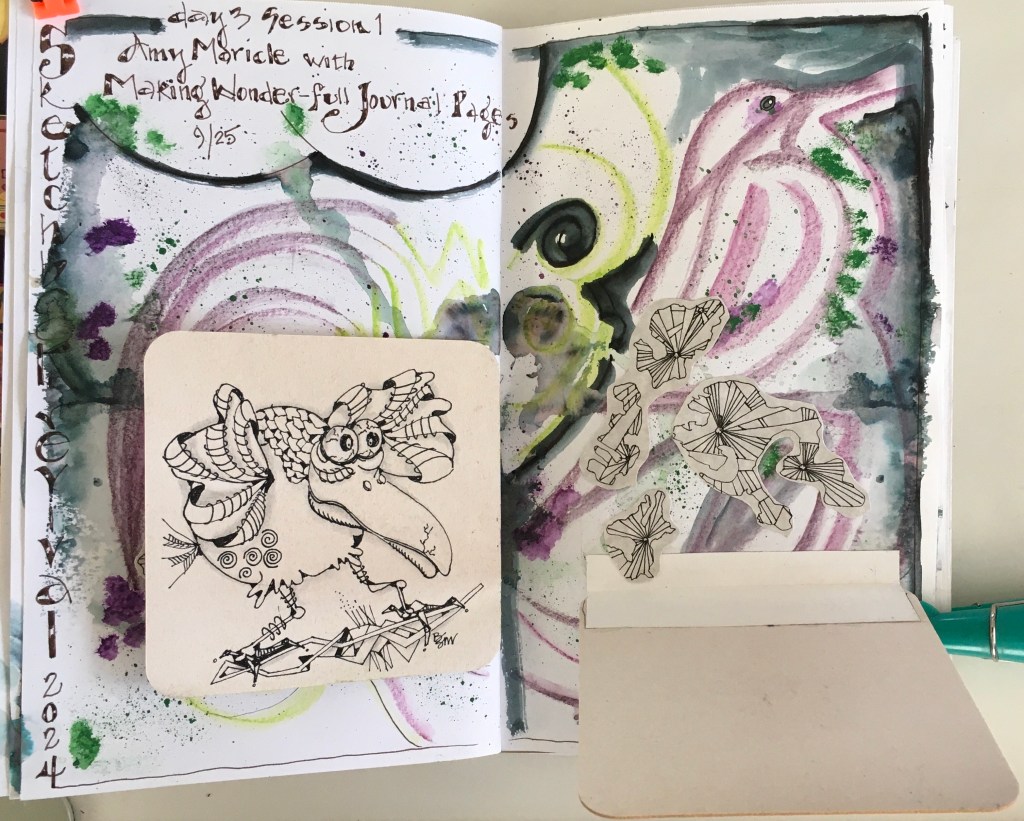
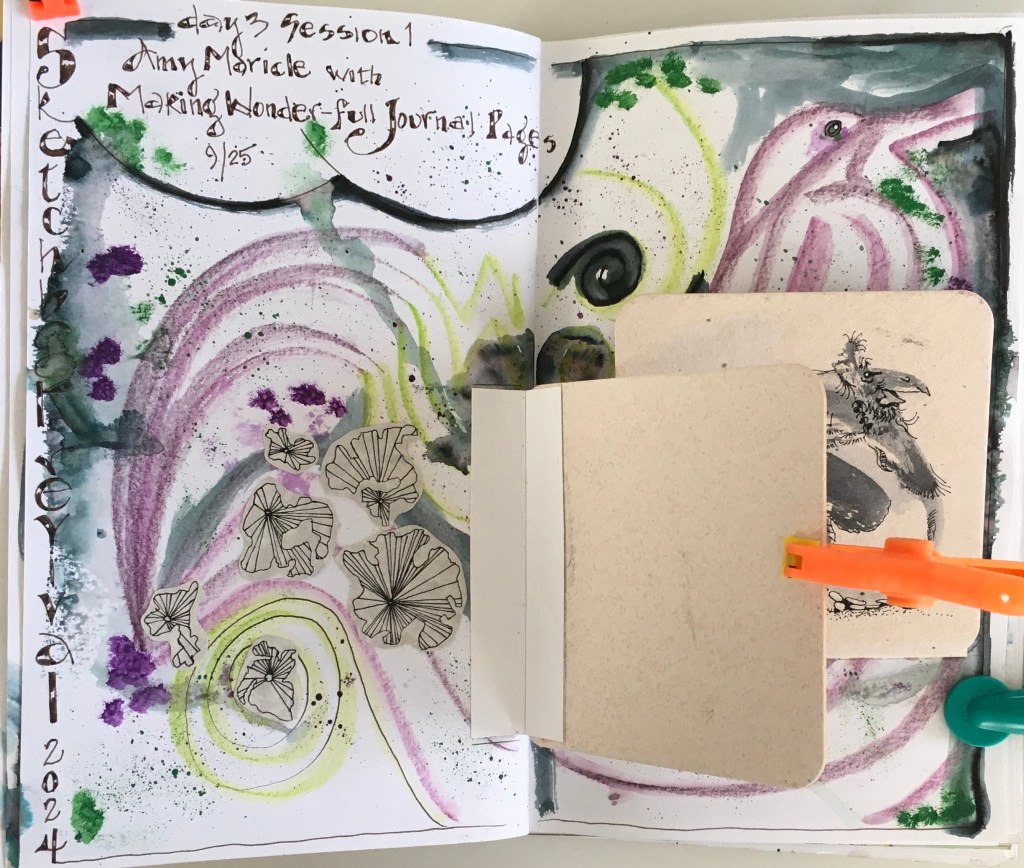
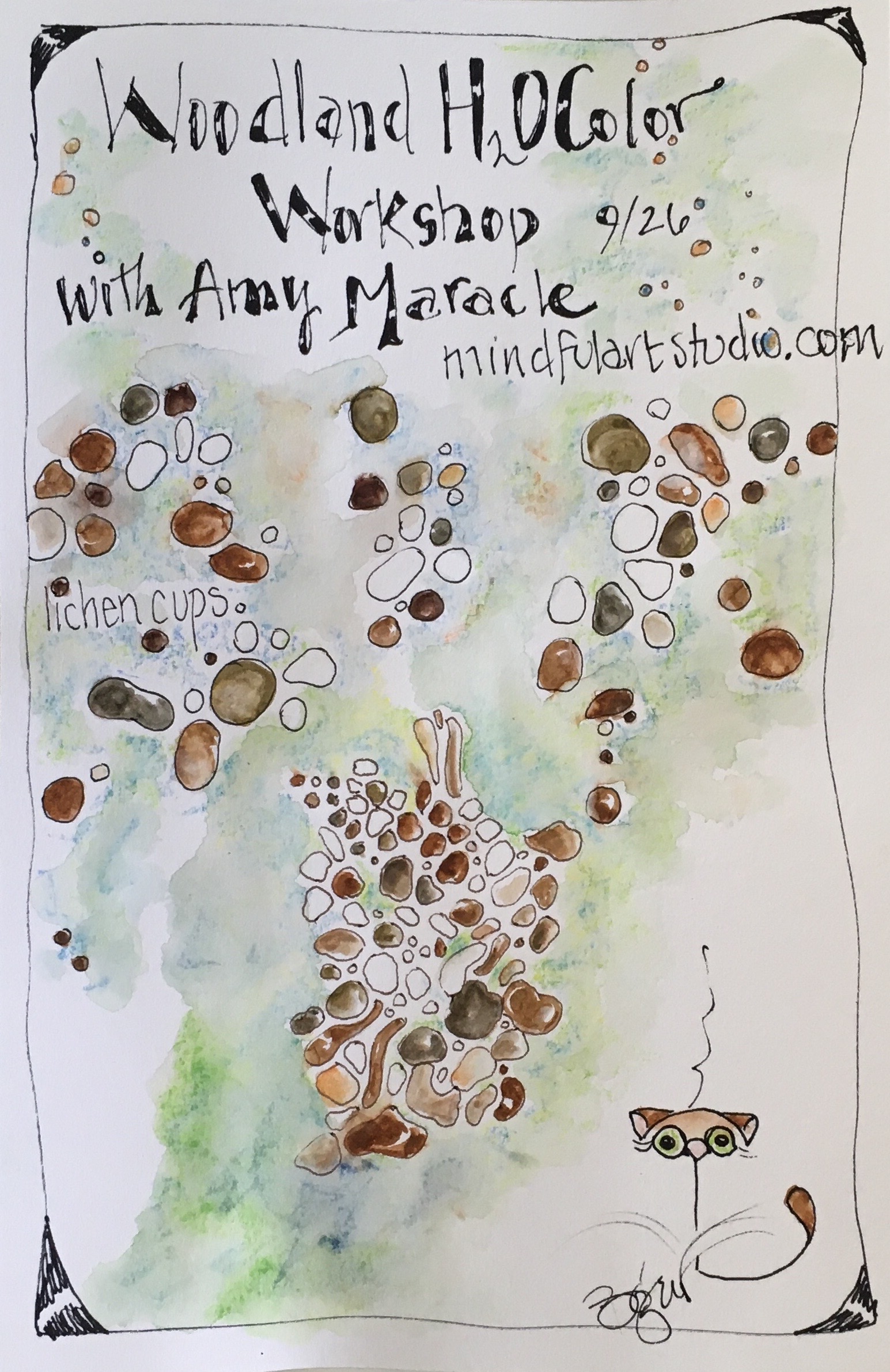
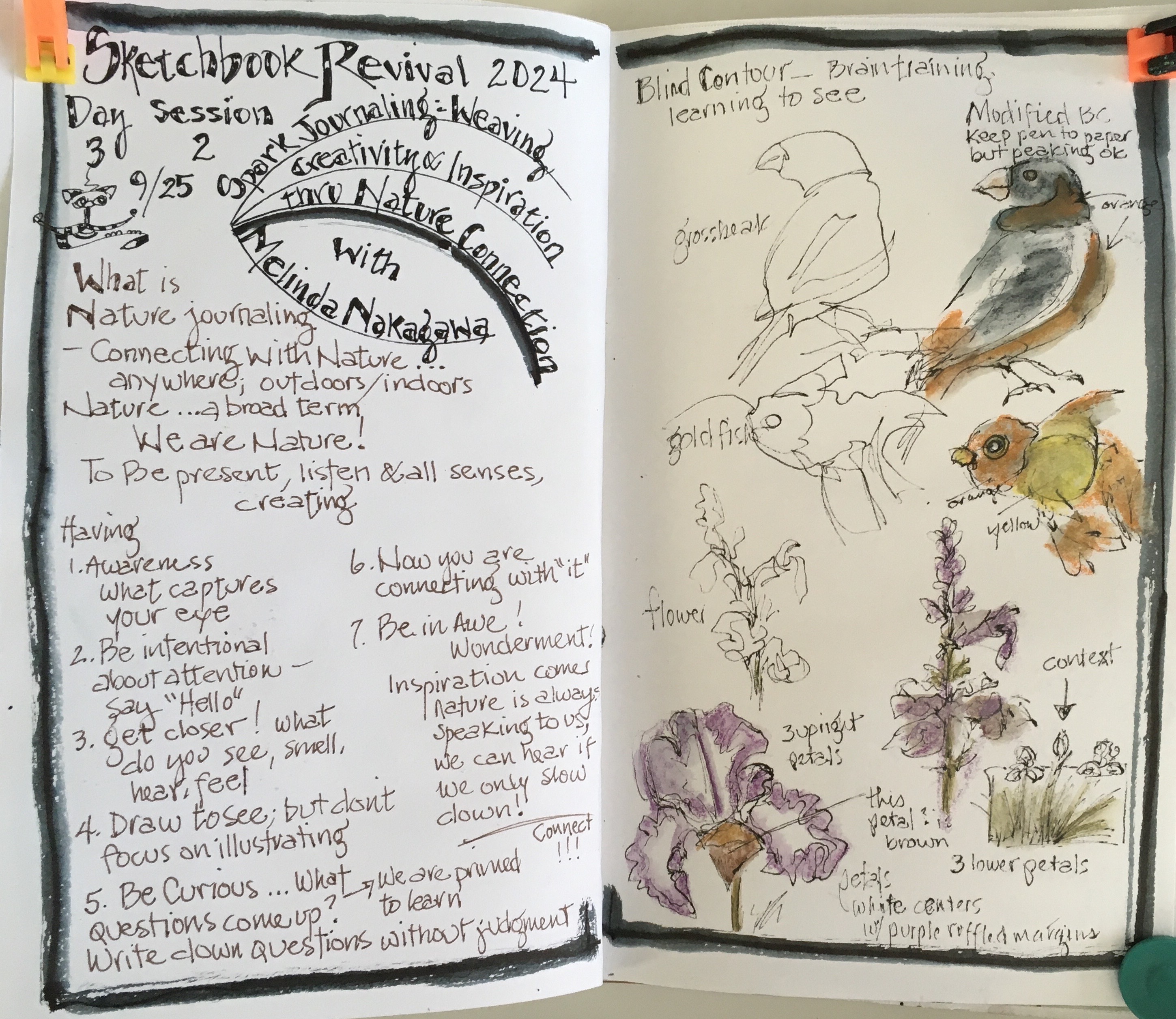
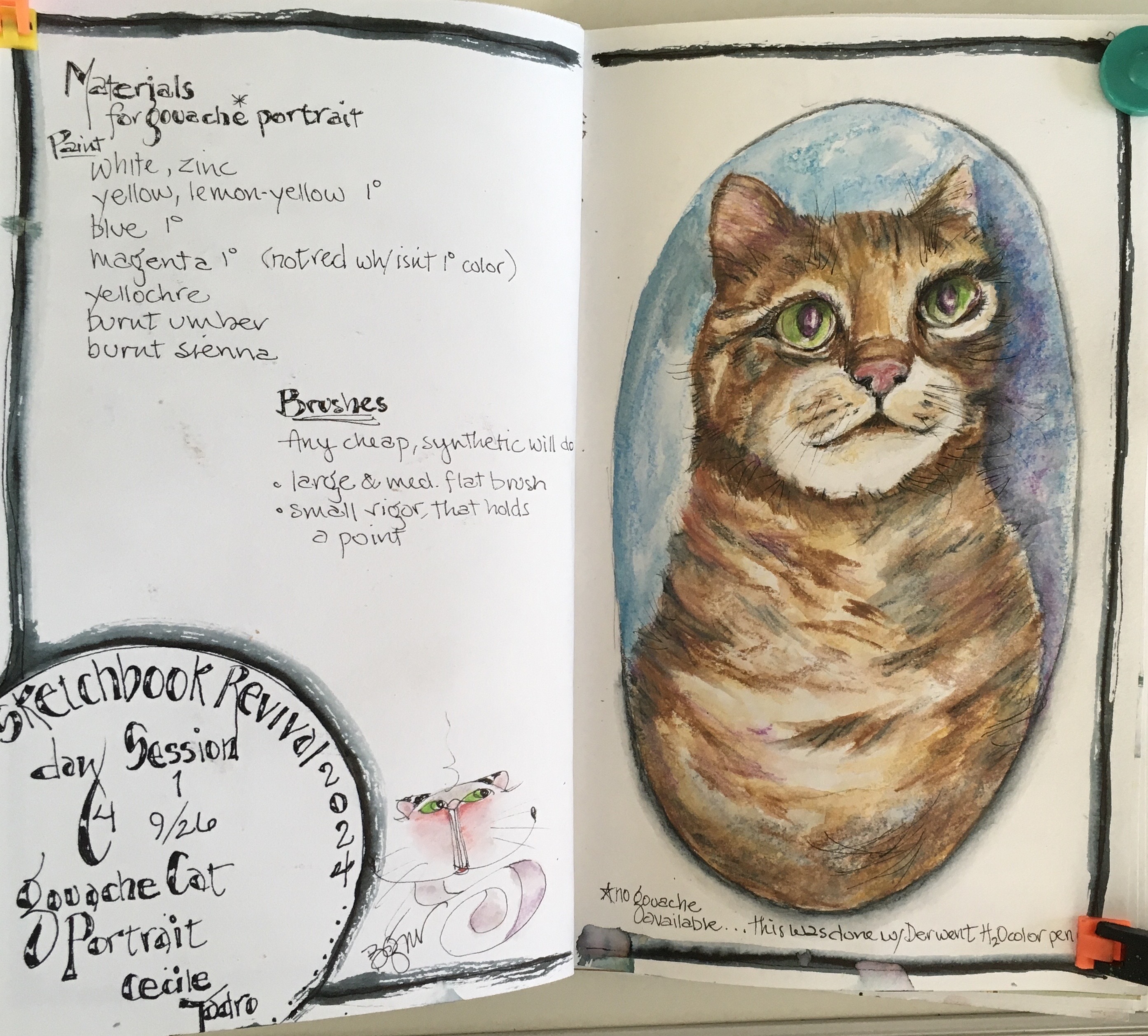
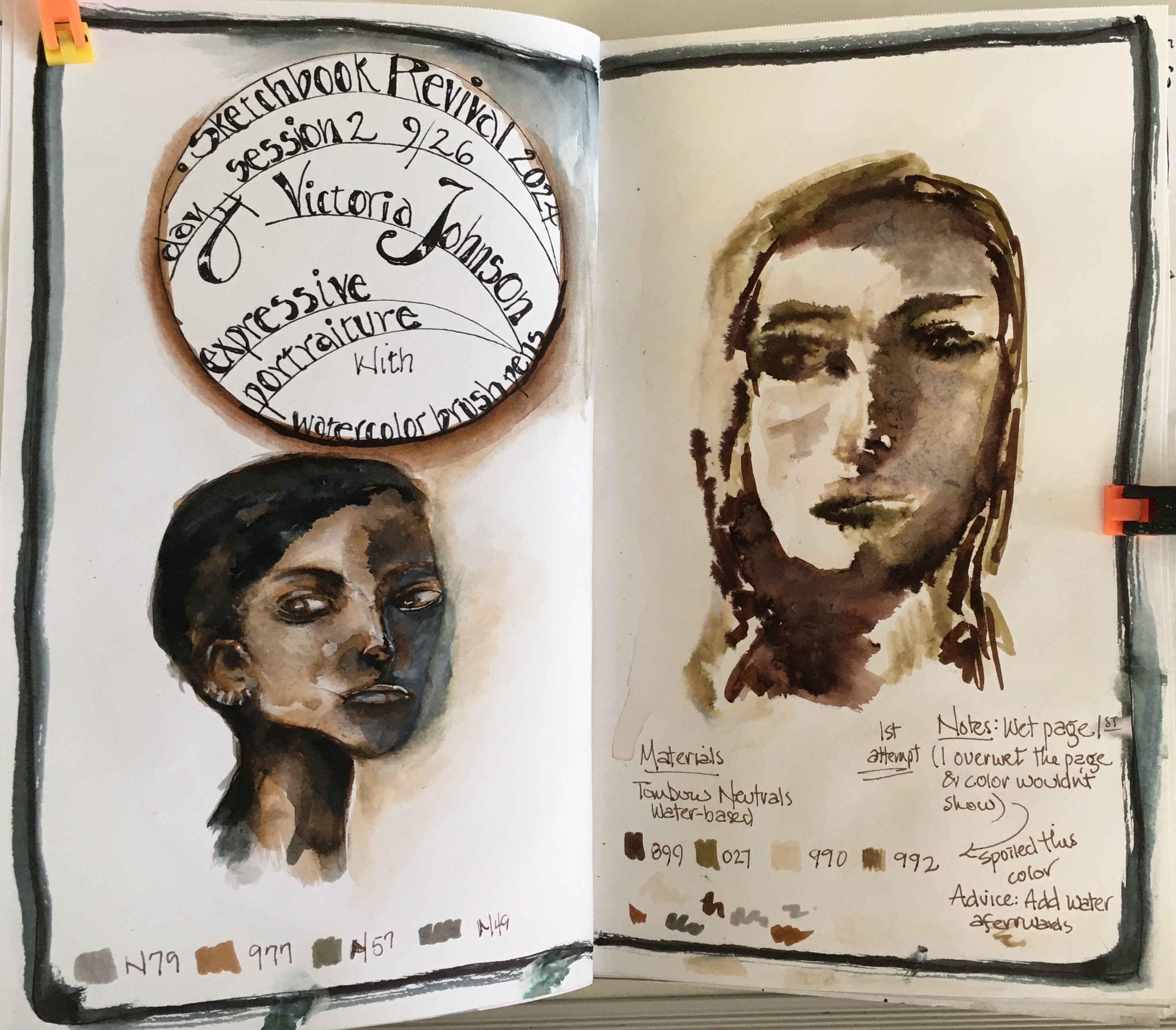
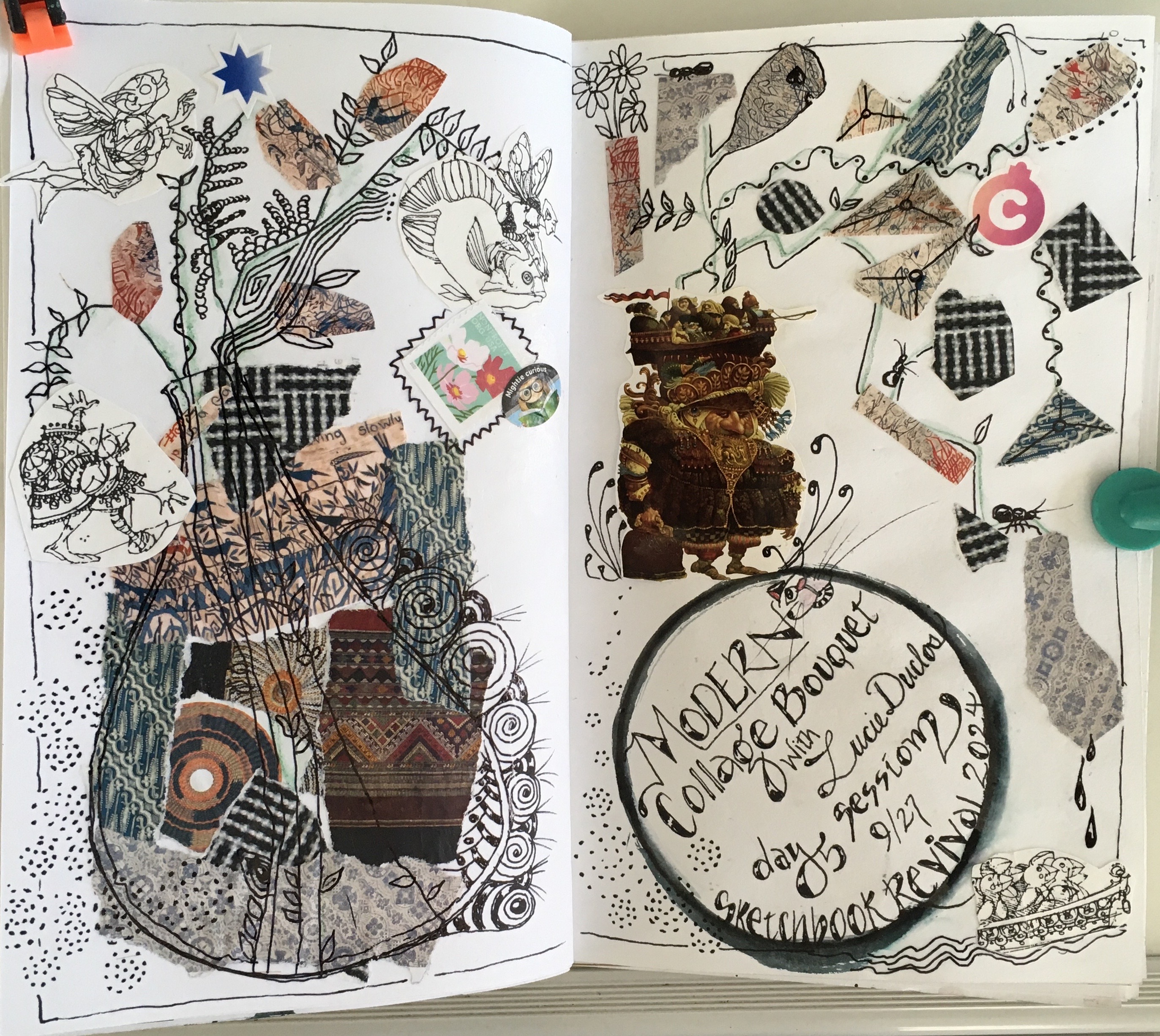
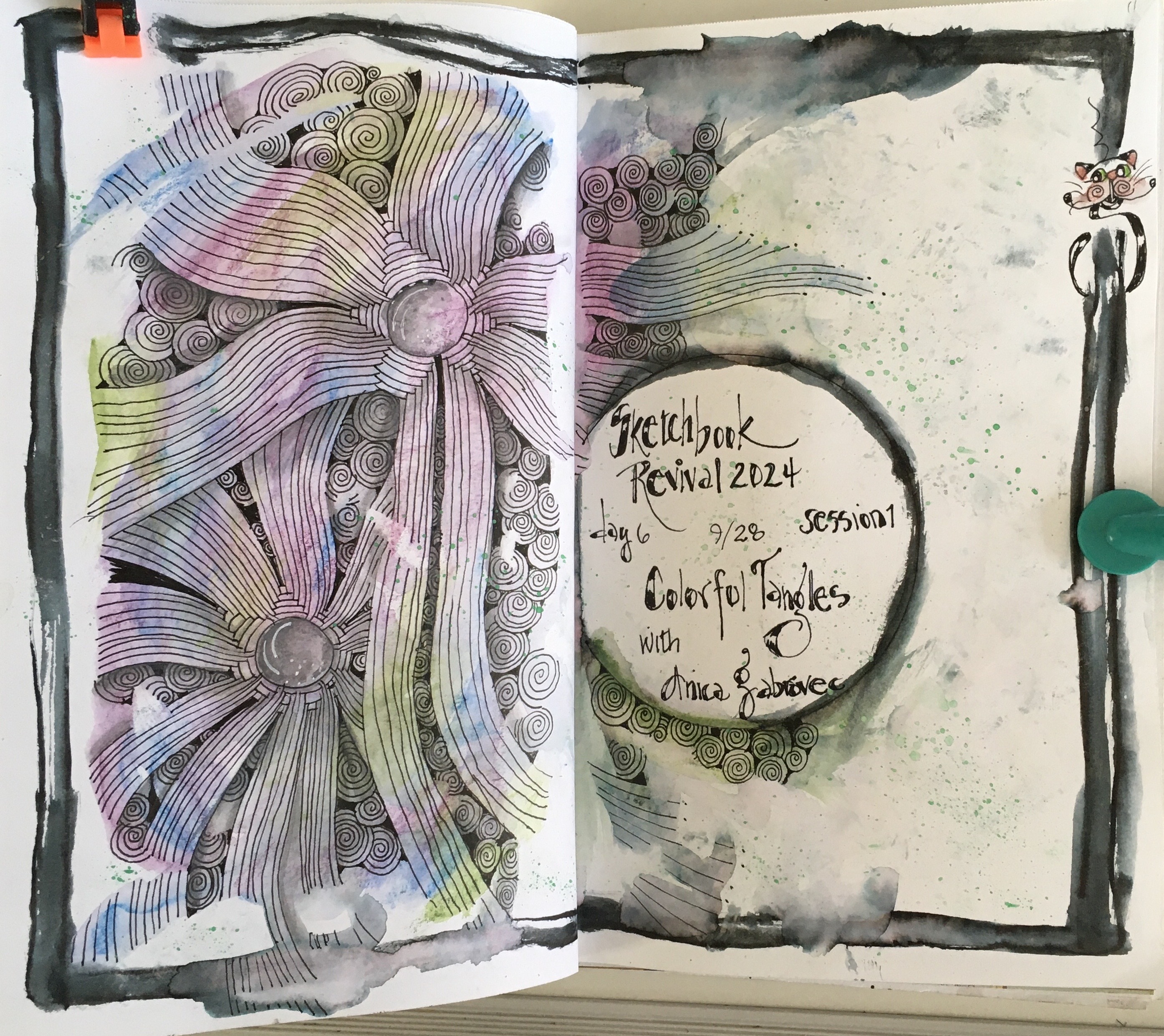
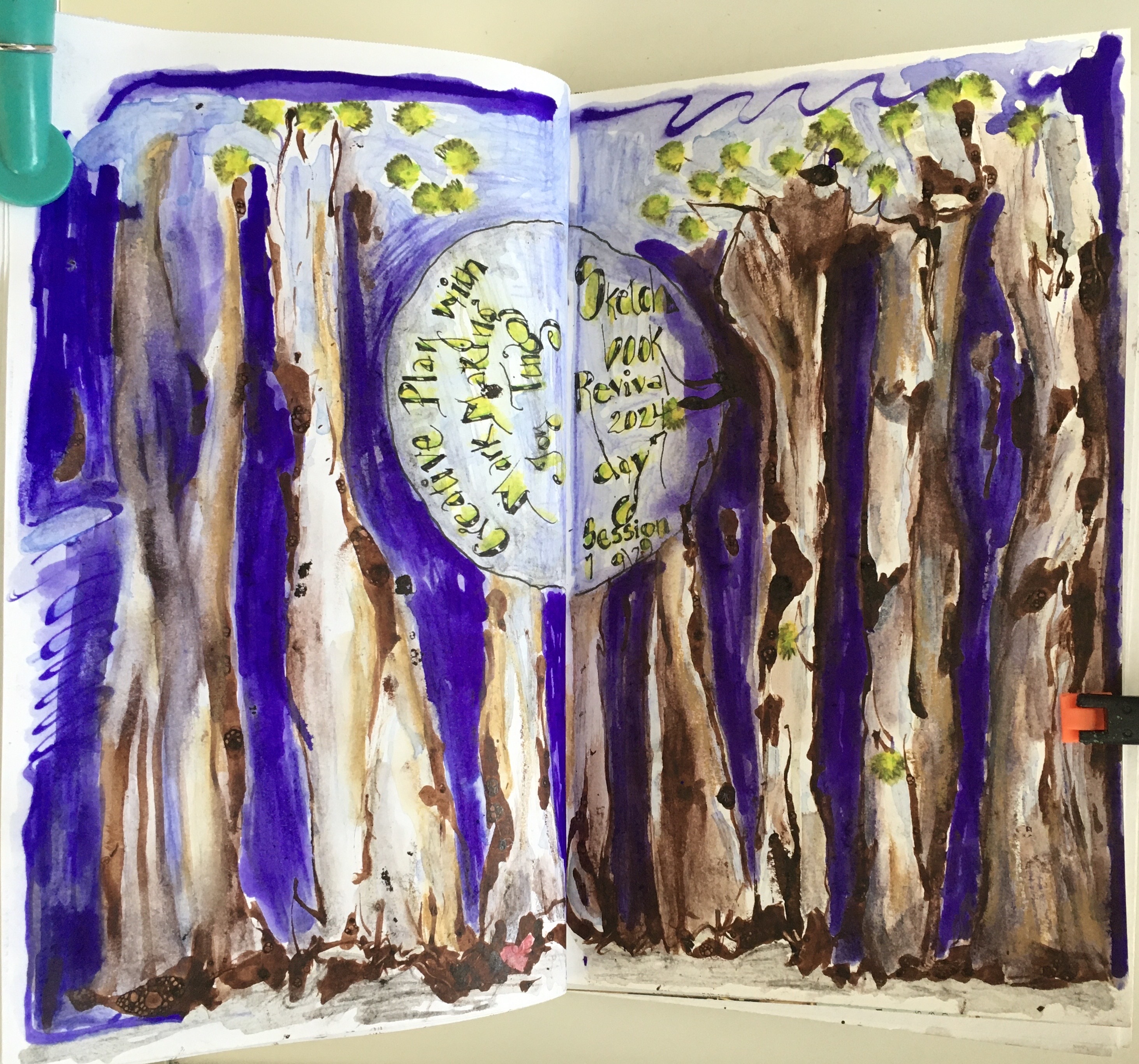
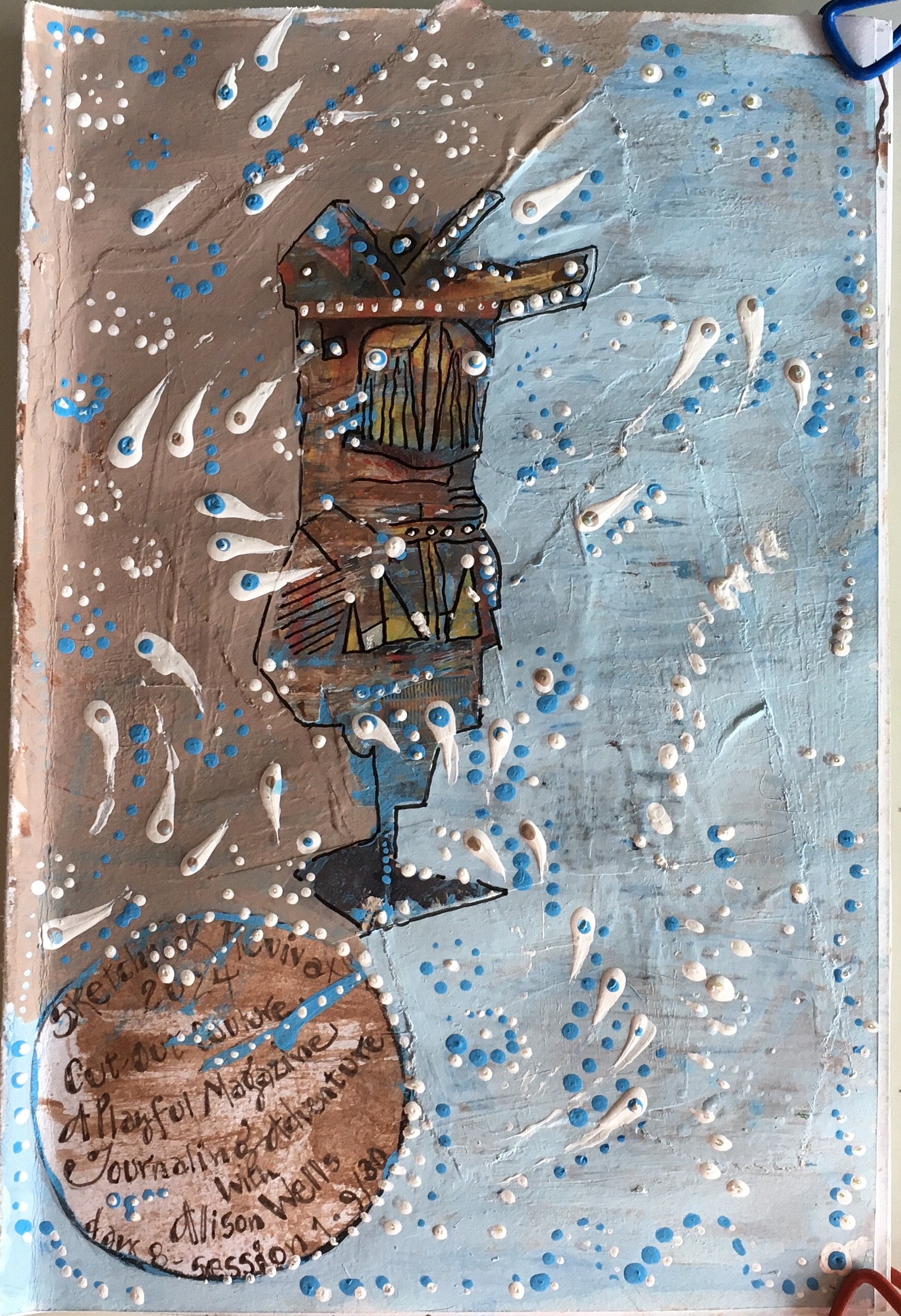
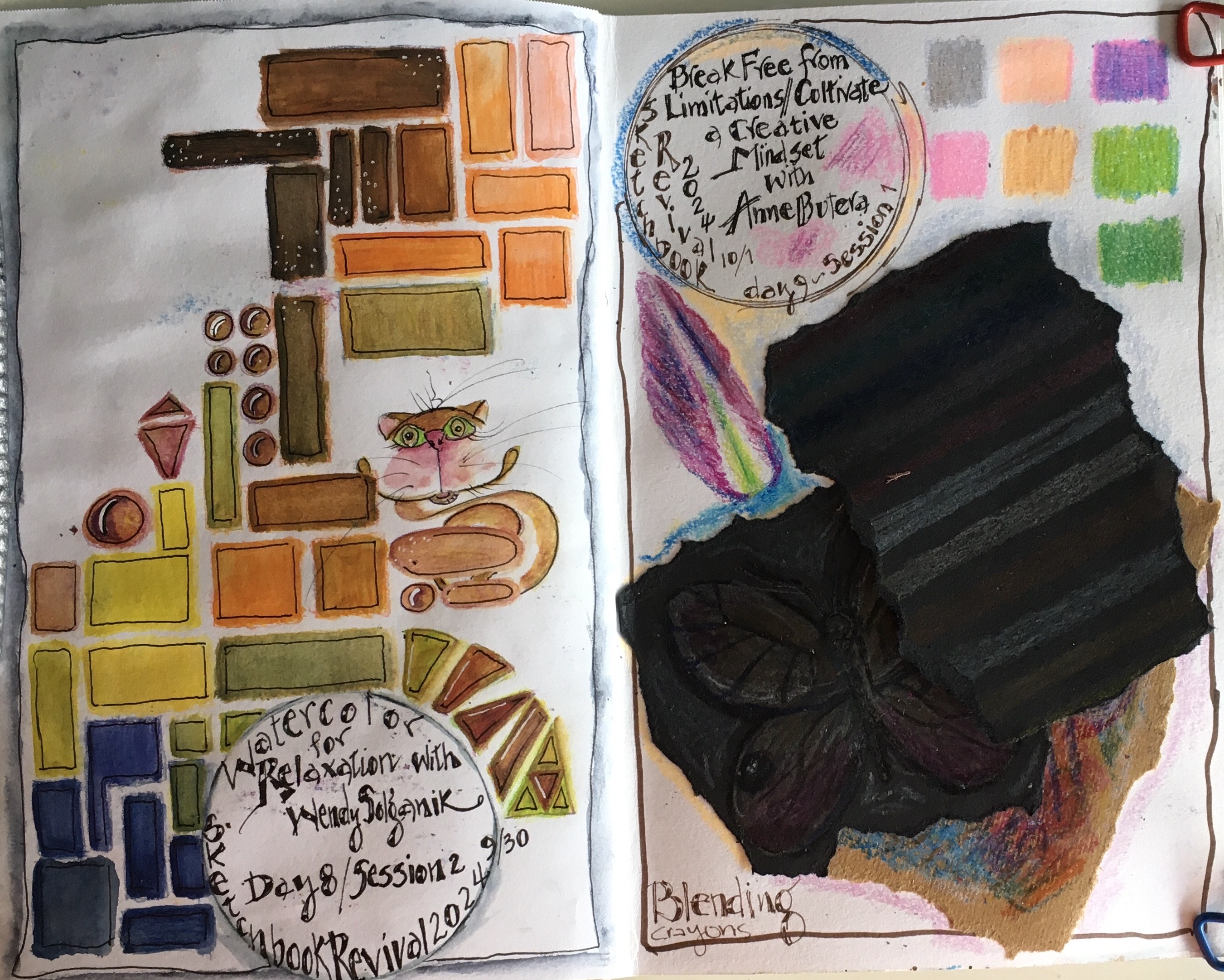
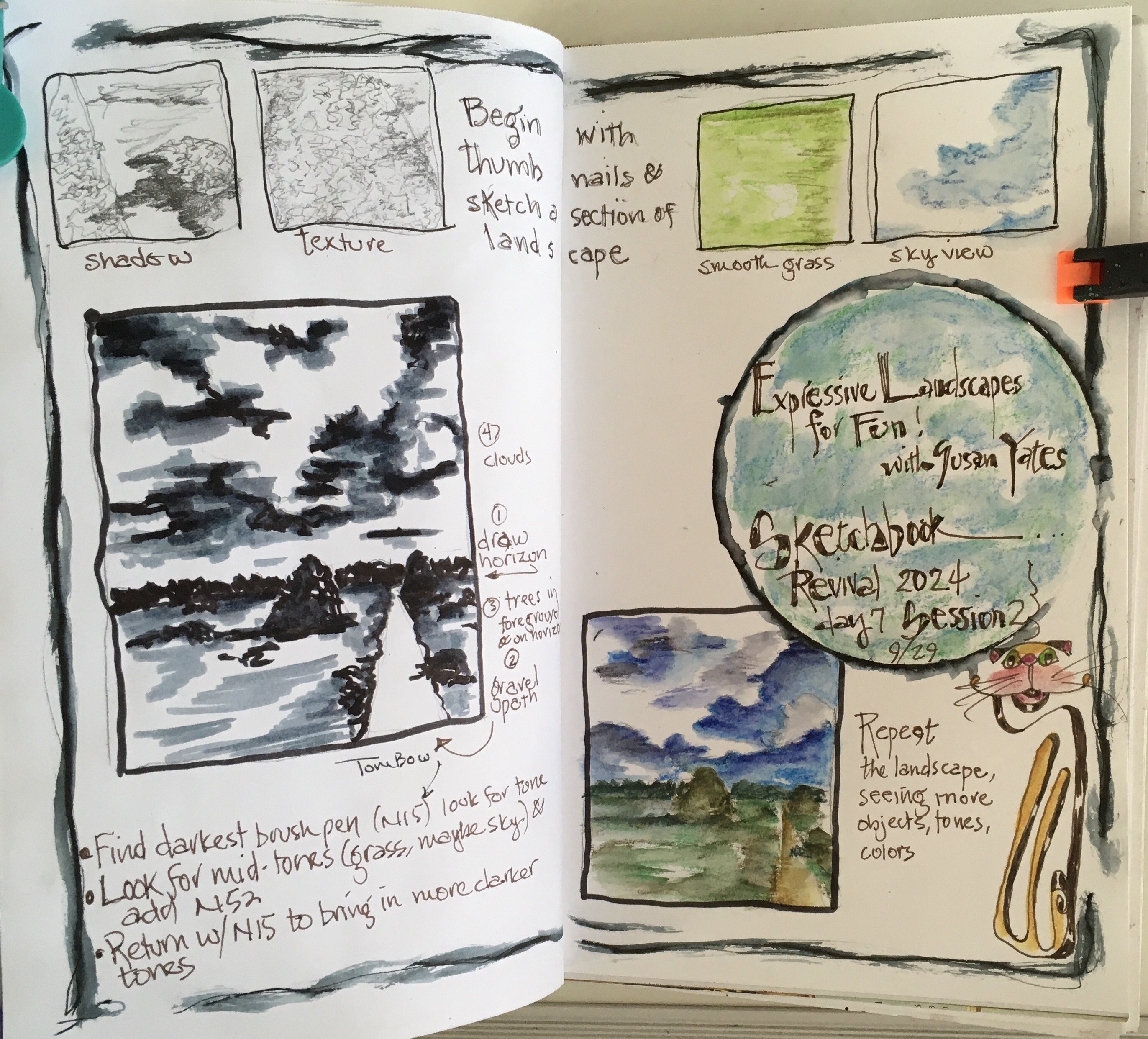
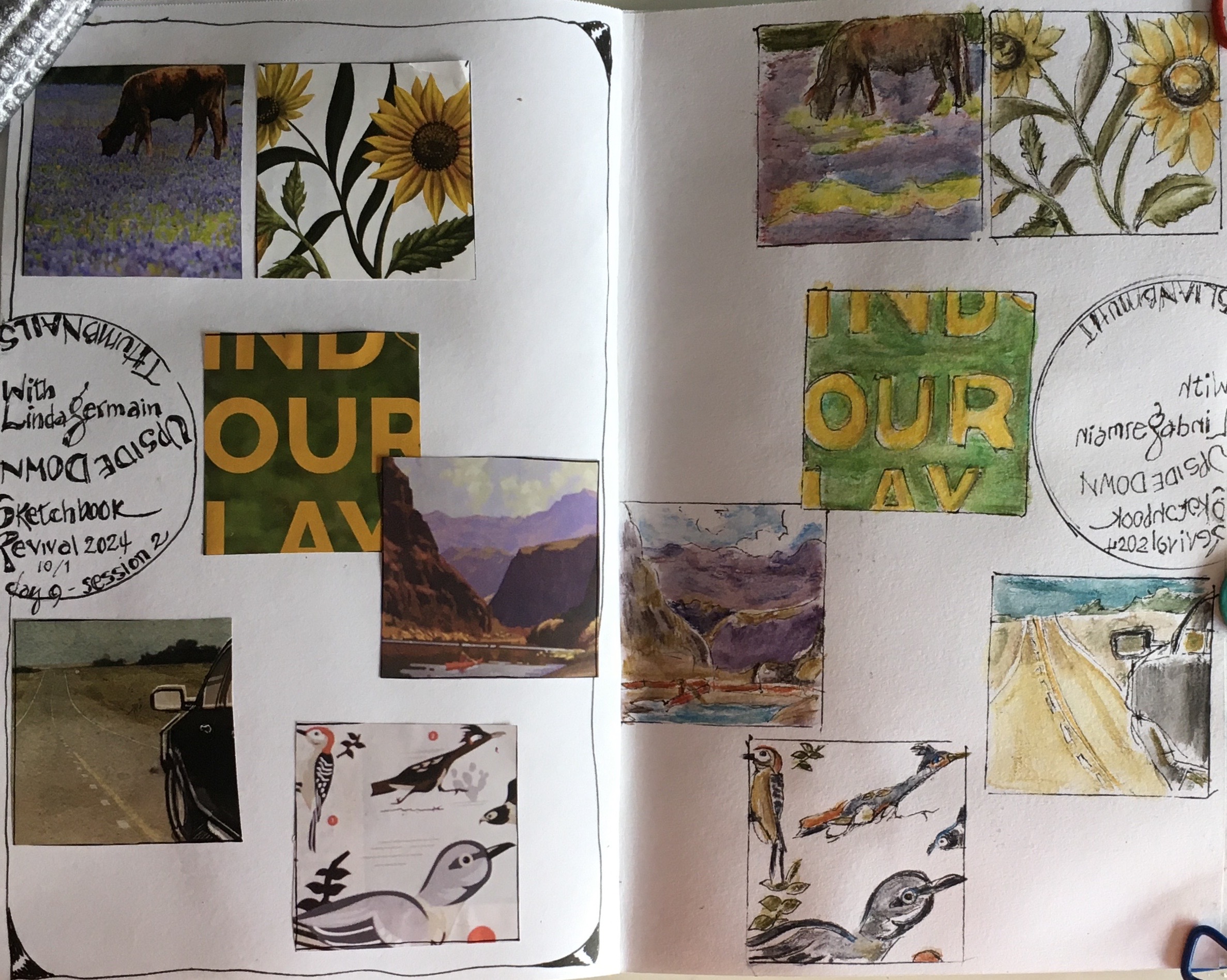
For the last 7 years, I’ve participated in the annual, 2-week long sketching/drawing, painting and mixed media event, Sketchbook Revival, founded and hosted by a talented sketchbook artist, Karen Abend. Every year, Karen brings together a cast of creative artists for a mega on-line teaching marathon. Each day, 2 1-hour recorded sessions are available to hundreds of participants from around the world, providing an opportunity to interactively learn a skill or technique designed to begin or expand on a regular sketchbook practice.  These sessions may include book binding, mark-making, collage, creating imaginary characters, urban sketching, composition, landscapes, flowers, mammals and bird painting, people or pet portrait drawing, nature journaling, Zentangle, map making, story telling, textiles, and on and on! Techniques shared by instructors involve a wide-variety materials, like watercolor, gouache, acrylic, markers, pencil and pen, colored pencil, and many forms of mixed-media. 

The whole fun event is designed to stretch your creative comfort zone by experimenting with art supplies and new approaches to art making, and encourages play. And as incredible as it sounds, all you need to participate is your time and whatever materials you have on hand. Otherwise, it’s totally free! Wowza! 

Not every session needs to be done (and this year there were 30 sessions in 15 days); I usually find time to complete about half of them. But this year I did all but one session (and may even complete the one skipped). From the very diverse cast of artists/instructors, I was able to learn new tips, techniques, approaches, and was invites to try new art supplies that would be useful in my regular sketchbooking and nature journaling practice. 

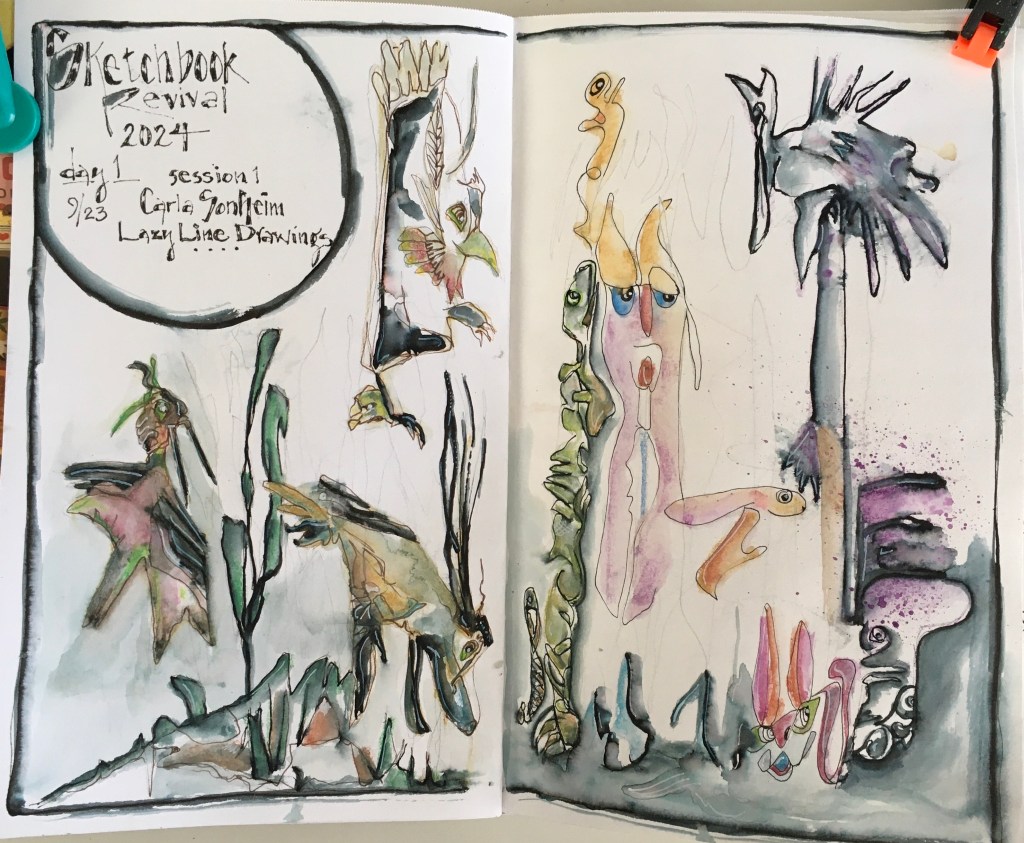
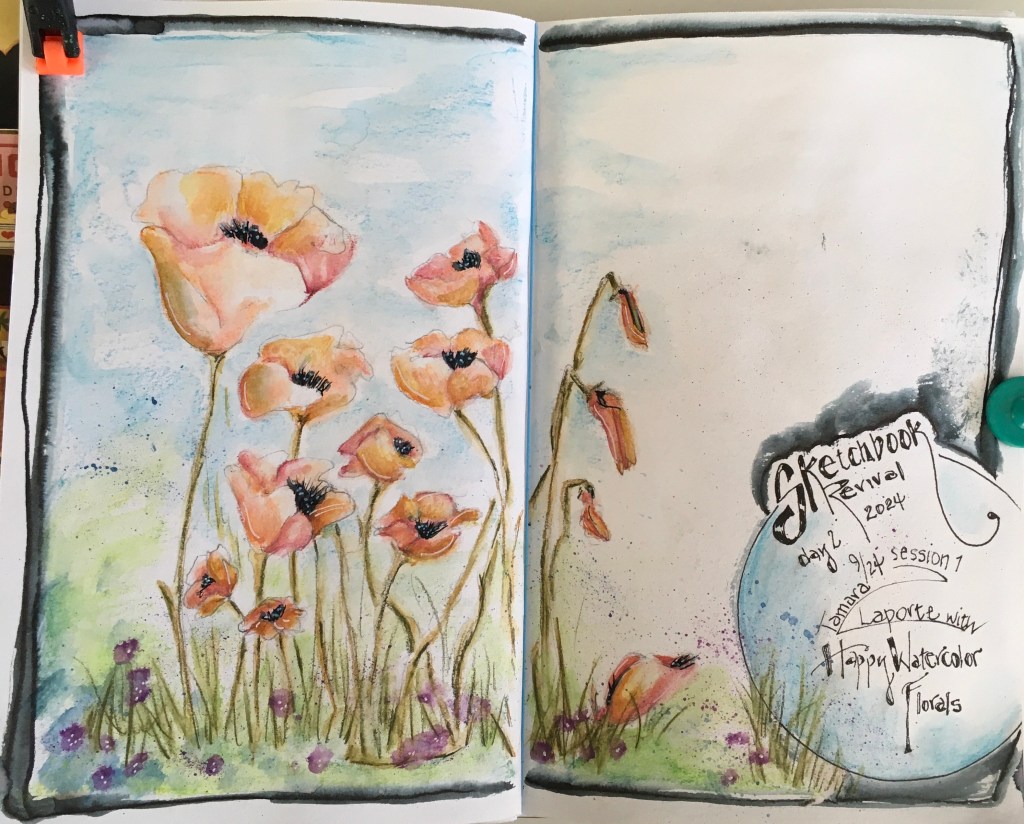
Hopefully you’ll enjoy my 2024 Sketchbook Revival “play!” Not all are great or even good (a few are downright awful!) but it was so much fun! Maybe something from my collection will have you laughing, or maybe even entice you to give Sketchbook Revival 2025 a whirl! 


That’s all for Sketchbook Revival 2024. Let me know what you think!

And as always, thanks for stopping by!

Sketchbook Revival 2024! 15 Days of Priceless Fun

September 23 – October 7, 2024
For the last 7 years, I’ve participated in the annual, 2-week long sketching/drawing, painting and mixed media event, Sketchbook Revival, founded and hosted by a talented sketchbook artist, Karen Abend. Every year, Karen brings together a cast of creative artists for a mega on-line teaching marathon. Each day, 2 1-hour recorded sessions are available to hundreds of participants from around the world, providing an opportunity to interactively learn a skill or technique designed to begin or expand on a regular sketchbook practice.  These sessions may include book binding, mark-making, collage, creating imaginary characters, urban sketching, composition, landscapes, flowers, mammals and bird painting, people or pet portrait drawing, nature journaling, Zentangle, map making, story telling, textiles, and on and on! Techniques shared by instructors involve a wide-variety materials, like watercolor, gouache, acrylic, markers, pencil and pen, colored pencil, and many forms of mixed-media. 

The whole fun event is designed to stretch your creative comfort zone by experimenting with art supplies and new approaches to art making, and encourages play. And as incredible as it sounds, all you need to participate is your time and whatever materials you have on hand. Otherwise, it’s totally free! Wowza! 

Not every session needs to be done (and this year there were 30 sessions in 15 days); I usually find time to complete about half of them. But this year I did all but one session (and may even complete the one skipped). From the very diverse cast of artists/instructors, I was able to learn new tips, techniques, approaches, and was invites to try new art supplies that would be useful in my regular sketchbooking and nature journaling practice. 

Hopefully you’ll enjoy my 2024 Sketchbook Revival “play!” Not all are great or even good (a few are downright awful!) but it was so much fun! Maybe something from my collection will have you laughing, or maybe even entice you to give Sketchbook Revival 2025 a whirl! 


That’s all for Sketchbook Revival 2024. Let me know what you think!

And as always, thanks for stopping by!

Happy World Smile Day!

October 4, 2024

World Smile Day is an annual celebration of the simple yet powerful act of smiling and spreading joy to others. It was created by commercial artist Harvey Ball in 1999 to honor the iconic smiley face he created in 1963. On this day, people are encouraged to perform acts of kindness and make others smile, both in person and through social media. World Smile Day is celebrated on the first Friday in October.
Poem Created by Barb

As always, thanks for stopping by!