It’s a wrap! EggTober 2025 – the Full Four Submissions- all in one place!
My 3 minute YouTube video (see link below) features all 32 annotated bird egg paintings submitted for Inktober2025, along with several bonuses you won’t want to miss!
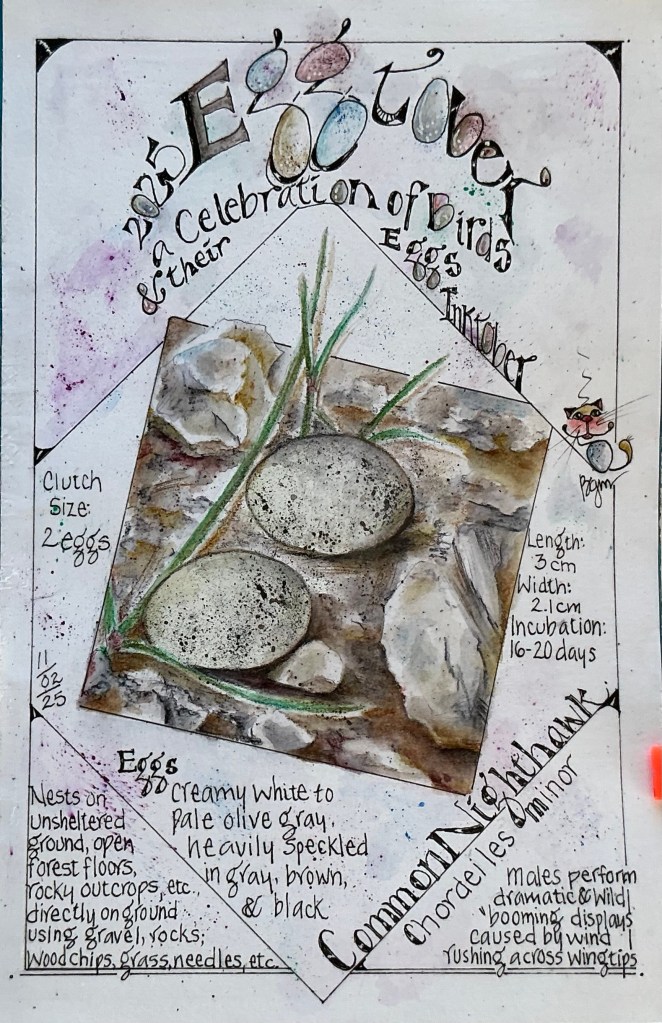
1) a pair of never-seen-before annotated Common Nighthawk eggs painted for the cover of my 6”x9” handmade journal ………
2) an index, by common name and date of appearance, of the 32 bird eggs painted and annotated between October 1 and November 1, 2025 ………
3) an accordion book attached to the inside back cover that has all the fascinating details about each of the 8 layers of an avian eggshell
YouTube Video Link
For some reason, I’m unable to embed my YouTube video directly into this post. This is rather inconvenient, huh! So until I can troubleshoot the player issue, I’d love for you to click on the link below to view the video on my YouTube channel!
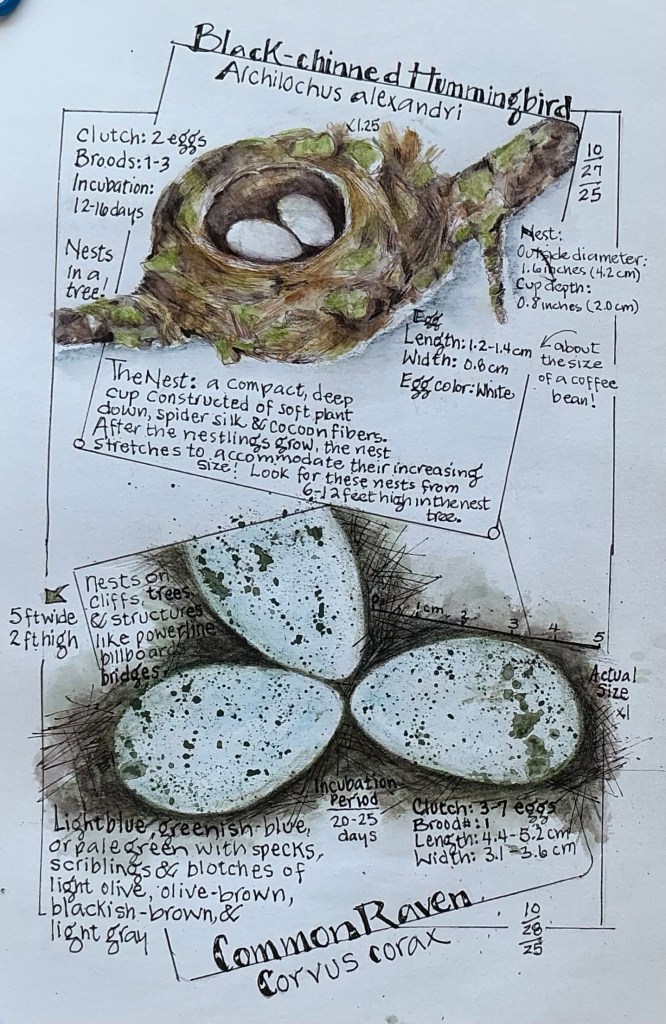
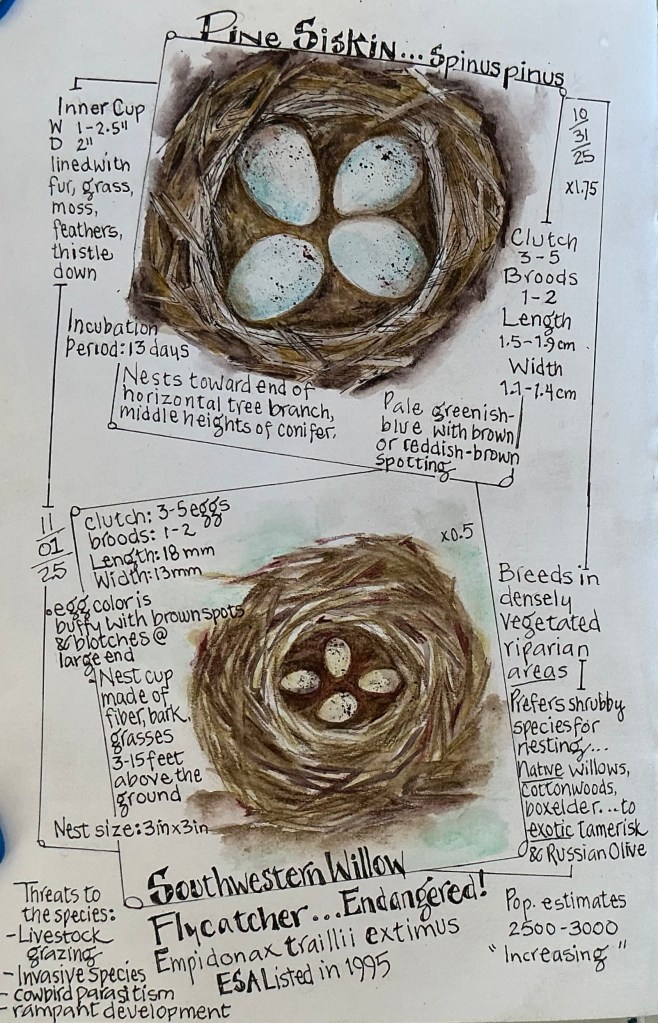
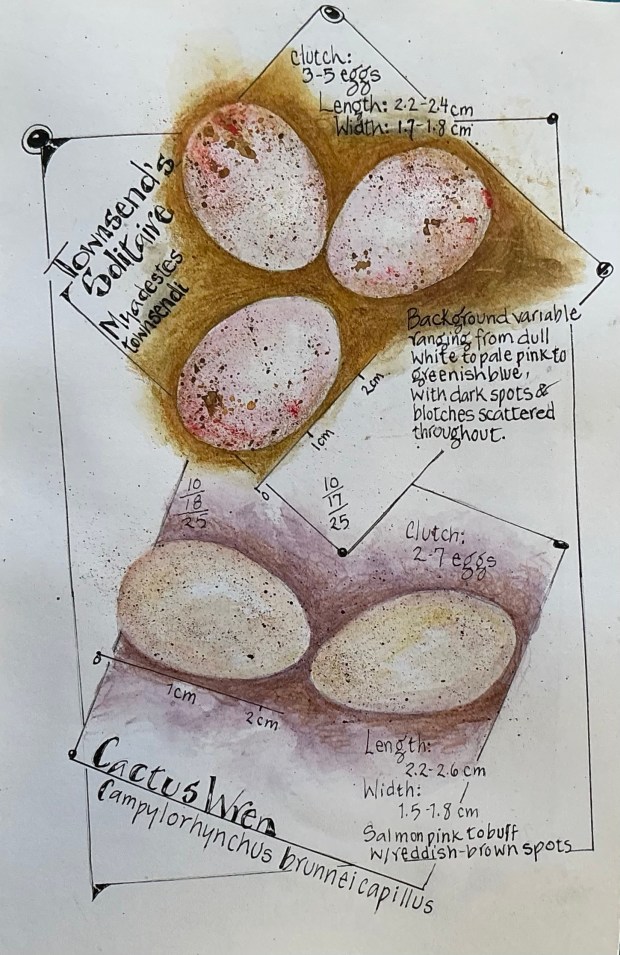
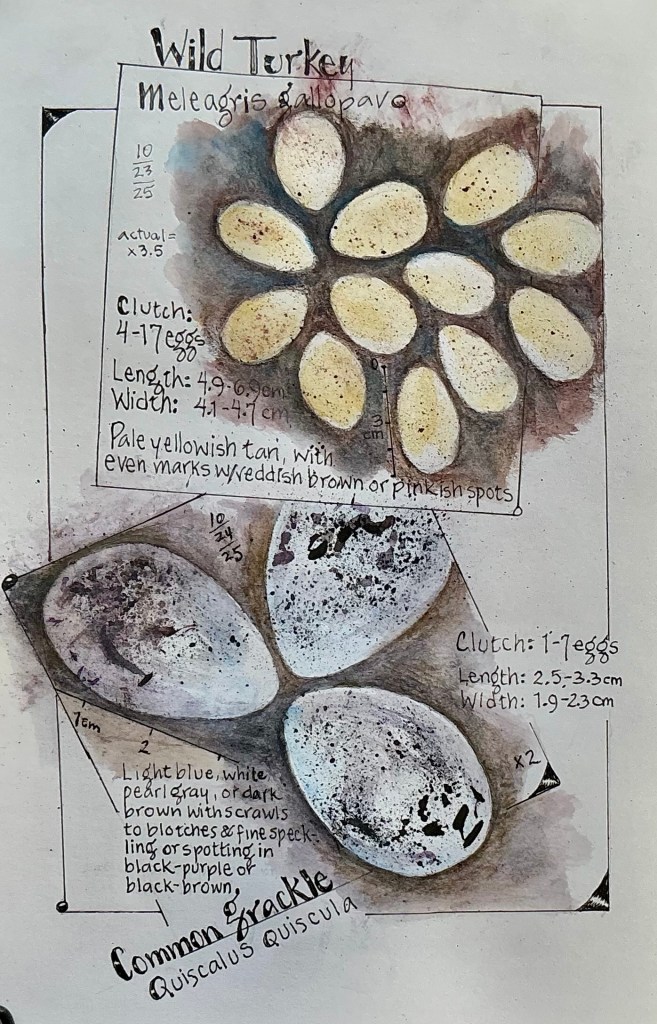
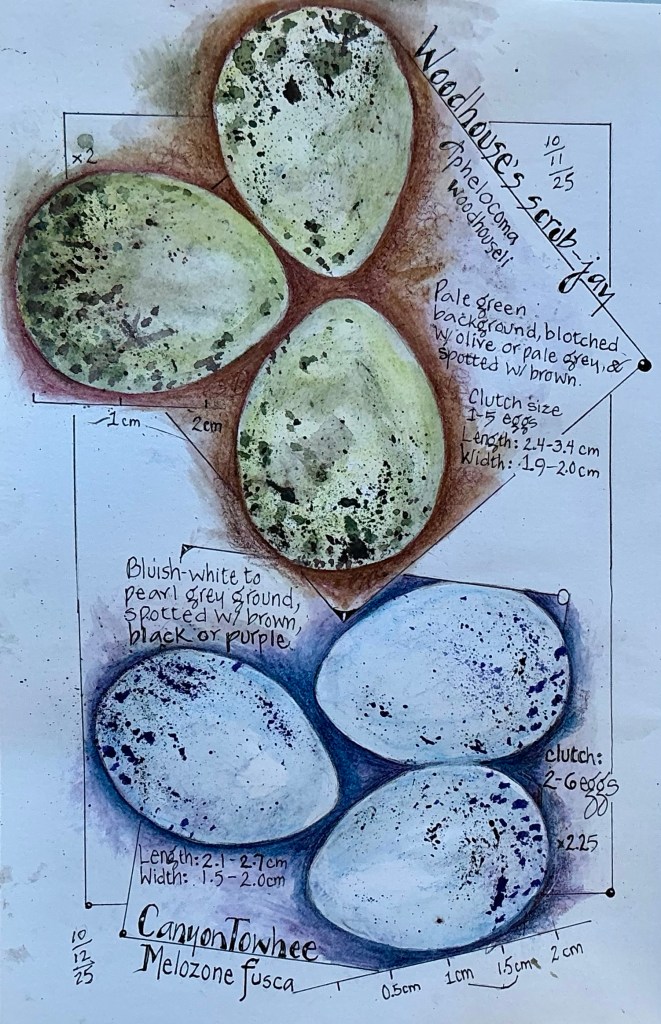
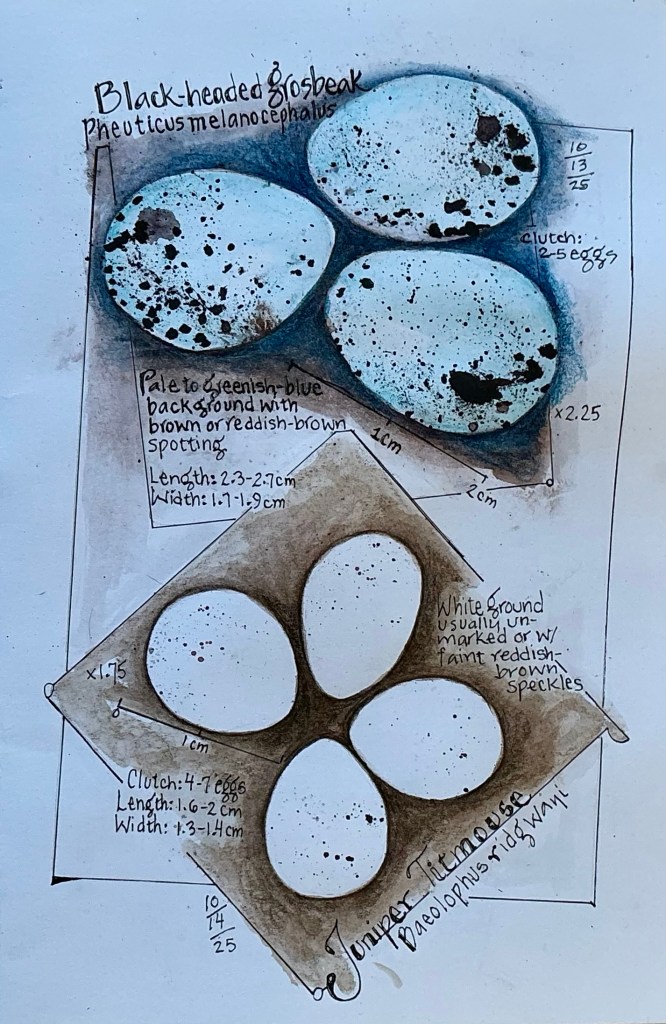
EggTober 2025 has officially ended! And Wow … I’m so eggs-cited to share Submission Four, the finale, with all-y’all! The eggs showcased for Days 25-31 +1 (yes, another random bird flew in and laid a bonus clutch on the last page) are all snug in their New Mexico nests. Also, you’ll notice a bit more text surrounding those nests.
Following Submission Three, where my narrative focused on the different layers of the eggshell membrane, I was curious about how avian eggshells are constructed. Then I wanted to know more about the entire reproductive system of birds, from ovulation to fertilization, to egg laying. And Then I couldn’t rest without knowing about the embryo, the yolk, the egg white, and all the bits and pieces you see when cracking open an egg! I didn’t know any of this, and if you don’t know, you’re head is about to explode in wonder!
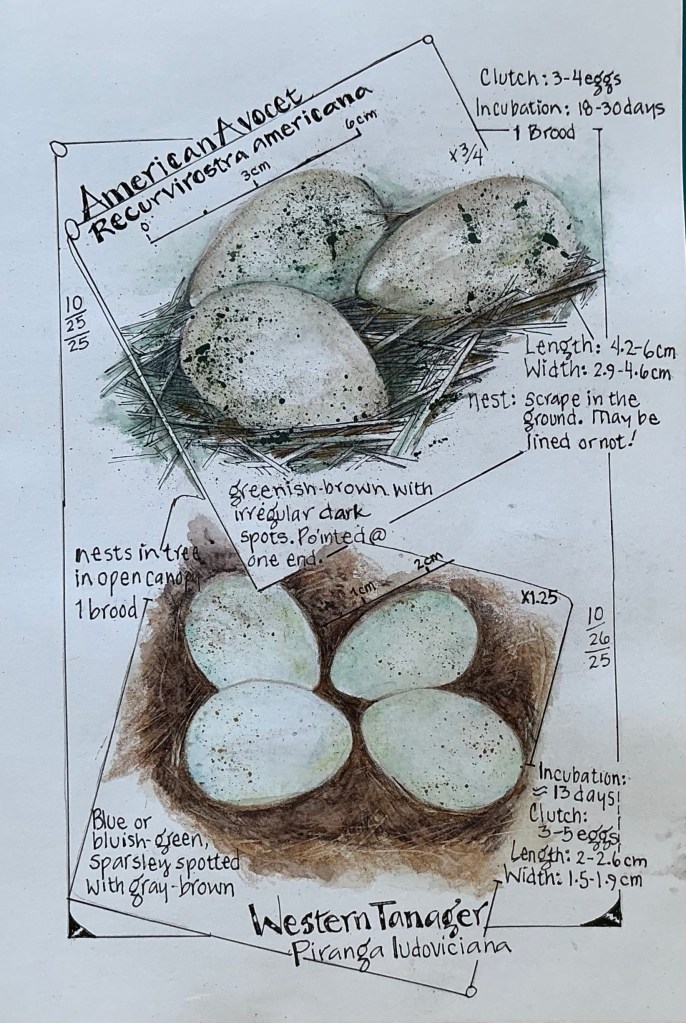
October 25 and 26
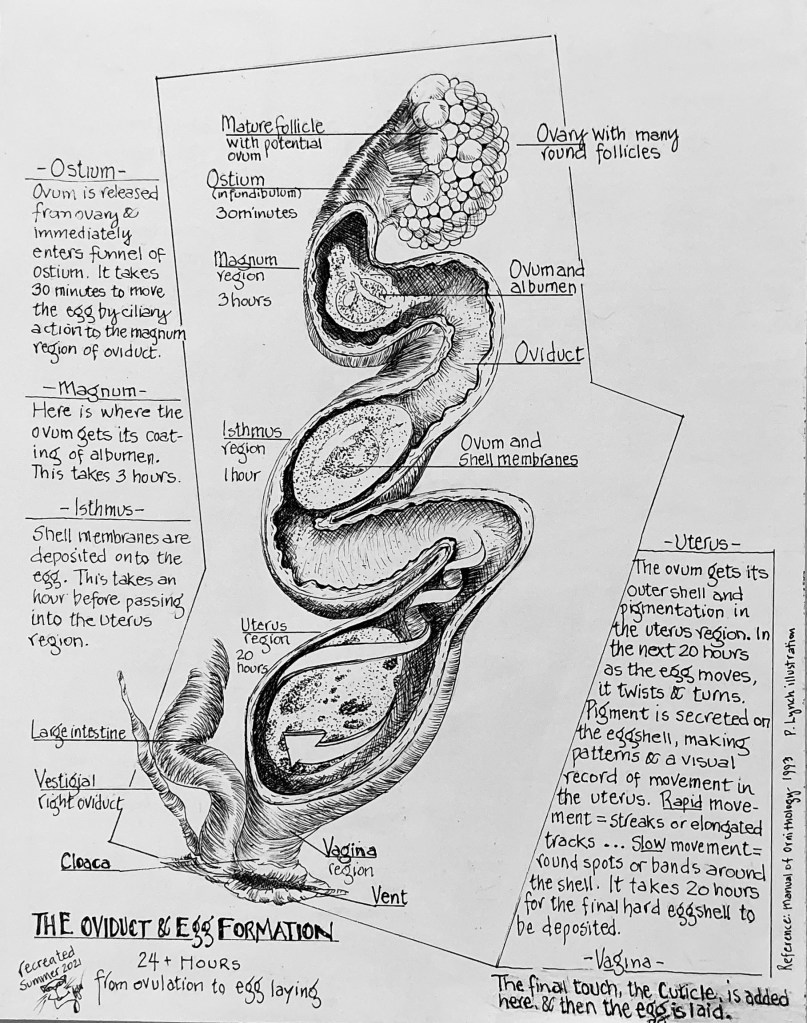
The Avian Oviduct and Egg Formation
It takes about one day to build an egg. But to prepare for the journey, about 7 to 9 days before the egg will be laid, the Yolk must be formed. Here’s the story of …..
The Yolk …..
….. formed in one of the many Follicles of the Ovary, the vitellus or Yolk begins as an immature Ovum that is stimulated to enlarge over several days by receiving deposits of yolk material. Once growth is initiated, over the next 7 to 9 days the Yolk’s formation intensifies as 99% of its nutrient-rich layers are deposited until it’s fully formed. Now mature, the Follicle ruptures and the Yolk is released in a process called Ovulation.
And this is where the Journey through the Oviduct begins! Over the next 24 hours, the developing embryo acquires the many layers it needs for nourishment, respiration, and protection until it’s formed into a perfect egg ready for laying. The entire journey takes place in the Oviduct …..
….. which can be divided into several regions: the Infundibulum, Magnum, Isthmus, Uterus, and Vagina. What happens in each of these regions is nothing short of fascinating!
The Regions of the avian oviduct
Infundibulum – After Ovulation, the Yolk immediately enters the funnel of the Infundibulum (the Ostium) where the Ovum is fertilized and the Chalazae is formed. With the help of ciliary action, it takes 30 minutes for the Ovum to move through this region of the Oviduct to the next, the Magnum.
Magnum– It’s this region where the Yolk, together with the now developing embryo and the Chalazae, gets a protective coating of protein-rich Albumen, a process that takes about 3 hours to complete, before moving along to the Isthmus.
Isthmus – The Inner and Outer Shell Membrane Layers and the NucleationSites are formed in this region of the Oviduct. This takes about an hour before the package is delivered to the Uterus.
Uterus– This is where five of the six layers of the outer Eggshell are formed. They are the Mammillary Layer and Mammillary Bodies, Organic Matrix Layer, Crystalline Palisade Layer, Vertical Crystal Layer, and Shell Pigment Layer. Also, as much as one-third of the protein in an egg is added while in the Uterus.
It takes about 20 hours for the egg to move through the Uterus while these layers are deposited. And as the egg moves, it twists and turns. When it’s time to add pigment, the rate of rotation adjusts to ‘paint’ the species-specific patterns we see on the eggshell, leaving a visual record of the egg’s movement in the Uterus. For example, if streaks or elongated tracks on the shell are required, movement is more rapid than when creating round spots, blotches, speckles, or bands. After pigment is added to the outer shell structure, the layers of background color and any markings are enclosed in calcite crystals.
Vagina – The last region of the Oviduct where the Cuticle (the Bloom) is added to the shell just before the egg is laid.
The egg is now complete. The entire process, beginning with the release of the mature Yolk and Ovum from its Follicle until the egg’s final touches, takes 24 hours! And the timing ensures the egg is always laid sometime during the day.
………………………………………………………………………………………………………………
Glossary and Other Interesting Things
Albumen – refers to the “white” of the egg. The Albumen is an effective barrier against microbes that might cross over and cause disease in the developing embryo. Albumen contains over a hundred antimicrobial proteins.
October 27 and 28
Chalazae – two spiral bands of white, stringy tissue that suspend and hold the Yolk in the center of the Albumen.
Crystalline Palisade Layer – A tough, mineralized structure of calcium carbonate crystals that grow into dense columnar units above the MammillaryBodies (the mineralized base of the crystalline eggshell). The amount of shell deposited is determined by the time spent in the Uterus.
Eggshell – Depending on species, the eggshell represents from 9-15% of the total weight of the egg.
Eggshell Formation – The Crystalline Palisade Layer is essential to the process of eggshell formation which takes place in the Uterus.
Nucleation: The process begins at the Nucleation Sites, located on the External Shell Membrane, which are the specific places where the mineralization of calcium carbonate begins.
Initial growth: As calcium salts are deposited and crystallize, inorganic calcium carbonate crystals grow around and outward from the Nucleation Sites, forming the cone-shaped Mammillary Bodies; the first, innermost calcified layer of the eggshell, anchored to the External Shell Membrane. This base of mineralized shell provides mechanical strength, and serves as the main source of calcium for the developing embryo’s skeleton.
Maturation – The calcium carbonate crystals continue to grow into the dense columnar units that form the Crystalline Palisade Layer, creating a tough, mineralized structure that protects the embryo. The amount of shell deposited is determined by the time spent in the Uterus.
Follicle – an enclosed cavity in the Ovary
Labile Medullary Bone– a temporary, highly porous, and woven bone tissue that forms, driven by hormonal changes in female birds, in her medullary (marrow) cavities in the period leading up to and during egg-laying. As a highly porous, woven bone, medullary bone has no significant mechanical function or structural strength. Its role is strictly metabolic.
The word labile means the bone is unstable and readily undergoes rapid and frequent change. Once the egg-laying period is complete, hormones change and medullary bone is reabsorbed.
Labile Medullary Bone Formation and Calcium Requirements – It’s interesting to note that an egg-laying hen requires 10% of her the total body calcium reserves during each 24-hour period she is producing eggs. To meet this calcium requirement, primarily for eggshell formation, it’s necessary that her plasma (blood) calcium levels triple during egg formation. This calcium is mainly obtained from increased intestinal absorption and a highly labile reservoir found in the medullary bone. In other words, to meet the calcium requirement, the hen’s body naturally produces it as medullary bone.
Eggshell Layers
Mammillary Bodies – The first, innermost calcified layer of the eggshell, anchored to the External Shell Membrane. These cone-shaped Mammillary Bodies form the base of mineralized calcium carbonate which provides mechanical strength to the shell, and serves as the main source of calcium for the developing embryo’s skeleton.
Nucleation Sites (aka Organic Cores) – form in the Isthmus region of the Oviduct, and are found on the External Shell Membrane. Composed primarily of organic material (proteins, proteoglycans, collagens), they are the specific locations where the mineralization of the calcium carbonate shell begins. In other words, the Nucleation Sites provide the initial template or “seed” for calcium carbonate crystals to start forming.
Oviduct – the tube that transports the developing egg with embryo from the Ovary to the Vagina.
Oviduct … Only One? – Yup! Most bird species have only one Ovary and adjoining Oviduct, the other having degenerated when the hen was, herself, a developing embryo. This evolutionary modification probably resulted because egg production from two ovaries would deplete the female’s body of calcium to excess. As has been demonstrated in chickens that are on a calcium deficient diet, egg production ceases.
Ovulation – The process in which the mature Yolk and Ovum is released from its Follicle in the Ovary and is received into the Oviduct through the Infundibulum.
Ovulation Rate – Within 1 hour after a hen has laid an egg, the next mature Follicle in the Ovary ruptures (aka ovulates), releasing the mature Yolk and Ovum.
Ovum – an unfertilized egg
October 29 and 30
Pigment or Not? – Whether an eggshell is white, or decorated with a background color and/or markings, it’s appearance is influenced first by the species of bird, then by lifestyle and nest location. The specific color of an egg is an adaptation to its environment. This is where camouflage and/or thermal regulation may be required.
Thermal regulation is still being studied, but where camouflage is beneficial, egg color depends strongly on nest locations:
White eggs – prevalent among birds like pigeons, doves, swans, many seabirds, etc. These birds often build concealed nests where camouflage isn’t necessary, or inconspicuous locations are chosen for nesting where white coloring helps camouflage the eggs, reducing the risk of drawing attention.
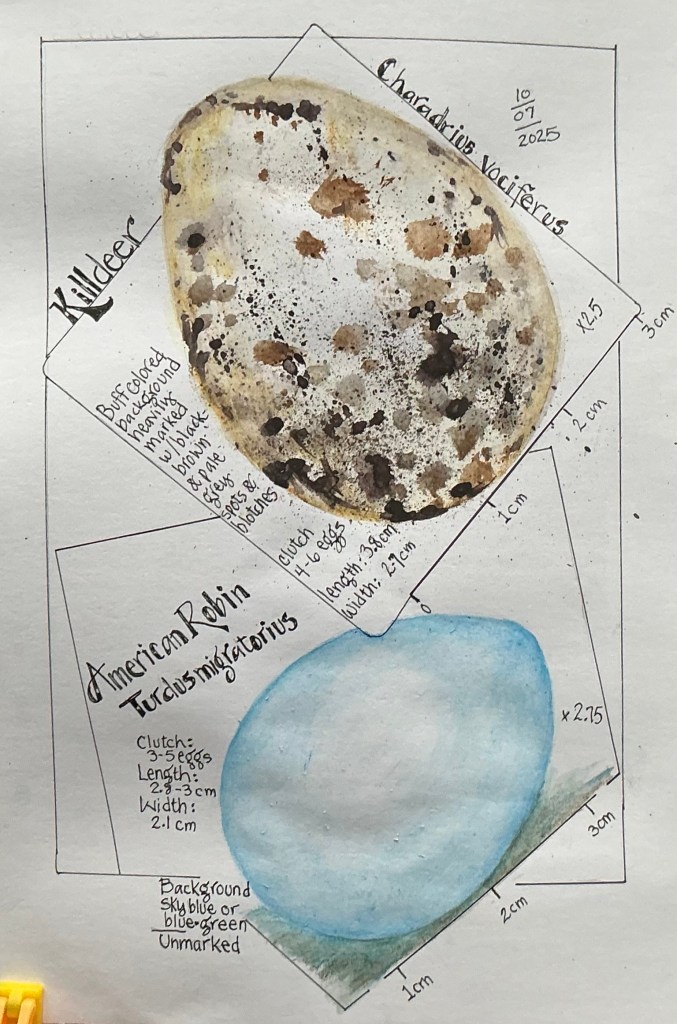
Blue or green eggs – Bluebirds, robins, sparrows, parrots and other birds that lay pale to bright blue, blue-green or green eggs blend in with the sky or the foliage of nesting sites, providing natural camouflage.
Brown or speckled eggs – Brown or highly marked eggs with speckles, spots, blotches, or scribbles provide excellent camouflage for ground-nesting birds like quail, avocets and killdeer. The mottled appearance of these eggs blend well against rock, sand, soil, foliage and branches. The eggs’ colorations are camouflaged well in nests woven from a variety of materials to nests that may be nothing more than a scrape or depression in the ground.
ShellPigment Layer – Pigment granules are deposited on the outer shell structure, forming color layers which are then enclosed in calcite crystals.
Sperm Storage – a female bird need mate only once for the sequential formation of her eggs to be fertilized. In other words, each newly ovulated egg that arrives at the Infundibulum, which occurs every 24 hours (more-or-less), becomes fertilized from a single mating. That’s because female birds can actually store sperm in Sperm Storage Tubules (SSTs). SSTS are tubular “invaginations” in the Infundibulum where sperm can be kept alive for 2 to 15 weeks (depending on the species), and can be released after Ovulation.
Uterus – the Shell Gland
Yolk – The nutrient-bearing portion of the egg containing most of its fat, minerals, and many of its proteins and blood vessels.
Yolk Behavior – The Yolk always rotates so the developing embryo floats to the top, regardless of the egg’s position
Zygote – the fertilized Ovum
Wow, gosh! I’m egg’s-hausted ….. how about you!?! But wasn’t that a fascinating journey through a bird’s oviduct? A literal look behind the scenes!
October 31 and November 1 (bonus)
And that concludes my Inktober/EggTober 2025. Researching so much information not only took me down some fascinating rabbit trails, but everything I learned in the month of October blew my mind! And everything I uncovered had to be shared with you all. The bounty was voluminous, resulting in each Submission eggs-panding to accommodate nearly everything. Yes, you read that right ….. I nearly got everything shared, and there’s still so much more to learn about past, present and future bird eggs and all eggs in general. Maybe once my notes are gather and organized, and I pursue answers to countless questions on the when’s, why’s and what-for’s, it will be time for EggTober 2026!
Did you participate in this year’s Inktober? Maybe my four submissions gave you ideas for Inktober 2026? Share your thoughts and ideas. Meanwhile ….. That’s all for now, yolks!
As always, thanks for stopping by!
P.S. in case you missed any of my previous EggTober 2025 Submissions, you can catch up with the following links: Submission One, Submission Two, and/or Submission Three! Enjoy!
October is ‘flying” by! It seems amazing how quickly my Inktober 2025 sketchbook is filling up with daily EggTober watercolor paintings of bird eggs. Week three is now complete, and the eggs of eight more breeding birds of New Mexico can be viewed below. As with Submissions One and Two, included are a few fascinating facts about bird eggs, this time with a focus on the eggshell.
In case you missed my first and/or second EggTober posts, and would like to catch up, click the following link(s) to read Submission One, and/or SubmissionTwo.
October 17th & 18th
A Bird’s Eggshell
At first glance, you may think all bird eggs are covered in a hard, solid shell. You would be right about the shell being hard, but have you ever taken a close look at the shell surface? The outer shell appears to have dimples, a bit like a golf ball. Those dimples are pores in the eggshell. Bird eggs are considered “amniotic” which means their eggs not only have a hard shell; they have a porous membrane to allow for oxygen and carbon dioxide exchange. Also, an important characteristic of amniotic eggs is they resist dehydration, which is why birds can lay them on dry land. So, is the porous membrane sandwiched between the eggshell and the ‘egg white’ (albumen), and why?
In Submission Two, I noted that the typically oval-shaped bird egg is able to withstand the weight of the incubating parent(s); the shell having the strength and resilience to withstand external pressures which minimizes the chances of the developing embryo becoming deformed or suffering bone fractures. So, just how thick must an eggshell be, yet still allow the developing embryo to breathe?
What are the main functions of the eggshell?
The shell of an egg contributes to successful formation and development of the embryo, by providing protection, respiration and water exchange. The eggshell is also the major source of calcium for the development of high-calcium consuming organs, like the skeleton, muscles and brain.
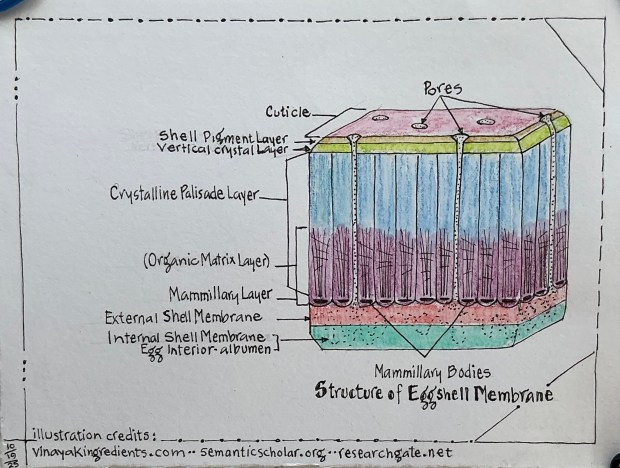
But what we think of as the eggshell, is actually Eight Separate Layers (!) that stack together from the outside of the egg to the inside where layer eight meets the albumen. It’s through these layers that the embryo breathes.
These layers, from the outside in, are the Cuticle layer with Pores, ShellPigment layer, VerticalCrystal layer, CrystallinePalisade layer, OrganicMatrix layer, Mammillary layer with MammillaryBodies, ExternalShellMembrane layer, and InternalShellMembrane layer. These will be summarized below. I’m also compiling a more complete description of each layer and detailing their importance, which should be complete and posted before the end of the month.
But before taking a brief ‘look’ at the eight eggshell layers, I wanted to share a snapshot about their thickness ….. because, quite frankly, I couldn’t imagine how all those eight layers manage to fit!
Eggshell Thickness
Most bird eggshells must be thin enough for the chick to peck through when it hatches, but at the same time it must be thick enough to bear the weight of the growing embryo inside, and the weight of the parents incubating it. The thickness of eggshells varies among species and individual birds, but also among individual eggs laid in a clutch. Eggshell thickness is also influenced by factors like the bird’s age, diet, and where the measurement is taken on the egg. In general, bird eggshells are usually 5% thicker at the mid-section of the egg (the area called the equator) than the ‘bottom’ (the sharp egg pole) and ‘top’ (the blunt egg pole) ends.
To ‘illustrate’ how thickness varies by a few species, the egg of a Blue-tailed Emerald (a species of hummingbird that lays an egg with one of the thinnest recorded eggshells among all bird species) has a shell that’s 0.029 mm (0.0011 inch) thick. Compare that with an Ostrich egg, the largest egg with the thickest eggshell in the world, measures in at 1.92 mm (0.08 inch) thick. For many common species, like the Mallard, shell thickness is around 0.337 mm (0.013 inch); a domestic chicken eggshell varies from 0.33 – 0.36 mm (0.013 – 0.014 inch) thick.
It may be helpful to relate these small sizes in eggshell thickness to an average human hair, which can be anywhere from 0.06 mm (0.0024 inch), to 0.10 mm (0.004 inch) thick. I’m still amazed how an eight-layered eggshell happens!
October 19th & 20th
Structure and function of eggshell layers: Cuticle layer and the Pores, Shell Pigment layer, Vertical Crystal layer, Crystalline Palisade layer
Cuticle (aka Bloom)
The Cuticle’s primary functions are to act as a physical and chemical barrier against invading microbes, protect the eggshell pores, and regulate the exchange of gas (Oxygen and Carbon Dioxide) and moisture (water vapor). The Cuticle also affects the egg’s wettability, which helps prevent water and bacteria from entering, and fine-tunes the eggshell’s appearance, including ultraviolet (UV) reflectance.
Eggshell Pores
The texture of the outer eggshell is due to the Pores that form openings in the Cuticle. Depending on species, there can be anywhere from 7,500 to 17,000 Pores covering an eggshell, most located at the blunt end of the egg (the top end where the air cell is located). Each Pore is connected to a Vertical Pore Canal that penetrates the next five eggshell layers, down to the External Shell Membrane. The shells of most bird eggs have simple, straight pore canals that widen slightly toward the openings through the Cuticle. The exceptions are found in swans and the ratites (the group with ostriches and emus), where their Vertical Pore Canals are highly branched. Covering the exterior opening of the Pores of all bird species (except pigeons and doves [hmmmm ….. wonder why]) are tiny plugs or caps, which may act as pressure-sensitive valves.
The Pores and their canals provide a critical passageway for gas and moisture exchange between the inside and outside world. This exchange allows the developing embryo to breathe by taking in oxygen and releasing carbon dioxide and water vapor.
Shell Pigment Layer
The Shell Pigment Layer serves multiple critical functions, including camouflage, thermoregulation, and protection for the developing embryo. The colors and patterns come from two main pigments, protoporphyrin (brown/red) and biliverdin (blue/green), and their function varies depending on the bird’s environment and nesting behavior.
Vertical Crystal Layer
The Vertical Crystal Layer provides mechanical strength and structural integrity. Its tightly packed, vertically oriented crystals form a dense, outer layer that protects the embryo from physical shocks, while also being integrated with the PalisadeLayer (below) to form a tough, ceramic-like structure. This outer layer’s density and arrangement make it resistant to impact.
Crystalline Palisade Layer
The Crystalline Palisade Layer serves two primary functions: providing mechanical strength and regulating gas exchange for the developing embryo. This is a thick, mineralized layer, that forms a dense matrix of calcium carbonate crystals, and is critical for protecting the egg’s contents while also aiding metabolic processes (i.e. all the chemical reactions within the embryo that are essential for life).
October 21st & 22nd
Structure and function of eggshell layers: Organic Matrix layer, Mammillary layer with Mammillary Bodies, External Shell Membrane layer, and Internal Shell Membrane layer
Organic Matrix Layer
The Organic Matrix Layer plays a crucial role in controlling biomineralization, forming the shell’s microstructure, and providing antimicrobial defense. Consisting of proteins, glycoproteins, and proteoglycans, this layer acts as a scaffold that controls the eggshell’s strength and protective properties.
Mammillary Layer and Mammillary Bodies
The Mammillary Layer and Mammillary Bodies form the foundation for the rest of the eggshell. Their primary function is to provide the calcium for the embryo’s skeletal development. This inner layer is composed of calcite microcrystals that dissolve easily, allowing the embryo to extract about 80% of its calcium needs before hatching.
This layer also helps during the “pipping” process because its globular texture makes it easy to crack and break through the shell from the inside. Pipping is the,process where the chick breaks through its eggshell to hatch. There are two phases during pipping: internal and external. Internal pipping is when the chick breaks through the InnerShell Membrane Layer (see below) to reach the air cell and take its first breath followed by chirping! This first phase not visible from the outside and can take 12-24 hours. External pipping is when the chick uses its egg tooth to peck a visible hole or holes in the eggshell, a process that can take a few hours to a few days, requiring the chick to rest frequently… those outer layers of shell are hard. The long time due to the chick needing to rest This can take anywhere from a few hours to a couple of days. The final step is “zipping,” where the chick turns in the egg, cracking the shell into two halves to fully hatch.
External Shell Membrane Layer
The External Shell Membrane Layer functions primarily as a barrier to protect the egg’s contents from bacterial invasion and to prevent moisture loss. This membrane is made of proteins and acts as the first line of defense after the Cuticle, preventing microorganisms from entering the egg.
Internal Shell Membrane Layer
The Internal Shell Membrane’s primary functions are to provide a barrier against bacterial invasion and to support the formation of the hard eggshell. It also helps prevent excessive moisture loss while allowing gases to pass through, a process that becomes more significant when the External and Internal Shell Membrane Layers separate to form an air cell.
October 23rd & 24th
Summary
Eggshells! I never knew they are such complex structures with many unique features. And eggshells are unfathomably critical to the development and survival of the embryo right up until the moment they “Pip” their way into the world. Without their bioceramic characteristics, microscopic pores, front-line bacterial defense systems, color patterns, and their surprising strength despite the shell’s thinness. birds might be something completely different or perhaps might not ‘be’ at all. Something worth pondering!
Hope you have enjoyed Submission Three of EggTober! If so, please leave me a comment. And as always, thanks for popping in!
p.s. Stay tuned for Submission Four, landing in your in-basket next week!
EggTober progress continued, with zeal, as I worked my way through week two. See for yourself! Check out the bird eggs that randomly popped up from my list of nesting birds of New Mexico. As with Submission One, included are a few fascinating facts about the shape of bird eggs to go along with week two birds.
If you missed Submission One of my EggTober post and would like to catch up, click here.
Egg Shape
The typical oval-shaped bird egg isn’t coincidental. Evolution, influenced by factors such as bird genetics and environmental influences, produced a “smart egg;” a perfectly shaped package just right for survival ……..
October 9th and 10th
1. Structural Strength
The oval shape provides greater strength and resilience, reducing the likelihood of breakage during incubation. It withstands external pressure more effectively, minimizing deformation or fractures in the developing embryo.
October 11th and 12th
2. Optimal Space
The oval shape maximizes the volume available for the embryo, ensuring proper development and sufficient reserves of nutrients, including proteins.
October 13th and 14th
3. Temperature Distribution
The oval shape promotes the even distribution of heat. When a female bird incubates the egg, her body heat is utilized to maintain warmth. The egg’s oval shape aids in evenly disseminating her body heat, ensuring a consistent temperature for the embryo throughout the incubation process.
October 15th and 16th
4. Prevents Rolling
The blunt, flat end of the oval egg shape helps prevent rolling within the nest. This stability safeguards the eggs, preventing them from accidentally falling from the nest or assuming an improper position.
Summary
While most bird eggs exhibit an oval shape, slight variations in shape do occur among different species. These variations are influenced by the birds’ lifestyles and specific incubation requirements. Overall, the oval shape plays a vital role in the reproductive ecology and physiological adaptations of birds.
Hope you have enjoyed Submission Two of EggTober! If so, please leave me a comment. And as always, thanks for popping in!
p.s. Stay tuned for Submission Three, landing in your in-basket next week!
Having participated in the Inktober for years by creating a daily drawing or painting throughout the month of October, I’ve found the challenge fun, rewarding, and motivating. However, rarely sticking to “ink only” creations and/or following the official prompts, I’ve shamelessly adopted a variety of approaches shared by others, have different media, or made up my own prompts. For me, this has added an elevated level of complexity that’s so appealing and somewhat wild!
In the past, my “Inktober” art has been about themes, like using a new Zentangle pattern a day that has a name beginning with “Q” or “Z” or “M” ……. or picking different botanical patterns. I’ve played with mixed media, watercolor, watercolor pencils, colored pencils, graphite, and (yes) ink to create a flower a day, rocks, mushrooms, candy, modes of transportation, the alphabet, fonts, portraits of famous people, etc. I’ve found the challenge is a great way to loosen up and try subjects I’m not comfortable or familiar with, while not worry about silly mistakes.
So, each year I look forward to Inktober, and this year was no exception.
This year I went way “out on a limb” and switched it up a bit.
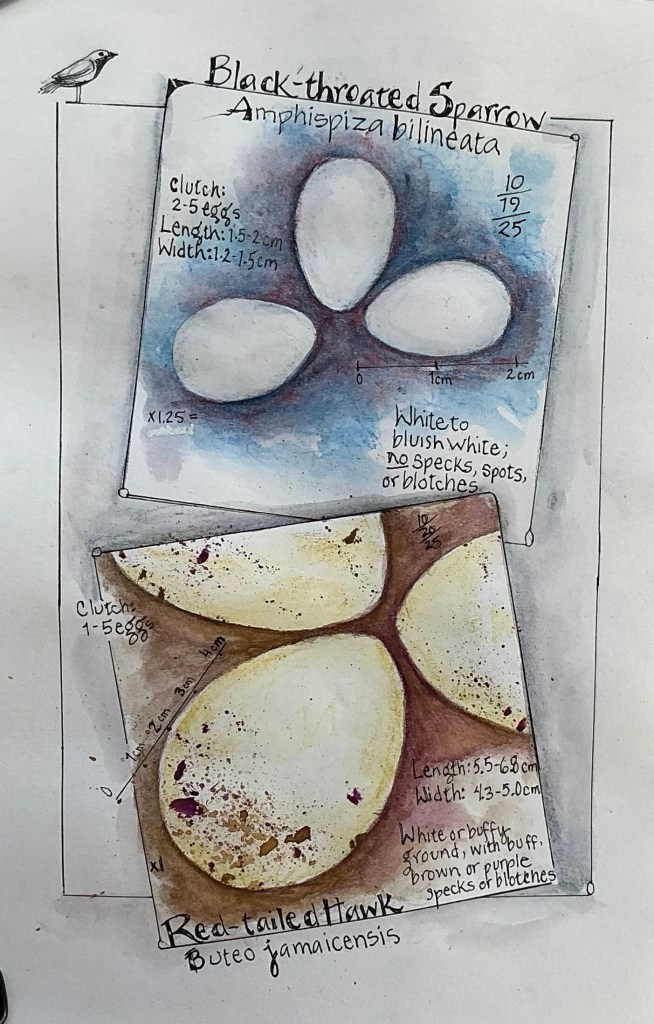
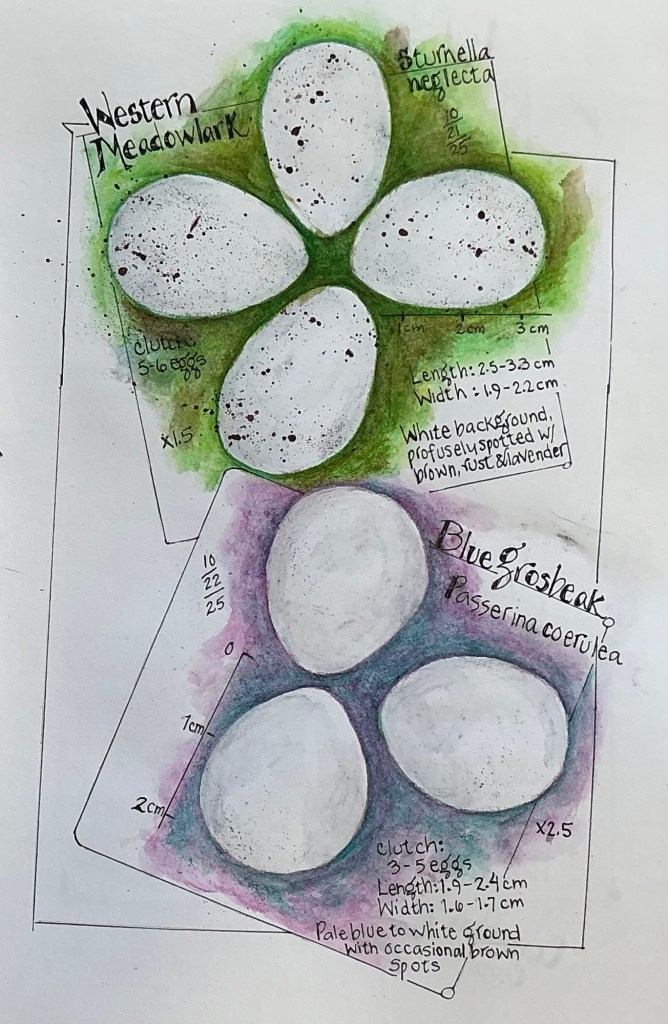
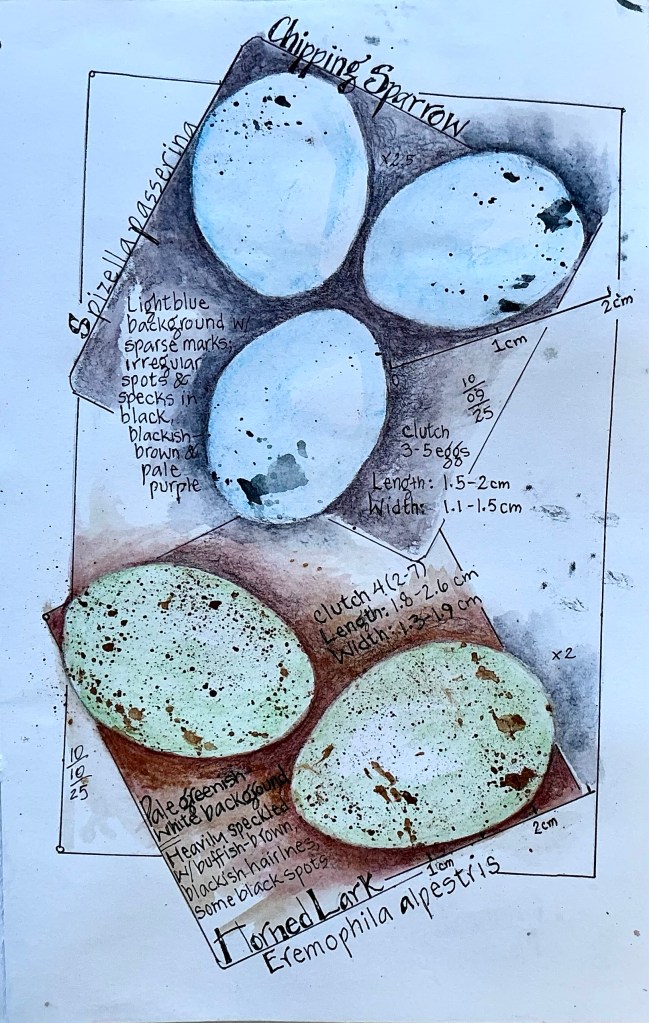
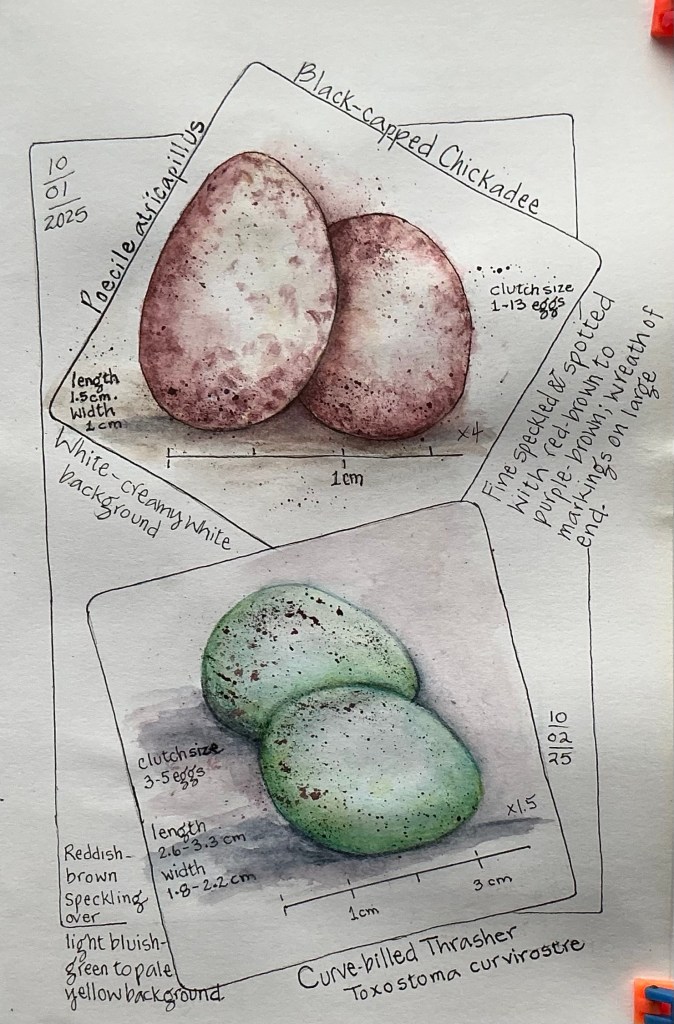
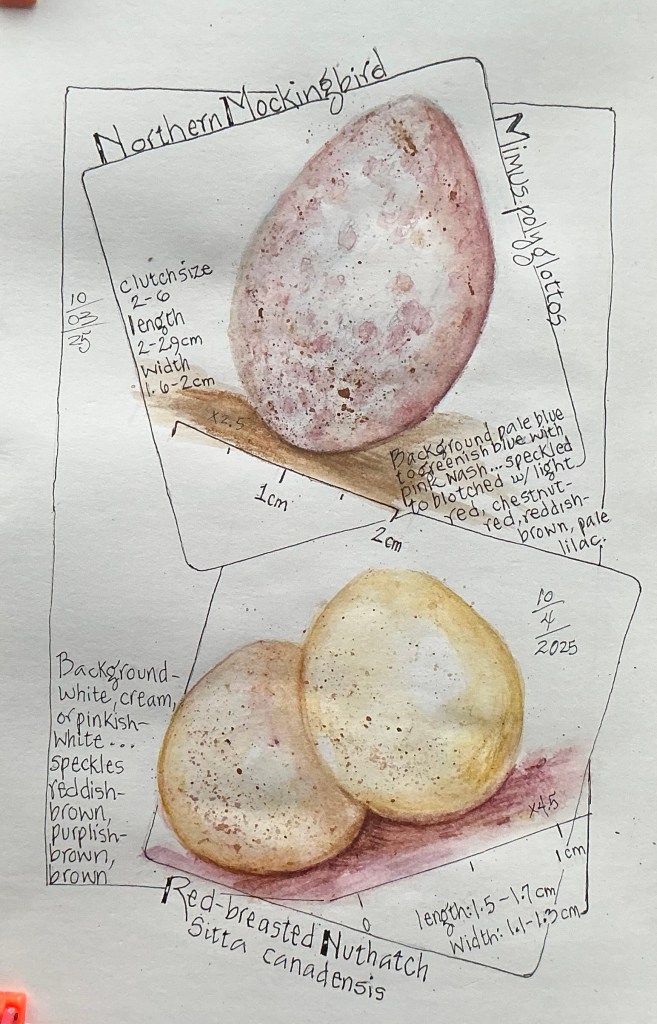
This year I’ve named my personal 31-day challenge EggTober! And in keeping true with my love of nature, nature journaling and curiosity, each morning I’ll be randomly pick from a list of birds that nest in my home state of New Mexico and will draw one or several of of their eggs. 🥚
Here’s my progress so far and a few fascinating facts about bird eggs. At the end of my post, you can read about my process and materials used.
Did you know that two pigments are responsible for most eggshell colors: biliverdins, which make blue-green hues; and, protoporphyrins, which make the background hues of rusty yellows, reds and browns.
Eggshells that have markings like spots, blotches, speckles, or lines, have more protoporphyrins. These markings help camouflage eggs, especially those laid by ground-nesting birds.
The largest known bird egg belonged to the extinct elephant bird. This flightless bird, which stood about 10 feet (3 meters) tall and lived in Madagascar until the 18th century, laid eggs about 11 inches (28 centimeters) long. That’s about the size of an American football!
Bird eggs can be oval, to round, to pear-shaped, depending on the species of bird laying the eggs and where. Many sea birds nesting on cliffs tend to lay more pear-shaped eggs which helps keep them from rolling off steep ledges. It’s said that pushing one of those eggs, because it’s so heavy at one end, will cause it to spin in a circle.
Eggshells are largely made of calcium carbonate, and if hatched without their final ‘spray-paint’ of color, will look pure white to the human eye. But some white eggshells contain ultraviolet colors visible to birds. (Wonder why?)
Process and Materials
Of course, given that it’s Autumn, and impossible to find any active bird nests housing unhatched eggs, I’ve formulated Plan B. For my references I’ll be relying on digital natural history museum egg collections, on-line bird identification resources, fascinating facts about bird eggs, several key references from my personal library, and other sources, to learn and satisfy my long held love of birds, their incredible eggs, and the egg-laying process.
Staying as true to real life as possible, approximate egg shapes will be colored with Derwent Inktense watercolor pencils. For consistency, basic information specific to each individual bird species’ typical egg (clutch size, length and width, background (ground) color(s) and marking color(s) and patterns) will be included. For future reference, I’ve handmade a small booklet that will hold two species’ eggs/page. At the end of October, I’ll then add a title page, table of contents, and a list of references.
And finally, for now, it’s entirely possible that my process and materials may be changed on a whim! So stay tuned as EggTober unfurls!
If you are an Inktober participant, or have never heard of this month-long creative event, please let me know!
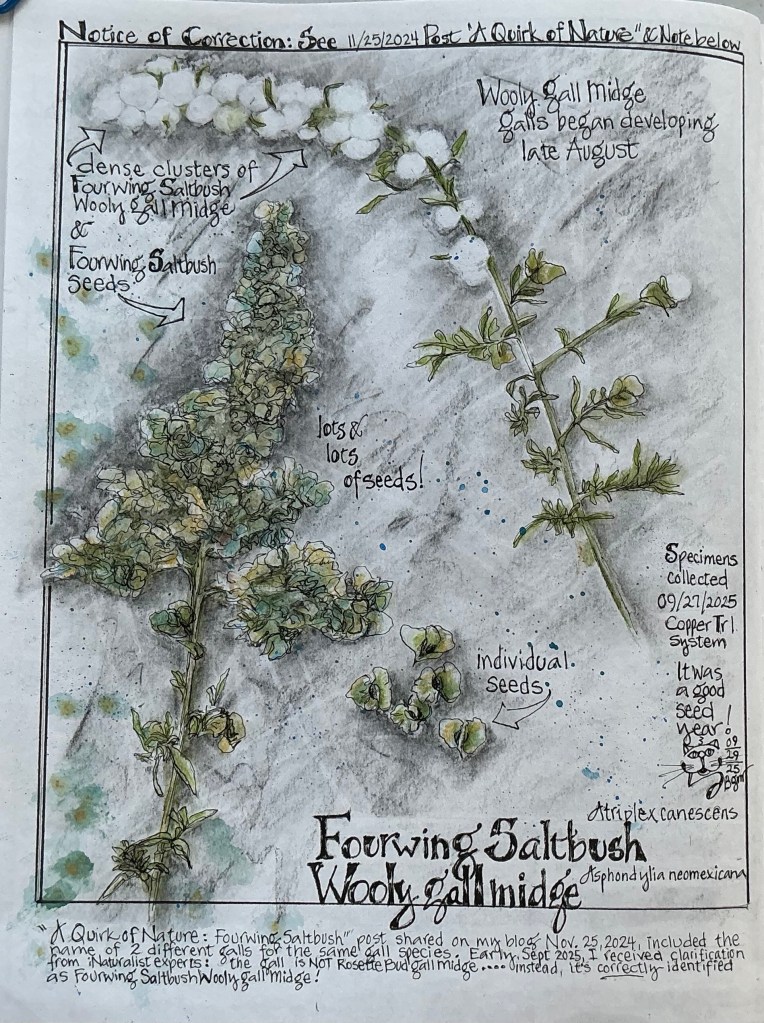
If you’re a fan of weird twists in nature (like me), and enjoyed my November 25, 2024 post, “A Quirk of Nature: Fourwing Saltbush,” you may have lost many hours of sleep wondering how I could’ve missed such an obvious mistake! You know the one. The labeling error made when naming those cottonball-like insect galls hugging the Fourwing stems.
In my confusion (or wishing to cover all options?), I seemed to believe two different midge species were somehow responsible for the same gall.
Are they Rosette Bud Gall Midge galls or Fourwing Saltbush Wooly Gall Midge galls?
Decisions, decisions.
My Quandry quite clear, it was time to consult the experts.
A short 10 months later, confirmation arrived from the iNaturalist experts in all things “Fourwing.” All the puffy galls are none other than those made by Fourwing Saltbush Wooly Gall Midges!
And the answer to my question is well timed, as the stems of the female Fourwing shrubs are once again ‘heavy’ with Wooly Gall Midge galls. Now I know! Now you also know!
Enjoy this official correction, at long last, and wishing you sweet dreams.
As always, thanks for stopping by!
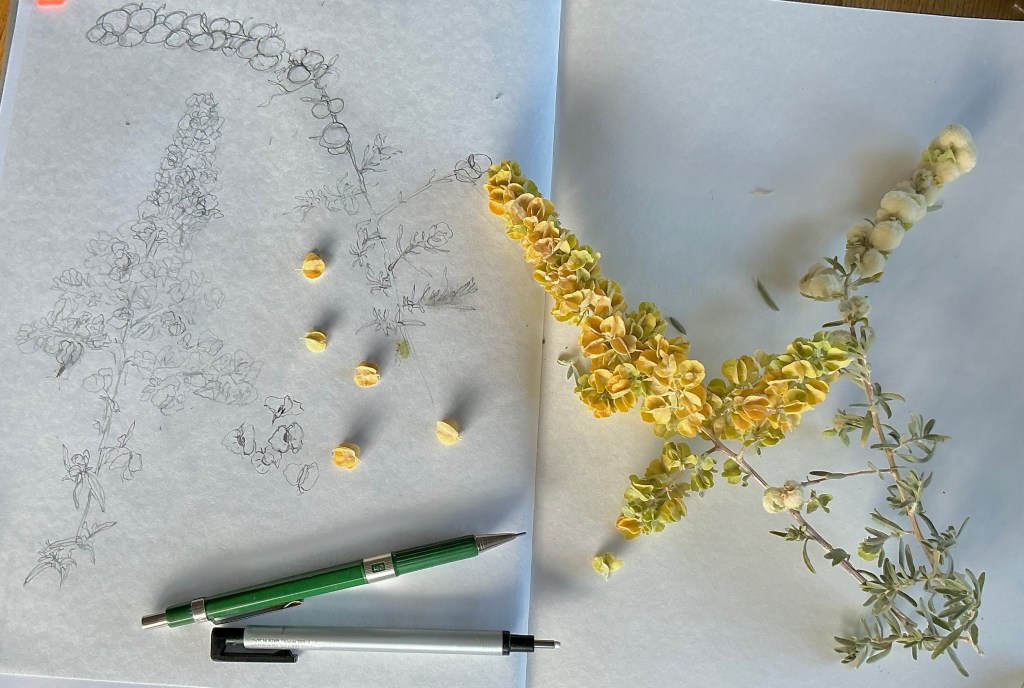
PS: My journal page was created by first sketching in graphite the two Fourwing stems, followed by outlining with loose ink lines from a Micron 005, adding a background of both soft and medium charcoal – blending with a stump, then using a Tombow Mono Zero eraser to clean up the ‘cottonballs,’ before adding watercolor pencil, color splatters, and eraser lines randomly placed through the charcoal background. A bit experimental, and lots of fun.
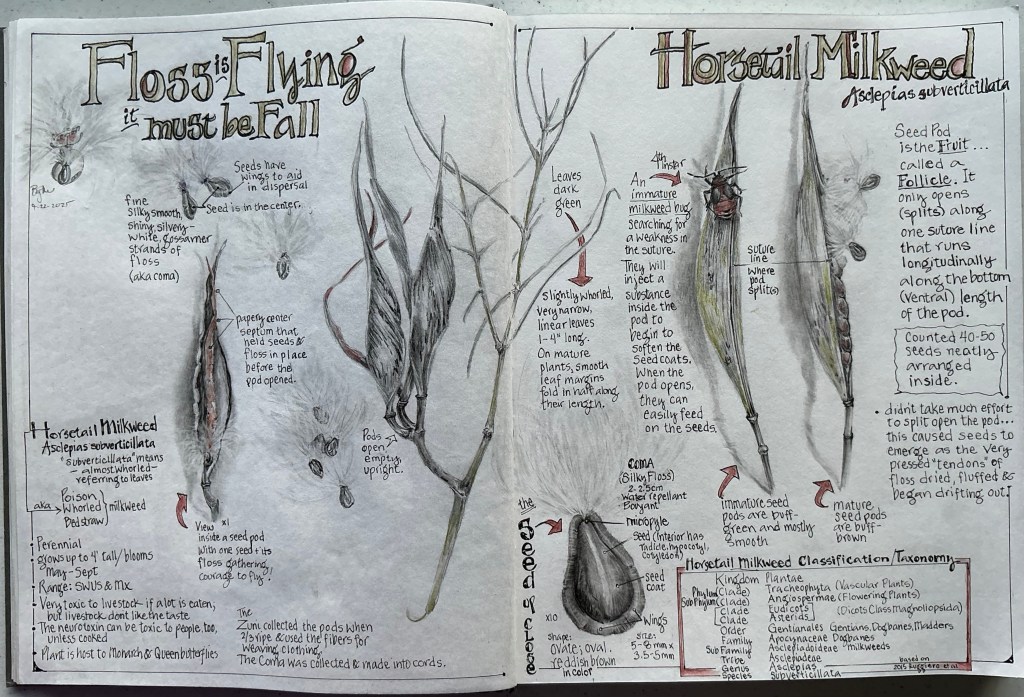
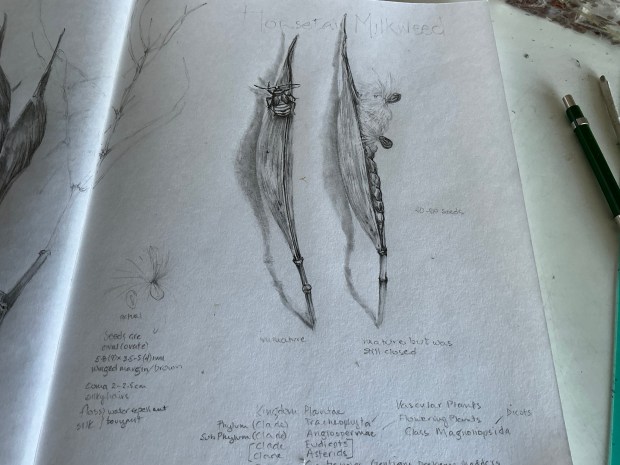
Like soft, fluffy snow! Glistening orbs of silky gossamer are floating about the neighborhood, drifting hither and yon in the gentle breeze. Suspended beneath each orb is a single reddish-brown winged seed that appears to coax its wind-propelled puff in a safe descent to the ground. But the white floss (the Coma) wants to fly, and it becomes a tug of war. As the weight of the seed overwhelms the ability (and the desire) of the floss to carry it, their brief relationship is severed. But both get their wish …. the floss flies free as the seed drops to the ground, hopefully landing in an ideal spot to overwinter and sprout next spring.
Welcome Fall!
When the air is full of Horsetail Milkweed parachutes and their ‘riders,’ I walk along the neighborhood roadways and collect a bounty of their new-crop seeds + floss to set free around our property. If they find the right soil, moisture, and light conditions for spring germination, the seeds will not only form the beginnings of a stand of these beautifully blooming, creamy-white milkweed flowers, but the plants might just play host to Monarch and Queen butterflies!
Now wouldn’t that be dandy!
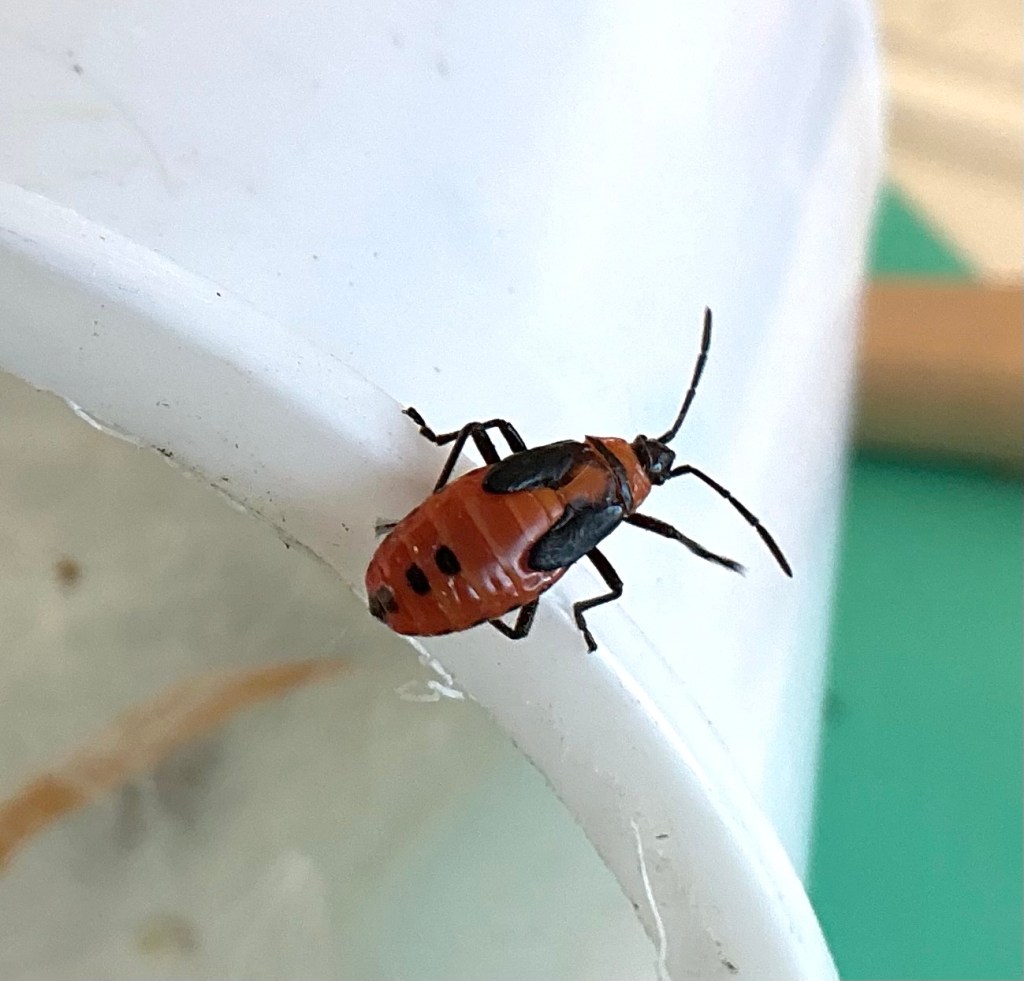
(Of course, mature seeds from new plants will undoubtedly entice a hungry crop of well-dressed Milkweed Bugs next Fall. That’s OK! They have to eat too!)
Before hint of color
My Journal Pages ……
For something different, instead of using ink and watercolor, all sketches on these pages were created in graphite. The pods, seeds and the milkweed bug were sketched from my collected samples using a mechanical pencil loaded with a fine point HB lead. The touches of color were added with water soluble graphite.
Work in Progress #1Work in Progress #2
Thanks for stopping by ….. And Have a Fabulous Fall!
Ohhhhhh, what a sweet month …… August. It almost got away from me without sharing a small collection of Littles1 that reflect the inevitable shifts in nature that occur during the month. It’s always hard to imagine summer winding down; where did the time go? But as surely as butter melts on freshly baked bread, undeniably, August forms a reliable bridge between summer and autumn. It’s a time of change and transition; abundance and harvest; transformation and a period of letting go.
So before I “let go” and before the snow flies (and it will), here’s a handful of little discoveries during the month of August:
-A female Wheel Bug gone slightly astray while searching for a protected place to overwinter the eggs she’s about to lay.
-A female Soldier Beetle doing her best to attract a mate by sending out pheromones while munching late season pollen from the disk flowers of a brilliant yellow Showy Goldeneye.
-An acorn that made it to maturity, ready to drop beneath a still green-leaved Gambel Oak soon to be decked out in radiant fall colors.
-Some hot red trumpet-shaped Scarlet Gilia flowers, still irresistible to hummingbirds until migration, will all be pollinated in time for seed set and mature.
-The snowy white fruit dangling from the draping branches of Roundleaf Snowberry shrubs are ripe and ready for plucking by hungry birds flying south for the winter.
-And plump purple-black Chokecherry berries that will become a juicy dietary supplement for black bears needing to bulk up for hibernation.
Enjoy!
And as always, thanks for dropping by!
1“Littles” is part of a blog series I began posting several years ago, beginning in January 2023. The concept was inspired by Fay (thanks again Fay!) who came up with the idea for her blog madebyfay.wordpress.com
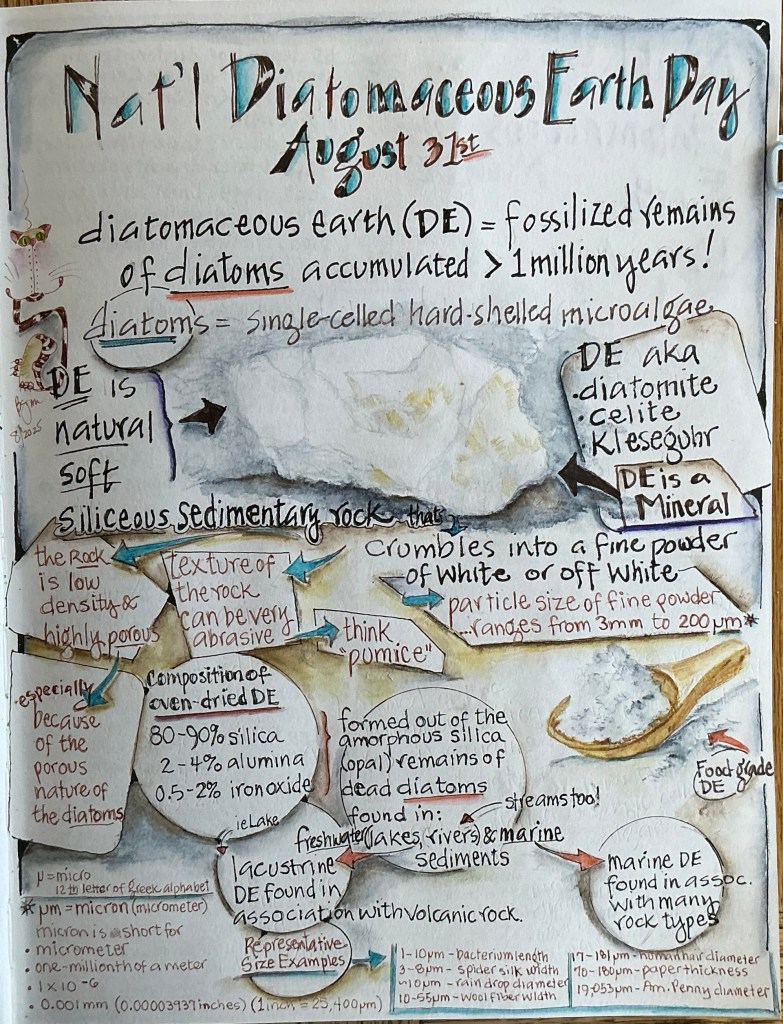
On August 31, National Diatomaceous Earth Day recognizes the diatom and the remarkable mineral it creates!
Have you ever heard of DiatomaceousEarth (DE)? If you answer “yes” then perhaps you brew your own beer, have a swimming pool in need of water filtration, or a vegetable garden that’s been invaded by a herd of hungry slugs. But did you know DE is a mineral1 composed of the fossilized remains of single-celled, microscopic algae called Diatoms? (More about diatoms in an upcoming post.) DE is truly a remarkable mineral, found around the world in ancient marine and lacustrine (freshwater lakes, streams, and rivers) sedimentary deposits.
Early Discoveries and Uses of DE
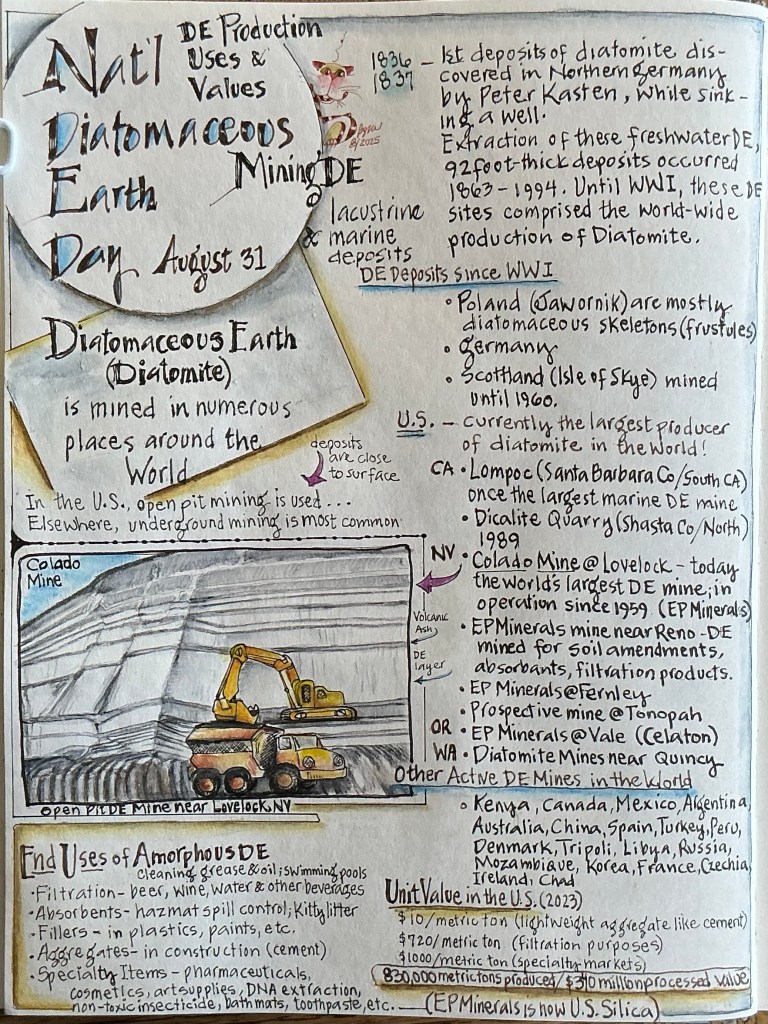
The year was 1836; the place, Northern Germany …… One day, a peasant named Peter Kasten was sinking a well when he encountered a mysterious-to-him layer of rock. Curious what this soft powdery rock might be, Pete took a sample to a friend who was a friend of a friend learned in the science of geology. This geologist carefully examined the rock then exclaimed (in German, of course), “Why this is the much prized and never-before-seen-in-Northern-Germany mineral known as Diatomaceous Earth! It has remarkably unique abilities to absorb, filtrate, polish, and stabilize! These qualities make Diatomaceous Earth (aka Diatomite) valuable and much sought after by numerous industries!”
Well, word spread and immediate exploration of the area commenced. It wasn’t long before numerous substantial deposits of lacustrine DE were discovered; some up to 92 feet thick! Extraction began in 1863. Until WWI, these sites comprised the world-wide production of Diatomite. Mining these deposits ended in 1994, when all of the DE deposits had been extracted.
But long before Pete’s discovery, Ancient Greeks used DE as an abrasive as well as a building material in lightweight bricks. Even in pre-historic times, DE was used in the ice-age cave paintings in France.
DE Deposits and Extraction – Worldwide
When diatoms die and fall to the bottom of marine and lacustrine waterbodies, they form large deposits. Over time, the organic portions of the diatoms weather away, leaving behind their hard silica shells. These remaining shells, called Frustules, with their opaline-like quality are what forms DE. Some of the largest deposits in the U.S. formed in ancient lakes that existed in California, Nevada, Oregon, and Washington. They also formed in oceans and occur along the coasts of North and South America.
Since WWI, exploration for and discovery of numerous DE deposits have occurred worldwide-wide, and are still on-going. Large mining companies have unearthed and continue to extract this mineral in substantial quantities, which is processed for use by industries that manufacture products for home and business (more on that below). DE deposits are (or have been) mined in many countries around the world, including the U.S., Mexico, Chile, Peru, France, Spain, Denmark, China, Canada, Argentina, Australia, Spain, Turkey, Libya, Russia, Mozambique, Ireland, and France. Today, the world’s largest DE mine, Colado Mine, is located just outside of Lovelock, NV, and has been in operation since 1959.
DE’s Modern Uses and Values
Today, DE is one of the most useful and durable substances known. The white to off-white powdery rock that makes up the more than 1 million year old DE deposits, is used in many common products likely encountered every day. One nearly universal use is in the filtration of liquids like the beer, wine and water. DE is also used to filter water in swimming pools, and to clean grease and oil. DE is used as an absorbent for hazmat spill control and in some kitty litters. As a filler in paint, it removes the sheen making flat paint flat; in plastics, it prevents blocking in plastic film. DE is used as an aggregate in construction, particularly in Portland Cement. And the list of specialty items that use DE for a variety of purposes is very long ….. including pharmaceuticals, cosmetics, art supplies, in the medical industry for DNA extraction, as a non-toxic insecticide, soil amendments, in bath mats for quick drying, in toothpaste as an abrasive, and as food additives to control moisture and extend shelf life. There are hundreds of other applications for DE with many more yet to be discovered!
But the biggest use of DE is in filtration. In 2023, the beverage industry paid $720/metric ton for processed food-grade DE (amount used to filter a keg of beer??). Compare that cost to $10/metric ton charged in 2023 for lightweight aggregates used in construction (wonder if or how tariffs impacted the 2025 cost?), or the $1000/metric ton charged for some specialty items.
Ideas on How to Observe Diatomaceous Earth Day
Discover more about DE, and learn about its common uses around your home or work.
Read product labels to learn what you use on a daily basis that contains DE.
Consult the fda.gov website to learn more about labeling.
Visit a Diatomite mining operation.
Learn about unmined deposits near where you live.
Use a magnifying glass or microscope to inspect the contents of bag of insecticidal DE.
Stay tuned for NATIONAL DIATOMACEOUS EARTH DAY – Part 2 – Diatoms! They are ultra-fascinating!
As always, thanks for stopping by!
1Minerals are naturally occurring, inorganic solids with a definite chemical composition and internal structure, and are the main components of rocks. DE (Diatomite) is a naturally occurring inorganic mineral that forms from the fossilized siliceous (silica-based) skeletons of diatoms, which are single-celled aquatic organisms. While the organisms themselves are organic, the hard, porous mineralized skeletons they produce are considered inorganic.
Being an inorganic mineral, DE falls into the same category as minerals we’re all familiar with, such as Quartz, Feldspar, Mica, Pyrite, Hematite, Galena, Sulfur, Gold, and Copper. The chemical formula of DE is primarily SiO2 (silicon dioxide), with traces of other minerals.
Part 3 ….. An Allelopath Declares Chemical Warfare
August 15, 2025
The more I learn about Cowpen Daisy (Verbesinaencelioides), the more the words Intrepid (fearless and bold), Interloping (meddlesome and smothering), and Impertinent (pushy and rude) come to mind.
Cowpen Daisy is literally a plant at war …..
Its adversaries are neighboring plants …..
Its weapons of choice are chemicals ….. 151 different Allelochemicals2 to be exact.
Cowpen Daisy shows no mercy to its most susceptible victims, and given the right conditions in the right locations, Cowpen Daisy can cripple ecosystems, and unravel biodiversity.
Oh No! What Have I Done! Have I unleashed a formidable enemy to run amok, bullying its way through our mostly intact biodiverse high desert ecosystem?
Maybe not! (Spoiler alert…… Allelopathy3can be bad, but I still love this happy Daisy)
On August 6th, I received an excellent question from one of my blog followers, based on my first Cowpen Daisy post :
“Do you have any concerns about this becoming an invasive plant? Best wishes, Nancy”
In reply, I expressed my concern about the number of “seedlings coming up late spring,” and how “I was definitely alarmed and wondered about the need for early control.” Fortunately, “as the season advanced, it became clear the density of plants seemed self-controlling.” Based on my limited experience with Cowpen Daisy, I explained how during the summer of 2023 “the plant completely covered an extremely large field near our home,” causing me concern about its invasive tendencies. But upon “[R]eturning the following year (2024) and again this past spring (2025) to see if the same field was blanketed again in these plants, “I couldn’t find a single Cowpen Daisy anywhere! So no, this annual [doesn’t appear to be] “invasive, at least not in central New Mexico.”
But Nancy’s question prompted me to dig deeper into on-line research. I wondered: Is Cowpen Daisy invasive outside of its native range, particularly where conditions are ideal for its aggressive growth? Yes, it is! And its invasiveness is further enhanced where neighboring plants are susceptible to the impacts of the allelochemicals released by Cowpen Daisy’s leaves, roots and decaying leaf matter in the soil.
One example where Cowpen Daisy is an introduced species and has become invasive is in India. Fields of mung bean, corn, chickpeas, and sweet melon are being outcompeted by invasive stands of Cowpen Daisies. These food crops are severely impacted by two allelochemicals released by the both roots and leaves of the Daisy; steroids and phenols. Studies of these four crops demonstrated not only “the suppression of germination and growth in these plants” but “also revealed an antagonistic effect on [their] chlorophylls, carotenoids and protein levels.” In other words, Cowpen Daisy is winning the war against India’s mung bean, corn, chickpea and melon crops, and farmers are currently engaged in a battle to develop a strategy of control and run this biological enemy out of their country.
Cowpen Daisy is only considered a native species to the Southwest U.S. and Northern Mexico. However, it has been introduced (either intentionally or by accident) and is considered naturalized in parts of Eastern North America, the Middle East, Spain, Argentina, Australia and the Pacific islands. As such, Cowpen Daisy’s nature to drop allelochemicals everywhere it grows allows it to behave like an invasive plant in countries where it is naturalized. Without diligent management (via herbicide application or mechanical control), it can thrive to the detriment of their desirable plant species’ survival.
Have I defeated my goal of reestablishing a diverse native plant community in disturbed areas surrounding our new home? “Not likely,” says I, optimistically! In addition to Cowpen Daisy, the variety of native plant species I intentionally seeded last fall and early this past spring, have germinated, grown, flowered and seeded or are in the process of flowering and seeding, most of which are adjacent to a Daisy. Of course time will tell. Meanwhile, I’ve declared this to be a happy ending to this post and my stand of happy Cowpen Daisies! However ……. next spring, if germination rates from my reseeders are low or zero, but Cowpen Daisy returns with renewed vigor, then I have a control job waiting for me. And the best advice I’ve read is to “pull out old plants and roots and selectively remove new seedlings.” That’s acceptable! That I can do!
Until then!
Do you struggle with weedy, invasive plant species in your garden or yard? Have you seen fields of blooming weeds and wondered …… “what weed is that?” Do you know the names of those pesty plants and do they seem to keep your favorite variety of cucumbers from growing? It might be interesting to learn if your local invasives are one of the many Allelopaths happily growing in our world! Let me know!
As always, thanks for dropping by!
1Cowpen Daisy is known to release up to 15 different allelochemicals2 from its leaves and roots, such as guanidine, phytosterols, phenolic acids, tripertenes, flavonoids, dicarboxylic acids, phytophenols, steroids, phenols, and others. Fresh and decaying leaf litter leach 14 of those allelochemicals into the soil.
2,3Allelopathy is a biological phenomenon by which an organism produces one or more biochemicals that influence the germination, growth, survival, and reproduction of other organisms. These biochemicals are known as allelochemicals and can have beneficial (positive allelopathy) or detrimental (negative allelopathy) effects on the target organisms and the community. Allelopathy is often used narrowly to describe chemically-mediated competition between plants. Allelopathic interactions are an important factor in determining species distribution and abundance within plant communities, and are also thought to be important in the success of many invasive plants. (source: Wikipedia)










 a curious nature