August 19, 2026
If you’ve ever passed by a barren field, a somewhat rocky yet gentle slope, or a roadside waste area and noticed one or maybe many more very tall stems rising from a rosette of large fuzzy leaves, you were likely looking at Great Mullein (Verbascum thapsus), a non-native biennial plant of the Figwort family. Standing out as sentinels on landscapes across the U.S., this now-naturalized1 species was intentionally brought to North America by early European colonists in the 1700s primarily for its medicinal properties and as a fish poison.
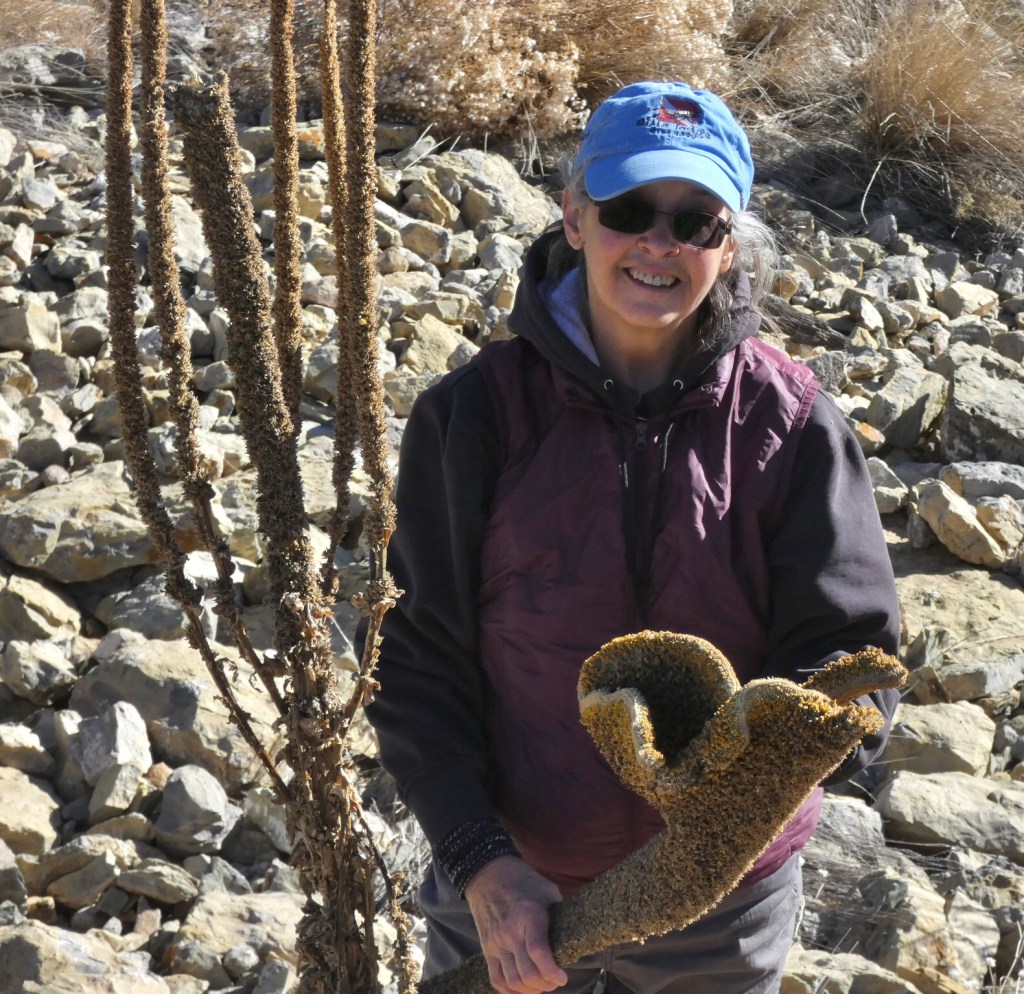
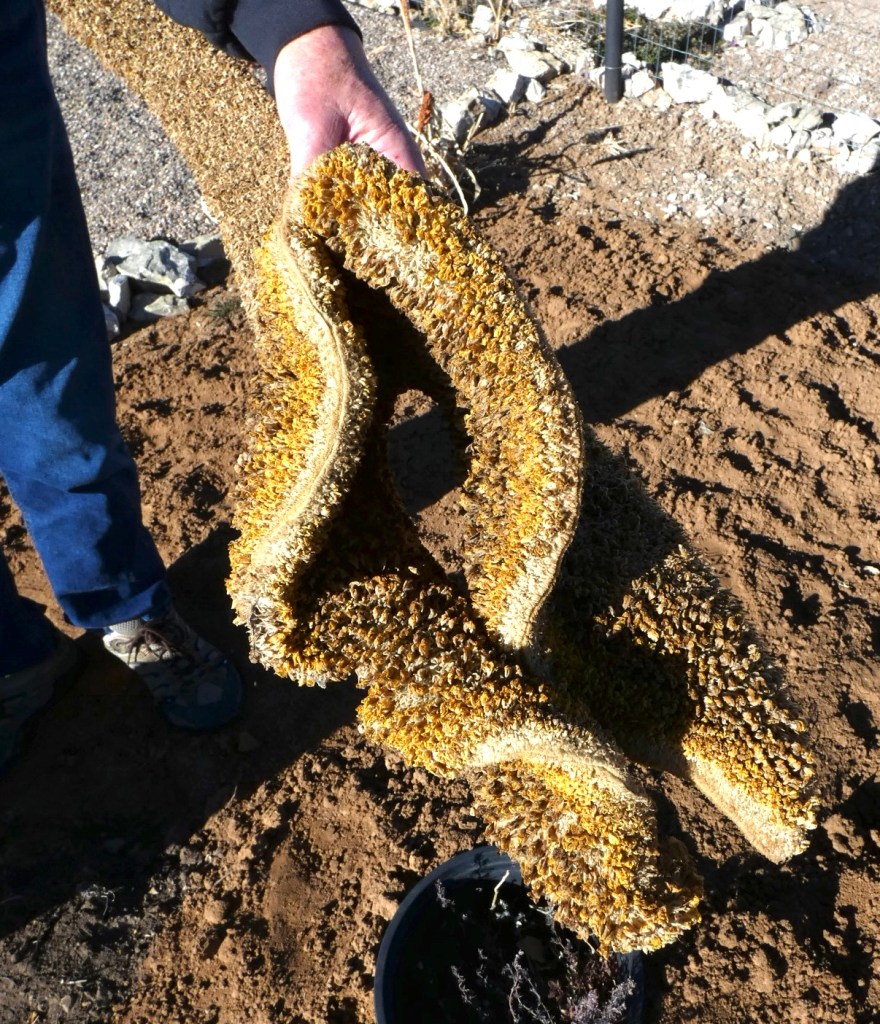
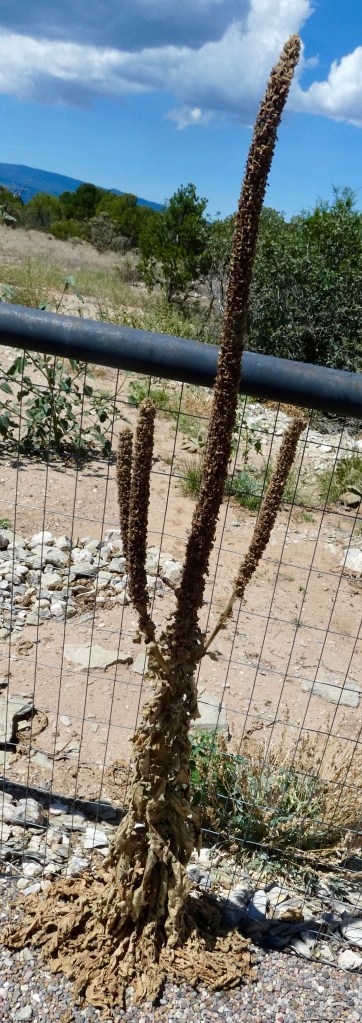
Two years ago while wandering down the “Trash Can” trail, just below the little rocky earthen dam stood an 8-foot tall Great Mullein. This wasn’t just any ordinary mullein though. The top 2 feet of the flower stalk was crowned with one of the most uniquely contorted, bent and folded mullein crests I’d ever seen. Magnificent!
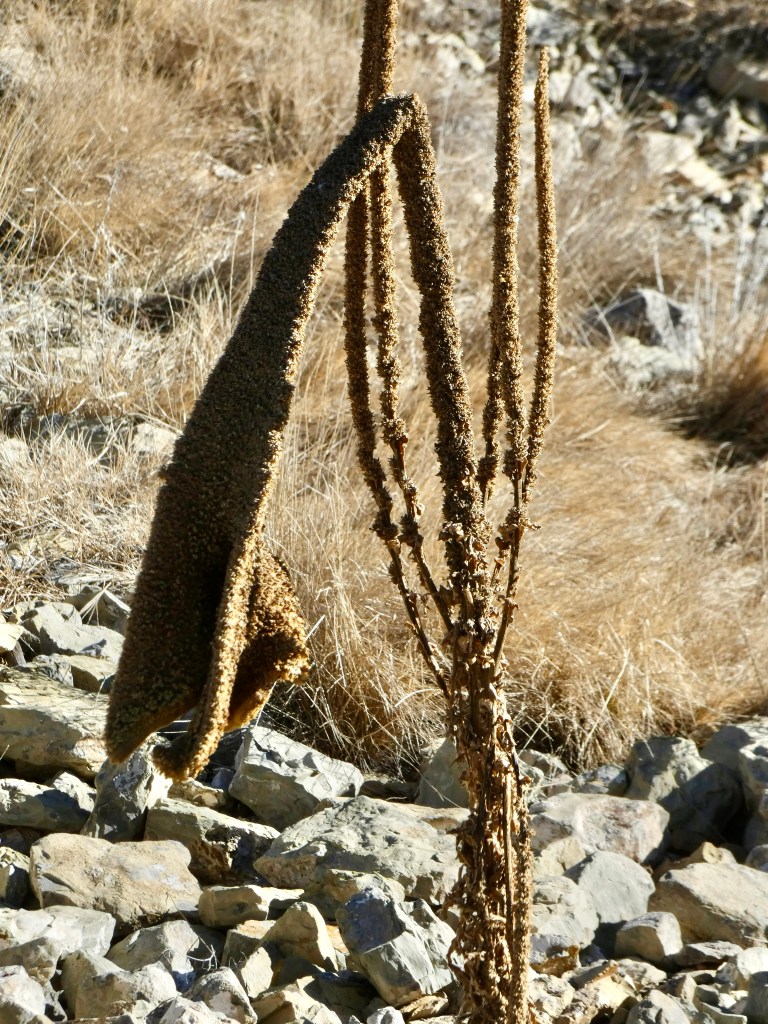
The top-heavy mass, supporting scattered flowers and many hundreds of growing seed capsules had begun to dip and sway dangerously in the light Fall breeze. While watching and wondering what cause(s) of this rare and exaggerated growth, known as a “fasciation,” the heavy stalk moaned (really!). All I knew on that morning along that trail was that the stalk’s lean would soon take the entire plant to the ground.
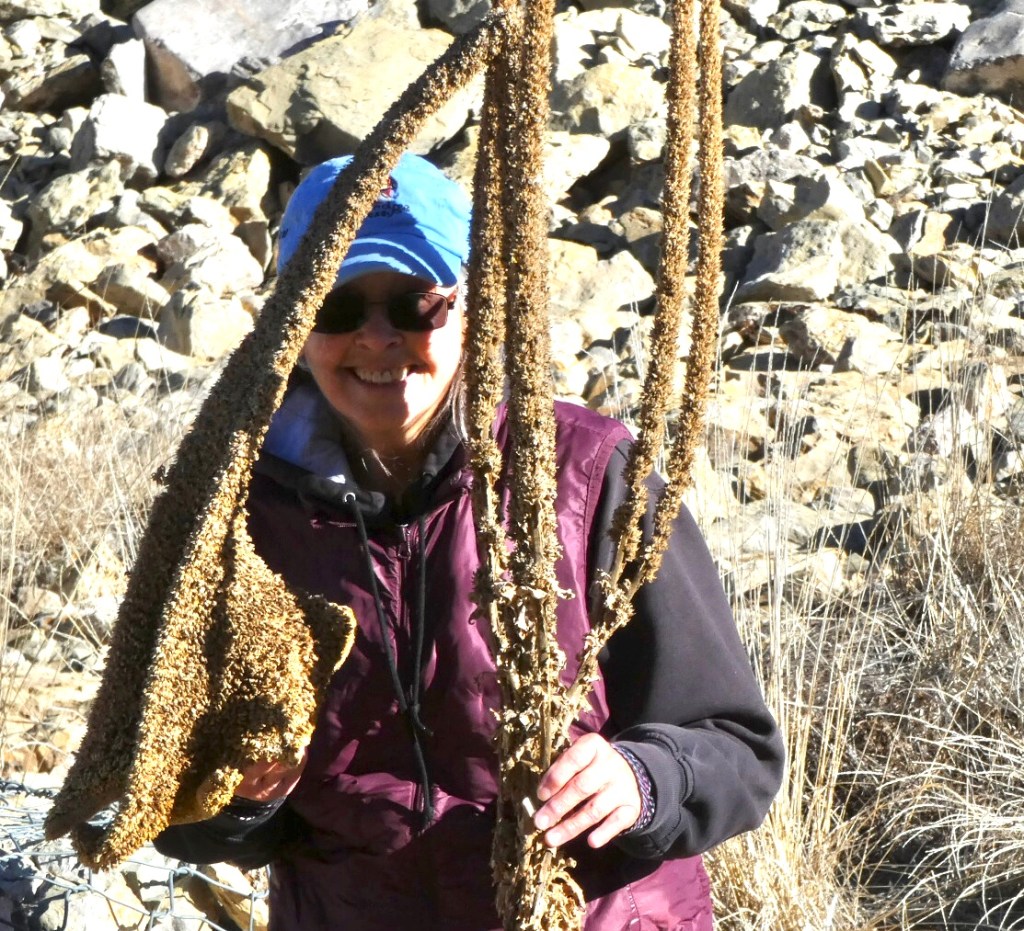
Rushing to the rescue, I grabbed onto the lower third of the stalk, hoping to somehow rotate the top 180°. It was at that moment, when nothing moved, I realized just how heavy that flower stalk was. Then, as my eye blinked only once, the upper 2/3rds of the plant broke and came crashing down …… fasciation and all!
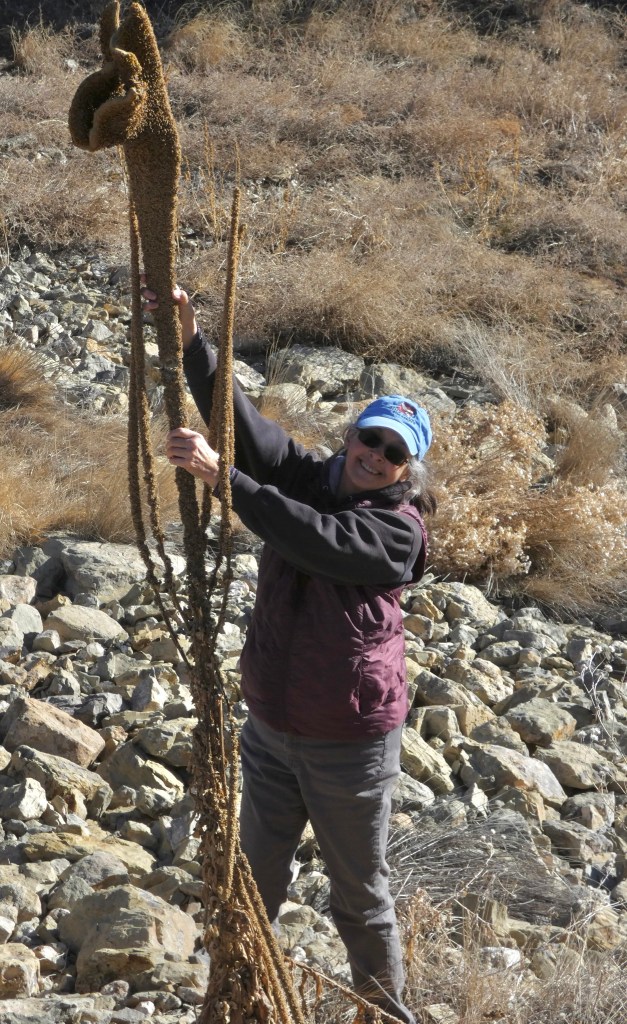
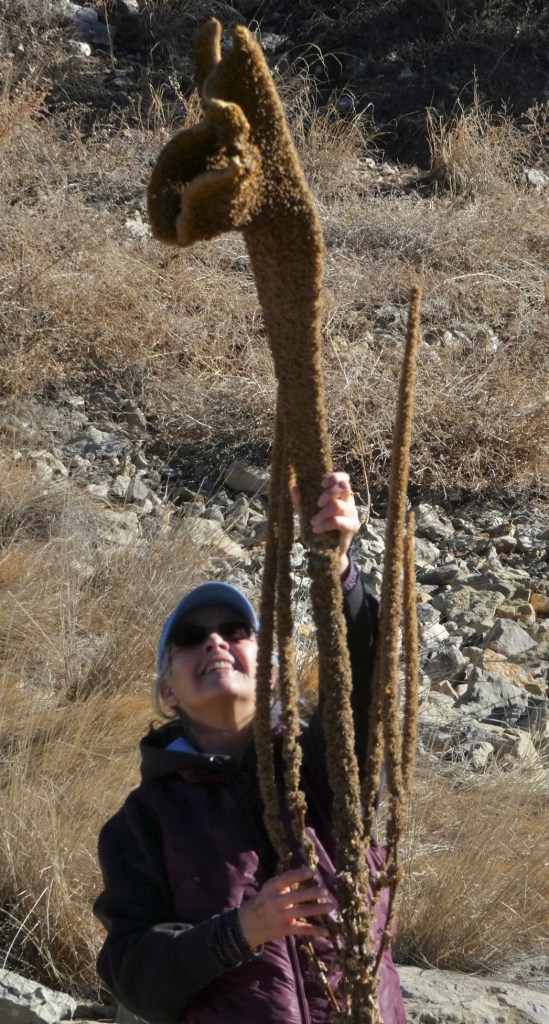
Lying on the ground in a heap (mullein pieces, not me), Plan B began to materialize. Here was my chance to learn if Great Mullein “fasciates” genetically. So I collected the still-intact contorted and folded crown with its many ripened seed capsules, and proudly carried it home where it spent the upcoming winter hanging out in a 5-gallon bucket while the seeds dried, became dormant, and experienced a natural dormancy-breaking winter, preparing them for Spring planting. So certain was I that my mother plant had passed her “fasciation genes” on to her seeds, that the flowering plants of her progeny would fasciate too.
(Here’s an excerpt from my garden journal)
Spring 2025 ….. many minute seeds were scattered about our back yard.
Summer 2025 ….. 8 seeds germinated into petite 1st year rosettes
Winter 2025-2026 ….. 7 rosettes were robust enough to survive the winter
Late Spring 2026 ….. all 7 rosettes bolted, and flower stalks began growing; no sign of fasciation
Mid-Summer 2026 ….. woke one morning to find 3 had died — cause unknown (did they get too much hand watering?); only 4 flowering plants still alive; no sign of fasciation; Ladder-backed woodpeckers feasting on something inside countless seed capsules (some kind of insect?). (You can read about my mulleins’ visits from Ladder-backed Woodpeckers in my June 8, 2026 post here)
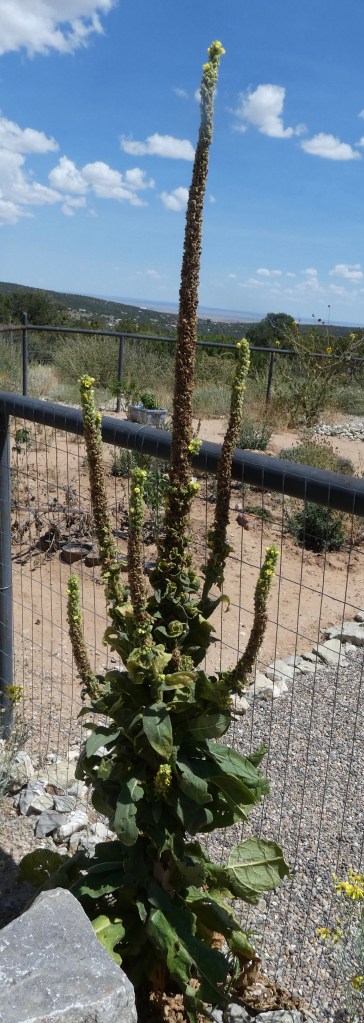
Late-Summer 2026 ….. only 1 flowering plant still alive, still flowering, still plumping up seed capsules that are still feeding hungry woodpeckers (there’s so many capsules, they aren’t opening them all, so there may be seed left over for the next generation?)
Fall 2026 ……………….
Thinking back on the last two years, it seems I have a slight case of Mullein Madness, judging from my apparent obsession with the fasciation (fascinating) characteristics of Great Mullein,Verbascum thapsus! If that’s as weird as contorted flower stalks, so be it. I’ll confess to this tho….. many happy hours were not only spent watching my mullein grow, but in combing the literature and published research in search of answers to my questions while learning so much about such a remarkable plant.
Apologies in advance, but after reading the rest of this post (which is quite verbose), you too might just catch a case of Mullein Madness!
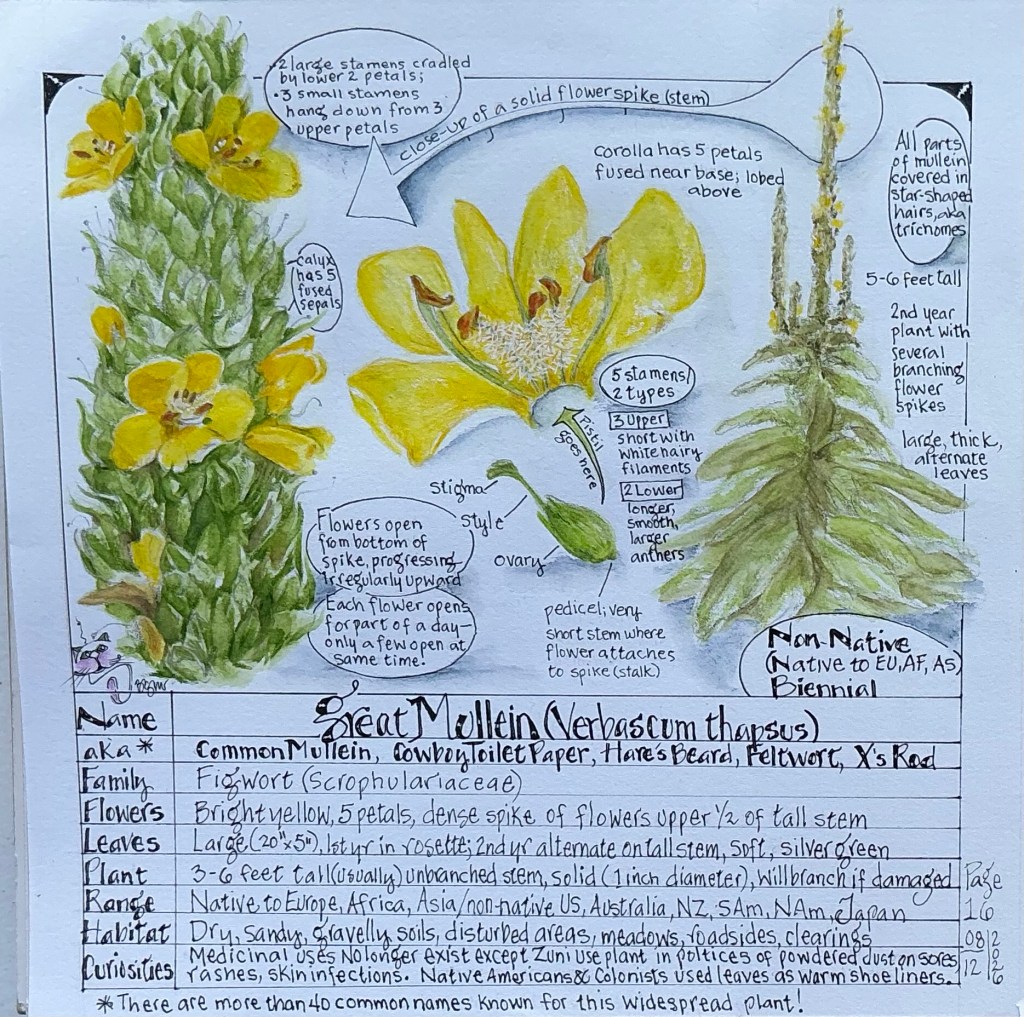
Great Mullein (Verbascum thapsus)
—aka—
greater mullein, common mullein, mullein dock, cowboy toilet paper, hig candlewick, Indian rag weed, bullock’s lungwort, Aaron’s-rod, hare’s-beard, ice-leaf feltwort, velvet dock, and flannel; woolly, velvet and blanket mullein; beggar’s, Moses’, poor man’s, Our Lady’s and old man’s blanket
Home, Sweet Home
Native to Europe, North Africa and Asia, Great Mullein is an introduced (a non-native) species in the Americas, Hawaii, Australia, New Zealand, and parts of Japan.
In the U.S., Great Mullein was imported very early in the 18th century and cultivated for its medicinal and Piscicide2 properties. By 1818, it had begun spreading so much that everyone thought it was native. By 1839, the species had spread as far west as Michigan; by 1876, it was growing in California. Today, Great Mullein is common in all 50 states. In Canada, it’s common in the Maritime Provinces, southern Quebec, Ontario and British Columbia, with scattered populations in between.
Happiness Was Watching My Mullein Grow
Life cycle: Great Mullein, a biennial (requiring two growing seasons to complete its entire life cycle), needs a winter dormancy period to flower. During its first year, a seed germinating in the spring or early summer develops a showy rosette of large leaves that grows from a taproot. After overwintering, the second year’s growth begins when a solid 1-inch diameter woody stem emerges from the rosette. This single pole-like stem, that can extend 6 feet tall or more, is covered in alternately-arranged leaves along the lower third of its length, becoming completely surrounded with a dense grouping of small flower buds that randomly bloom throughout the summer. Typically, only one stem forms, but if damaged during growth, branching may occur. After flowering and seed release the flower stalk(s) dries up and remains covered in dried brown seed capsules. Dried stalks and any seeds not scattered during fall may persist into the following spring or summer.
Habitat: Great Mullein grows in a wide variety of habitats, but thrives on well-lit disturbed soils, open meadows, and arid or overgrazed rangelands. Viable seeds, that can persist in the soil for hundreds of years, rapidly germinate in the spring soon after the ground warms up. While the mullein can also grow alongside existing plants, growth of the rosettes on bare soil is four to seven times more rapid than under vegetated conditions.
Flowers: Beneath the flower’s corolla (petals) is the deeply lobed, green calyx consisting of 5 hairy, triangular-shaped sepals. The bright golden-yellow saucer-shaped corolla (0.6–1.2 in) is formed from 5 slightly unequal petal lobes that are fused at the base. Attached on top of the petals are 5 stamens of two types: three shorter upper stamens covered in yellow/whitish hairs, and two longer lower stamens that are smooth. The pistil at the center of the flower consists of a superior ovary, a single slender green style, and a two-lobed stigma. Flowering lasts up to three months from early to late summer. Flowers begin blooming from the bottom of the tall stalk (spike) and progress irregularly upward. Each flower opens for part of a day and only a few open at the same time around the stalk. They typically open before dawn and close in the afternoon.
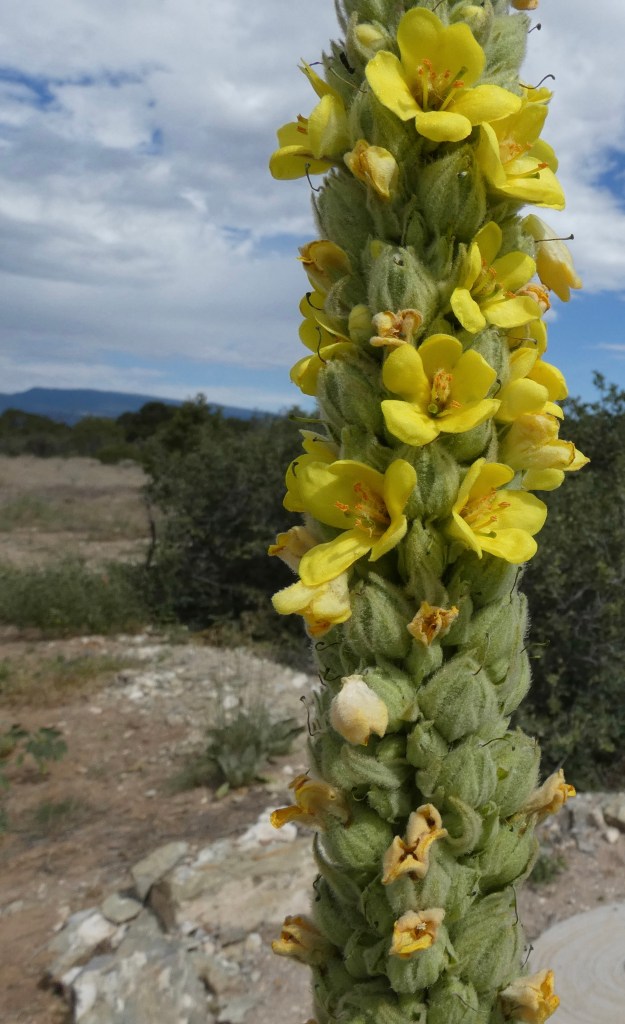
Pollination and Pollinators: Flowers are able to self-pollinate if they haven’t been pollinated by insects during the day. Even though many insects visit the flowers, only certain bees actually get the job done (such as halictid bees (usually dark black or brown, often metallic appearing sweat bees). Birds foraging for insects, such as the white-headed and ladder-backed woodpeckers, are known to feed from the seed capsules covering the flower stalk.
Seeds: Each tiny (<0.04 in) brown Great Mullein seed is marked with longitudinal ridges. Each flower produces a small, ovoid (0.24 in) capsule full of seeds that splits open with two valves when mature. Each plant produces hundreds of capsules that contain up to 700 seeds apiece, totaling anywhere between 180,000 or 240,000 seeds/plant. Seeds germinate in spring and summer on bare soil (or very close to the soil surface) when exposed to light, at temperatures between 10 and 40°C (50 and 104°F).
The seeds are generally too small for birds to feed on, although the American goldfinch has been reported to eat them.
(See the following section for more on seeds.)
Did You Know ………
They Call it Fasciation! If you’re familiar with Great Mullein, you may have noticed some flower stalks don’t always grow straight and tall. For some reason, some tops form weird shapes that may be flat or compressed, folded or ribbon-like, bulbous or crested. These plants have grown what’s called a fasciated flower stalk, the result of a rare developmental mutation. Scientists studying these unusual growths are trying to learn what triggers fasciation, but it remains a mystery. They have, however, identified several potential vectors that may disrupt normal growth:
- Pests and pathogens: Insect feeding, mite activity, or bacterial infections (like Rhodococcus fascians) can damage or trick the growth tip into abnormal widening, though some field tests found their presence on fasciated mullein as well as on normal plants.
- Environmental stress: Severe weather shifts, frost, or chemical/herbicide exposure during early stalk development may shock the growing tip into expressing fasciation.
- Physical injury: Mechanical damage to the growing tip is known to disrupt normal elongation, though specific studies carried out on some Great Mullein plants noted that physical damage actually reduced or did not trigger fascination.
And Now! Everything You Wanted to Know About Great Mullein Seeds
Did you know ….. some seeds that germinate in autumn may jeopardize the life of the plant? Rosettes getting a late start must grow to at least 6 inches in diameter or they are likely to die in winter. Regardless, all first year plants that do survive overwintering and go on to complete their life cycle, die at the end of their second year, with some exceptions. Under the best growing conditions, some individuals flower in the first year, only to die the same year. And some individuals, especially in the northern parts of the range, require a longer growing period and don’t flower until their third year. Curiously tho, three-year plants often produce fewer seeds than biennial and annual ones. While year of flowering and size are linked to the environment, most other characteristics appear to be genetic (fasciation is an example).
Did you know ….. decades-old seeds can readily sprout from bare ground, or after forest and range fires, long after Great Mullein plants have died. This ability to quickly grow or even colonize disturbed areas may provide some soil stability, but it does interfer with the natural succession of native species.
Did you know ….. seeds don’t disperse far from a Great Mullein flower stalk? This means plants rarely establish in new areas without human intervention. Seeds scatter naturally when winds or animals move the stem causing 75% of the seeds fall within 3 feet of the parent plant; 93% fall within 15 feet.
Did you know ….. seeds are in the fossil record? Oh My! Discoveries of Great Mullein seeds have been reported from several important geological areas on the British Isles, including:
- Cromer Forest Bed geological formation (Early to the early Middle Pleistocene [2 to 0.5 million years ago]) located in coastal areas of the Norfolk region of England;
- West Wittering in Sussex in fossil-bearing clay formed during the Eocene epoch around 46 million years ago; and the
- Ipswichian interglacial layers falling within the Middle Paleolithic period 130,000 to 115,000 years ago.
Great Mullein Plays Host to Many Visitors
The Good, the Bad, and the Questionable Pests and Beneficial Insects, and Diseases
Represented by 29 different families!
Pests: The majority are western flower thrips (Frankliniella occidentalis), Lygus species such as the tarnished plant bug (L. lineolaris) and various genera from the spider mite family (Tetrantchidae). Other common insects that feed exclusively on Verbascum spp. in general or V. thapsus (Great Mullein) in particular are: mullein thrips (Haplothrips verbasci), mullein moths (Cucullia verbasci), and common stalk borer moths (Papaipema nebris).
Beneficial Insects include predators, pollinators and specialized herbivores, such as:
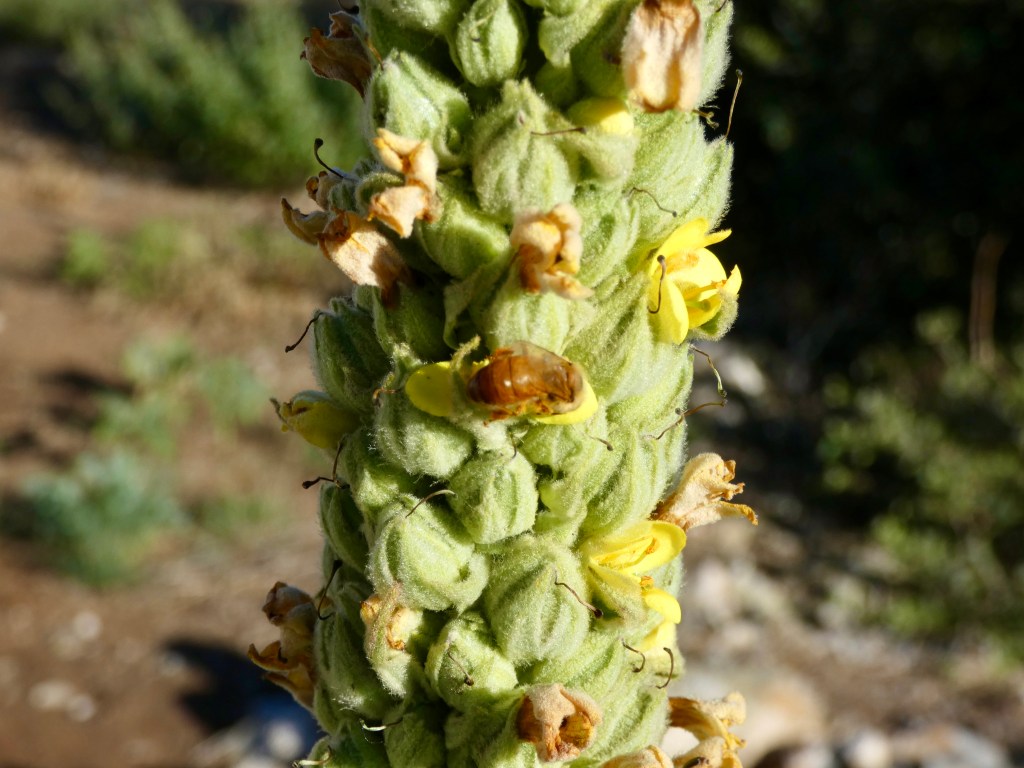
- Mullein plant bug (Campylomma verbasci) is hosted primarily in summer and permitted to feed lightly on the plant while actively preying on orchard aphids, mites, and thrips.
- Leaf bug (Dicyphus hesperus) is hosted year-round as its primary habitat and food source in return for helping to manage greenhouse and agricultural pests like whiteflies and spider mites.
- Minute pirate bug (Orius tristicolor) hosted solely as a platform to hunt thrips and other small pests on the foliage.
- Predatory mites (Galendromus, Typhlodromus and Amblyseius spp.) hosted year-round on plant surfaces to hunt harmful plant-feeding mites.
- Wool carder bees (Anthidium species) hosted as a casual visitor for purposes of gathering the dense, soft/woolly hairs from the plant’s leaves to line their nesting chambers.
- Bumblebees, honeybees, hoverflies, butterflies hosted as frequent drop-in visitors throughout the growing season to gather abundant nectar and pollen from the flowers in return for pollination services. Special accommodations are always arranged for the following members of this visitor group known to successfully pollinate the flowers — generalist short- and long-tongued bees, including certain bumblebee species (Bombus spp.), honeybees (Apis mellifera), and assorted solitary bees (small native, wild bees).
Diseases reluctantly hosted by Great Mullein include cucumber mosaic virus — the cucurbit powdery mildew (Erysiphe cichoracearum), and root rot (Phymatotricum omnivorum), along with Cercospora verbasciola; Phoma thapsi; Phyllosticta verbaciola; Heterodera maroni; Meloidogyne sp.; Mycosphaerella verbasciola; Ramularia veriabilis; Septoria verbasciola; and Oidium pyrinum. These microorganisms not only impact the health of the host, but may impact other desirable plants in the area.
A Confusingly Questionable Insect —
The Voracious Mullein Seed-Eating Weevil
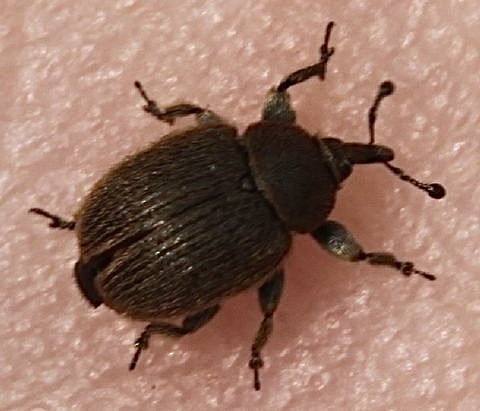
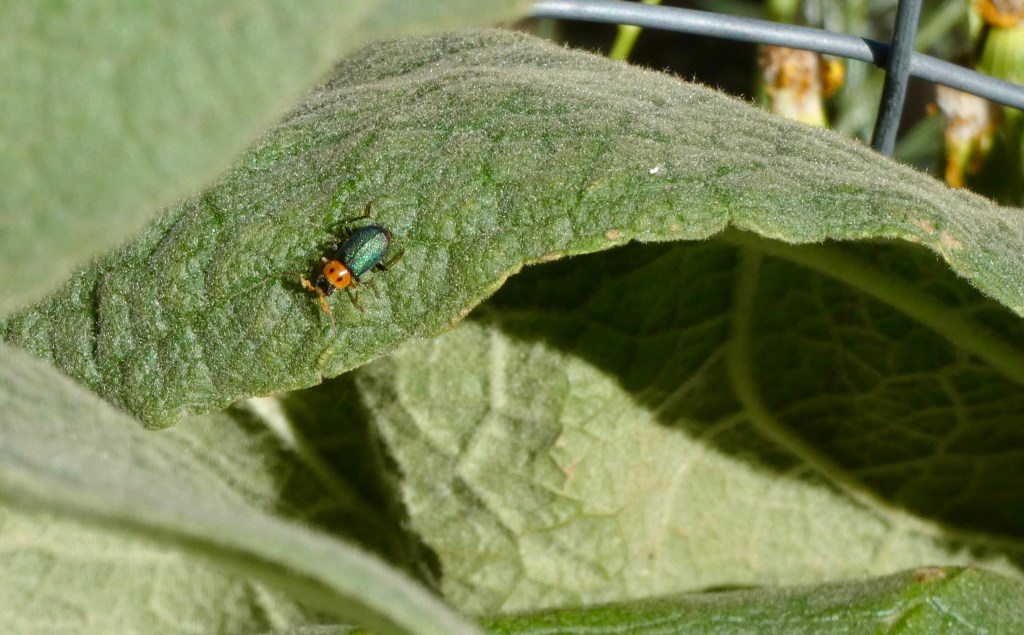
Great Mullein was clearly tricked into hosting the mullein seed-eating weevil (Rhinusa tetra syn. Gymnaetron tetrum) by this demure, sometimes brown to nearly glossy-black beetle that promised to nibble only on leaves and a few seed capsules for the entire 45 days of its adult life. Little did mullein know that this weevil was hiding a secret. When it came to the end of her days (coinciding with flower blossoming) there was only one thing left to do … deposit all 150-200 of her fertilized eggs, two-by-two, into as many flowers as possible, she does this for over an 11-day period, and then she dies. But about 1 week following egg laying, the eggs hatch into larvae (grubs) and commence consuming most of the ~700 seeds in the growing seed capsule. When they’ve about exhausted their food supply, the larvae pupate and finally emerge as adults ~25 days later. The adults remain on the host mullein, munching uninhabited seed capsules and leaves, for 45 days until the next batch of females lays their next batch of eggs, and on it goes, until ….. when the growing season winds down and winter begins to blow in, adult weevils that haven’t completed their life cycle will tuck into a dried seed capsule and hibernate. And larvae that have entered the pupa stage of their lives will remain as such, overwintering until late spring when warmer weather triggers completion of their metamorphosis and the adults can safely emerge, ready to begin feeding on 2nd year flowering mullein.
Weevil Interlude
The mullein seed-eating weevil was accidentally introduced from Europe in 1876, to control the spread of Great Mullein. But back then and for many years following, the weevil was never intentionally used for that purpose. It happened “naturally” as the weevil spread throughout North America, making its living on Verbascum spp. it found on its journey. In more modern times, and because the weevil was never formally cleared as a released biological control agent, local land management and weed programs (such as in parts of the Pacific Northwest and Wyoming) informally recognize it as an already-established bio-agent since its larvae feed extensively on the seeds of Great Mullein. In some regions where the plant is a designated noxious weed, the weevil is viewed as a helpful naturalized helper; in other states—like Colorado—it remains unapproved for intentional release due to a lack of formal ecological impact studies.
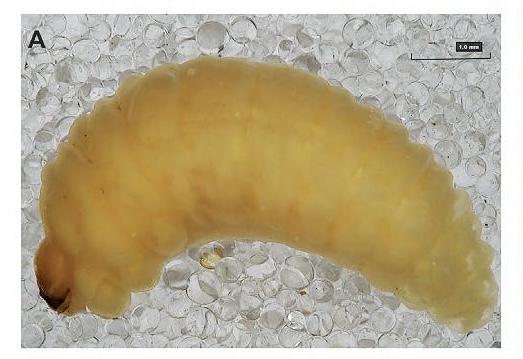
Bumper-to-Bumper Weevil Interlude
It seems that using a non-native insect to control a non-native plant is effective in significantly reducing the number of Great Mullein’s viable seeds to limit the plant’s spread. It is also a risky strategy, as many biological slip-ups have occurred in the past when a population of an introduced insect, having depleted its targeted food supply, develops an appetite for other, desirable-to-native-species plants. So far in the U.S., the mullein seed-eating weevil has only feasted on seeds of two Verbascum species—the Great Mullein (its clear favorite) and the equally-alien Moth Mullein (V. blatteria). Because the population of egg-laying adult female weevils doesn’t have enough eggs to lay in all of the hundreds and hundreds of mullein flowers, it’s probably unlikely they will run short of food in the near or far future.
To Weed, or Not To Weed
And What to Do With Unruly Great Mullein
In all areas where Great Mullein has been introduced, it’s recognized as a weedy species. Considered Invasive3 across much of the U.S., Great Mullein is a state-listed Noxious4 weed in Colorado and Hawaii, and in several counties in Wyoming, Nebraska and Montana. In these states it aggressively crowds out native plants in dry or open ecosystems.
In other areas of the U.S., opinions on the ecological impacts of Great Mullein vary. Some land managers primarily view it as a short-lived pioneer species on heavily disturbed ground that eventually fades as native vegetation recovers; others classify it as a persistent invasive weed based on its seed longevity. Where agricultural crops are grown, impacts are generally considered minor — the ability of Great Mullein to outcompete most crops is limited because it’s shade intolerant and doesn’t survive tilling. Where it may become invasive, individuals are easy to remove by hand, even though populations are difficult to eliminate permanently.
Control Measures that Work: Mechanical methods that control the growth and/or spread of Great Mullein are the most effective. The best means is by hand pulling and hoeing, preferably followed by sowing of native plants. Regular cultivation is known to be adequate for the control of mullein. Tractor-mounted mowers or scythes can be used to trim the plants when they begin to flower. Repeated mowing prevents the flower stalk from bolting, but if mowing is discontinued then the plant will bolt and produce flowers anyhow.
Not Worth the Time or Effort: All parts of the plant are covered in dense, star-shaped hairs (trichomes). Cattle and sheep avoid grazing the plant because biting into these hairs is irritating. Goats may find the plant edible, but studies are inconclusive. Use of contact herbicides is impractical since the hairs cause the liquid to roll off. Ground herbicides when taken up by the roots will damage or kill the plant, won’t kill seeds stored in the soil from previous years, and also denude the ground creating ideal conditions for growing more mullein. It would take decades of annual applications to slow, let alone prevent, new plants from growing. The use of seed-eating chickens has been proposed for mullein control, but has not been studied.
Multi-Use Mullein
Although commonly used in traditional medicine, today there are no FDA-approved drugs made from Great Mullein. Non-medicinal uses, past and present, are curiously varied.
Traditional Medicine
- Dioscorides, an Ancient Greek pharmacologist and botanist, first recommended Great Mullein 2000 years ago as a folk medicine for pulmonary diseases. Leaves were smoked to attempt to treat lung ailments, a condition that in America was rapidly transmitted to Native American peoples.
- The Zuni used the plant in poultices of powdered root applied to sores, rashes and skin infections. An infusion of the root was also used to treat athlete’s foot. Any preparations meant to be drunk had to be finely filtered to eliminate the irritating hairs.
- Oil from the flowers was used against catarrhs (inflamed mucous membrane(s) in an airway or body cavity) colics, earaches, frostbite, eczema, and other external conditions. Topical application of various V. thapsus-based preparations was recommended to treat warts, boils, carbuncles, hemorrhoids, and chilblains. The plant has been used in an attempt to treat colds, croup, sunburn, and other skin irritations.
- Great Mullein (V. thapsus) was in the United States’ 4th edition of the National Formulary from 1916 – 1936, stipulating that fluid extracts of dried leaves and flowers of the plant was approved as a pharmaceutical drug.
Otherwise Practical and Curious Uses
- Roman soldiers are said to have dipped the flower stalks in grease for use as torches.
- Romans extracted a yellow dye from the flowers to color women’s hair.
- In some cultures, leaves have been used as wicks.
- Native Americans and colonists lined their shoes with the plant’s leaves to keep out the cold.
- As with many plants, Great Mullein was linked to witches, although the relationship remained undefined. At the same time, the plant was also widely believed to ward off curses and evil spirits.
- As mentioned earlier, the seeds, which contain saponins, glycosides, coumarin and rotenone, are toxic to fish and have been widely used as piscicide since the plant’s introduction to the U.S. in the 1700s. Settlers threw the seeds and even the leaves into slow-moving water, allowing the chemicals to spread and stun the fish, causing them to float to the top making them easy to catch.
- In modern times, Great Mullein is treated as an ornamental plant.

Etymology
From the Greek word etymon, meaning
“literal meaning of a word according to its origin”
Scientific Name: Verbascum thapsus
Genus Verbascum: Originally described by Carl Linnaeus in 1753, Verbascum was derived from the classical Latin verbascum, used for the plant by Pliny the Elder (CE 23-79), Roman author, naturalist, scientist, etc. However, the word “verbascum” was widely believed to be and accepted as a corruption of “barbascum,” from “barba” meaning “beard.” The genus name Verbascum, back then (as it does today), refers to the dense, hairy coating on the leaves and the bearded appearance of the plant’s stamens.
Species (specific epithet) thapsus: First used by Theophrastus (BC 371-287), Ancient Greek philosopher and naturalist, for an unspecified herb from the Ancient Greek settlement of Thapsos, near modern city of Syracuse, Sicily ….. OR ….. it may have come from the ancient Tunisian city of Thapsus.

Common Name: Great Mullein
“Great” was used in the plant’s common name to distinguish it from other more diminutive plants of the same genus Verbascum. “Great” refers to the plant’s tall stature.
“Mullein” evolved from Middle English “moleyne,” by way of the Anglo-French word “moleine,” which came from the Latin root “mollis,” meaning “soft.”
…………………………………………………………………………………………………
Wake up Now! Unless you’ve caught a case of Mullein Madness Fever!
Regardless, hope you found this interesting!
(I promise to write a shorter post next time)
As always, thanks for stopping by!
1 Naturalized – a non-native plant species brought from other regions that now reproduces and spreads on its own without human help, but doesn’t aggressively overrun native habitats.
2 Piscicide – a chemical substance that’s poisonous to fish. Piscicides are primarily used to eliminate a dominant species of fish in a body of water, done as the first step in attempting to populate the water body with a different fish species. They are also used to combat parasitic and invasive species of fish.
3 Invasive – a non-native species introduced to a new-to-it ecosystem where it spreads rapidly, outcompetes native species, and causes economic or environmental harm. Because it lacks natural predators or diseases in its new home, it easily takes over natural habitats, yards, farms, etc.
4 Noxious – any plant legally designated by a government agency as harmful to agriculture, public health, wildlife, or property. These plants grow aggressively, spread fast, and lack natural controls. While many are non-native invasive species, some native plants can also be classified as noxious if they cause severe damage.
References