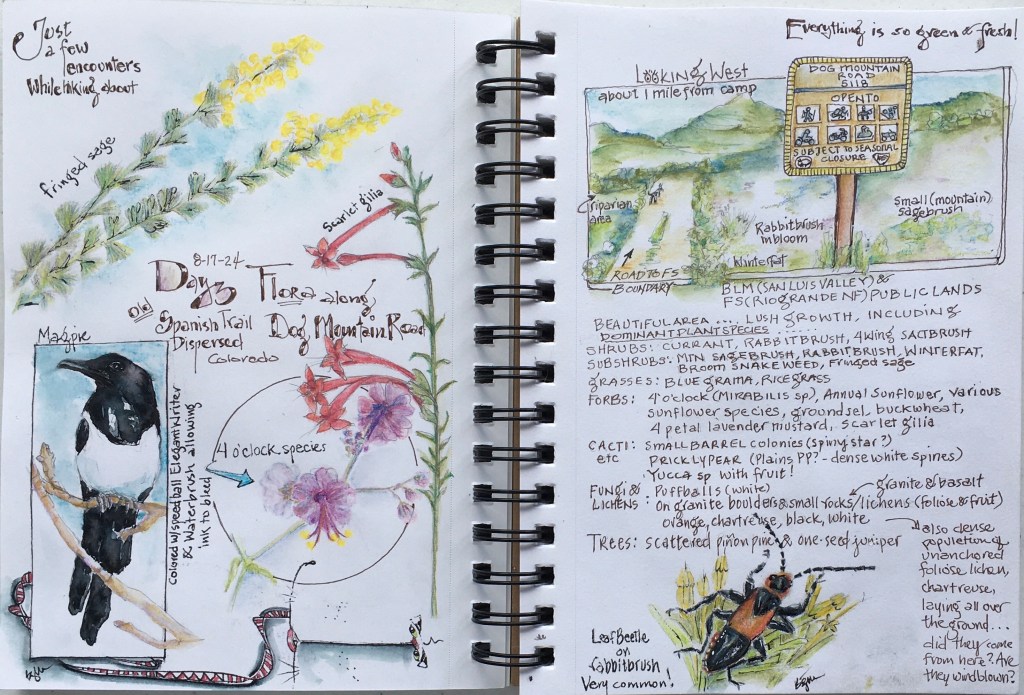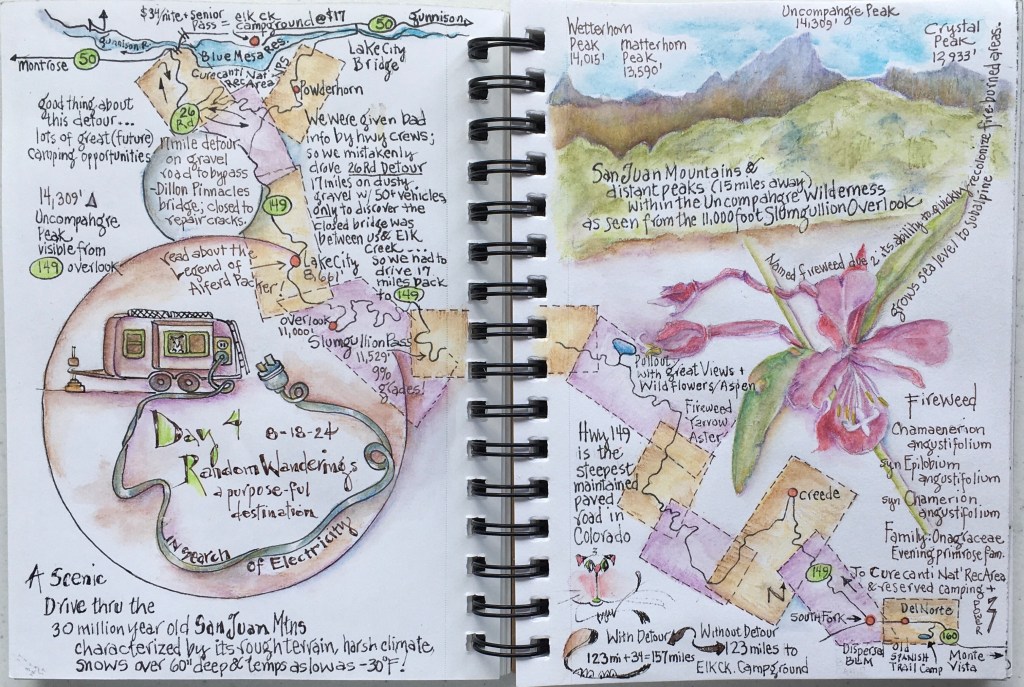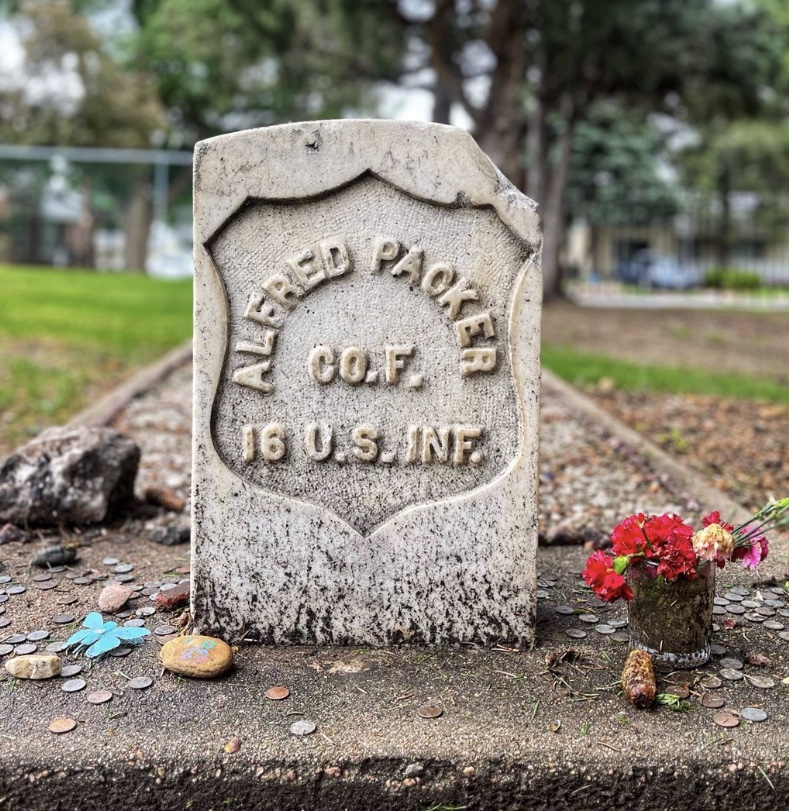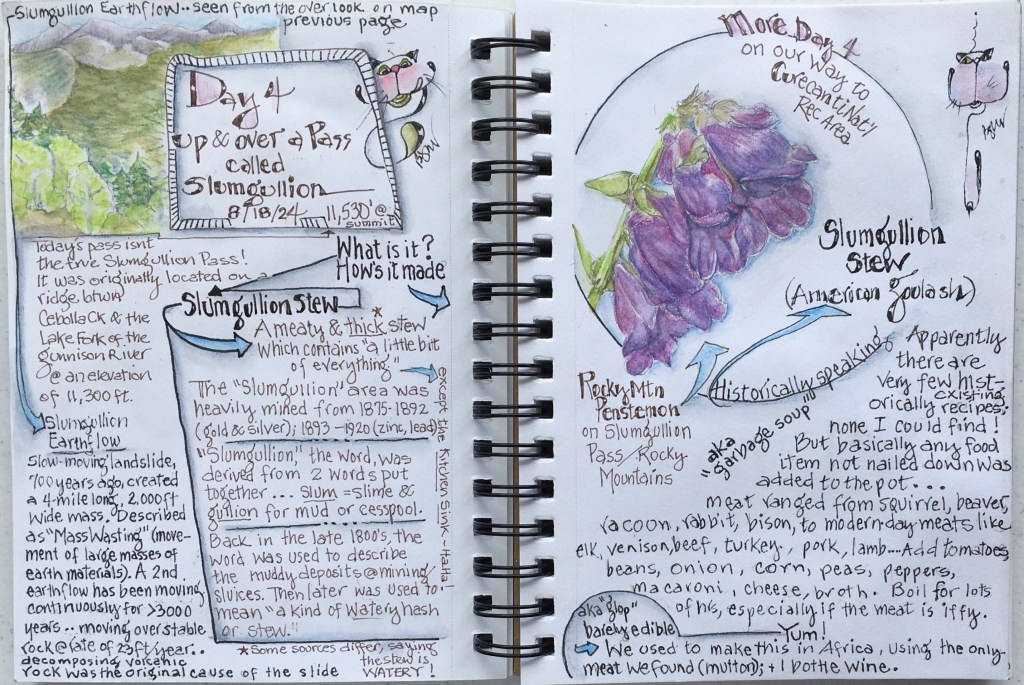
One of our early morning landscaping projects has been keeping us busy shoveling our way through 14 tons of pea gravel, one wheelbarrow load at a time. As each backbreaking load is hauled into our back yard and dumped on miles of weed barrier fabric, we keep reminding ourselves how nice it will be when Luna no longer returns home with muddy paws.
What began as a daunting pile of millions and millions of tiny little stones, by morning #3 the pile still looked impossibly huge, while the only thing diminishing was our enthusiasm. So it wasn’t a big surprise when, after only 15 minutes of scooping, a very large and shiny black beetle was welcome excuse for a break! After all, she was charging across our travel path, and without rescuing would’ve surely been squished flat under a careless wheelbarrow tire!
And we paused …… for nearly 45 minutes ….. as we ooohed and aaaahed over such a magnificent beetle, wondering what she could be. Well over an inch long, we noticed her blue-black head, thorax (pronotum) and hard wing covers (elytra) as shiny as freshly polished paten leather shoes, were ringed by a dense fringe of rusty orange hairs. When she went belly-up, we could see those hairs all over the ventral (lower) side of her head and thorax.
Not enjoying exposing her undersides to the world, those six flailing, long and powerful, many-segmented claw-tipped legs flipped her body over and she quickly resumed charging across the ground. Roy kept her in sight while I ran for the camera, determined to take lots of photos to get an ID. About a dozen poses later, and with the help of iNaturalist, I learned that our visitor appeared to be a female Western Rhinoceros Beetle (WRB)!
Yes, apparently there are Rhinos in New Mexico! How cool it would be to find a male or two, and watch how they use their horns (which are as tall or taller than their steeply pitched and somewhat concave pronotums) in battle to win a hornless female.
Wonderings! Why was our female WRB in such a hurry? Was she running from a male? Two battling males? Had she mated already and was in search of a Velvet Ash Tree (a NM native species and likely her preferred food source) where she could lay her more than 100 eggs in the soil beneath the tree? How does she find these ash trees, because I’ve never seen one on our 2 acres or along any of our neighborhood hiking trails?
So many unanswered questions! But you can bet I’ll be on the lookout for the next WRB to trek on by. Maybe I’ll drop everything I’m doing (like scooping pea gravel) and follow her or him just to answer a few questions! Do you think Roy will mind being left behind holding the shovel?
Hiking and rehiking familiar areas always turns up new discoveries. This may be because my eyes skim over the most commonly seen phenomena, allowing me to actively search for anything new or anything out of place. Rarely am I disappointed.
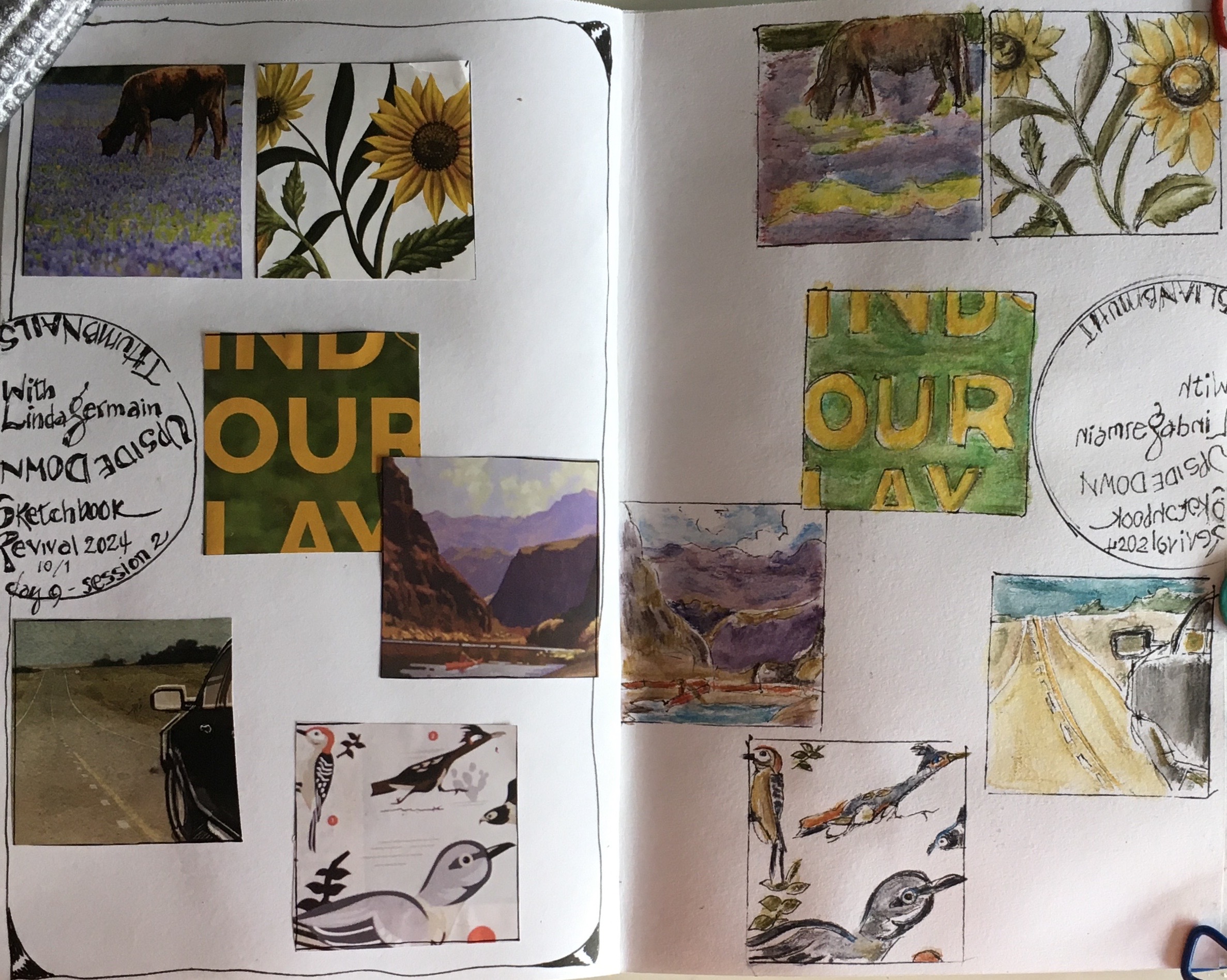
A few days ago, we explored one of our favorite hiking areas. Because birds tend to be more secretive this time of year, the best surprise was to hear a black-throated sparrow sweetly singing from his perch atop a cholla skeleton.
Because it’s monsoon season, many plants that bloomed late spring are making a comeback, and are happily spreading throughout the area. So to keep track of how ranges are expanding, I made note of their locations and transferred this information to a simple trail map. I also noted that the most commonly seen flowers were from the composite family …. the sunflowers.
Oh! Couldn’t resist capturing the silhouette of Wile E. Coyote glued to the back end of a dented vehicle in the parking area. That’s was a perfect discovery for the resident roadrunners!
Do you enjoy exploring familiar areas? What surprises have you discovered?
When trying to pin down exactly what’s so special about Herbs, a deliciously aromatic group of plants, I was stumped. Well, maybe not stumped, exactly. There are so many reasons to fall in love with Herbs, and picking one feature or even one Herb that’s especially special is nearly impossible. Best known for their culinary flavor enhancements, can you imagine pickles without Dill, pesto without Basil, salsa without Cilantro? What’s a dark chocolate circular pattie without Peppermint, or a cookie cutter man without Ginger?
Herbs excite memories, calm the mind, reduce inflammation. Does the aroma of sage conjur thoughts of Thanksgiving? Does a sprig of lavender make you sleepy? Does bold yellow turmeric soothe arthritic joints?
And many Herbs are decorative and lovely to look at, form beautiful shrubs, have gorgeous flowers.
But I keep coming back to the aroma. It’s hard to resist crushing the leaves of herbs like thyme or mint between my fingers. The essential oils released into the air and lingering on my fingers causes me to take a deep breath, inhaling the fragrance, embedding the aroma in my brain, resulting in a memory I can recall over and over again.
Herbs are Special!
The Rosemary plant (actually a mini shrub) in my yard always invites my attention, and just this week it welcomed spring by coming into full bloom!
Who remembers this?! Now I can’t get it out of my head!
Do you have a favorite Herb? Why is it special? How do you use it? Please share! And thanks for stopping by!
Honest …. You can’t make up this stuff! You’ve got to wonder what the person or persons who began the National social media movement, “I Hate Coriander” Day, have against an innocent little herb.
“National I Hate Coriander Day, celebrated annually on February 24th, is a social media movement to express disdain for the herb coriander (also known as cilantro) and its taste and smell.”
“Hate” is such a strong word under any circumstances, but to “hate” an herb? … What do these Coriander “Haters” find offensive about the look of this bright green leafy plant? What is it about the taste and/or smell of Cilantro that elicits such a strong reaction? Now I’m not a Coriander (aka Cilantro) addict ….. a bit now and then as garnish or to flavor a fresh salsa is perfectly fine with me. I’ve even grown Coriander in my garden and marveled at the plant’s growth rate, intense leaf and stem coloring, bouquets of delicate flowers and abundance of seed. So my curiosity was definitely piqued when I came across this peculiar National Day. Just what is it that has and keeps these people all riled up over Coriander?
Coriander – The Plant
Not to be confusing, but Coriander and Cilantro are actually the same thing, Coriandrumsativum. However, in the U.S. we tend to refer to the leaves and stems as Cilantro; the seeds (whole raw or toasted, or ground) as Coriander. But because the National Day is about hating Coriander, I’ve made a leap in assuming they hate the entire plant, including the roots, stems, leaves, flowers and seeds (all of which are edible; all of which are eaten).
The plant is an annual that grows up to 20” tall. The bright green leaves are variable in shape, broadly lobed at the base of the plant, and slender and feathery higher on the stems. Flowers are arranged in umbels (like a wind blown, inside-out umbrella), are white to pale pinkish-mauve. Each asymmetrical flower has longer petals pointing away from the center of the umbel than those pointing inwards. And each flower produces a dry globular fruit (schizocarpic cremocarp) about 1/8 – 3/16” diameter, which splits when mature into 2 mericarps, each mericarp with a single seed.
Coriander – The Seed
The name, Coriander, is the common name used around the world, for the seed of Coriandrumsativum. There are two cultivated varieties of Coriandrum sativum grown around the world. Although the plants of both varieties appears the same, it’s the seed where the visible differences occur. C. s. var microcarpum is the small-seeded variety found in temperate climates, such as in Europe and the U.S. Its seeds are about 3 mm in diameter, round, and very potent as a spice. C. s. var macrocarpum (aka C. s. var vulgare) is the large-seeded variety found in hot, subtropical areas of Asia and India. It’s seeds are 5 mm in diameter, football shaped and have a very delicate flavor.
If you’ve ever grown Coriander from seed, you probably planted one seed at a time, being careful to follow the spacing instructions on the package. Then when your seeds germinated, sending up those first immature leaves (cotyledons), you noticed that for each seed planted there are 2 little plants! “What the heck?” you say. When you sowed the seeds in each well-spaced spot, you obviously planted an entire globular fruit (both mericarps at once) resulting in the germination of both seeds!
Is There a Consensus of Opinions on Leaf Taste and Aroma?
Nope! Opinions are far from consensual. As a matter of fact, they are frequently polar opposites. Coriander has been described as the “Marmite”*****!!! of herbs; either you love it or hate it. This great analogy reflects how strongly people do feel about flavors of their food.
Opinions on leaf taste and aroma: The good – tart, lemon-lime, fragrant, pleasant, distinctive, spicy hot, peppery, aromatic. The bad – bitter, stinky, unpleasant, nasty, fetid. And the bleh – The leaves smell and taste like dish soap!
Is There a Consensus of Opinions on Seed Taste and Aroma?
Again, Nope! But curiously, most of the opinions about seed taste and aroma were fairly positive, provided the correct variety of C. sativum was properly prepared and used. For example, all seeds contain 1% volatile essential oils, but the quality of oils is different between the two varieties. For some reason the smaller European variety seeds (C. s. var microcarpum) have far superior essential oils resulting in far superior flavor and yield when compared to the larger India variety seed (C. s. var macrocarpum). The larger India variety seeds are preferred as a spice, both whole and ground.
Opinions on taste and aroma of fresh or dried seeds: Spicy, earthy, cumin-like, orange peel, aromatic, dried seeds have full flavor, fresh seeds are undesirable.
Opinions on taste and aroma of toasted seeds++, whole or ground: Fruity, Fruit Loops, lemony, floral, mild perfumy, aromatic, bitingly pungent, delightful bouquet, distinctive flavor.
Now it’s your turn! Where do you stand on the issue of Coriander; it’s taste and smell? Are you celebrating today’s National “I Hate Coriander” Day? Or are you a regular Coriander Connoisseur, savoring the taste, smell and texture in all of your favorite dishes, from sauces and marinades, curries, meats and seafood, stews, to pastries and desserts?
***!!! Marmite! Invented, made and sold in England, this stuff is a sticky, dark brown paste made from fermented yeast. It has a very salty and powerful (understatement) flavor, and is frequently slathered on toasted breads like jam. If you haven’t experienced Marmite, perhaps you’ve dared to taste its equally unappetizing knockoff, “Vegemite,” found all over Australia? If you’ve tasted either or both (wow, you’re tough), what was your reaction? If you’ve never had the culinary pleasure, consider this fair warning! Wonder if there’s a social media group that’s declared “International I Hate Marmite (Vegemite) Day?” I would happily eat a bushel basket of cilantro greens, than dare give these yeasty products another go. (No offense to the marmite and/or vegemite lovers of the world.)
++Toasting Coriander Seed: In a non-stick skillet, over medium-high heat, add the seeds. Keeping the skillet in constant circular motion. When the seed’s aroma is released, toasting is complete! Cool completely and grind with mortar/pestle or in a small electric grinder. Store ground coriander in a cool (refrigerated) location, away from light and moisture. It’s best to toast and grind seeds in small amounts, on an as needed basis, to experience the full flavor.
It’s hard now to imagine how extremely hot and dry the summer was this year. Without even a spittle of rain, the 100+ degree temps for weeks effectively suppressed the usual mid-season bloomers in and around the Albuquerque foothills/East Mountains. Even invasive plants, like goathead and tumbleweed, remained dormant or failed to germinate all together. It looked like winter browns had arrived early.
Then in less than a week, a small rain followed by several long downpours flooded the parched landscape, transforming browns to greens. You’ve heard this from me in a few earlier posts, but it was magical, and a reminder about the resiliency of desert vegetation.
Here’s a few pages highlighting a handful of the Late Bloomers I recorded in only 2 days. More than 2 dozen species had sprung back to life, setting flowers at all stages of accelerated vegetative growth. The landscape seemed wide awake. If plants could talk, I imagined them laughing while excitedly chanting, “hurry, hurry, hurry!” Only their roots prevented them from dancing!
In addition to the species on these journal pages, there are many (more) composites, native grasses, shrubs and sub shrubs, small forbs from Spring and early Summer actively growing and blooming right now, and (of course) the weedy invasives are growing and blooming with wild abandon.
Random thoughts and wonderings ….. are pollinators still hanging around …… or ….. how many of today’s bloomers are self fertile …… are local birds, insects, reptiles and mammals that depend on earlier summer pollen and/or fruit and seed production stressed with this timing change/availability of food sources … will there be noticeable shifts in species composition, including plants, insects, reptiles and animals (including birds) ….. what species can and will adapt to changes, and how quickly ….. etc. The answers to these and many more questions are probably best answered in coming years, if it’s even possible to answer them at all.
Have you observed vegetation anomalies that may be influenced by changes in climate? If so, please share your observations and where these changes are taking place. Meanwhile, keep your eyes wide open.
“Closing your eyes isn’t going to change anything. Nothing’s going to disappear just because you can’t see what’s going on. ……….. Closing your eyes and plugging up your ears won’t make time stand still.” – Haruki Murakami.
It was a rainy day in most of NM, but what a welcome relief to be getting moisture! As we hastily hiked the lower Copper Trails, we noticed the prickly pear seemed to be draped in a more-than-usual white fuzz, and it wasn’t cotton ball shaped but dripping and running down hundreds of cactus pads. Every direction we turned we found nearly every prickly pear to be covered…………………. And then we spotted hundreds of thousands of brilliant scarlet red bodies of the cochineal insect ….. exposed, naked and frantically trying to hold onto their food source, the vertical surfaces of prickly pear pads. The rain had “melted” their protective coats of fine white wax and the green pads of the cactus looked white washed.
One of the weediest places we camped during our recent Reservoir tour, Santa Cruz Recreation Area, became a floral hot spot of discovery, at least for me. I shared a photo sampling of some of the flora in my last post……
Two new-to-me members of the Potato family really stood out. A plant called Greenleaf Five-eyes and another simply called Wild Potato.
Oh I do love purple …… not sure why? Anything purple and any shade of purple ….. even a hint of purple will do! As a kid (then and now) my most treasured possession was a new box of crayons. Breaking the seal and inhaling that delicious aroma of color (admit it …. you know the smell) was only the first step in my love affair. Removing each crayon, one-by-one, and taking them for a test drive soon followed, with special care and attention paid to the purples, with names like ……….
Vivid violet, wisteria, twilight lavender, pearly purple, purple pizzazz and purple mountain’s majesty. Who wouldn’t love cyber grape and lilac; or plump purple and sugar plum. How could here be so many purples!
So when I literally stumbled into a mound of the exquisitely purple-hued Silverleaf Nightshade, my surprise and delight was audible. While carefully removing countless nettle-like prickles from my hands, Roy heard me explain, “My “Crayola” Potato!”
Strolling the neighborhood on a cool July morning, in search of any newly-blooming botanical delights (thanks to our all-too-brief bout of monsoonal rains), from a distance I recognized something different. From a distance it looked like a common pepper plant, or maybe a spectacle pod? Coming closer I thought, “shepherd’s purse” with those tiny satchel-like seeds! Or could it be bedstraw, with such an intoxicating fragrance? Finally facing this spindly, narrow-leafed plant, I reached down to a stem and prepared to take a sniff when I was surprised twice!
An ant that had been busy gathering nectar (?) had leaped into my hand and bit me, hard! Obviously he was extremely upset at being disturbed and wanted me to know about it. I instantly dropped the stem and when I flicked the ant from my now throbbing finger, noticed an army of busy ants climbing up and down this tasty plant.
It was then that my surprise was complete. The flowers were unmistakable and recognizable. This plant was a member of the Dogbane family ….. a beautiful Milkweed! Now I had to learn which species of Asclepias this one was that had such tiny flowers?
After trying for 4 years to collect one of the giant seed pods from our small population of banana yuccas, I was sure this would be the year. One of the plants was in full bloom about a month ago, and after noticing the fleshy fruits were enlarging, I kept watch almost daily.
I should’ve suspected the local population of mule deer were also keeping close watch, because a week ago they snuck in and harvested every single seed pod! Disappointed? Yes. But still determined …….
Then a few days ago I discovered another plant loaded with a dozen of the huge fleshy green pods! Without further ado, I liberated 2 of them and dissection began …..