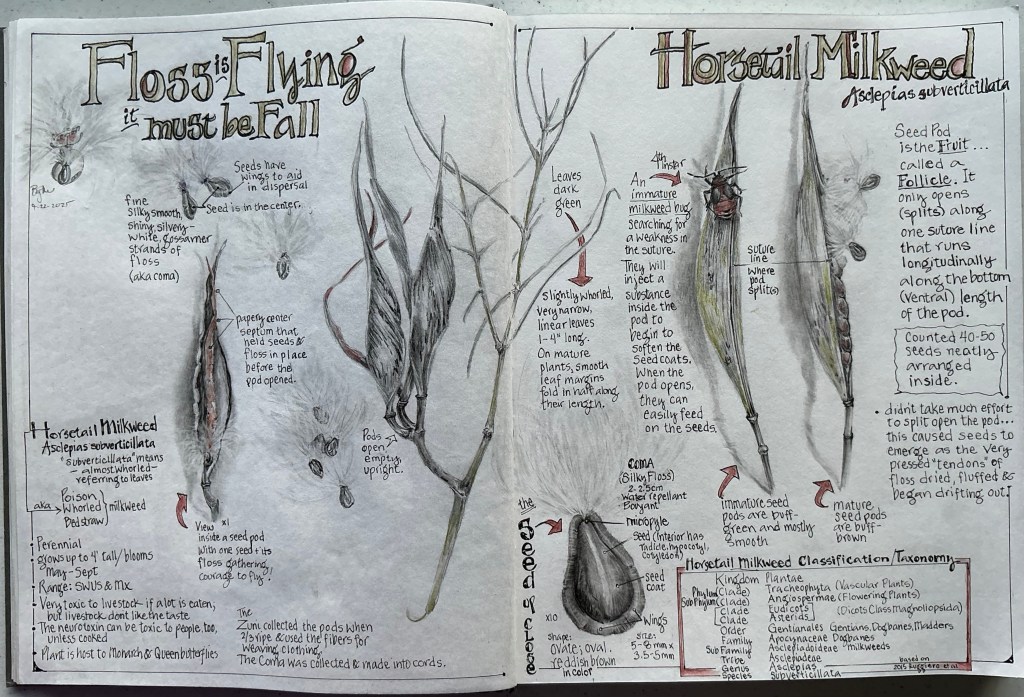
Like soft, fluffy snow! Glistening orbs of silky gossamer are floating about the neighborhood, drifting hither and yon in the gentle breeze. Suspended beneath each orb is a single reddish-brown winged seed that appears to coax its wind-propelled puff in a safe descent to the ground. But the white floss (the Coma) wants to fly, and it becomes a tug of war. As the weight of the seed overwhelms the ability (and the desire) of the floss to carry it, their brief relationship is severed. But both get their wish …. the floss flies free as the seed drops to the ground, hopefully landing in an ideal spot to overwinter and sprout next spring.
Welcome Fall!
When the air is full of Horsetail Milkweed parachutes and their ‘riders,’ I walk along the neighborhood roadways and collect a bounty of their new-crop seeds + floss to set free around our property. If they find the right soil, moisture, and light conditions for spring germination, the seeds will not only form the beginnings of a stand of these beautifully blooming, creamy-white milkweed flowers, but the plants might just play host to Monarch and Queen butterflies!
Now wouldn’t that be dandy!
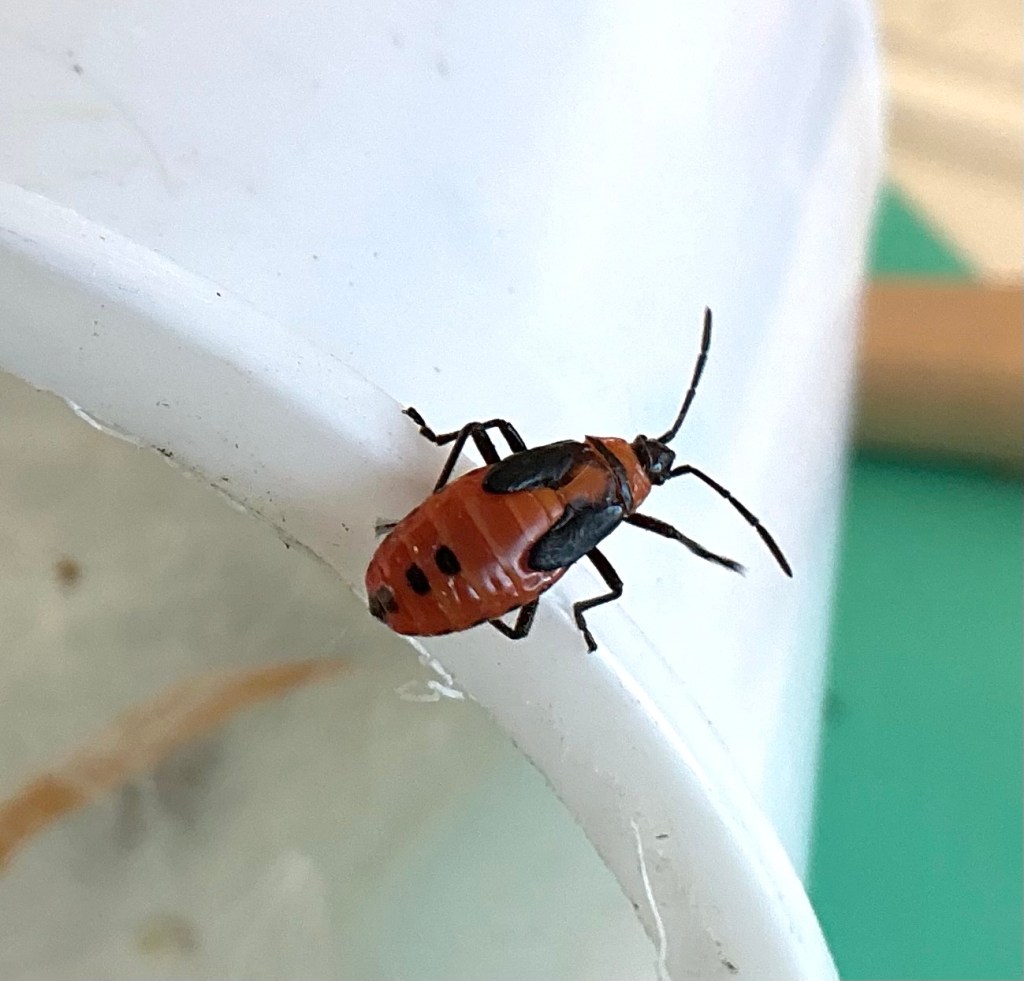
(Of course, mature seeds from new plants will undoubtedly entice a hungry crop of well-dressed Milkweed Bugs next Fall. That’s OK! They have to eat too!)
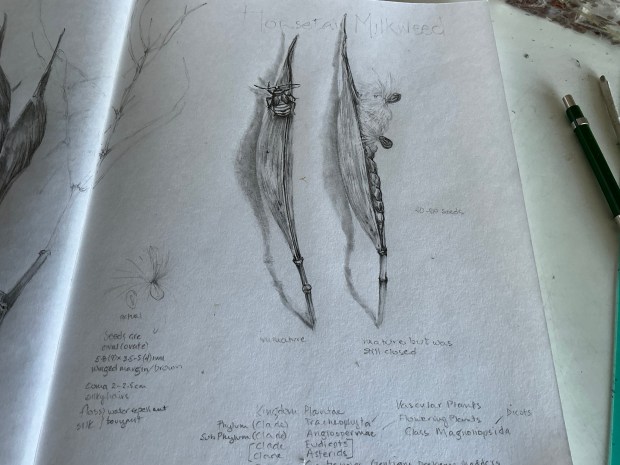
Before hint of color
My Journal Pages ……
For something different, instead of using ink and watercolor, all sketches on these pages were created in graphite. The pods, seeds and the milkweed bug were sketched from my collected samples using a mechanical pencil loaded with a fine point HB lead. The touches of color were added with water soluble graphite.
Work in Progress #1Work in Progress #2
Thanks for stopping by ….. And Have a Fabulous Fall!
Ohhhhhh, what a sweet month …… August. It almost got away from me without sharing a small collection of Littles1 that reflect the inevitable shifts in nature that occur during the month. It’s always hard to imagine summer winding down; where did the time go? But as surely as butter melts on freshly baked bread, undeniably, August forms a reliable bridge between summer and autumn. It’s a time of change and transition; abundance and harvest; transformation and a period of letting go.
So before I “let go” and before the snow flies (and it will), here’s a handful of little discoveries during the month of August:
-A female Wheel Bug gone slightly astray while searching for a protected place to overwinter the eggs she’s about to lay.
-A female Soldier Beetle doing her best to attract a mate by sending out pheromones while munching late season pollen from the disk flowers of a brilliant yellow Showy Goldeneye.
-An acorn that made it to maturity, ready to drop beneath a still green-leaved Gambel Oak soon to be decked out in radiant fall colors.
-Some hot red trumpet-shaped Scarlet Gilia flowers, still irresistible to hummingbirds until migration, will all be pollinated in time for seed set and mature.
-The snowy white fruit dangling from the draping branches of Roundleaf Snowberry shrubs are ripe and ready for plucking by hungry birds flying south for the winter.
-And plump purple-black Chokecherry berries that will become a juicy dietary supplement for black bears needing to bulk up for hibernation.
Enjoy!
And as always, thanks for dropping by!
1“Littles” is part of a blog series I began posting several years ago, beginning in January 2023. The concept was inspired by Fay (thanks again Fay!) who came up with the idea for her blog madebyfay.wordpress.com
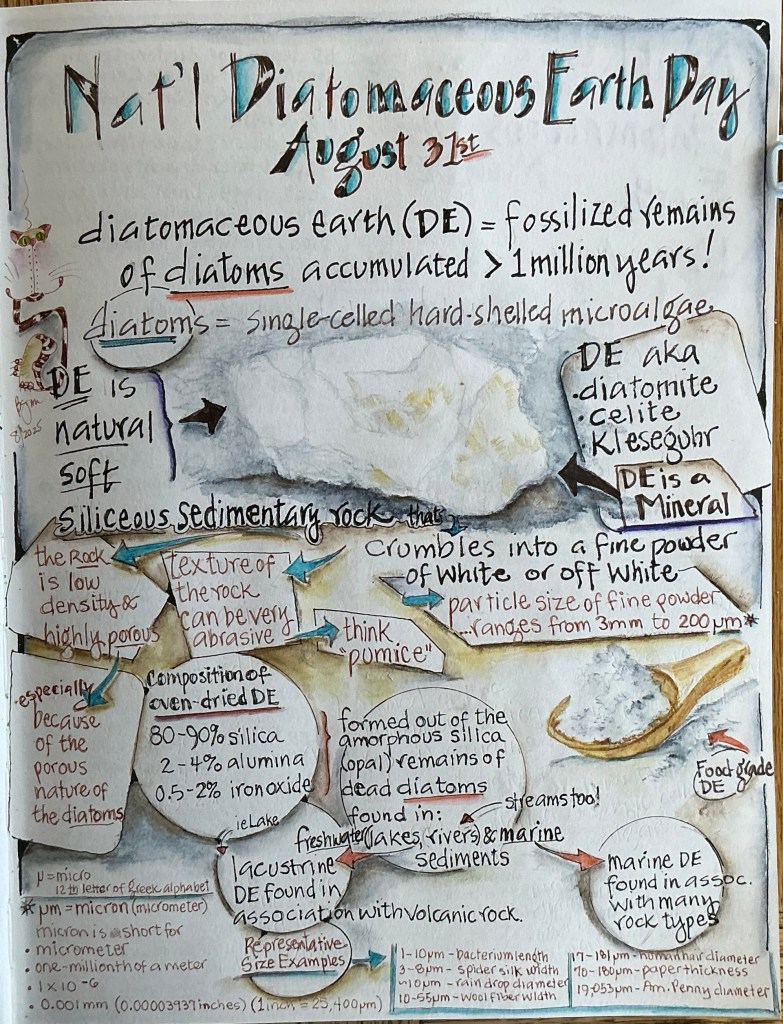
On August 31, National Diatomaceous Earth Day recognizes the diatom and the remarkable mineral it creates!
Have you ever heard of DiatomaceousEarth (DE)? If you answer “yes” then perhaps you brew your own beer, have a swimming pool in need of water filtration, or a vegetable garden that’s been invaded by a herd of hungry slugs. But did you know DE is a mineral1 composed of the fossilized remains of single-celled, microscopic algae called Diatoms? (More about diatoms in an upcoming post.) DE is truly a remarkable mineral, found around the world in ancient marine and lacustrine (freshwater lakes, streams, and rivers) sedimentary deposits.
Early Discoveries and Uses of DE
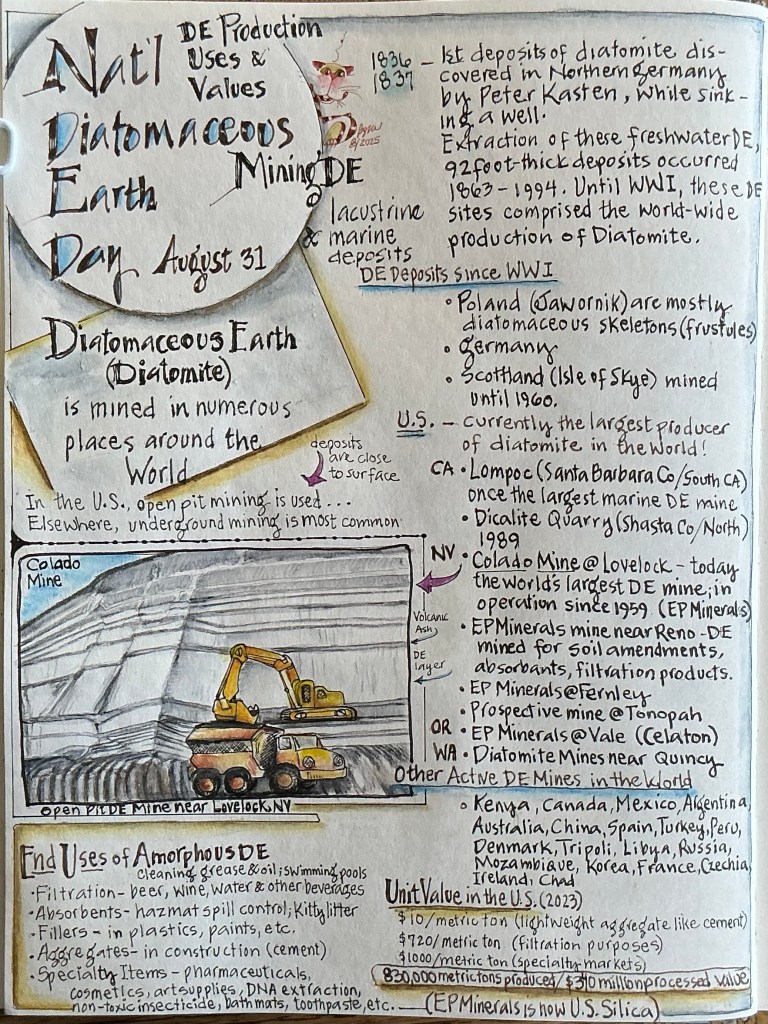
The year was 1836; the place, Northern Germany …… One day, a peasant named Peter Kasten was sinking a well when he encountered a mysterious-to-him layer of rock. Curious what this soft powdery rock might be, Pete took a sample to a friend who was a friend of a friend learned in the science of geology. This geologist carefully examined the rock then exclaimed (in German, of course), “Why this is the much prized and never-before-seen-in-Northern-Germany mineral known as Diatomaceous Earth! It has remarkably unique abilities to absorb, filtrate, polish, and stabilize! These qualities make Diatomaceous Earth (aka Diatomite) valuable and much sought after by numerous industries!”
Well, word spread and immediate exploration of the area commenced. It wasn’t long before numerous substantial deposits of lacustrine DE were discovered; some up to 92 feet thick! Extraction began in 1863. Until WWI, these sites comprised the world-wide production of Diatomite. Mining these deposits ended in 1994, when all of the DE deposits had been extracted.
But long before Pete’s discovery, Ancient Greeks used DE as an abrasive as well as a building material in lightweight bricks. Even in pre-historic times, DE was used in the ice-age cave paintings in France.
DE Deposits and Extraction – Worldwide
When diatoms die and fall to the bottom of marine and lacustrine waterbodies, they form large deposits. Over time, the organic portions of the diatoms weather away, leaving behind their hard silica shells. These remaining shells, called Frustules, with their opaline-like quality are what forms DE. Some of the largest deposits in the U.S. formed in ancient lakes that existed in California, Nevada, Oregon, and Washington. They also formed in oceans and occur along the coasts of North and South America.
Since WWI, exploration for and discovery of numerous DE deposits have occurred worldwide-wide, and are still on-going. Large mining companies have unearthed and continue to extract this mineral in substantial quantities, which is processed for use by industries that manufacture products for home and business (more on that below). DE deposits are (or have been) mined in many countries around the world, including the U.S., Mexico, Chile, Peru, France, Spain, Denmark, China, Canada, Argentina, Australia, Spain, Turkey, Libya, Russia, Mozambique, Ireland, and France. Today, the world’s largest DE mine, Colado Mine, is located just outside of Lovelock, NV, and has been in operation since 1959.
DE’s Modern Uses and Values
Today, DE is one of the most useful and durable substances known. The white to off-white powdery rock that makes up the more than 1 million year old DE deposits, is used in many common products likely encountered every day. One nearly universal use is in the filtration of liquids like the beer, wine and water. DE is also used to filter water in swimming pools, and to clean grease and oil. DE is used as an absorbent for hazmat spill control and in some kitty litters. As a filler in paint, it removes the sheen making flat paint flat; in plastics, it prevents blocking in plastic film. DE is used as an aggregate in construction, particularly in Portland Cement. And the list of specialty items that use DE for a variety of purposes is very long ….. including pharmaceuticals, cosmetics, art supplies, in the medical industry for DNA extraction, as a non-toxic insecticide, soil amendments, in bath mats for quick drying, in toothpaste as an abrasive, and as food additives to control moisture and extend shelf life. There are hundreds of other applications for DE with many more yet to be discovered!
But the biggest use of DE is in filtration. In 2023, the beverage industry paid $720/metric ton for processed food-grade DE (amount used to filter a keg of beer??). Compare that cost to $10/metric ton charged in 2023 for lightweight aggregates used in construction (wonder if or how tariffs impacted the 2025 cost?), or the $1000/metric ton charged for some specialty items.
Ideas on How to Observe Diatomaceous Earth Day
Discover more about DE, and learn about its common uses around your home or work.
Read product labels to learn what you use on a daily basis that contains DE.
Consult the fda.gov website to learn more about labeling.
Visit a Diatomite mining operation.
Learn about unmined deposits near where you live.
Use a magnifying glass or microscope to inspect the contents of bag of insecticidal DE.
Stay tuned for NATIONAL DIATOMACEOUS EARTH DAY – Part 2 – Diatoms! They are ultra-fascinating!
As always, thanks for stopping by!
1Minerals are naturally occurring, inorganic solids with a definite chemical composition and internal structure, and are the main components of rocks. DE (Diatomite) is a naturally occurring inorganic mineral that forms from the fossilized siliceous (silica-based) skeletons of diatoms, which are single-celled aquatic organisms. While the organisms themselves are organic, the hard, porous mineralized skeletons they produce are considered inorganic.
Being an inorganic mineral, DE falls into the same category as minerals we’re all familiar with, such as Quartz, Feldspar, Mica, Pyrite, Hematite, Galena, Sulfur, Gold, and Copper. The chemical formula of DE is primarily SiO2 (silicon dioxide), with traces of other minerals.
Part 3 ….. An Allelopath Declares Chemical Warfare
August 15, 2025
The more I learn about Cowpen Daisy (Verbesinaencelioides), the more the words Intrepid (fearless and bold), Interloping (meddlesome and smothering), and Impertinent (pushy and rude) come to mind.
Cowpen Daisy is literally a plant at war …..
Its adversaries are neighboring plants …..
Its weapons of choice are chemicals ….. 151 different Allelochemicals2 to be exact.
Cowpen Daisy shows no mercy to its most susceptible victims, and given the right conditions in the right locations, Cowpen Daisy can cripple ecosystems, and unravel biodiversity.
Oh No! What Have I Done! Have I unleashed a formidable enemy to run amok, bullying its way through our mostly intact biodiverse high desert ecosystem?
Maybe not! (Spoiler alert…… Allelopathy3can be bad, but I still love this happy Daisy)
On August 6th, I received an excellent question from one of my blog followers, based on my first Cowpen Daisy post :
“Do you have any concerns about this becoming an invasive plant? Best wishes, Nancy”
In reply, I expressed my concern about the number of “seedlings coming up late spring,” and how “I was definitely alarmed and wondered about the need for early control.” Fortunately, “as the season advanced, it became clear the density of plants seemed self-controlling.” Based on my limited experience with Cowpen Daisy, I explained how during the summer of 2023 “the plant completely covered an extremely large field near our home,” causing me concern about its invasive tendencies. But upon “[R]eturning the following year (2024) and again this past spring (2025) to see if the same field was blanketed again in these plants, “I couldn’t find a single Cowpen Daisy anywhere! So no, this annual [doesn’t appear to be] “invasive, at least not in central New Mexico.”
But Nancy’s question prompted me to dig deeper into on-line research. I wondered: Is Cowpen Daisy invasive outside of its native range, particularly where conditions are ideal for its aggressive growth? Yes, it is! And its invasiveness is further enhanced where neighboring plants are susceptible to the impacts of the allelochemicals released by Cowpen Daisy’s leaves, roots and decaying leaf matter in the soil.
One example where Cowpen Daisy is an introduced species and has become invasive is in India. Fields of mung bean, corn, chickpeas, and sweet melon are being outcompeted by invasive stands of Cowpen Daisies. These food crops are severely impacted by two allelochemicals released by the both roots and leaves of the Daisy; steroids and phenols. Studies of these four crops demonstrated not only “the suppression of germination and growth in these plants” but “also revealed an antagonistic effect on [their] chlorophylls, carotenoids and protein levels.” In other words, Cowpen Daisy is winning the war against India’s mung bean, corn, chickpea and melon crops, and farmers are currently engaged in a battle to develop a strategy of control and run this biological enemy out of their country.
Cowpen Daisy is only considered a native species to the Southwest U.S. and Northern Mexico. However, it has been introduced (either intentionally or by accident) and is considered naturalized in parts of Eastern North America, the Middle East, Spain, Argentina, Australia and the Pacific islands. As such, Cowpen Daisy’s nature to drop allelochemicals everywhere it grows allows it to behave like an invasive plant in countries where it is naturalized. Without diligent management (via herbicide application or mechanical control), it can thrive to the detriment of their desirable plant species’ survival.
Have I defeated my goal of reestablishing a diverse native plant community in disturbed areas surrounding our new home? “Not likely,” says I, optimistically! In addition to Cowpen Daisy, the variety of native plant species I intentionally seeded last fall and early this past spring, have germinated, grown, flowered and seeded or are in the process of flowering and seeding, most of which are adjacent to a Daisy. Of course time will tell. Meanwhile, I’ve declared this to be a happy ending to this post and my stand of happy Cowpen Daisies! However ……. next spring, if germination rates from my reseeders are low or zero, but Cowpen Daisy returns with renewed vigor, then I have a control job waiting for me. And the best advice I’ve read is to “pull out old plants and roots and selectively remove new seedlings.” That’s acceptable! That I can do!
Until then!
Do you struggle with weedy, invasive plant species in your garden or yard? Have you seen fields of blooming weeds and wondered …… “what weed is that?” Do you know the names of those pesty plants and do they seem to keep your favorite variety of cucumbers from growing? It might be interesting to learn if your local invasives are one of the many Allelopaths happily growing in our world! Let me know!
As always, thanks for dropping by!
1Cowpen Daisy is known to release up to 15 different allelochemicals2 from its leaves and roots, such as guanidine, phytosterols, phenolic acids, tripertenes, flavonoids, dicarboxylic acids, phytophenols, steroids, phenols, and others. Fresh and decaying leaf litter leach 14 of those allelochemicals into the soil.
2,3Allelopathy is a biological phenomenon by which an organism produces one or more biochemicals that influence the germination, growth, survival, and reproduction of other organisms. These biochemicals are known as allelochemicals and can have beneficial (positive allelopathy) or detrimental (negative allelopathy) effects on the target organisms and the community. Allelopathy is often used narrowly to describe chemically-mediated competition between plants. Allelopathic interactions are an important factor in determining species distribution and abundance within plant communities, and are also thought to be important in the success of many invasive plants. (source: Wikipedia)
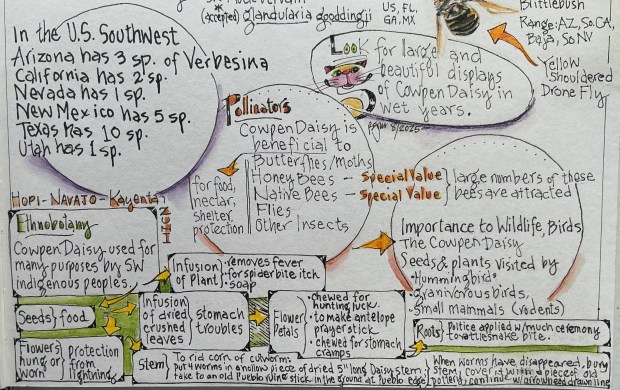
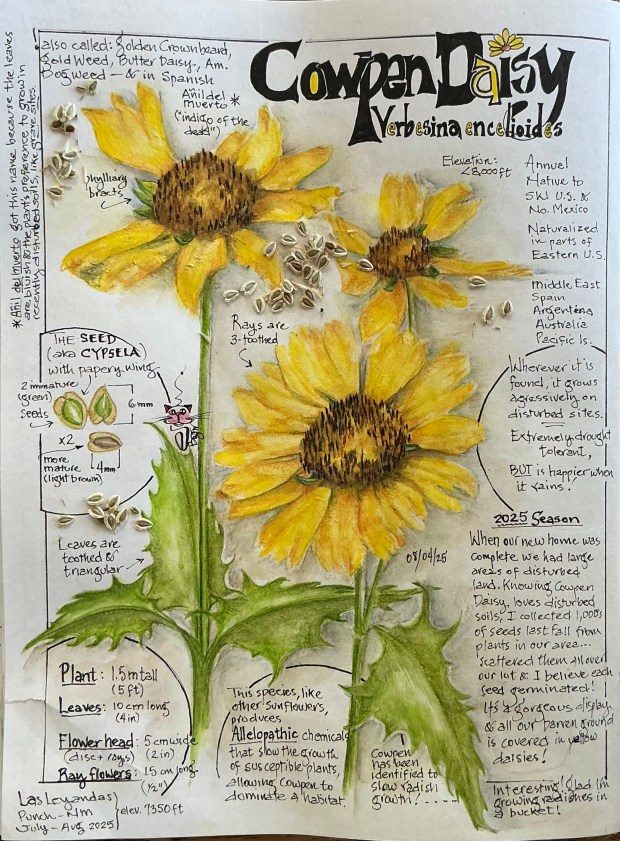
While compiling last week’s post about the happy Cowpen Daisy party taking place outside our back door, it was no surprise to find way more interesting info about this sunflower than could ever fit on my journal page. Decisions …… decisions! To keep the August 5th illustrated page relatively uncluttered, I decided to include just the botanical basics (mostly), focusing on Cowpen Daisy flowers, leaves and seeds.
Then the past week I found my nature journal wide open to a blank page, ‘begging me’ for another Cowpen Daisy entry ….. “What about all those interesting info bits?” she asked. Replying* to my journal with a hearty, “OK,” I proceeded to locate and gather my rabbit-trailing notes. This scavenger hunt reminded me just how many pages there were; so many fascinating things about the Cowpen Daisy I wanted to remember and share. Decisions …… decisions! How to keep this next post to one page? By limiting the topics to only three, was it possible?
Barely! (after some clever editing, not a single word dropped off the page)
A little bit closer view for those without a microscope!
P.S. By the way, you may have noticed I’ve indicated this post is Part 2 of what’s now become my Cowpen Daisy series. Unless I start journaling on larger than 8” x 11” paper, there’s likely to be more Parts in store. And this multi-part series resulted in a minor edit to last week’s post, not titled “One of the Happiest Sunflowers Ever! The Cowpen Daisy; Part 1 ….. Can There Be Too Many Sunflowers?” In case you missed it, please check it out here.
*Yes, you read that right; I talk with my nature journals. Don’t you? After all, we do spend quite a bit of time together!
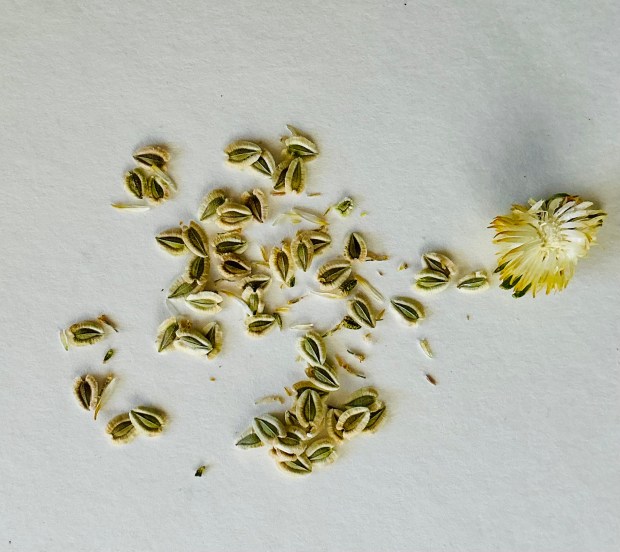
It was the Fall of 2024. A small cluster of Cowpen Daisies (Verbesinaencelioides) flourishing on the severely disturbed ground surrounding our new home was going to seed. Waiting several weeks until the migratory birds ate their fill, I spent an hour or so collecting as many remaining dried seeds (cypselas) as possible, stuffing full two quart-sized ziplock bags. About 1/3 of the seeds I scattered around the house where they would overwinter on the ground. The rest were poured into large pill vials that were labeled with species name, location, and date, then placed in the refrigerator to simulate cold storage until Spring.
Cowpen Daisy cypselas (seeds) 08/04/2025 at Punch
It was late April 2025. The chances of heavy frost seemed a distant memory. My fingers crossed, I chose a sunny 42 degree morning to liberate those refrigerated seeds from 6 months of cold storage, and scattered them in disturbed areas not seeded last Fall. Then I waited like an expectant parent, watching for signs of germination, worrying that runoff from late season snows might wash away my scattered seeds, expecting that flocks of migratory birds would gobble them all up, and hoping for gentle rain showers to swell those thousands of seed coats to aid those tiny embryos in growing their first roots (radicles) and first leaves (cotyledons).
Then early June 2025. Success! Cotyledons were literally popping up everywhere, which meant the radicles were already expanding into the soil. They were especially crowded where I’d scattered all the cold storage seeds, and germination was obvious where seeds had been scattered the Fall of 2024. By early July, those Cowpen daisies were crowding out many of the other native species I’d also seeded in the same areas.
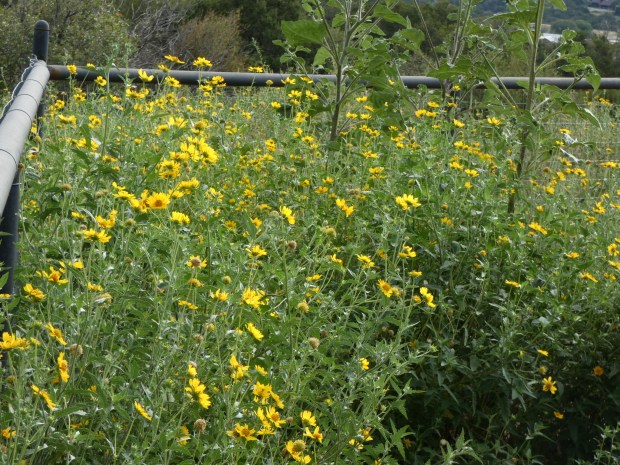
Backyard and overflow Cowpen Daisies, robust growth after Fall 2024 seeding (08/03/2025)
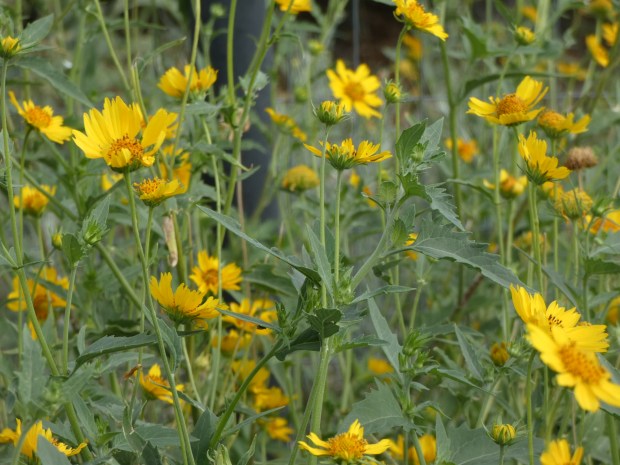
And now it’s early August 2025, and what a dazzling show! Even though the sunflower yellow flowers of Cowpen Daisy are small (2” wide), there are up to 75 long-stemmed flowers on each plant that can grow from 4-5’ tall! They are so dense, the backyard fence is hardly visible, our walking paths are totally draped with 4” long leaves, and if there’s a rattlesnake lurking around under our massive Cowpen Daisy canopy, we’d probably (hopefully) hear him well before he slithered into view!
Goals and Lessons Learned
I’ve learned a lot by parenting these Daisies; from the best time to scatter seed (in the late Spring following cold storage) and where (not so close to other desirable natives or pathways), to managing the mass of growth (by organizing through selective removal). Our initial goal of seeding and growing native plant species was to attract and help feed wildlife (pollinators, reptiles, rodents, birds and mammals), and we are optimistic that achieving this goal long-term seems realistic with the success we’ve had to date. However, because so many of our native plants are losing the battle against habitat loss caused by invasive species encroachment and takeover, land development, and climate change, we will continue to explore ideas to expand our initial goal to address the habitat situation. As we gain insight about the best native plants to grow to help restore our disturbed soils, we will learn and share with our neighbors those species that: are drought tolerant; aid in building soils; are effective at invasive weed suppression; provide wildlife benefits; and increase plant diversity.
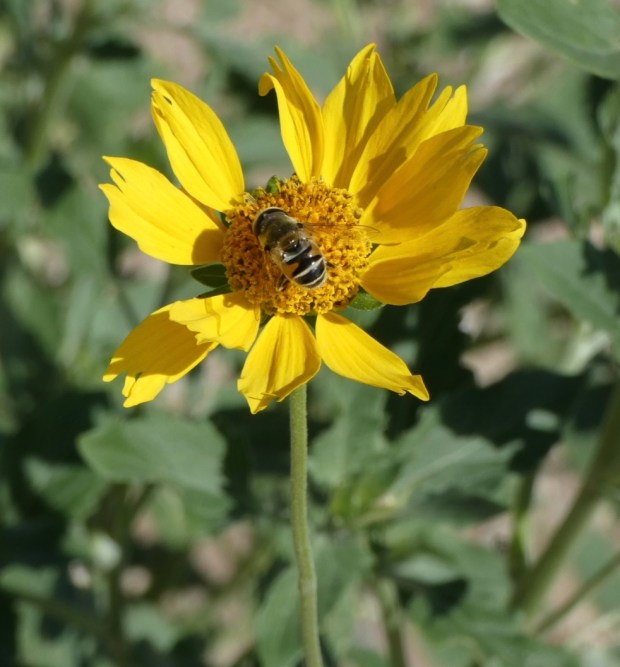
Cowpen Daisy and pollinator 08/01/2025 at Punch
Happy – Happy – Happy! Will I be collecting Cowpen Daisy seed again this Fall? You bet! Having all that sunshine yellow around our home is thrilling. Every morning all those thousands of sunflower faces looking East towards a new day are about the happiest sight ever! And having such wild, uninhibited growth of a native annual out our back door has been ideal for observing the pollinators that benefit from the abundant nectar and pollen, enjoying the aerial acrobatics of several phoebe families that have been feasting on those pollinators, and promises to be a perfect spot for bird watching this Fall when all those cypselas ripen into high protein food.
Can’t wait!
Do you ‘know’ a special native plant? How about a native butterfly garden? Are you a bird watcher? Maybe you enjoy the occasional deer, coyote, or bobcat wander through your yard? Please share your favorite wildlife encounter!
As always, thanks for stopping by!
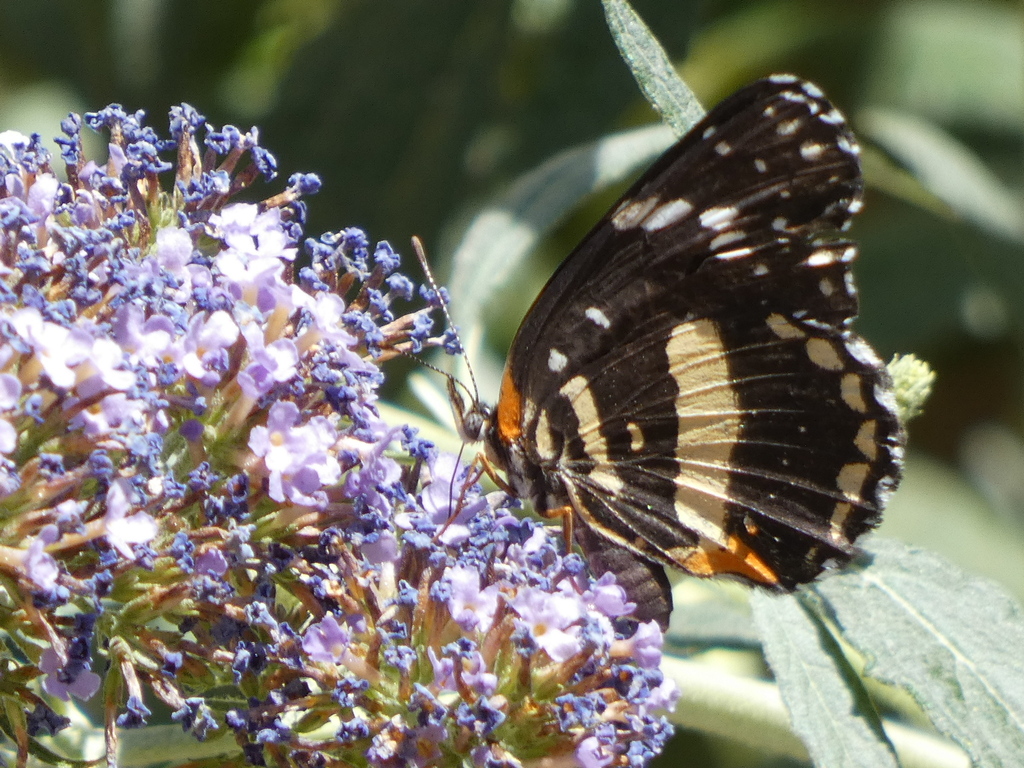
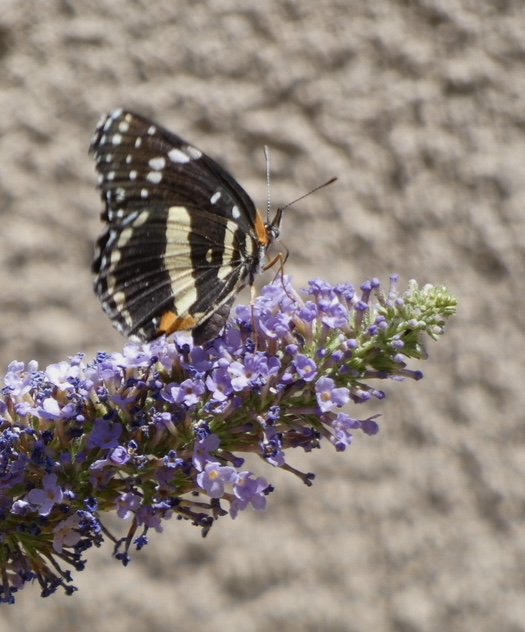
Bordered Patch (my photo/2023 – on butterfly bush)Bordered Patch catBordered Patch (my photo taken 2023These dandy little butterflies, the Bordered Patch, often choose the Cowpen Daisy as their larval host. (The butterfly nectaring on butterfly bush flowers are from my home collection)
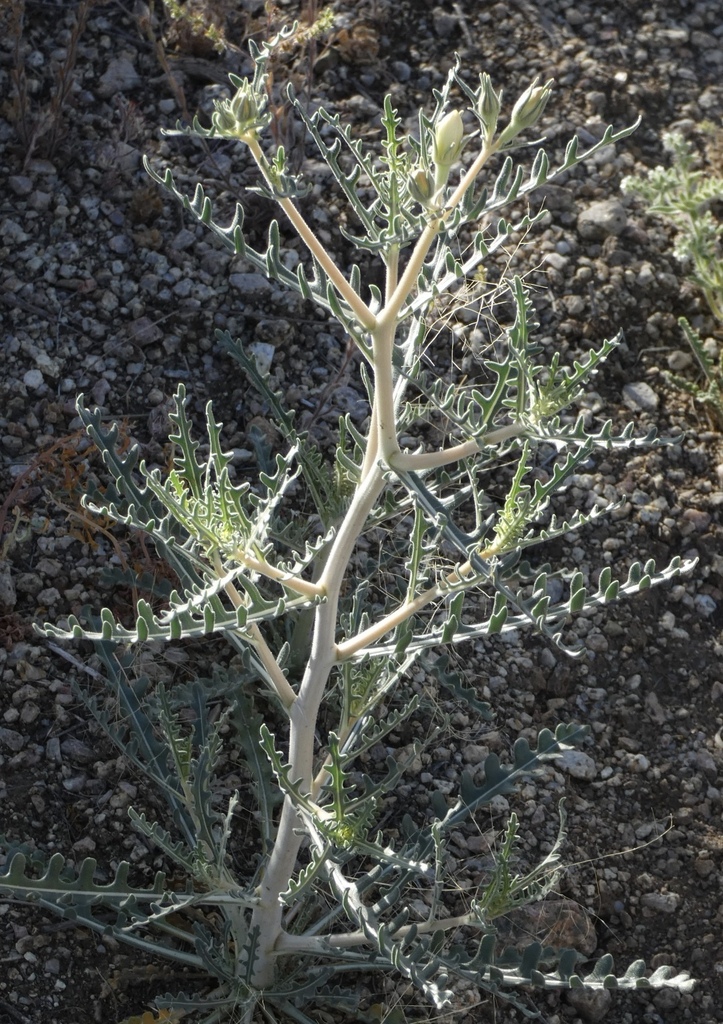
You must awake when the first rooster crows to enjoy the floral beauty of a fully flaired Blazingstar blossom. Appropriately named, these gorgeous flowers display a radiant combination of spoon-shaped petals, petal-like stamens, and hundreds of thread-like stamens, all colored in bold sulfur yellows, distinctive pale orange-yellows, brilliant star whites, or fluorescent blues, based on species. These superbly showy flowers unfurl overnight atop tall white, branching stems that resemble candelabras with narrow lobed green leaves. These large, 2” diameter flowers belong to the Mentzelia genus, plants that are all native to the Americas, and represented by 60-80 species, most found in the desert southwest.
In 1753, Carl Linneaus gave this plant its genus name, Mentzelia, after German botanist and sinologist Christian Mentzel. (Did you know a Sinologist is a specialist in the study of Chinese language, literature, and civilization? Huh!) But perhaps more fascinating and what’s always ‘captured’ my complete attention (and blue jeans) is that the Mentzelia genus fits perfectly in the Loasaceae family ….. commonly referred to as the Stickleafs.
About those leaves ……
Being primarily a day-time hiker, my first encounter with a Blazingstar occurred simultaneously with a misstep into the plant. Noticing some resistance in making my escape, I looked down at the ground and discovered my jeans had a collection of stuck leaves from my boots on up. And the leaves were really stuck tight along their entire length! Removing those leaves was like peeling a banana, only tougher. Wait! Forget the banana peel. Removing those sticky leaves sounded like and felt like tugging on and separating Velcro! I was reminded of the familiar ‘ripping’ noise made when Velcro hooks are forcibly released from their loops!
Eureka!!
Nature is full of surprises. Were the Stickleafs the source of accidental inspiration for today’s handy hook-n-loop fastener, called Velcro? Almost, but not quite! As it turns out, the tiny hooks on Cocklebur seedpods inspired a Swiss engineer to develop Velcro in 1941. But not to change subjects too much …….The reasons Stickleafs could’ve been the inspiration for Velcro, is similar to the Cocklebur story, but, I think, even better. Here’s why ……
The seedpods of both plants have tiny hooks that readily adhere to clothing and fur. And it was the hooks’ tenacity for stick-to-it-tiv-ness that grew the original Velcro idea. But Stickleafs go even further in ‘reinforcing’ the fastener concept. Not only does the seed pod (capsule) of Stickleafs have a covering of tiny hooks, but both leaf surfaces and even the stems of plants in this family can have multiple types of minuscule grappling-hooks and barbed needles, called Trichomes, visible only with an electron microscope. I summarize that if the Swiss engineer was visiting America in 1941, and had the good fortune to walk into a Mentzelia plant, he undoubtedly would’ve been super inspired to develop Velcro. After all, it’s the leaves that stick fast to clothing, resemble a strip of Velcro, and hold tight, mimicking an ideal hook-n-loop fastener.
Hooked on Trichomes
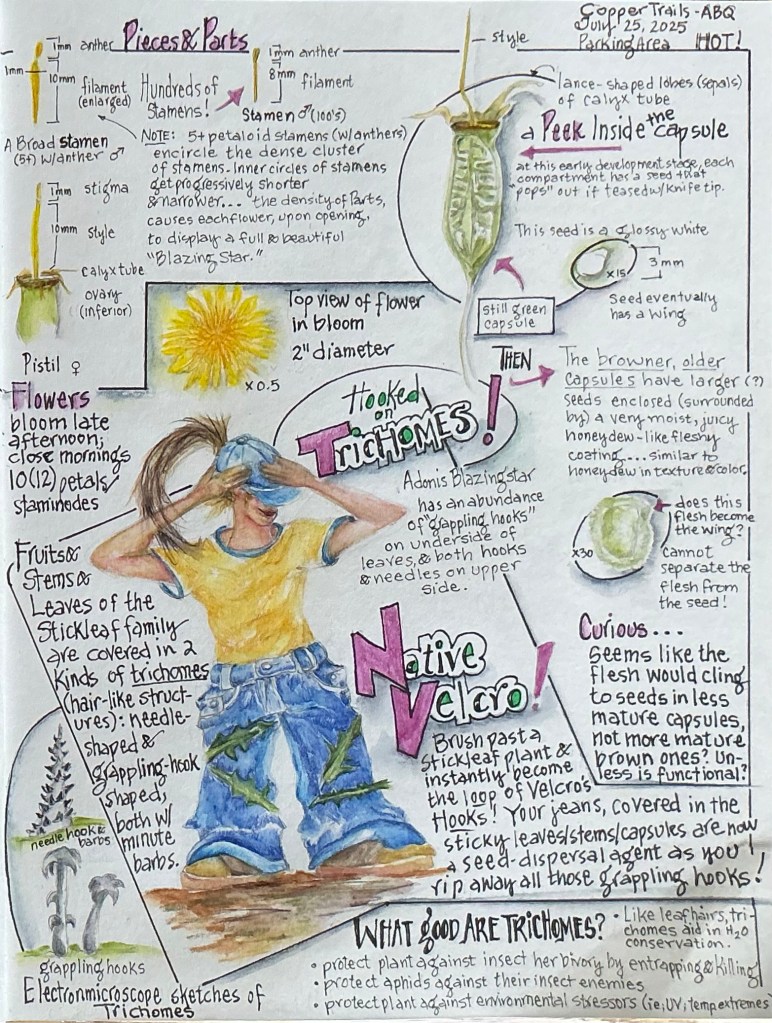
And now for the curious nature of the Mentzelia genus. When coming across the Adonis Blazingstar (Mentzeliamultiflora) over the past 8 years, it’s been fun to inspect the leaves, remove one and intentionally stick it to Roy’s jeans or mine. I’ve then wondered how this plant ‘sticks’ so well, and why. The time for answers arrived this month, and what I learned was fascinating. It’s all about Trichomes.
Trichome is a botanical term used to describe the small hair-like structures that occur somewhere on a plant; typically on plant leaves. Trichomes can be found throughout the plant kingdom (like on Cannabis sativa); they aren’t unique to the Stickleaf family, and are found on all species of the the Mentzelia genus. Some Mentzelia species have one type or shape of trichome; some have several types. Adonis Blazingstar has two types of trichomes – one is shaped like a grappling hook; one is shaped like a barbed needle. It’s the trichomes that grab on and hold tight. But what possible function do they serve the plant? Surely a leaf sticking to the fur of a passing animal or a person’s pant leg, while decorative, is otherwise pointless?
What Good are Mentzelia Trichomes?
Like plant hairs, trichomes aid a plant in water conservation in times of drought by reducing transpiration, and in situations of other environmental stressors, such as excessive UV light and extreme temperatures. The trichomes serve as a protective barrier between the leaf, stem, or other part of the plant, and the environment.
Trichomes can function as water collection, retention and funneling structures during a rainstorm.
The grab-and-hold nature of trichomes when they attach to fur or clothing can cause enough vibration of mature seed capsules to shake loose seeds ready for dispersal.
Trichomes are the plant’s primary defense against herbivory; not from livestock or rodents intent on munching leaves, but from insects that attempt crawling amongst the grappling hooks and barbed needles intent on causing damage. As can be seen in electron microscope images, insects have been photographed speared and hooked and killed because they were unable to escape their entrapment by trichomes.
But not all insects succumb to the fate of trichomes. Aphids are able to navigate the dense forest of hooks and needles without capture, allowing them to wreak havoc on vulnerable and tasty leaves, stems and seed capsules.
And that’s why the Mentzelia genus of the Stickleaf family is one of the natural curiosities of the plant kingdom. Maybe now, you too, are Hooked on Trichomes?
I hope you’ve enjoyed this post, and do thank you for stopping by!
And if you’re curious about how Trichomes contribute to the enjoyment and/or medicinal benefits of marijuana (Cannabis sativa), here’s what I found:
Trichomes are the primary site for cannabinoid production (i.e. compounds like THC & CBD responsible for the plant’s psychoactive/therapeutic effects.
Trichomes are the site of terpene production which gives different Cannabis strains their unique aromas/flavors.
Trichomes are the site of flavonoids known for antioxidant and medicinal properties.
When you think of ‘Barberry,’ does a shrubby knee-high landscaping bush that transforms to flame red in the fall, come to mind? If so, you may have seen hedge rows of the plant known as Japanese barberry ……
Japanese barberry (Berberisthunbergii) is a non-native shrub that was introduced from Japan in 1875 as an ornamental that’s planted for erosion control and as a living fence. But this invasive shrub outcompetes and displaces native plants, alters ecosystems, and is a host species of black-legged ticks that carry Lyme disease.
When you think of ‘Holly,’ does a plant with boughs of prickly green leathery leaves naturally ‘decorated’ for the holidays with red berries, come to mind? If so, you’re likely familiar with the iconic American holly ……
American holly (Ilexopaca) is a native shrub of eastern and south-central U.S. that grows well in both dry and swampy soils. The plant, which is also cultivated as an ornamental, forms thick a canopy cover for birds and other wildlife, and the female plants produce an abundance of shocking red berries, loved by birds but poisonous to dogs, cats and humans. Regardless of the risk, bountiful quantities of leafy boughs and clusters of red berries are harvested each fall and brought indoors to create holiday wreaths and other seasonal decorations.
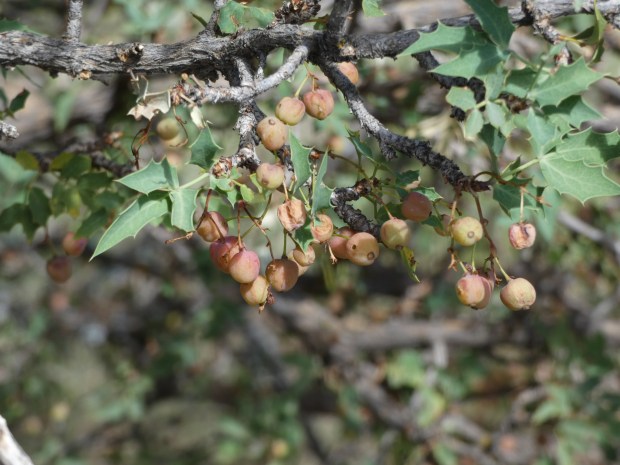
Red Barberry berries beginning to ripen
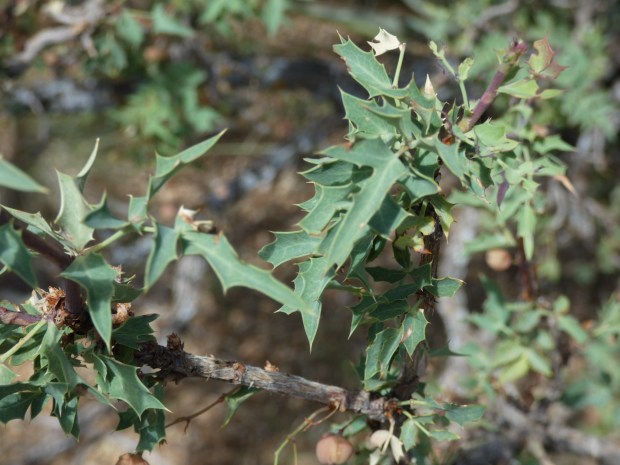
Now imagine you’re hiking in a pinyon-juniper forest of the American Southwest. You decide to bushwhack to a connecting trail and all of a sudden find yourself hopelessly stuck in a 10 foot high shrub covered in juicy red berries and very prickly holly-like leaves. This large (somewhat familiar) shrub is a surprisingly effective barricade; a formidable fence. You’ve become entangled in thousands of armed leaves preventing your forward or backwards movement without getting seriously poked and stabbed!
Is this the desert variety of American holly? Maybe it’s the giant living fence of a Japanese barberry gone rogue?
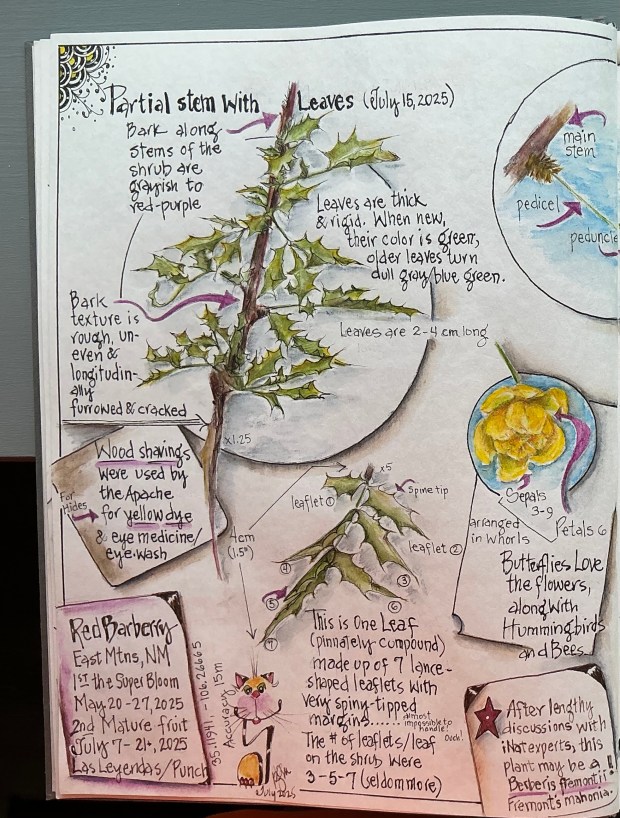
Nope! It’s neither. You’ve stumbled upon (into) a hardy specimen of the desert Southwest native Red Barberry (Berberishaematocarpa). But no wonder you were confused. This shrub, which can grow to 13 feet tall and nearly as wide, has an abundance of holly-shaped leaflets armed by a sharp spine on each lobe tip. And if birds haven’t devoured all of the red berries, you may find an ample supply of a refreshing (albeit tart) snack while you carefully and oh-so-slowly free yourself from the shrub’s embrace.
Red Barberry leaves – each lobe tip is armed with a needle-like spine
By now you’ve created lasting memories of Red Barberry, and have promised to always be alert for surprise encounters when visiting the desert island Southwest.
The hiking scenario above conjured up one of my hard-learned lessons from 8 years ago. Having just moved to New Mexico, Roy & I began avidly hiking local trails. Wishing to master the native flora as quickly as possible, one day I discovered clusters of red berries hanging inside the leafy canopy of a 5 foot shrub. What could they be?! Only having eyes for those juicy berries and an irresistible urge to gather a bunch for closer inspection, I plunged my open hand through several layers of small leaflets and successfully clutched a cluster. It was then I realized those spiny leaflets had poked, scratched and even penetrated my bare skin, as evidenced by tiny trickles of blood dripping from my hand and arm! Now that I had captured those pretty berries, it was obvious they had to be released to permit me the delicate maneuvers required to free my arm and minimize further injury. It was that day that I learned all about Red Barberry; lessons that will likely stick with me always!
Red Barberry berries amid armored leaves
Since that close encounter 8 years ago, it’s no surprise I’ve never been a big Red Barberry fan, until ……
Spring Super Bloom
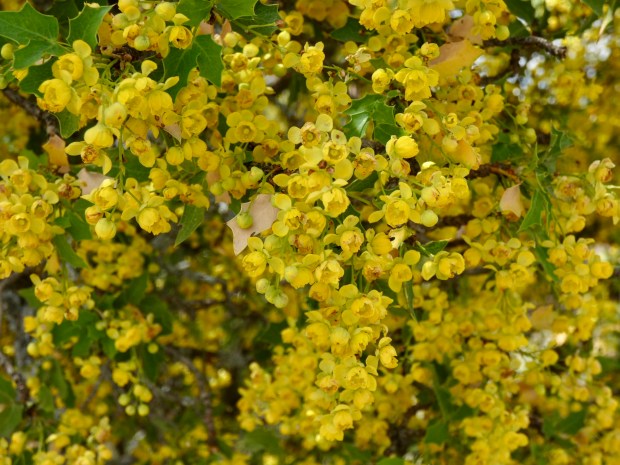
…… this past May a 13 foot tall plant in front of our home burst out in the most spectacular display of sunshine yellow flowers, literally covering the entire shrub front to back; top to bottom! The fragrance was overwhelming for the entire 2+ weeks the flowers were in bloom. And not only our Barberry was in full bloom, but about a dozen more barberries in our neighborhood and surrounding area were also covered in vibrant yellow. It was an amazing sight, causing me to figuratively re-embrace the native Red Barberry!
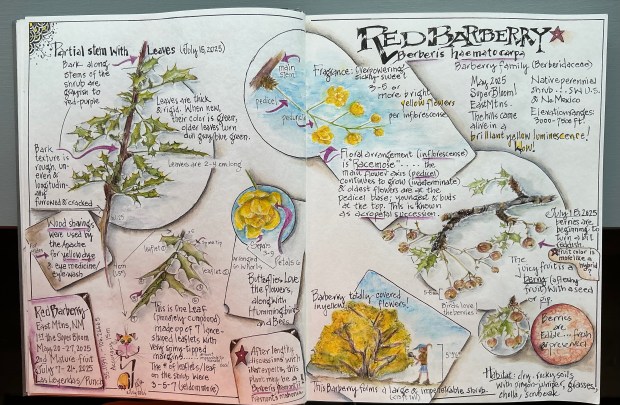
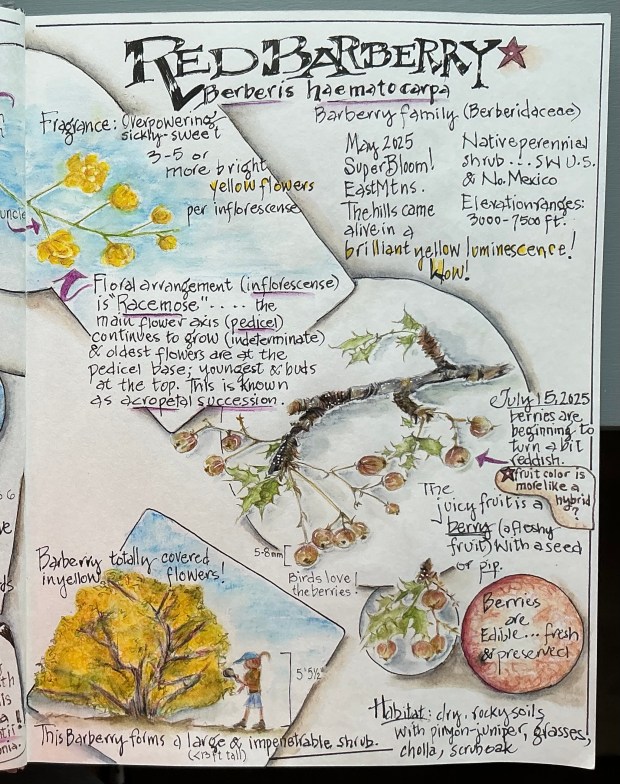
For more tidbits about Red Barberry, browse the text and illustrations displayed on my journal pages. Hope you enjoyed this post.
As always, thanks for stopping by!
P.S. In case you’d like to know about the etymology of the name Berberis haematocarpa…… ‘Berberis’ is a Latinized form of the Arabian name ‘barbaris, for barberry. “Haematocarpa” means ‘blood-red fruit’ referring to the bright red berries produced by this shrub. The word is derived from the Greek words “haima” (blood) and “karpos” (fruit).
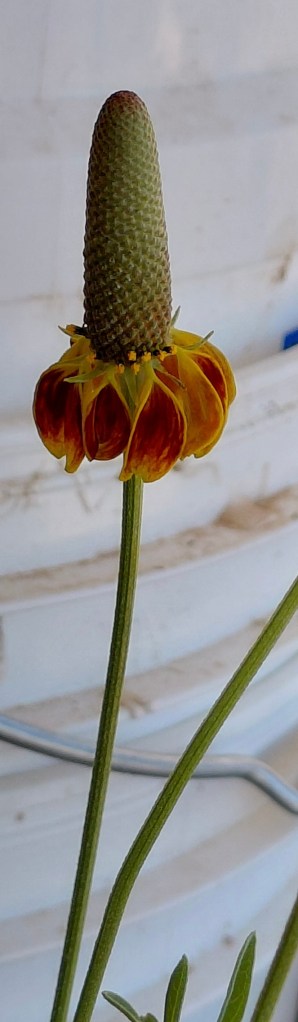
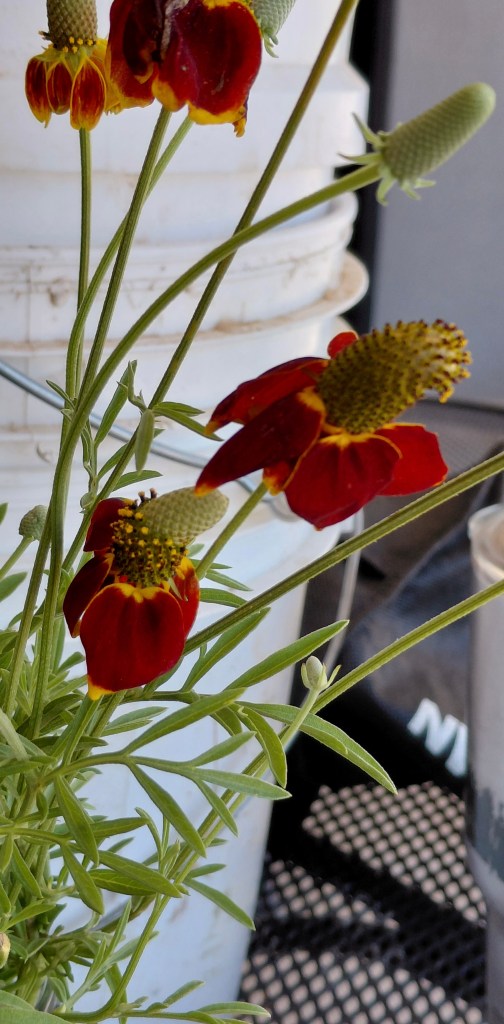
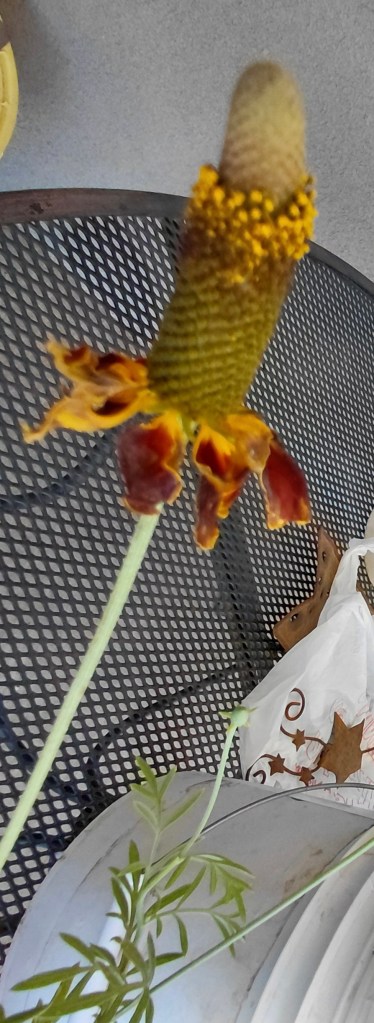
A few years ago I stumbled across this plant while walking around our neighborhood. Being immediately awed by its richly-colored petals skirting an upright cylinder or cone, I knew it would be a perfect addition to our high elevation (7,300 feet) landscape. My idea was to wait until the flowers on the cone faded and collect some seed to scatter in our yard. After repeated trips hoping to find evidence of seed, I was skunked. Either I missed the dispersal event, or this plant was 100% sterile. On the outside chance there were microscopic seeds embedded in the cone, I resorted to cone collection. Fast forward to the next spring …… every spot I’d planted those cones was barren; nothing had sprouted; zero; zip.
Fast forward again to early July 2025. This wildly blooming plant was growing vigorously in many of the dry disturbed openings and roadside areas throughout our new neighborhood! Time to learn more about such a charming member of the sunflower family called Mexican Hat.
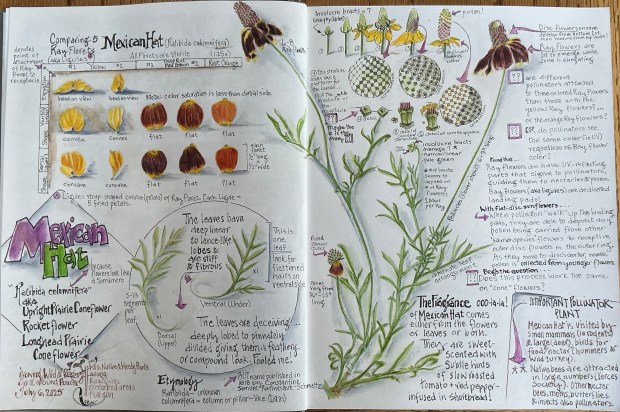
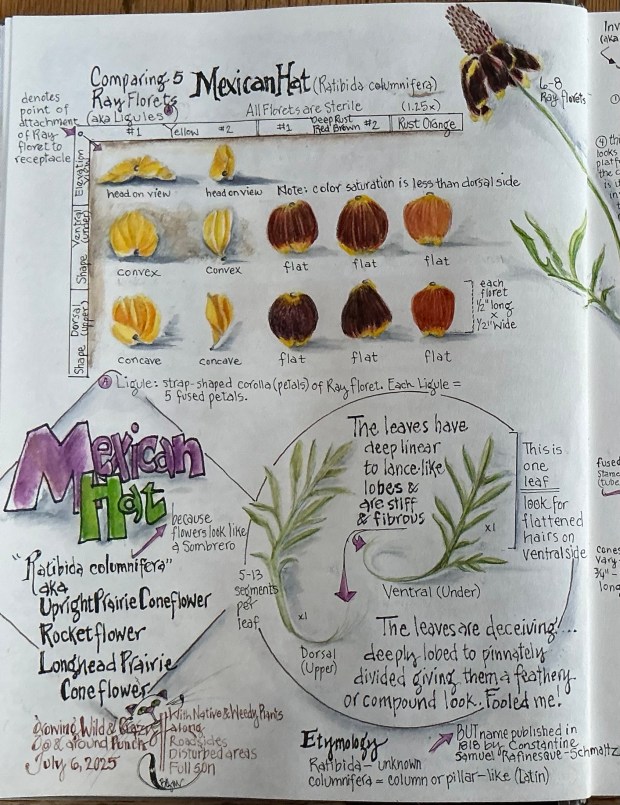
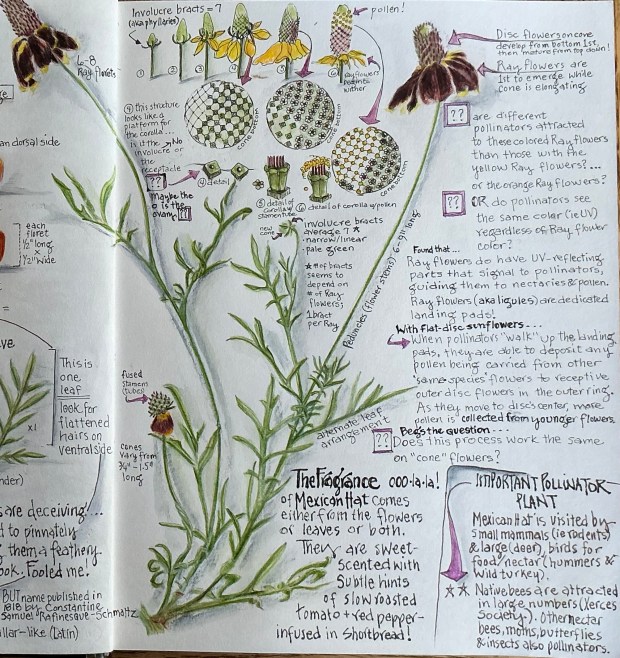
Mexican Hat (Ratibidacolumnifera), also commonly known as rocketflower, and both upright and longhead prairie coneflower, is a native perennial found across the Lower “48” (U.S.), southern Canada and northern Mexico at elevations ranging from 5,000-7,500 feet. Its Ray flowers come in a dazzling sunshine yellow, along with a soft velvety royal purple-brown, an intensely deep rust-red brown, and rusty oranges – all with some measure of sunshine yellow marginal accents. Each Disc flower (those tiny spots that spiral, Fibonacci fashion, around the upright cone) has 5 fused pale-green petals (the Corolla). The Corolla surrounds 5 fused purple/red oxide-colored Anthers (the pollen structures of the Stamens). The Anthers are shoved up through the Corolla by the developing Style (the stalk of the Pistil) where they burst into 5 sunshine yellow pollen “strands” resembling a hairdo of long, twisted, windblown dreadlocks! The shockingly beautiful colors unfailingly lure many insects hungry for pollen and/or nectar.
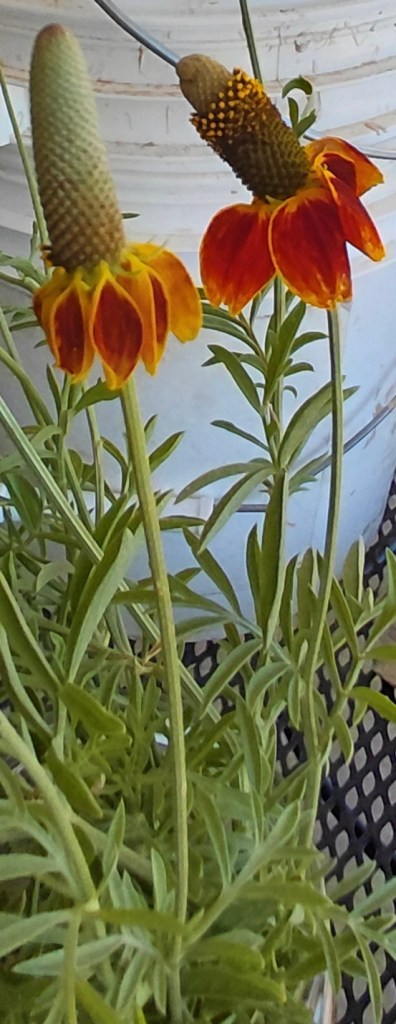
The entire Capitulum (the densely packed flowerhead of a composite “flower”) continually waves in the slightest of breezes as it perches atop the long stiff and naked stem (the Peduncle) of the flowerhead. Below the Peduncle are the many branched feathery-like, deeply lobed leaves. These leaves seem to be the primary source of a curiously fascinating fragrance. After handling the plants for several days, I began thinking of the aroma as being cautiously sweet-scented with subtle hints of slow roasted tomato + red pepper-infused homemade shortbread cookies! I’m looking for a recipe!
All “said and done,” Mexican Hat can grow from 8 inches tall to over 3 feet!
Benefits of and Curiosities About Mexican Hat
Special Value to Native Bees – According to The Xerces Society for Invertebrate Conservation, Mexican Hat is recognized by pollination ecologists as attracting large numbers of native bees.
Food Source for Wildlife Species – In addition to being an important source of pollen and nectar for native bees, Mexican Hat also attracts many other insects like butterflies and moths, and hummingbirds sip its sweet nectar. Wildlife that feast on its seeds include small song birds, wild turkey and rodents. Even white-tailed deer will eat the foliage, despite its reported deer-resistant qualities.
Supports Native Pollinators, Attracts Beneficial Insects, and Promotes Biological Diversity – Mexican Hat is a adaptable and resilient wildflower species, able to endure extended periods of drought, hot and cold temperatures, and diverse habitat and soil conditions. Because of these characteristics, and because the species is a self-seeder, Mexican Hat provides food and cover for wildlife, is a reliable source of pollen for at-risk native bees, and makes an excellent choice for sustainable gardening, habitat and soil restoration, and prairie conservation efforts. And not to be overlooked, Mexican Hat attracts beneficial insects like lady beetles and lacewings that help control garden pests like aphids and caterpillars, and makes a valuable contribution to natural pest management strategies.
Many Uses; the Ethnobotany of Mexican Hat – North American indigenous peoples prepared the leaves, stems, flowers and/or the cones in certain ways to treat specific ailments suffered by people and animals. By creating washes, by boiling, physically rubbing and crushing, decoctions, concoctions and infusions were used to treat chest pains, wounds, stomach aches, fevers, headaches, urinary problems, rattlesnake bites and to induce vomiting. Mothers wishing to wean their babies had crushed leaves rubbed on their breasts. Horses with urinary problems were hand fed the entire plant as a cure, and sheep that are “out of their minds” are given a cold infusion.
The cones were used as baby nipples. Leaves and flowerheads were boiled to make a pleasant tasting tea.
A Symbolic Meaning and Familiar Visual of Mexican Hat – In Mexican culture, this wildflower is often associated with traditional celebrations, ceremonies and festivals. Mexican Hat is a symbol of joy, abundance and cultural heritage. The common name “Mexican Hat” was given to this wildflower because it reminds many of the shape of a traditional Mexican sombrero.
Origin of the Scientific Name Ratibidacolumnifera – The Etymology of the genus name Ratibida was published in 1818 by Constantine Samuel Rafinesque-Schmaltz (1783–1840). Even to this day, the meaning of Ratibida is a mystery. It’s well known that Rafinesque-Schmaltz often assigned unexplained names to plants. Oh, and be aware that around 60 sites online use the spelling “Ratidiba” rather than Ratibida. So if poking around the internet for more information about Mexican Hat or any of the other prairie coneflowers, don’t be fooled by the typo!
The species epithet columnifera is a Latin name meaning “bearing columns.” This refers the tall cylindrical or cone-shaped flowerhead (Capitulum) which is the support structure (the Receptacle) for the numerous Disc flowers, the 7 Ray flowers, and the 7 small leafy bracts (Phyllaries).
Loving My Mexican Hat!
Early this spring I purchased 2 Mexican Hat plants for our garden. I’m happy to report they are doing great and loaded with 10-20 yet-to-mature pale green cones. Wonder what color the Ray petals will be?
I’m also planning to collect seed again this year, after learning the best time is early Fall when the cones look like they’re withering. Wish me luck!
Hope you enjoyed my exploration of this marvelous native perennial member of the sunflower family. Even though in a previous post I made a thorough plunge into the sunflower family, I learned even more putting this post together.
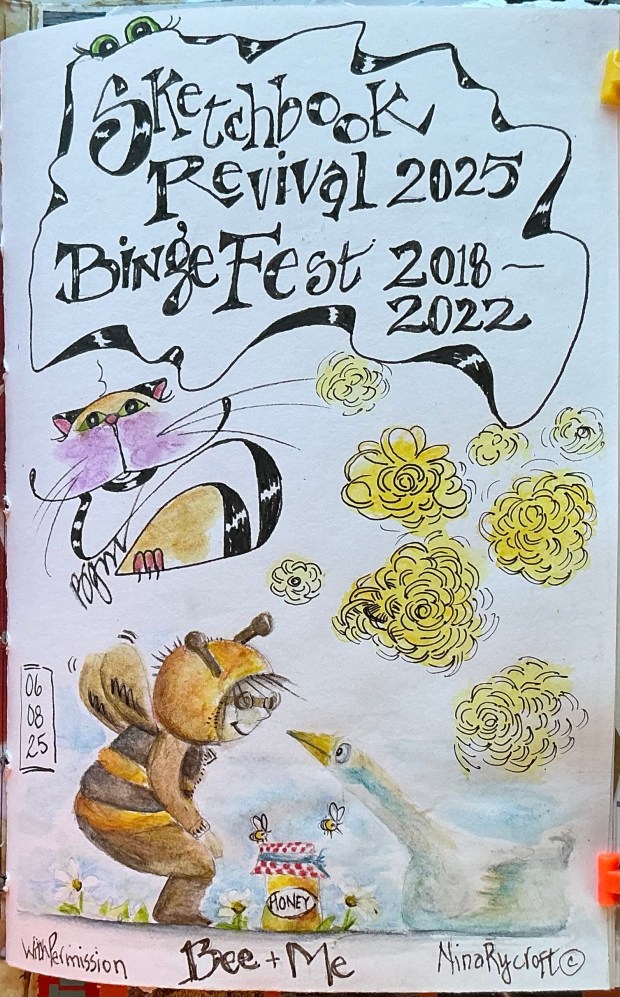
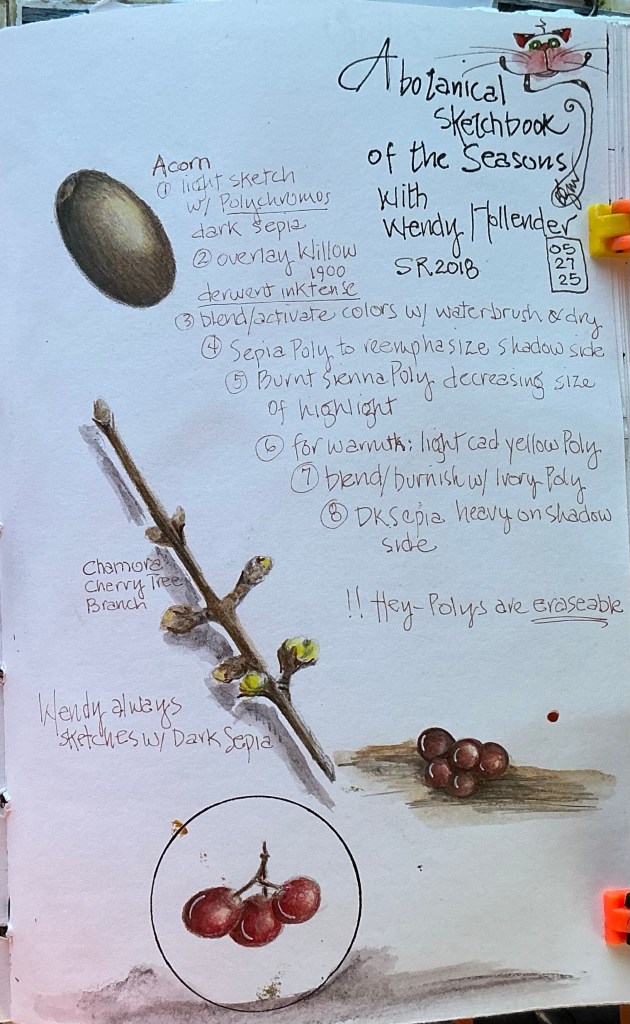
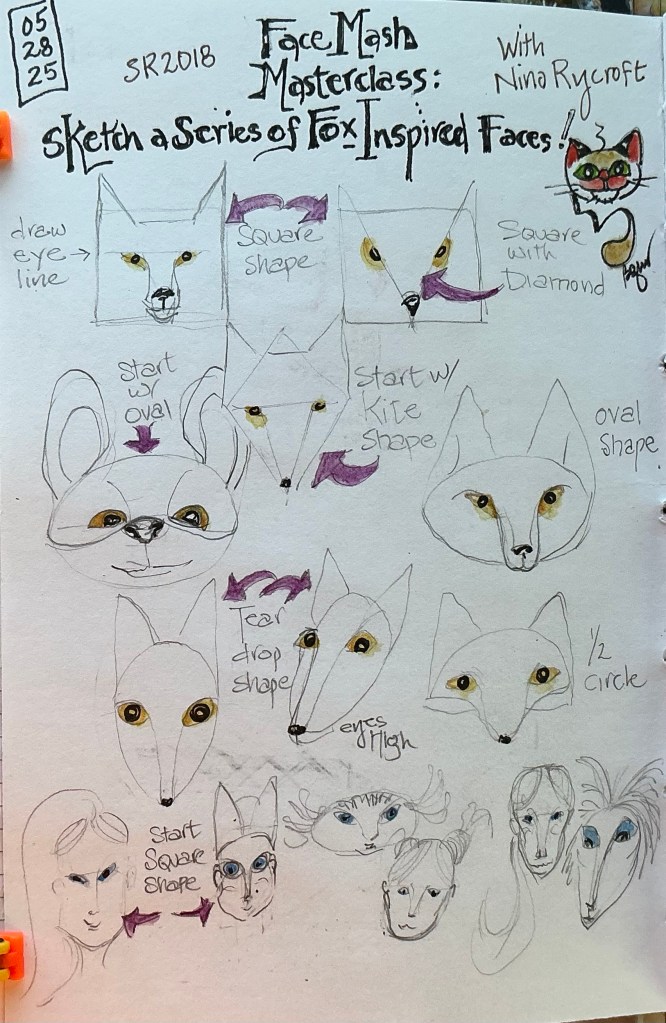
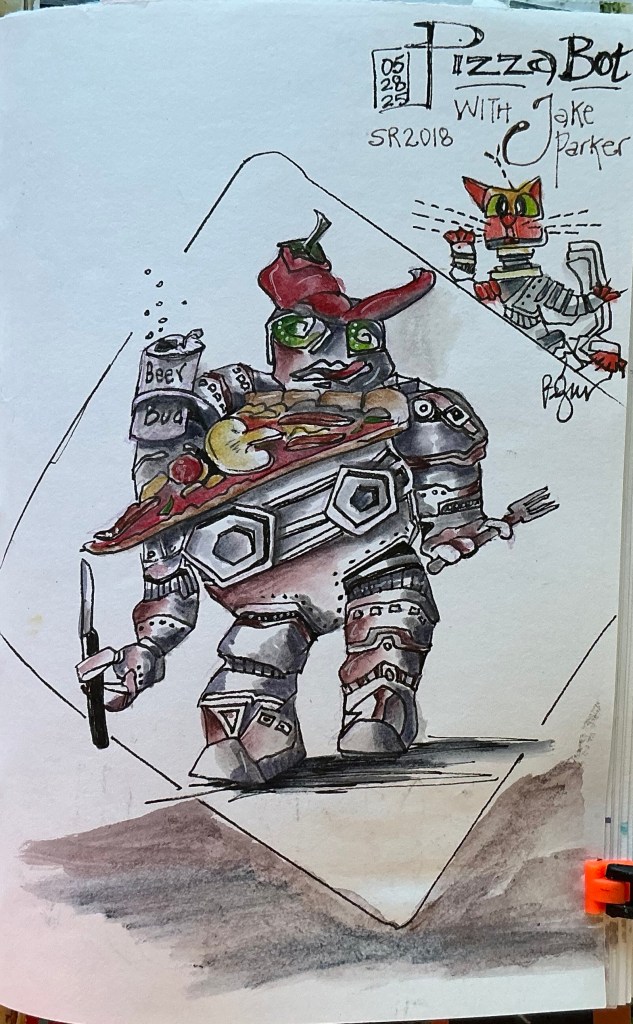
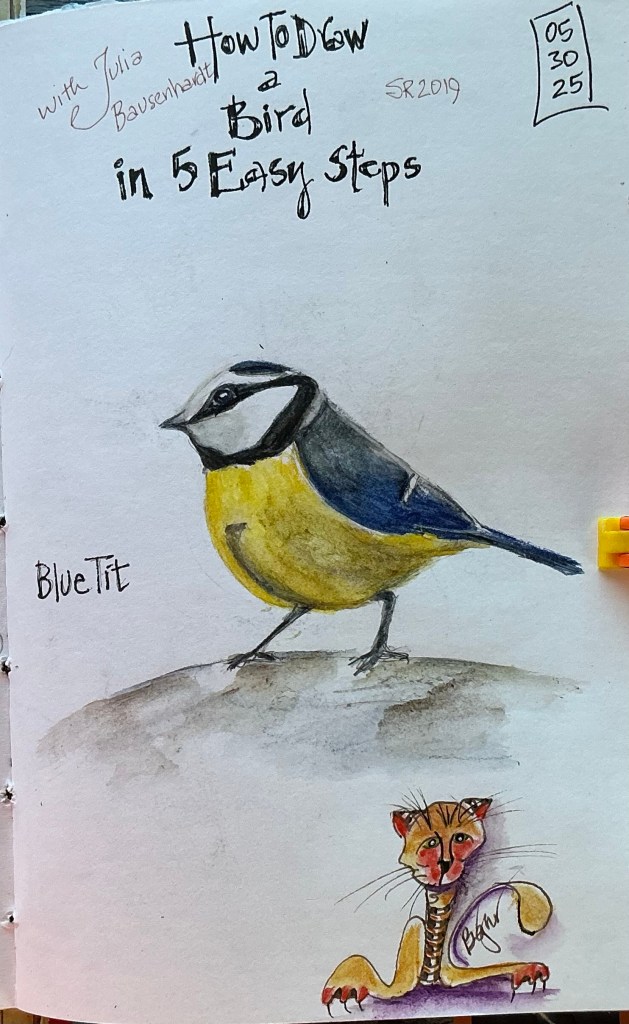
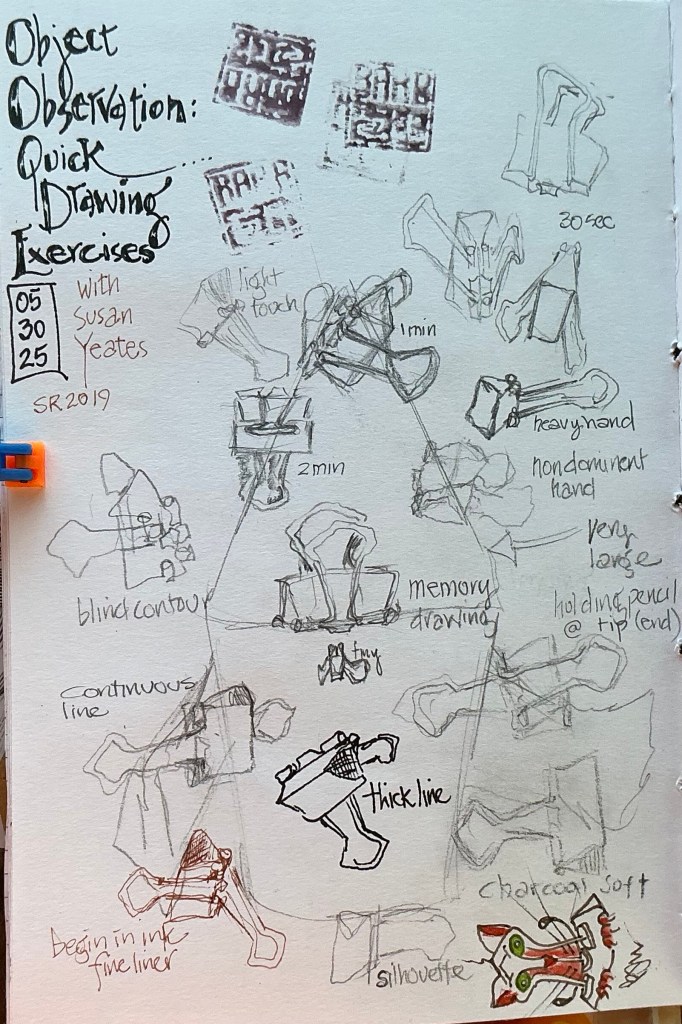
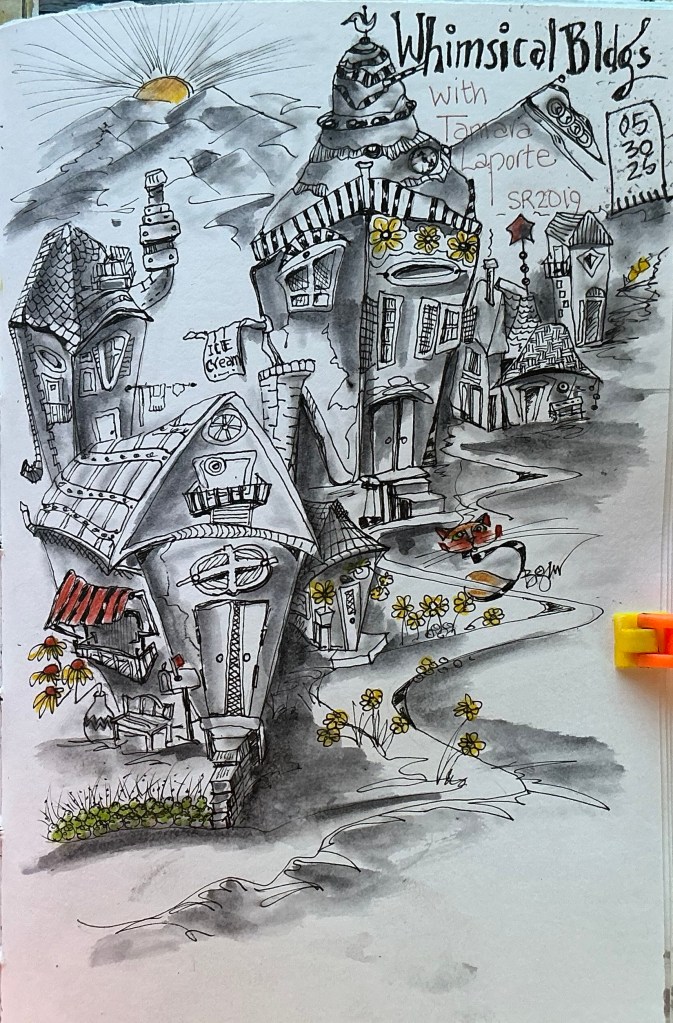
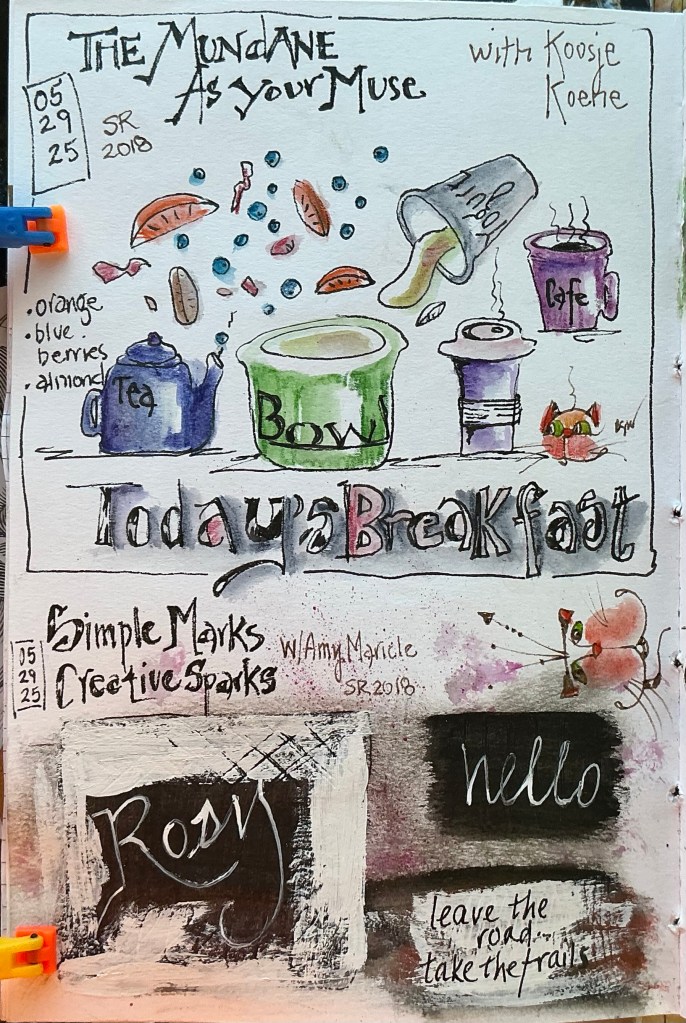
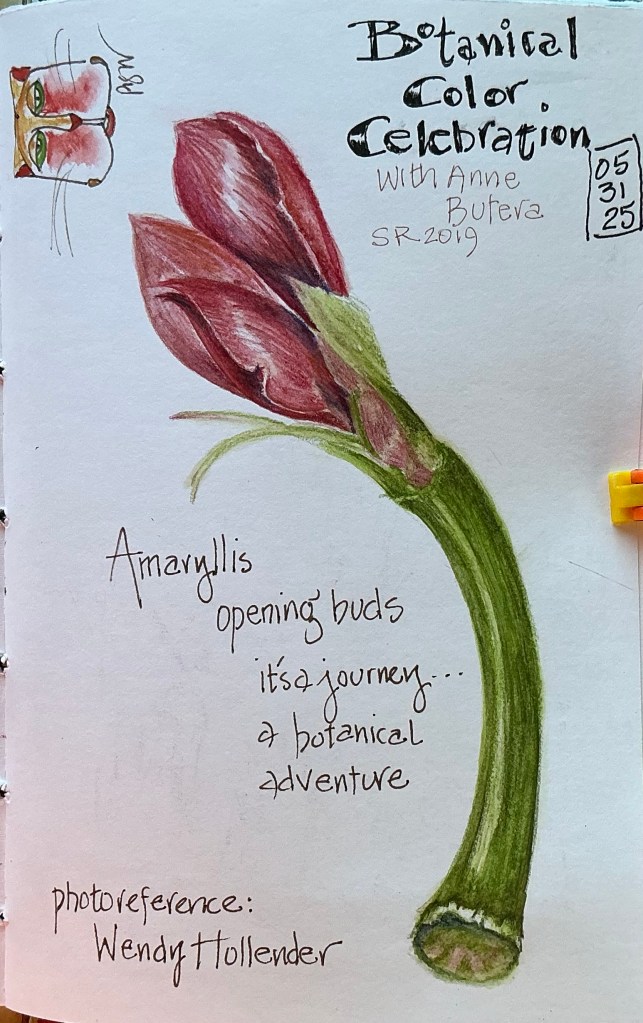
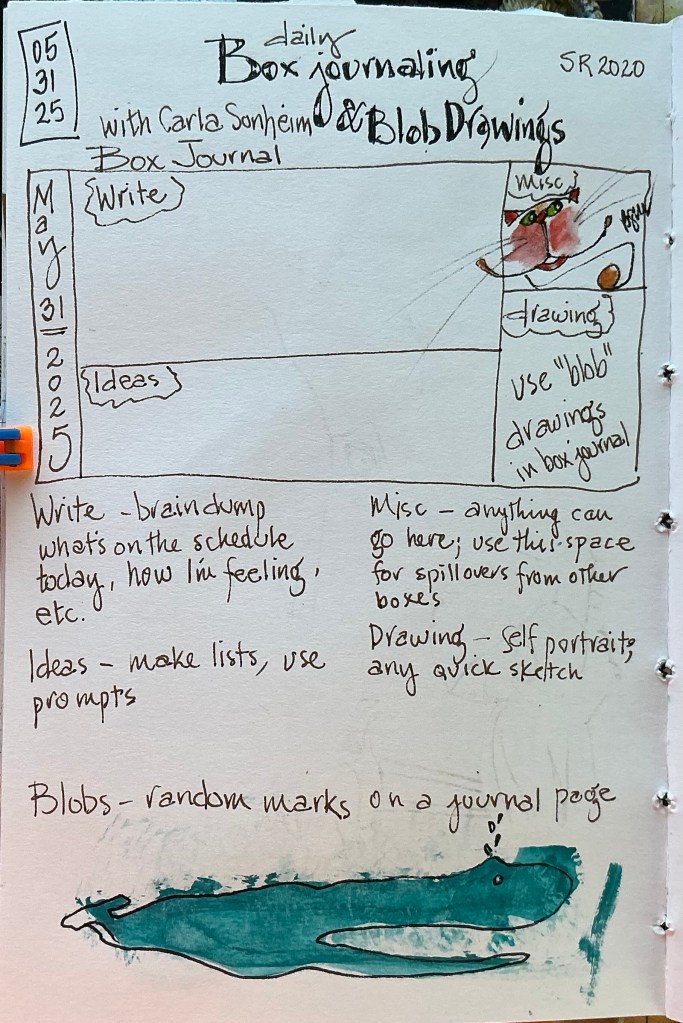
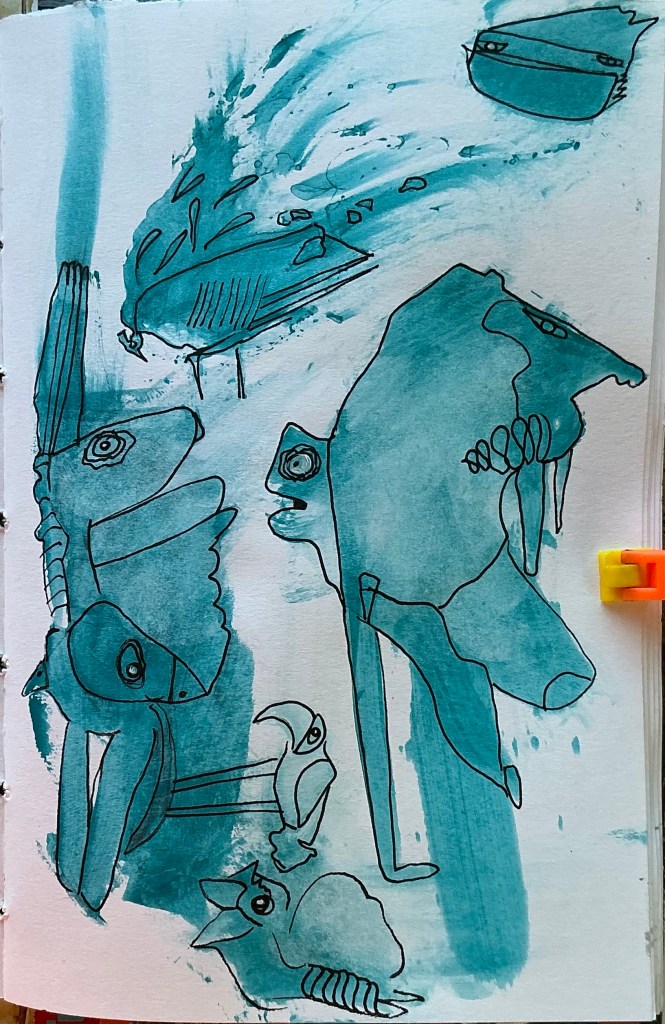
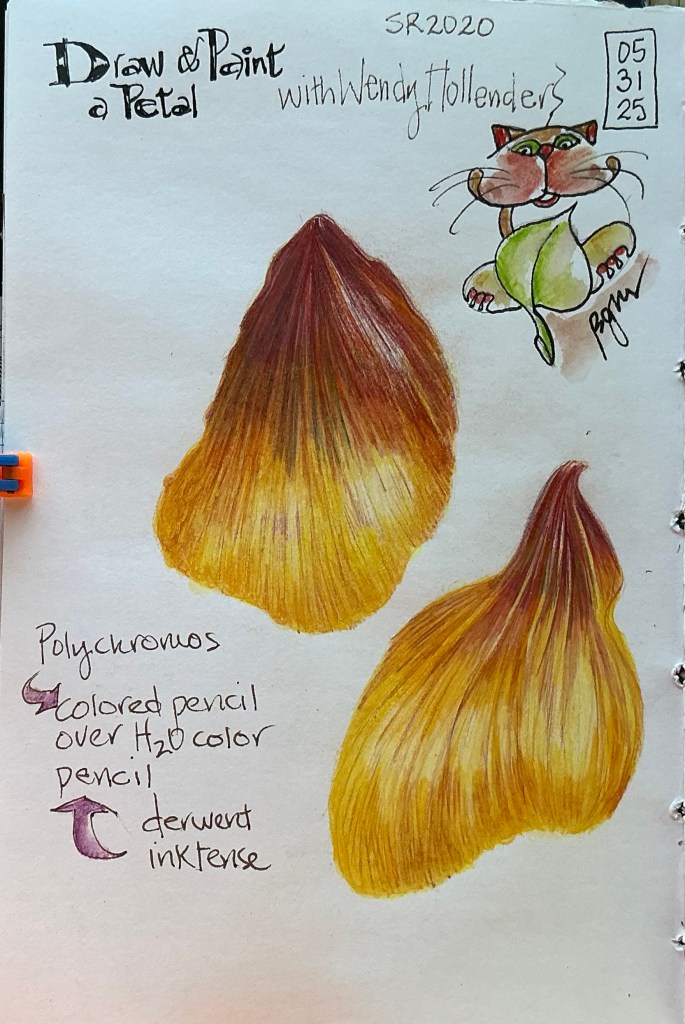
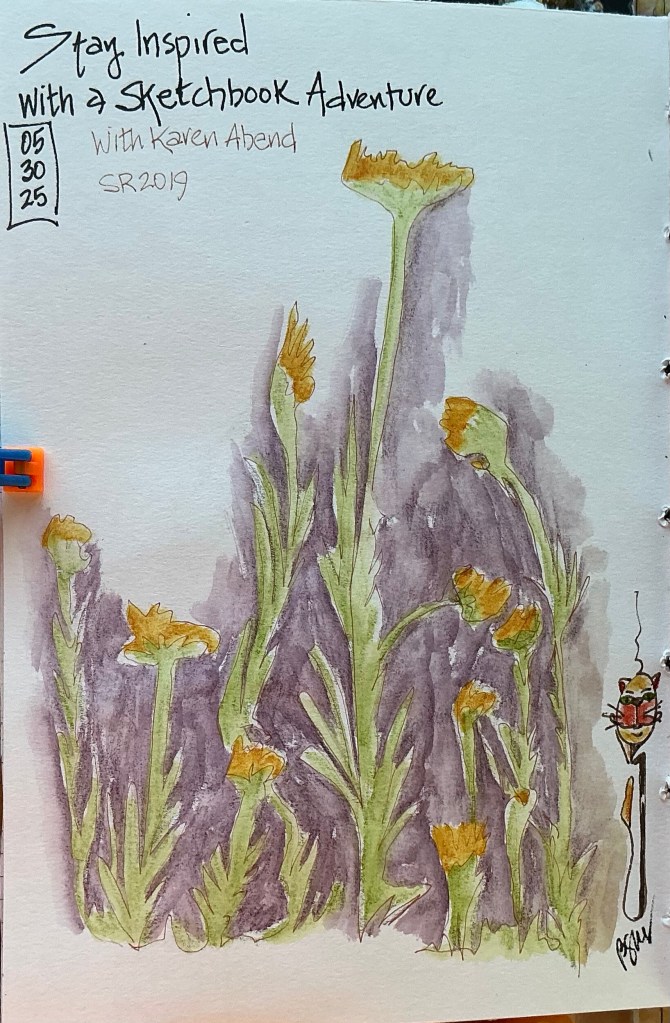
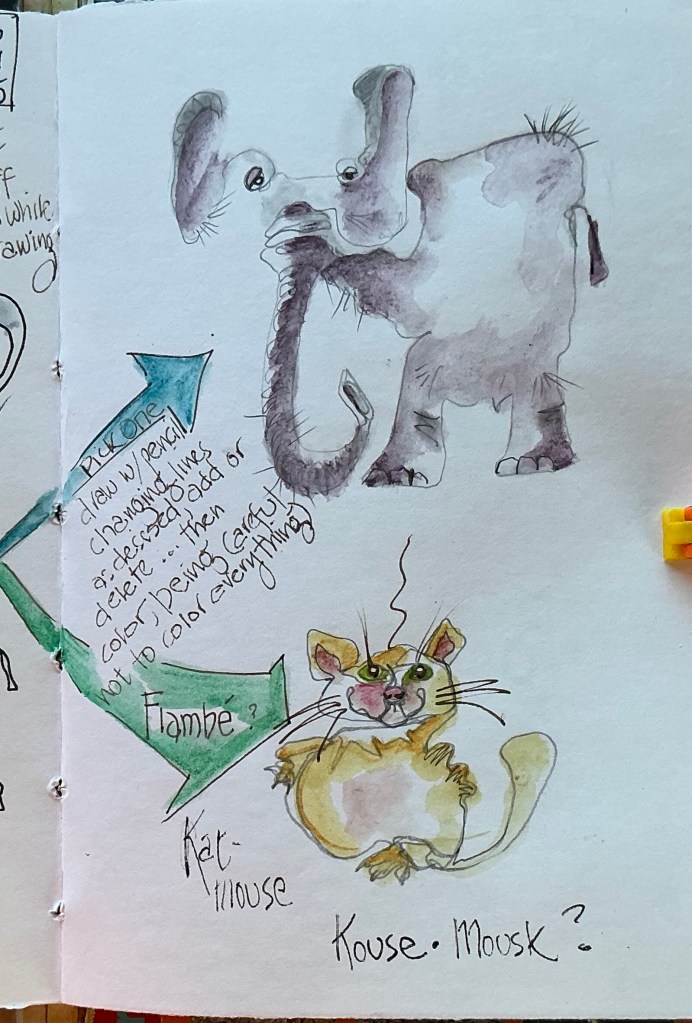
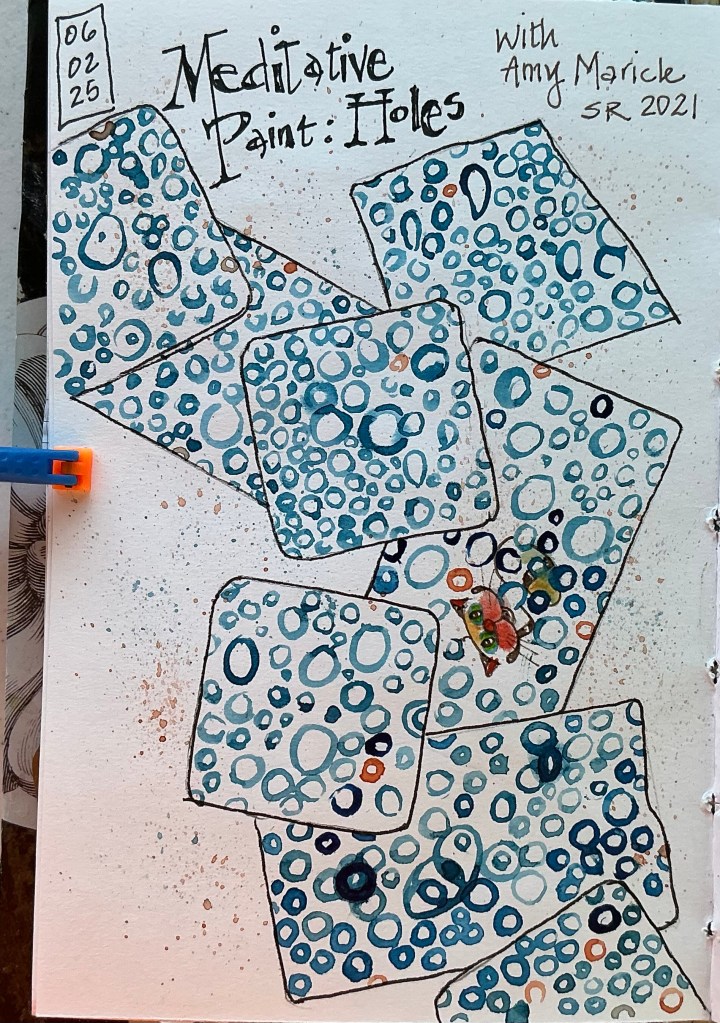
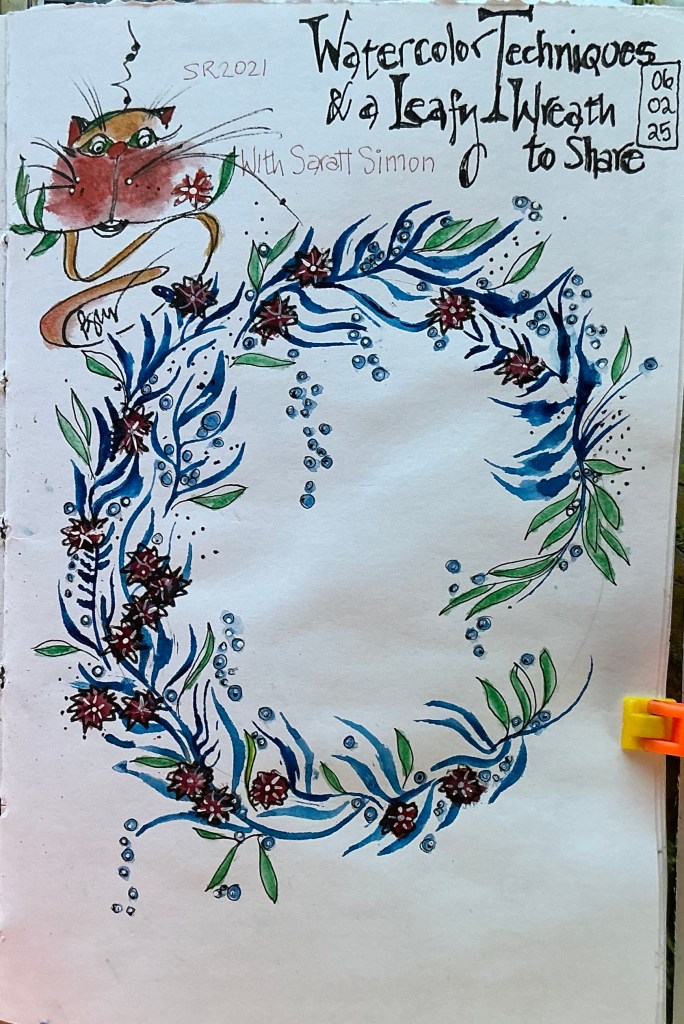
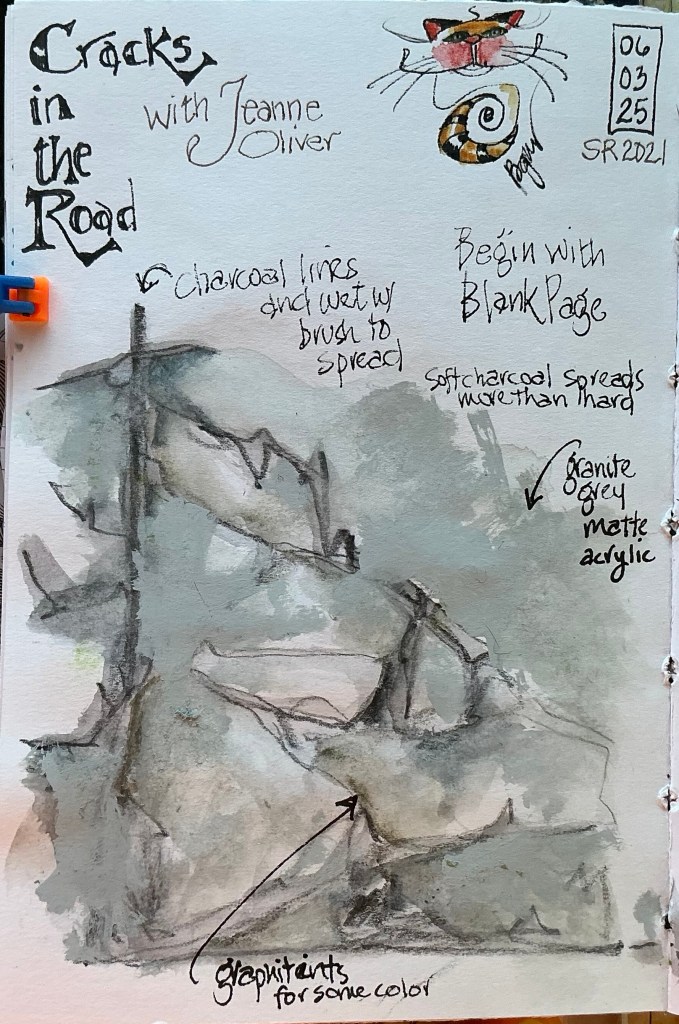
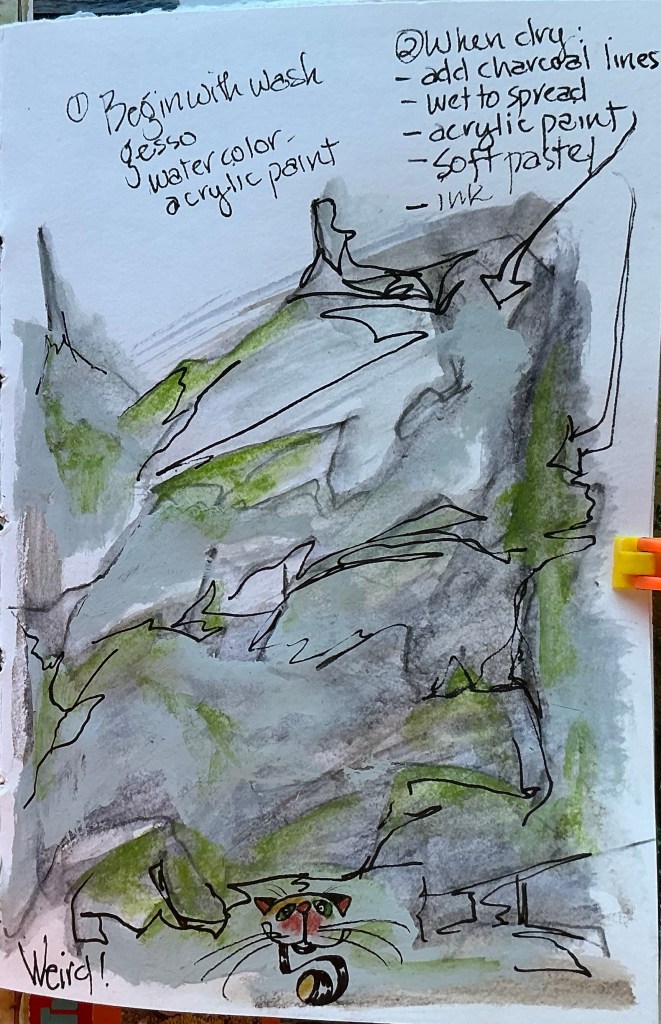
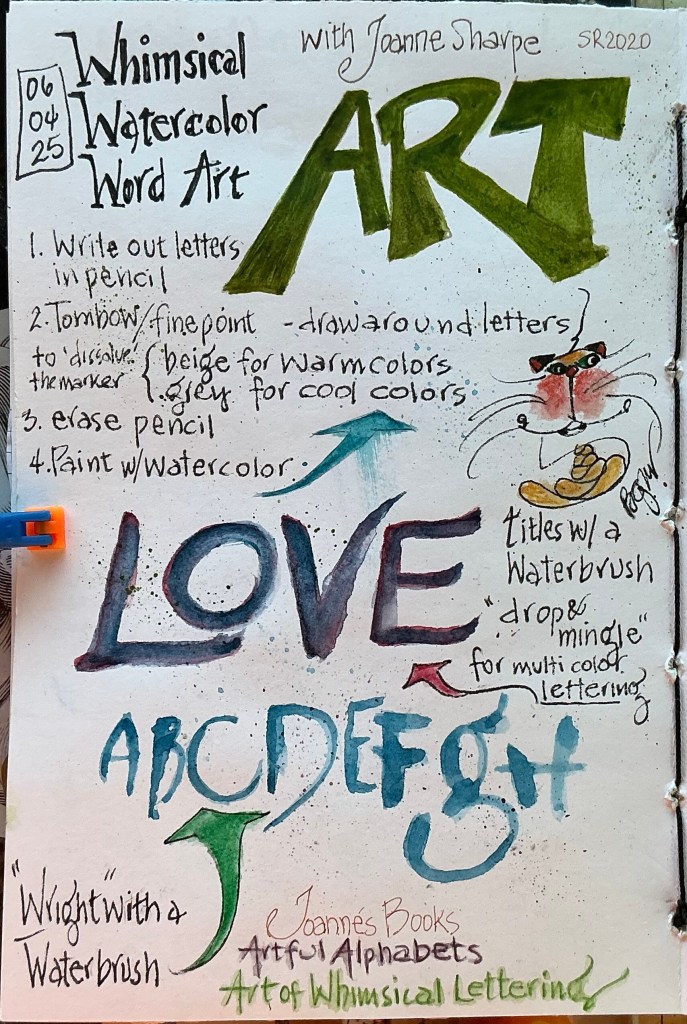
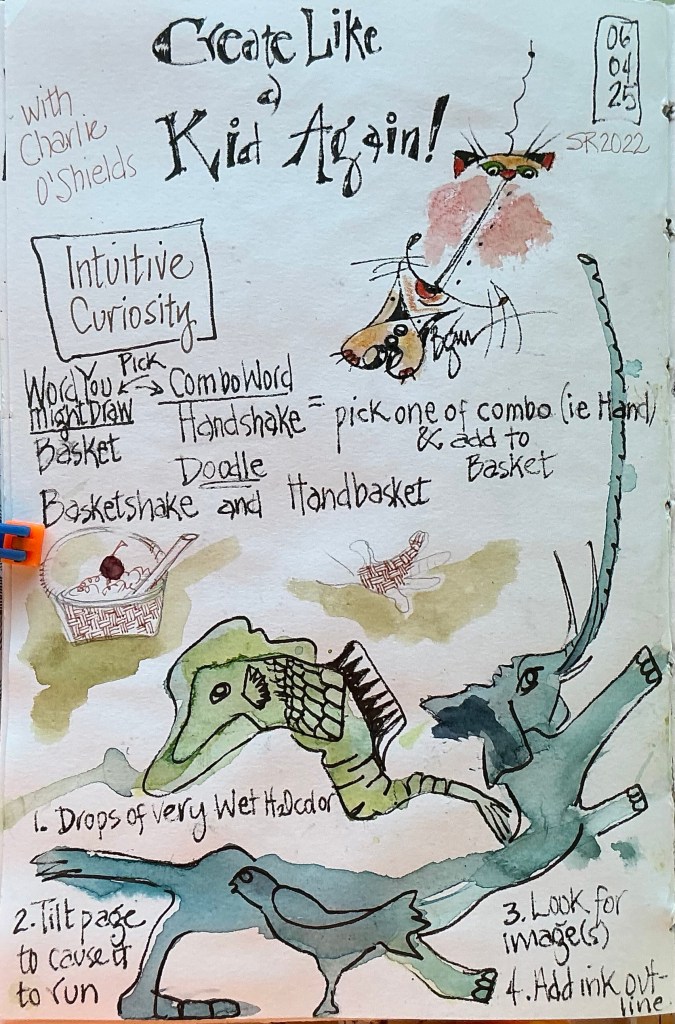
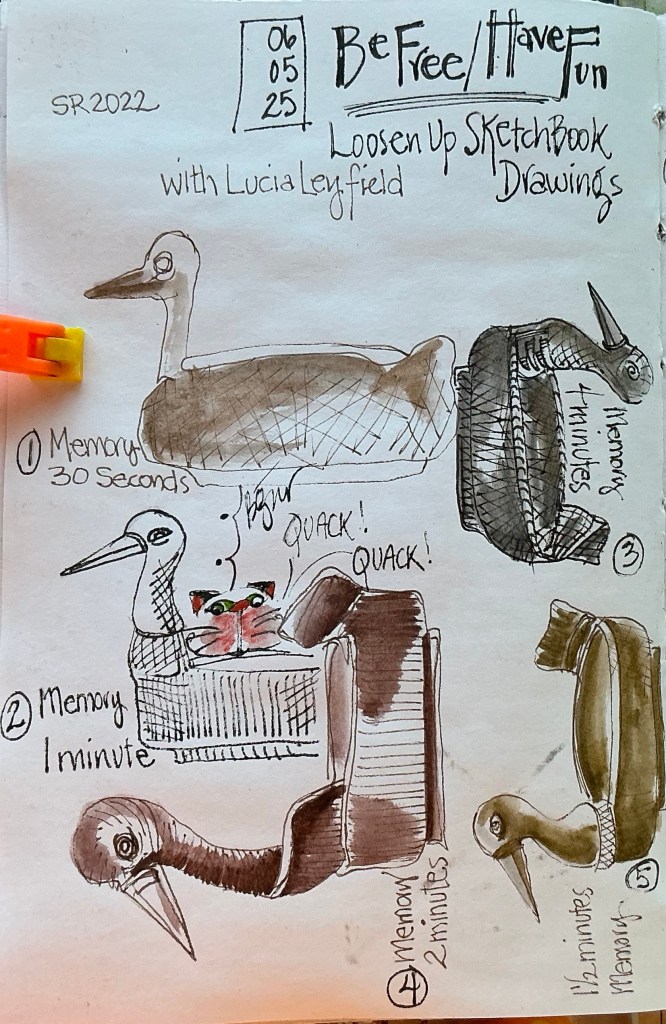
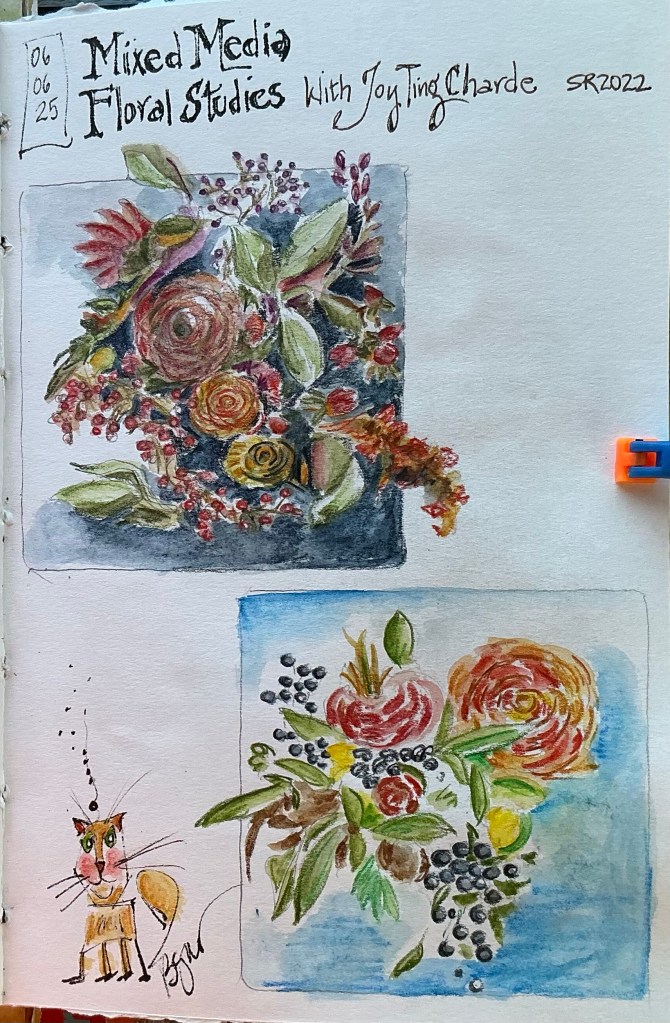
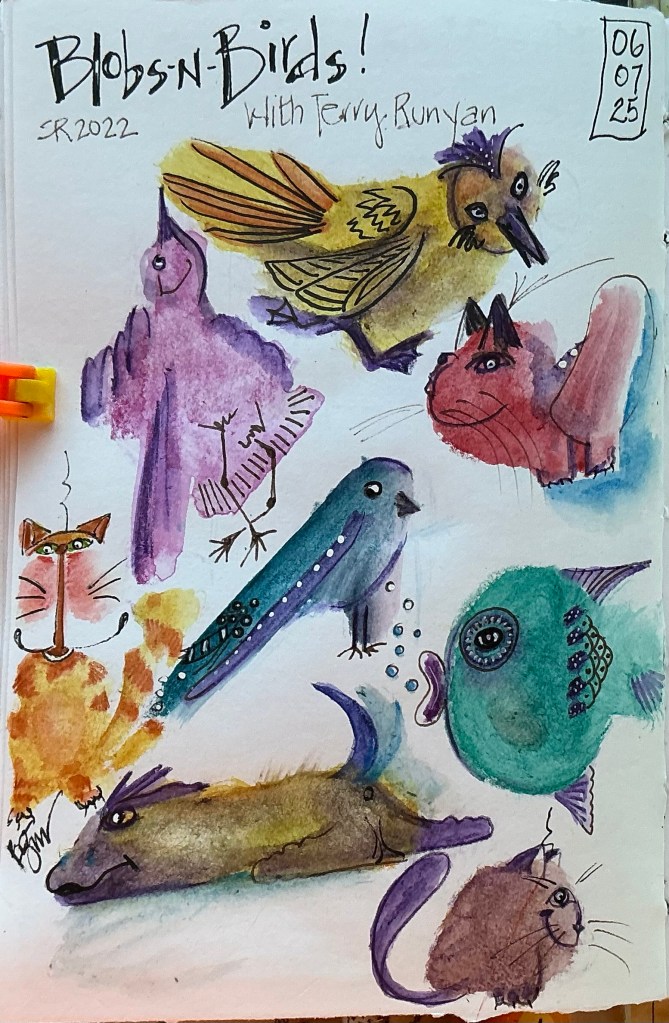
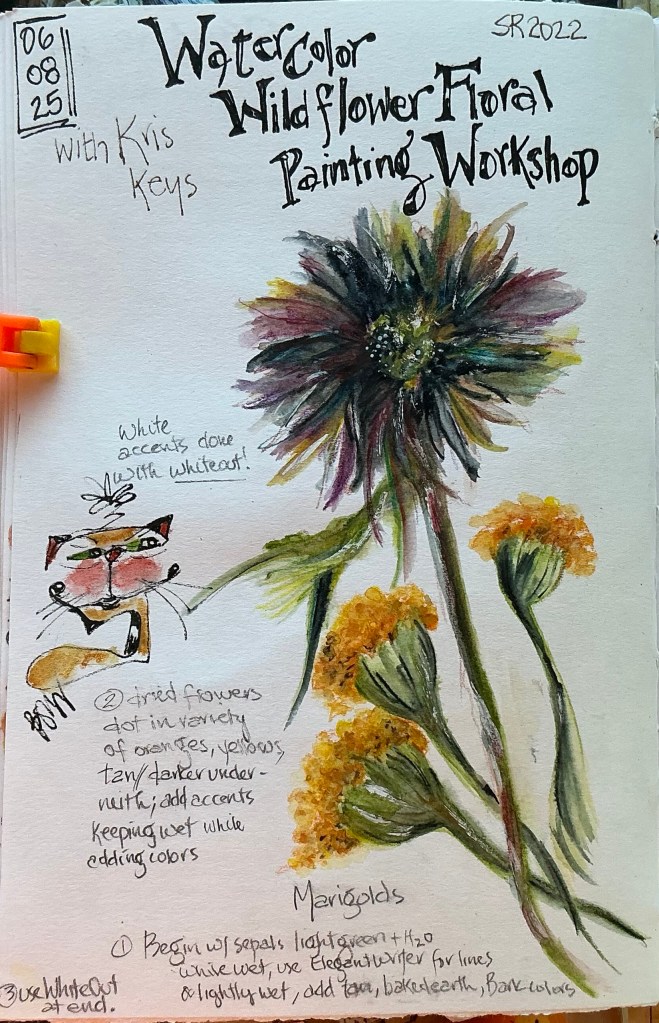
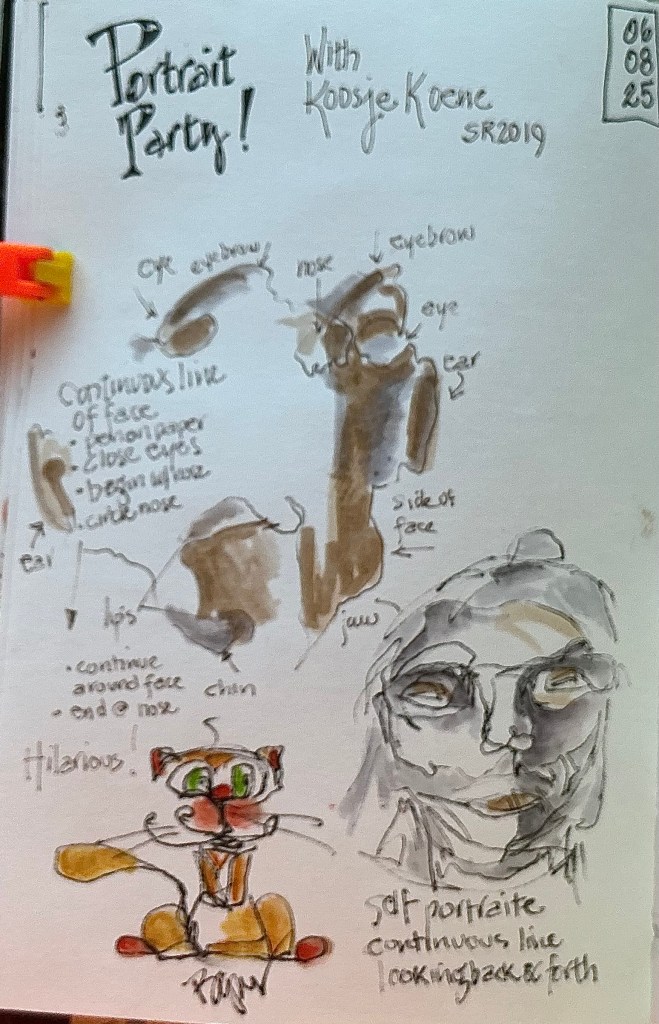
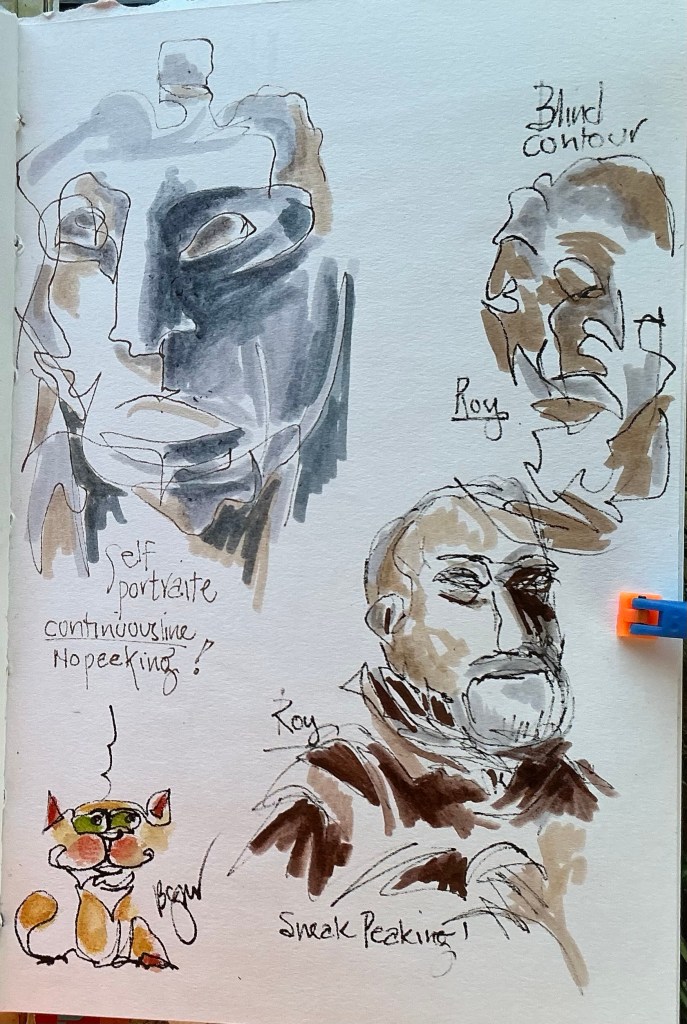
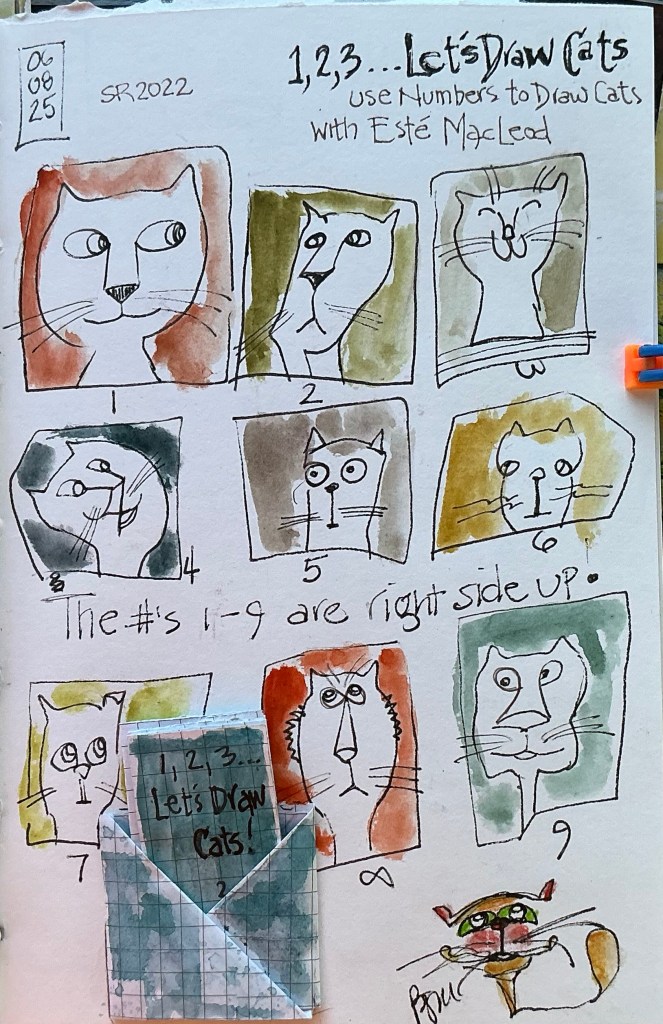
What a whirlwind celebration! Sketchbook Revival (SR) 2025 Binge Fest was so much fun. And Wow! Two jam packed weeks of creativity was over in the blink of an eye!
Karen Abend, SR creator, host extraordinaire, and wonderful artist, came up with a brilliant idea for the SR 2025 session. I would swear the creative gears inside her head were spinning with delight as she declared, “Yureka! I’ve got it!”
Beginning on May 27th thru June 9th, Karen generously opened up the SR historic vault and set free all of the workshops conducted the first 5 years of SR (2018-2022)! That unbelievable offering came to more than 130 one-hour-long workshops of inspiring, hands-on, and creative play time all instructed by well-known experts in artistic fields associated with Sketchbook Journaling.
Challenge presented ……. Challenge accepted.
Since I’ve been participating in SR each year since 2018, and attended most of these workshops in the past, my goals and strategies to tackle the challenge were these:
Complete a minimum of 4 workshops daily;
Two workshops should involve a project outside of my comfort zone, such as portrait drawing, fantasy, word play, collage, and properly stitching my own SR sketchbook so it wouldn’t fall apart during the 2-week challenge, etc.;
Two workshops should involve projects within my comfort zone, such nature subjects, urban sketching, whimsey, and lettering, and those using watercolor pencils, graphite, and ink;
Develop fresh, interesting, and imaginative sketches during the workshops;
Allow Flambé to play along;
Slow down, breathe, and enjoy the 2-week marathon without becoming overwhelmed;
Recognize and gather take-away tips and techniques to bring into my Nature Journaling practice and Zentangle storytelling.
Keep sketching and sharing.
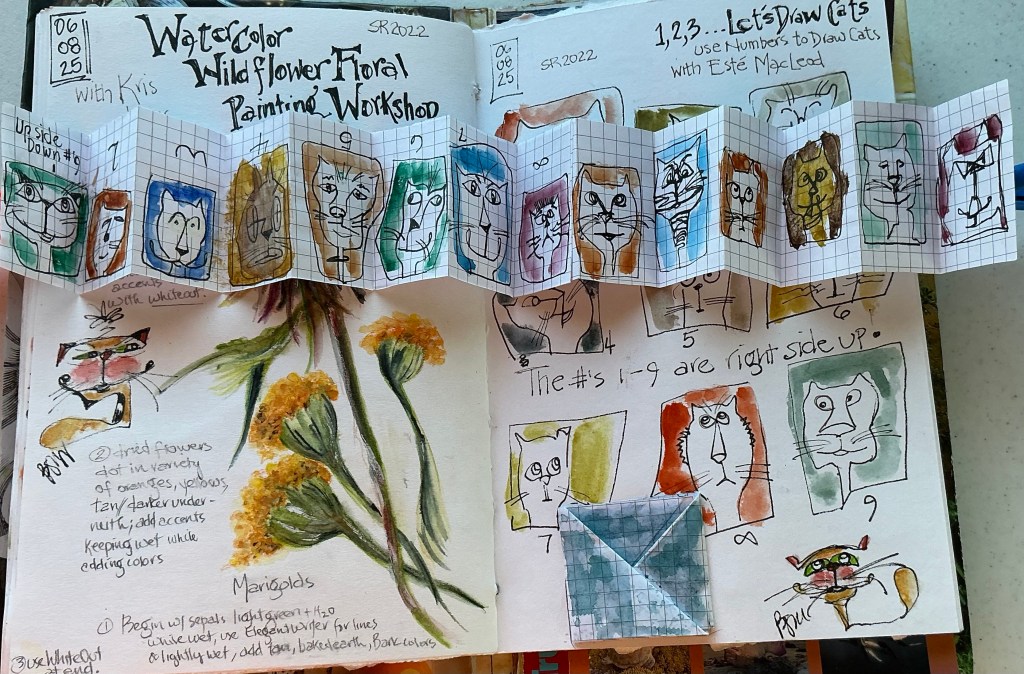
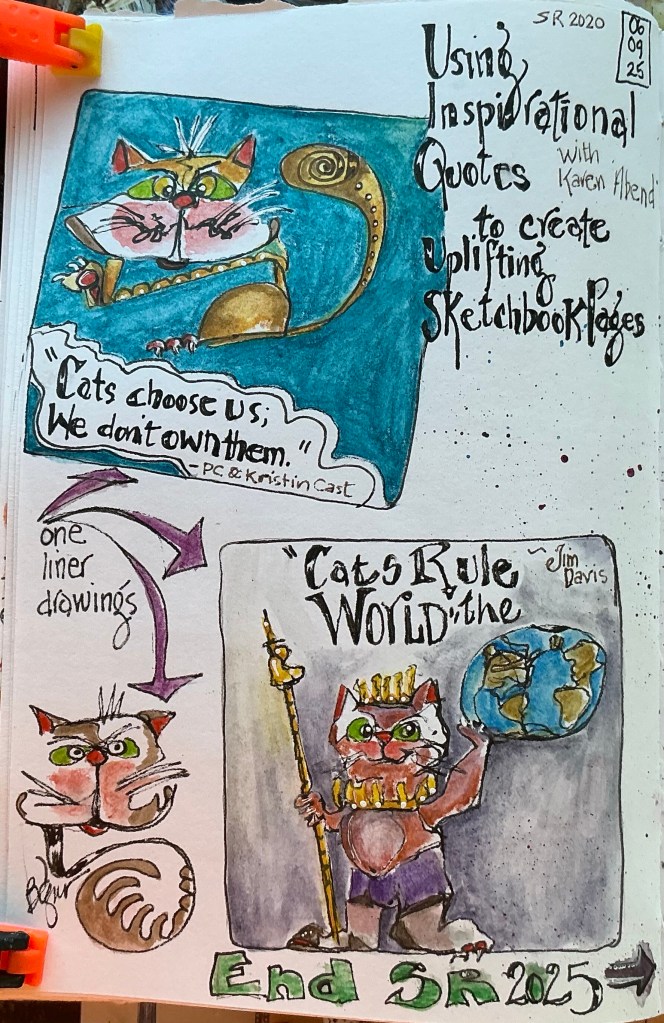
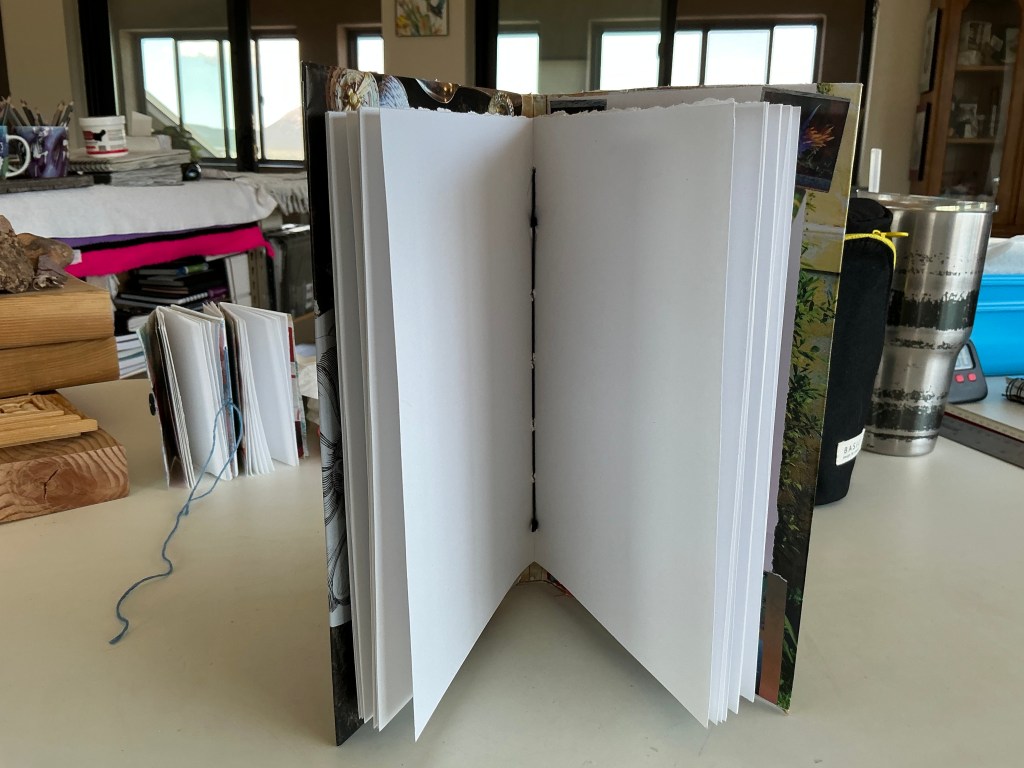
After two weeks of play, I was able to fill up my handmade and successfully stitched SR 2025 sketchbook! With a total of 46 pages completed (doubling up workshop projects on a handful of pages), including several pockets with inserts, I was pretty happy (and a bit exhausted).
If you’ve participated in SR in the past, or maybe took on the 2025 challenge as your first time, you know how intense (in an exhilarating way) it can become. If not, and would like to learn more, check out this link
This link will take you to Karen Abend’s website where you can ask for more information about Sketchbook Revival. https://karenabend.com
Hope my collection made you smile and laugh! I certainly got a kick out of the experience.
Well, until Sketchbook Revival next year, thanks for coming along!
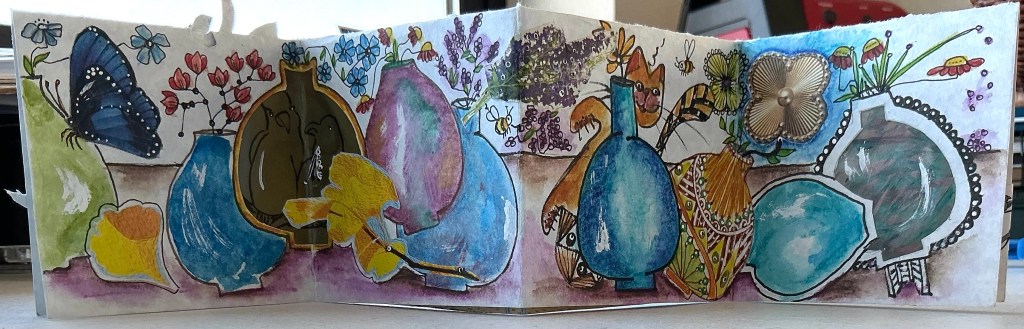
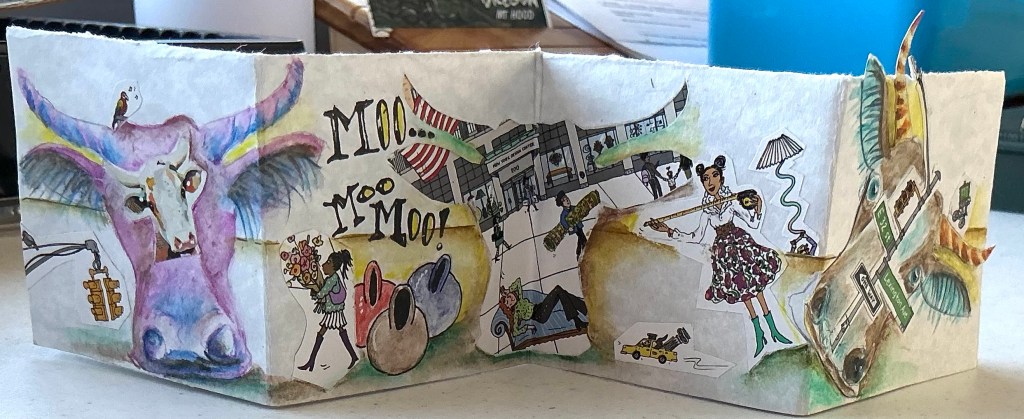
Front and back of the concertina book that tucks into the pocket above.My hand sewn, one signature SR 2025 Sketchbook.























 a curious nature