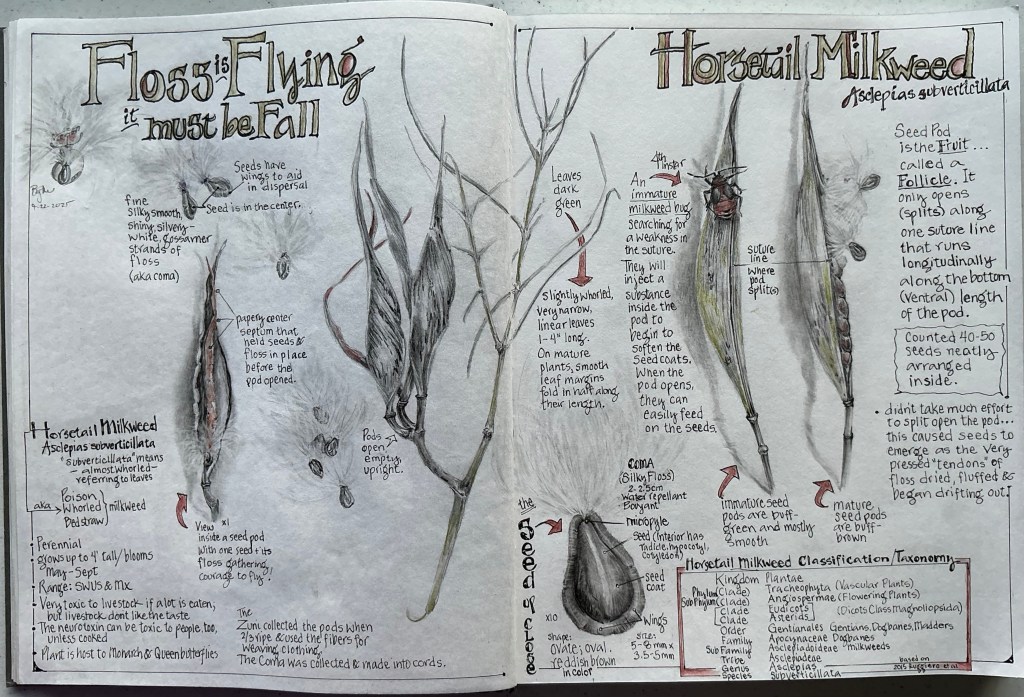
Like soft, fluffy snow! Glistening orbs of silky gossamer are floating about the neighborhood, drifting hither and yon in the gentle breeze. Suspended beneath each orb is a single reddish-brown winged seed that appears to coax its wind-propelled puff in a safe descent to the ground. But the white floss (the Coma) wants to fly, and it becomes a tug of war. As the weight of the seed overwhelms the ability (and the desire) of the floss to carry it, their brief relationship is severed. But both get their wish …. the floss flies free as the seed drops to the ground, hopefully landing in an ideal spot to overwinter and sprout next spring.
Welcome Fall!
When the air is full of Horsetail Milkweed parachutes and their ‘riders,’ I walk along the neighborhood roadways and collect a bounty of their new-crop seeds + floss to set free around our property. If they find the right soil, moisture, and light conditions for spring germination, the seeds will not only form the beginnings of a stand of these beautifully blooming, creamy-white milkweed flowers, but the plants might just play host to Monarch and Queen butterflies!
Now wouldn’t that be dandy!
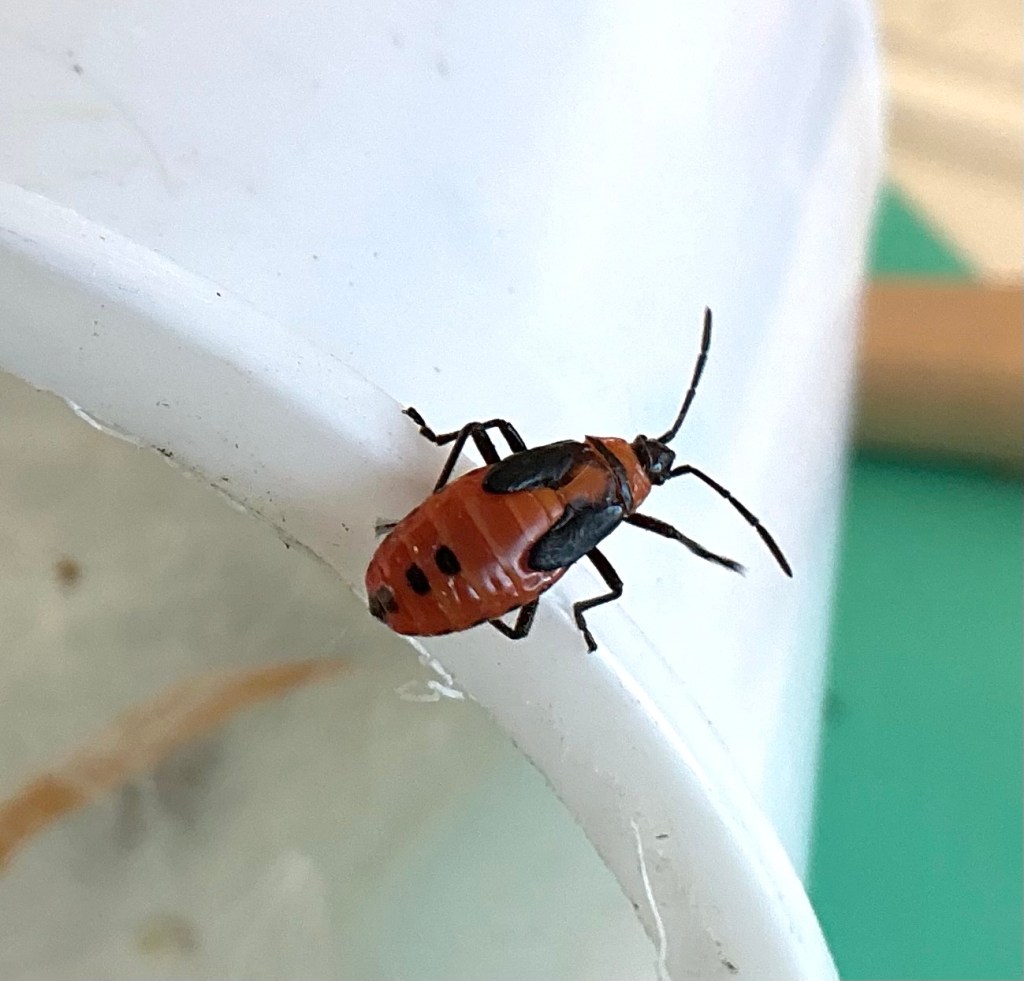
(Of course, mature seeds from new plants will undoubtedly entice a hungry crop of well-dressed Milkweed Bugs next Fall. That’s OK! They have to eat too!)
Before hint of color
My Journal Pages ……
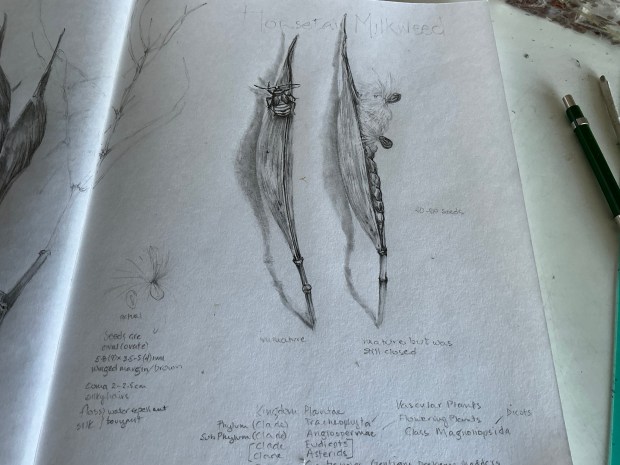
For something different, instead of using ink and watercolor, all sketches on these pages were created in graphite. The pods, seeds and the milkweed bug were sketched from my collected samples using a mechanical pencil loaded with a fine point HB lead. The touches of color were added with water soluble graphite.
Work in Progress #1Work in Progress #2
Thanks for stopping by ….. And Have a Fabulous Fall!
Ohhhhhh, what a sweet month …… August. It almost got away from me without sharing a small collection of Littles1 that reflect the inevitable shifts in nature that occur during the month. It’s always hard to imagine summer winding down; where did the time go? But as surely as butter melts on freshly baked bread, undeniably, August forms a reliable bridge between summer and autumn. It’s a time of change and transition; abundance and harvest; transformation and a period of letting go.
So before I “let go” and before the snow flies (and it will), here’s a handful of little discoveries during the month of August:
-A female Wheel Bug gone slightly astray while searching for a protected place to overwinter the eggs she’s about to lay.
-A female Soldier Beetle doing her best to attract a mate by sending out pheromones while munching late season pollen from the disk flowers of a brilliant yellow Showy Goldeneye.
-An acorn that made it to maturity, ready to drop beneath a still green-leaved Gambel Oak soon to be decked out in radiant fall colors.
-Some hot red trumpet-shaped Scarlet Gilia flowers, still irresistible to hummingbirds until migration, will all be pollinated in time for seed set and mature.
-The snowy white fruit dangling from the draping branches of Roundleaf Snowberry shrubs are ripe and ready for plucking by hungry birds flying south for the winter.
-And plump purple-black Chokecherry berries that will become a juicy dietary supplement for black bears needing to bulk up for hibernation.
Enjoy!
And as always, thanks for dropping by!
1“Littles” is part of a blog series I began posting several years ago, beginning in January 2023. The concept was inspired by Fay (thanks again Fay!) who came up with the idea for her blog madebyfay.wordpress.com
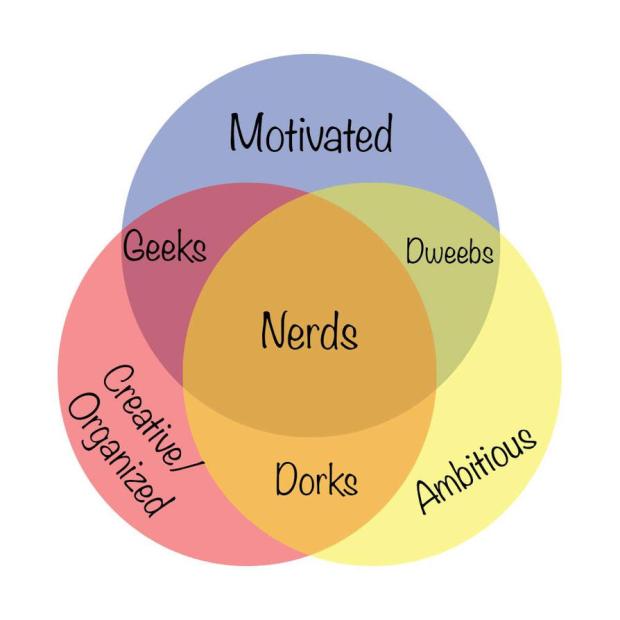
Today’s the Day! Embrace your Inner Nerd, and set her free.
Back in the 1950s, the term “Nerd” was frequently heard to describe someone in a negative sense: “He’s not attractive;” “She’s awkward at socializing;” “What dorky glasses he’s wearing;” “She’s so shy.” Before that time, “Geek” was the popular word in play. However, many of today’s Nerds and Geeks have proudly broken free of those decades-old definitions by tossing them aside and rewriting dictionaries.
Where do you fit?
While the terms “Nerd” and “Geek” are often used interchangeably, some dictionaries are splitters. You can find Nerds described as people typically associated with intellectual pursuits and academic achievement, often focusing on mastering skills and knowledge, where Geeks are known for their intense enthusiasm of specific hobbies or interests, particularly in areas like technology, science fiction, or gaming.
Not to nit-pick an officially-designated celebration, it appears National Find Your Inner Nerd Day has merged Nerd with Geek, matching a 2024 dictionary definition….. and I paraphrase: “Nerd” is someone who’s extremely enthusiastic and wise about a subject or something they’re passionate about, and who excitedly and obsessively talks about it while paying extraordinary attention to details.
Are you an Inner Nerd?
Deep down inside do you identify with parts or even all of those words and phrases that attempt to describe a Nerdy you? You do? Awesome! Still not sure (or “On the Fence” and)/or not willing to admit to your Inner Nerdiness? Being someone who’s a self-identified Nerd, having recognized and accepted my quirkiness for decades, let me help!
You might be an Inner Nerd if:
-you’re an academic, a book-worm, into classic movies, or a Trekkie;
-you knit holiday clothes every year for your dog, all your friend’s dogs, the neighbor’s dogs, and the humane society;
-you collect Pez dispensers, antique buttons, bars of soap, or banana labels;
-you collect Adventure Labs, GeoArt, EarthCaches, TravelBugs, and Geocoins;
-your house is full of stuffed toys from around the world; you ask friends to bring you a skein of yarn every time they travel somewhere new; the closet in your craft room holds more bolts of fabric than Hancock’s of Paducah, because you ‘never know;’
-you’re passionate about learning as much as you can about anything new and then sharing everything with everyone you meet;
-you’re obsessed about your daily creative practice in the fine arts (drawing, painting, music, song, dancing, acting), or creative writing (poetry, prose, essays, short stories), or in the culinary arts;
-you have a rock from every state in the U.S., a pressed leaf from every deciduous tree in your county, a photo of front doors from all your neighbors’ homes, and neighboring neighbors’ homes;
-you’re obsessed about scrapbooking, making botanical inks, filling journal after journal with nature sketches, storytelling, song writing;
-your collection of art supplies rivals Jerry’s Artarama; your own more ukuleles than Jake Shimabukuro;
-and on and on and on!
Being a Nerd is about embracing what you love and sharing all of your nerdy habits, collections, hobbies, and passions. Being a Nerd is about wanting to inspire others to embrace their inner nerdiness, too! Isn’t it time to show the world how amazing your differences are? Isn’t it time to embrace your quirkiness and share what you love?
And if you need more convincing, have no fear! Nerds are some of the coolest people in the world, if not the world’s most creative and successful. They’re always up for learning new things and love to share what they have learned with others. National Find Your Inner Nerd Day gives permission for everyone to explore their inner nerd, because everyone has a little inner nerdiness inside ready to be set free! Nerds aren’t weird, Nerds are wonderfully unique! So let’s celebrate our quirky nature and love ourselves for who we really are.
Let’s Celebrate Our Inner Nerd
If you’re a collector of things, take the day to share your treasures with other people. Give them a glimpse inside your mind and share your enthusiasm about your collection.
Join a local club that offers similar interests to yours. Book clubs, art clubs, bird watching clubs, nature clubs, car clubs, astronomy clubs, cooking clubs , and stamp collecting clubs can always be found. The best way to meet people like you is to find people like you.
Attend a convention, such as Comicon, Star Trek, Anime, QuiltCon, National Narrow Gauge, and Association of Speciality Cut Flowers, and see how fun and enthusiastic Nerds really are! Start by searching in your local area to find something that interests you.
And lastly ……. Are you a self proclaimed Inner Nerd? Are you ready to finally submit to your Inner Nerdiness? What are you obsessed about; passionate about? Do you have an insatiable curiosity about one thing; lots of things? Are you a collector (of what); a dedicated and driven learner? Please share your uniqueness with family, friends, and me! Oh how I’d love to know!
I hope this post was fun! As always, thanks for dropping by!
P.S. I’ve been a self-proclaimed Inner Nerd for most of my life (and that’s a lot of years!). It’s been an ever changing, non-stop circular journey of obsessions and passions involving art, music, science and nature. Right now I’m passionate about nature journaling on a daily basis, and the joy of non-stop learning and sharing the limitless diversity of our natural world. Oh, and I’m crazy about my daily connections with art, Flambé, and storytelling through Zentangle.
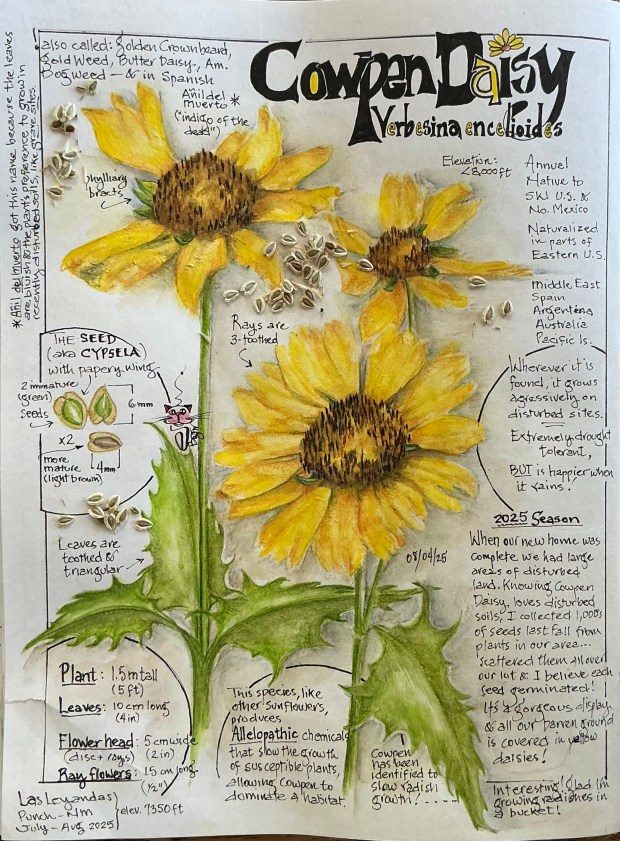
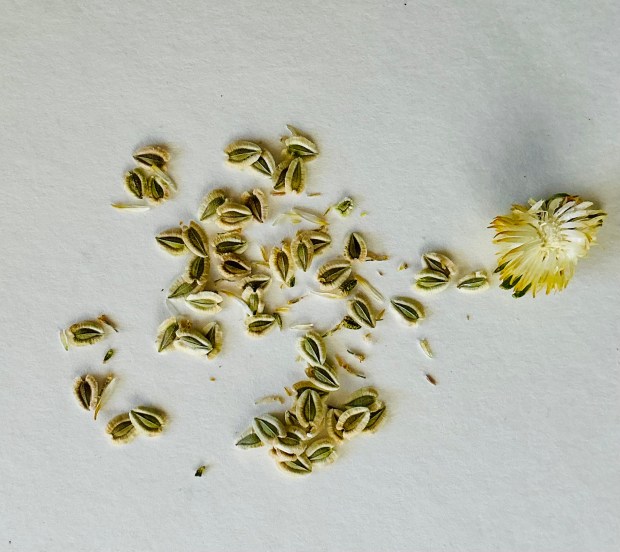
It was the Fall of 2024. A small cluster of Cowpen Daisies (Verbesinaencelioides) flourishing on the severely disturbed ground surrounding our new home was going to seed. Waiting several weeks until the migratory birds ate their fill, I spent an hour or so collecting as many remaining dried seeds (cypselas) as possible, stuffing full two quart-sized ziplock bags. About 1/3 of the seeds I scattered around the house where they would overwinter on the ground. The rest were poured into large pill vials that were labeled with species name, location, and date, then placed in the refrigerator to simulate cold storage until Spring.
Cowpen Daisy cypselas (seeds) 08/04/2025 at Punch
It was late April 2025. The chances of heavy frost seemed a distant memory. My fingers crossed, I chose a sunny 42 degree morning to liberate those refrigerated seeds from 6 months of cold storage, and scattered them in disturbed areas not seeded last Fall. Then I waited like an expectant parent, watching for signs of germination, worrying that runoff from late season snows might wash away my scattered seeds, expecting that flocks of migratory birds would gobble them all up, and hoping for gentle rain showers to swell those thousands of seed coats to aid those tiny embryos in growing their first roots (radicles) and first leaves (cotyledons).
Then early June 2025. Success! Cotyledons were literally popping up everywhere, which meant the radicles were already expanding into the soil. They were especially crowded where I’d scattered all the cold storage seeds, and germination was obvious where seeds had been scattered the Fall of 2024. By early July, those Cowpen daisies were crowding out many of the other native species I’d also seeded in the same areas.
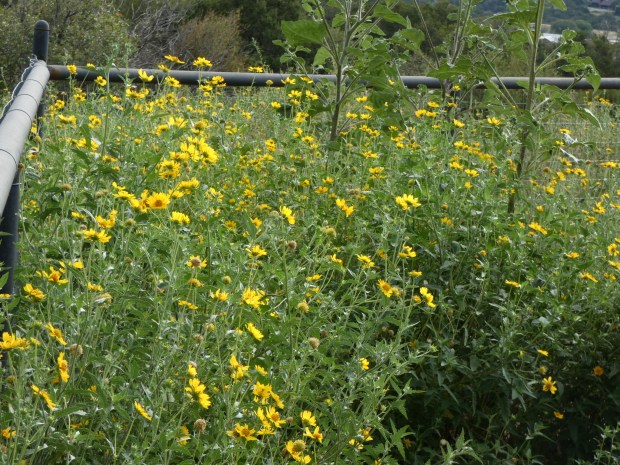
Backyard and overflow Cowpen Daisies, robust growth after Fall 2024 seeding (08/03/2025)
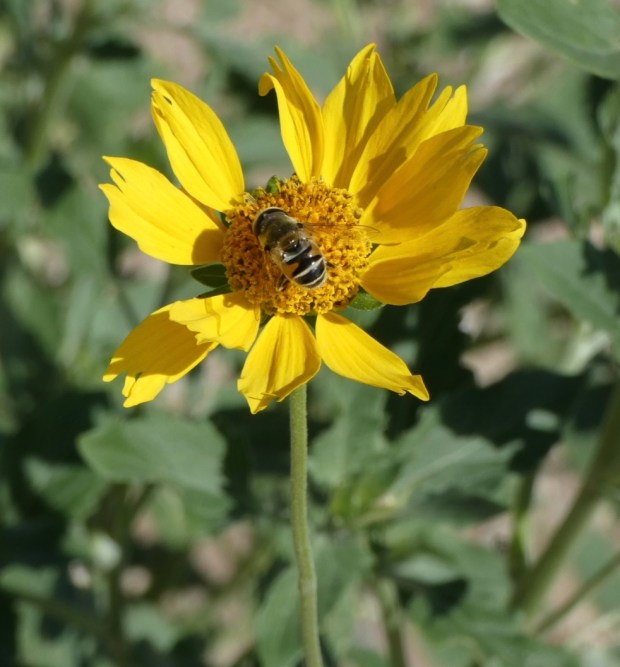
And now it’s early August 2025, and what a dazzling show! Even though the sunflower yellow flowers of Cowpen Daisy are small (2” wide), there are up to 75 long-stemmed flowers on each plant that can grow from 4-5’ tall! They are so dense, the backyard fence is hardly visible, our walking paths are totally draped with 4” long leaves, and if there’s a rattlesnake lurking around under our massive Cowpen Daisy canopy, we’d probably (hopefully) hear him well before he slithered into view!
Goals and Lessons Learned
I’ve learned a lot by parenting these Daisies; from the best time to scatter seed (in the late Spring following cold storage) and where (not so close to other desirable natives or pathways), to managing the mass of growth (by organizing through selective removal). Our initial goal of seeding and growing native plant species was to attract and help feed wildlife (pollinators, reptiles, rodents, birds and mammals), and we are optimistic that achieving this goal long-term seems realistic with the success we’ve had to date. However, because so many of our native plants are losing the battle against habitat loss caused by invasive species encroachment and takeover, land development, and climate change, we will continue to explore ideas to expand our initial goal to address the habitat situation. As we gain insight about the best native plants to grow to help restore our disturbed soils, we will learn and share with our neighbors those species that: are drought tolerant; aid in building soils; are effective at invasive weed suppression; provide wildlife benefits; and increase plant diversity.
Cowpen Daisy and pollinator 08/01/2025 at Punch
Happy – Happy – Happy! Will I be collecting Cowpen Daisy seed again this Fall? You bet! Having all that sunshine yellow around our home is thrilling. Every morning all those thousands of sunflower faces looking East towards a new day are about the happiest sight ever! And having such wild, uninhibited growth of a native annual out our back door has been ideal for observing the pollinators that benefit from the abundant nectar and pollen, enjoying the aerial acrobatics of several phoebe families that have been feasting on those pollinators, and promises to be a perfect spot for bird watching this Fall when all those cypselas ripen into high protein food.
Can’t wait!
Do you ‘know’ a special native plant? How about a native butterfly garden? Are you a bird watcher? Maybe you enjoy the occasional deer, coyote, or bobcat wander through your yard? Please share your favorite wildlife encounter!
As always, thanks for stopping by!
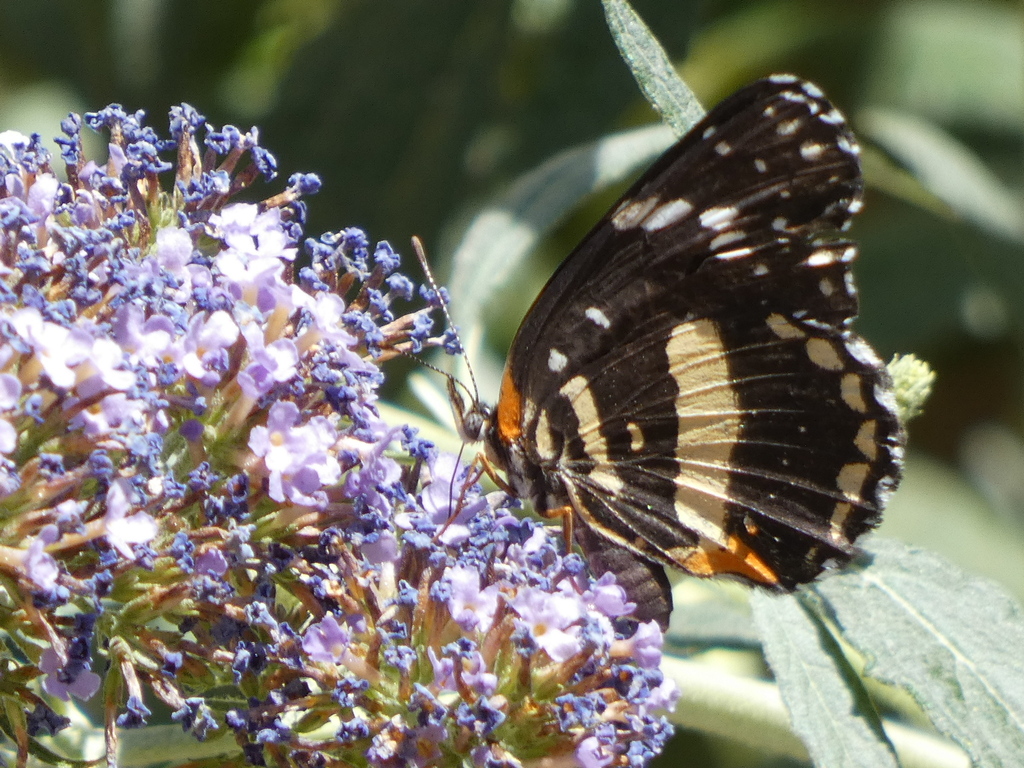
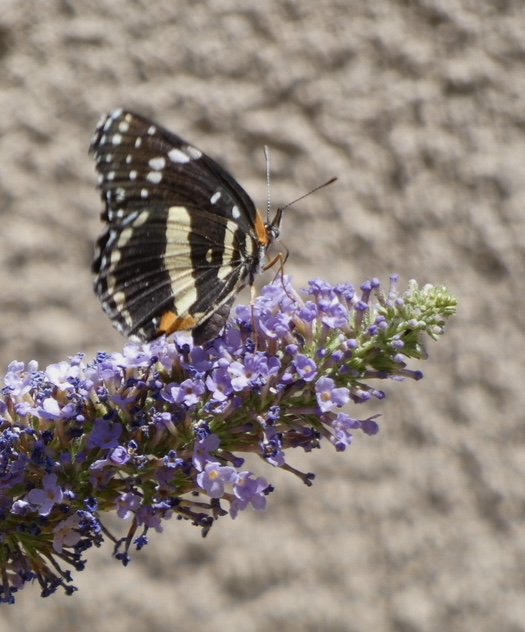
Bordered Patch (my photo/2023 – on butterfly bush)Bordered Patch catBordered Patch (my photo taken 2023These dandy little butterflies, the Bordered Patch, often choose the Cowpen Daisy as their larval host. (The butterfly nectaring on butterfly bush flowers are from my home collection)
Sunflowers!🌻 Absolutely the happiest flower on Earth. Wouldn’t you agree?
Sunflowers, a symbol of adoration, loyalty, and longevity, represent happiness, friendship, and intelligence. Much like the sun, sunflowers reflect vibrancy and an energy of life. While National Sunflower Day is the official day to celebrate these beautiful flowers, why not declare the entire growing season reason a-plenty to radiate your inner sunshine and mirror the smiling faces of every sunflower encountered!
Then and Now
Did you know sunflowers have been around since about 1000 BCE? In the U.S. indigenous peoples used sunflowers as a valuable food source, for oil, paint, and textiles, and during ceremonies. Some archaeologists even believe sunflowers may have been cultivated before corn. Today, sunflowers are still used for food (seeds, salad mixes) and beverages (tea), cooking oil, in beauty and skin care treatments, for medicinal purposes, and for hobbies and crafts.
Annual Sunflower over 6 feet tall!
The sunflower crop
The U.S. is a mass producer of sunflowers, particularly in the plains states, and is a major crop in both North Dakota and South Dakota. The average cultivated sunflower plant is five to six feet tall, and the central face of disc flowers can grow bigger than a human head. As the weight of the sunflower head becomes heavy, it begins to fall forward causing the petals to fall off. Shortly after the harvest begins. On average, one sunflower can produce up to 2,000 seeds per head. In 2022, North Dakota produced 762 billion pounds of sunflower seeds!
The Happiest and the most Intelligent flower
Have you ever noticed sunflowers track the sun, from sunrise to sunset? It’s true! Sunflowers follow the sun’s movements throughout the day. You may notice that before sunrise, a sunflower is in sort of a sleeping position with its head slightly down. As the sun comes over the horizon, the flower awakens and slowly lifts its face to ‘look’ directly at the rising sun. As the day progresses and we observe the sun moving from east to west, so too does the sunflower by turning its face in sync with the sun’s apparent movements until sunset.1 When the sun sets in the evening, sunflowers nod off to sleep, but not before untwisting themselves and slowly return to face the east. Ingenious!
This charmer is called Cowpen Daisy
1 However, on very hot days, sunflowers tend to avoid looking directly at the sun to keep from overheating. And I’ve noticed on cloudy days, sunflowers may appear confused about the sun’s location, seeming to make their best guess on which way to face.
A season of yellows and oranges
Although you can find flowers in the Aster (sunflower) family in the Spring, August is the peak growing and blooming season for these cheerful plants. Brilliant displays of yellow flowers welcoming the morning sun can be found wherever sunflowers grow. Witnessing fields of sunflowers is guaranteed to lift your spirits as you oooooh and aaaaaaaah at their breathtaking beauty.
A trio of cowpen daisies
Ideas to celebrate a day, week, month or year of sunflowers
Spend a day with a wild sunflower and watch its face track the sun.
Take a drive to view fields of sunflowers to see their true beauty in mass.
Give a bouquet of sunflowers to a friend to brighten their day.
Add sunflower petals and seeds to your salad.
Create a painting of your favorite sunflower and frame it to enjoy year-round.
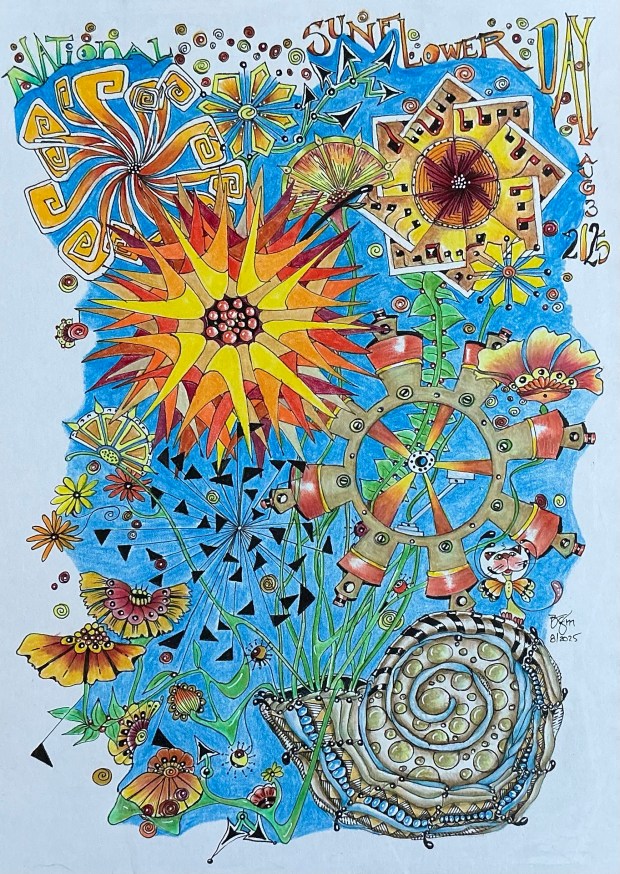
Try your hand at a Zentangled sunflower bouquet ….. there are as many pattern possibilities as there are blooming sunflowers!
Plan a road trip to North Dakota in August and coordinate places to stop to visit sunflower fields and get updates from local farmers who cultivate sunflowers.
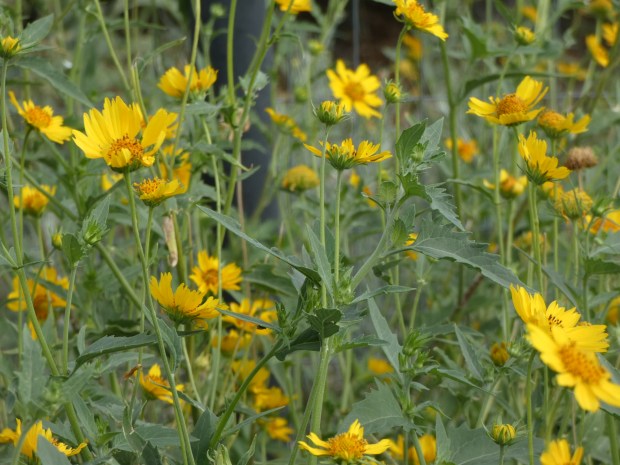
A collection of cowpen daisies in my backyard.
If you missed celebrating this year’s National Sunflower Day, no worries! Every time you come across any sunflower, of any size, anywhere, pause and hold a personal celebration in honor of its splendiferous magnificence!
As always, thanks for stopping by!
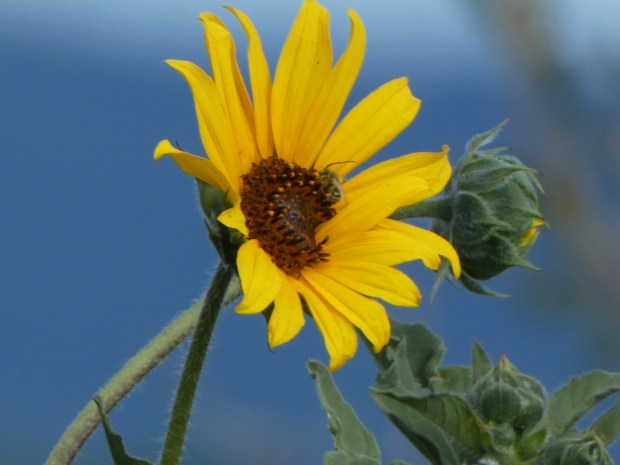
Sunflower photos were taken in our backyard ….. all volunteers too!
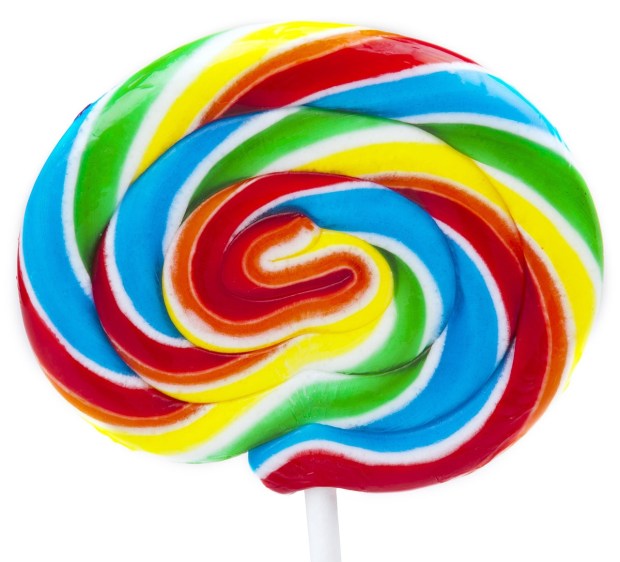
Today, Flambé was craving a generous dollop of whimsy and an extreme sugar rush to feed her ever insatiable sweet tooth. Today, she insisted on choosing the National celebratory day that would simultaneously satisfy both her exorbitant desires. Today, Kat took a calculated leap, gracefully “sticking” her landing on one of those oversized spirals of sweet colors-on-a-stick. Today, Flambé picked National Lollipop Day!
While Kat is frantically licking her paws to break free of that giant Lollipop, my task was to learn stuff about those ultra-sweet confections.
Pixabay photo
Lollipops have been around for how long? Apparently no one is really sure how old the ‘lollipop’ is, but it’s likely this treat on a stick has been around for centuries. There’s even speculation that during prehistoric times, a form of ‘lollipop’ may have preserved nuts and berries in honey. Then as sugar became commonplace, lollys “popped” up as a popular treat in 16th century Europe. In the 17th century, the English enjoyed boiled sugar candy treats on sticks, which made the candies easier to eat. And in the mid-19th century (1860s), confectionaries and medicine shops in the U.S sold ‘lollipops’ in various forms.
The Name Lollipop ….. may have been used for centuries. A word sounding much like ‘lollipop’ was heard in Europe as early as the 4th century. Nomadic Roma people (also called Gypsies) migrating throughout Europe, had a tradition of selling candy apples on a stick. Red apple in the Romani language is loli phaba. In the late 18th century (1796), English lexicographer1 Francis Grose recorded the term ‘lollipop’ that was likely derived by combining the words ‘lolly’ (which means tongue) and ‘pop’ (which means slap, describing the slapping or popping sound one made when sucking on hard candy). But it wasn’t until 1908, when Mr. George Smith, an American candy store owner and inventor from New Haven, Connecticut, developed a machine that could produce large quantities of hard candies mounted on sticks. Thinking about what to call those popular treats, he finally decided on Lollipop, the name of his favorite racehorse “Lolly Pops.” Smith trademarked the lollipop name in 1931.
Pixabay photo
Today, the modern Lollipop comes in a variety of sizes, shapes, colors (usually brightly colored), and flavors (usually fruit flavored). Some have fillings, like bubblegum, soft candy (think Tootsie Pops), soft chocolate, jawbreakers, and fizzy candy. Some are even medicinal (where medicines for weight loss and cancer treatments are added to the candy). And then there’s the novelty lollipops! Some contain unusual items like a mealworm larvae, scorpion, cricket, or ants, suspended in the clear-as-glass candy, so you can see the bugs while sucking on the lollipop! Some novelty lollipops have non-edible centers, like a flashing light, a small toy, or even a motorized device attached to the stick that makes the candy spin around in your mouth!
Pixabay photo
Lollipop Pop Culture – By now you’re probably humming one of Shirley Temple’s favorite tunes, “On the Good Ship Lollipop.” Maybe you’re thinking about “The Lollipop Guild” gleefully welcoming Dorothy to the Land of Oz. Did you ever (or maybe you still do) count the number of licks it takes to reach the center of a Tootsie Pop? I always questioned whether Kojak (you know, the TV series from the 70s) actually became more of a tough guy while sucking a lollipop. Hmmmmm?
Celebrate National Lollipop Day – The phrase of the day must be Lollipop Fun! You’re never too old to enjoy a brightly-colored, spirally-twisted lollipop. Buy a bagful of Tootsie Pops or Dum-Dums and share them with your family, friends, and neighbors. Visit a local candy-making factory and watch how they make these sweet treats on a stick. Try out one of the unique novelty lollipops, if you dare. Write a short story or a poem about lollipops and illustrate it in a kaleidoscope of colors. To me, lollipops remind me of riding a carousel pony, possibly named “Lolly Pops,” while at the carnival.
Pixabay photo
Now that Flambé has freed her paws from that giant spiral-shaped lollipop, she’s busy licking her way to the soft tuna center. That should keep her out of mischief for the rest of the day! Meanwhile, please let us know what your Lollipop Fun plans are for the day. Maybe share your favorite lollipop shape, color, and flavor guaranteed to put a big smile on your face!
Pixabay photo
As always, thanks for stopping by!
1 A lexicographer is a person who compiles dictionaries. You know …. of ‘Webster’s Dictionary’ fame, Noah Webster (October 16, 1758 – May 28, 1843) was an American lexicographer, textbook pioneer, English-language spelling reformer, political writer, editor, and author. He has been called the “Father of American Scholarship and Education”.
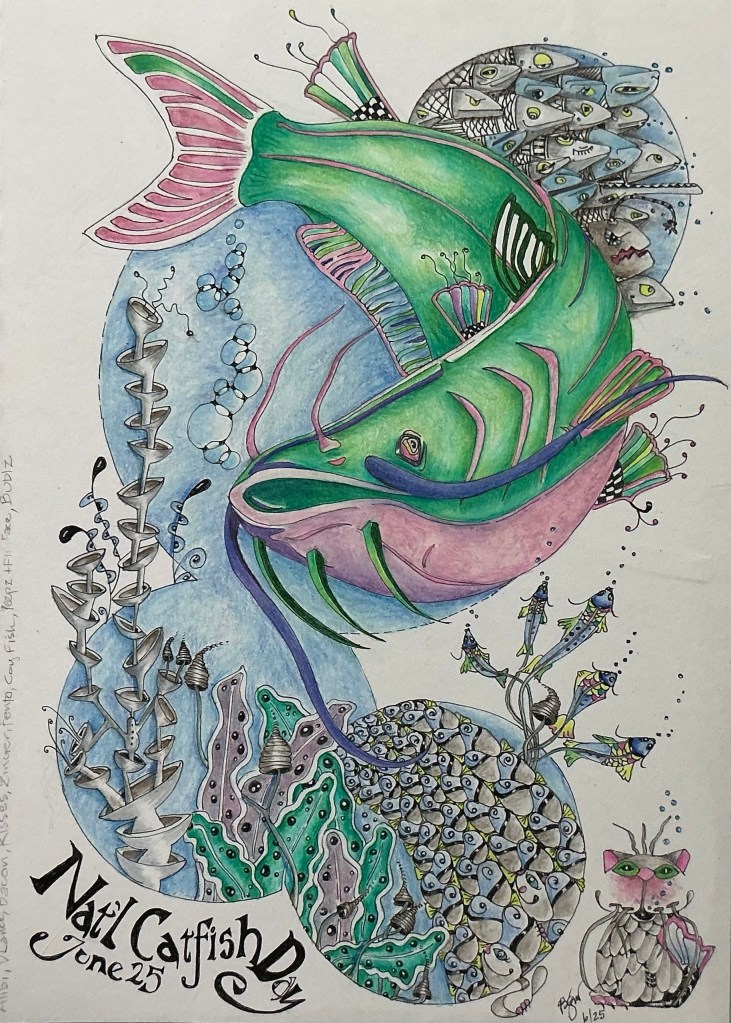
I’ll never forget my first taste of catfish! Just the memory of that meal makes my mouth water. Mmmmmmmmmmmmm!
When I was about 9 yrs old, my aunt and uncle invited the family for a visit to their home in Nashville. My jolly Aunt Sis, always the organizer, planned an entire week of non-stop fun and sightseeing that included a firefly safari, touring a life-sized Parthenon replica, exploring Civil War battlegrounds, front row seats at the Grand Ole Opry, and an overnight camping trip into the Great Smoky Mountains. I especially remember the drive into the mountains. The narrow road, which seemed to twist and turn for hours, was flanked on each side by an impenetrable forest of hardwood trees, the view broken only by roadside cafes spaced 2-5 miles apart. These cafes, with their hand-painted signs, all advertised the same daily lunch special —- 2 fresh caught catfish fillets/breaded with cornmeal and deep fried/served with a pile of hot hushpuppies and slaw/$1.75 to-go. “Could we stop, could we? Please, please, pleeeeaaaassssseee!” Knowing the sight of these cafes would be too hard to resist, Aunt Sis had already planned to stop for lunch at a very special one; Cataloochee Creek Catfish Cafe. She said they always fried up and served the freshest catfish and hushpuppies in all of the Great Smoky Mountains. Two hairpin curves later we had arrived. Oh what an aroma!
Needless to say, my clever Aunt Sis was right! That catfish was (and still is) the best ever! Whether the little one-room Cataloochee Creek Catfish Cafe is still in business, and whatever species of catfish they served up that day may forever be a mystery. But I’ll always have a fond place in my heart (and stomach) for catfish…………. So ……………
when discovering June 25th is a designated National Day in honor of the catfish, I took notice (and so did Flambé – either hoping for a new friend or a take-away meal!). About time I learned a little something about catfish. And of course I wanted to share.
Why the name “Catfish?”
In addition to not being remotely related to any fish species, it’s well known that most cats are not big fans of water. So how did the catfish get its name? The most likely origin of the name “catfish” comes from the 1610s when mariners referred to the Atlantic wolf-fish as a “catfish” due to its ferocity. But later the name was given to a freshwater fish found in North America’s river systems. This odd looking fish had barbels protruding from its jaw and chin that resembled cat whiskers. Also when this fish was removed from the water, it made a purring sound. It may be one or both of these cat-like similarities that led to the common name “catfish.” ….. Oh, and about those barbels that grow out of the jaw and chin of most all catfish species. They function as sensory organs; used for tasting and feeling their environment.
How do you enjoy your catfish?
In 1986, catfish made up the third-highest volume of finned fish consumed in the U.S., with the most commonly eaten species being the channel catfish and blue catfish. Today, catfish is still a popular dish; one that can be prepared in many different ways, including baking, deep frying, sautéing, and stewing.
Traditionally, the fish was coated in cornmeal and fried. Many still enjoy catfish fillets prepared this way, or prefer baking or frying fillets or even the entire fish. If you fry the entire fish, do you also savor the crunch of the crispy tail? Spices complement catfish, and it’s also yummy served with a little lemon and butter. No matter what method you prefer, this tender whitefish always separates easily from the bones.
There are 38 known species of catfish in the U.S., and 22 are found in Tennessee. But the most commonly caught in the state are the flathead, the channel, and the blue catfish. The flathead is reported to be the tastiest of all. Perhaps the catfish I loved so much as a kid were from the flathead? To this day, my memory has me convinced those fried morsels from yesteryear remain the tastiest I’ve ever enjoyed. (Until further research unveils what hushpuppy ‘species’ were the perfect melt-in-your-mouth side-kick to those delicious cornmeal-breaded flathead bits, I remain clueless ….. but insatiably curious).
HOW TO OBSERVE NATIONAL CATFISH DAY
While baking and frying catfish may be the most popular ways to enjoy this flavorful fish, they’re not the only way. How about some catfish pasta dishes or catfish soup? If you’ve never tasted catfish before, #NationalCatfishDay encourages you to explore catfish dishes bursting with flavor.
Until next time …… add a little catfish to your menu!
As always thanks for stopping by!
And now, for your entertainment and enlightenment, why not take a few minutes to read these
Fun to Fascinating Catfish Facts
Catfish are found on every continent except Antarctica, with the highest abundance in tropical waters of Asia, Africa, and South America.
New species of catfish are regularly being discovered, and by 2030 the number of identified species may reach 5,000.
Catfish exhibit a wide range of sizes, from the tiny candiru (1/2” long) to the giant Mekong catfish, which can grow up to 10 feet long and weigh over 600 pounds. The largest catfish caught on record was 646 pounds and 9 feet long.
Catfish typically live between 15 and 20 years, but some can live up to 60 years.
Around 1,600 species of catfish may be venomous. Their venom glands are associated with the bony spines in front of their dorsal and pectoral fins. Used in defense against other fish, venom is released if a spine punctures another organism. If a person is punctured by a venomous spine it can cause severe pain and swelling; the wound may become infected. However, a few catfish species – the striped eel catfish and the Asian stinging catfish – have a venom so strong it can lead to hospitalization or even death for humans.
Most catfish are nocturnal.
Electric catfish can discharge up to 350 volts and seem to be immune to high shocks themselves.
Catfish are sometimes known as “swimming tongues,” because their bodies are covered in about 100,000 tastebuds that detect chemicals present in the water.
Catfish can produce and detect sounds using the Weberian apparatus, a structure connecting their swim bladder to their inner ear. The hearing of some catfish species is so good that it can be used as a form of echolocation in dark, murky waters.
Some species have flexible teeth that bend as the fish scrape algae and other food particles from rocks, preventing wear and tear.
Unlike many fish, catfish typically lack scales; they have smooth, naked skin.
Some catfish including the Mekong catfish have been known to fast.
Large catfish usually migrate huge distances and create ecological links between parts of a river miles apart. Catfish native to the Amazon River make some of the longest migrations of any freshwater species: covering up to 5,000 miles when swimming back to their birthplace. Large catfish usually migrate huge distances and create ecological links between parts of a river miles apart.
The Asian walking catfish, an air breathing species, sometimes resembles a dark, bloated slug and can survive for 18 hours, moving up to 3/4 miles on land to travel between water bodies. Much like slugs, they are often seen after periods of rain or flooding, their long and sweeping barbels helping them navigate the land.
In 2021 scientists coined a new term – “reffling” – after studying the movement of the armored suckermouth catfish which uses its mouth, tail and a “grasping” pelvic fin to haul itself across dry ground.They can survive 30 hours out of water, provided a layer of mucus keeps them moist.
Similarly, some catfish have a climbing style known as “inching”, where they alternate between using suction from their mouths and their pelvic disc to shuffle up vertical cave walls.
The Mekong catfish is one of the world’s most endangered fish species. It’s population is estimated to have decreased by 90% in the last decade.
Large catfish are especially at risk of endangerment due to habitat loss, the building of dams, river pollution and hunting. Losing them would be a huge loss for species diversity, and would also threaten the ecosystems they live in.
While some catfish species are at risk, others have become invasive. Invasive species often disturb the food webs and biodiversity of an ecosystem because the native wildlife is not adapted to their presence. The blue catfish was introduced to the Chesapeake Bay for recreational fishing, but have since become an invasive. Like most catfish, blue catfish are generalists and opportunistic feeders, having created a predator-prey imbalance in Chesapeake.
The Asian walking catfish (mentioned above), has become highly invasive in Florida. Its ability to breath air and “walk” on land has greatly accelerated its invasive nature.
There are between 34 and 44 families of catfish and at least 3,400 different species, depending on taxonomic classification.
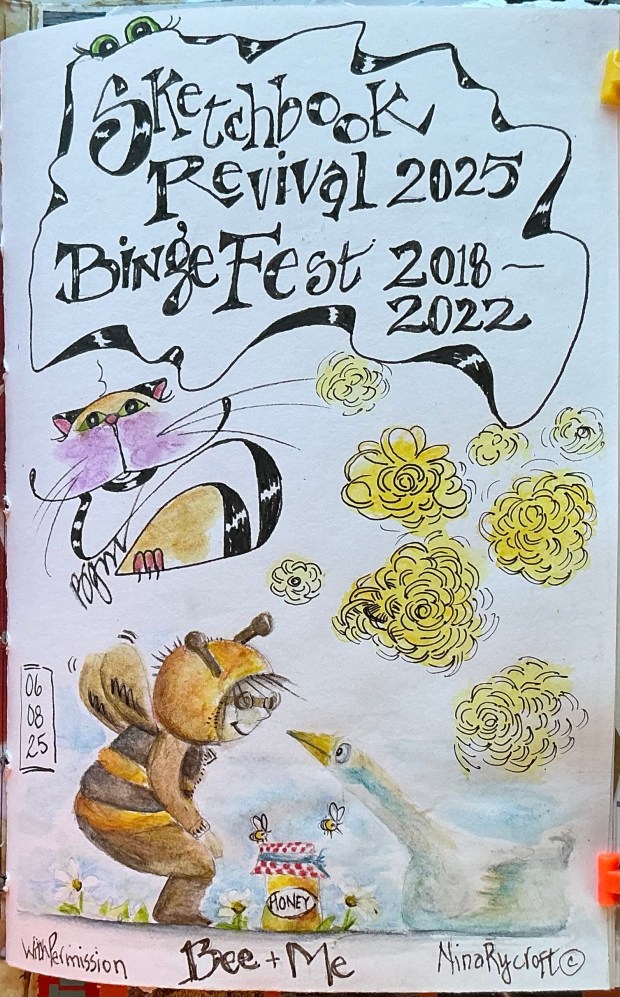
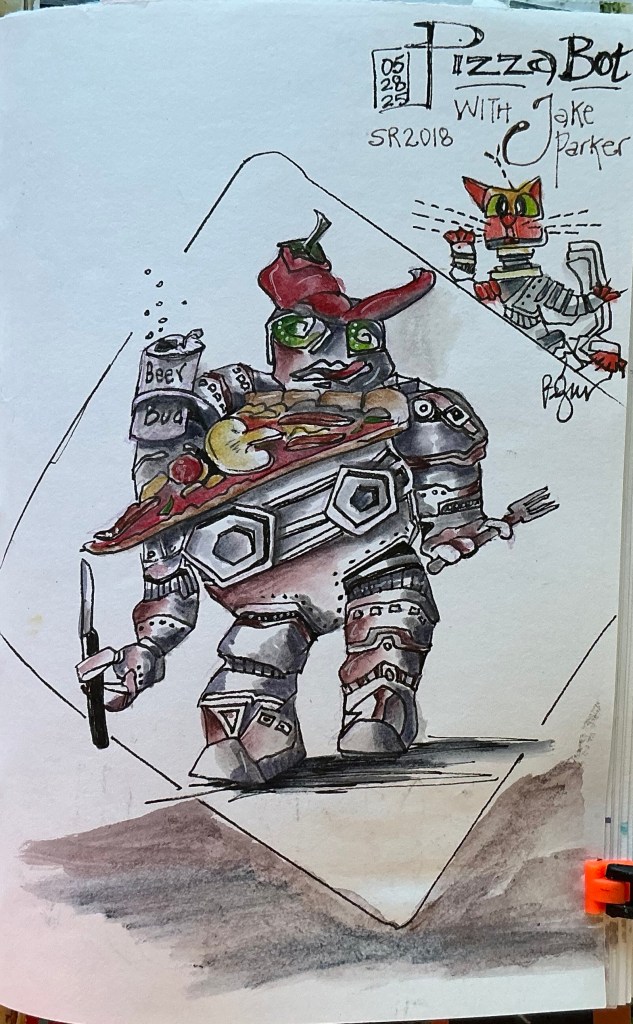
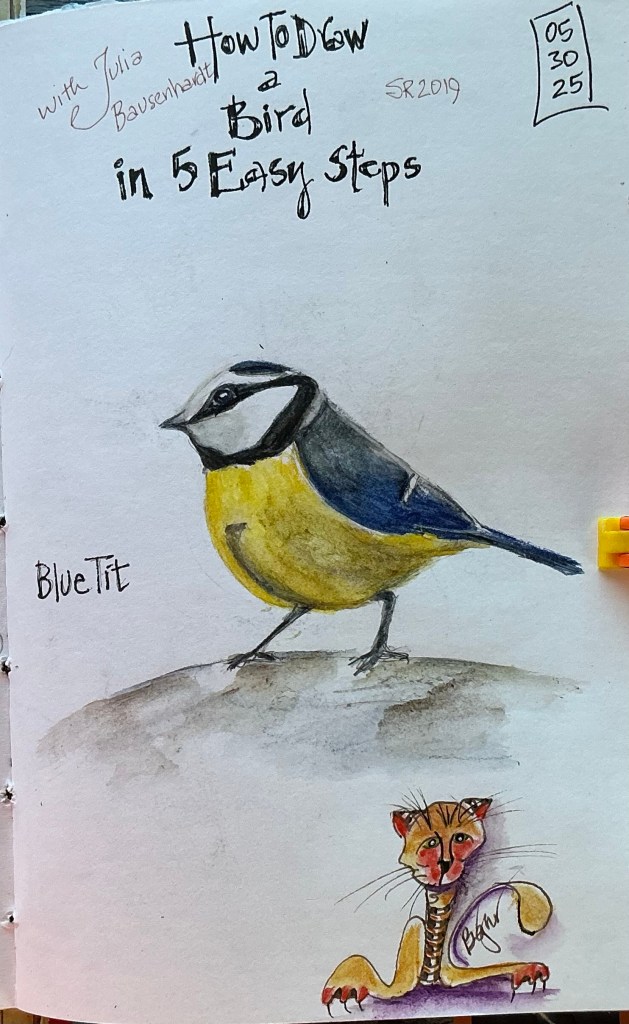
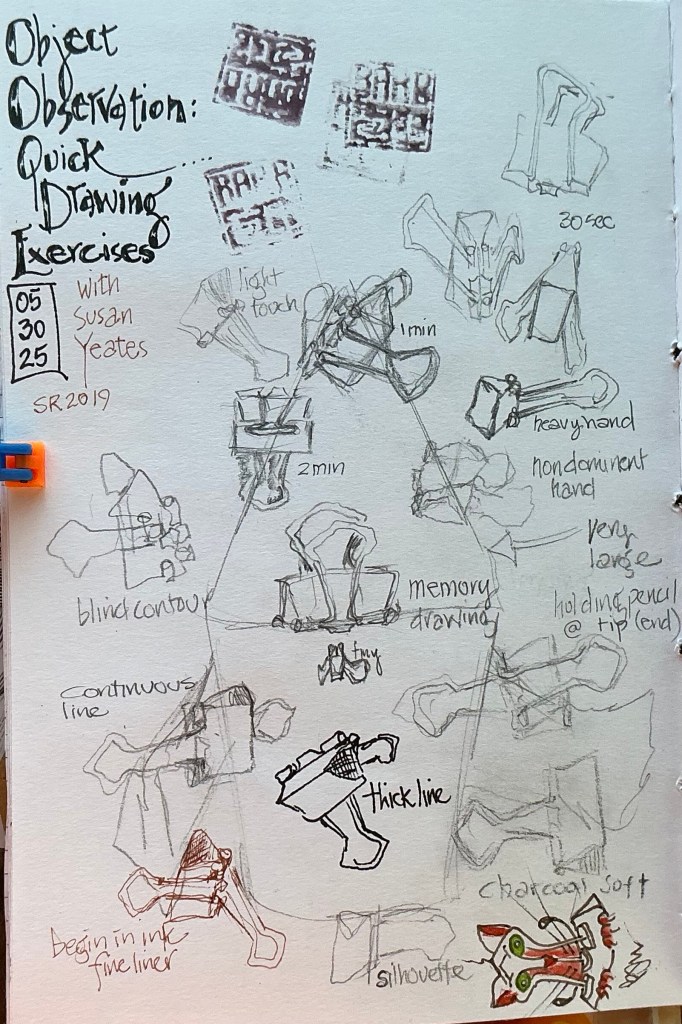
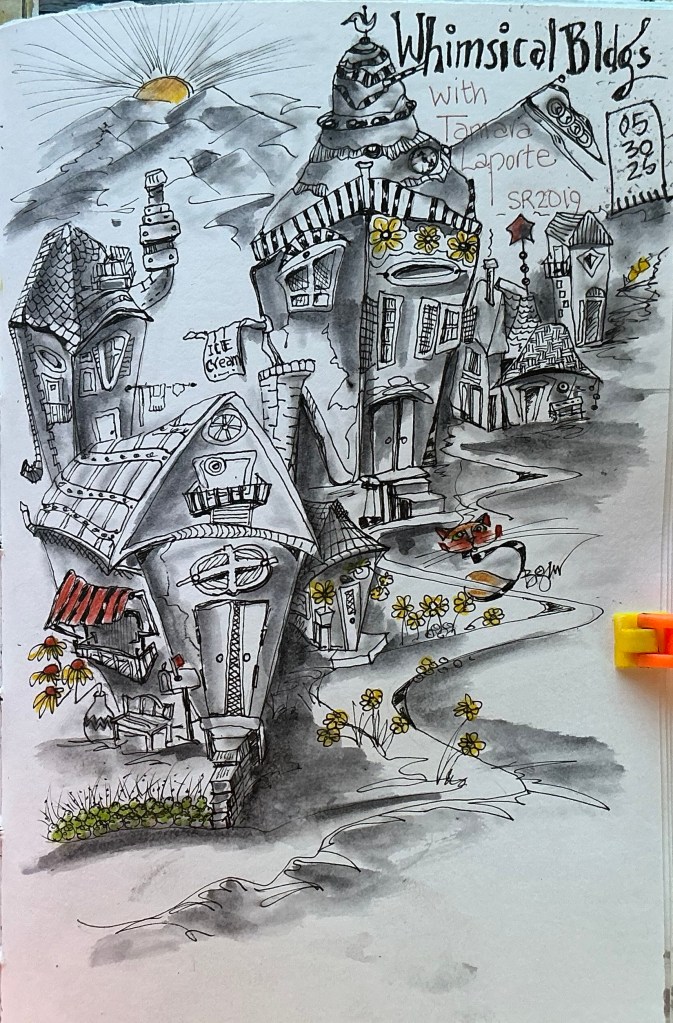
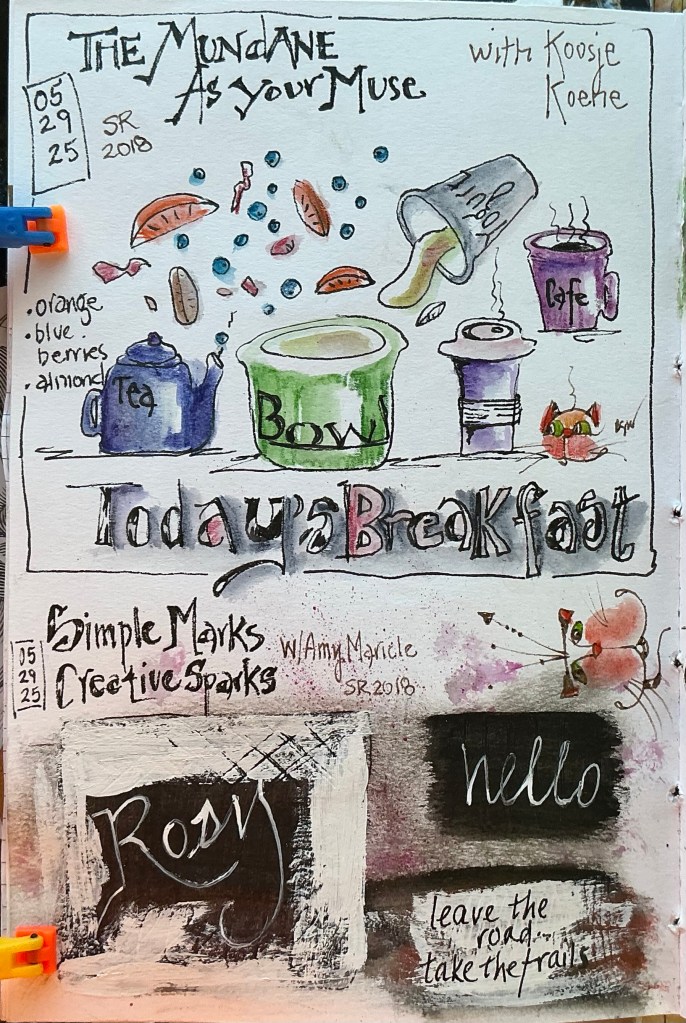
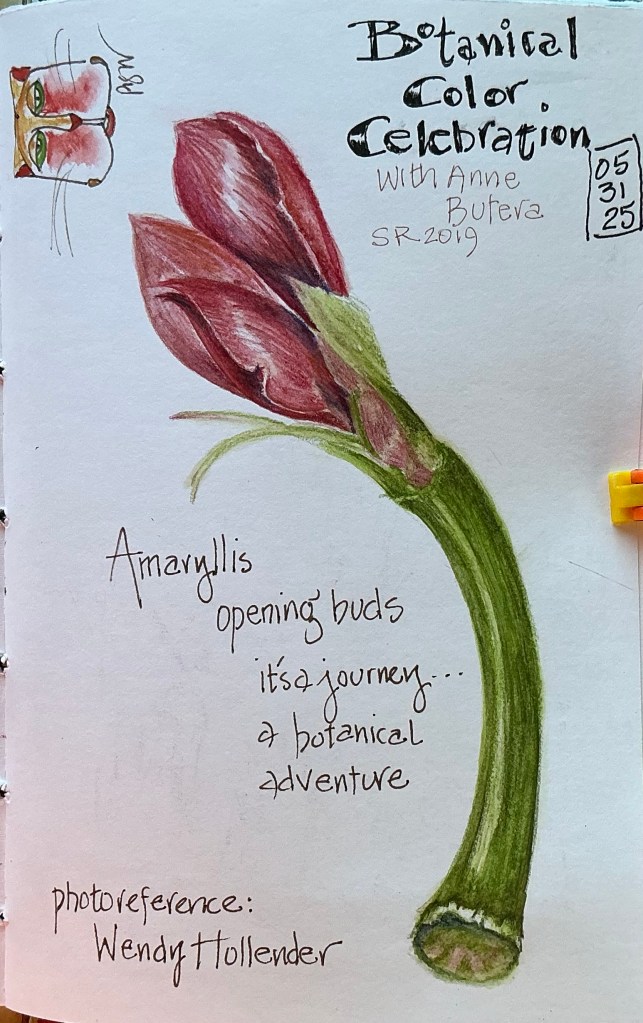
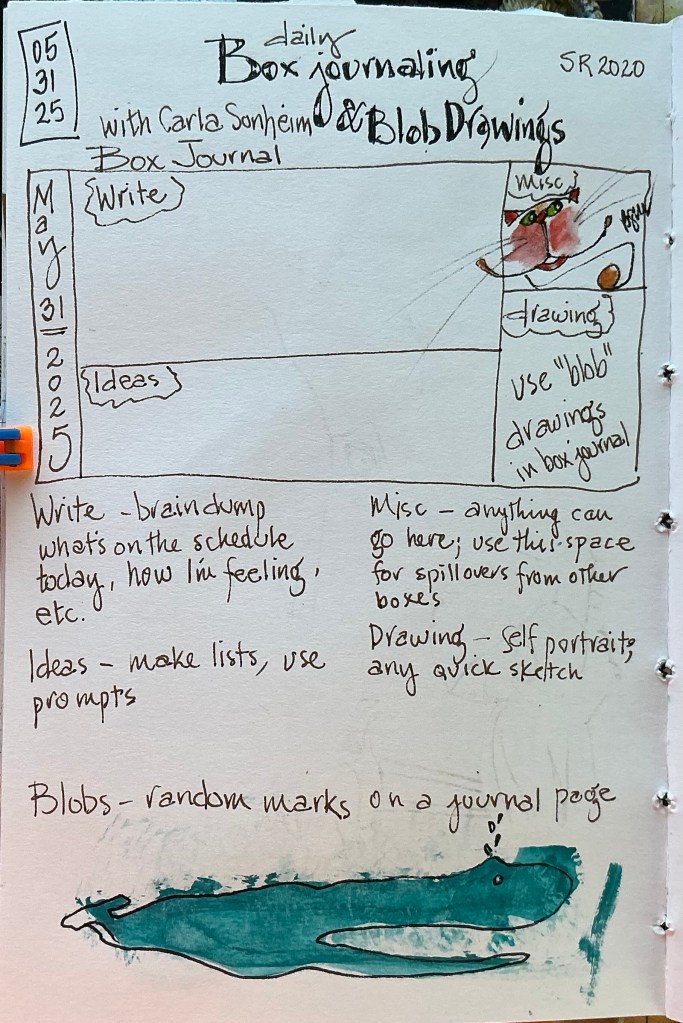
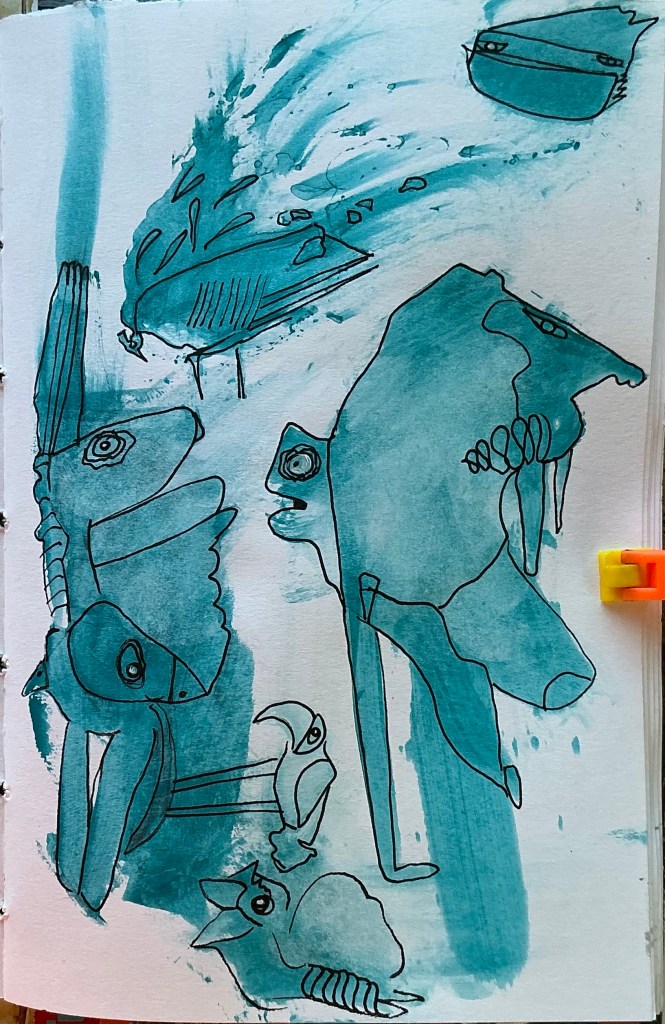
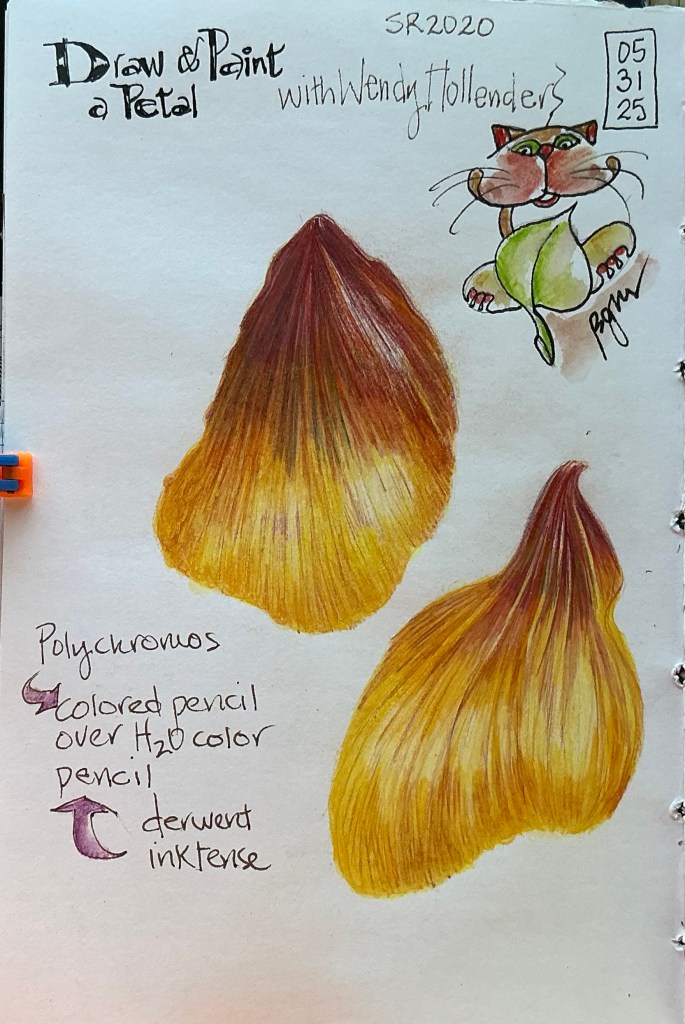
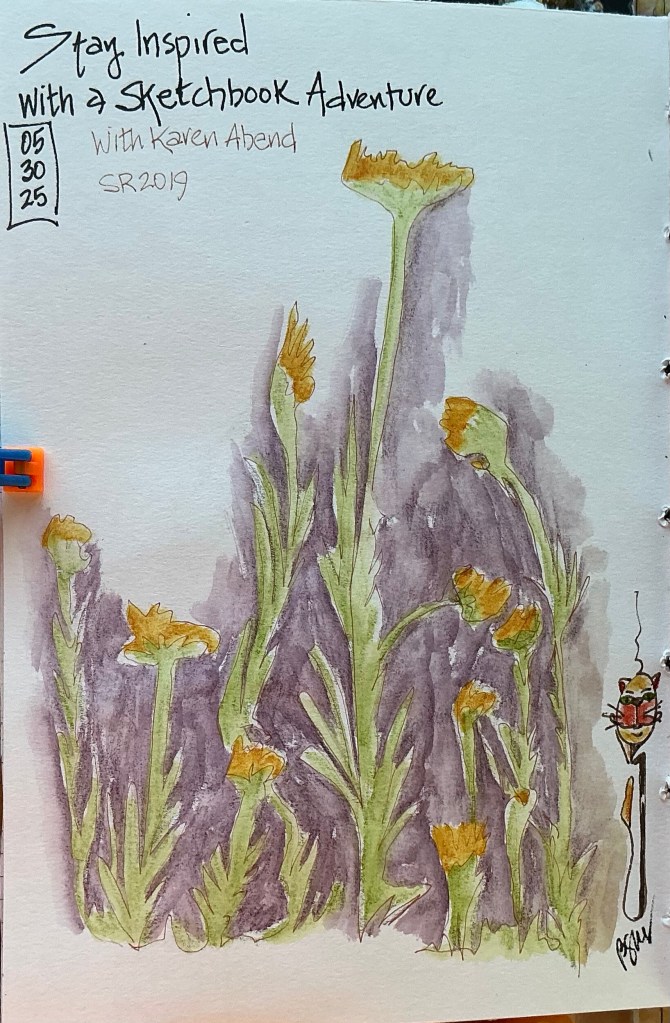
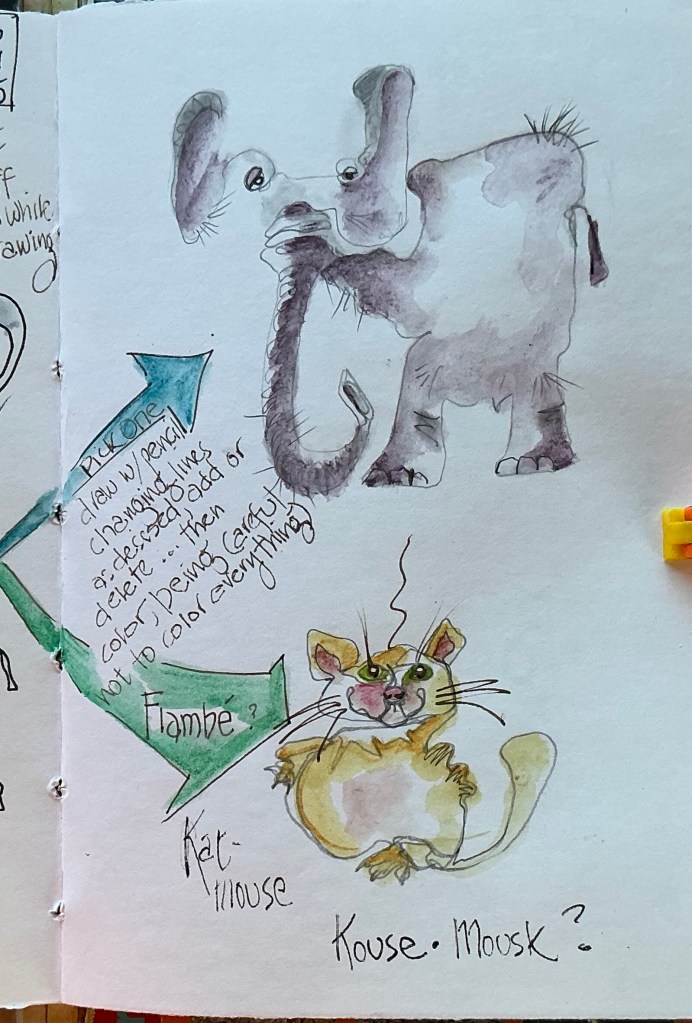
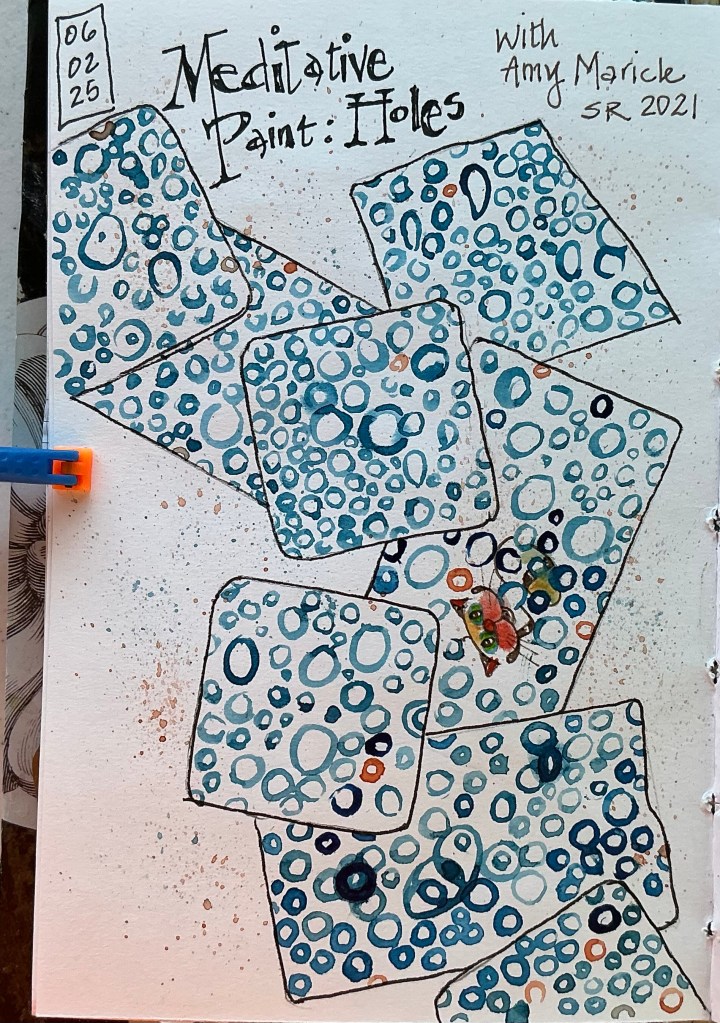
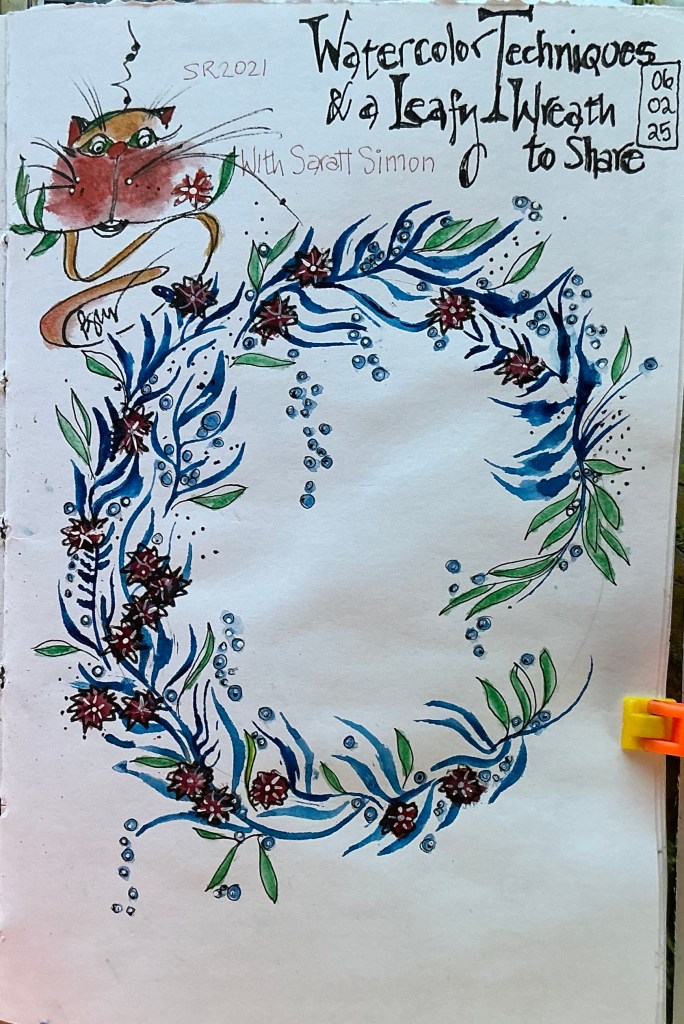
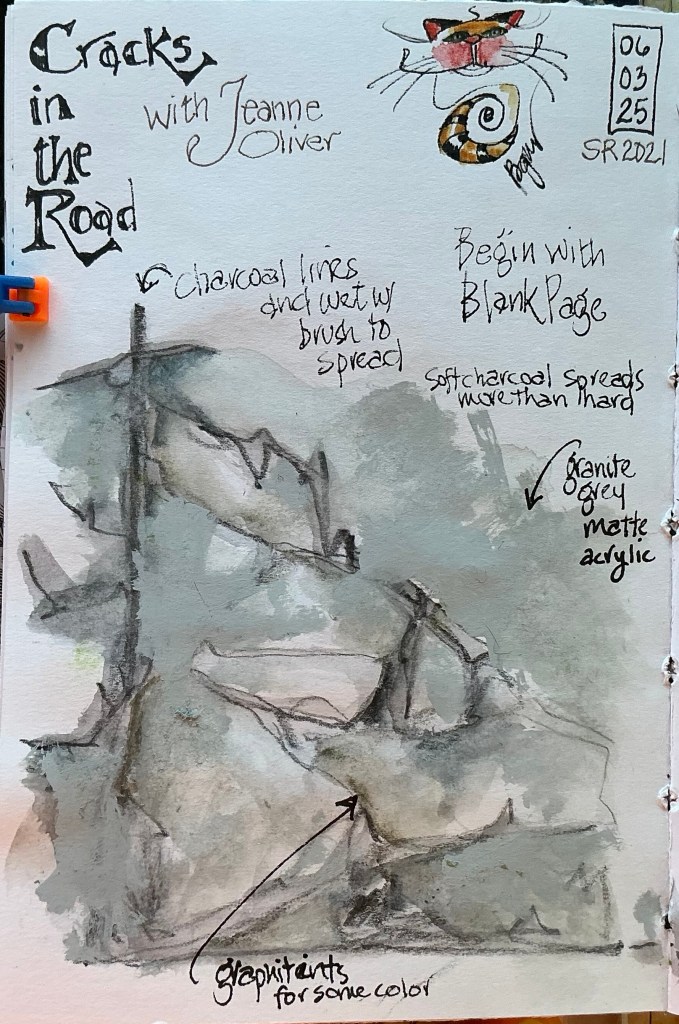
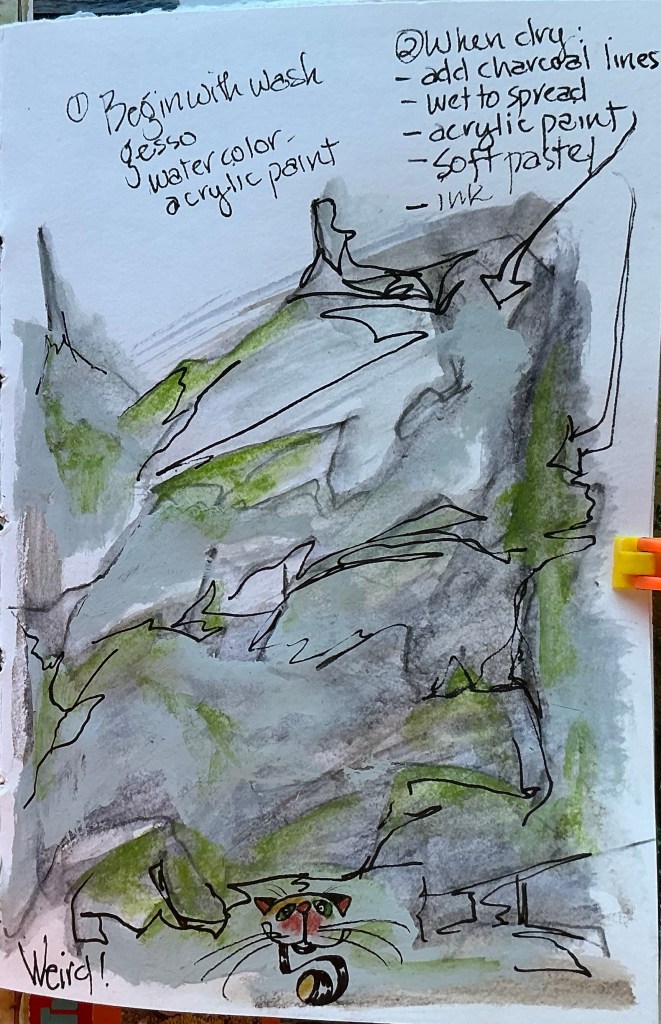
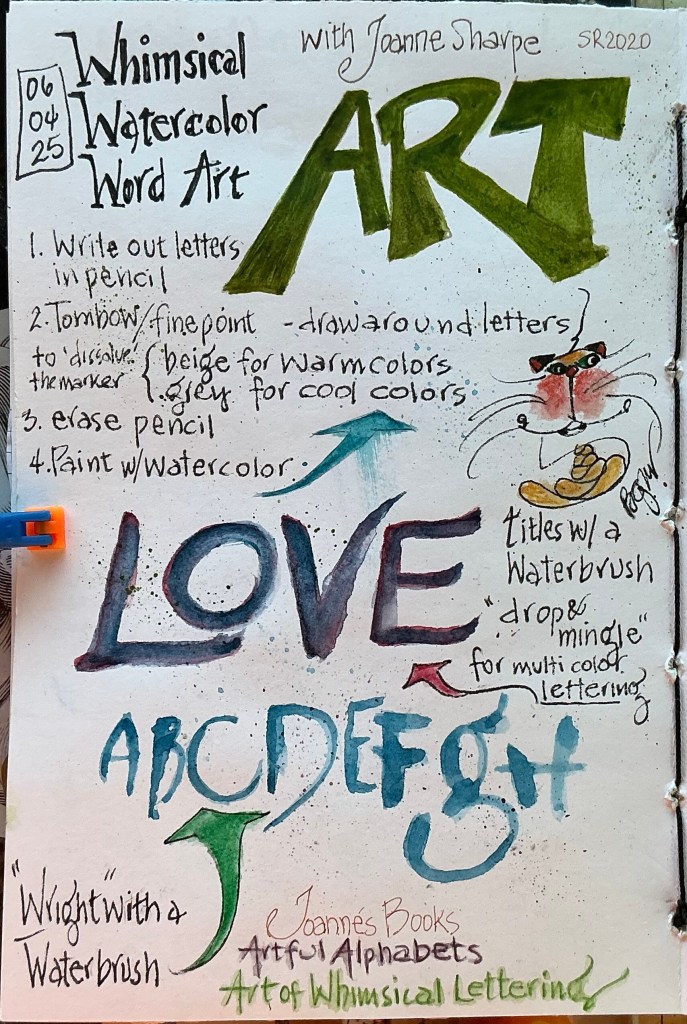
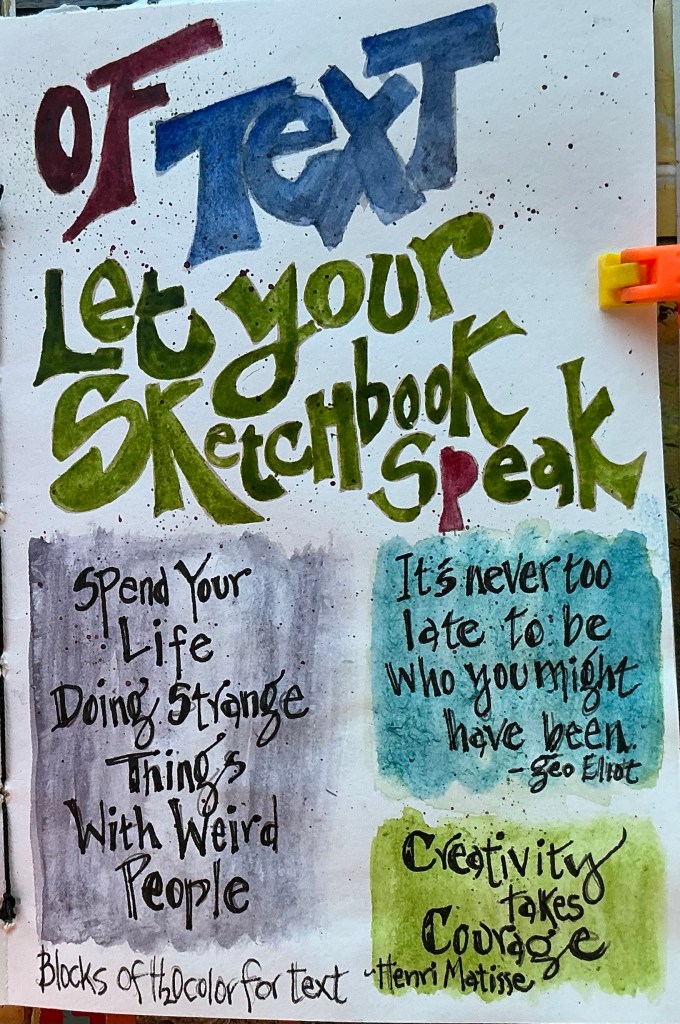
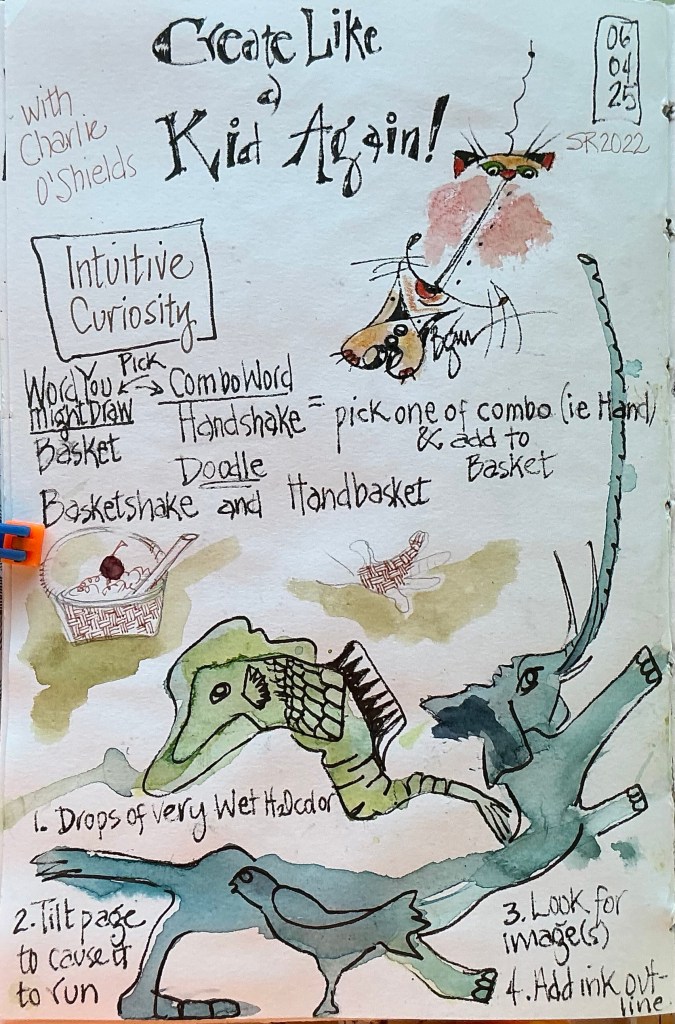
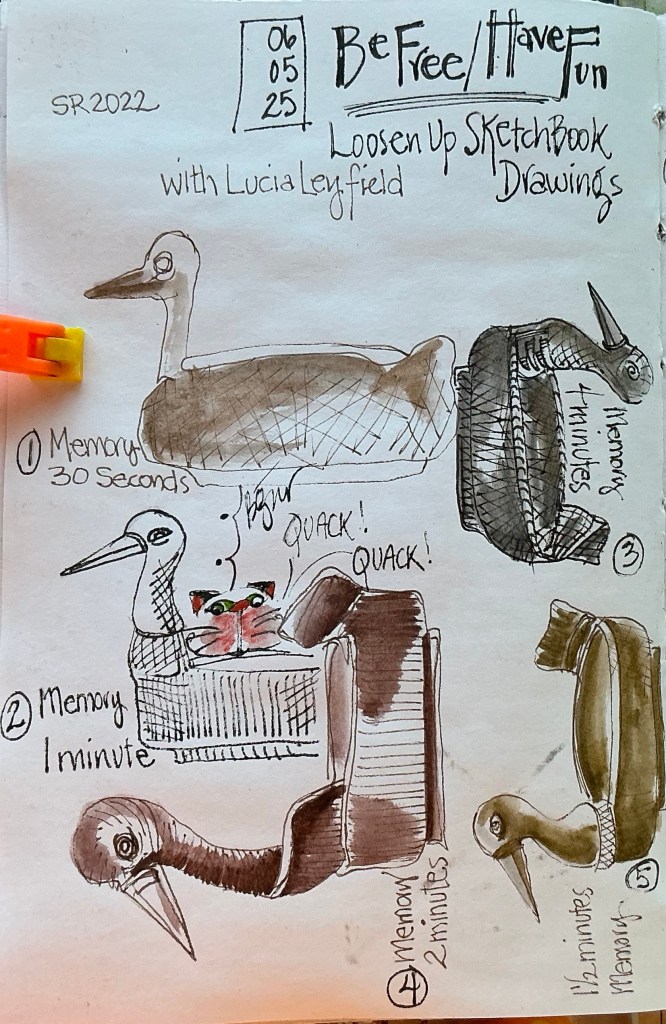
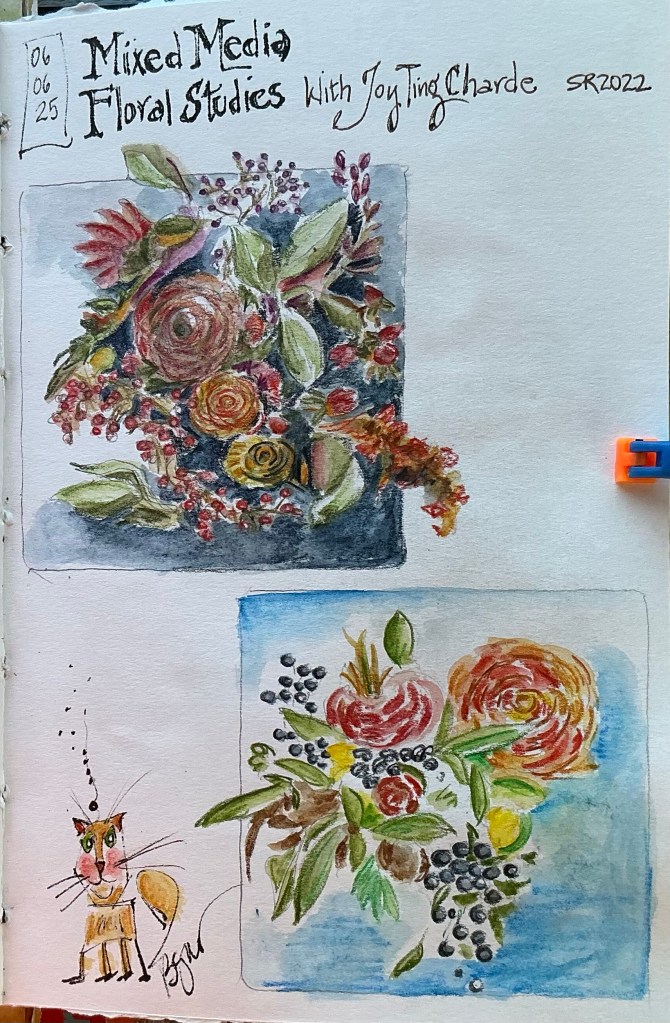
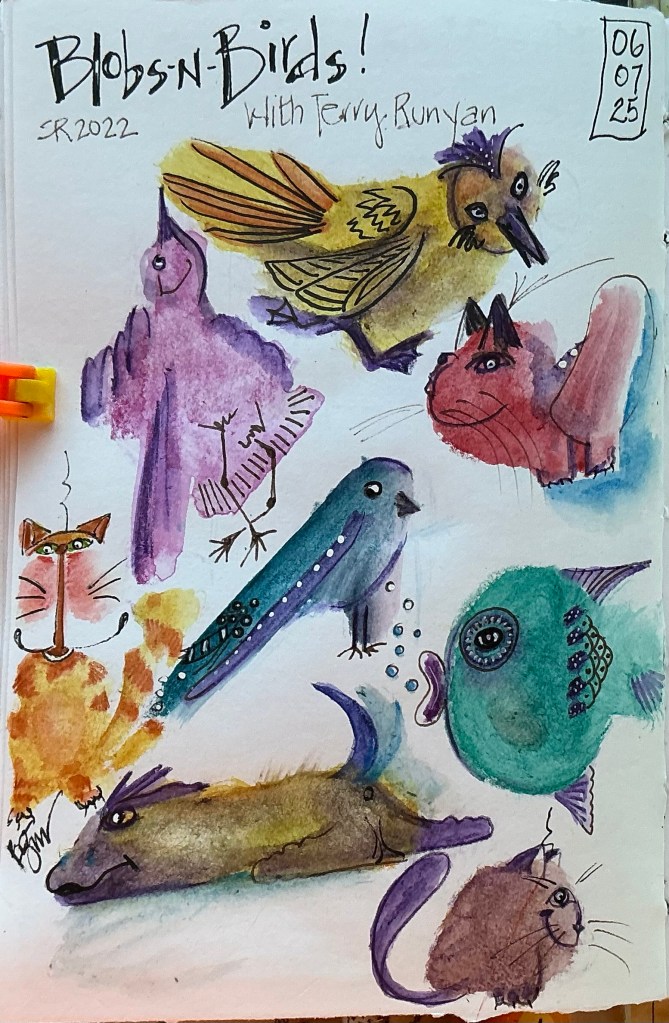
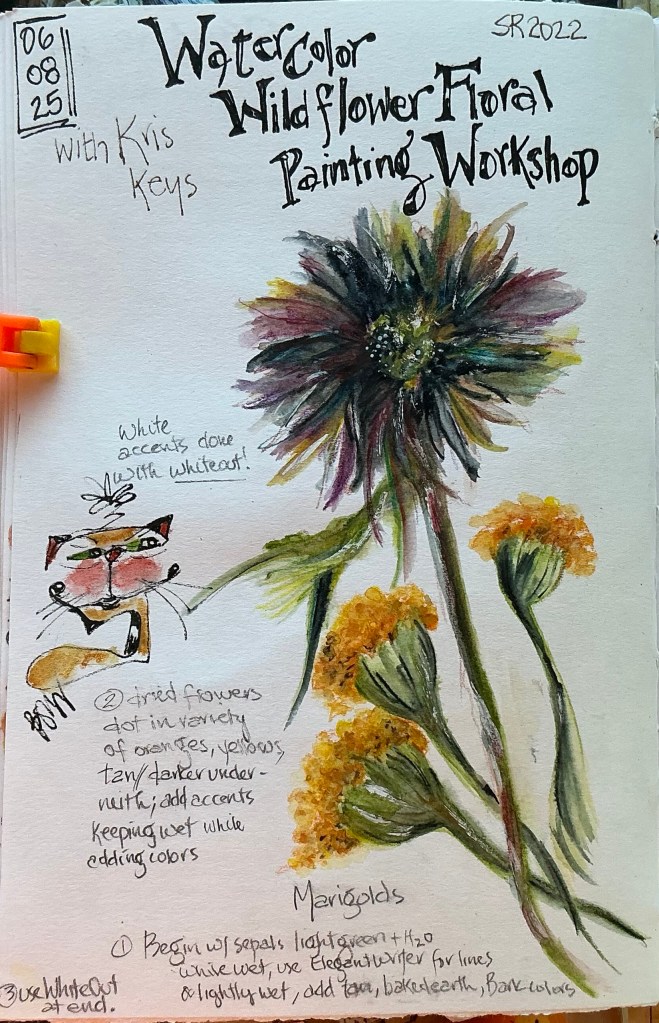
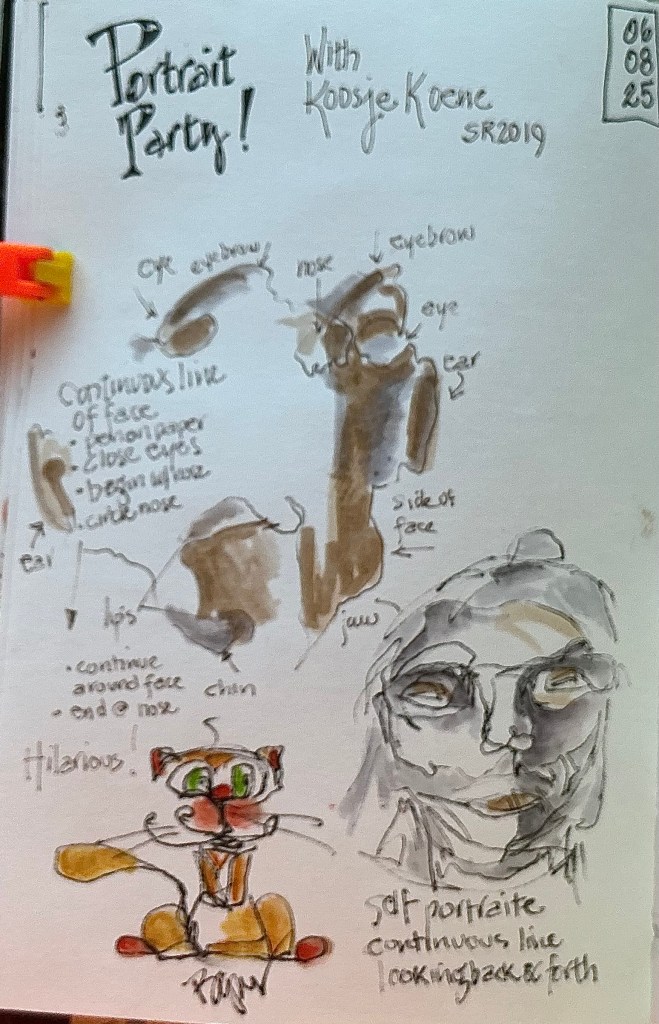
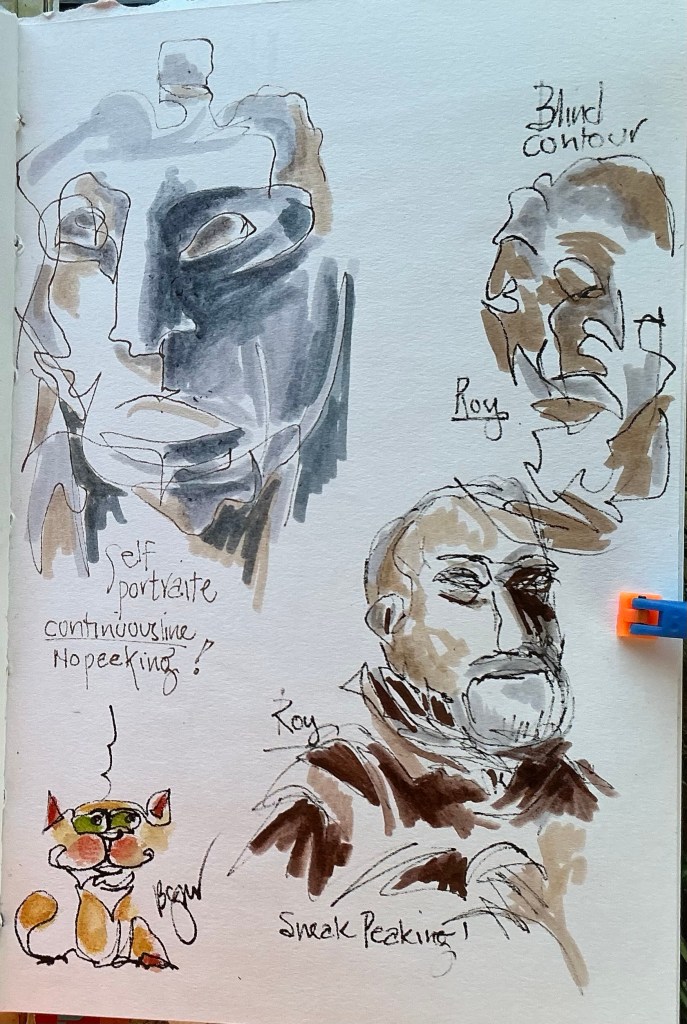
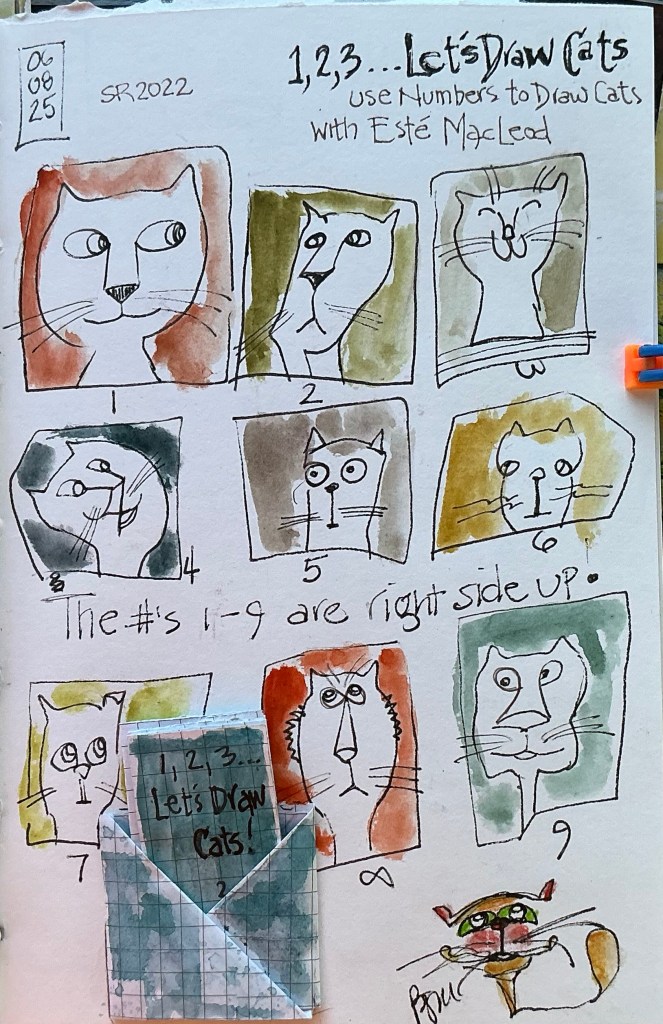
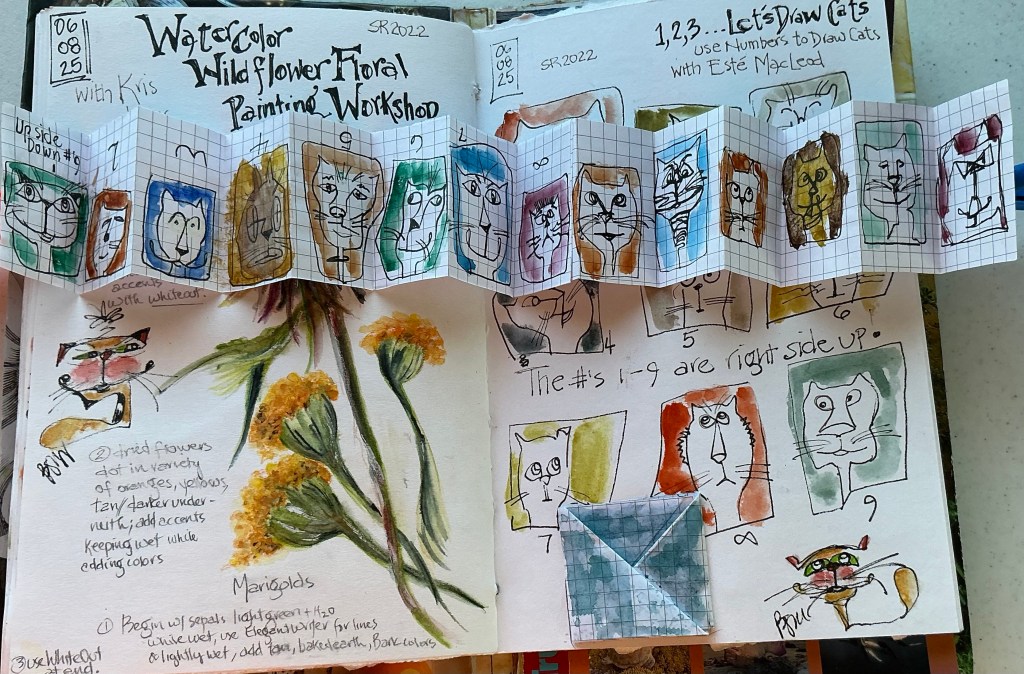
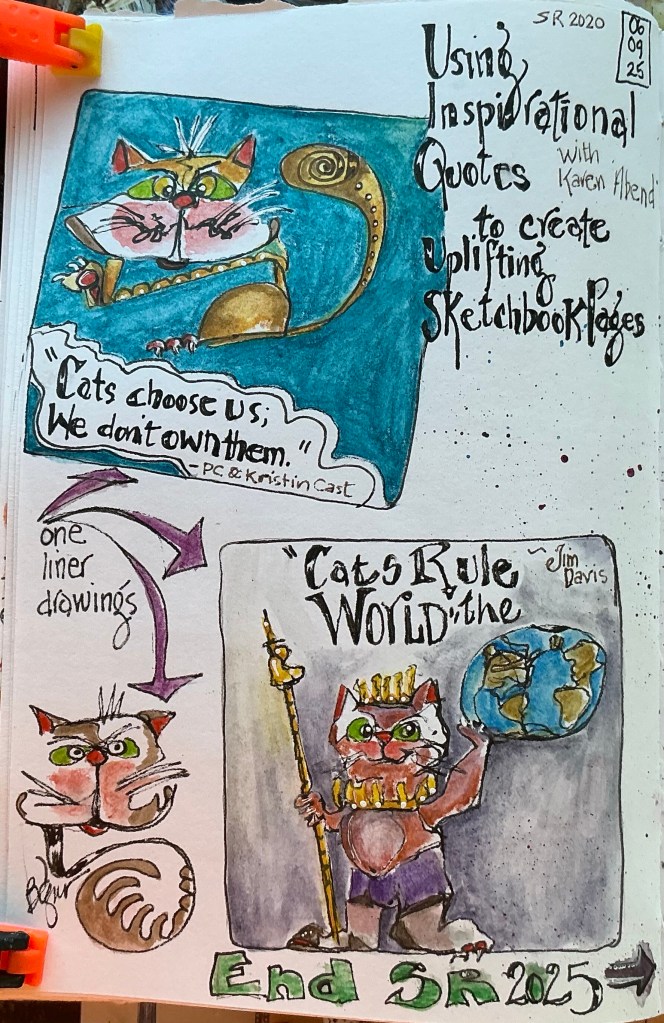
What a whirlwind celebration! Sketchbook Revival (SR) 2025 Binge Fest was so much fun. And Wow! Two jam packed weeks of creativity was over in the blink of an eye!
Karen Abend, SR creator, host extraordinaire, and wonderful artist, came up with a brilliant idea for the SR 2025 session. I would swear the creative gears inside her head were spinning with delight as she declared, “Yureka! I’ve got it!”
Beginning on May 27th thru June 9th, Karen generously opened up the SR historic vault and set free all of the workshops conducted the first 5 years of SR (2018-2022)! That unbelievable offering came to more than 130 one-hour-long workshops of inspiring, hands-on, and creative play time all instructed by well-known experts in artistic fields associated with Sketchbook Journaling.
Challenge presented ……. Challenge accepted.
Since I’ve been participating in SR each year since 2018, and attended most of these workshops in the past, my goals and strategies to tackle the challenge were these:
Complete a minimum of 4 workshops daily;
Two workshops should involve a project outside of my comfort zone, such as portrait drawing, fantasy, word play, collage, and properly stitching my own SR sketchbook so it wouldn’t fall apart during the 2-week challenge, etc.;
Two workshops should involve projects within my comfort zone, such nature subjects, urban sketching, whimsey, and lettering, and those using watercolor pencils, graphite, and ink;
Develop fresh, interesting, and imaginative sketches during the workshops;
Allow Flambé to play along;
Slow down, breathe, and enjoy the 2-week marathon without becoming overwhelmed;
Recognize and gather take-away tips and techniques to bring into my Nature Journaling practice and Zentangle storytelling.
Keep sketching and sharing.
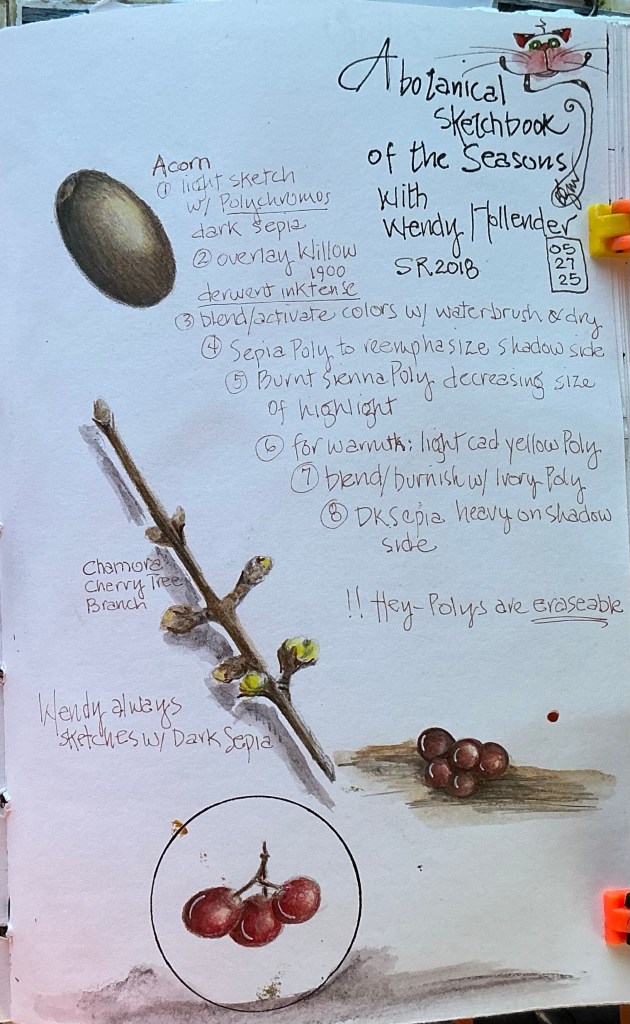
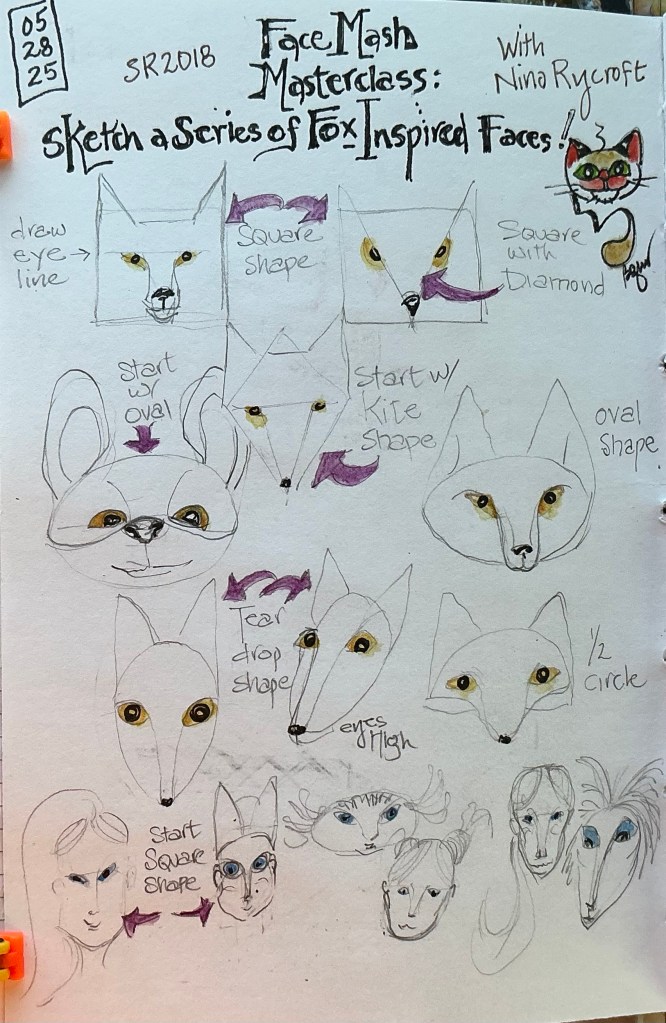
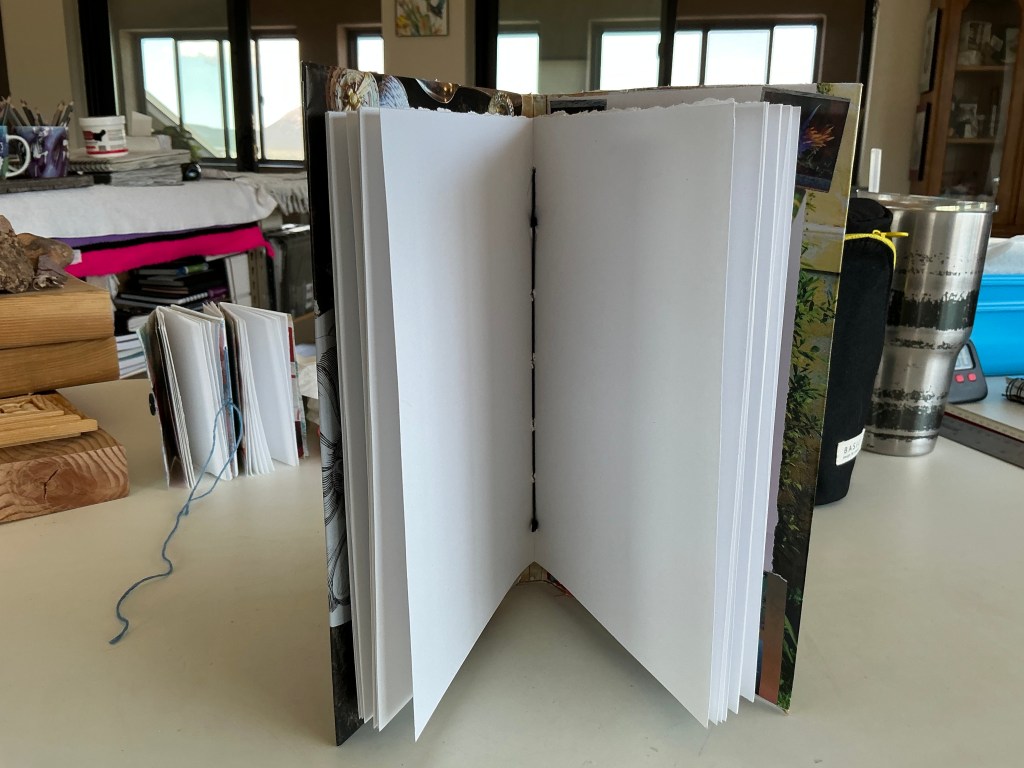
After two weeks of play, I was able to fill up my handmade and successfully stitched SR 2025 sketchbook! With a total of 46 pages completed (doubling up workshop projects on a handful of pages), including several pockets with inserts, I was pretty happy (and a bit exhausted).
If you’ve participated in SR in the past, or maybe took on the 2025 challenge as your first time, you know how intense (in an exhilarating way) it can become. If not, and would like to learn more, check out this link
This link will take you to Karen Abend’s website where you can ask for more information about Sketchbook Revival. https://karenabend.com
Hope my collection made you smile and laugh! I certainly got a kick out of the experience.
Well, until Sketchbook Revival next year, thanks for coming along!
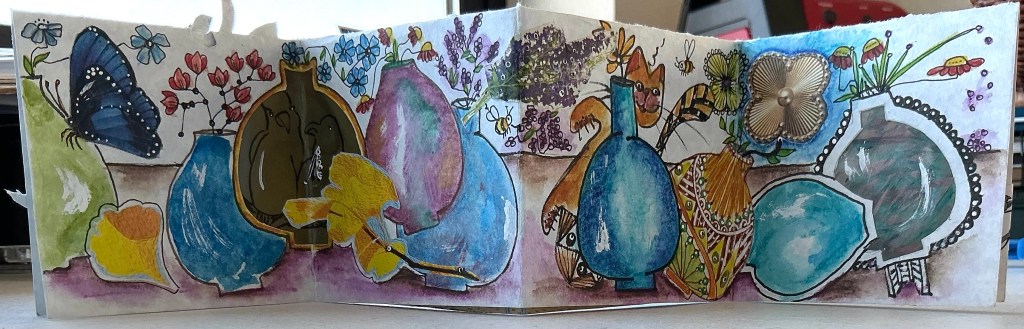
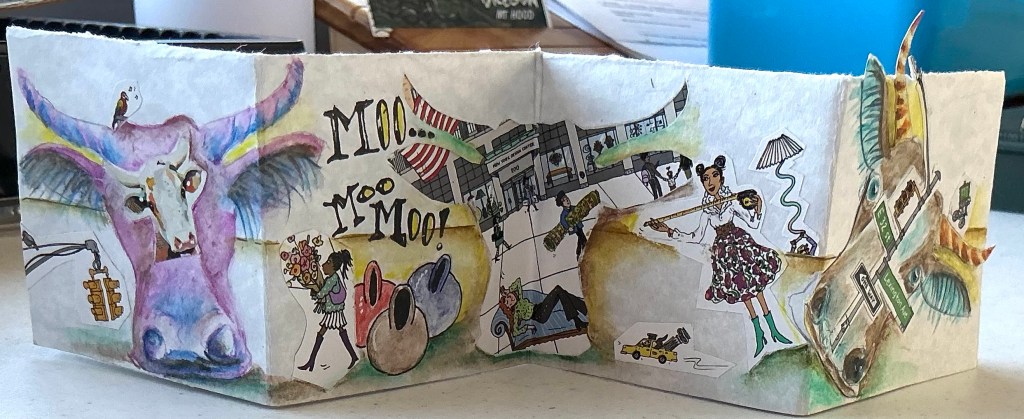
Front and back of the concertina book that tucks into the pocket above.My hand sewn, one signature SR 2025 Sketchbook.
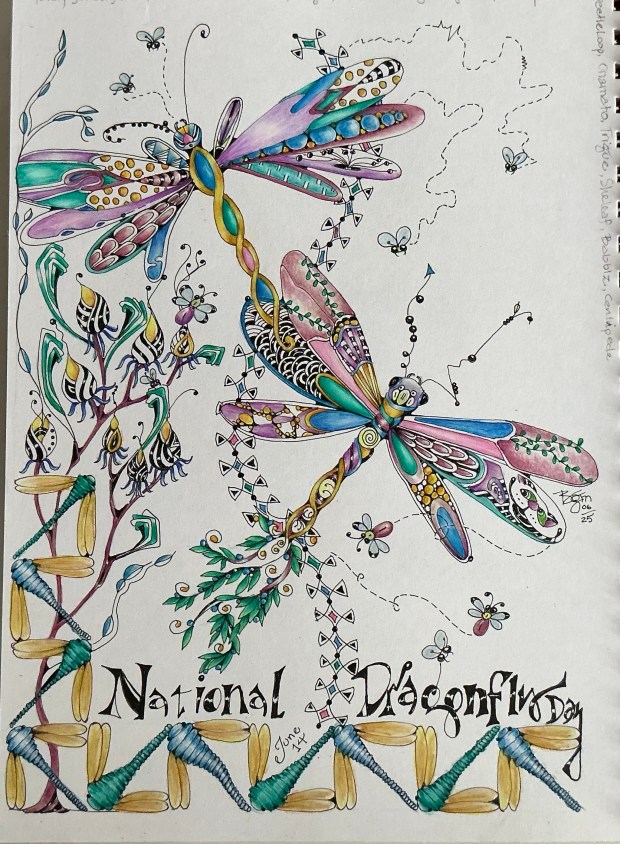
Always landing on the 2nd Saturday in June, the annual dragonfly celebration pays tribute to this fascinatingly unique and beautiful insect that’s been flying over our planet for nearly 300 million years. Wow!
There’s no mistaking the fossil record. Dragonflies have populated the airspace for nearly 300 million years, some with 3-foot wingspans. Paleontologists say they may have had 6-8 foot wingspans, making them the size of a bald eagle!
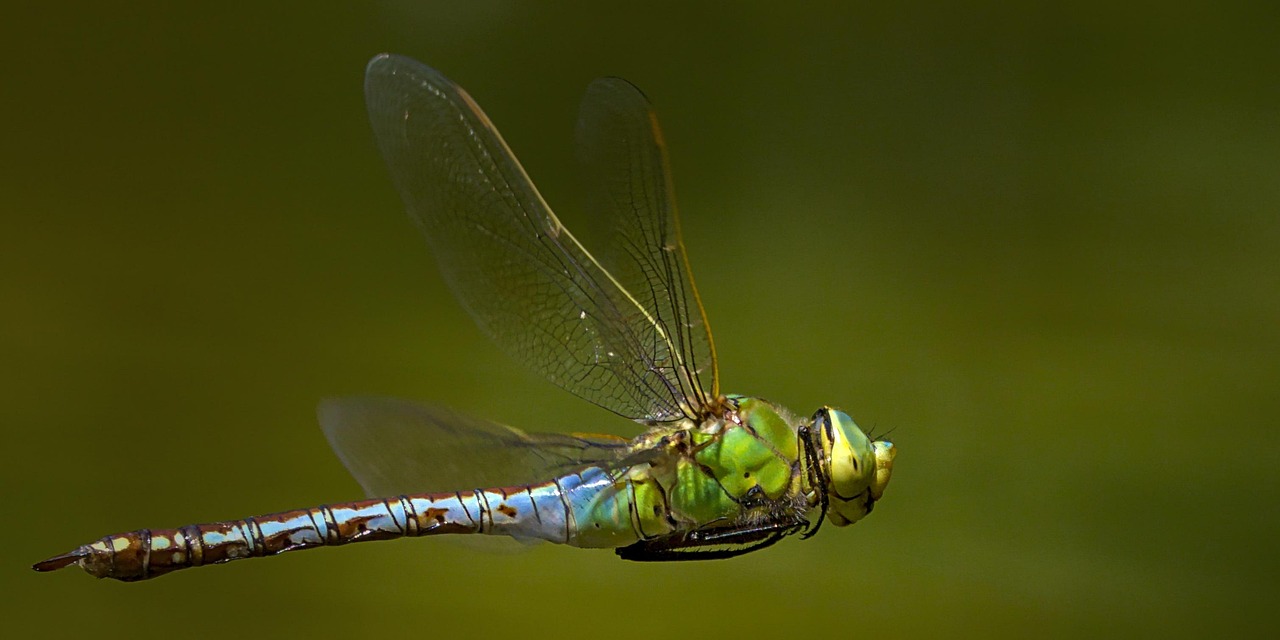
As scary as that may have looked to their prey, the 2-5 inch wingspans of modern dragonflies, combined with their body makeup, make these animals some of the most accurate and ravenous hunters known today.
It’s a warm summer day and the air above the wetlands is full of countless insects such as mosquitoes, true flies, mayflies, and midges. Perched motionless on a tall reed is a metallic colored dragonfly, and she’s hungry. To feed an insatiable appetite, she’s always on the hunt for her next meal. To satisfy her hunger, she has evolved into one of the most skilled predators in animal kingdom.
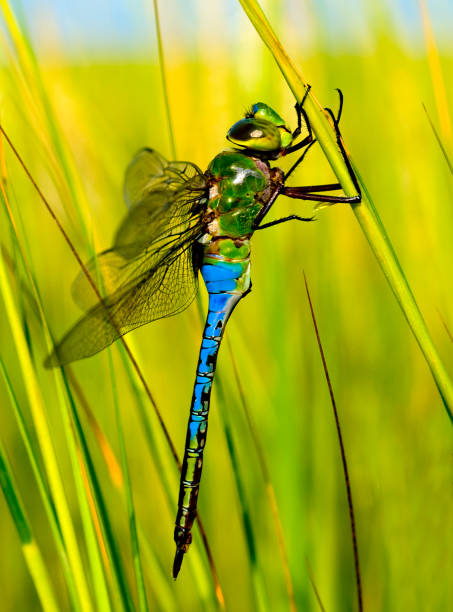
A Green Darner Dragonfly hangs onto a blade of marsh grass
But are dragonflies really that good? And if so, why?
Consider the proverbial ‘King of the Jungle;’ lions are frequent hunters, but might be successful only 20% of the time. Birds of prey, like owls, falcons and hawks, average a 25% success rate. But dragonflies catch their prey 95% of the time! Now I’d call that amazing. Dragonflies owe their survival to two key characteristics:
Eyes – in addition to three simple eyes, dragonflies (and bees) have two large compound eyes; the largest of any insect. With 30,000 facets per eye, both compound eyes together cover most of their head. This multifaceted eye makes a dragonfly acutely sensitive to movement. Because each of the 30,000 facets face a different direction, dragonflies have almost a 360 degree field of vision. This means they can see you from behind as they wing on by. ……. And speaking of wings! ………
Wings – When compared to all other insects, dragonflies are the most skilled, agile, and the fastest fliers of all insect species. With muscles attached directly to their wings, they not only can fly at speeds up to 35 mph, but are able to maneuver like a helicopter. They can fly straight up or down, forward or backward, side-to-side, upside down, and can even hover and pivot in place while keeping perfectly level. To understand how dragonflies achieve backward flight, high speed cameras revealed they angle their bodies vertically, at a 90-degree angle to the horizon. They’re also capable of independently moving and twisting each of their four wings to improve flight control.
Look! A Mosquito Hawk!
It’s been reported that one adult dragonfly can capture and eat from 30 to 100 mosquitos a day, earning them the name ‘’Mosquito Hawk.” Considered such prevalent mosquito predators when they are adults, a dragonfly nymph feasts on mosquito larvae too, devouring as many as 40 a day!
A variegated meadowhawk
And How About these Dragonfly Fun Facts!
A dragonfly is classified as an Odonata, which is the family of flying insects that includes dragonflies and damselflies. Odonata means “toothed one” in Greek. However, dragonflies don’t have teeth. The name refers to its serrated mandible, which comes in handy for holding and crushing prey.
There are around 5,000 species of dragonflies around the world.
Dragonflies can live for years underwater as predatory larvae (aka nymphs). At the end of its larval stage, the nymph crawls out of the water, its exoskeleton cracks open releasing its abdomen (which had been packed in like a telescope), then out come its four wings and its entire body dries and hardens over the next several hours.
Most adult dragonflies live for only a few weeks, but some do live up to a year.
Dragonflies can live in the winter but are normally small and stumpy in size.
Dragonflies use both their feet and mandibles to catch their food.
When dragonflies mate, the pair first forms a flying, loop-like structure known as a mating wheel or mating circle. Then the male grasps the female’s neck with claspers on his abdomen to transfer his sperm. Sometimes, he will continue to guard the female from other males until she lays eggs in the water. If a female doesn’t consent to mating, she might play dead. Or, she might wrestle away her suitor by twisting, shaking, flying backward or clinging to a reed to prevent takeoff. In some cases, the female might even take control of the flight, then dunk the male into a body of water, buying herself time to flee.
Mysterious swarming behavior – sometimes 100’s of dragonflies of different species will gather in swarms, possibly to locate new and/or better habitat, for feeding, or migration. Not much is known about this short-lived behavior, but it is being studied by members of the Dragonfly Swarm Project. You can read more about the Swarm Project here: https://thedragonflywoman.com/dsp/ And you can report seeing a swarm through this website: https://thedragonflywoman.com/dsp/report/
The Scarlet Dwarf is the smallest known dragonfly. Less than two centimeters long, it’s only 0.59 inches long (15 millimeters), and has a wingspan of about 0.79 inches (20 millimeters). These dragonflies are native to Southeast Asia, as well as China and Japan.
Many species of dragonflies migrate annually. To track them, scientists attach tiny transmitters to their wings with a combination of eyelash adhesive and superglue. One of their findings revealed the two inch dragonfly called the globe skimmer has the longest migration of any insect — flying up to 11,000 miles across multiple generations between India and Africa. Aided by winds, the globe skimmers cross the Indian Ocean stopping at islands along the way. They have even been spotted at altitudes of around 20,000 feet in the Himalayas.
Of the 445 kinds of dragonflies in North America, only 9 of these species (or 2%) migrate regularly. One of these species is called the green darner which migrates in swarms. They complete a multi-generational migration from Canada and the northern U.S. to the Gulf Coast and Mexico in late summer and fall, and then return again in the spring. By tracking the migration, it was found their journey covered over 800 miles one way. To accomplish this feat, they travel only every third day, averaging 7.5 miles per day.
The International Union for Conservation of Nature (2021) found that 16 percent of the 6,016 species of dragonflies and damselflies that were studied are at risk of extinction as they lose the freshwater breeding grounds needed to maintain their populations. Clearing of forests in South and Southeast Asia as well as in Central and South America has driven habitat loss for the insects, and in North America and Europe, dragonflies are most threatened by pesticides and climate change.
Mosaic darner
The Good Luck Insect
Not surprisingly, the dragonfly has symbolic meaning in almost every part of the world. Many cultures believe this insect symbolizes good luck. Because dragonflies have such short lifespans, they also represent new beginnings and change, especially for strength, growth, courage, and happiness. A few ancient cultures say dreaming about a dragonfly indicates you are in a powerful transition in your life.
Here’s a Few of those Symbolic Dragonfly Beliefs. Do you know of more?
Native Americans believe a dragonfly symbolizes life transformations.
South American cultures believe the dragonfly symbolizes good luck and prosperity, and many artists include the dragonfly in their work.
European cultures see the dragonfly as a symbol of change and adaptability, and are included in many of their folklore stories and beliefs.
Asian cultures believe the dragonfly represents good luck, prosperity and new beginnings.
South Africans believe dragonflies are a sign of spirits and bring good luck. Africans also hold dragonflies in high regard because they are water gods who bring rain.
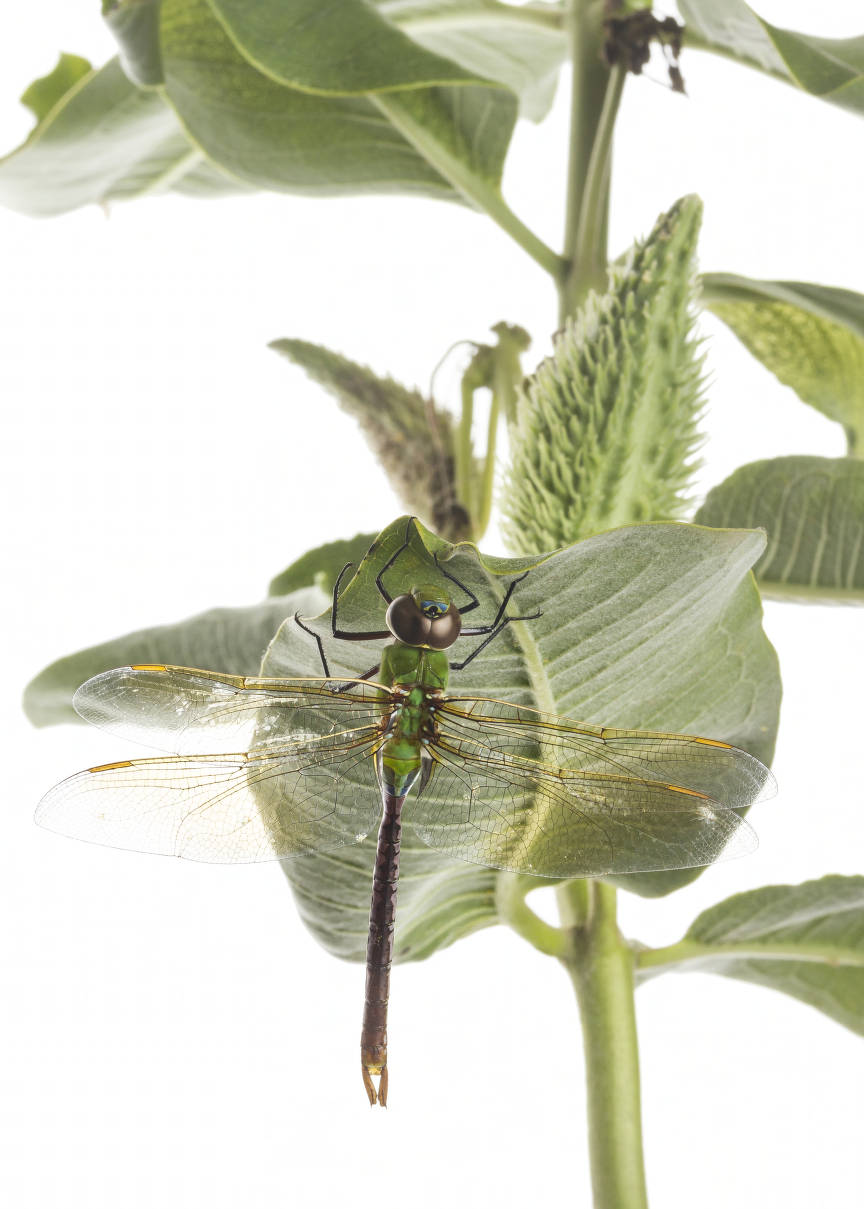
A South Dakota dragonfly resting on a milkweed
How Will you Celebrate National Dragonfly Day? Here’s a few ideas:
Learn about the species of dragonflies near you.
Visit your local wetland habitats to observe dragonflies, as nymphs and as adults.
When you travel in the summer, search out new-to-you species of dragonflies and record your observations.
Learn about the symbolism of dragonflies in your own culture.
Sketch or paint a dragonfly in its habitat.
Photograph a dragonfly and share on social media using #NationalDragonflyDay.
It was great fun and so eye-opening to learn about this species. A few months ago I watched a nature program about dragonflies and how they fly like stunt pilots. It was fascinating, and gave me a whole new appreciation of these insects. Can you imagine living in the dragonfly’s world 300 million years ago? Wonder if they could also fly like a helicopter?
Please share your dragonfly stories. Have you ever tried to catch a dragonfly? Have you seen one flying upside down or hover? What colors of dragonflies have you seen? Let me know if you enjoyed this post about dragonflies, and give it a Like!
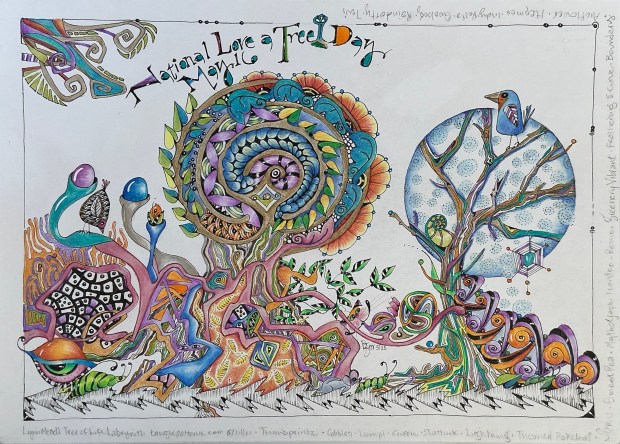
And many thanks to Lynn Mead for sharing her Tree of Life Labyrinth pattern. Super fun to give a whirl! The easy to follow directions can be found on tanglepatterns.com posted 08/14/2021
Today, May 16th, just so happens to be National Love a Tree Day! It’s the official day to celebrate all of life’s joys brought to us by the trees we share this planet with. Whether you love reading in the shade or taking a bite out of a fresh fruit pie, National Love a Tree Day encourages y’all to get outside and enjoy a tree.
A Changing Landscape
We all know many tree species live many many years; some live to be several thousand years old. According to the U.S. Forest Service, about 766 million acres of forest land exists in the United States today, a number that’s held steady since 2012. But the nature of our forests has changed over the last 400 years, due to changes in management practices and demand. Population growth, rural and urban development, along with a variety of land uses (like conversion of forests to agriculture use) resulted in a steady decline of forested acres between 1630 and 1910; a decline from 1,023 million acres to 753 million acres or 46% to 34% of the total land area in the U.S. Since that time until the present, where people choose to live and how the land is used has been constantly changing. While some urban forests increase, other areas see a decline. Tree planting programs improve landscapes but human activities and population growth continue to impact these ecosystems.
We All Benefit from Trees
Trees provide more than just beautiful landscapes and a shady canopy on a sunny day. They play a significant role in reducing erosion and moderating the climate as well as give us oxygen. Large quantities of carbon are stored in their tissues as trees remove carbon dioxide from the atmosphere. They provide habitat and structure for strong ecosystems.
How to Observe National Love a Tree Day
This is a good day to plant a new tree native to your area, or spend some time enjoying the beauty of the trees, Take time to learn how to care for the trees you have, too, whether you live in the mountains or the desert. Write down all the reasons trees are important to you. If you have a favorite tree, or a tree you’re not familiar with, begin a little research project about that (or those) species, and journal about your findings.



























 a curious nature