Mexican Hat

July 11, 2025

A few years ago I stumbled across this plant while walking around our neighborhood. Being immediately awed by its richly-colored petals skirting an upright cylinder or cone, I knew it would be a perfect addition to our high elevation (7,300 feet) landscape. My idea was to wait until the flowers on the cone faded and collect some seed to scatter in our yard. After repeated trips hoping to find evidence of seed, I was skunked. Either I missed the dispersal event, or this plant was 100% sterile. On the outside chance there were microscopic seeds embedded in the cone, I resorted to cone collection. Fast forward to the next spring …… every spot I’d planted those cones was barren; nothing had sprouted; zero; zip.

Fast forward again to early July 2025. This wildly blooming plant was growing vigorously in many of the dry disturbed openings and roadside areas throughout our new neighborhood! Time to learn more about such a charming member of the sunflower family called Mexican Hat.

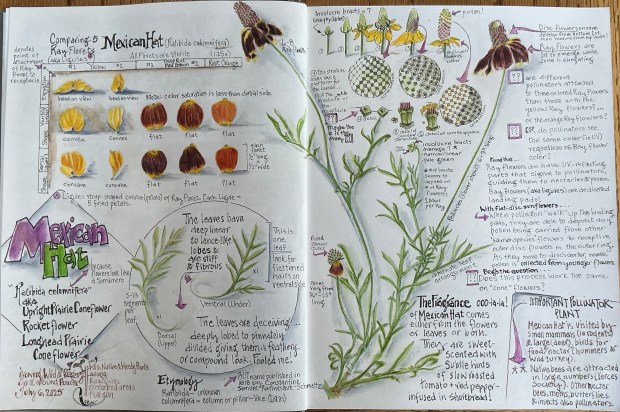
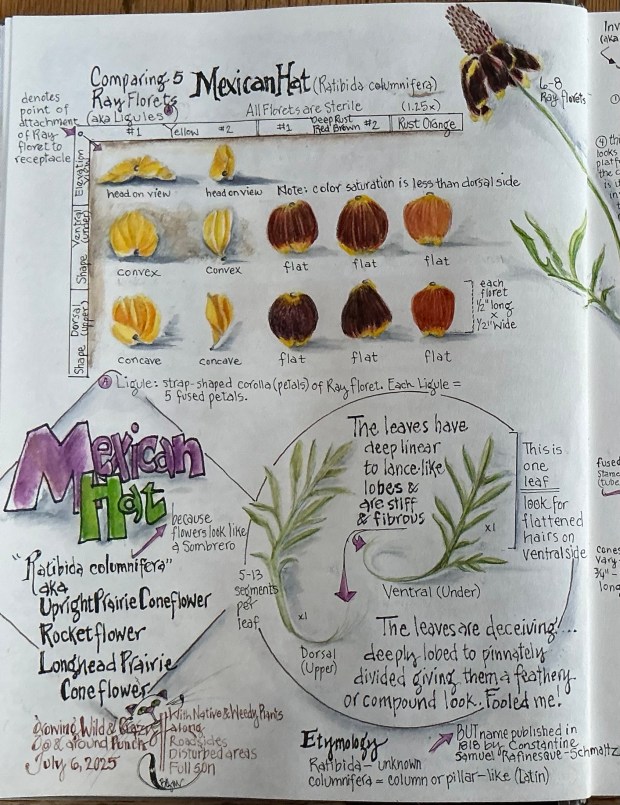
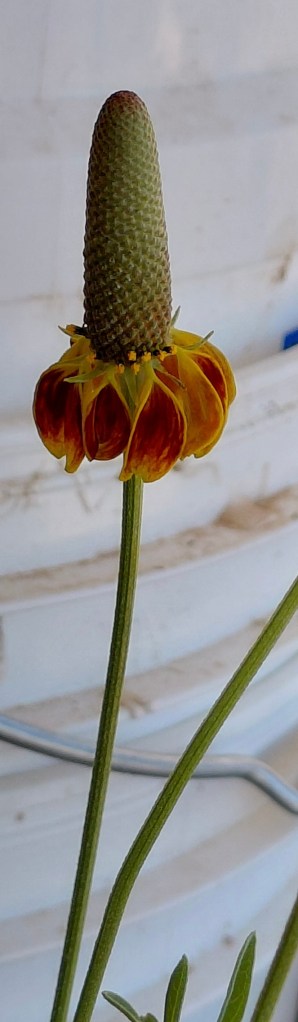
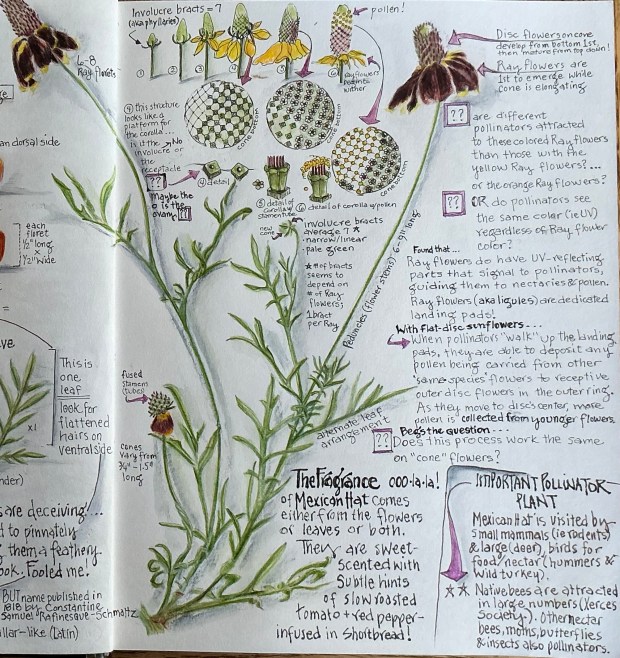
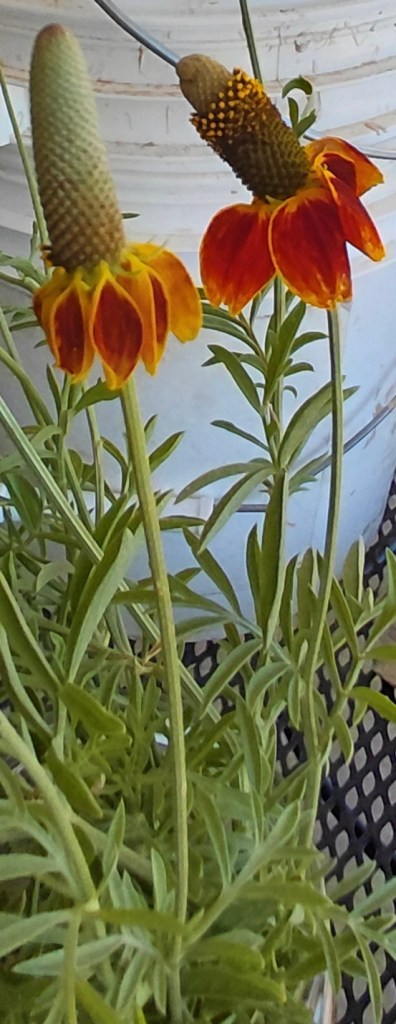
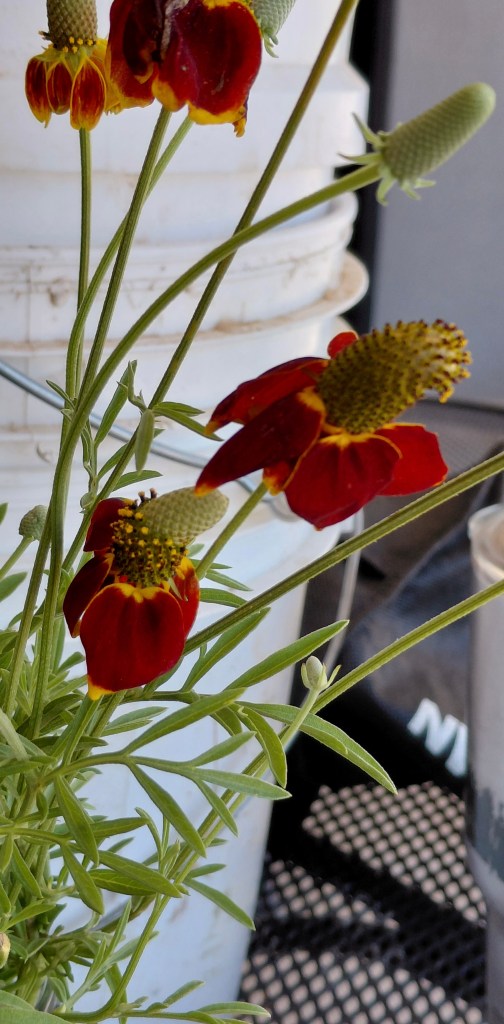
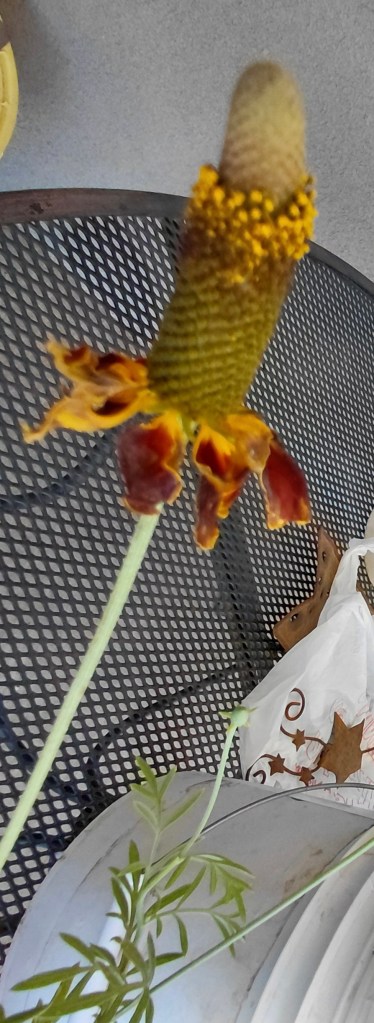
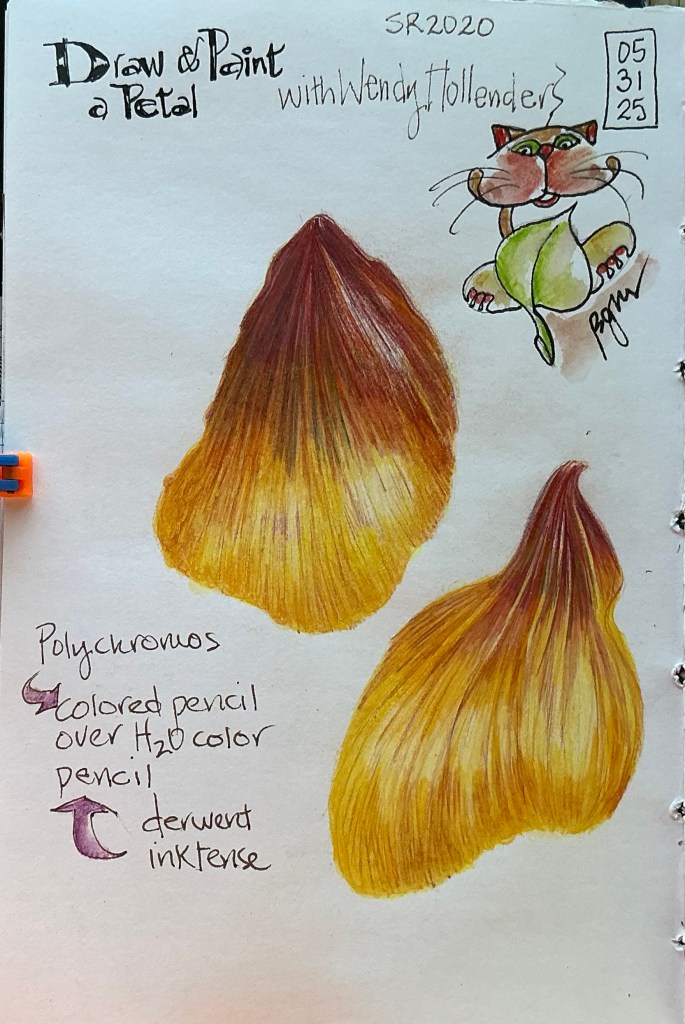
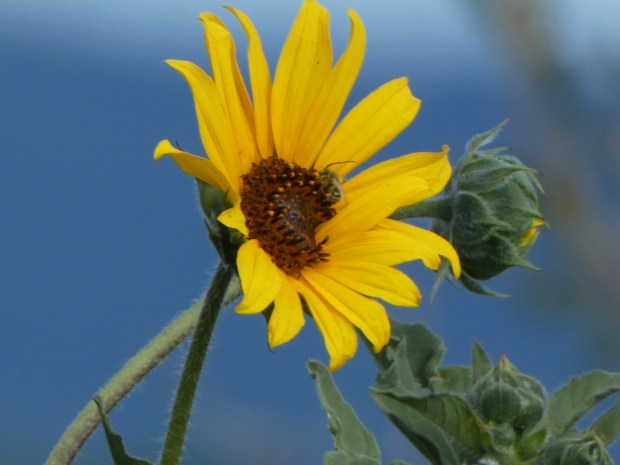
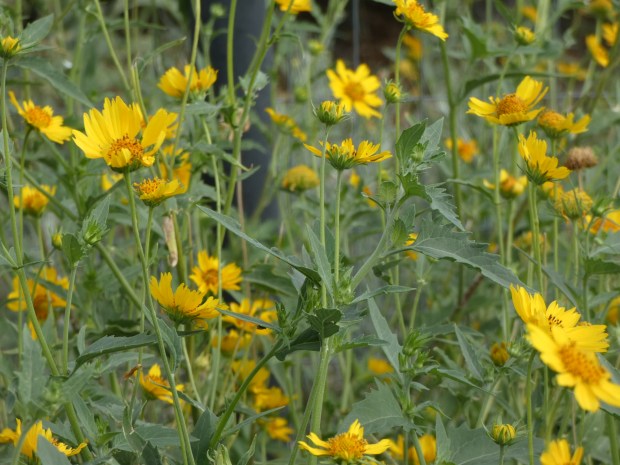
Mexican Hat (Ratibida columnifera), also commonly known as rocketflower, and both upright and longhead prairie coneflower, is a native perennial found across the Lower “48” (U.S.), southern Canada and northern Mexico at elevations ranging from 5,000-7,500 feet. Its Ray flowers come in a dazzling sunshine yellow, along with a soft velvety royal purple-brown, an intensely deep rust-red brown, and rusty oranges – all with some measure of sunshine yellow marginal accents. Each Disc flower (those tiny spots that spiral, Fibonacci fashion, around the upright cone) has 5 fused pale-green petals (the Corolla). The Corolla surrounds 5 fused purple/red oxide-colored Anthers (the pollen structures of the Stamens). The Anthers are shoved up through the Corolla by the developing Style (the stalk of the Pistil) where they burst into 5 sunshine yellow pollen “strands” resembling a hairdo of long, twisted, windblown dreadlocks! The shockingly beautiful colors unfailingly lure many insects hungry for pollen and/or nectar.  

The entire Capitulum (the densely packed flowerhead of a composite “flower”) continually waves in the slightest of breezes as it perches atop the long stiff and naked stem (the Peduncle) of the flowerhead. Below the Peduncle are the many branched feathery-like, deeply lobed leaves. These leaves seem to be the primary source of a curiously fascinating fragrance. After handling the plants for several days, I began thinking of the aroma as being cautiously sweet-scented with subtle hints of slow roasted tomato + red pepper-infused homemade shortbread cookies!  I’m looking for a recipe!

All “said and done,” Mexican Hat can grow from 8 inches tall to over 3 feet! 

Benefits of and Curiosities About Mexican Hat

Special Value to Native Bees – According to The Xerces Society for Invertebrate Conservation, Mexican Hat is recognized by pollination ecologists as attracting large numbers of native bees.

Food Source for Wildlife Species – In addition to being an important source of pollen and nectar for native bees, Mexican Hat also attracts many other insects like butterflies and moths, and hummingbirds sip its sweet nectar.  Wildlife that feast on its seeds include small song birds, wild turkey and rodents. Even white-tailed deer will eat the foliage, despite its reported deer-resistant qualities. 

Supports Native Pollinators, Attracts Beneficial Insects, and Promotes Biological Diversity – Mexican Hat is a adaptable and resilient wildflower species, able to endure extended periods of drought, hot and cold temperatures, and diverse habitat and soil conditions. Because of these characteristics, and because the species is a self-seeder, Mexican Hat provides food and cover for wildlife, is a reliable source of pollen for at-risk native bees, and makes an excellent choice for sustainable gardening, habitat and soil restoration, and prairie conservation efforts. And not to be overlooked, Mexican Hat attracts beneficial insects like lady beetles and lacewings that help control garden pests like aphids and caterpillars, and makes a valuable contribution to natural pest management strategies. 

Many Uses; the Ethnobotany of Mexican Hat – North American indigenous peoples prepared the leaves, stems, flowers and/or the cones in certain ways to treat specific ailments suffered by people and animals. By creating washes, by boiling, physically rubbing and crushing, decoctions, concoctions and infusions were used to treat chest pains, wounds, stomach aches, fevers, headaches, urinary problems, rattlesnake bites and to induce vomiting. Mothers wishing to wean their babies had crushed leaves rubbed on their breasts. Horses with urinary problems were hand fed the entire plant as a cure, and sheep that are “out of their minds” are given a cold infusion.

The cones were used as baby nipples. Leaves and flowerheads were boiled to make a pleasant tasting tea.

A Symbolic Meaning and Familiar Visual of Mexican Hat –  In Mexican culture, this wildflower is often associated with traditional celebrations, ceremonies and festivals. Mexican Hat is a symbol of joy, abundance and cultural heritage. The common name “Mexican Hat” was given to this wildflower because it reminds many of the shape of a traditional Mexican sombrero.   

Origin of the Scientific Name Ratibida columnifera – The Etymology of the genus name Ratibida was published in 1818 by Constantine Samuel Rafinesque-Schmaltz (1783–1840). Even to this day, the meaning of Ratibida is a mystery. It’s well known that Rafinesque-Schmaltz often assigned unexplained names to plants. Oh, and be aware that around 60 sites online use the spelling “Ratidiba” rather than Ratibida. So if poking around the internet for more information about Mexican Hat or any of the other prairie coneflowers, don’t be fooled by the typo!

The species epithet columnifera is a Latin name meaning “bearing columns.” This refers the tall cylindrical or cone-shaped flowerhead (Capitulum) which is the support structure (the Receptacle) for the numerous Disc flowers, the 7 Ray flowers, and the 7 small leafy bracts (Phyllaries).  

Loving My Mexican Hat!

Early this spring I purchased 2 Mexican Hat plants for our garden. I’m happy to report they are doing great and loaded with 10-20 yet-to-mature pale green cones. Wonder what color the Ray petals will be? 

I’m also planning to collect seed again this year, after learning the best time is early Fall when the cones look like they’re withering. Wish me luck!

Hope you enjoyed my exploration of this marvelous native perennial member of the sunflower family. Even though in a previous post I made a thorough plunge into the sunflower family, I learned even more putting this post together.

As always, thanks for stopping by!

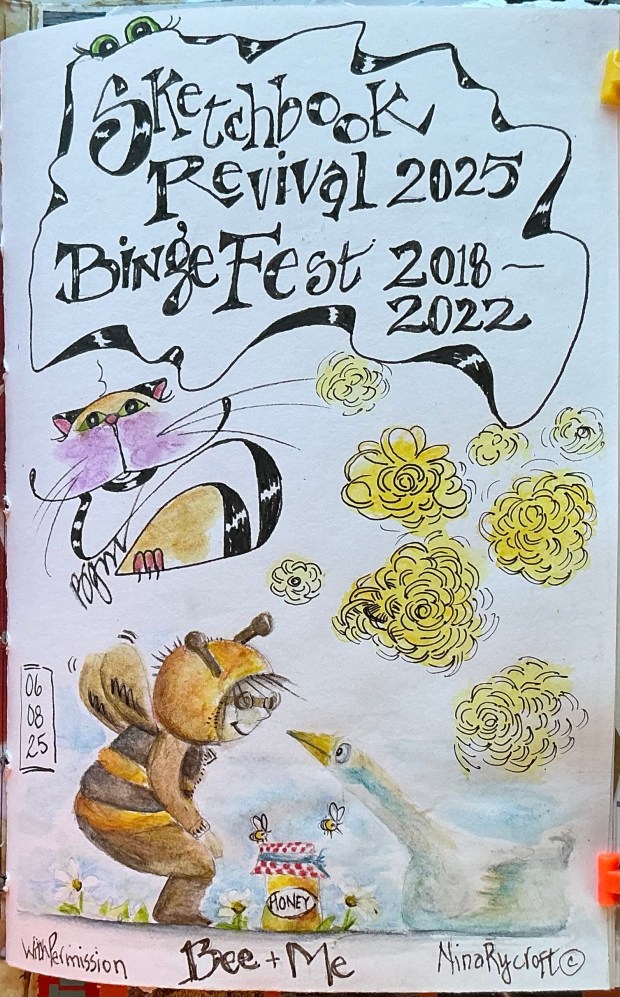
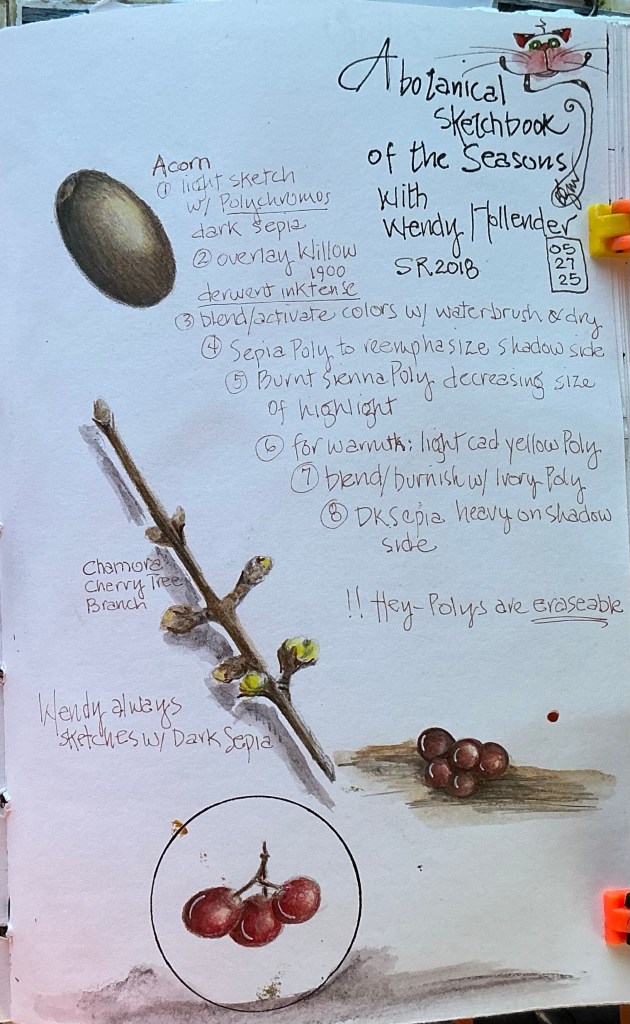
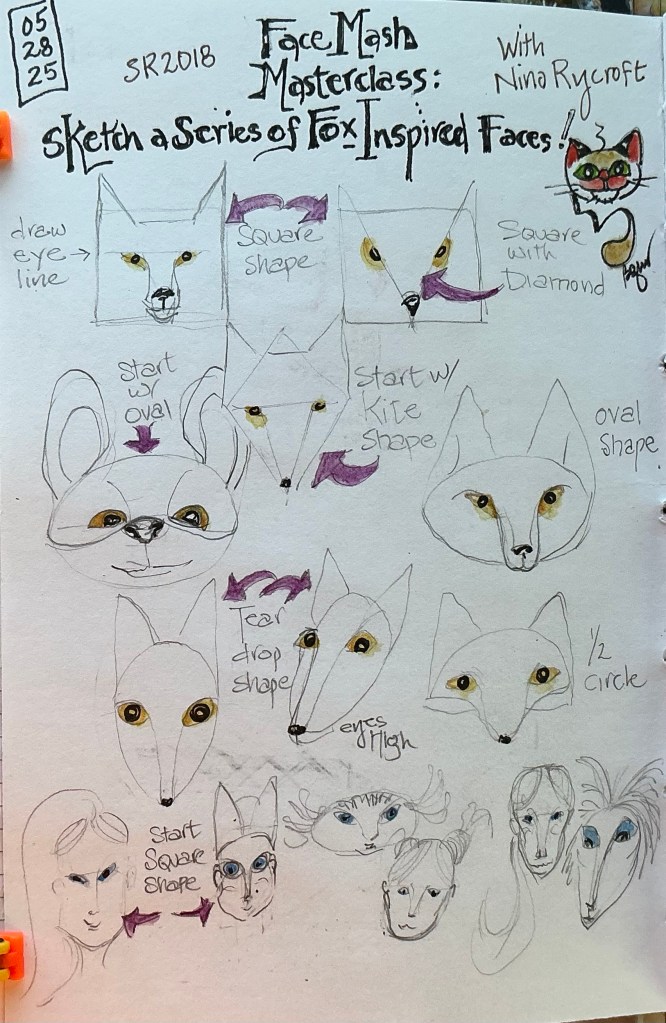
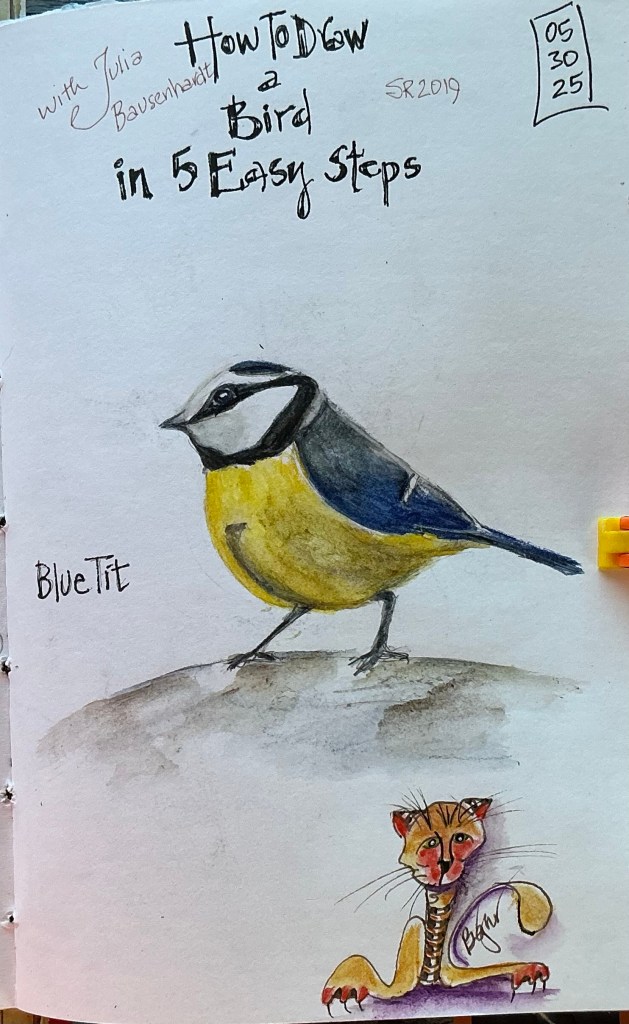
Sketchbook Revival 2025 ….. Binge Fest Extravaganza!

June 16, 2025

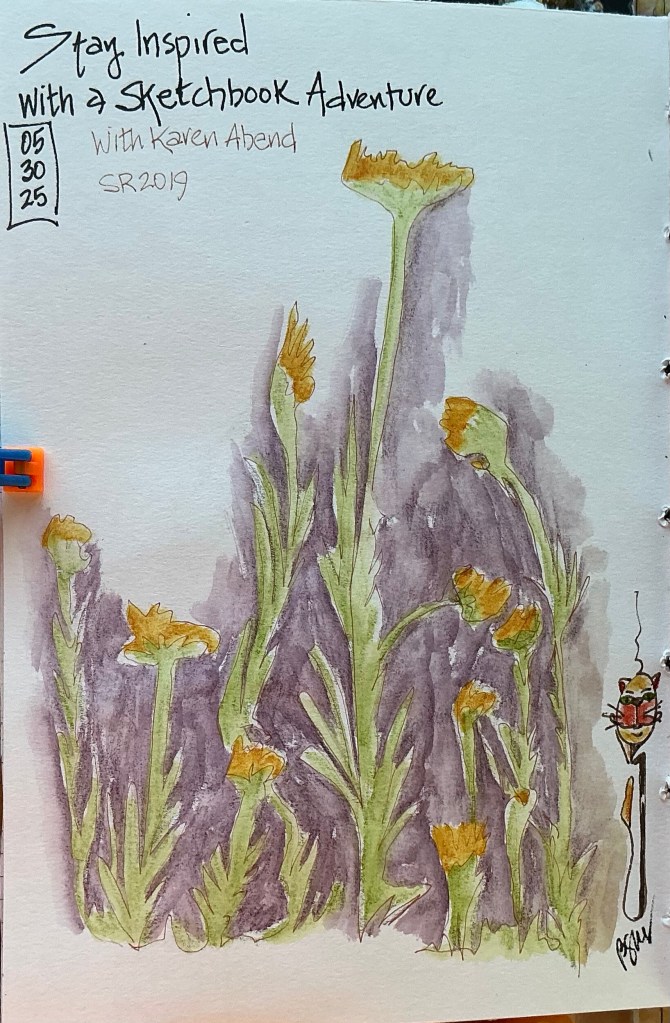
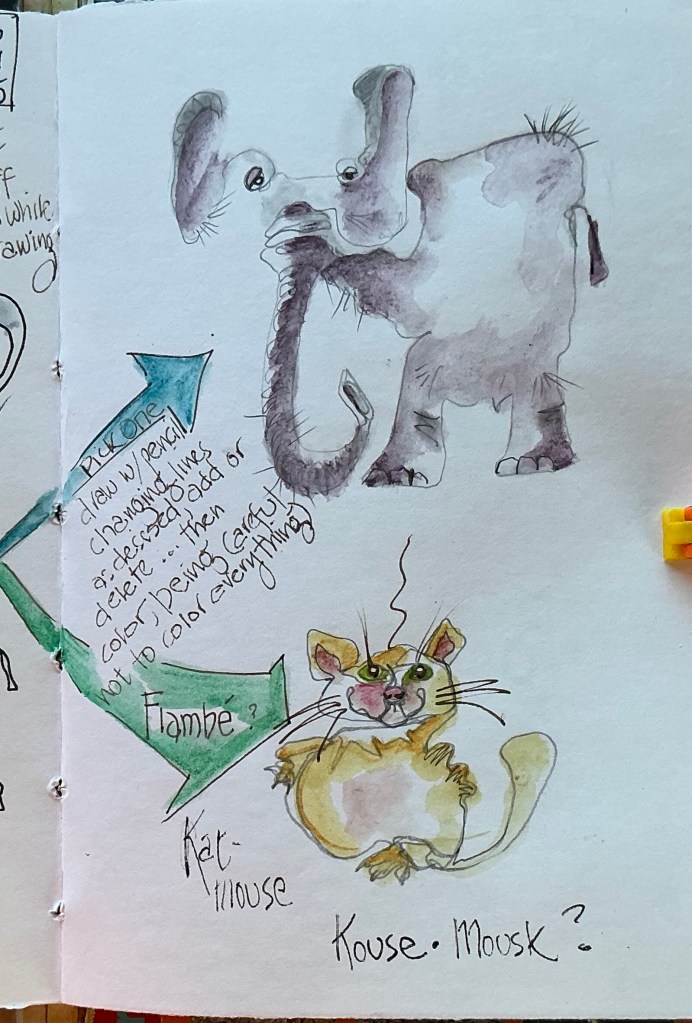
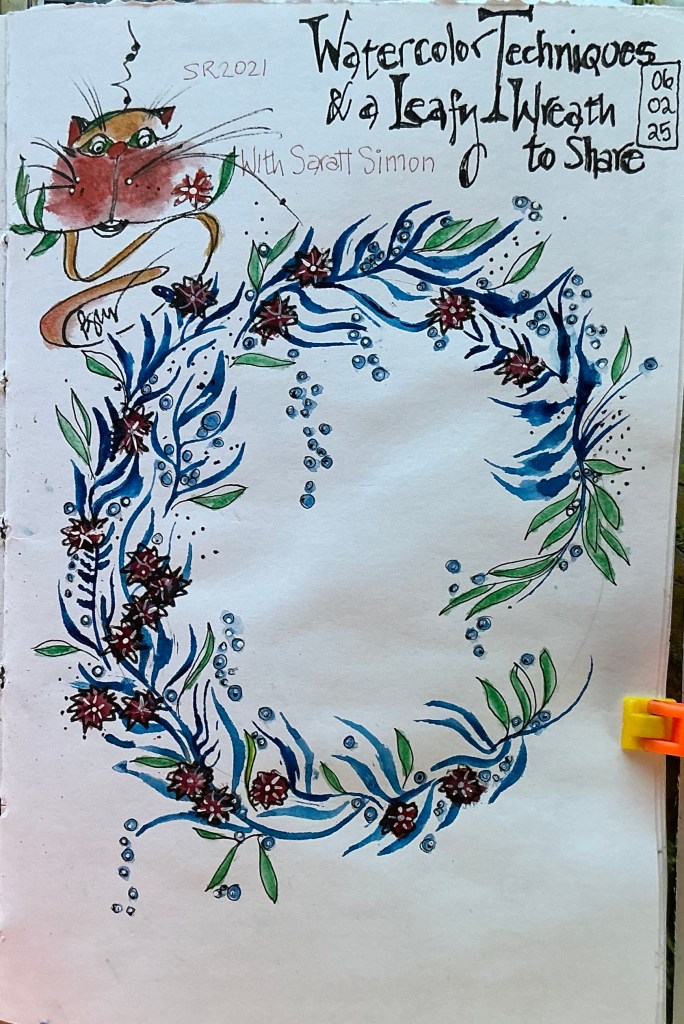
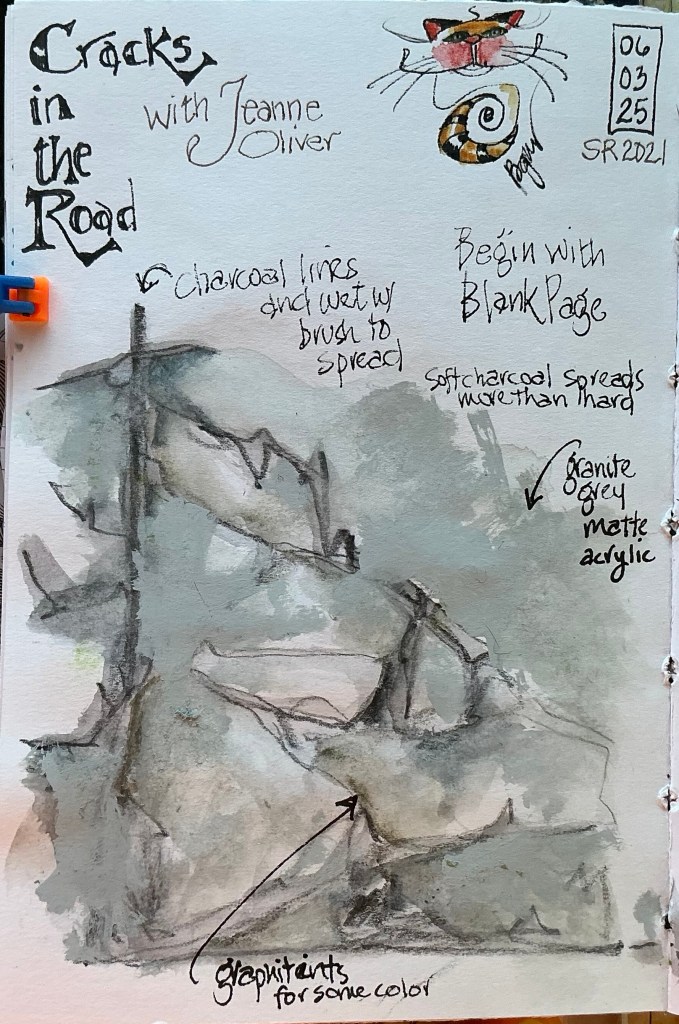
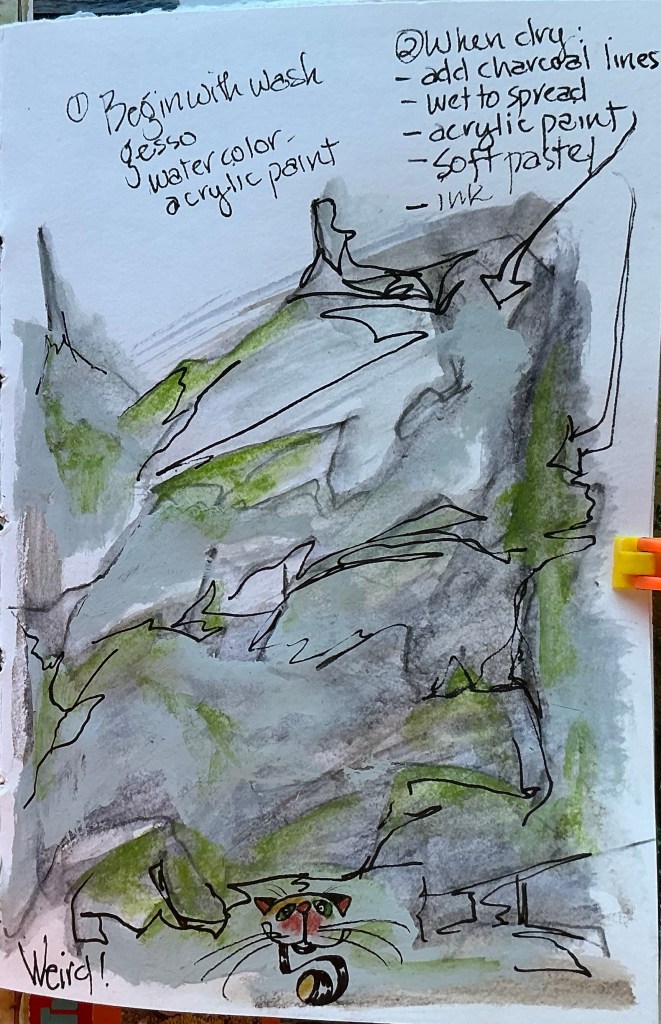
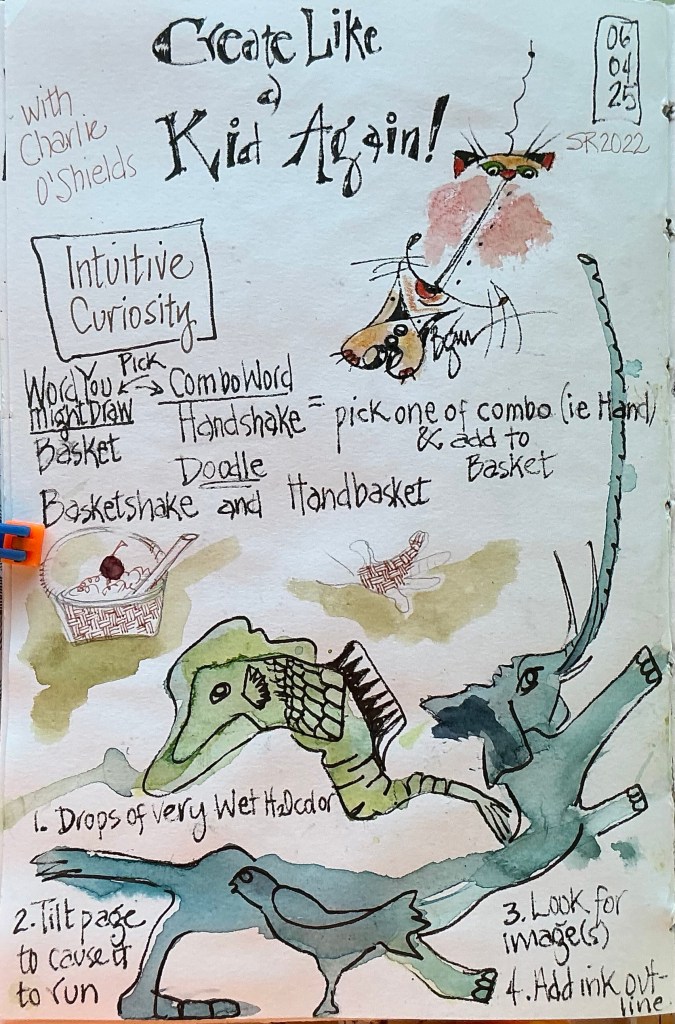
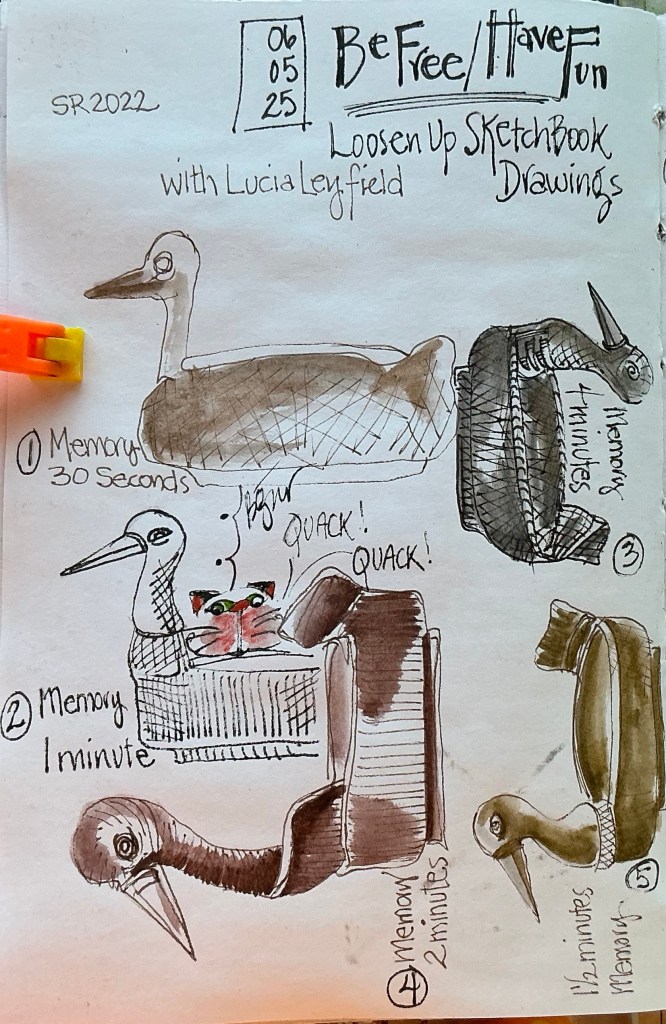
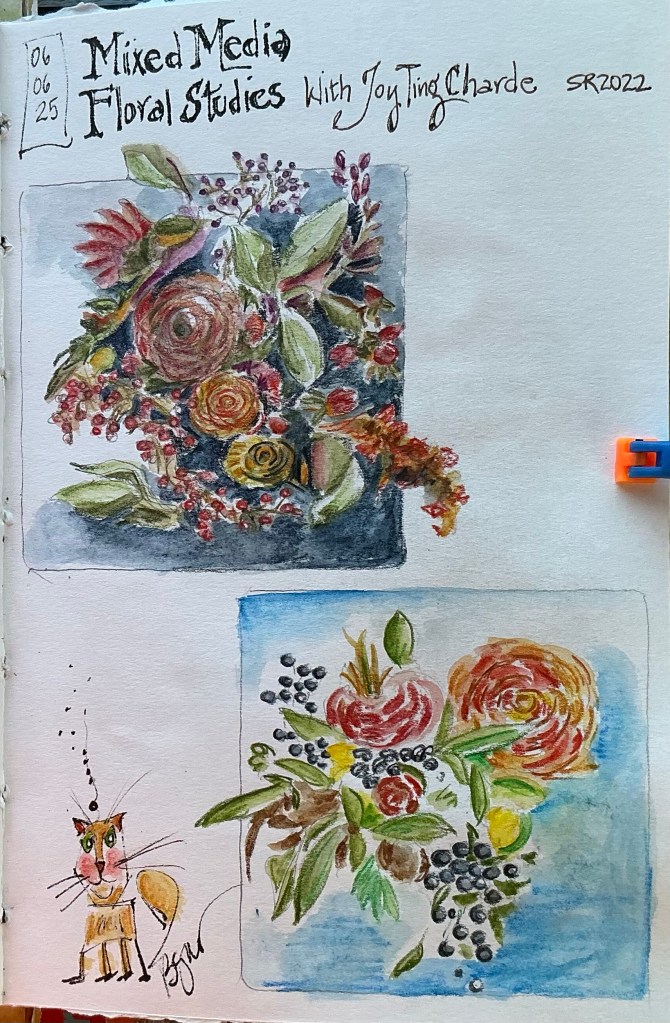
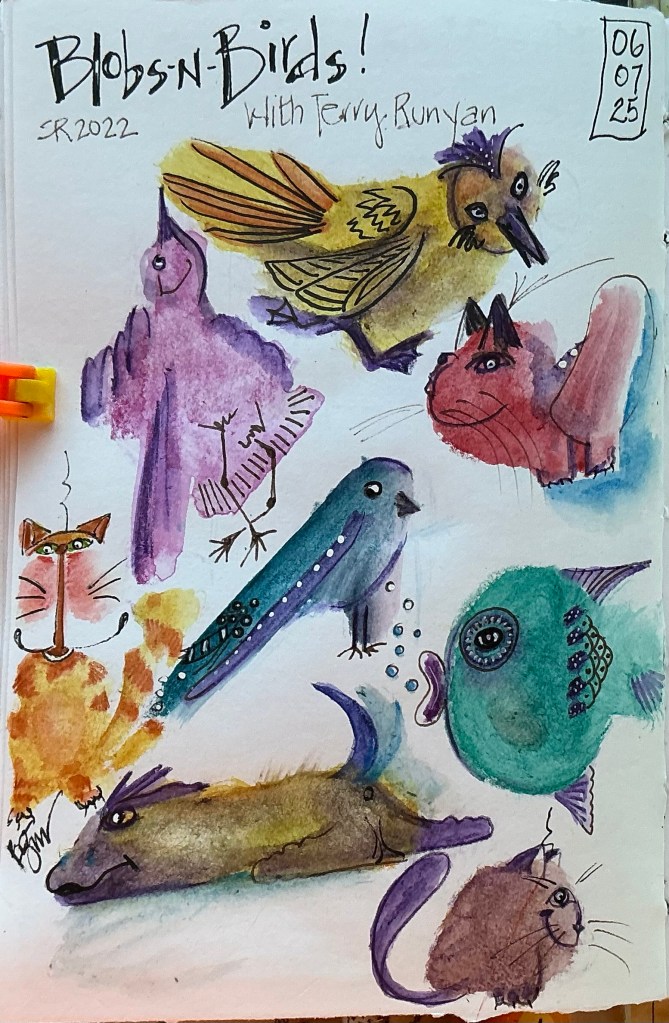
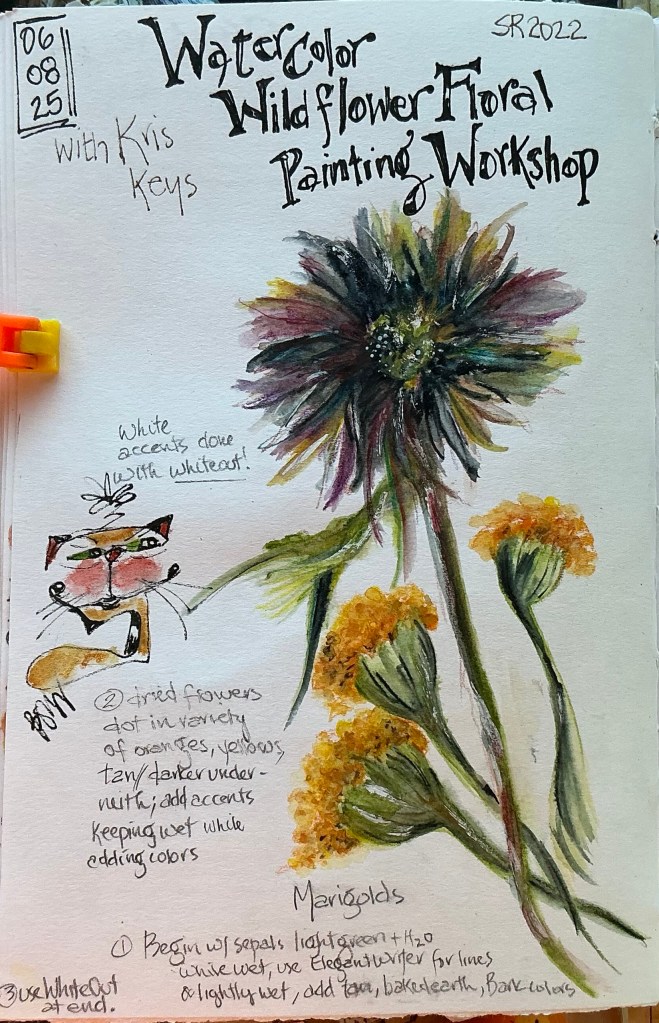
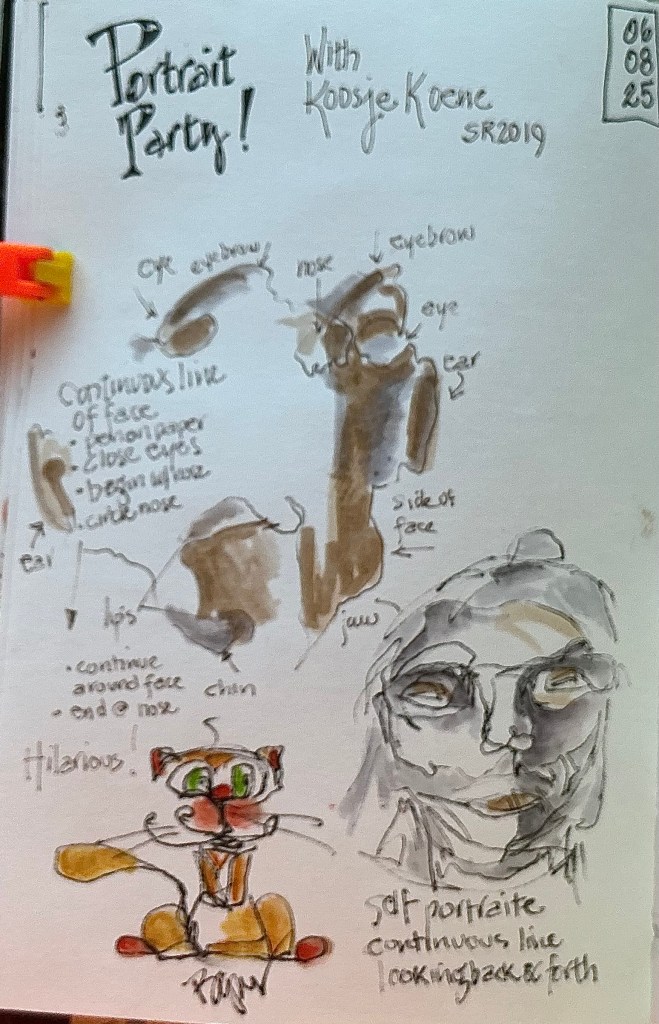
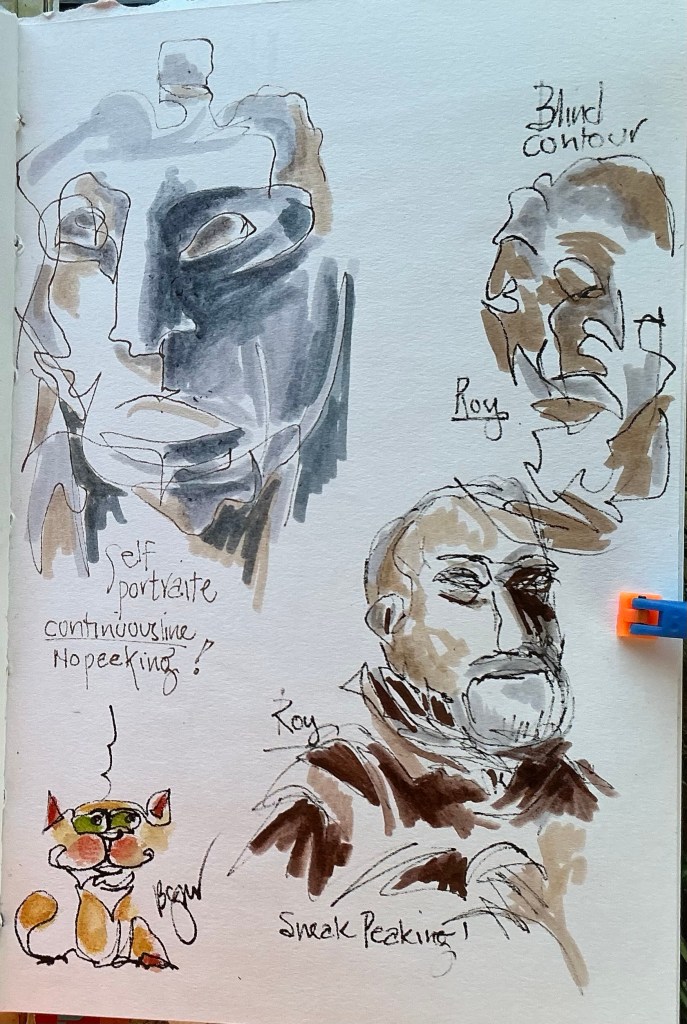
What a whirlwind celebration! Sketchbook Revival (SR) 2025 Binge Fest was so much fun. And Wow! Two jam packed weeks of creativity was over in the blink of an eye! 

Karen Abend, SR creator, host extraordinaire, and wonderful artist, came up with a brilliant idea for the SR 2025 session. I would swear the creative gears inside her head were spinning with delight as she declared, “Yureka! I’ve got it!”

Beginning on May 27th thru June 9th, Karen generously opened up the SR historic vault and set free all of the workshops conducted the first 5 years of SR (2018-2022)! That unbelievable offering came to more than 130 one-hour-long workshops of inspiring, hands-on, and creative  play time all instructed by well-known experts in artistic fields associated with Sketchbook Journaling.  

Challenge presented ……. Challenge accepted.

Since I’ve been participating in SR each year since 2018, and attended most of these workshops in the past, my goals and strategies to tackle the challenge were these: 

  1. Complete a minimum of 4 workshops daily;
  2. Two workshops should involve a project outside of my comfort zone, such as portrait drawing, fantasy, word play, collage, and properly stitching my own SR sketchbook so it wouldn’t fall apart during the 2-week challenge, etc.;
  3. Two workshops should involve projects within my comfort zone, such nature subjects, urban sketching, whimsey, and lettering, and those using watercolor pencils, graphite, and ink;
  4. Develop fresh, interesting, and imaginative sketches during the workshops;
  5. Allow Flambé to play along;
  6. Slow down, breathe, and enjoy the 2-week marathon without becoming overwhelmed;
  7. Recognize and gather take-away tips and techniques to bring into my Nature Journaling practice and Zentangle storytelling. 
  8. Keep sketching and sharing.

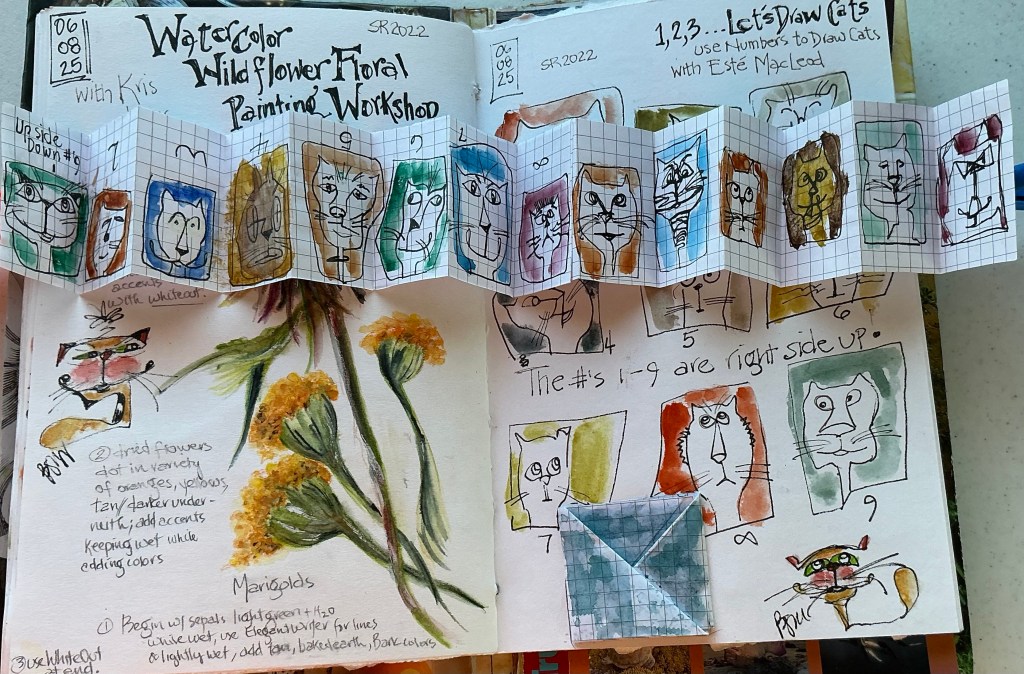
After two weeks of play, I was able to fill up my handmade and successfully stitched SR 2025 sketchbook! With a total of 46 pages completed (doubling up workshop projects on a handful of pages), including several pockets with inserts, I was pretty happy (and a bit exhausted). 

If you’ve participated in SR in the past, or maybe took on the 2025 challenge as your first time, you know how intense (in an exhilarating way) it can become.   If not, and would like to learn more, check out this link 

This link will take you to Karen Abend’s website where you can ask for more information about Sketchbook Revival. https://karenabend.com

Hope my collection made you smile and laugh! I certainly got a kick out of the experience.

Well, until Sketchbook Revival next year, thanks for coming along! 

High on the Views: Camping Above the Rio Grande

June 6, 2025

Such an awesome-inspiring place to spend a Spring week in New Mexico!

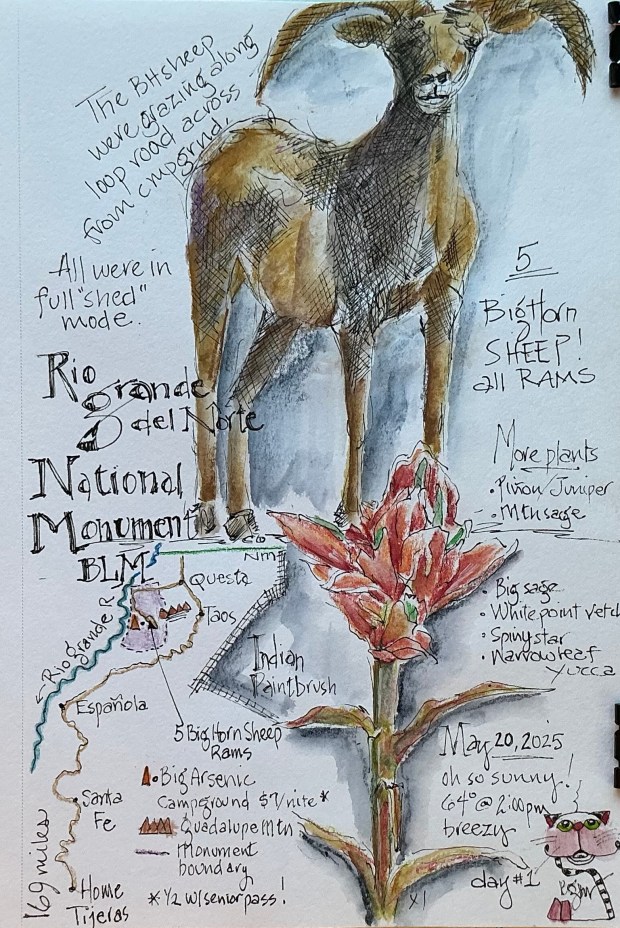
Three of the five big boys! Rocky Mountain Big Horn Sheep.

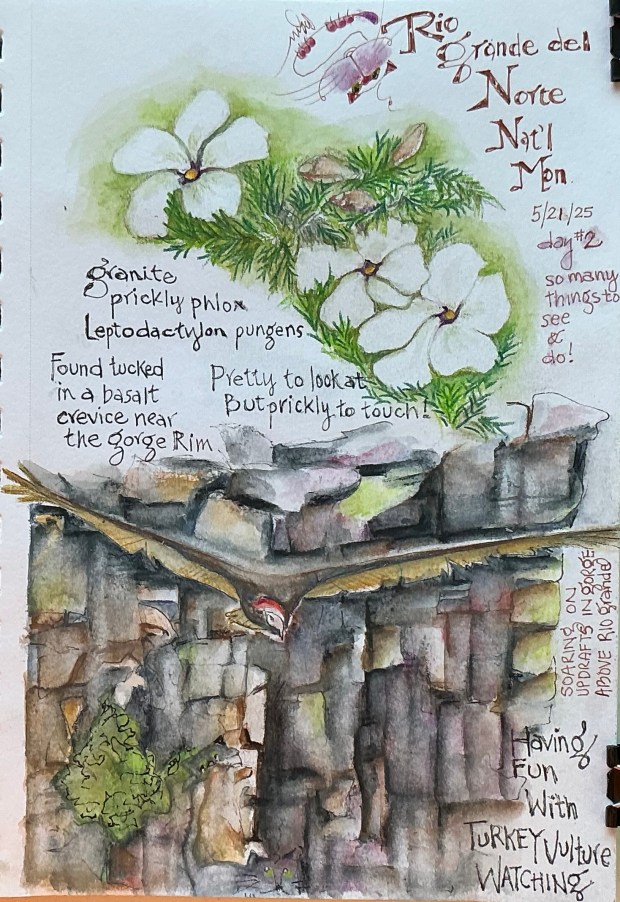
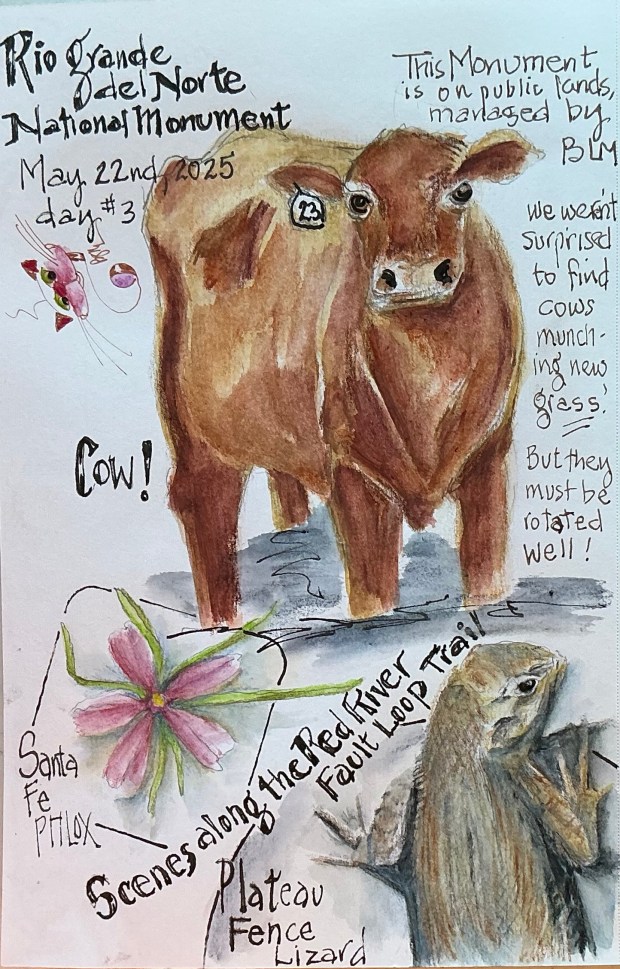
Rio Grande del Norte National Monument ….. 

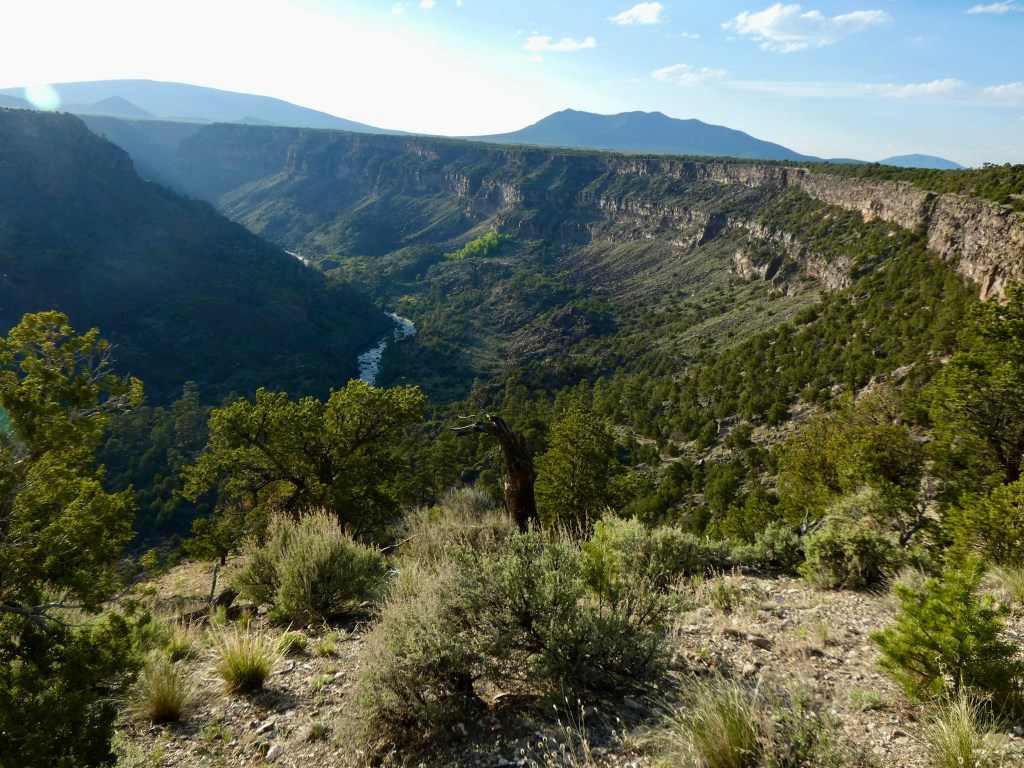
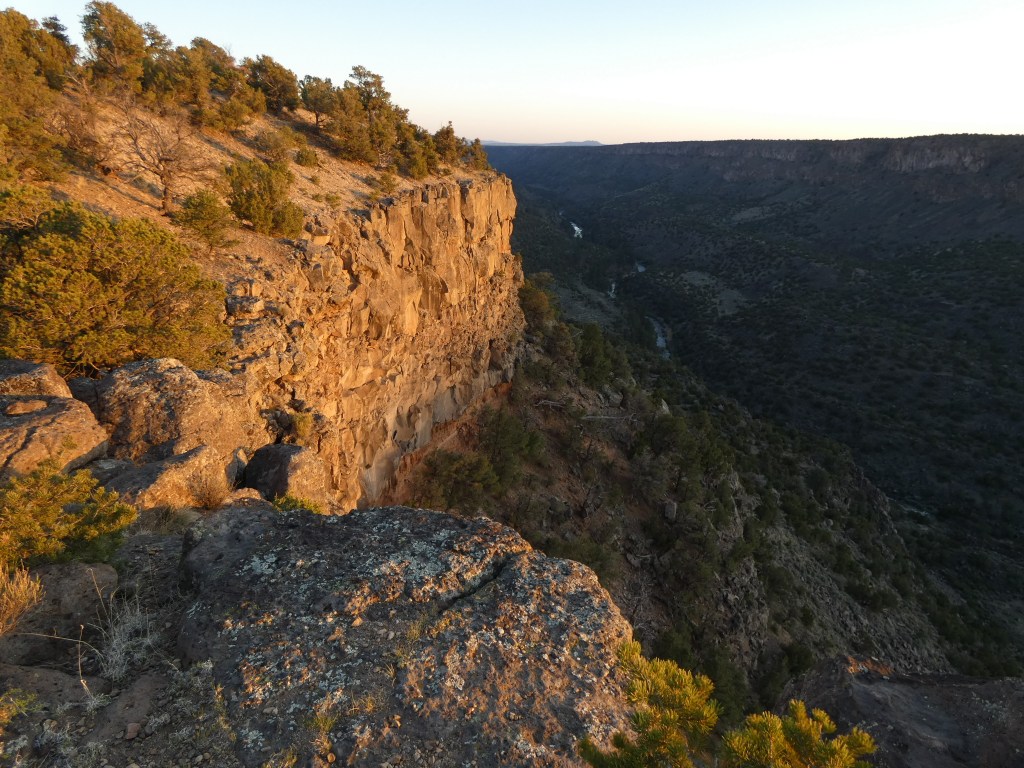
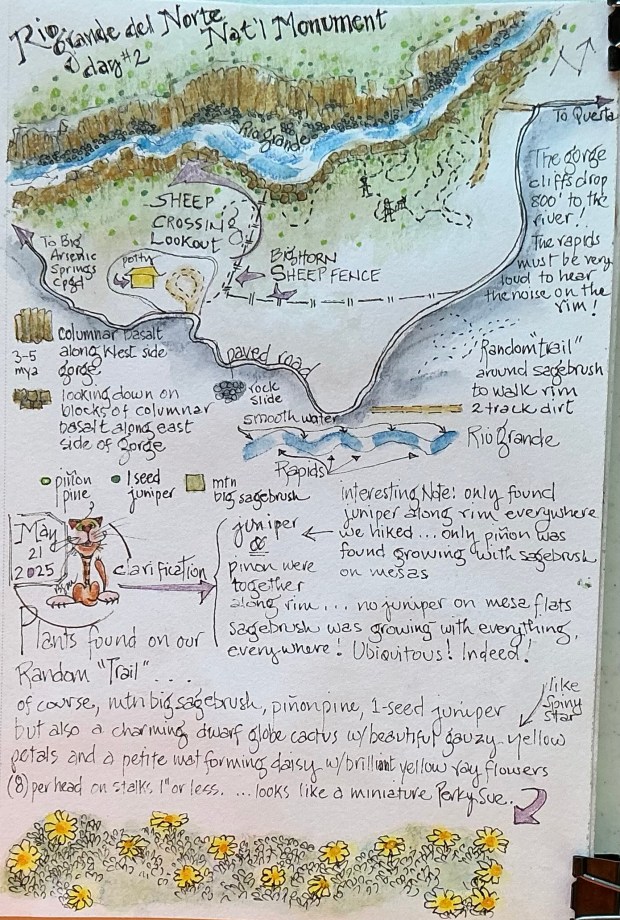
comprises a breathtaking 245,000 acre area of the northern Rio Grande rift valley in north central New Mexico.  Established as a Bureau of Land Management (BLM) national monument in 2013, the rugged wide-open plains average 7,000 feet in elevation before dropping into steep narrow canyons carved into the landscape by rivers that have been flowing for millennia.  

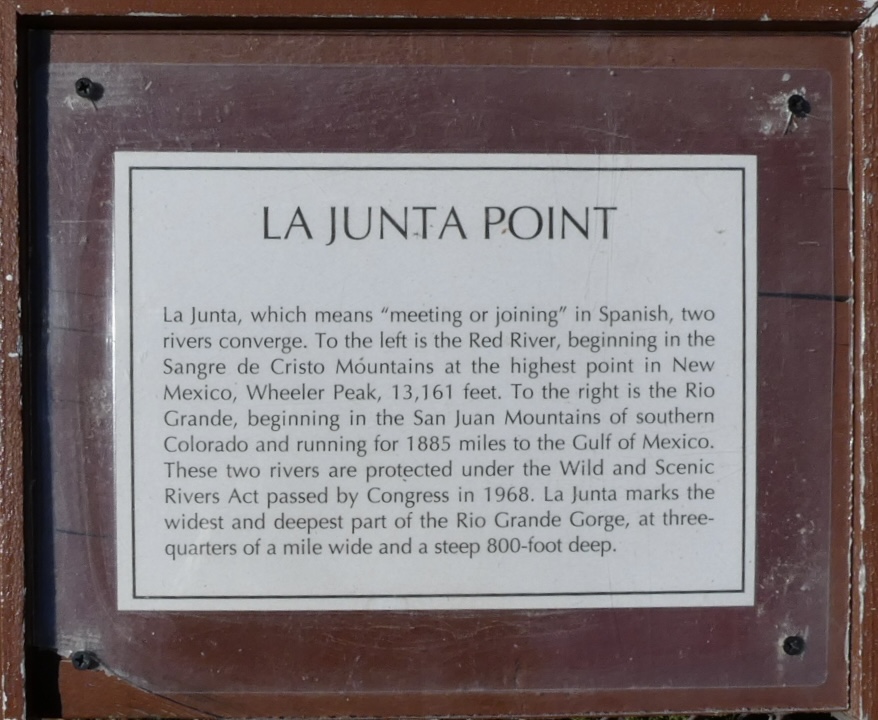
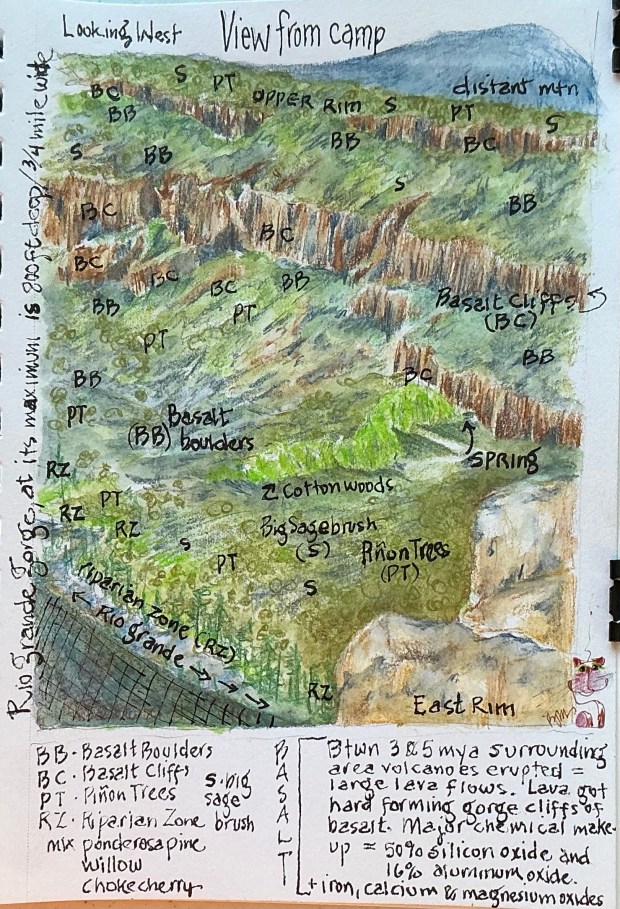
The confluence of two of these rivers, the Rio Grande and the Red River, occurs in the northern Wild Rivers area of the Monument. It’s at this confluence where the gorge is its deepest at 800 feet, and its widest from rim to rim measuring 3/4 mile. It’s an impressive view from the la Junta (“the Meeting”) Overlook. All of the views from anywhere along the rim are impressive.

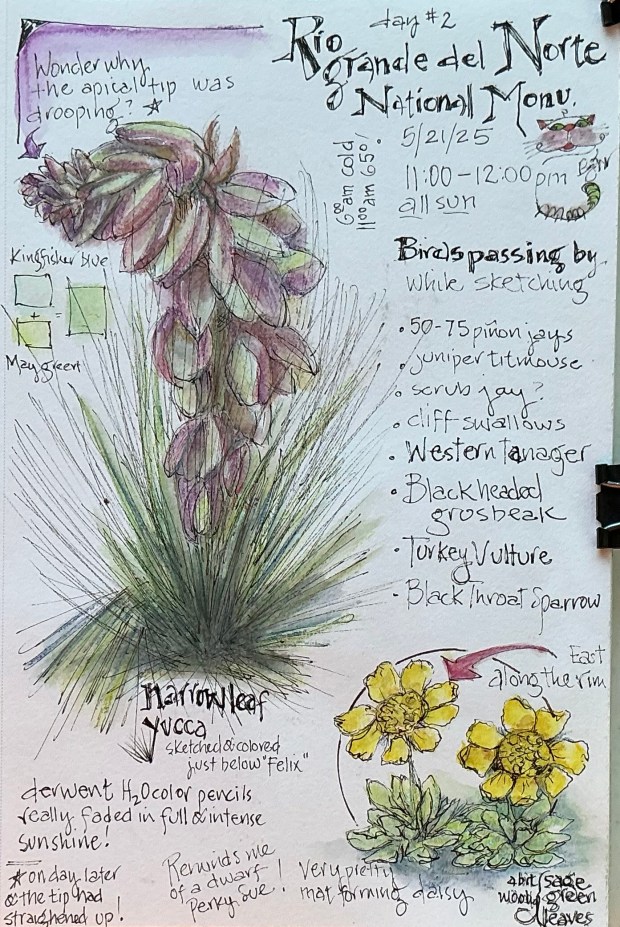
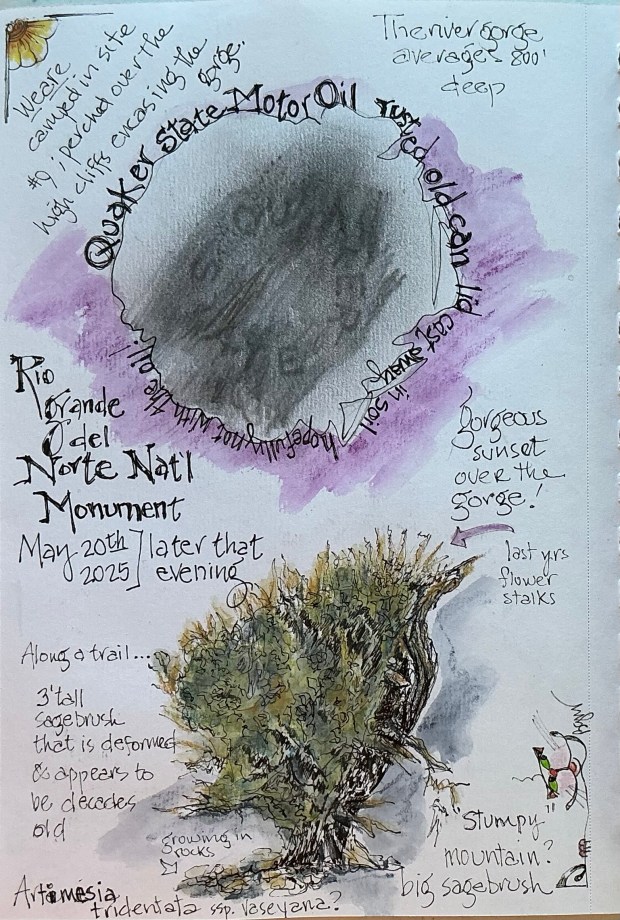
We backed our RV (‘Felix’) into what must’ve been the best designated camping site ever ….. #9 on the southern loop in Big Arsenic Springs Campground. After setting up, we discovered that Felix rested only a few steps west was the rim and the long plunge down to the Rio Grande!  But immediately south of us, the rim formed a small peninsula where nearly every afternoon I could be found sketching the plants growing from the basalt cliffs, or the swifts and turkey vultures soaring along the cliffs and over the river aided by the canyon’s updrafts. This skinny little peninsula quickly became my favorite sit spot; then late one morning it became priceless …….

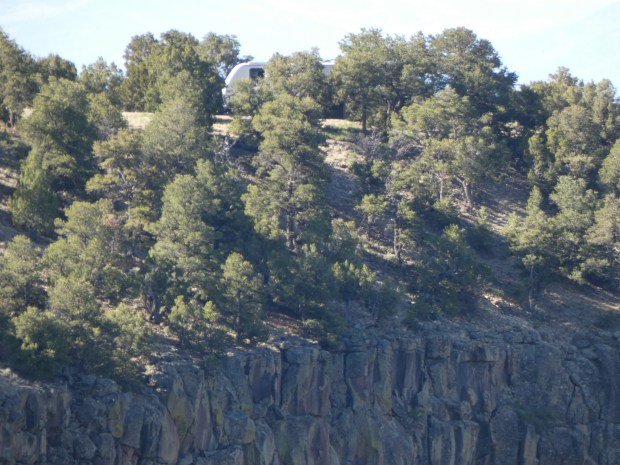
Can you spot our RV? We were precariously perched above the Rio Grande, right on the rim of the gorge!

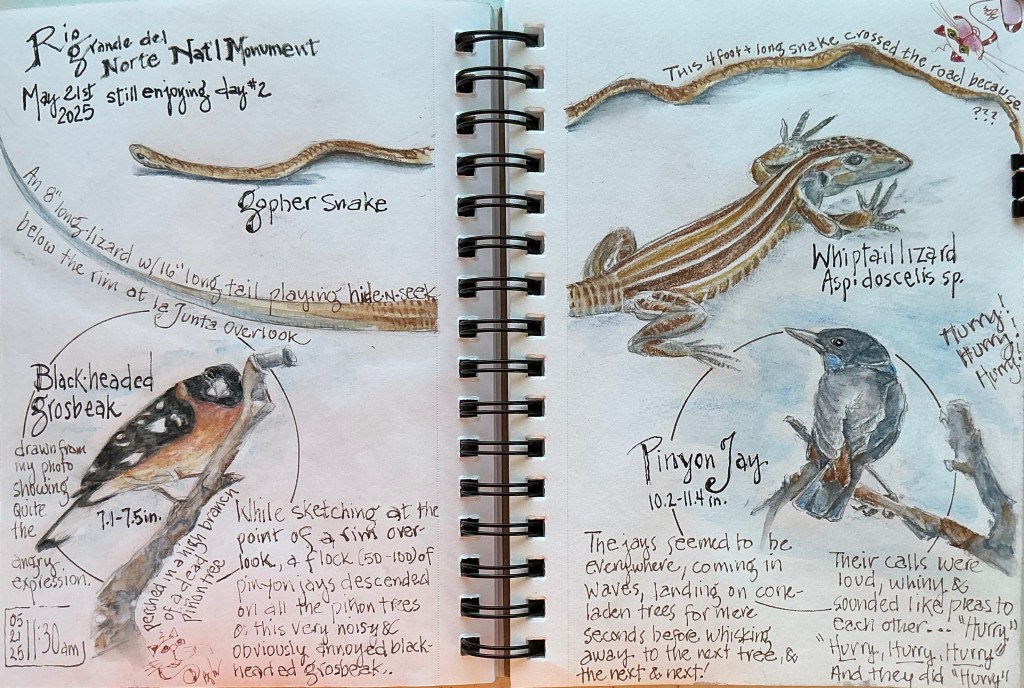
I could hear them approaching, like a swarm of bees. In a matter of seconds I was  witnessing a cacophonous chorus of 100’s of pinyon jays. These noisy birds quickly moved in and onward while descending, like they were famished, on this year’s piñon pine cone-laden trees in large erratic groups, all the while screaming, “Hurry, Hurry, Hurry, Hurry!” Where exactly they came from or where they went remains a mystery. All I know was the spectacle must’ve lasted a good 10 minutes or more, as I watched wave after wave of these birds pass by. I still get goosebumps (jaybumps?) recalling those exciting moments.

We had planned to spend only one day camping in the Monument, but every morning we decided to stay at least another and then another day. We hiked every rim and interior trail (sometimes more than once), spent hours at all of the Overlooks getting ‘High on the Views,” were thrilled with our chance encounters of five (5) Rocky Mountain Big Horn Sheep rams (twice in one day), and marveled at how the forces of nature* collaborated to carve the narrow and steep 800 foot deep gorge within the Monument.

But alas, it became time to pack up our home away from home. Even tho a string of completely clear days allowed sun to shine on our solar panels from sunup to sundown, keeping Felix’s battery purring happily our entire stay, it did nothing to recharge our potable water tank. So the morning we found the water indicator light teetering on ‘Empty,’ was the day we headed for home (after enjoying a farewell hike, of course) with my nature journal full of sketches and memories for a lifetime!

Do you have an especially special place where you can spend time in nature? Please share your discovery and what makes it so awesome!

As always, thanks for stopping by!

*Geology 101

From the overlooks throughout the Monument, we could see stacks and stacks of basalt and ash lining the narrow canyon walls of the Rio Grande Gorge. It’s hard to imagine the volume of material deposited during two very active periods of volcanic activity that occurred 5 and 3 million years ago. Soon after these events, water moving through the major drainage in the area (today’s Red River) began eroding pathways into these deposits as it flowed downstream into the 10-16 million year old rift valley. Geologists refer to the ancient Red River drainage as the ‘original Rio Grande’ because the still-closed San Luis Basin to the north (in south central Colorado) would not overflow for a few million years. Then 400,000 years ago, coinciding with a change in climate resulting in an overabundance of snow and rain, the San Luis Basin filled and spilled. As water does so well, this new and powerful river, today’s Rio Grande, moved ‘downhill’ towards the ‘original Rio Grande’, cutting through everything in its path (including the ancient volcanic deposits). When it converged with the ‘original Rio Grande,’ the erosive force of both rivers became enough to eventually carve out an 800-foot deep gorge in the Rift.  

A Fiery Hot Hummer!

May 14, 2025

Nope …. that’s not a title typo! 

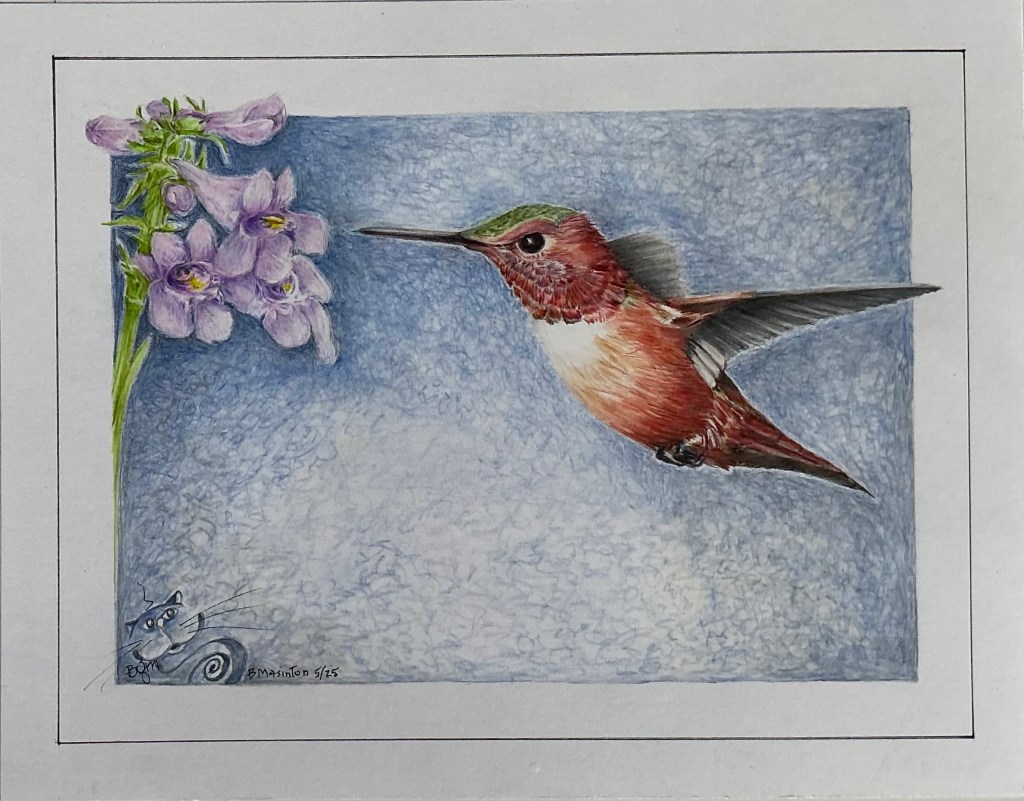
Rufous Hummingbird and penstemon

Of all the hummingbirds migrating through central New Mexico, the male Rufous ‘hummer’ (Selasphorus rufous) is the most spectacular. Showing up when our hot Summer temps begin to soar, he has two things on his mind ……. #1. find the best patch of nectar-rich tubular flowers, and #2. keeping that patch all to himself to refuel before completing his 4,000 mile migration from southern Mexico to southern Alaska. Upon arriving from Mexico, the flashy 2-1/2” long Rufous, garbed in a feathery cloak of flame colored oranges and reds, quickly lays claim to an area of sweetly blooming flowers that may include penstemon, columbine, scarlet gilia, Indian paintbrush, mint, lily, fireweed, larkspur, currant, and heath. Determined to defend his patch against all invaders, he performs a quick flower flyover. If satisfied the coast is clear (for now), he takes up a strategic observational post by perching on a nearby tree branch to watch for rival hummers. 

Ever alert and constantly in motion, his perch gives him a great vantage point to scan the area by looking right and left/up and down, all the while making quiet chittering and chipping noises. If another hummer, and especially a male Rufous dares to enter his territory and sip from his flowers, oh no! Becoming highly agitated, the perched bird spreads his tail while flashing his colorful gorget (throat feathers) seconds before dive bombing his competitor, loudly screaming his alert call while attempting scare off the thief. If this tactic doesn’t work, i.e. the rival is determined to hold his piece of air space, a duel is declared. 

Rufous hummers are well known for their aerial acrobatics. Perhaps you’ve witnessed their display, which likely put you in awe of this little powerhouse. If not, what you’ve missed is their incredible speed of initial attack, their precision, the cacophony of noise coming from such a tiny blur of a bird, the maneuverability of numerous aerial loop-de-loops and J-pattern sky displays allowing them to dive repeatedly at their foe, and their tireless determination in defending their rights to their flowers.  It’s a spectacle you have to see to believe! 

The Rufous will attack not only males and females of their species, but hummingbirds of all species, and even large insects, all with the audacity to steal precious nectar from his prized flowers.

And never, ever sit near or below a hummingbird feeder when there’s a Rufous in the neighborhood. I learned the hard way after being attacked over and over again by a surprisingly intimidating Rufous hummer. Despite being thankful I chose to wear a hat that afternoon, a large dose of common sense had me backing away from his feeder for fear he might have a stroke before drawing blood. My heart still races when recalling this thrilling yet scary encounter.

While reading about the Rufous, I learned that all ages and both sexes of this species are aggressive, even during their brief 1-2 week migration stopovers. This is certainly very good information to know about, having only witnessed males launch themselves at intruders, myself included!

Can’t wait for Rufous migration season!

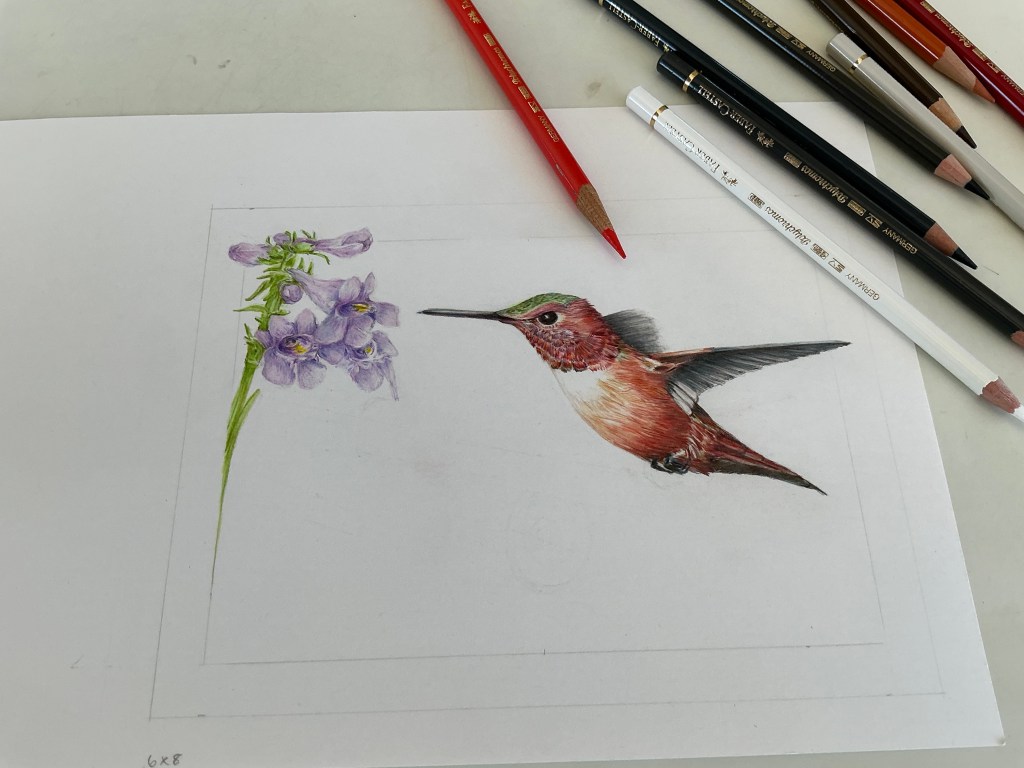
Have you learned something new about this wildly fascinating and fiery hot hummer of southern Mexico, the Western US, Canada and southern Alaska? If you have a Rufous or any hummingbird story to share, please do! Oh, I also hope you’ve enjoyed my colored pencil artwork of a male Rufous about to sip nectar from a freshly blooming penstemon.  

Work in Progress …… showing an almost completed composition on smooth Bristol paper and a few of the Faber-Castell Polychromos colored pencils used in creating this Rufous hummer and penstemon.

As always, thanks for stopping by!
Dance of the Bagworms

May 9, 2025

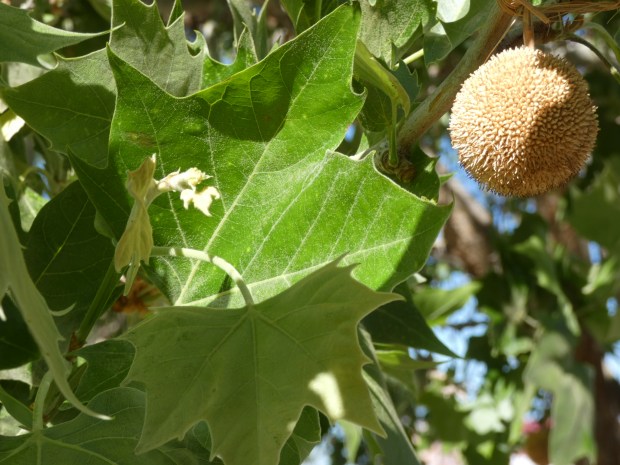
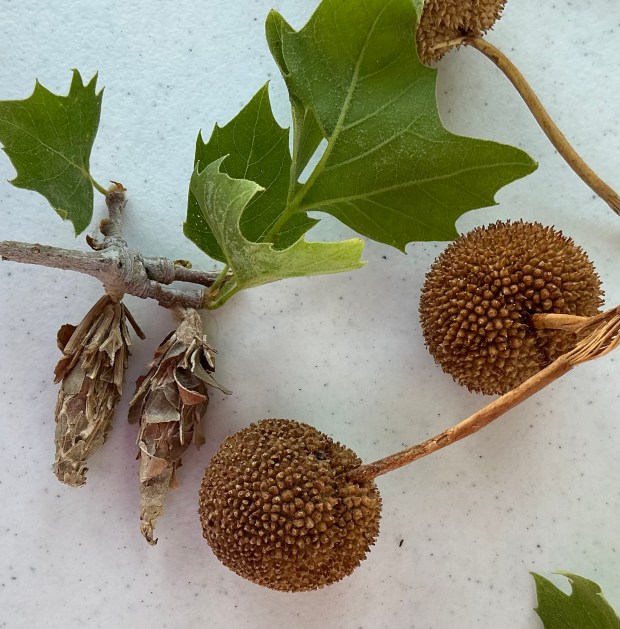
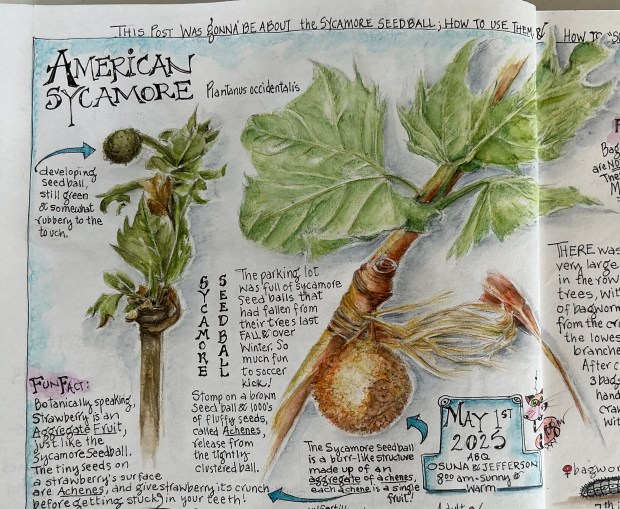
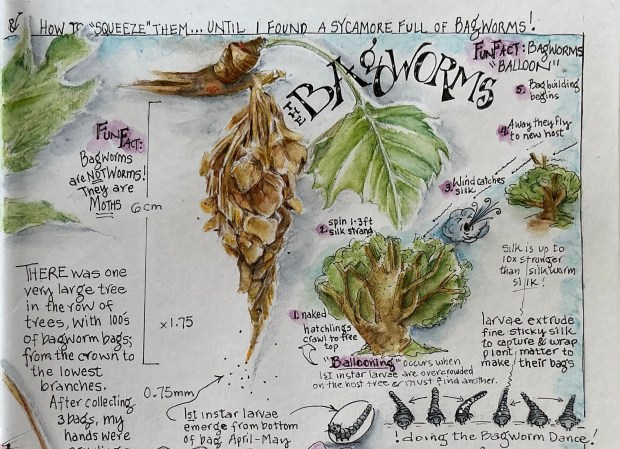
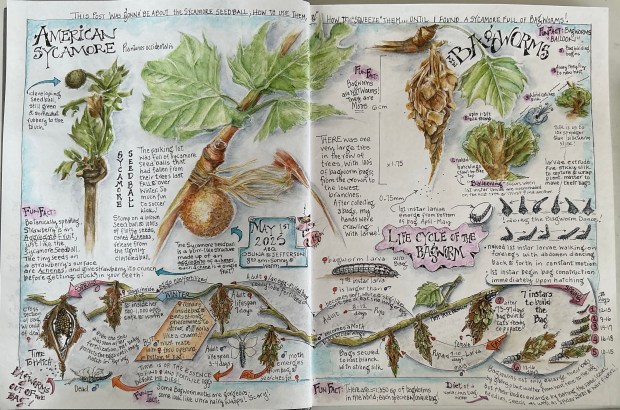
On a warm Spring morning, wandering around a grove of American Sycamore, I became curious about these magnificent trees: where in the US are they native; why are some leaves larger than the palm of my hand and some half the size; what about those odd pingpong sized seedballs lying on the ground everywhere you look ….. why don’t they roll away in search of an ideal spot to pop open so the seeds can germinate …… when the seedballs are kicked, stepped on or crushed beneath a car tire, do the 1,000’s of seeds inside blow away to sprout ….. are the seeds (all or some of them) even viable ….. do the seedballs make a good ink or dye or maybe they’re edible or even medicinal……. what, if any wildlife species eat the seedballs or seeds; and ooooohhhhhhh, sycamore bark! Why does this tree’s bark flaunt a pastel palette of greens, yellows and pinks. These and many more questions came to mind that it seemed about time the American Sycamore became a subject for my nature journal, until ……………..

There! In the tree above my head, I spotted a most curious thing. Parting a few of that sycamore’s beautiful Spring green palmate-shaped leaves was a bundle of dead brown and beige leafy bits and sticks all haphazardly glued together. Wishing to get a closer look at that elongated ornament shaped “thing,” I found it was securely suspended from a branch. Trying to puzzle out this fascinating mystery while searching for my pen knife, a stiff breeze blew through the tree. It was then a I noticed hundreds of those 2-3” long bundles all over the tree; from the base to its crown!

Curiosity is the Essence of Nature Journaling

What continues to draw me to nature and nature journaling after so many years are the surprises in the familiar and in the unknown. I know well enough that new encounters in nature are infinite; you just have to open your eyes and look.  Having learned by carefully observing what appears to be familiar, often leads to new discoveries. That’s when my curiosity kicks into high gear ….. when it’s time to engage in some serious poking around to figure something out; to learn what the “thing” is. 

Curiosity, for me, is the very heart and soul of nature journaling. The ‘art’ of curiosity even precedes skill in observation. It’s what drives me out the door in the morning and fuels my exploration. Curiosity fills the mind with countless questions if for no other reason but to develop a deeper understanding of the natural world. 

But I “wax philosophical.” Needless to say, my curious discovery on that warm and breezy Spring morning prompted an abrupt change of mind for my next blog post (this post). Anxious to learn about the “thing” suspended from a tree branch, probably minding its own business, I proceeded to cut it down (along with two more) and popped them in a bag along with a few sycamore leaves and seedballs.

Later that same day …….

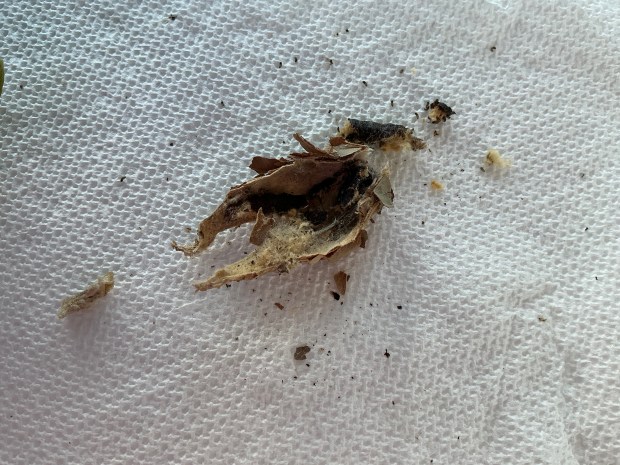
Upon completing my journal sketches of sycamore leaves and seedballs, and posting a few photos to iNaturalist for an initial ID, it was time to take a closer look at my discovery. Reaching into the bag for one of the “things” (wiping my hand free of spider webbing?), I placed it on my examination table surrounded by several hand lenses, a larger magnifying glass, a penknife, and 2 pairs of tweezers. Before beginning the dissection, I noticed about a dozen black pepper-sized bits moving about the “thing.” Thinking tiny spiders had come from the bag, I didn’t give them a second thought (should’ve been curious!).

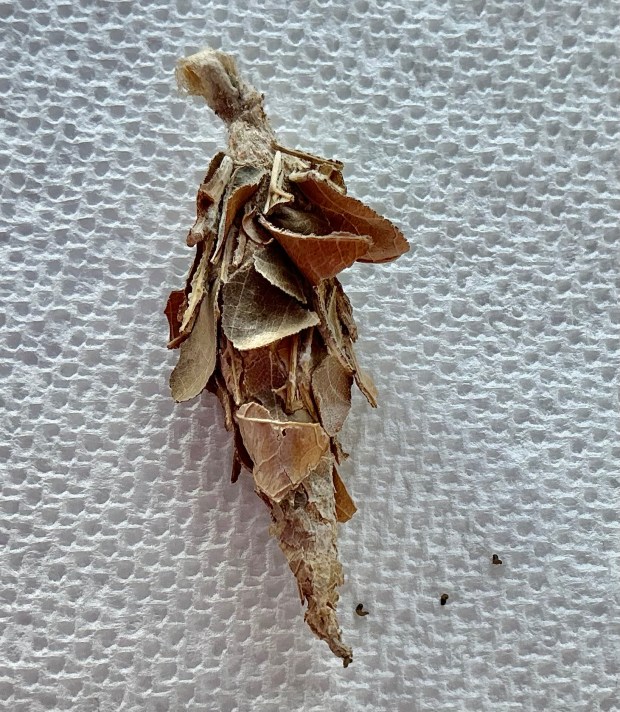
This bagworm bag was the subject of my dissection. Notice the pepper-sized black dots next to the bag ….. those are wiggling 1st instar larva.

iNaturalist ID Pick :::::::::::::: BAGWORM MOTH ::::::::::::::: iNaturalist ID Pick

(awaiting genus/species ID)

A Bagworm Moth!

How cool is that!?!

The opened bag of a female Bagworm moth. She’s very dead, but her progeny are escaping as fast as they can.

Dissection resumes ……

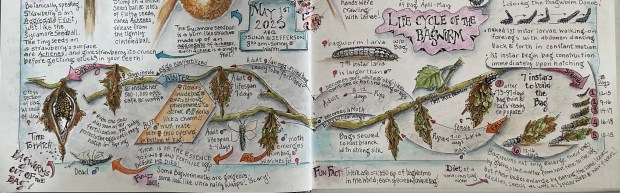
After finding out the “thing” I’ve been pondering over is the Bag of a bagworm moth, I learned the Bag was built during last Spring, Summer and Fall by either a male or female bagworm moth. If a male, the Bag would be empty; if a female, the Bag would contain her remains …. she would’ve died last fall after a male fertilized 500-1,000+ eggs she overwintered inside her body until Spring when newly-hatched larvae would emerge from the bottom of the Bag and begin the species’ life cycle all over again.

The Bag, that took about 10 minutes and all my dissection tools to open, contained the black and mushy remains of a female and 100’s of wiggling/dancing larvae! They were on the move; escaping from the now wide open Bag, and quickly covering my examination table like a pepper grinder out of control.

And my effort to open the Bag? This made sense after reading about the high tensile strength of the silk they produce. These thin strands of silk, 10x stronger than that produced by silkworms, is used in abundance to construct their Bags.

The coolest thing ever! Notice the either late 2nd or early 3rd instar larva, no longer naked, but swaddled in very chewed up leafy bits glued together with strong silk. This dude was hiking up a sycamore branch, continually chewing, wiggling, and gluing.

After disposing of all the naked 1st instar larvae waggling and dancing across my examination table, I placed the dissected Bag, the two whole Bags, and collected leaf material into a clear plastic ziplock to observe what would happen. Over 10 days, the number of larvae multiplied and the naked 1st instar caterpillars grew in size (at least to 2nd instar) while building their individual Bags from tiny bits of leaf litter! Their wiggling dance seemed to be the way their silk strands wrapped and secured leafy bits around their bodies. It’s been fun to watch all the activity.

Have you ever encountered one or more of the 1,350+ species of bagworm moths? What materials were their Bags made from? Please share your experience with these fascinating members of the butterfly/moth family of insects.

As always, thanks for stopping by!

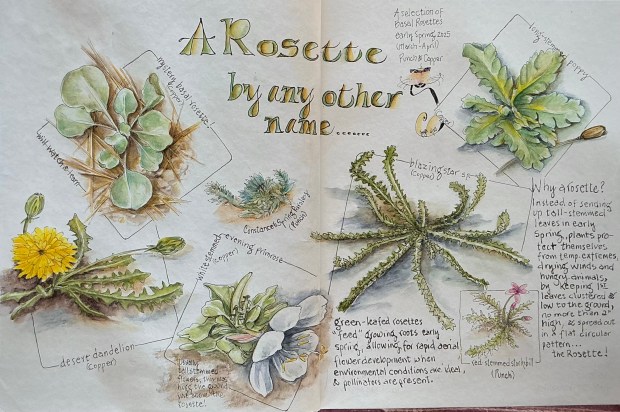
A Rosette by any other name …….

April 23, 2025

A selection of basal rosettes that popped out of the ground this Spring.

Have you ever noticed a dandelion? Oh sure …… you’ve seen hundreds, probably thousands of those ubiquitous sunburst yellow flowers blanketing a lawn or brightening an abandoned field. But before all that brilliance magically appears, have you ever looked below all those flower stalks? Have you ever noticed a dandelion before it blooms?

It’s early Spring in the mountainous areas of central New Mexico, and it seems like the high desert is slow to bloom this year. Anxious to spot even a hint of green during this transition time is always challenging, but if you look closely …….. Tucked beneath dry grasses and piled-high tumbleweed skeletons wedged next to swelling cholla you’ll find the green. Clusters of new leaves hugging the ground no more than an inch high, are beautifully arranged in a circular pattern like the unfolding petals of a rose.  

Rosettes!

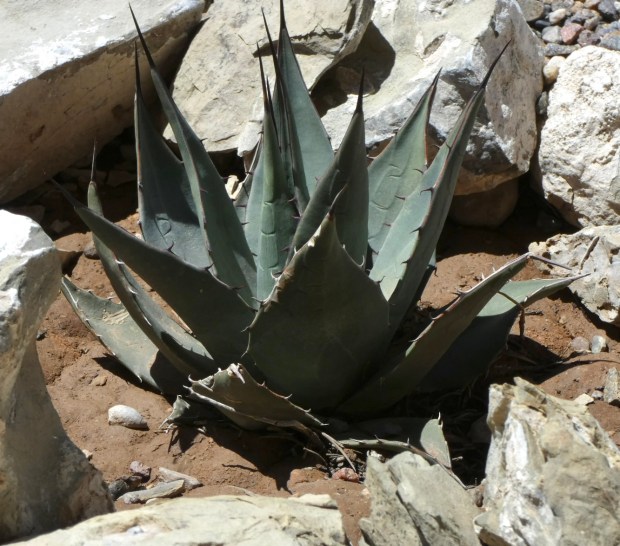
Rosette arrangements are found throughout nature,1 but in the flowering plants they are particularly common in the following families: Asteraceae (like dandelions), Brassicaceae (like cabbage), and Bromeliaceae (like pineapple). Many other families display the rosette morphology too. The needle sharp leaves of yucca and the bayonet-shaped leaves of century plant (in the Agave family) form tall rosettes. The intricate leaves of wild spring parsley (a tiny member of the Parsley family) and the petite red-stemmed stork’s bill (Geranium family) both form ground-hugging rosettes. 

A century plant displaying a beautiful basal rosette.

Where Rosettes Form

Basal Rosettes grow close to the soil at or near the plant’s crown (the thick part of the stem where the roots attach). Their structure is an example of a modified stem in which the internode gaps between the leaves do not expand, ensuring all the leaves stay tightly bunched together and at a similar height.  A protective function of a basal rosette makes it hard to pull from the ground; the leaves come away easily while the taproot is left intact (have you ever tried to pull a dandelion without snapping off the root?). Generally speaking, basal rosettes improve a plant’s odds at survival. For example, overwintering rosettes, like the basal leafy growth produced in year #1 of the 2-year life span of giant mullein, protect the plant and its roots from extreme cold temperatures. Emerging Spring rosettes, like those found in long-stemmed poppy, also protect the plant from late winter frosts. Basal rosettes are also more protected from changes in microclimate, gravity, wind, browsing, and mechanical damage if they are closer to the ground than tall leafy stems would be. help in water balance and conservation, especially important during periods of drought. 

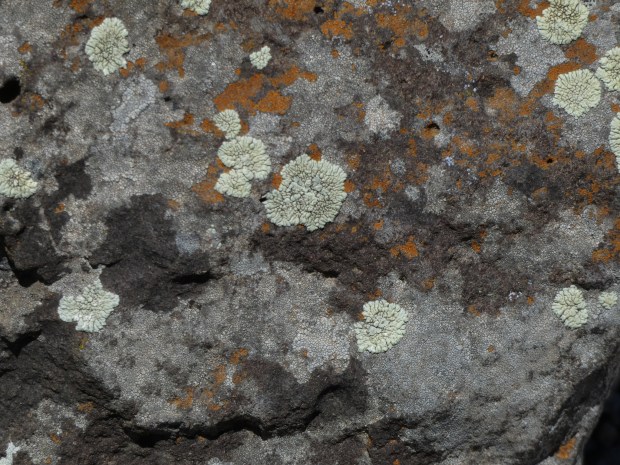
Lichen that has form small rosettes on rock.

But don’t only look down. Another form of rosette occurs when the internodes (those areas between leaves) along a stem are shortened, bringing leaves closer together as in lettuce and some succulents.2. And although not as common as basal rosettes, some plants form rosettes at the terminal or top end of their often naked stems, branches, or even trunks. One plant that does this is the native sedum called wild stonecrop. The top of the plant stems usually terminate in whorls or three fleshy leaves. Another example is the Hawaiian screwpine, which has a terminal rosette of sword-shaped leaves which sits atop an erect trunk, often supported by prop roots.

Know Your Local Rosettes

A number of desirable and undesirable (weedy) plant species produce rosettes, particularly basal rosettes.  Being able to identify a species that pops up in the Spring by its rosette is so helpful in preventing a removal mistake by inadvertently digging them up. Many weedy, non-native plants gaze first at their world through rosette “eyes.” But not all plants with rosettes are undesirable. Do you know your local rosettes by their other names?

………………………………………………………………

1  Rosettes are found throughout nature, not just in the flowering plants.  Here’s some examples you may have seen or heard of:  

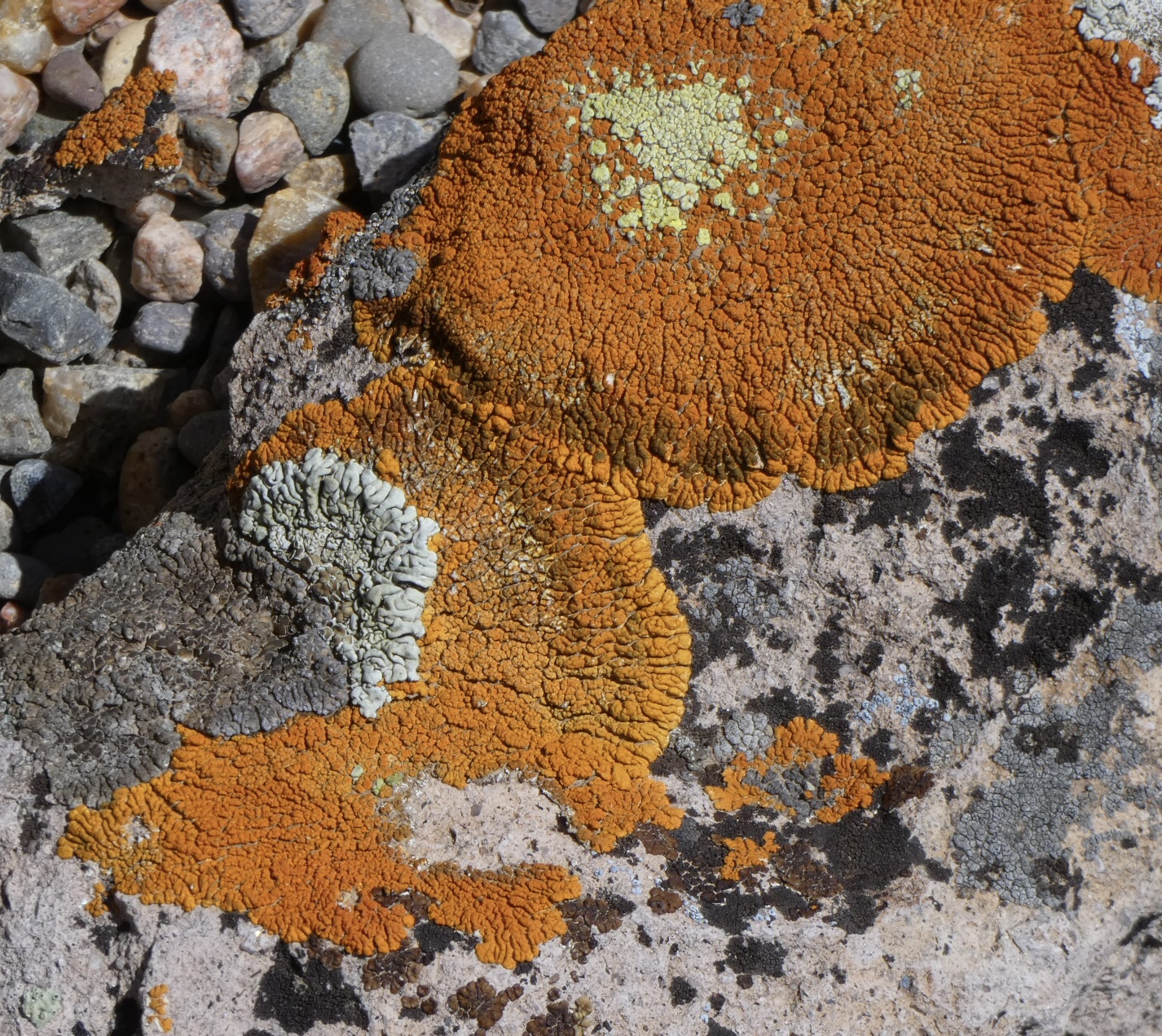
In bryophytes and algae, a rosette results from the repeated branching of the thallusas grown by plant, resulting in a circular outline. Lichens also grow rosettes.

Tiny wasps and midges can induce the development of galls that become leafy rosettes.

Jaguars, leopards and other feline species display rose-like markings on their fur, referred to as rosettes.

Malaria parasites are known to form spontaneous rosettes in uninfected red blood cells.

Neural rosettes in the human brain are being studied to learn how new cells are born.

It is unknown why the Rosette-Nosed Pygmy chameleon, at home in the mountains of Tanzania, has evolved a distinctive, rosette-shaped, fleshy protrusion on the end of its nose.

The Rosette nebula, named for its rosette-like appearance, is a beautiful collection of gas and dust 5,200 light-years from Earth in the constellation Monoceros the Unicorn, and stretches about 130 light-years across.

A gorgeous lichen decorated rock from Colorado. Note the rosette patterns of growth (the thallus)

  The horticultural definition of a succulent describes a drought-resistant plant where the leaves, stems, or roots have become fleshy and their tissues are able to store water. Succulents include aloe, euphorbia, sedum, the garden favorite hen-and-chicks, and bromeliads. But horticulturalists do not include cacti in the succulent group. huh? Even though cacti are frequently found in books describing succulents based the definition of a succulent, succulents are not cacti. In agreement with that last statement are many botanical and other scientific experts. (Can this get any more confusing?). So basically some experts are lumpers, while other are splitters.  Which are you? 

Basal rosette of a yucca in the NM foothills.

P.S. Cacti have stems that are thickened fleshy water-storing structures, and are considered to be a stem-succulent group of plants. Are there any cacti species that develop leafy rosettes? Because the spines are the leaves, greatly modified, in all my rabbit-trailing thru the internet and perusal of my collection of botanical references I’ve yet to see any spines forming whorled/rosette-like patterns. If you have, please contact me immediately!

……………………..……………..😂…………………………………………

Are you ready to explore the wide diversity of rosette forming plants in your neighborhood? Get on out there before those circularly-arranged leaves become disguised by an overabundance of gorgeous wildflowers! 

As always, thanks for stopping by!  And Happy Earth Day (week)!
Up Close and Conversational .. ‘Glorieta’ Southwestern Orangetip Butterfly

April 2, 2025

New Mexico Orangetip butterflies

The ‘Glorieta’ Southwestern Orangetip (Anthocharis thoosa ssp coriande), are only known to occur in the central and north central counties of New Mexico. This recently recognized form of A. thoosa was described by M. Fisher and Scott in 2008, from specimens collected near Glorieta Pass southeast of Santa Fe1 (which just northeast of our home).

The Orangetips are classified in the Family Pieridae/Subfamily Pierinae ….. commonly called the Whites. In NM there are 16 known species of Whites, including the non-native European Cabbage White.  After a wet winter, plentiful males compete for hilltop display locations while females search surrounding areas for the choicest of native plants in the mustard family (Brassicaceae) on which to lay their eggs. When the eggs hatch, the larvae (caterpillars) voraciously devour the leaves of their host mustard plants, until they’ve grown to over 1,000 times in size!  Because this family of butterflies is common in desert habitats, to withstand drought conditions some species have the ability to suspend development during their pupal stage (when they are in their chrysalis), a mechanism called pupal diapause. And if winter rains do not cause favorable conditions for their larval hosts (the mustard plants), they can remain in pupal diapause for several years.   

The White’s preference for mustard plants may not be about taste. It’s thought that chemicals contained in these host plants make butterflies in this group unpalatable. Entomologist, “Mike Toliver has witnessed only one attack by a bird on members of this group in more than 60 years of observation.”1

1https://peecnature.org/butterflies-of-new-mexico/whites-pieridae-pierinae/

A Very Close Encounter

Early one morning (a few days ago), Roy discovered a miniature butterfly afloat, upside down, in a water bucket left outside overnight. Looking very drowned, Roy scooped him up with the tip of his index finger and brought him inside the house for my inspection. Excited and sad all at once, I snapped a few photos, having never seen this species before.  Because this little guy had such striking marks and color, finding him in the online New Mexico butterfly field guide was easy.  This beauty was a ‘Glorieta’ Southwestern Orangetip (Anthocharis thoosa ssp coriande)!

Roy was about to turn him over to take a look at the flip side when one of the wings fluttered a bit. Not believing our eyes, I gently prodded him, and sure enough! He seemed alive! But just how much alive we didn’t know.

Rushing this tiny guy outside where his wings might dry, he slowly became more active. Unfortunately the tip of a still damp forewing folded over and stuck like glue making it impossible to synchronize those wings  …. he didn’t seem remotely interested in taking flight. Not to be defeated, he then crawled up to the tip of my pinky finger, looked me in the eyes, raised one of his six legs politely asking for help. Gathering my courage and willing any clumsiness ‘be gone’ from my fingers, I held my breath while using the edge of my longest fingernail to slowly and carefully separate the fold. Taking my time to tease up the delicate tip millimeter by millimeter, this butterfly never moved a muscle (do butterflies have muscles?). After what seemed like hours the wing unfolded, popping back into alignment without any apparent damage! 

“The Talk”

He didn’t fly tho, so I sat with him for about 20 minutes as he perched on my finger. During my ultra close inspection of his eyes (you know I love eyes, and his were sultry grey and gorgeous), punk-rock style hairdo, and brilliant orange tipped wings, he seemed content while I carried on a lengthy one-sided conversation warning him of the world’s dangers. 

Somewhat convinced he believed and would abide by my every word, I walked him over to a large mullein stalk, where he walked off my finger to enjoy a sunbath (hopefully to prepare to take wing). He wasn’t in much of a hurry tho. About an hour later and checking to see if the coast was clear, off he flew.  That beautiful Glorieta Southwestern Orangetip butterfly was free!

All-in-all, it was an exciting encounter! 

What exciting encounters are you experiencing during this change of seasons? 

As always, thanks for stopping by!

From Seed to Tree: The Irresistible Urge to Grow

A Pinyon Pine/Piñon Seed Update

February 7, 2025

Give a seed the right conditions ……. enough water, sunlight, the perfect temperature ….. and this small package cannot resist emerging from its protective coat to grow into a full grown plant.

Seeds are tiny marvels of nature. 

Looking inside the seed reveals a miniature pine tree!

Think about it ……. a seed is really a living baby plant (the embryo) surrounded by a cozy blanket (the endosperm) that cradles and nourishes the embryo while tucked inside the seed coat. When the coat unzips, freeing the “baby” as it begins to grow, it continues to be nourished by the endosperm until the first true leaves appear. Witnessing the process is so cool!

After collecting piñon seeds from last November’s foraging expedition, (Piñon or Pinyon, Piñon Seed or Pine Nut), we decided to treat a dozen or so to conditions just right to stimulate germination. But first the seeds required a short period of stratification (moisture) to help soften and crack the seed coats. Introducing moisture was done by lining a clear glass jar with damp paper towels and placing the seeds between the towels and glass to watch the action.

Post from November 2024 Seed Foraging Expedition

Soon embryonic roots (the radicles) successfully cracked the seed coats of nine seeds and began growing downward, as roots tend to do. In a week or so, before the embryonic leaves (cotyledons) appeared, all of the germinating embryos were planted. Six of the nine then sprouted their whorled cotyledons, followed by a growth spurt of the first true leaves, initiating the process of food manufacturing (photosynthesis). 

Steps to Germination

All of the germination and seedling development details of these piñon seeds, to date, can be found in my update illustrations. 

Seed germination is a fascinating process, and like the seed itself, is also a marvel of nature. Have you ever tried to germinate a seed? If not, give it a go.  It’s fun, educational, and imagination provoking ….. from such a small seed comes a full-grown flowering plant!

The evidence!

As always, thanks for stopping by!
Winter Botany: Horsetail Milkweed

February 1, 2025

Wandering about the neighborhood one warm summer morning in 2018, I noticed a dense stand of plants lining a 20 foot section of road. What caught my eye were the umbrella-like clusters of pearly white flowers topping each slender stem. From a distance these plants resembled our native white-flowering yarrow. But I soon realized the narrow dark green leaves were not fuzzy; the tiny exotic-looking flowers were not daisy shaped. Unmistakably, this plant was a species of milkweed! And the flowers of more than 50 individual plants in this population were a-flutter and a-buzz and a-crawling with hungry insects!

What was this milkweed species?

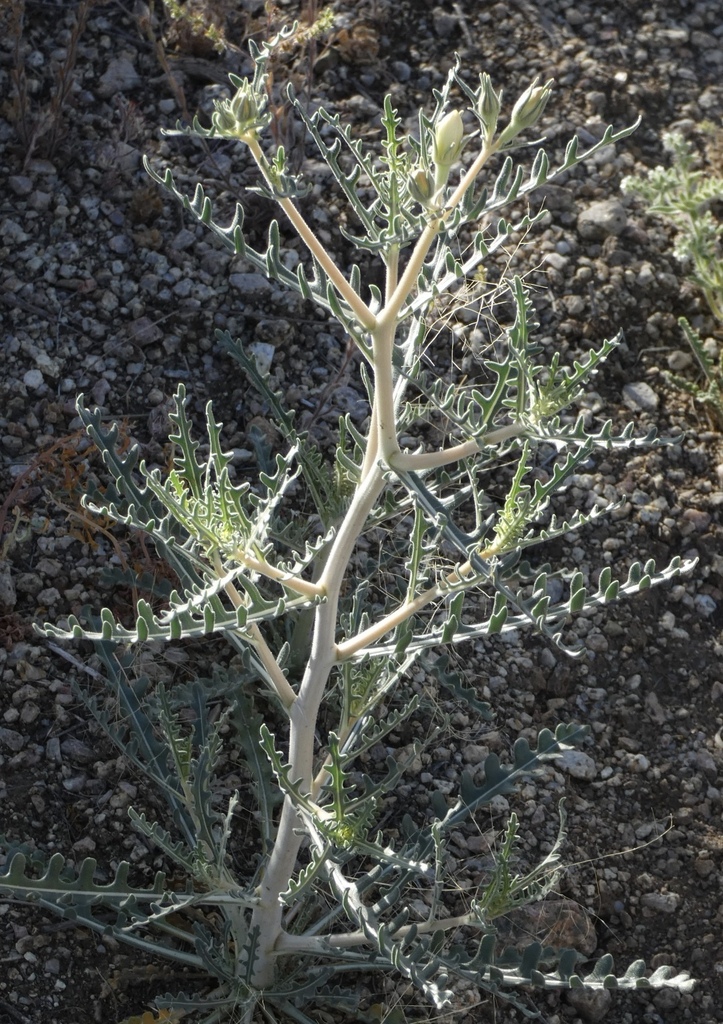
This is the Winter Botany portion of this post. All that remains of last summer’s Horsetail Milkweed are stems and mostly empty seed pods clinging to short branches. But some of the seed pods still hold silky tailed seeds clinging to their open pods. Hundreds of seed pods line the roadways in our neighborhood.

It didn’t take long to confirm this plant as Horsetail Milkweed (Asclepias subverticillata), a species commonly found along roadsides in pinyon-juniper woodlands. Knowing what to look for on future walks, over the next several years I was excited to find 30+ more populations of various sizes along neighborhood roadways! From 2018 until early summer 2024, I continued to monitor these seemingly abundant populations. The small numbers of seeds I collected in the Fall were planted in our yard, and every year I checked for the presence, variety and numbers of insects busy feeding on nectar as they pollinated the flowers.  

During June 2024, when we moved only a few miles to the northeast, I was happy to see Horsetail Milkweed grew abundantly in our new subdivision. This prompted me to dig deeper into researching this species. Its been exciting to discover how important this milkweed is to native insects, including monarch and queen butterflies.

Photo (mine) taken in July 2022 of a blooming Horsetail Milkweed being enjoyed by a feeding wasp.

According to pollination ecologists, Horsetail Milkweed is especially valuable to large numbers of native bees. This plant species also supports conservation biological control by attracting predatory or parasitoid insects that prey upon pest insects. 

And Horsetail Milkweed is one of the favorite host plants for monarch and queen butterflies, all because it’s toxic!  Producing an especially nasty tasting and potent neurotoxin strong enough to kill livestock, the caterpillars of these two butterflies have evolved to benefit from such a poisonous substance. Voraciously ingesting a diet of only milkweed leaves, obviously tasty to the larvae, makes them unpalatable to would-be predators, such as birds. The toxin from milkweed leaves has become their primary means of defense; definitely a benefit for such chubby, slow little caterpillars.

Monarch caterpillar (source: open commons)

Although central New Mexico isn’t in any of the major migratory routes of these butterflies, I have observed both species in our previous neighborhood. Since learning more about Horsetail Milkweed and it’s favored roadside habitat close to home, my hope is to provide actively growing plants throughout the summer (a safe distance away from roadside easements) for both the monarch and queen adult butterflies and their caterpillars ……. especially important when governing covenants of our previous and new subdivisions require the roadways be groomed (mowed down like a butch haircut!) on a monthly basis by subdivision landscape crews. 

Because milkweeds are among my favorite of all plant species, mainly due to their complex flowers and the clever trickery they’ve developed to ensure pollination, I wrote about and illustrated two in-depth blog posts on this subject. Believe me when I say,  “It’s overboard fascinating!”

Check out the following posts …..

Surprise! A vine-y, twine-y desert milkweed discovery from July 2024, where I revisit milkweed flower structure and pollination and learn about a new-to-me genus, Funastrum.

Summer Botany: Meet the Milkweeds from July 2022. This is my first comprehensive look at milkweed flower structure, how pollination takes place, and the genus Asclepias.

Read on to learn more botanical information about Horsetail Milkweed AND how to find out if you live in Spring and/or the Fall Migration routes of the monarch butterfly AND where queen butterflies migrate to and from. 

Characteristics and habitat requirements of Horsetail Milkweed

Horsetail Milkweed is a perennial species with a stout, woody rootstock. Plants readily spread by rhizomes (underground stems) producing dense communities. Cold-hardy to at least 0℉, this milkweed bounces right back in the Spring. Plants are also drought-tolerant once established, thriving in well-drained, sandy soil under full to partial sun.

Able to thrive in a variety of habitats and plant communities from 2500 – 8000 feet in elevation, Horsetail Milkweed grows among grasses, on sandy or rocky flats, on slopes, roadsides, and along trails in Chaparral, Semidesert Grasslands, Pinyon-Juniper Woodlands, Montane Conifer Forests, and in disturbed areas.

All of these characteristics and its adaptability to a wide range of habitats make Horsetail Milkweed one of the easiest milkweed species to grow.

Monarch butterfly (source: open commons)

Monarch Butterfly

To learn if you live within the path of or close to spring and/or fall monarch butterfly migration routes, you can view a map or these route here:

https://www.monarchwatch.org/

Queen butterfly (source: open commons)

Queen Butterfly

The queen is chiefly a tropical species. In the US, it is usually confined to the southern portion of the country. It can be found regularly in peninsular Florida and southern Georgia, as well as in the southern portions of Texas, New Mexico, Arizona, and California. Occasionally, the subspecies of the queen can be found somewhat north, in Kansas, Colorado and Utah. 

Queen butterflies do not migrate as dramatically as monarch butterflies, but they do move short distances in tropical regions with dry seasons to higher elevations.

Queen caterpillar (source: open commons)

As always, thanks for stopping by!
A Quirk of Nature: Fourwing Saltbush

November 25, 2024

In November 2023, I created a journal page of seeds and seed pods, which posted on 12/14/2023, under the title November Littles: Seeds, Pods, Silk, and Wings. On that page was a small drawing of two Fourwing Saltbush seeds, absent any information about this plant species, Atriplex canescens. At that time I remember finding a wealth of articles and research documents about this widespread shrub, but what really stuck in my mind was a very unusual quirk exhibited by this plant. Finally, a year later and WOW! I discovered Fourwing Saltbush has a reproductive superpower …… this species has the ability to change sex!
An Unusual Quirk

My first dive into the literature revealed that within a 7-year period of time, 40% of a Fourwing population switches sexes with 20% of a population changing sex every year. Botanically, this is known as Trioecious, or the 3rd Sexual State.  

But clearly a bit of back peddling is needed ……. if Trioecious is the 3rd Sexual State in plants, what about the 1st and 2nd sexual states, huh? Yes, they exist …….. but before explaining them, which requires comparison with the more common sexual state in plants, I must describe this sexual norm. 

And now for a little Botany 101 ……..

The Sexual Norm …… Plants with Perfect or Complete Flowers

You are likely familiar with plants like roses, tulips, lilies, garden strawberries, beans, peas and cabbage. If you’ve closely examined their flowers while inhaling their fragrant aromas, you may have noticed their centers have both female and male parts. These are known as plants with Perfect or Complete flowers (aka hermaphroditic or bisexual) defined by each individual flower having a fully functional pistil (the female part) and stamens (the male parts). Worldwide, about 90% of flowering plants have Perfect or Complete flowers.

Monoecious ….. the 1st Sexual State

Here again you are likely familiar with many plant species described as Monoecious (moh-NEE-shuhs). These include corn, all of the plants in the gourd family (i.e. cucumber, squash, watermelon), oak, birch, pine, spruce and dogwood. Monoecious, which means “one house” in Greek, describes plants having separate female and male flowers in different places on the same plant, often blooming at different times. Visualize corn growing in a field; the tassels are the male (staminate) flowers, and the corn kernels you eat are the female (pistillate) flowers.  Around 10% of all flowering plant species worldwide are Monoecious.

Not to confuse the matter, but sometimes botanical experts refer to Monoecious species as Perfect or Complete because they have both male and female flowers on the same plant, even though these flowers are separate and considered sexually Incomplete (aka unisexual) by themselves. 

Dioecious ….. the 2nd Sexual State

A plant species with individual plants in a population having only female flowers, and individual plants of the same species in the same population with only male flowers is called Dioecious (dahy-EE-shuhs). This Greek word meaning “two houses,” describes plants such as spinach, asparagus, sumac, currant, box elder, willow, holly, ginkgo, juniper and aspen. Only 5% of all flowering plant species worldwide are Dioecious.

Another confusing matter once again. There are botanical experts that refer to plant species with Perfect or Complete flowers as Dioecious because they require cross-pollination to produce seeds (fruit). Tree fruit species such as apples, pears, cherries and plums are common examples.

Trioecious ….. the 3rd Sexual State

An extremely rare reproductive strategy among flowering plants, Trioecious (aka trimonoecious or “three houses”), is characterized by a species that can have Incomplete (unisexual) male, Incomplete (unisexual) female, and Perfect or Complete (bisexual or hermaphroditic) male/female flowers on separate plants in a population or even all on the same plant! Just over 3% flowering plant species worldwide are Trioecious (trahy-EE-shuhs).

This is where Fourwing Saltbush (Atriplex canescens) enters the story

Primarily a Dioecious species, some Fourwing Saltbush populations have a Monoecious component ranging from entirely male (staminate) or female (pistillate) individuals to those that are Perfect or Complete (hermaphroditic or bisexual). And in this DioeciousMonoeciousHermaphroditic gender system, referred to as Trioecy, switching sexes occurs. To reiterate from an earlier paragraph, on average, in a 7-year period, about 40% of a Fourwing Saltbush population switches sexes with 20% changing from male to female or from female to male every year.

Reasons Behind and Benefits of Fourwing’s Sex Change Phenomenon

Fourwing Saltbush has evolved to be one of the most adaptable plant species found throughout central and the western US. It grows from sea level to 8500 feet elevation, and in a multitude habitats within a wide range of plant communities, no matter the successional stage. Fourwing can adapt to all soil textures, soil depths and all but the wettest of soil conditions. The species is able to tolerate hot (+100F) and dry (6” precipitation annually) summers, and bitter cold (-50F) and dry winters.  

The ability of the species to adapt to such a wide range of physical and climatic conditions is, in part, due to this sex change phenomenon. Environmental stressors seem to be the major triggers resulting in Fourwing plants switching sexes. Female plants are more likely to change sex than male plants, especially following a drought, an extremely cold winter, or after a heavy fruiting season. Because fourwing is so tasty as range forage, overgrazing can also trigger a sex change, with male plants tending to dominate regularly grazed sites. Male plants that change to female typically flower earlier than plants that remain female season after season. And female plants dominate richer sites than do male plants, becoming larger and producing more seed.

Undoubtably there’s more environmental stressors, such as wildfire and other climate change-induced factors, that may result in Fourwing Saltbush to switch sex. I’ll be curious to learn what they are and how these triggers influence the adaptability and survivability of this robust species.  And I’m excited get busy marking this season’s female and male plants that we see nearly every day, and will begin more closely observing these populations for gender changes and possible stressors that may have triggered these switches. 

A Retrospective and Thoughts on Prospective Studies

There’s so much to learn about Fourwing Saltbush that it seemed logical to tackle one characteristic at a time. Originally I had planned to discuss both the plant’s reproductive quirk and several of its common galls, but found there would be too much information for one post. While deciphering the complexities of the Fourwing’s sex change abilities, I found it necessary to describe certain key botanical terms in my buildup to the crucial piece of the puzzle ….. the Trioecious reproductive strategy.  So this post focused on the first of my two journal pages; my beginning exploration into this plant.  The galls illustrated on my second journal page, that could not be easily chopped away from the first page, serve as a preview of a future post about the fascinating Fourwing Saltbush. 

And Finally ……….

For a shrub I used to describe as a messy tangle of branches haphazardly cloaked with unremarkable features like dusty little grey-green leaves, nearly invisible flowers, shreddy dull grey trunks and a chaotic canopy, Fourwing Saltbush has captured my imagination, respect, and love as an almost invincible survivor of our changing world!

Hopefully you found this interesting and informative. Bet you never look at flowering plants in casual ways again.  Let me know if you are familiar with Fourwing Saltbush. Where does it grow? Have you ever marveled at the thousands of winged seeds densely crowded at the tops of these shrubs?  And then satisfied an irresistible urge to strip dozens of skinny branches of those ripe seeds, tossing them in the air like confetti? If so, please share.

As always, thanks for stopping by!